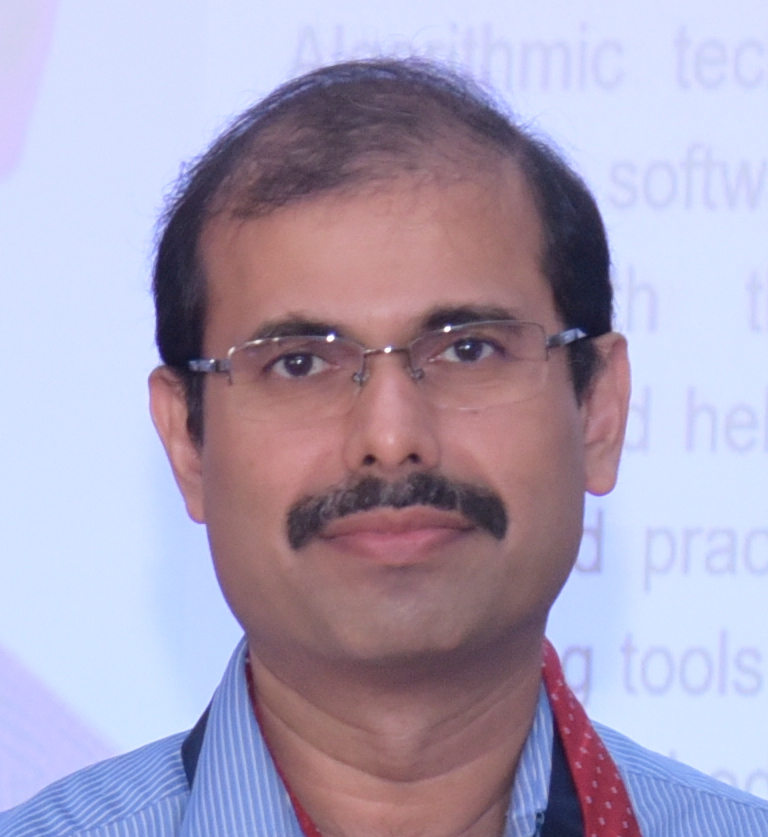
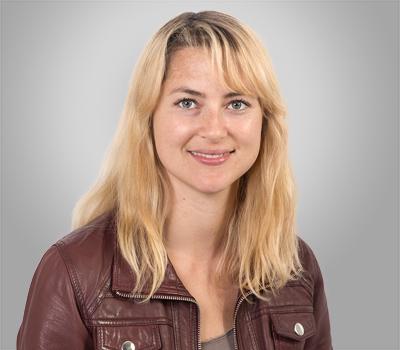
Bharat Lohani is a Professor at the Department of Civil Engineering in Indian Institute of Technology Kanpur . His work focuses on Geoinformatics , utilizing LiDAR and GIS for 3D modeling and spatial analysis. Education : PhD (University of Reading, UK), ME (IIT Roorkee), BE (MMM Engineering College Gorakhpur) Research Interests : LiDAR simulation, motion correction in scanning, flood propagation modeling, historical urban mapping, GPS signal analysis, agricultural land consolidation Article Trends : His publications emphasize LiDAR data processing , sensor integration , and optimization algorithms for geospatial applications. Scientific Awards : ISRS National Award (2012), Best Paper at INCA Congress (2012), Silver Award at ISPRS (2008) Advising : Mentored 8+ students in LiDAR and spatial data analysis Labs/Teams : Leads a research group at IITK including Aswani Kumar Munnangi and Salil Goel, affiliated with the Wadhwani School of AI & Intelligent Systems .
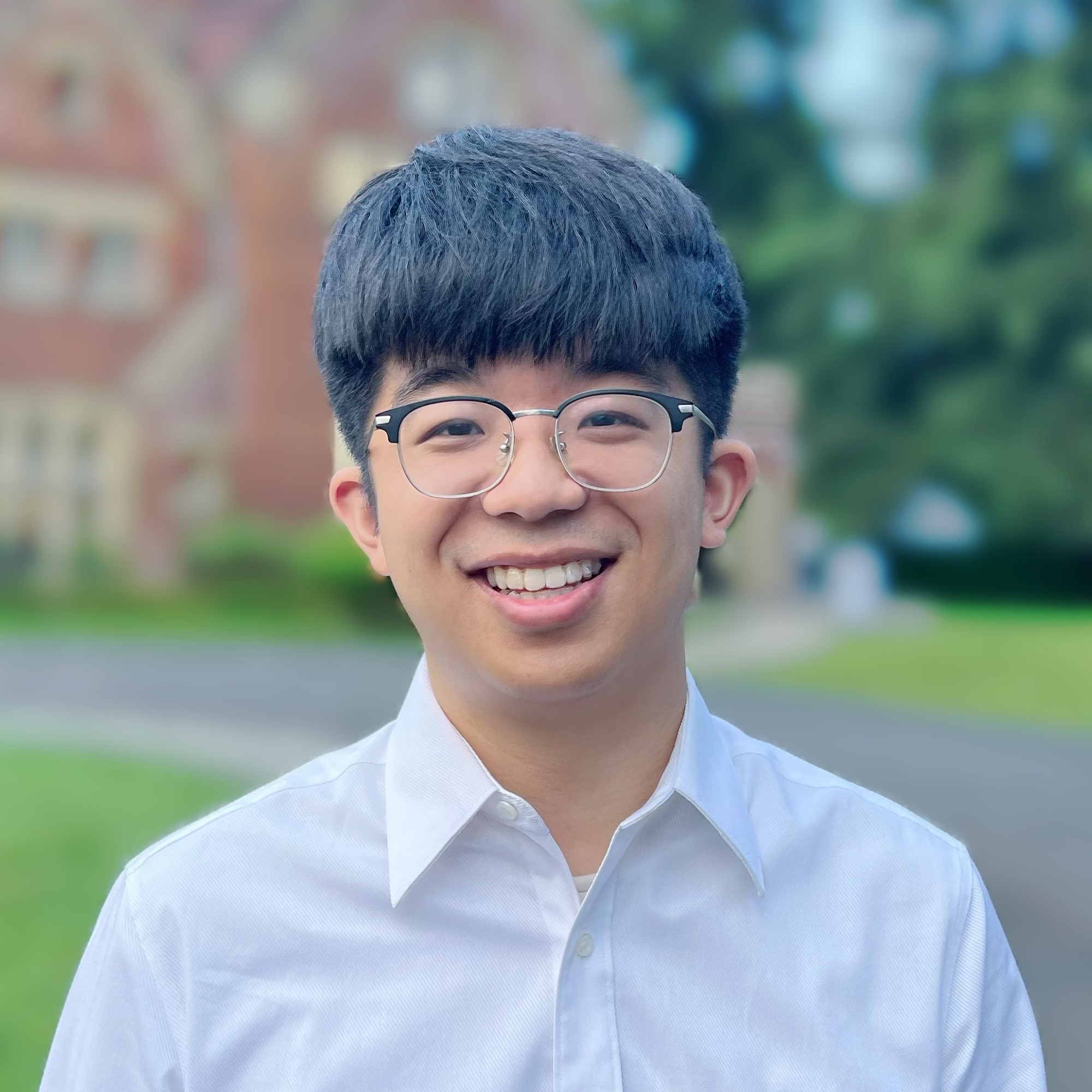
Supratik Chakraborty serves as the Bajaj Group Chair Professor in the Department of Computer Science and Engineering at Indian Institute of Technology Bombay. He maintains dual affiliations with the Centre for Formal Design and Verification of Software and the Centre for Liberal Education at IIT Bombay, demonstrating his cross-disciplinary engagement. Professor Chakraborty's research spans formal methods with focus on formal verification, rigorous analysis of system models, and automated synthesis of systems from specifications. His work bridges theoretical foundations with practical applications, particularly in developing mathematically provable guarantees for increasingly complex hardware, software, and intelligent systems. Current research interests include constrained counting and sampling, scalable formal verification of software and hardware systems, automated synthesis of programs and circuits, and applications of automata, logic and finite model theory to practical verification challenges. His publication trajectory shows a significant evolution from traditional hardware and software verification toward addressing verification challenges in machine learning and AI systems. Recent work increasingly focuses on interpretability of black-box models, verification of neural networks, and synthesis techniques applicable to intelligent systems. The research demonstrates strong interdisciplinary connections between formal methods, programming languages, and artificial intelligence. IIT Bombay Excellence in Thesis (CSE) Award 2011 (for Bhargav Gulavani's thesis) IIT Bombay Excellence in Thesis (CSE) Award 2017 (for Abhisekh Sankaran's thesis) Best Paper in Algorithms and Architecture track at IEEE International Conference on Computer Design: VLSI in Computers and Processors, 1998 Professor Chakraborty has successfully supervised 11 doctoral students, with research spanning formal verification techniques, Boolean functional synthesis, constrained counting, and applications to hardware and software systems. His students have gone on to positions at major institutions including Microsoft Research, TCS Research, Georgia Tech, and BARC, reflecting the strong industry and academic impact of his mentorship. Current research directions show increasing emphasis on verification challenges posed by machine learning systems and AI. His research group at IIT Bombay, while not explicitly named in the materials, appears to focus on formal methods with strong connections to the Centre for Formal Design and Verification of Software. The group maintains active collaborations with international researchers including Moshe Y. Vardi at Rice University, and has made significant contributions to verification tools like VeriAbs that bridge theoretical advances with practical applications.
Hadi Esmaeilzadeh is an Associate Professor at the University of California, San Diego in the Department of Computer Science and Engineering . He previously served as an Assistant Professor at Georgia Tech (2013-2017) and holds the Halicioğlu Chair in Computer Architecture . As founder/director of the Alternative Computing Technologies (ACT) Laboratory and associate director of UCSD's Center for Machine Integrated Computing and Security (MICS) , his research drives cross-stack solutions for next-generation computer systems. Early tenure recipient at UCSD Coined the term "dark silicon" in computer architecture Developed Tabla/DnnWeaver open-source frameworks Research Interests span: Approximate Computing Neural Acceleration FPGA/ASIC Hardware Design Machine Learning Systems Dark Silicon Challenges Security/Privacy in Accelerated Systems Scientific Recognition : 4 CACM Research Highlights 4 IEEE Micro Top Picks Distinguished Paper Award (HPCA 2016) Inducted to ISCA Hall of Fame (2018) Teaching : Developed courses on accelerator design (CSE 240D) and alternative computing (CS 8803 ACT) Advocates for hands-on FPGA-based learning in Processor Design with FPGAs courses
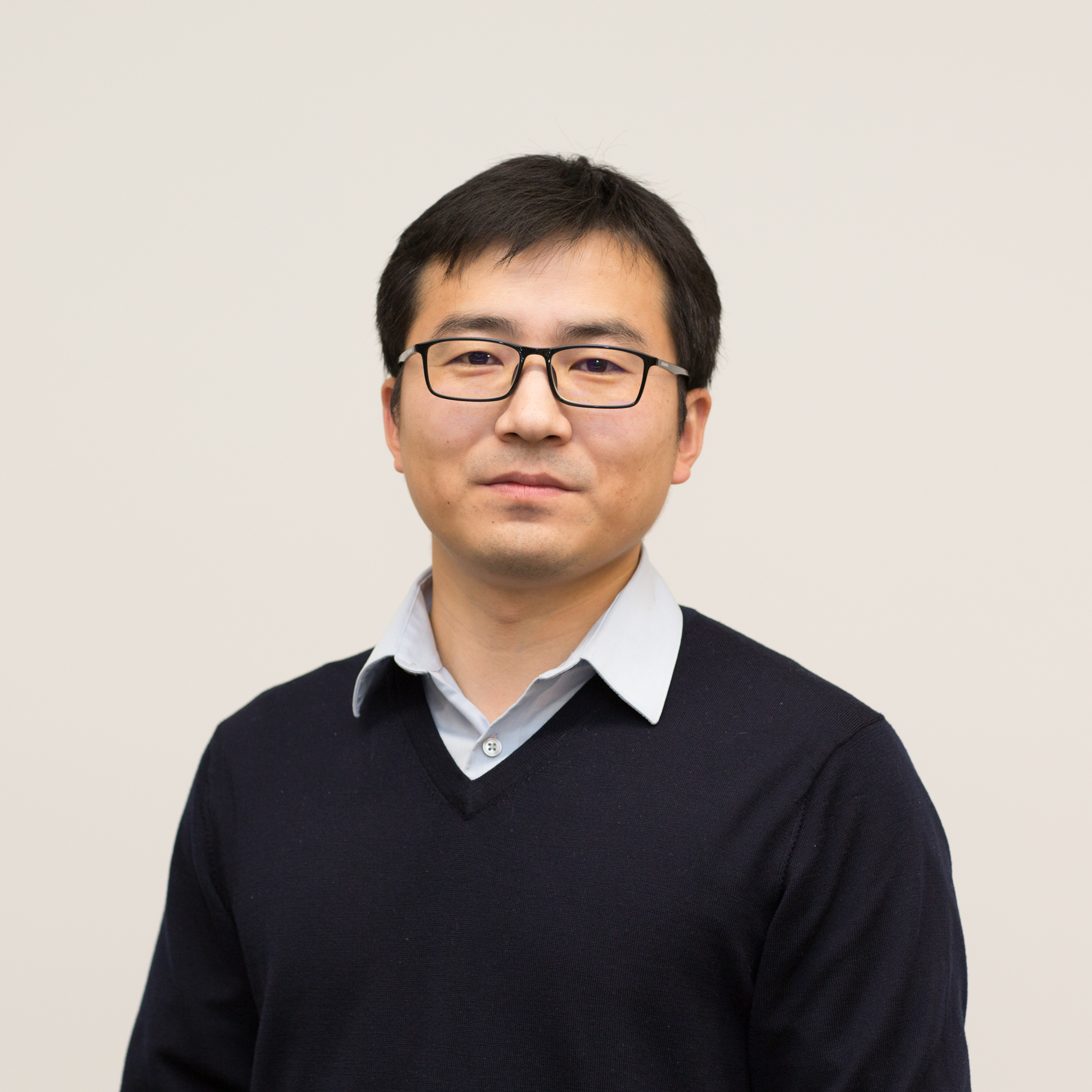
Zhijian Liu is a Research Scientist at NVIDIA with a PhD from MIT, advised by Song Han. His work focuses on efficient machine learning and systems through sparse computation and hardware-aware neural network design. Rising Star in Data Science (UChicago/UCSD) Rising Star in ML and Systems (MLCommons) Qualcomm Innovation Fellowship awardee Research highlights include: SPVCNN++ for LiDAR segmentation HAQ framework in Intel OpenVINO TorchSparse framework for 3D CNN efficiency His recent publications explore: Efficient visual language models (NVILA) Contextual sparsity in LLM fine-tuning (SparseLoRA) Training-free acceleration of diffusion LLMs Query-aware visual sparsity mechanisms Contact: zhijian@mit.edu
Atsuo Takanishi is a distinguished Professor at Waseda University's Faculty of Science and Engineering, School of Creative Science and Engineering, with appointments in both the Department of Bioscience and Biotechnology and the Department of Modern Mechanical Engineering. With over 700 publications, 10,399 citations, and an h-index of 47, Professor Takanishi has established himself as a leading figure in robotics research. His work spans multiple institutions, including visiting positions at Showa University School of Dentistry and KDDI Research, Inc. Professor Takanishi received his Doctor of Engineering degree from Waseda University in 1985, following his undergraduate studies in the Faculty of Science and Engineering at the same institution, which he completed in 1980. His academic journey began with positions as an Assistant at Waseda University (1985-1988), Lecturer (1988-1990), and Associate Professor (1990-1997) before achieving his current Professor status. Professor Takanishi's research interests center around robotics and intelligent systems, with particular expertise in humanoid robotics, surgical dentistry applications, and biomechatronics. His work demonstrates a unique integration of mechanical engineering principles with biological systems, resulting in innovative robotic platforms that mimic human capabilities. Notably, his laboratory has developed the Waseda Anthropomorphic Saxophonist Robot series and various medical training simulators that have significantly advanced the field of human-robot interaction. His research in experimental psychology complements his robotics work, particularly in human-robot interaction studies. Analysis of Professor Takanishi's recent publications reveals a strong focus on practical applications of robotics technology, particularly in assistive devices for elderly mobility, medical training simulators, and agricultural robotics for Synecoculture environments. His work consistently bridges theoretical robotics with real-world implementation, with recent papers emphasizing reinforcement learning approaches, haptic feedback systems, and computer vision techniques for complex environments. The Waseda Anthropomorphic Saxophonist Robot series represents a culmination of decades of research in humanoid robotics and musical expression. IEEE Fellow (2020-present) Robotics Society of Japan Fellow (2012-present) Japan Society of Mechanical Engineers Fellow (2007-present) Multiple Best Paper Awards from IEEE conferences (ICRA, IROS, ROMANSY) BusinessWeek Asia's Stars Bloomberg (2001) IFToMM Award of Merit (2010) Professor Takanishi has maintained extensive collaborations with research institutions worldwide, particularly with Italian institutions through the Italy-Japan Workshop series. His laboratory has secured substantial funding from Japanese government agencies including the Japan Science and Technology Agency, with particular emphasis on projects bridging robotics with medical applications and human-centered technologies. His international recognition is evidenced by his numerous visiting professorships and collaborative projects across continents. Professor Takanishi leads the Takanishi Laboratory at Waseda University, which maintains specialized facilities for humanoid robotics development, medical robotics research, and human-robot interaction studies. The laboratory has developed several notable robotic platforms including the WABIAN series of bipedal humanoid robots, the WASEDA FLUTIST ROBOT, and various medical training simulators used in clinical education settings. His work on the WASEDA SAXOPHONIST ROBOT represents a unique fusion of musical artistry and robotics engineering.
Dr. Feng Cheng is a Senior Researcher and head of the IT Security Engineering (Sec-Eng) Team at the Hasso Plattner Institute (HPI), Germany, and serves as the Representative of the Chair "Internet Technologies and Systems" at the Digital Engineering Faculty, University of Potsdam. He holds a PhD from the University of Potsdam, an MEng from Beijing University of Technology, and a BEng from Beijing University of Aeronautics and Astronautics. His research is centered on data-driven security engineering, security analytics, network security, cloud security, firewall, IDS/IPS, attack modeling, and penetration testing. Dr. Cheng's research interests span a broad range of cybersecurity domains, with a strong emphasis on security analytics , data-driven threat detection , cloud and network security , and authentication . His work integrates advanced data engineering and machine learning techniques to enhance security operations, including intrusion detection, threat intelligence, and security information and event management (SIEM). Key application areas include IoT security, mobile security, and web security. The recent publications of Dr. Cheng and his team reflect a significant trend towards leveraging big data analytics , machine learning , and graph-based methods for cybersecurity. Their work focuses on developing frameworks for blockchain-based public key infrastructures, advanced SIEM analytics, malware detection using NLP, and chaos engineering for cloud security. This demonstrates a strong commitment to creating practical, scalable, and intelligent solutions for modern security challenges in complex, distributed environments. Dr. Cheng is actively involved in the academic community as a member of ACM and IEEE, a program committee member for numerous international conferences, and an organizer of workshops on cloud computing and cybersecurity. He has also served on editorial boards for international journals. He supervises a large group of PhD, master's, and bachelor's students, guiding research on topics such as security analytics, cyber threat intelligence, digital credentials, and behavioral authentication. He leads the Sec-Eng team, which conducts research on a diverse portfolio including the Security Analytics Lab, HPI-VDB (vulnerability database), Lock-Keeper (physical separation technology), and the Security Lab Generator for scenario-driven security training.
Di Shi is an Associate Professor at the Klipsch School of Electrical and Computer Engineering , New Mexico State University (NMSU), holding the Paul W. and Valerie Klipsch Distinguished Professorship. He previously founded the AI energy startup AInergy, LLC and held leadership roles at GEIRI North America, NEC Laboratories America, and Arizona State University. Education: PhD in Electrical Engineering, Arizona State University (2012) MS in Electrical Engineering, Arizona State University (2009) BS in Electrical Engineering, Xi'an Jiaotong University (2007) His research focuses on power system data analytics , energy storage , artificial intelligence , and IoT applications for grid stability and renewable integration. His work bridges theoretical innovation with real-world deployment, including software adopted by 15 utility companies. Recent publications highlight his leadership in deep reinforcement learning for grid control, blockchain frameworks for energy management, and tensor decomposition for efficient load modeling. He has secured a $6M NSF grant for AI-driven digital twinning to address climate-aware energy resilience. Awards & Recognition: 2025 Paul W. and Valerie Klipsch Distinguished Professorship 2024 University Research Council Mid-Career Award 2024 IET Fellow Multiple IEEE Best Paper Awards (2019–2022) 2019 L2RPN AI Competition Championship He serves as an editor for IEEE Transactions on Power Systems , IET Generation, Transmission & Distribution , and other journals, and leads the IEEE Task Force on IoT for Power Systems . His team’s patents cover AI-driven load modeling , energy storage scheduling , and state estimation , with 42 granted or pending.
Prof. Baker Mohammad serves as Professor and Director of the System on Chip Lab in the Department of Computer and Information Engineering at Khalifa University. With over 15 years of industrial experience at Intel and Qualcomm designing microprocessors and DSP chips, he bridges academic research with real-world engineering challenges in high-performance computing and low-power systems. His educational background includes: Ph.D. in Electrical and Computer Engineering, University of Texas at Austin (2008) M.S. in Electrical and Computer Engineering, Arizona State University B.S. in Electrical Engineering, University of New Mexico Dr. Mohammad's research spans cutting-edge domains where VLSI design converges with AI acceleration and emerging memory technologies . His work pioneers Memristor applications in environmental sensing (radiation, vacuum, glucose) and neuromorphic computing, while advancing energy harvesting systems for wearable electronics. The integration of in-memory computing with security primitives represents a paradigm shift in hardware design, moving beyond traditional CMOS limitations. His publication trajectory reveals accelerating focus on self-powered neuromorphic systems and RRAM-based architectures, with recent work (2021-2023) emphasizing hardware-software co-design for edge AI. Over 75% of his recent publications involve cross-disciplinary collaborations spanning materials science, chemistry, and biomedical engineering. Notable scientific recognition includes: IEEE TVLSI Best Paper Award 2016 IEEE MWSCAS Myrill B. Reed Best Paper Award Qualcomm Qstar Award for Performance Leadership KUSTAR IP Excellence Award Multiple SRC Techon Best Session Papers As a dedicated mentor, he has supervised over 15 graduate students while securing competitive funding from Khalifa University, ADEK, Qualcomm, Tii, and UAE space agencies. His grant portfolio demonstrates exceptional translational impact, converting fundamental research in memristive devices into drone flight computers and medical sensors. Current projects integrate academic rigor with industrial deployment timelines. The System on Chip Lab operates as a multidisciplinary hub where semiconductor physicists collaborate with AI researchers to develop RISC-V-based secure processors and piezoelectric nanogenerator systems. Recent expansions include partnerships with Tii for aerospace applications and medical device startups for glucose monitoring technology.
Sebastian U. Stich is a tenured faculty member at the CISPA Helmholtz Center for Information Security , where he has been since December 2021. He is also a member of the European Lab for Learning and Intelligent Systems (ELLIS) since June 2020. His research focuses on optimization methods for machine learning, collaborative learning algorithms, privacy and security in distributed systems, and theoretical foundations of deep learning. Stich received his PhD in Theoretical Computer Science from ETH Zurich (2014), following a Master's in Mathematics at the same institution (2010-2014). Prior to CISPA, he worked as a research scientist at EPFL (2016-2021) and held positions at ETH Zurich and ICTEAM/CORE. He has been awarded the ERC Consolidator Grant 2024 , Google Research Scholar Award (2023), and Meta Privacy-Enhancing Technologies Research Award (2022). His team includes Dr. Anton Rodomanov (since 2023), Dr. Rotem Mulayoff (since 2024), Xiaowen Jiang (2023), Yuan Gao (2023), and notable alumni like Anastasia Koloskova (defended 2023). Stich actively organizes workshops (e.g., NeurIPS OPT 2024) and serves on editorial boards ( Journal of Optimization Theory and Applications , Transactions on Machine Learning Research ). He teaches advanced courses in optimization at Saarland University and has held visiting positions at MIT. Key scientific contributions include: Developing ProgFed for progressive federated learning (2021) Creating ProxSkip to accelerate communication in federated settings (2022) Formalizing SCAFFOLD with control variates for FL (2020) Introducing RelaySum mechanism for decentralized learning (2021) Proposing Lookahead-Minmax for GAN training (2021) His work addresses fundamental challenges in: Decentralized optimization theory Communication-efficient algorithms Privacy-preserving model training Handling heterogeneous data distributions Stochastic gradient dynamics Second-order optimization methods
Massimo Mischi is a Full Professor at the Faculty of Electrical Engineering of the Eindhoven University of Technology (TU/e) and chairs the Signal Processing Systems (SPS) Division , the largest division at TU/e with over 250 researchers. He founded the Biomedical Diagnostics (BM/d) Lab in 2012, which now includes 180 researchers and clinical/industrial advisors, focusing on biomedical signal processing for diagnostics and monitoring.
Andrea Cavallaro is a Full Professor at the École Polytechnique Fédérale de Lausanne (EPFL) and Director of the Idiap Research Institute. He holds dual appointments in the School of Engineering (STI) within the Institute of Electrical Engineering and Measurements (IEM) and the School of Engineering's Education Unit (SEL-ENS). His research focuses on machine learning for multimodal perception, privacy-preserving AI, and autonomous systems. Cavallaro earned his PhD in Electrical Engineering from EPFL in 2002 and has held leadership roles including Director of Research at Queen Mary University of London and Turing Fellow at The Alan Turing Institute. Education: PhD in Electrical Engineering (EPFL, 2002) Leadership: Idiap Director, Affiliate at ELLIS Society Editorial Roles: Editor-in-Chief of Signal Processing: Image Communication (2020–2023), Senior Area Editor for IEEE Transactions on Image Processing Research Interests: Machine learning for audio-visual sensing, privacy in AI, autonomous systems perception, and ethical AI frameworks. Key projects include AlignAI (trustworthy AI alignment) and CORSMAL (multimodal object manipulation). Recent articles explore privacy-aware AI models, adversarial attacks, and multimodal perception systems. His work bridges theoretical advancements with practical applications in robotics, healthcare, and education. Awards include the Royal Academy of Engineering Teaching Prize and IAPR Fellowship. Teaching: Leads courses on deep learning ethics and multimodal AI at EPFL. Advising: Supervises 11 PhD students in areas like privacy-preserving algorithms and autonomous systems. Labs/Teams: Coordinates Idiap’s Audiovisual Intelligence and Learning Lab (LIDIAP) and collaborates on projects like GraphNEx (explainable AI via graph neural networks).
Oscar P. Bruno is a Professor of Applied and Computational Mathematics at the California Institute of Technology (Caltech). He holds a Licenciado from the University of Buenos Aires (1982) and a Ph.D. in Mathematics from New York University's Courant Institute (1989). Since 1998, he has been a Professor at Caltech, previously serving as Associate Professor (1995–98) and Executive Officer for Applied Mathematics (1998–2000). His research focuses on developing high-performance numerical methods for solving partial differential equations (PDEs), addressing challenges in complex geometries, singularities, and high-frequency phenomena. Key contributions include the Fourier Continuation (FC) method and integral-equation techniques, enabling solutions to previously intractable PDE problems in science and engineering. Prof. Bruno's expertise spans computational electromagnetics, computational fluid dynamics (CFD), solid mechanics, and mathematical physics. His work integrates numerical analysis, multiphysics modeling, and computational science to solve real-world problems in geophysics, optics, and fluid dynamics. He has received numerous awards, including membership in the National Academy of Sciences of Argentina (2020), the Vannevar Bush National Security Science and Engineering Fellowship (2016), and SIAM Fellow (2013). Bruno serves on editorial boards for journals like SIAM Journal on Scientific Computing and SIAM Journal on Applied Mathematics, and participates in national science advisory roles. His teaching includes advanced courses on applied mathematics methods (ACM/IDS 101 ab), emphasizing theoretical foundations and numerical techniques for PDEs. His research group develops cutting-edge solvers with applications in shock dynamics, optical tomography, and geophysical fluid dynamics.
Heather Knight is an Assistant Professor in the Department of Electrical Engineering and Computer Science at Oregon State University, part of the College of Engineering. Her research focuses on social robotics and human-robot interaction, emphasizing non-verbal communication and the design of non-anthropomorphic robots. She directs the CHARISMA Research Lab, which applies principles from performing arts to enhance robot charisma through expressive motion and interaction design. Dr. Knight holds a Ph.D. in Robotics from Carnegie Mellon University (2016), and dual M.S. degrees in Robotics (Carnegie Mellon) and Electrical Engineering & Computer Science (MIT, 2008), alongside a B.S. in Electrical Engineering from MIT (2006). She also leads Marilyn Monrobot, a robot theater company producing comedic performances and an annual Robot Film Festival. Her work bridges technical innovation with societal impact, exploring how robots can better communicate intent through motion and interaction. Notable contributions include the 'Sanitizerbot' project for playful public health support and the development of Laban-based motion frameworks for expressive robotics. Awards include being named to Forbes' 30 Under 30 in Science (2011) and her TED talk on robot comedy. Key Research Themes: Multi-robot formations, expressive motion design, human-robot social dynamics, and ethical integration of AI in robotics. Recent Projects: VR storytelling with social robots, service robots in workplace environments, and motion-based affective communication. Her articles span topics from robot humor generation to industrial light communication systems, reflecting a commitment to both foundational research and applied solutions for human-robot coexistence.
Rex Ying is an Assistant Professor in the Department of Computer Science at Yale University's School of Engineering & Applied Science. He leads research in graph neural networks, geometric representation learning, and explainable AI, with applications spanning physical simulations, biology, knowledge graphs, and recommender systems. His lab actively recruits PhD students interested in geometric deep learning, graph neural networks, and trustworthy AI. Dr. Ying received his PhD in Computer Science from Stanford University under Jure Leskovec, with a thesis titled "Towards Expressive and Scalable Deep Representation Learning for Graphs." Prior to that, he graduated from Duke University in 2016 with highest distinction, majoring in Computer Science and Mathematics. His research focuses on three interconnected areas: advancing graph neural network architectures for improved expressiveness, scalability, and interpretability; innovating in geometric representation learning for data with diverse characteristics; and developing real-world applications across scientific domains. He has pioneered influential algorithms including GraphSAGE, PinSAGE, and GNNExplainer, and developed the first billion-scale graph embedding services at Pinterest as well as graph-based anomaly detection algorithms at Amazon. His recent publication trends show a strong focus on hyperbolic geometry for foundation models, non-Euclidean representation learning, and multimodal applications in computational biology. The research demonstrates increasing integration of geometric deep learning with large language models and foundation model architectures. KDD 2022 Dissertation Award 2019 Baidu Scholarship in Artificial Intelligence Dr. Ying actively serves the research community as a committee member for major conferences including AAAI, ICML, NeurIPS, ICLR, KDD, and WebConf for over seven years, and as area chair for LoG 2022. He co-leads the open-source PyTorch Geometric project and has organized numerous workshops on graph learning. His industry collaborations include Pinterest, Amazon, Facebook AI Research, DeepMind, Siemens, SLAC National Accelerator Laboratory, and Saudi Aramco. He teaches "Deep Learning for Graph-Structured Data" at Yale and mentors students in developing cutting-edge graph learning algorithms. His research lab collaborates with both academic institutions and industry partners to advance the state-of-the-art in graph representation learning, with particular emphasis on geometric deep learning and its applications to scientific discovery and real-world systems.
Matthew B. Blaschko is a Professor in the Department of Electrical Engineering at KU Leuven, Belgium. He serves as director of the KU Leuven ELLIS unit and is a fellow in the ELLIS Health program. He is a Core PI in the Flanders AI Research Program, working as a workpackage lead for Decision Support Systems and Medical Imaging. Blaschko is also a member of the KU Leuven Institute for Artificial Intelligence and one of the leaders of the working group on Machine Learning and Data Science. Professor Blaschko received his B.S. from Columbia University, M.S. from the University of Massachusetts Amherst, and Dr. rer. nat. from Technische Universität Berlin (awarded for work at Max Planck Institutes Tübingen). He was a Newton International Fellow at the University of Oxford and received his Habilitation (HDR) from École Normale Supérieure de Cachan. Prior to joining KU Leuven, he was a Permanent Research Scientist in the INRIA Saclay Research Center and a Faculty Member at Ecole Centrale Paris. His research focuses on machine learning techniques applied to visual data, with particular emphasis on calibration in deep learning, medical image analysis, and federated learning. Blaschko's work bridges theoretical foundations with practical applications, as evidenced by technology developed in his research being incorporated into MONA, software for ophthalmic image analysis. His research group has made significant contributions to the fields of model calibration, uncertainty estimation, and medical imaging analysis, with recent publications showing strong trends toward improving reliability of AI systems in medical contexts and advancing theoretical understanding of calibration metrics. Professor Blaschko has been recognized with several awards including the Université Paris-Saclay STIC Doctoral School Best Scientific Contribution Award, Best Paper Award at CVPR 2008, Main Award at DAGM 2008, and Best Student Paper Award at ECCV 2008. Professor Blaschko has supervised numerous PhD and Master's students, with current and former students including Deniz Soysal, Claire Marchal, Dongli Xu, Sebastian Gruber, Jiameng Li, Marco Mezzina, and many others working on diverse topics from Alzheimer's disease analysis to surgical phase recognition. His research has been supported by various funding sources including the Flanders AI Research Program. He has co-organized several influential workshops including the "Another Brick in the AI Wall: Building Practical Solutions from Theoretical Foundations" at CVPR 2025, Commands 4 Autonomous Vehicles workshop at ECCV 2020, and the Learning from Limited Labeled Data workshop series at NIPS 2017 and ICLR 2019. His laboratory focuses on machine learning for medical image analysis, with applications in ophthalmology, neurology, and surgical robotics. The group maintains active collaborations with medical institutions and participates in international challenges such as the KNee OsteoArthritis Prediction (KNOAP2020) challenge.