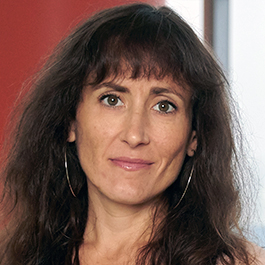
Sneha Das is an Assistant Professor at the Department of Applied Mathematics and Computer Science, Technical University of Denmark (DTU), specializing in Speech and Language Technology, Machine Learning, and Privacy-Preserving AI. Her research bridges technical innovation with applications in mental health and physiological signal analysis. Her work focuses on Speech Emotion Recognition , Distributed Speech Processing , and Explainable AI , with recent publications exploring model interpretability, speaker anonymization, and physiological data analysis for emotion detection. She actively supervises PhD students in projects involving AI for mental health and hydroacoustic modeling of fish behavior. Key Research Areas: Speech Emotion Recognition (SER) Privacy and Fairness in Speech Processing Transfer Learning with Physiological Time Series AI Applications in Health and Aquaculture Notable achievements include earning a DSc (Tech) degree for her thesis on robust distributed speech processing. She also contributes to educational activities, including teaching applied statistics and R programming to PhD students.
Brenna Argall is an Associate Professor at Northwestern University with joint appointments in the Departments of Computer Science, Mechanical Engineering, and Physical Medicine & Rehabilitation . She is also a Faculty Research Scientist at the Shirley Ryan AbilityLab , the nation’s premier rehabilitation hospital. Her research focuses on robotics autonomy, machine learning, and human rehabilitation , particularly in developing assistive and rehabilitation robotics that utilize shared control and interface-aware intelligence to enhance user autonomy. Education: Ph.D. in Robotics (2009), Carnegie Mellon University M.S. in Robotics (2006), Carnegie Mellon University B.S. in Mathematics (2002), Carnegie Mellon University Research Interests: Argall's work sits at the intersection of robotics, artificial intelligence, and rehabilitation . Key themes include trust-based control systems, dynamic autonomy allocation, and human-in-the-loop machine learning . Her lab, the Assistive & Rehabilitation Robotics Laboratory (argallab) , develops semi-autonomous wheelchairs, robotic arms, and adaptive control systems tailored to users’ physical and cognitive abilities. Projects emphasize customizable shared control, intent inference, and human-robot collaboration . Article Trends: Recent publications highlight advancements in shared autonomy, interface-aware robotics, and human-robot co-adaptation . Key areas include 7-DoF robot arm teleoperation, eye gaze tracking for control, high-dimensional body-machine interfaces, and trust-based dynamic control allocation , reflecting her lab’s focus on user-centric AI and rehabilitation technology . Scientific Awards: NSF CAREER Award (2016) Crain's Chicago Business 40 under 40 (2016) NSF Convergence Accelerator Phase 1 & 2 Awards (2022, 2024) AIMBE College of Fellows (2023) Office of Naval Research (ONR) Grant Advising & Grants: Argall advises students in the Masters of Science in Robotics program and has secured significant funding from NSF, NIH, and ONR for projects on self-driving wheelchairs, intent disambiguation, and trust-aware autonomy . Labs & Teams: As founder and director of the argallab , she leads a multidisciplinary team at the Shirley Ryan AbilityLab . The lab’s mission is to advance human ability through robotics autonomy , focusing on motor-impaired users and human-robot co-adaptation .
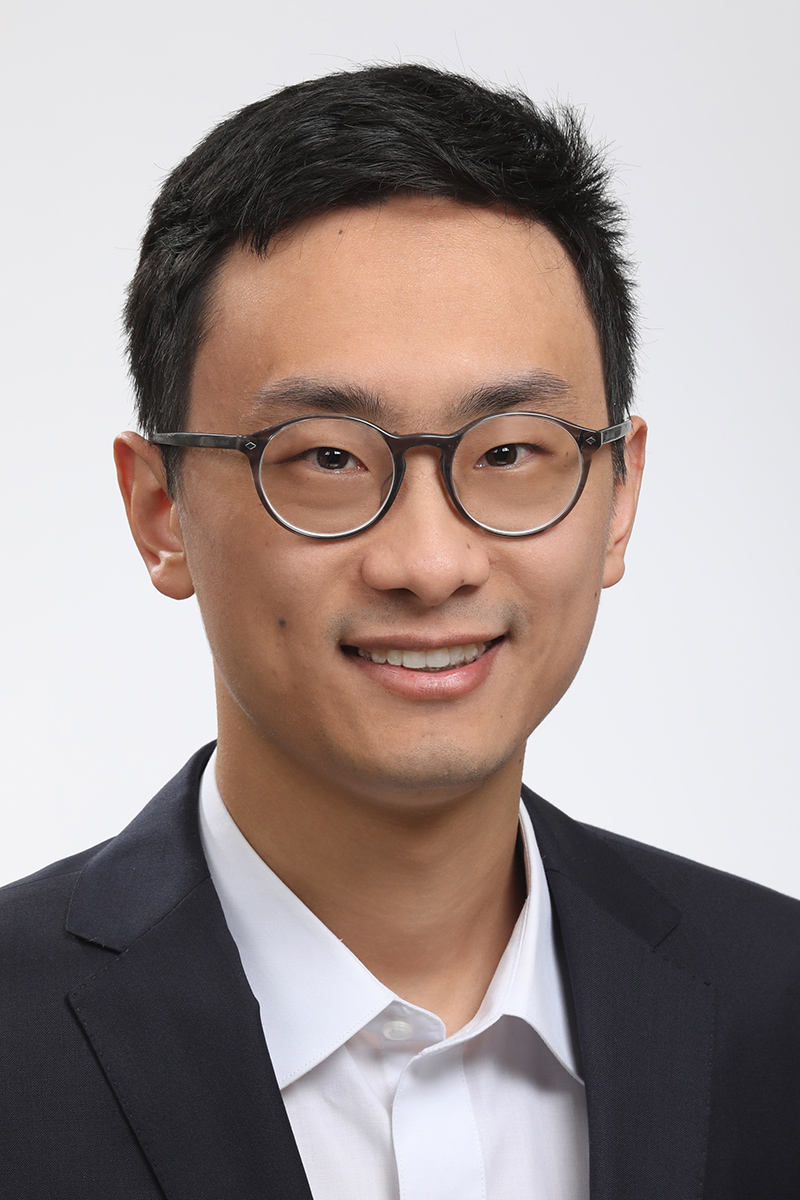
Yang Song is an incoming Assistant Professor in Electrical Engineering and Computing and Mathematical Sciences at the California Institute of Technology (Caltech). Prior to joining Caltech, he leads the Strategic Explorations team at OpenAI. He received his Ph.D. in Computer Science from Stanford University under the supervision of Stefano Ermon and completed his Bachelor's degree in Mathematics and Physics from Tsinghua University. His educational background includes: Ph.D. in Computer Science, Stanford University Bachelor's in Mathematics and Physics, Tsinghua University Dr. Song's research focuses on building powerful AI models capable of understanding, generating, and reasoning with high-dimensional data across diverse modalities. He is particularly known for inventing foundational concepts and techniques in score-based diffusion models, which have revolutionized the field of generative AI. His work bridges theoretical advances with practical applications, particularly in image generation, medical imaging, and solving inverse problems. His research has demonstrated how score-based models can achieve state-of-the-art results in image generation while maintaining flexibility for various applications including medical image reconstruction. Analysis of his publication record reveals a strong trajectory in generative modeling, with a particular emphasis on score-based approaches and diffusion models. His work consistently addresses fundamental challenges in generative modeling including sample quality, training stability, computational efficiency, and application to real-world problems. His most recent work on consistency models represents a significant advancement toward making generative models practical for real-time applications. His notable achievements include: ICLR 2021 Outstanding Paper Award for Score-Based Generative Modeling through Stochastic Differential Equations NeurIPS 2021 Spotlight Presentation for Maximum Likelihood Training of Score-Based Diffusion Models Multiple ICLR Oral presentations for his work on consistency models Developing foundational techniques that power many modern AI image generation systems His GitHub repository for score-based generative modeling has gained significant traction in the research community, with over 1,700 stars, reflecting the impact of his work. His research bridges theoretical machine learning with practical applications, particularly in medical imaging where his techniques have shown promise for improving image reconstruction in CT and MRI.
Christophe Danjou is an Associate Professor in the Department of Mathematical and Industrial Engineering at Polytechnique Montréal . He joined as a professor in January 2018 and serves as Scientific Director of the Poly-Industries 4.0 Laboratory since June 2021. His expertise spans Industrial Engineering , Industry 4.0/5.0 , Manufacturing Systems , and Blockchain . His research focuses on solving interoperability challenges in digital transformation through ontological approaches (OntoSTEP-NC) and blockchain technology. Key themes include strategic positioning frameworks for Industry 4.0/5.0, knowledge management , and smart manufacturing . Recent work explores digital twins for system-of-systems resilience , data integrity in IoT , and AI-driven food processing optimization . He teaches courses like Industry 4.0 and Manufacturing Processes . Under his supervision, 7 PhD and 6 Master’s students are advancing research in areas such as blockchain-based smart maintenance , distributed manufacturing , and carbon emission traceability . He is affiliated with institutions including IVADO (Member), CIRRELT (Member), and Data Intelligence Lab (Member). His publications highlight contributions to digital transformation across construction, agri-food, and SMEs, with 83 total publications (15+ recent articles shown).
Dr. Roy Lederman is an Assistant Professor at the Department of Statistics and Data Science , Yale University. He is affiliated with the Quantitative Biology Institute (QBio) , the Applied Math Program , the Institute for Foundations of Data Science (FDS) , and the Wu Tsai Institute (WTI) . He was awarded the Sloan Research Fellowship (2023) . He previously held a Gibbs Assistant Professorship at Yale (2014-2015) and a postdoc at Princeton University (2015-2018) . Education: PhD in Applied Mathematics, Yale University (2014); dual BSc in Physics and Electrical Engineering, Tel-Aviv University. Teaching: Courses include Computational Tools for Data Science, Signal Processing, and Mathematical Machine Learning. Research Areas: Dr. Lederman works at the intersection of computational biology , structural biology , Bayesian inference , numerical analysis , and machine learning . His recent work focuses on cryo-EM and hyper-molecules for studying molecular heterogeneity, alternating diffusion for common variable recovery, and Zernike polynomials for 3D imaging. He also develops Hamiltonian Monte Carlo methods and randomized DNA sequencing algorithms . Publications Trends: His publications (15 most recent) emphasize structural biology and cryo-EM applications, machine learning (Bayesian deep learning, diffusion maps), numerical analysis (Fourier/Laplace transforms), and computational biology (DNA sequencing algorithms). Key sub-fields include heterogeneity analysis , manifold learning , Hamiltonian Monte Carlo , and Zernike polynomials . Scientific Awards: Sloan Research Fellow (2023) Dr. Lederman actively mentors graduate students and postdocs at Yale, and co-organizes the One World Cryo-EM seminar series . His lab develops open-source software (e.g., prolate function implementation ) and explores theoretical bounds on transforms and common variable recovery in multi-sensor experiments.
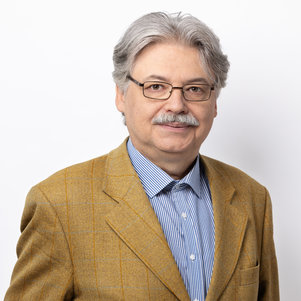
Florian Bociort is an Assistant Professor at the Optics Research Group , Delft University of Technology (Faculty of Applied Sciences). He holds a PhD in Physics from TU Berlin (1994) and has dedicated his career to optical system design, gradient-index optics, and computational methods in lens design. Research Interests Bociort’s research focuses on design landscapes of optical systems , where he pioneered the use of saddle points to escape local minima in optimization. His work spans Gradient-index optics (conversion of homogeneous lenses to GRIN media) Artificial intelligence in lens design Optics education (simulation-driven learning) Academic Contributions He has supervised multiple PhD theses on topics like: A. M. Boyd (2025): Generalized gradient-index lens optimization Z. Hou (2023): Systematic lens design searches Y. Shao (2021): Imaging coherence and optimization M. Strauch (2020): Tunable optics M. Mout (2019): Ray-based diffraction simulation Recent Publications His 2025-2018 publications show a trajectory from classical optical design to modern computational approaches, including simulation-driven education, gradient-index conversions, and high-NA diffraction modeling. The 2024 paraxial reconstruction and 2025 simulation-education articles exemplify this evolution. Patents & Expertise He co-invented two ASML-related patents in lithographic design and served as expert witness in the 2018 ASML-Nikon patent lawsuit. His personal webpage details his networks of local minima and fractal basins in optimization.
Edward N. Zalta is a Senior Research Scholar at Stanford University's Center for the Study of Language and Information (CSLI) and Director of the Metaphysics Research Lab. He served as Principal Editor of the Stanford Encyclopedia of Philosophy from 1995 to 2022 and now serves as Co-Principal Editor. His academic career spans several decades with significant contributions to philosophical logic and metaphysics. Dr. Zalta's educational background includes an honors B.A. from Rice University (1975) and a Ph.D. in Philosophy from the University of Massachusetts/Amherst (1981). He joined Stanford in 1984 as a Postdoctoral Fellow at CSLI, establishing his long-term affiliation with the institution. His research focuses on metaphysics and formal ontology, philosophy of mathematics, computational metaphysics, and intensional logic. Zalta has developed influential theories in object theory and abstract objects, with applications extending to computational metaphysics. His work bridges traditional philosophical inquiry with modern computational approaches, creating new methodologies for metaphysical investigation. He has made significant contributions to understanding the logical foundations of ontology and the philosophical implications of mathematical structures. Zalta's publication record demonstrates consistent scholarly output across five decades, with recent work showing increasing integration of computational methods in metaphysical research. His articles reveal a trajectory from foundational work in object theory toward more applied computational approaches, reflecting the growing interdisciplinary nature of his research. The recurring themes across his work include formal ontological structures, the nature of abstract objects, and the logical frameworks necessary to model complex philosophical concepts. K. Jon Barwise Prize (2016) Covey Award (2009) 2025 Johan von Spix Visiting Professor at the University of Bamberg As Principal Editor of the Stanford Encyclopedia of Philosophy for over 25 years, Zalta has shaped one of the most influential digital humanities projects in philosophy. His work with the Metaphysics Research Lab has fostered numerous collaborations between philosophers and computer scientists. He has received funding to support the development of computational tools for metaphysical reasoning and has supervised research projects at the intersection of philosophy and computer science. The Metaphysics Research Lab at CSLI serves as the intellectual hub for Zalta's work, supporting research in computational metaphysics and formal ontology. The lab has developed several computational frameworks for representing and reasoning about metaphysical concepts, including implementations of object theory in automated reasoning systems. Zalta's research group has collaborated with computer scientists to create tools that bridge philosophical theory with practical computational applications.
Sudhir Kumar is a Professor and Principal Investigator at Temple University, leading a research laboratory focused on molecular evolution, phylomedicine, and functional genomics. His lab develops mathematical methods, computational algorithms, and software packages for analyzing genomic variation across populations, pathogens, tumors, and species. Key contributions include the widely used MEGA software (www.megasoftware.net) for molecular evolutionary analysis and the TimeTree knowledge-base (www.timetree.org) that synthesizes evolutionary knowledge on species divergence times. Dr. Kumar's research interests center on integrating mathematical and computational techniques into evolutionary biology and biomedicine. His lab pursues a holistic paradigm where evolutionary and genomic patterns are discovered through comparative analysis of big datasets, then used to reveal underlying biological processes and develop predictive models. His work spans phylomedicine of genetic diseases, molecular phylogenomics, and the timetree of life, with recent innovations including Bayesian methods, machine learning algorithms, and statistical approaches for inferring molecular phylogenies, divergence times, and pathogenic mutations. Analysis of his recent publications reveals a strong trend toward applying artificial intelligence and machine learning to evolutionary genetics, with multiple 2025 papers focused on sparse learning techniques, transformer-based models, and AI-assisted analytical protocols. His work increasingly bridges evolutionary biology with cancer genomics and precision medicine applications. His scientific achievements have been recognized with the prestigious 2025 George W. Beadle Award from the Genetics Society of America, which honors his "efforts to democratize evolutionary genetics." Dr. Kumar has mentored numerous doctoral candidates, postdoctoral researchers, and graduate students, many of whom have gone on to faculty positions at institutions including Oakland University and universities in Brazil. His lab includes current doctoral candidates working in bioinformatics and statistical molecular evolution, supported by technical staff including programmers, genome tech specialists, and informatics specialists. The Kumar Laboratory operates as an interdisciplinary research hub with multiple projects including MEGA (Molecular Evolutionary Genetics Analysis), TimeTree, myPEG (web-based evolutionary tools), and FlyExpress (a knowledge base for Drosophila melanogaster embryo images). The lab emphasizes green computing efforts aimed at democratizing scientific practice and making big data analytics more accessible.
Christian Engwer is a full Professor at the University of Muenster in the Institute for Applied Mathematics, specializing in Analysis and Numerics. He leads the Engwer Group focused on Applications of Partial Differential Equations and is actively involved in the Cells in Motion initiative as a supervisor in the CiM-IMPRS Graduate Programme. His research centers on developing numerical methods for partial differential equations, particularly addressing challenges in complex geometries and multi-physics applications. He specializes in Unfitted Discontinuous Galerkin methods, which allow simulations on complex geometries without requiring domain-fitted meshes. His work spans porous media modeling, biological systems, and bioelectromagnetism applications, with significant contributions to EEG/MEG forward modeling in neuroscience. Analysis of his recent publications reveals a strong focus on model order reduction techniques, stabilized numerical schemes for cut-cell meshes, and applications in bioelectromagnetism. His work demonstrates a consistent trajectory toward developing robust, efficient numerical methods applicable to real-world problems in medical imaging and biological modeling, with increasing emphasis on high-performance computing implementations. Professor Engwer actively supervises doctoral students, with recent completions including Lukas Renelt (2025), Michael Wenske (2021), and Maria Carla Piastra (2019), among others working on topics related to numerical methods and biomedical applications. He leads several major research projects including BrainStorm: Highly Extensible Software for Advanced Electrophysiology and MEG/EEG Imaging (NIH-funded since 2019), multiple EXC 2044 Cluster of Excellence projects through 2025, and the InterKI interdisciplinary teaching program on machine learning and artificial intelligence. His group develops several important software packages including DUNE (Distributed and Unified Numerics Environment), duneuro (for bioelectromagnetism applications), and TPMC (Topology Preserving Marching Cubes). These tools support research in numerical methods and their applications to complex scientific problems.
Dr. Bei Jiang is an Associate Professor in the Department of Mathematical and Statistical Sciences at the University of Alberta , Canada. She holds the Canada CIFAR AI Chair and is affiliated with the Alberta Machine Intelligence Institute (Amii) . Her academic journey includes a PhD in Biostatistics (2014) from the University of Michigan, MS (2008) and BS (2004) from the University of Alberta and Beijing University of Technology, respectively. Current Positions : 2021–Present (Associate Professor), 2022–Present (CIFAR AI Chair) Past Appointments : Assistant Professor (2015–2021), Postdoctoral Fellow at Columbia University (2014–2015), Research Assistant at University of Michigan (2009–2013) Research Interests : Dr. Jiang specializes in methods for joint modeling of longitudinal and health outcome data , Bayesian hierarchical modeling , functional and imaging data analysis , and statistical machine learning . Her work integrates kernel machine regression , differential privacy , and synthetic data generation to address challenges in heterogeneous health data and neuroimaging. Scientific Awards : Highlights include the 2015 SAMSI New Research Fellow , multiple Rackham Conference Travel Awards (2013, 2012), and prestigious NSERC scholarships (2009–2012). She has also received the J Gordin Kaplan Graduate Award (2008) and Statistical Society of Canada Travel Award (2008). Grants : $375,000 (CIFAR AI Chairs, 2022–2027), $480,000 (MITACS Accelerate, 2022–2025), and $210,000 (Canadian Statistical Sciences Institute, 2022–2025) Students and Postdocs : She mentors numerous PhD , MSc , and Postdoctoral Fellows , including Junxi Zhang (2023–Present), Enze Shi (2022–Present), and former advisees like Wenxing Guo (now Lecturer at University of Essex) and Yafei Wang (Assistant Professor at University of Alberta).
Professor Javen Qinfeng Shi is a faculty member at the University of Adelaide, holding the position of Professor in the School of Computer and Mathematical Sciences under the Faculty of Sciences, Engineering and Technology. He serves as Founding Director of the Causal AI Group and as one of the directors at the Australian Institute for Machine Learning (AIML), based at the North Terrace campus location. His research centers on causation, artificial intelligence, mind and metaphysics, with Google Scholar rankings placing him 4th globally in causation and 7th in probabilistic graphical models. Shi develops causal AI methods to identify root causes, discover latent variables, eliminate spurious correlations, enhance cross-domain generalization, model intervention consequences, and solve counterfactual queries. His work focuses on optimizing intervention sequences for desired outcomes under resource constraints, applied to material discovery, agriculture, mining, sports, manufacturing, bushfire prediction, healthcare, and education. Professor Shi's industry impact includes the NOBURN bushfire prediction app (released 2023 with 50+ media coverages), energy material discovery via AI catalysts, and smart manufacturing logistics solutions. His work with the Responsible AI Think Tank (2022-2024) and current AI Industry Forum panellist role (2024 onward) demonstrates active contribution to national and state AI ecosystem development. His scientific awards include: 1st place at Open Catalyst Challenge (NeurIPS AI for Science 2023) Winner of AUS/NZ Bushfire Data Quest 2020 Citizen Science Grant 2021 Finalist in SA Department of Energy and Mining Gawler Challenge 2020 (2k+ participants from 100+ countries), recognized for "The most innovative modelling" 2nd place in Explorer Challenge 2019 (1k+ entries from 62 countries) 1st place at SAIC Volkswagen Logistics Innovation Day 2019 Shi is eligible to supervise Masters and PhD students and has secured research funding including the Citizen Science Grant 2021. His industry collaborations span energy, agriculture, mining, and emergency management, translating theoretical causal AI into practical tools like NOBURN. He leads the Causal AI Group at the University of Adelaide and directs research teams at AIML, focusing on causal inference frameworks for distribution shift resilience and intervention optimization. Current projects emphasize bushfire prediction, material science applications, and AI ethics implementation through the AI Industry Forum.
Dr. Boyin Ding is an Associate Professor at the University of Adelaide , serving as Academic Director at Haide College and researcher in the Mechanical Engineering department within the Faculty of Sciences, Engineering and Technology. He leads the Wave Energy Research initiative established in 2014, while also contributing to Robotics and Biomechanics through his work with the Flinders Medical Device Research Institute. Research Areas: Ocean Wave Energy Harvesting Control Systems for Renewable Energy 6DOF Robotic Testing Spine Biomechanics Transnational Education Programs Key Collaborations: Australia-China Joint Research Centre for Offshore Wind & Wave Energy Acoustics, Vibration and Control Research Group Scientific Awards: Australian Endeavour Fellowship Malcolm Kinnaird Engineering Excellence Award (2012) His recent publications focus on hybrid offshore energy systems, nonlinear hydrodynamics in wave energy converters, and biomechanical testing technologies. He has developed control algorithms for floating offshore wind-wave systems and pioneered 6DOF robotic platforms for medical applications. As an eligible PhD supervisor, he actively collaborates with global industries and academic institutions.
Charless C. Fowlkes is a Professor in the Department of Computer Science at the University of California, Irvine (UCI), and a member of the UCI Vision Group. His research focuses on computational vision, integrating visual recognition with 3D scene understanding and developing tools for biological image analysis. UCI Chancellor's Fellow (2019-2022) NSF CAREER Award recipient (2013) Helmholtz Prize winner (2015) Research Interests His work spans computational vision, image understanding, 3D scene reconstruction, and machine learning applications in biological and forensic domains. He develops methods for automated pollen classification, cardiac tissue analysis, and forensic shoeprint matching. Recent Publications His recent work includes 3D scene reconstruction with epipolar transformers, forensic shoeprint analysis, and image inpainting techniques. These show trends in integrating geometric understanding with deep learning. Scientific Awards Awarded the Marr Prize (2009), Helmholtz Prize (2015), and NSF CAREER Award (2013), he has received recognition for both theoretical and applied contributions to computer vision. Teaching & Advising He has taught graduate and undergraduate courses in computer vision since 2008 and advised numerous PhD, MS, and BS students who now work at institutions like Google, Apple, and CMU. Collaborations He collaborates with labs at UIUC (Punyasena Lab), Harvard (DePace Lab), and UCI (Cinquin Lab, Khine Lab) for biological applications of computer vision.
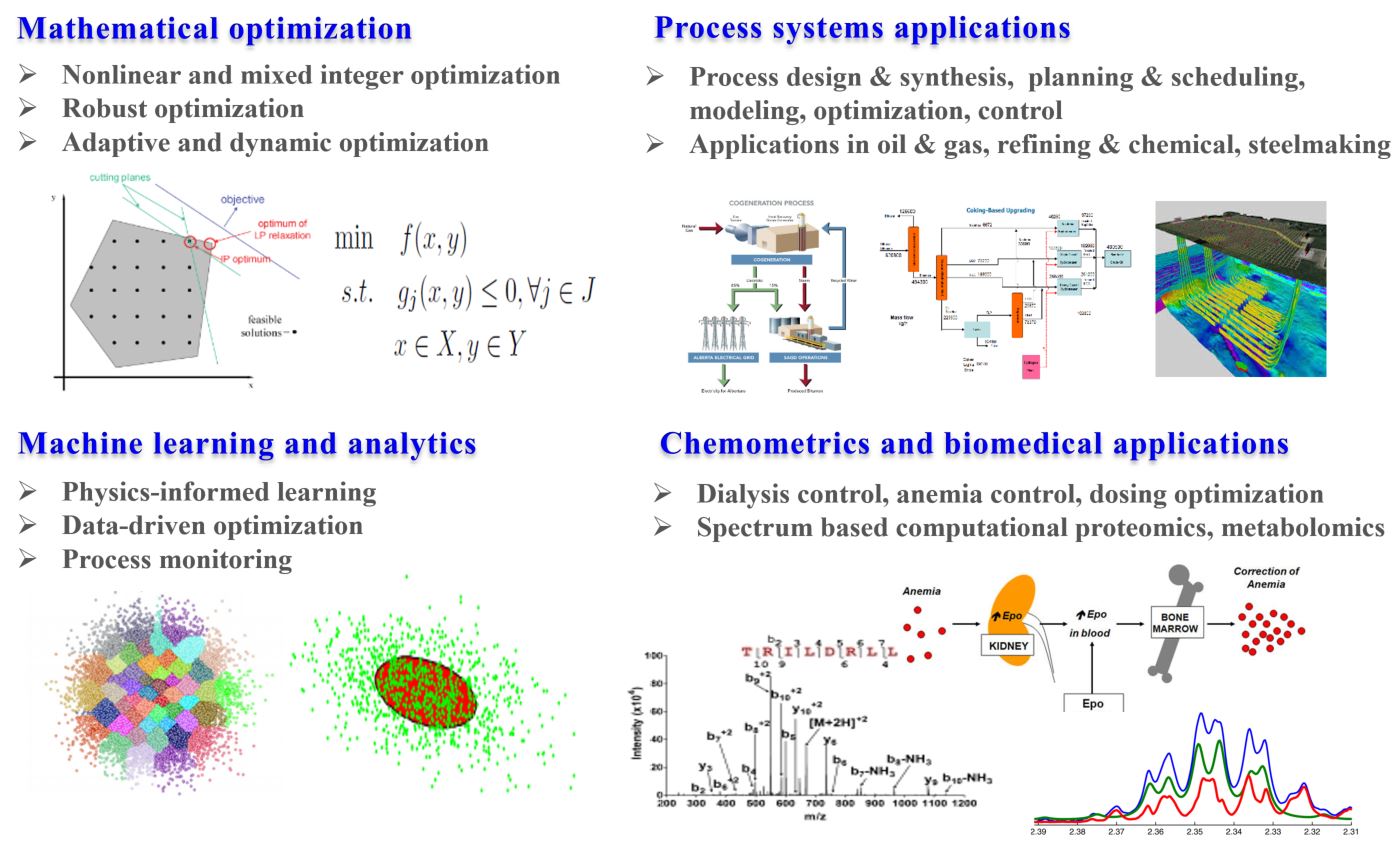
Zukui Li is a Professor in the Department of Chemical and Materials Engineering at the University of Alberta's Faculty of Engineering, where he leads a research group focused on mathematical optimization, machine learning, and process systems engineering. His work spans oil sands extraction, steel production, biomedical applications, and advanced optimization methods. Education: Ph.D. in Chemical Engineering, Rutgers University (2010) M.Sc. in Control Theory and Control Engineering, University of Science and Technology of China (2005) B.Sc. in Automatic Control, University of Science and Technology of China (2002) Postdoctoral Training: Princeton University (2010-2012) Research Focus: Dr. Li's research integrates mathematical optimization and machine learning for complex process systems. His primary areas include: Advanced optimization techniques (robust, stochastic, and distributionally robust optimization) Machine learning applications in process monitoring and biomedical systems Industrial applications in energy, manufacturing, and resource extraction Specific innovations include physics-informed ML for anemia treatment, adaptive optimization for steel production, and distributionally robust methods for uncertainty management. Publication Trends (2019-2023): Recent articles demonstrate a strong focus on uncertainty-aware optimization methods, with increasing integration of machine learning techniques. Dominant themes include distributionally robust optimization, adaptive decision-making under uncertainty, neural network approximations for complex constraints, and applications in industrial process control and biomedical systems. Theoretical advancements are consistently coupled with practical implementations in energy and manufacturing sectors. Research Group: Leads an active team developing optimization frameworks and machine learning solutions for process engineering challenges. Group website: Dr. Zukui Li's Research Group
Dr. Le-Nam Tran is a researcher at the UCD School of Electrical & Electronic Engineering , University College Dublin. His work focuses on optimizing the last hop of 5G/6G wireless networks through mathematical programming, with emphasis on energy efficiency, interference management, and security against eavesdropping. Develops low-cost, low-complexity transmission techniques Projects supported by Science Foundation Ireland Career Development Award Author of over 80 peer-reviewed publications Research Keywords: Wireless Communications Network Security Signal Processing Energy-Efficient Systems Beamforming Optimization Interference Mitigation