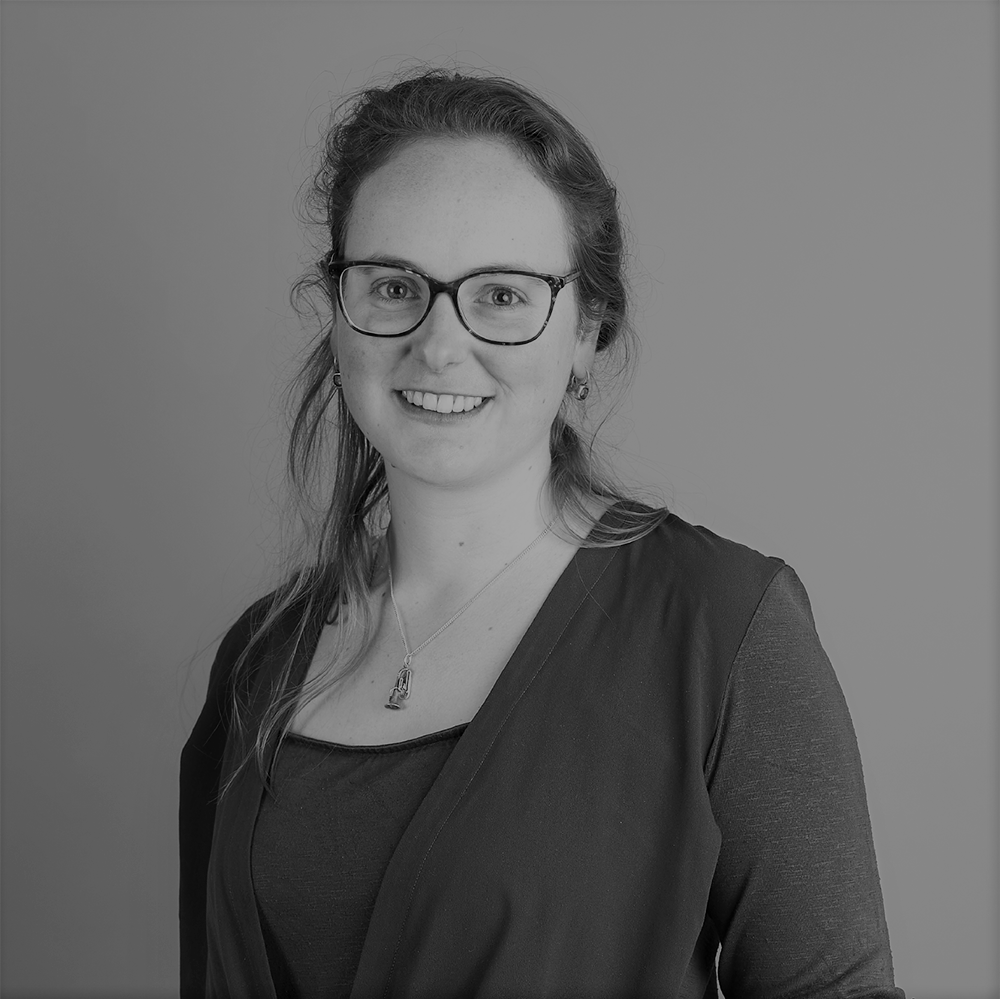
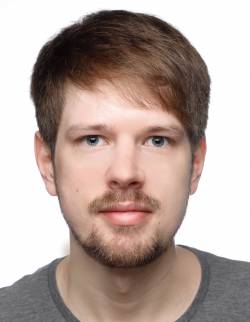
Dr. Sheila Flanagan is an academic researcher affiliated with the Department of Psychology at the University of Cambridge and a Research Associate at the Centre for Neuroscience in Education since 2012. She serves as Director of Studies in Psychological and Behavioural Sciences and Bye-Fellow of Selwyn College. Ph.D. in Experimental Psychology (University of Cambridge) MSc in Music Technology (University of York) Background in psychoacoustics from engineering experience Her research focuses on auditory neuroscience, developmental dyslexia, and speech processing through neural entrainment. Key projects include the Botnar project (assisted listening tech for dyslexia), BabyRhythm project (auditory rhythm processing in infants), and studies of temporal sampling theory in speech encoding. Her work combines EEG analysis, motion capture, and computational modeling across neurotypical and atypical populations. Recent publications highlight trends in decoding speech from neural data, binaural temporal fine structure sensitivity, amplitude rise time processing, and cross-sectional studies of language development in Spanish-speaking contexts. She examines how cortical oscillations track speech rhythms across different modalities (acoustic/visual) and developmental stages. She collaborates with researchers such as Usha Goswami (PI of lab group), Kanad Mandke , and Áine Ní Choisdealbha . Her methodological expertise includes auditory perception studies, speech enhancement algorithms, and longitudinal neuroimaging.
Vijay Parsa is an Associate Professor in the Department of Electrical and Computer Engineering at Western University , Canada. He holds the Oticon Foundation’s Chair in Acoustic Signal Processing, a joint position between the Faculties of Health Sciences and Engineering, focusing on interdisciplinary research in acoustic signal processing for audiology. Education: Ph.D. in Biomedical Engineering, University of New Brunswick M.E.Sc. in Electrical Engineering, University of New Brunswick B.Eng. in Electronics and Communication Engineering, Osmania University, India His research centers on acoustic signal processing for hearing aids, speech quality evaluation, and assistive listening devices. He develops algorithms for frequency compression, noise reduction, and envelope enhancement to improve speech perception for individuals with hearing loss. Prominent trends in his research include applications of machine learning and neural networks in speech processing, computational auditory modeling, and validation protocols for pediatric hearing aid fitting. His work bridges engineering and clinical audiology. Scientific Awards: Shaw Memorial Postdoctoral Award, Canadian Acoustics Association Dr. Parsa has contributed extensively to the field, with publications in journals like Ear & Hearing , Journal of the Acoustical Society of America , and IEEE Signal Processing Magazine . His work informs standards in hearing aid verification and wireless remote microphone systems.
Sergio de las Heras is a Doctoral Researcher at the Department of Information and Communications Engineering, Aalto University. He is affiliated with the Technical Psychoacoustics research group, focusing on audio engineering and virtual reality applications. His research explores psychoacoustic modeling, spatial audio, and speech reproduction in immersive environments, as evidenced by his recent publication at the AES International Conference on Audio for Virtual and Augmented Reality. This work addresses speech intelligibility and sound quality assessment in augmented reality contexts. He can be contacted at sergio.delasheras@aalto.fi .
Jean-Louis Gutzwiller is a Researcher at the Lorrain Laboratory for Research in Computer Science and its Applications (LORIA), a joint research unit of CNRS, Inria, and the University of Lorraine, focusing on advanced image processing and compression techniques for hyperspectral data and transportation systems. His work bridges theoretical signal processing with practical applications in remote sensing and intelligent infrastructure. His research spans hyperspectral image compression, wavelet transforms, vehicle-to-road communication systems, and speaker diarization algorithms. Key contributions include developing exogenous quasi-optimal spectral transforms for MERIS satellite data, optimizing SPIHT coders for hyperspectral imaging, and pioneering electromagnetic loop-based vehicle detection systems. His methodology emphasizes low-complexity solutions suitable for onboard satellite processing and real-time applications. Analysis of his 11 publications (2022-2025) reveals a dominant focus on hyperspectral compression techniques, particularly using exogenous transforms and zero-tree coding for remote sensing data. Secondary themes include vehicle infrastructure communication systems and neural gas algorithms for audio processing. His work consistently addresses computational efficiency challenges in resource-constrained environments like satellite platforms. Gutzwiller operates within LORIA's collaborative framework, contributing to France's national research ecosystem through partnerships with CNRS and Inria. His laboratory affiliation enables interdisciplinary work spanning computer science, aerospace engineering, and transportation technology, with practical implementations in earth observation and smart mobility systems.
Jonas Andersson Schwarz is an Associate Professor and Lecturer at the Department of Culture and Learning, Södertörn University . His research focuses on digital media's impact on social structures, everyday life, epistemology, and media ecology, particularly through platforms, apps, and mobile hardware. He adopts interdisciplinary frameworks, integrating systems theory, legal/political-economic perspectives, and historical analyses. Research Shift : Transitioned from studying unregulated file-sharing to platform-centric media ecosystems. Key Themes : Authority and control in digital infrastructures, data-driven media economies, and sociotechnical structures. His work critically examines platform power, algorithmic governance, and intersections between technological ideologies and neoliberalism. Articles reveal trends in platform capitalism, digital ethics, and systemic conditions of media production. He co-authored Framtiden (2011) and authored Plattformssamhället (2019), a policy-oriented exploration of digitalization.
Dr. Heysem Kaya is an Assistant Professor at Utrecht University's Faculty of Science , affiliated with the Social and Affective Computing research group in the Department of Information and Computing Sciences. With over 90 publications and 2600+ citations, his work bridges machine learning, speech processing, and affective computing to advance applications in mental health, child behavior analysis, and explainable AI. PhD in computational paralinguistics from Bogaziçi University (2015) Editorial board member of IEEE Transactions on Affective Computing Keynote speaker at University of Glasgow Social AI Workshop (2025) Leader of the student wellbeing task force at Utrecht's Faculty of Science (2023-2025) Research spans applied data science , human-centered AI , and computational paralinguistics , with notable contributions to emotion recognition, bias mitigation, and multimodal analysis of mental health indicators. Recent articles focus on fairness in AI, explainable models for depression severity, and synthetic data generation. Awarded six ComParE Challenges (INTERSPEECH), three ChaLearn Awards , and first runner-up in EmotiW 2015 , Kaya's work combines technical rigor with societal impact. His projects include the Turkish Audio-Visual Bipolar Disorder Corpus and federated learning for psychiatric violence prediction.
Daphne Odekerken is a Researcher at the AI & Data Science department of Utrecht University , with a focus on Responsible AI . She works at the National Police Lab AI , a collaborative initiative between the Dutch National Police, Utrecht University, and TU Delft, where she implements argumentation-based AI systems for law enforcement applications. Research Areas: Computational Argumentation, Human-in-the-Loop Decision Support, Legal AI, Algorithmic Complexity, and Music Information Retrieval Her publications (2022-2024) explore stability/relevance detection in incomplete argumentation frameworks, ASPIC+ reasoning under uncertainty, and the development of the PyArg visualization tool. Key contributions include efficient algorithms for high-complexity problems and their application in police case analysis. Recent work includes Groundbreaking analysis of justification status in precedent models (2024) Complexity classifications for ASPIC+ reasoning (2024) Interactive IAF visualization systems (2024) These reflect trends in transparent AI for critical decision-making environments. Scientific recognition includes the Donald Berman Best Student Paper Award (2023) . She has developed several open-source tools: PyArg for argumentation visualization DECIBEL for audio chord estimation ForgettingWeb for knowledge base simplification and maintains a web interface for public demonstrations.
Sribalaji C. Anand is a postdoctoral researcher at KTH Royal Institute of Technology, Sweden, affiliated with the Division of Decision and Control Systems and the Department of Intelligent Systems. Hosted by Prof. Karl Henrik Johansson and Prof. Henrik Sandberg, his academic journey includes an M.Sc. in System and Control from Delft University of Technology (2019) and a Ph.D. in Automatic Control from Uppsala University (2024). Research Focus: Secure control systems, scalable control, positive systems, convex optimization applications, dissipative systems, and adaptive control. Grants: VR International Postdoctoral Grant (2024), STINT International Postdoctoral Scholarship (2024), and multiple travel scholarships from IEEE and Stenholm Wilgott. Publications: 15 recent articles covering security metrics, attack mitigation, and control system optimization.
Cristina España i Bonet is a Professor in the Department of Computer Science at the Polytechnic University of Catalonia (UPC), working within the Natural Language Processing group (GPLN) of the Center for Technologies and Applications of Language and Speech (TALP). She holds a Physics degree and a PhD in Cosmology from the University of Barcelona, later transitioning to Natural Language Processing and Machine Translation. Her academic journey includes teaching at both the Faculty of Physics of the University of Barcelona and currently at the Barcelona School of Informatics of UPC. Her research spans multiple areas of computational linguistics with a strong focus on Machine Translation. She has extensive experience in statistical and hybrid translation systems, document-level translation, multilingual systems, and machine learning applications in NLP. Her work often addresses real-world challenges with diverse text genres including news, patents, Wikipedia articles, and social media content. She has made significant contributions to developing translation systems that leverage context beyond the sentence level to improve coherence and quality. Cristina has been actively involved in numerous European and national research projects including OPENMT, OPENMT2, MOLTO, and TACARDI, where she has contributed both research and project coordination. Her recent work shows a growing interest in sign language translation, low-resource language processing, and the intersection of large language models with traditional machine translation paradigms. She has supervised multiple PhD and Master's students in topics related to machine translation and multilingual systems. Member of the Natural Language Processing group (GPLN) at TALP Research Center Supervisor of doctoral and master's theses in NLP and Machine Translation Lead researcher in multiple EU-funded projects on multilingual translation Developer of resources and tools for Wikipedia-based multilingual corpora Her research has evolved from statistical machine translation to incorporate neural approaches while maintaining focus on document-level context and multilingual applications. She has made significant contributions to understanding translation artifacts, developing methods for low-resource language translation, and creating resources for sign language processing. Her work bridges theoretical advances with practical applications across diverse language pairs and domains.
Fabian Ostermann is a researcher at the Chair 11: ALGORITHM ENGINEERING within the Department of Computer Science at Technical University of Dortmund. His work focuses on the intersection of artificial intelligence and music technology, with particular expertise in algorithmic composition and evolutionary approaches to music generation. His primary research interests include: Artificial Intelligence for Music Applications Computer Music and Algorithmic Composition Reinforcement Learning and Evolutionary Algorithms Neuroevolution and Procedural Content Generation Music Information Retrieval Systems Ostermann's research output demonstrates a strong focus on applying AI techniques to music creation and analysis. His recent work explores the use of large language models in evolutionary music generation, adaptive video game music systems, and novel approaches to instrument recognition in polyphonic audio. He has developed significant resources for the research community including the AAM dataset of artificial audio multitracks, which contains 3,000 algorithmically generated music tracks with rich annotations. His scientific contributions have been recognized through invitations to serve on program committees for major conferences including EvoMUSART (2024, 2025) and IJCAI's Special Track on AI, the Arts, & Creativity. He has also contributed to journals such as Computer Music Journal and Transactions of the International Society for Music Information Retrieval. Ostermann has supervised numerous student theses on topics ranging from transformer-based music generation to evolutionary approaches for recreating vector graphics. His teaching portfolio includes courses on practical optimization, music informatics, and digital entertainment technologies across multiple semesters from WS20/21 through SS25.
Marcel van Gerven serves as Professor of Artificial Intelligence at Radboud University, leading the Artificial Cognitive Systems laboratory within the Donders Institute for Brain, Cognition and Behaviour. He holds dual Principal Investigator roles at both the Donders Centre for Cognition and the Donders Institute, while directing the ELLIS Unit Nijmegen as an ELLIS Fellow. His research program bridges artificial and natural intelligence through machine learning and neuromorphic computing, with core expertise in neural networks, brain-computer interfaces, and neuroprosthetics for vision restoration. Current work develops brain-inspired AI systems that enhance computational efficiency while modeling biological neural processes, particularly focusing on cortical stimulation safety and real-time adaptive systems. Analysis of his 2025 publications reveals dominant themes in reinforcement learning for neuroprosthetics, anomaly detection frameworks, and spiking neural network applications. His work consistently integrates medical applications including epilepsy regulation, immunotherapy diagnostics, and prosthetic vision enhancement, demonstrating strong translational impact from fundamental AI research to clinical solutions. Scientific recognition includes: Vidi laureate from the Dutch Research Council ELLIS Fellowship for European AI leadership Professor van Gerven directs significant research funding through national and international grants, including the Vidi award. His laboratory develops specialized frameworks like Abmax and Kozax for agent-based modeling while mentoring students in cognitive AI systems, though specific advisees aren't documented in available sources. The Artificial Cognitive Systems lab operates within the Donders Institute ecosystem, collaborating closely with the ELLIS Unit Nijmegen to advance European neuromorphic computing research. Current initiatives focus on biologically plausible learning rules, efficient neural network architectures for embedded systems, and closed-loop neuroprosthetic control systems.
John Culling is Professor at Cardiff University's School of Psychology, specializing in psychoacoustics, binaural hearing, and speech perception in noise. His research investigates perceptual mechanisms enabling speech understanding in challenging auditory environments like reverberant rooms, with applications in hearing aid design and cochlear implant technology. Research focuses on: Cocktail-party problem solutions Binaural unmasking mechanisms Effects of reverberation on speech segregation Fundamental frequency differences in voice separation Hearing impairment compensation strategies Publication analysis reveals consistent focus on auditory perception in complex soundscapes, with recent work emphasizing computational modeling, assistive device optimization, and neurophysiological underpinnings of hearing. Scientific honors include: Fellow of the Hanse Wissenschaftskolleg Fellow of the Acoustical Society of America Current PhD supervision includes Ryab Barnsley's work on bone-conduction hearing aids. Major grants secured: EPSRC: 'Physiologically inspired hearing loss simulation' (£366K, PI) Leverhulme Trust: 'Active audiovisual perception' (£239K, Co-I) Oticon Foundation: 'Bilateral cochlear implants' (£139K, PI) Collaborates internationally with researchers in auditory science including Dr Mathieu Lavandier (Lyon) and Prof. Jon Barker (Sheffield).
Asmaa Shati is a researcher at the School of Physics, Mathematics and Computing, King Khalid University, with a focus on applying computer science and artificial intelligence to medical diagnostics. Her work bridges disciplines such as machine learning, image analysis, and public health through innovative research in disease prediction. Her research output centers on developing advanced algorithms for medical imaging analysis. Using techniques like residual networks, DenseNet, and texture descriptors, she contributes to improving detection systems for pneumonia, tuberculosis, and COVID-19 based on cough audio signals. Shati's publications demonstrate expertise in computer science and biomedical engineering, with a strong emphasis on practical applications in healthcare. Her work leverages methods such as GLCM, wavelet transforms, and k-NN to enhance diagnostic accuracy.
B.H.W. Hendriks is a Professor in the Department of Mechanical Engineering at Delft University of Technology, specializing in Medical Instruments & Bio-Inspired Technology. His research develops optical and signal processing solutions for medical applications, particularly in surgical environments and tissue analysis. His primary research domains include: Biomedical Engineering Optical Spectroscopy (Diffuse Reflectance) Medical Device Development Surgical Technology Cardiac Signal Processing Tissue Characterization Analysis of his 55+ publications reveals dual expertise: (1) Intraoperative optical sensing (e.g., fiber-optic tissue identification during spine surgery and electrosurgery), and (2) Advanced signal processing for cardiac diagnostics (atrial fibrillation mapping via electrograms/ECG). His work bridges mechanical engineering with clinical practice through real-time surgical workflow analysis and tissue-mimicking phantoms. Hendriks actively supervises research students and has generated 3 significant datasets for tissue characterization. His fingerprint shows dominant activity in spectroscopy (100%), surgery (93%), and tissue analysis (91%), with emerging work in human pose tracking for cardiac catheterization laboratories.
Matt Gooderson is an award-winning British music artist, producer, composer, and academic currently serving as Programme Director for the MA in Music Management at City St George's, University of London. Formerly a founding member of the indie-electro band Infadels, he has performed over 500 shows globally including Glastonbury and Coachella, and contributed music to A24 films, Gran Turismo, FIFA, and CSI: Miami. His academic work bridges industry practice and education through real-world applications of music business principles. Gooderson's educational background includes: Senior Fellowship of the Higher Education Academy (SFHEA) from University of the Creative Arts (2025) MA in Music Education from University College London (2013-2014) BA (Hons) in Commercial Music from University of Westminster (1996-1999) His research centers on the intersection of music technology, production, and creativity, with particular emphasis on artificial intelligence's impact on artistic processes. Gooderson investigates how AI tools influence diversity and inclusivity in music creation while examining tensions between academic songwriting pedagogy and industry practices. He advocates for entrepreneurial approaches in music education through authentic assessments that promote equality and critical industry engagement, aiming to empower creators through technological innovation. Analysis of Gooderson's publications from 2015-2024 reveals an evolving trajectory from live electronic performance techniques toward AI-driven composition. His scholarship increasingly addresses ethical dimensions of machine creativity, with recent work exploring bias in AI music generation across cultural contexts. Recurring themes include collaborative songwriting dynamics, producer cognition in digital workflows, and immersive audio environments, demonstrating consistent engagement with evolving music technologies and their sociocultural implications. His professional recognition includes: Impala Silver Award for Infadels' independently released single selling over 50,000 copies Senior Fellowship of the Higher Education Academy (SFHEA) awarded 2023 As Programme Director for the MA in Music Management, Gooderson oversees curriculum development and student progression through industry-integrated learning. His partnerships with PRS for Music and the Ivors Academy facilitate practical industry connections, though specific student advising relationships and dedicated research grants aren't documented in available sources. His teaching philosophy emphasizes real-world applications through entrepreneurial practices and inclusivity-focused assessments. Gooderson cultivates industry-academia connections through memberships in the Ivors Academy Education Council and PRS for Music. His creative practice involves collaborations with artists like David Sheppard (Snow Palms) and engagement with gaming platforms including Gran Turismo and FIFA. Though no formal research lab is described, his work integrates modular synthesis systems and AI tools within performance contexts, often through university partnerships like the University of Westminster's music programs.