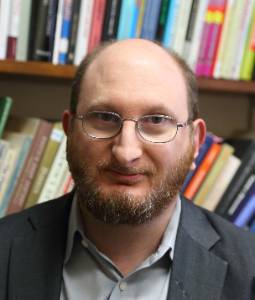
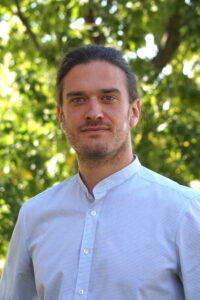
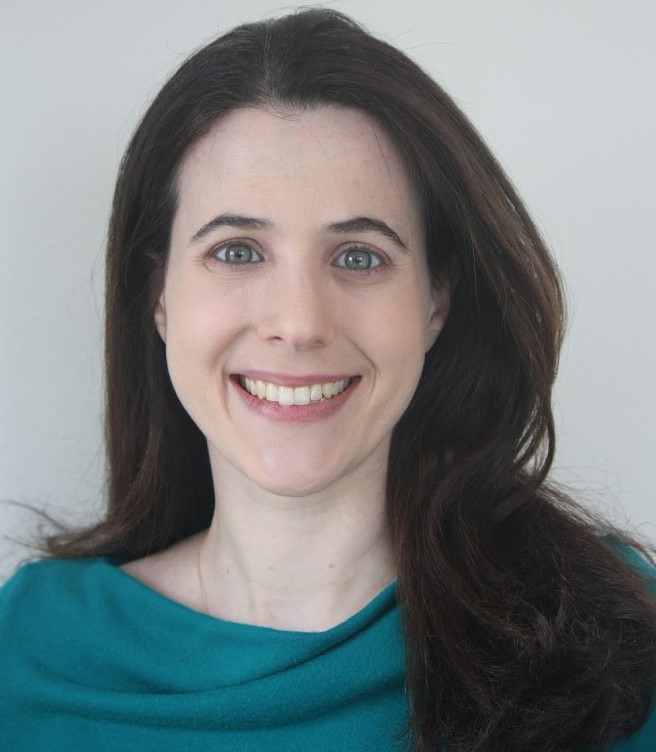
Ryan Heuser is an Assistant Professor in Digital Humanities at the University of Cambridge, specializing in computational approaches to literary and intellectual history, prosody, and artificial intelligence's impact on language. His work bridges data science, machine learning, and literary studies through digital methodologies. Doctoral training in Eighteenth-Century British Literature, Stanford University (2019) Founding member & Associate Research Director, Stanford Literary Lab Junior Research Fellow, King’s College Cambridge (2019-2022) Research interests span computational modeling of semantic revolutions, large-scale literary field analysis, and the intersection of digital methods with historical and intellectual studies. His book Explorations in the Digital History of Ideas (2023) co-edited with Peter de Bolla exemplifies this approach. Recent publications focus on historical semantics, metrical analysis, and digital mapping of emotions in literature, reflecting his interdisciplinary expertise in natural language processing, network theory, and literary data visualization. Currently leads teaching initiatives at Cambridge Digital Humanities and contributes to computational projects exploring textual rhythms and large language models.
Sharese King is the Neubauer Family Assistant Professor of Linguistics at the University of Chicago, where she has taught since 2018. She earned her Ph.D. and Master's in Linguistics from Stanford University, focusing on language variation across African American communities. Her research bridges sociolinguistics, critical race theory, and phonetics to examine how African American speech is constructed, racialized, and socially evaluated. Education: Ph.D., Linguistics, Stanford University (2018) M.A., Linguistics, Stanford University Research Interests: Sociolinguistics Language Variation & Change African American Language Critical Race Theory Phonetic and experimental analysis Dialect and judicial systems Notable Contributions: Interdisciplinary studies on raciolinguistics and courtroom bias Analysis of /s/ articulation in intersectional contexts Reconceptualization of AAVE as AAL to emphasize linguistic diversity Fieldwork in Bakersfield, Rochester, and Chicago Publications in American Speech , Journal of Sociolinguistics , Language , and Nature Scientific Awards: Provost's Postdoctoral Fellowship Neubauer Family Assistant Professorship Labs & Projects: Co-founder of the Chicagoland Language Project
Joseph A. November is an Associate Professor in the Department of History at the University of South Carolina, affiliated with the McCausland College of Arts and Sciences. His research focuses on the history of biomedical computing, distributed computing, and the intersection of technology and medicine. He holds a Ph.D. from Princeton University (2006), an M.A. from the University of Chicago (2002), and a B.A. from Hamilton College (1997). His work includes the award-winning book Biomedical Computing: Digitizing Life in the United States (2012), which explores the co-development of biomedicine and computing technologies. Current projects include Revolutions@home , examining distributed computing in protein folding research, and a biography of computing pioneer Robert S. Ledley. He has received grants from the NSF, NIH, and the Charles Babbage Institute. Teaching interests span the history of science and technology, including courses on the history of medicine, digital humanities, and the role of games in historical education. He actively contributes to professional organizations like SHOT and the History of Science Society. Awards include the Computer History Museum Prize (2013) and the National Institutes of Health DeWitt Stetten Fellowship (2007-2008). His research bridges historical analysis with contemporary issues in technology and biomedical ethics.
Jessica Straley is an Associate Professor in the Department of English at the University of Utah, where she has served since 2005 (Visiting Assistant Professor 2005-2007, Assistant Professor 2007-2016, Associate Professor 2016-present). She holds a PhD in English from Stanford University, an MA in Literature, Culture, and Modernity from Queen Mary and Westfield College, University of London, and a BA in English from Cornell University. Education: PhD, English - Stanford University MA, Literature, Culture, and Modernity - Queen Mary and Westfield College BA, English - Cornell University Her research focuses on intersections between Victorian literature, children's literature, animal studies, disability studies, and ecocriticism. She explores how literary imagination interacts with scientific and moral discourses, particularly in 19th-century contexts. Recent publications analyze feral child narratives, zoo representations, and evolutionary theory in children's texts. Her work bridges historical literary analysis with contemporary critical frameworks like disability rights and environmental ethics. Scientific Awards: Faculty Fellowship Award (University Research Council, 2017) Ramona W. Cannon Award for Teaching Excellence (2016) Tanner Humanities Center Fellowship (2016) University Research Committee Faculty Fellowship (2011) Newberry Library Short-Term Library Research Fellowship (2008) She teaches courses in 19th-Century British Literature, Intellectual Movements, and Honors Thesis/Project supervision. Her external grant (Animal Testing URC, 2017-2018) demonstrates institutional support for her interdisciplinary work.
Professor Hutan Ashrafian is a clinician-scientist and surgeon at the University of Leeds Business School, holding dual roles as Professor of Research Impact and Senior Research Fellow at Imperial College London. His expertise spans AI in healthcare, metabolic surgery, and ancient history. He pioneered STARD-AI and QUADAS-AI guidelines for AI diagnostics, collaborated on AI-driven breast cancer screening with Google and NHS, and led global health policy initiatives. Ashrafian’s work bridges medicine, history, and philosophy, including his contributions to understanding historical figures’ medical conditions, such as King Tutankhamun’s epilepsy. He has authored over 550 publications, 12 books, and holds a PhD in computational physiology and an MBA with distinction. Awards include the Hunterian Prize and Wellcome Trust Fellowship. His research also explores AI ethics, quantum physics paradoxes, and art-based medical diagnostics. Education: PhD in Computational Physiology (Imperial College London) MBA (Warwick Business School) MD (University College London) Bachelor of Science in Immunology (University College London) Research Interests: Ashrafian’s work spans: AI in Medicine: Diagnostic algorithms, guideline development (STARD-AI/QUADAS-AI), and ethical frameworks. Metabolic Surgery: Bariatric interventions, gut microbiome, and obesity treatments. Ancient History: Medical analyses of historical figures (e.g., Tutankhamun, Julius Caesar) and art-based pathology identification. Philosophy: AI rights (AIONAI law), temporal paradoxes, and the Simulation Argument. Awards: Royal College of Surgeons Arris and Gale Lectureship Hunterian Prize Wellcome Trust Research Fellowship Advising & Innovation: Supervised >50 PhD students, co-founded Oxford Medical Products (weight loss tech), and serves as CSO at Flagship Pioneering’s Preemptive Health division. He advises on NHS digital transformation and global health policy. Labs/Teams: Leads AI initiatives at Imperial’s Institute of Global Health Innovation and collaborates with Google, NICE, and international institutions on health tech solutions.
Minh Q. Phan is an Associate Professor of Engineering at Dartmouth College's Thayer School of Engineering. His expertise spans system identification, iterative learning control, model predictive control, robotic swarm control, and intelligent control systems. He holds a BS from the University of California, Berkeley, and MS/M.Phil/PhD degrees from Columbia University in Mechanical Engineering. Dr. Phan has contributed to over 50 peer-reviewed publications and serves as an Associate Editor for the Journal of Guidance, Control, and Dynamics. His research focuses on advancing control theory applications in robotics, structural health monitoring, and sustainable construction materials. Key contributions include the development of OKID (Observer/Kalman Filter Identification) methods and bilinear system identification frameworks. Education History: Bachelor of Science in Mechanical Engineering, UC Berkeley, 1985 Master of Science in Mechanical Engineering, Columbia University, 1986 Master of Philosophy in Mechanical Engineering, Columbia University, 1988 Doctor of Philosophy in Mechanical Engineering, Columbia University, 1989 Research Interests: Advanced control methodologies for dynamic systems Model-based predictive control strategies Applications in robotics and aerospace engineering Structural health monitoring via system identification Machine learning for materials science Teaching Responsibilities include courses like ENGG 149 (Systems Identification), ENGS 145 (Modern Control Theory), and ENGG 148 (Structural Mechanics). His work bridges theoretical control systems with practical industrial applications, including automation in food processing and sustainable construction practices. Dr. Phan has collaborated on projects addressing viral epidemiology in Vietnam and coastal erosion mitigation strategies.
Richard J. Aldrich is a Professor of International Security at the University of Warwick. His research focuses on intelligence, cybersecurity, and digital politics, with notable contributions to understanding historical and modern security challenges. He has led major projects including the AHRC-funded study on the CIA and U.S. foreign policy, and co-edits journals like Intelligence and National Security . Aldrich advises governments on records management and declassification, notably assisting the German Bundestag inquiry into the NSA 'Snowden' affair. He holds a Distinguished Scholar award from the International Studies Association and has published extensively, including the acclaimed GCHQ: Centenary Edition . Teaching modules include 'Vigilant State: The Politics of Intelligence' and 'Cybersecurity: War, Spies, Crime, and Protest on the Internet.'
Tim Elmo Feiten is an Assistant Teaching Professor of Philosophy at the University of Cincinnati. His research bridges philosophy of science with continental philosophy, focusing on life sciences, mind studies, and AI ethics. He holds degrees from the University of Freiburg (B.A. 2009, M.A. 2012) and University of Cincinnati (M.S. 2024, M.A. 2024, Ph.D. 2024 in Philosophy and the Life Sciences). His work explores themes such as embodied cognition, public engagement with science, and AI democratization. Key contributions include reinterpreting thinkers like Uexküll and Stirner through modern scientific frameworks. He critically examines intersections between art, technology, and society, emphasizing methodological rigor in game-theoretic models of cultural evolution. Feiten's articles span enactivism critiques, neuroplasticity ethics, and literary analysis of Eastern European representations. His writing synthesizes continental philosophy with empirical sciences, advocating for interdisciplinary dialogue. Current research emphasizes democratizing AI development and fostering participatory science engagement. No scientific awards listed. Advising and grants are not detailed in available texts. Active in philosophical communities through publications and conferences.
Melanie Mitchell is a Professor at the Santa Fe Institute, focusing on artificial intelligence, cognitive science, and complex systems. She is an inaugural Fractal Faculty member and originated the Complexity Explorer platform. PhD in Computer Science from University of Michigan (1990) Faculty/research roles at Santa Fe Institute, Portland State University, Los Alamos National Laboratory, and others Her research explores abstraction, analogy-making, and reasoning in AI and human intelligence. She has authored six books, including the award-winning Complexity: A Guided Tour and Artificial Intelligence: A Guide for Thinking Humans . Recent work examines large language models, conceptual understanding, and cognitive parallels between humans and AI. Her 15 most recent publications address topics like AI reasoning, language model robustness, cognitive metaphors, and the Turing test's evolving relevance. Awards include the Phi Beta Kappa Science Book Award and the Herbert A. Simon Award. She advises numerous PhD and postdoctoral students and leads public outreach through online courses and media appearances.
Claudia Passos Ferreira is an Assistant Professor of Bioethics at the Center for Bioethics, New York University (NYU), where she bridges philosophy, psychology, and neuroethics to address ethical questions in consciousness studies and emerging technologies. Education: MA and Ph.D. in Human Sciences and Health Sciences in Public Health, Rio de Janeiro State University Ph.D. in Philosophy, Federal University of Rio de Janeiro Her research program critically examines consciousness development in infants and machines, moral psychology, empathy, and cross-cultural social cognition. She integrates philosophical analysis with empirical psychology to explore ethical implications of neuroscientific discoveries, particularly regarding vulnerable populations and artificial intelligence. Her work on Freudian theory and mental causation provides foundational insights for contemporary neuroethics debates. Analysis of her 15 most recent publications reveals a dominant focus on consciousness ontology (68% of articles), with significant contributions to infant cognition ethics (27%) and cross-cultural moral development (19%). Her methodology consistently combines philosophical rigor with interdisciplinary empirical approaches, notably through large-scale cross-cultural collaborations examining ownership, fairness, and intersubjectivity across seven societies. Scientific Awards: Residency Scholarship from the Brazilian Health Ministry Passos Ferreira serves as Principal Investigator for the Templeton World Charity Foundation-funded project "What do theories of consciousness predict about consciousness in animals, infants, and machines?". Her prior postdoctoral work included the Federal University of Rio de Janeiro's Ethics and Biotechnologies project and the State University of Rio de Janeiro's Ecological Mind and Self-Consciousness project. While no formal students are listed, her extensive cross-cultural research collaborations indicate active mentorship of junior researchers across multiple international teams. Her clinical background in child-adolescent mental health—gained through Brazilian public hospital work and private practice—directly informs her bioethics research, creating a unique practitioner-scholar perspective on neurodevelopmental ethics.
The Chinese University of Hong Kong (CUHK)Hong Kong SAR
Jyh-An Lee is a Professor and founding Executive Director of the Centre for Legal Innovation and Digital Society (CLINDS) at The Chinese University of Hong Kong (CUHK) Faculty of Law. He leads the New Ventures Legal Team (NVLT) and holds advisory roles at institutions like the European Center for E-Commerce & Internet Law and National University of Singapore. Education : JSD (Stanford), LLM (Harvard), MBA & LLB (National Taiwan University) Admissions : Practicing lawyer in Taiwan His research interests focus on Intellectual Property , AI and the Law , Law & Digital Technology , and Asian Law . He has contributed to landmark studies on NFTs, metaverse legal frameworks, cybersecurity, and IP litigation in Asia. The scientific awards he has received include: CUHK PhD IMPAC Award (2024-25) CUHK Vice-Chancellor’s Exemplary Teaching Award (2023, 2019) CUHK Outstanding Research Impact Award (2022-23) Numerous other university and faculty-level honors His work has been cited by major international courts and agencies. He is also a TRAIL Academic Fellow and active in policy advisory roles for Creative Commons and IP offices in Taiwan and Hong Kong.
Dr. Yaron Meron is a Lecturer and researcher in design at the University of Sydney's School of Architecture, Design and Planning. He holds a PhD (RMIT, Melbourne) and two Master's degrees (RMIT, Central St Martins). His work bridges academic research and professional practice, focusing on graphic and communication design, socially engaged design, AI integration, and responsible design thinking. Meron’s research explores interdisciplinary challenges, design collaboration, and the societal impact of emerging technologies like AI. He coordinates the Civic & Social Design Research Group. Educations: PhD in Design (RMIT University, Melbourne) MA in Design (RMIT University, Melbourne) MA in Communication Design (Central Saint Martins, London) Research Interests: Graphic design as an interdisciplinary practice Artificial intelligence in design education and practice Media literacy and defamiliarisation techniques Socially engaged design methodologies Design briefs and stakeholder relationships Articles & Trends: Recent publications emphasize AI's role in design education, speculative urban futures, and critical design approaches to media literacy. His work frequently intersects with pedagogy, ethics, and technology’s societal implications. Labs/Teams: Coordinator of the Civic & Social Design Research Group, fostering collaborative projects on responsible design and interdisciplinary innovation.
Subodha Kumar is the Paul R. Anderson Distinguished Chair Professor of Statistics, Operations, and Data Science at Temple University’s Fox School of Business. He serves as the Founding Director of the Center for Business Analytics and Disruptive Technologies and has a secondary appointment in Information Systems. His roles include Ph.D. Program Concentration Director for Operations and Supply Chain Management. With over 240 publications, he ranks #1 globally in Information Systems Research publishing and holds a robotics patent. His research focuses on AI, blockchain, healthcare analytics, and cybersecurity, with notable contributions to digital transformation and operations management. Awards include the INFORMS ISS Distinguished Fellow and POMS Fellow. He advises major journals like Production and Operations Management and organizes conferences like POMS 2018. Media mentions span NYT, WSJ, and CBS. Education: University of Washington faculty Texas A&M University faculty Research Interests: Dr. Kumar explores AI applications, blockchain in fintech, healthcare system optimization, and supply chain analytics. He investigates cybersecurity’s operational impacts and data mining strategies. His work bridges theory and practice, addressing challenges in digital transformation and platform economies. Publications Trends: Recent work emphasizes digital platforms (e.g., blockchain adoption, telemedicine impact), organizational behavior (real-time feedback systems), and healthcare operations (personalized treatment algorithms). He frequently collaborates internationally, with studies appearing in Management Science, Information Systems Research, and Decision Sciences. Awards & Recognition: Changjiang Scholars Chair (China) ISB Visiting Professorship POMS Executive Editor Grants & Labs: Secured NIH grants for health analytics projects. Leads Temple’s analytics center fostering industry partnerships. Active in editorial roles (e.g., Production and Operations Management Journal Deputy Editor). Teaching: Offers courses in data science, optimization methods, and innovation entrepreneurship at graduate/undergraduate levels.
Professor Jason Rentfrow is a Professor of Personality & Individual Differences and Director of Graduate Education at the University of Cambridge's Department of Psychology. His research focuses on geographical psychology, exploring how regional environments shape personality, cultural differences, and societal outcomes. He also serves as Director of Studies in Psychology at Fitzwilliam College, Cambridge. Key research interests include the psychological effects of geography on traits like openness, conscientiousness, and neuroticism; the role of music preferences in personality expression; and the impact of socioeconomic status on self-concept. He has pioneered studies linking personality to political behavior, urban planning, and public health responses to crises like the 2020 pandemic. His work combines large-scale data analysis with spatial methodology, examining datasets from over 133 nations. Notable contributions include frameworks for measuring regional personality differences and their implications for innovation, entrepreneurship, and electoral outcomes. He has also developed psychometric tools like the Test of Attribute Preferences (TAP) for studying musical preferences. Recent research highlights include analyzing how Roman historical legacies influence modern German well-being disparities, the psychological roots of Brexit and Trump voter behavior, and the link between childhood trauma and adult empathy levels. His interdisciplinary approach spans psychology, sociology, economics, and geography. Professional activities include supervising graduate students, reviewing for top journals, and advising on cultural policy. He maintains an active lab focused on personality-environment interactions and their societal consequences.
Adriana Schulz is an Assistant Professor in the Department of Computer Science & Engineering at the University of Washington's College of Engineering. She leads a research group focused on computational design, computer-aided design (CAD), and digital fabrication. Her work bridges computer science with practical applications in manufacturing, robotics, and sustainable design. Dr. Schulz received her Ph.D. in Computer Science from MIT in 2018 under the supervision of Professor Wojciech Matusik. Prior to her doctoral studies, she earned a Master's degree in Mathematics from IMPA (Instituto Nacional de Matemática Pura e Aplicada) in Rio de Janeiro, where she worked with Professor Luiz Velho, and a Bachelor's degree in Electronics Engineering from UFRJ (Federal University of Rio de Janeiro). Her research interests center around computational tools that enhance design and manufacturing processes. She develops novel algorithms for CAD systems, computational fabrication techniques, and sustainable design approaches. Her work spans multiple domains including robotics, textiles, electronics, and architecture, with a strong emphasis on creating practical tools that designers and engineers can use in real-world applications. She explores how machine learning, particularly neurosymbolic approaches, can improve design workflows and enable new capabilities in computational design systems. Analysis of her recent publications reveals a strong trend toward more intelligent and user-centered design tools. Her research increasingly integrates machine learning with traditional CAD systems to create more intuitive interfaces, supports sustainable design practices with computational tools, and develops novel fabrication techniques that push the boundaries of what's possible with digital manufacturing. She has made significant contributions to zero-waste fashion design, immersion cooling for high-performance computing, and CAD program understanding through novel representation learning techniques. Innovators Under 35 - MIT Technology Review Bolsa Aluno Nota 10 from FAPERJ Engineer 20000 award Dr. Schulz actively mentors several PhD students and postdoctoral researchers, including Haisen Zhao, Ben Jones, Yuxuan Mei, and others, often in collaboration with colleagues across different departments. Her research has attracted significant media attention, with coverage in major outlets including MIT News, BBC, IEEE Spectrum, Wired, and TechCrunch. Her work on Interactive Robogami was noted as the most read article in the International Journal of Robotics Research in its publication year. She leads a vibrant research group at the University of Washington that focuses on computational design systems, with particular emphasis on creating tools that bridge the gap between digital design and physical fabrication. Her team develops novel algorithms for CAD systems, computational fabrication techniques, and sustainable design approaches that have practical applications across multiple industries.