Jina Kang is an Assistant Professor in the Department of Curriculum & Instruction at the University of Illinois Urbana-Champaign , with an affiliate appointment at the Siebel Center for Design . Her research focuses on immersive technology-supported learning environments , collaborative problem-solving dynamics , and educational data mining for understanding multimodal engagement in science education. Recent publications examine embodied cognition in STEM through gesture-based learning simulations, joint attention dynamics in astronomy VR environments, and systematic reviews of immersive technology applications in collaborative education. Her work integrates XR platforms , Bayesian knowledge tracing , and multimodal behavioral analysis to enhance science learning outcomes. She teaches graduate courses including CI 539: Introduction to Educational Data Mining and CI 489: Educational Technology Capstone Course , where students develop technology-supported learning activities using studio-based approaches.
Daragh Byrne is an Associate Teaching Professor at the Carnegie Mellon University School of Architecture , with courtesy appointments in the School of Design and Human-Computer Interaction Institute (HCII) . Previously an Assistant Research Professor at Arizona State University’s School of Arts, Media and Engineering, he manages the NSF-funded XSEAD project and leads MakeSchools , a catalog of making practices in higher education. PhD in Digital Media from Dublin City University (2011) M.Res. in Design and Evaluation of Advanced Interactive Systems from Lancaster University B.Sc. in Computer Applications from Dublin City University His research explores experiential media systems through Internet of Things and tangible interaction design , focusing on how computational tools can capture human experience and enable multidisciplinary collaboration. Key projects include Sentient Concrete (thermochromic architectural surfaces) and Spooky Technology (speculative design around invisible technologies). He has developed CMU’s Designing for the Internet of Things course since 2016, creating hands-on curricula for connected product design. Recent publications examine creative physical computing education , AI-driven documentation systems , and XR-enabled skill training . Awards include multiple CMU research grants and the CHI 2018 Best Paper Award . He actively advises PhD and Masters students in Computational Design, emphasizing human-centered design and speculative technology research .
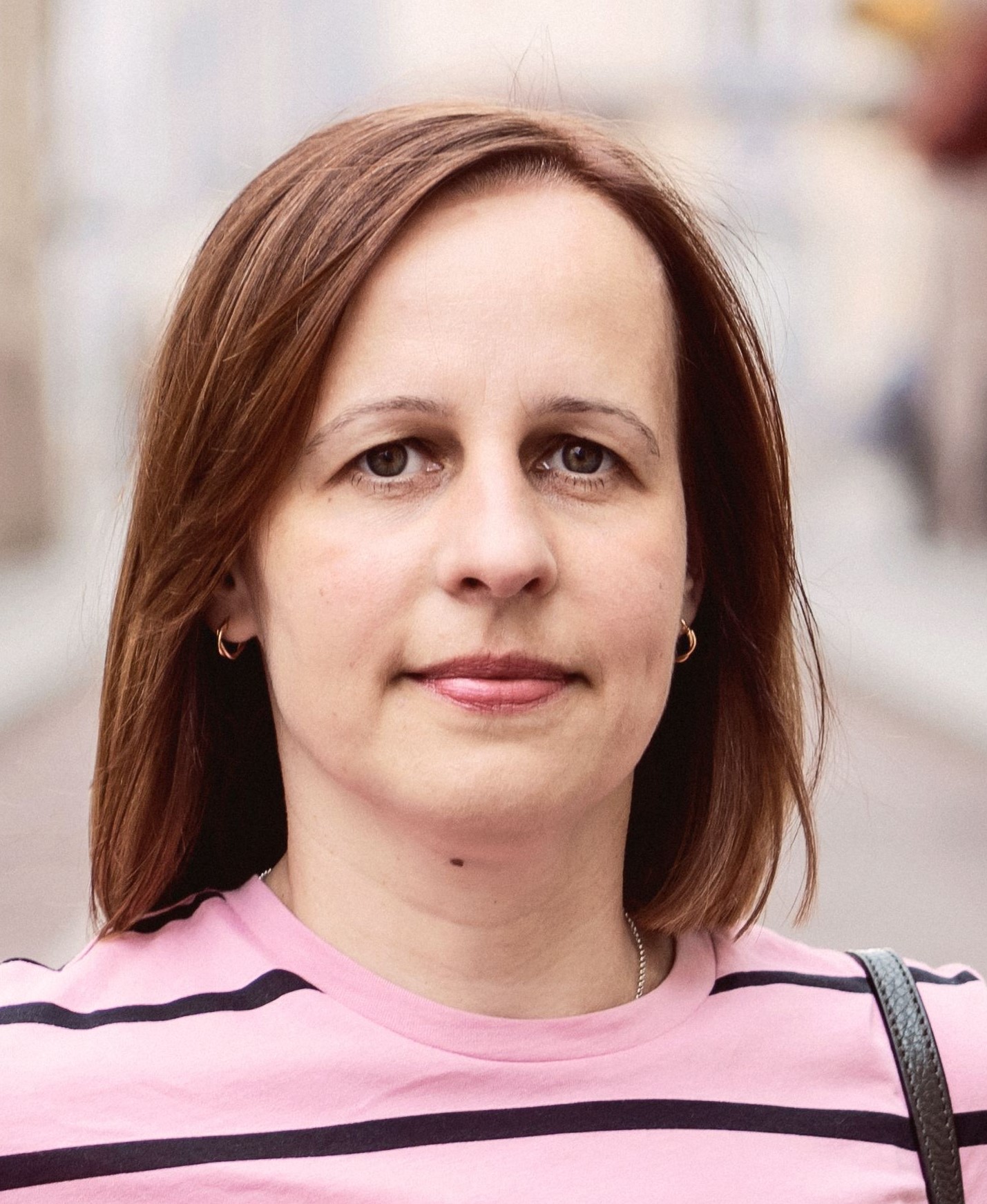
Dr. Olga Kurasova is a Professor and Senior Researcher at Vilnius University's Institute of Data Science and Digital Technologies, where she leads research in the Cognitive Computing Group. Her work focuses on developing advanced computational methods for real-world applications. Her primary research explores machine learning paradigms including deep learning for cybersecurity (keystroke dynamics, adversarial attacks), medical image analysis (pancreatic cancer detection), industrial monitoring, and explainable AI. She maintains strong collaborations across disciplines, particularly in healthcare and security domains. Analysis of her recent publications (2023-2025) reveals three dominant themes: (1) Advanced biometric authentication systems using behavioral analysis and deep learning, (2) Medical AI applications focusing on pancreatic cancer detection through CT image analysis, and (3) Theoretical advancements in explainable AI methodologies for high-stakes domains. Significant scientific recognition includes: 2021 Lithuanian Science Prize for the cycle 'From Data Science to Artificial Intelligence Technologies' 2024 Vilnius University Rector's Science Prize She has led multiple national research projects, including a 2024-2027 LMT-funded initiative on 'adversarial machine learning for cybersecurity' and coordinated interdisciplinary teams for projects on cognitive computing capabilities and optimal data mining solutions. She directs research within the Cognitive Computing Group, focusing on developing intelligent systems for data analysis, visualization, and decision support across healthcare, cybersecurity, and industrial applications.
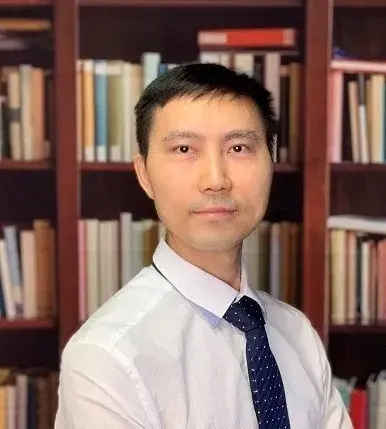
Guandong Xu is a Professor in the School of Computer Science at the University of Technology Sydney (UTS), where he has been employed since 2012. He also serves as the Director of the UTS-Providence Smart Future Research Centre, which focuses on disruptive technology for sustainability, and leads the Data Science and Machine Intelligence Lab dedicated to research excellence and industry innovation in data science and artificial intelligence. Dr. Xu holds a PhD in Computer Science from Victoria University, Australia, along with MSc and BSc degrees in Computer Science and Engineering. After holding various research positions at European and Australian universities, he joined UTS in 2012 and was promoted to Associate Professor in January 2017, then to Professor in January 2019. His research spans data mining, machine learning, social computing, recommender systems, text mining, predictive analytics, and user behavior modeling. He has published over 240 papers in these areas with increasing citations from academia. His recent work demonstrates a strong focus on integrating large language models with recommendation systems, causal inference in recommendation, multimodal learning, and fairness in AI systems. His publications reveal sophisticated graph-based approaches and addressing challenges in dynamic recommendation scenarios, particularly through temporal modeling and hypergraph structures. Dr. Xu has received numerous prestigious awards including the Digital Disruptors Winner for ICT Research Project of the Year (2021), eBay's Leaders' Choice Award (2021), and was elected Fellow of Institution of Engineering and Technology (IET), UK (2021) and Fellow of Australian Computer Society (ACS) (2022). He has shown strong academic leadership as founding Editor-in-Chief of Human-centric Intelligent Systems Journal, Assistant Editor-in-Chief of World Wide Web Journal, and founding Steering Committee Chair of the International Conference of Behavioural and Social Computing Conference. He has supervised over 25 high degree research students and secured over $8 million in research funding from ARC, government, and industry sources, including projects like 'Smart Personalized Privacy Preserved Information Sharing in Social Networks' and 'A Secured Smart Sensing and Industry Analytics Facility for Industry 4.0.' Dr. Xu directs the Data Science and Machine Intelligence Lab at UTS, which aligns with UTS research priority areas in data science and artificial intelligence. The lab focuses on research excellence and industry innovation across academia and industry, with particular emphasis on developing advanced techniques for recommendation systems, knowledge graphs, and multimodal learning applications.
Prof. Dr. Ilona Buchem is a Professor of Communication and Media Studies at the Berlin University of Applied Sciences (BHT), Department I of Business and Social Sciences. She serves as Head of the Communication Laboratory and leads research in human-robot interaction, educational robotics, and technology-enhanced learning. Her work spans multiple interdisciplinary projects including Social Robotics, Open Virtual Mobility, and ePA-Coach, focusing on digital media for communication, collaboration, and digital sovereignty for older adults in healthcare contexts. Dr. Buchem holds a doctorate in business education from Humboldt University and a certificate in business administration from the University of St. Gallen, Switzerland. Her academic background bridges business education with digital media expertise, positioning her at the intersection of technology and communication for innovative educational approaches. Her research interests focus on human-robot interaction in educational contexts, social robotics for learning, AI applications in education, and digital media for communication and collaboration. She explores how robots can serve as educational tools in business studies, language learning, and health-related applications. Her work also investigates digital sovereignty, particularly for older adults using electronic health records, and the use of open digital credentials like Open Badges for recognizing learning achievements. The integration of gamification elements with social robots represents another significant strand of her research, enhancing student engagement and learning outcomes. Analysis of her recent publications reveals a strong focus on practical applications of social robots in educational settings, particularly examining student perceptions of different robot platforms (NAO, Pepper, Furhat). Her work increasingly integrates generative AI with robotics, exploring conversational interfaces and new learning paradigms. There's also a consistent thread examining digital literacy for seniors, especially regarding electronic health records, and innovative approaches to recognizing learning through micro-credentials and digital badges. Dr. Buchem actively supervises numerous bachelor's and master's theses across multiple programs including Business Administration: Digital Economy and Media Informatics Online. She has established a digital award system based on Open Badges to recognize outstanding thesis work with top grades. Her research is supported through various funding sources including BMBF, EU, DFG, and industry partners, with projects spanning social robotics, virtual reality applications, and digital credentialing systems that connect academic research with practical applications. She leads the Communication Laboratory at BHT and is actively involved in the 'House of Robotics' initiative at the university. Her work connects with international partners through projects like Social Robotics (EU) and Open Virtual Mobility, creating a global network for educational robotics research and development that bridges European institutions and promotes cross-cultural educational exchange.
Thomas Tie Luo is a tenured Associate Professor in the Department of Electrical and Computer Engineering and holds a courtesy joint appointment in the Department of Computer Science at the University of Kentucky, affiliated with the Stanley and Karen Pigman College of Engineering. He previously served as Associate Professor at Missouri University of Science and Technology and earned his PhD in Electrical and Computer Engineering from the National University of Singapore (ranked #8 globally by QS). His research focuses on Trustworthy Artificial Intelligence with applications in medicine, healthcare, and IoT, emphasizing Explainable AI (XAI) , Robust Machine Learning , and Privacy-Preserving Federated Learning . Education: PhD, Electrical and Computer Engineering, National University of Singapore (2009) His recent work explores Time Series Anomaly Detection , Secure Federated Learning for LEO Satellite Networks , and Medical Imaging Analysis through advanced deep learning architectures and adversarial attack mitigation. His research has been recognized with Best Paper Awards at ECAI'25, PAKDD'24, and PerCom'24, as well as a Best Student Paper Award at AAIM'18. Dr. Luo actively contributes to academic service as a Senior Member of IEEE, serving on editorial boards for journals like IEEE Transactions on Services Computing and Elsevier Ad Hoc Networks . He has advised PhD students in Computer Science, Electrical Engineering, and Computer Engineering, with graduates placed at institutions such as Washington State University and ByteDance.
Mauro Barni serves as a Full Professor in the Department of Information Engineering and Mathematical Sciences at the University of Siena, where he teaches Cybersecurity, Information Theory, and Mathematical Statistics. His office hours are held Fridays from 3:00 PM to 5:00 PM via online appointment, reflecting his active engagement with students. Professor Barni's research spans multimedia security and digital forensics, with emphasis on deep learning applications for digital watermarking, deepfake detection, and synthetic image attribution. His work addresses critical challenges in adversarial machine learning, steganography, and image manipulation detection, contributing significantly to cybersecurity and intellectual property protection frameworks. Analysis of his 2021-2025 publications reveals dominant trends in neural network watermarking robustness, synthetic media detection, and defenses against backdoor attacks. His research consistently bridges theoretical foundations with practical implementations, focusing on real-world applications like printer source attribution and physical-domain adversarial scenarios. He leads the VIPP (Vision, Image Processing, and Pattern Recognition) research group, which maintains dedicated virtual classrooms for collaborative projects in computer vision and multimedia security. The group actively develops methodologies for image forensics, synthetic media analysis, and security countermeasures against emerging threats.
Simone Paolo Ponzetto is an Assistant Professor (Juniorprofessor) at the University of Mannheim since 2013, affiliated with the Research Group Data and Web Science. His research focuses on Semantic Web technologies, Natural Language Processing (NLP), and knowledge acquisition, particularly leveraging collaboratively built resources like Wikipedia. Prior to Mannheim, he held postdoctoral roles at Sapienza University of Rome and research positions at the University of Heidelberg and Stuttgart. His work includes pioneering projects like BabelNet, a multilingual semantic network. Ponzetto earned his PhD in Computational Linguistics from the University of Stuttgart, with interdisciplinary contributions to coreference resolution, semantic relatedness, and ontology learning. Research Interests: Unsupervised/weakly-supervised knowledge extraction Multilingual ontology learning and semantic networks Lexical semantics (word sense disambiguation, semantic similarity) Discourse semantics (coreference resolution, coherence modeling) Professional Contributions: Guest editor for a Artificial Intelligence Journal special issue on AI and Wikipedia Area chair for EMNLP-CoNLL 2012 and EACL 2014 Program committee member for ACL, AAAI, and other top conferences Lab/Team: Active in the Research Group Data and Web Science at Mannheim, advancing AI and NLP applications in collaborative knowledge systems.
Saptarashmi Bandyopadhyay is a Tenure-Track Assistant Professor of Computer Science at the City College of New York and the Graduate Center at the City University of New York (CUNY). Her research focuses on Artificial Intelligence Agents and Autonomous Decision Making, with special emphasis on Multi-Agent Reinforcement Learning, Multi-Agent Imitation Learning, and related paradigms. She has established significant collaborations with leading institutions including Google DeepMind, Carnegie Mellon University, Oxford University, and MIT. Dr. Bandyopadhyay received her PhD from the University of Maryland, College Park, where she was advised by Professor John Dickerson and Professor Tom Goldstein. Prior to that, she graduated from Penn State in 2020 with a thesis on Multimodal Computer Vision in Medical Domain advised by Prof. William Evan Higgins. Her research expertise spans multiple domains of AI including Multi-Agent Systems, Reinforcement Learning, Imitation Learning, and Multimodal Perception. She specializes in developing AI agents for applications in climate conservation, economic systems, and AI safety. Her work integrates techniques from computer vision, natural language processing, and robotics to create more robust and explainable AI systems that can operate effectively in complex, real-world scenarios. Current work includes improving explainable AI, developing Multimodal LLM/VLM/Robotic Agents, and creating libraries to speed up Multi-Agent evolutionary training with JAXMARL. Analysis of Dr. Bandyopadhyay's publication record reveals a clear progression from foundational work in medical imaging and natural language processing toward increasingly sophisticated multi-agent AI systems. Her recent publications demonstrate a strong focus on Multi-Agent Reinforcement Learning frameworks like JAXMARL, with applications spanning from supply chain orchestration to climate conservation. The interdisciplinary nature of her work is evident in publications spanning computer vision, NLP, and multi-agent systems conferences including AAAI, NeurIPS, AAMAS, EMNLP, and ACL. DoGood Fellow (2022) UMD Dean's Summer Fellow (2021) Dr. Bandyopadhyay has been actively involved in securing research funding from major agencies including NSF, NIH, DoD, and ARL. She served as the lead PhD student RA in a DoD project for Multi-Agent Explainable AI to improve AI trustworthiness. Her service to the academic community includes membership on program committees for major conferences including IJCAI 2024, KDD 2024, ACL 2024, and AAMAS 2023-2024. She has also created the AI Agents Seminar Series at UMD in 2022 with over 1,000 participants from six continents. Currently, Dr. Bandyopadhyay leads research on improving explainable AI, developing Multimodal LLM/VLM/Robotic Agents, and creating libraries to speed up Multi-Agent evolutionary training with JAXMARL. Her lab collaborates prominently with researchers from Google DeepMind, Carnegie Mellon University, Oxford University, University of Sheffield, Waymo, Meta AI, and MIT, with special focus on Dr. Jakob Foerster's and Dr. Robert Loftin's groups.
Andrew C. Johnston is an Associate Professor of Economics at the University of Texas at Austin and a Faculty Research Fellow at the National Bureau of Economic Research (NBER). He holds a Ph.D. in Applied Economics from the Wharton School at the University of Pennsylvania. His research focuses on public economics, labor economics, applied econometrics, and personnel economics, with specific interests in workforce management, unemployment insurance, teacher labor markets, American poverty, pensions, and family structure. Dr. Johnston's work examines critical policy issues through econometric analysis, including: Teacher labor markets and educational equity Unemployment insurance systems and labor supply Pension reforms and workforce retention Family dynamics and economic outcomes His publications demonstrate consistent focus on labor economics and public policy, with recent work exploring: Divorce impacts on long-term family outcomes Education system reforms Behavioral responses to social policies AI applications in healthcare diagnostics He maintains affiliations with NBER, JPAL-North America, and IZA Institute of Labor Economics.
Peter H.N. de With is a Full Professor at the Video Coding & Architectures group within the Department of Electrical Engineering at Eindhoven University of Technology (TU/e). He is an international expert in video compression and image analysis for health, surveillance, and automotive applications, with over 35 years of R&D experience. He leads the Video Coding & Architectures Group (SPS-VCA) and contributes to initiatives like the Center for Care & Cure Technology Eindhoven and Eindhoven MedTech Innovation Center. De With's research focuses on video/image signal processing, machine learning, and their applications in healthcare (e.g., esophageal cancer detection), security, and automotive systems. His work includes collaborations with hospitals, EU projects, and industry leaders like Bosch Security Systems and ASML. His recent publications emphasize real-time 3D processing, assembly state recognition, driver action analysis, and medical imaging advancements, reflecting his expertise in computer vision and AI. Notable scientific awards include IEEE Fellowship and multiple paper awards (CE Chester Sall, SPIE, Elsevier). Scientific Awards IEEE Fellow CE Chester Sall Award SPIE Paper Award Elsevier Journal Award Best Paper Award (2017) Second Place in CAMELYON17 Challenge De With has supervised numerous research projects and contributed to datasets in noise reduction, augmented reality, and medical imaging. He actively collaborates on AI-driven innovations for healthcare and industrial applications.
Prof. Dr. Gernot R. Müller-Putz is Head of the Institute of Neural Engineering and the Graz Brain-Computer Interface Lab at Graz University of Technology. He serves as Dean of the Faculty of Computer Science & Biomedical Engineering and holds editorial roles at Frontiers in Human Neuroscience IEEE Transactions in Biomedical Engineering Brain-Computer Interface Journal . With over 212 peer-reviewed publications and an h-index of 80, his research focuses on Brain-Computer Interfaces , Neuroprosthetics , and EEG-based Motor Control . His work investigates: Neural signal decoding for spinal cord injury rehabilitation Hybrid BCI systems with error processing Artificial sensory feedback mechanisms Machine learning applications in neural engineering VR-based neurofeedback environments Non-invasive multimodal biosignal recording Research trends show strong emphasis on EEG signal processing , BCI clinical applications , and neurotechnology integration . Scientific Awards : ERC Consolidator Grant (2015) Ludwig-Guttman Award (2017) CYBATHLON Best Paper (2019) State of Styria Research Award (2019) Förderstipendium (2013-2014) He advises 21 PhD students and has managed major projects like MoreGrasp (EU Horizon 2020) , Feel Your Reach (ERC) , and INTRECOM (EU EIC Pathfinder) . The Institute hosts the BCI Racing Team Mirage91 and offers international thesis opportunities.
Arijit Khan is an Associate Professor in the Department of Computer Science at Aalborg University, Denmark. He leads the Data Engineering, Science and Systems group and is affiliated with the Technical Faculty of IT and Design. His research focuses on Graph Neural Networks , Blockchain , Data Management , and AI interpretability . He is the Principal Investigator (PI) of a major project on Data Management, Fundamental Algorithms, and Machine Learning for Emerging Problems in Large Networks (2022–2027). Research Interests : Graph Data Management & Machine Learning Blockchain Transaction Analysis Large Language Model + Knowledge Graph Synergies Healthcare AI (e.g., ICU glucose prediction) Explainable AI for Graph Neural Networks Research Trends : His publications emphasize neuro-symbolic systems , uncertain graph analysis , and AI-driven blockchain insights . Recent work bridges large language models with knowledge graphs and explores GPU performance optimization via shader code analysis. Awards & Grants : No explicit awards listed, but his active research grants include a 5-year project on large network analysis with interdisciplinary applications in life and health sciences. Funding emphasizes algorithmic innovation and data science integration. Labs/Teams : Head of the Data Engineering, Science and Systems research group, focusing on AI for societal impact ('AI for the People') and scalable graph data systems. Collaborations span blockchain analytics, healthcare informatics, and GPU architecture design.
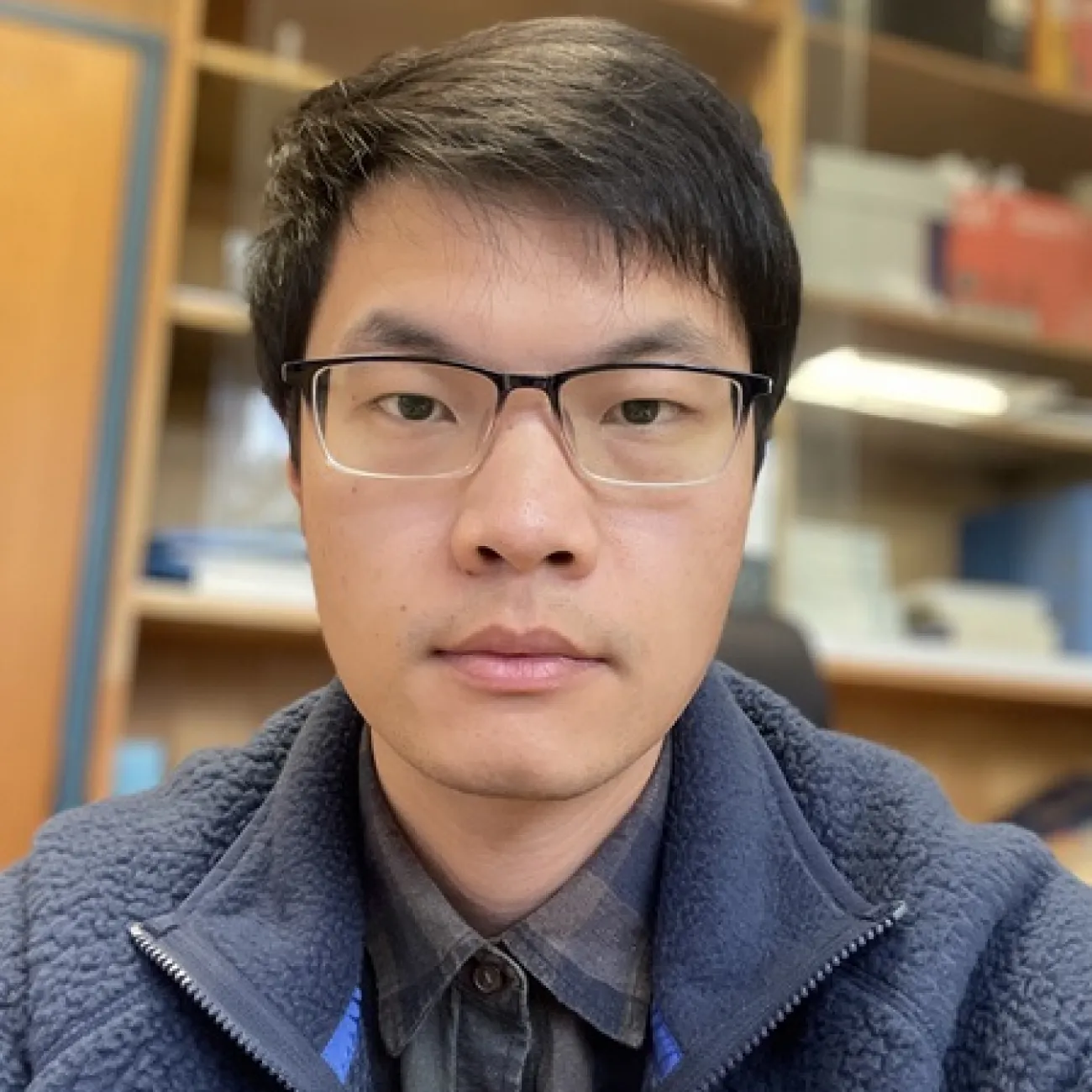
Dr Yuting Zhang serves as a Research Fellow within the Department of Civil, Maritime, and Environmental Engineering at the University of Southampton's Faculty of Engineering and Physical Sciences. He is an integral member of the Royal Academy of Engineering Chair Centre of Excellence for Intelligent & Resilient Ocean Engineering (IROE), focusing on machine learning applications for geotechnical site characterization. His educational background includes a Bachelor's degree and MPhil in Geotechnical Engineering from Wuhan University, China, followed by a 2024 PhD from the University of Newcastle, Australia, specializing in probabilistic calibration of resistance factors for piling designs. Zhang's research centers on probabilistic geotechnics and reliability-based design methodologies, with particular emphasis on data-driven site characterization techniques. His work bridges machine learning algorithms with geotechnical and geophysical data analysis to enhance foundation engineering practices, especially in offshore and marine environments. Current projects investigate spatial soil variability effects on pile group reliability, optimization of resistance factors, and innovative data augmentation approaches for rock fracture prediction. His publication record demonstrates consistent output in high-impact journals since 2022, with recent 2025 publications indicating active research momentum. The articles reveal strong thematic focus on probabilistic methods for pile design, integration of diverse geotechnical data sources, and machine learning applications in subsurface characterization. As part of the Infrastructure Group and Southampton Marine and Maritime Institute, Zhang contributes to ocean energy research initiatives while maintaining active collaborations with international researchers including Jinsong Huang, Jiawei Xie, and Anna Giacomini. His work supports the development of more resilient offshore infrastructure through advanced geotechnical reliability frameworks.
Anna Brunström is a Full Professor and Head of the Distributed Intelligent Systems and Communications Research Group (DISCO) at Karlstad University's Department of Computer Science. She holds a part-time role as a Researcher at the University of Malaga's Institute of Software Engineering and Technologies (ITIS). Her research focuses on computer networking, Internet architectures, low latency communication, and 5G/6G mobile systems. She leads the nationally funded DRIVE initiative and collaborates on European projects like 6G-PATH. She actively contributes to IETF standardization, notably as a former rmcat WG chair. Her work spans over 200 publications, emphasizing network measurement, latency optimization, and multipath protocols. Education: Ph.D. (1996) and M.Sc. (1993) from College of William & Mary, B.Sc. (1991) from Pepperdine University. Research Interests: Distributed systems, IoT networking (NB-IoT), satellite communication (Starlink), machine learning for positioning, and transport protocols (QUIC, MPTCP). Recent work includes latency-aware scheduling, 5G/6G performance analysis, and edge computing frameworks. Publications highlight trends in: 1) Satellite network throughput modeling, 2) 5G/6G architecture validation, 3) Machine learning applications for positioning and network analysis, 4) Cross-layer optimization of latency-critical services. Collaborations with industry and academia drive applied research in smart grids, healthcare, and automotive communication. Labs/Teams: DISCO group at Karlstad University, leading the DRIVE research profile and 6G-PATH consortium involvement.