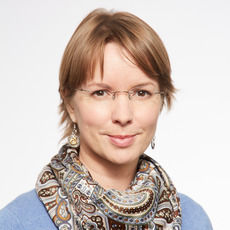
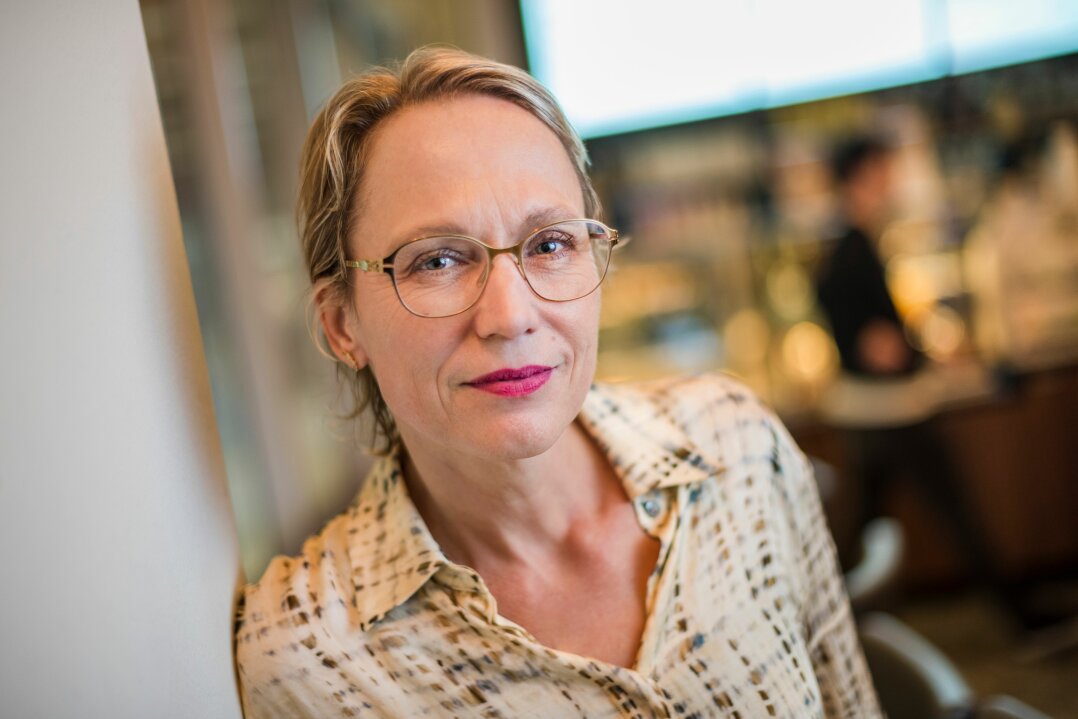
Alexis Peri is an Associate Professor of History at Boston University, specializing in modern Russian and Soviet history, with a focus on war, gender, and private life. Her work bridges cultural history, environmental history, and transnational studies. She holds a B.A., M.A., and Ph.D. from the University of California, Berkeley. Her research explores Soviet beauty pageants, US-Soviet women’s correspondence, and environmental dimensions of the Crimean War (co-authored with Catherine Ashcraft). Major publications include The War Within: Diaries from the Siege of Leningrad (2017) and Dear Unknown Friend: the Remarkable Correspondence between American and Soviet Women (2024). Dr. Peri has received the 2018 Pushkin House Book Prize, 2019 Gitner Teaching Prize, and 2024 Metcalf Award. Her research has been supported by the Fulbright Program, Kennan Institute, and others. She teaches undergraduate courses on Russian/Soviet history and directs multiple collaborative research projects.
Gerhard Hirschfeld is an Honorary Professor at the Department of History, University of Stuttgart, and has served as Director of the Bibliothek für Zeitgeschichte since 1989. His research focuses on Social and Cultural History of World War I , Comparative Occupation History of World War II , 20th Century Netherlands History , and Academic Emigration post-1933 . He has been a Fellow of the Netherlands Institute of Advanced Studies in the Humanities and Social Sciences (1996/1997, 2006/2007) Fellow of the German Historical Institute London and held leadership roles including Chair of the German Committee for the History of WWII (1991–2000) and President of the International Committee for the History of WWII (2000–2010). His publications span monographs, edited volumes, and essays on occupation policies, collaboration, and exile studies. Recent works emphasize the media representation of WWI , continuity of nationalist rhetoric , and ethical dimensions of historical taboos . He contributes to journals like Zeithistorische Forschungen and Tijdschrift voor Geschiedenis . Scientific awards include Fellowships at NIAS and DHIL Editorial leadership in academic series like Zeit der Weltkriege and Schriften der Bibliothek für Zeitgeschichte and advocacy for interdisciplinary war studies.
Andrew J Fleck is an Associate Professor in the English and Comparative Literature Department at San José State University, affiliated with the College of Humanities and the Arts. He has been teaching since 2001, specializing in Early Modern British Literature with a focus on Dutch-English cultural relations between 1588-1688. Fleck holds a PhD from Claremont Graduate University (2000). His research explores how Dutch figures influenced English literary and cultural imagination, including studies on John Donne, Thomas Nashe, and early modern drama. He has published widely in journals like Studies in Philology and Journal of British Studies , with a particular emphasis on textual analysis, historical narratives, and cross-cultural exchanges. Fleck’s work spans from examining the role of Dutch language performances in early modern theater to analyzing the representation of national identity in texts like The Shoemaker’s Holiday . His recent publications (2013) include studies on John Donne’s engagement with astronomical themes and global adaptations of Macbeth . He maintains an active presence in academic encyclopedias, contributing entries on Milton’s Dutch connections and Renaissance authors. His scholarship bridges literary analysis with historical context, often highlighting how literature reflects political, religious, and cultural tensions of the period. Fleck’s teaching and research reflect a commitment to interdisciplinary approaches, integrating historical, linguistic, and cultural methodologies.
Devin Stauffer is a Professor and Associate Chair in the Department of Government at the University of Texas at Austin . Holding a Ph.D. from Boston College, he specializes in classical and early modern political philosophy, with a focus on Plato, Thomas Hobbes, and Leo Strauss. His career spans teaching roles at Kenyon College and St. John's College prior to joining UT Austin in 2004. Education: Ph.D., Boston College Professor Stauffer's research explores intersections of ancient and modern political thought, examining themes like justice, rhetoric, democracy, and the theological-political problem. His recent scholarly work continues to engage deeply with Strauss's interpretations of Hobbes, Locke, and classical texts. Key trends in his publications include: Interpretations of Strauss's correspondence and lectures Critical analyses of Hobbes's ethical and theological foundations Comparative studies of Socratic thinkers in classical texts Reconsideration of Locke's political conscience Debates on classical vs. modern approaches to natural right Scientific Awards : Two Teaching Excellence Awards at Kenyon College Three Teaching Awards at University of Texas Carl Friedrich von Siemens Foundation Fellowship (2013-14, Munich) He has taught courses including Machiavelli's Discourses , Socratic Political Philosophy , and Classical Quest for Justice . His visiting appointment at Harvard (2018) underscores his scholarly impact in political philosophy circles.
Dr. Xin Fan is a Teaching Professor in Modern Chinese History at the University of Cambridge's Faculty of Asian and Middle Eastern Studies (AMES). He also serves as a Fellow and Director of Studies at Lucy Cavendish College and Director of Studies at Robinson College. A global historian, Fan specializes in intellectual history, historiography, and worldviews of twentieth-century China. His research explores the intersections between foreign knowledge, nationalism, and knowledge production in non-Western contexts. He co-edits the SAGE Handbook of Interpreting Chinese History and has authored major works like Global History in China (2024) and World History and National Identity in China (2021). His current projects include studies on emotions and nationalism, as well as the global rise of higher education. Fan has taught at universities in Europe and the U.S., focusing on courses about Chinese cultural and historical contexts. His work bridges global and national perspectives, emphasizing how political consciousness shapes historical narratives. Education & Career: Fan has studied and worked in China, the U.S., Germany, and the UK. While formal academic credentials are not detailed, his career trajectory reflects extensive international scholarly engagement. Research Interests: Fan’s expertise spans intellectual history, nationalism, global historiography, and the sociology of knowledge. He examines how cultural and political conditions influence knowledge production in China, particularly regarding world history, emotional politics, and cross-cultural reception of antiquity. His work challenges Eurocentric frameworks and explores non-Western historiographical traditions. Publications: Fan has authored monographs, co-edited volumes, and published widely in journals such as Global Intellectual History and Contributions to the History of Concepts . His book reviews appear in prominent journals like Journal of Asian Studies and Frontiers of History in China . Teaching & Leadership: Fan teaches undergraduate courses on Chinese history and culture at AMES. He directs studies at two Cambridge colleges, fostering academic mentorship in Asian and Middle Eastern Studies.
Dr Tanya Harmer is a Lecturer in the Department of International History at the London School of Economics and Political Science (LSE). She is a leading scholar in Latin American Cold War history, with a focus on Chile, transnational revolutionary movements, and gender politics. She is closely associated with the LSE’s Latin America and Caribbean Centre (LACC) and convenes the Latin America-Europe Cold War Research Network. BA, University of Leeds MA and PhD, London School of Economics and Political Science Dr Harmer specializes in the international and transnational dimensions of Cold War struggles in Latin America. Her research emphasizes the global dynamics of revolutionary movements, particularly in Chile and their connections to Cuba and broader solidarity networks. She explores themes such as women and gender in revolutionary politics, exile, resistance, and inter-American diplomacy. Her work bridges diplomatic, social, and cultural history to offer a nuanced understanding of the Cold War beyond superpower confrontation. Her recent publications include the acclaimed biography Beatriz Allende: A Revolutionary Life in Cold War Latin America (2020) and the co-edited volume Toward a Global History of Latin America’s Revolutionary Left (2021). Her articles examine topics such as the 'Cuban Question,' Kissinger’s diplomacy in Latin America, and transnational militant networks. Her research consistently highlights the agency of Latin American actors and the interconnectedness of regional and global histories. Luciano Tomassini International Relations Book Award (2013) LSE Major Review Teaching Prize (2014) Student-led Teaching Excellence Award for Research Support and Guidance (2015) LSE Excellence in Education Award (2016–17, 2019–20) British Academy Newton Mobility Award (2015) Michael Dockrill Memorial Thesis Prize (supervised student, 2021) Dr Harmer supervises PhD students working on twentieth-century Latin American history and has directed the MA in History programme at LSE. She has received grants from the British Academy to support international collaborative research and has organized major conferences on the global history of Latin America’s revolutionary left. She has held visiting teaching positions at Columbia University and the Pontificia Universidad Católica de Chile, where she was appointed Visiting Professor in 2023. She is actively involved in public engagement, having contributed to BBC Newsnight, Jacobin Magazine, and the Historias podcast. She also leads educational initiatives such as the 'Diversifying the Curriculum' project at LSE and has hosted interdisciplinary workshops on memory and resistance.
Joel Wolfe is a Professor of History at the University of Massachusetts Amherst, based in Herter Hall. He holds a B.S. from Georgetown University, an M.A. in Latin American Studies from the University of New Mexico, and a Ph.D. in History from the University of Wisconsin–Madison. His research focuses on modern Brazil, Latin American history, and the cultural and political history of baseball and football. Wolfe is the author of three books, including *Working Women, Working Men* (1993) and *Autos and Progress* (2010), with his latest work *Brazil* (2023) examining national history. He is currently writing a book on the history of American football and a project on inter-American trade and culture in the 1920s. Wolfe’s teaching includes courses on modern Latin America, Brazilian history, and the history of baseball and football. His awards include the George R. Brown Prize for Excellence in Teaching (Rice University, 2003–2005) and the Residential First Year Experience Student Choice Award at UMass Amherst. His research integrates themes of labor, modernization, and transnational connections, with a focus on Brazil’s industrialization, populism, and cultural identity. His work bridges economic, social, and cultural history, often exploring how technology, politics, and everyday life shape national narratives. Ongoing projects emphasize the intersection of sport, national identity, and globalization in Latin America and the U.S.
Dr. Stefanie Burkhardt is a Research Associate at the Department of Religious Studies and Intercultural Theology , University of Münster, since October 2024. She previously served as a Postdoctoral Researcher and Research Coordinator at the Friedrich-Alexander University Erlangen-Nürnberg (2016–2024) and completed her doctorate in 2022 with a dissertation on Mircea Eliade's dual work in Religious Studies and Literature. Education: PhD (2022, FAU Erlangen-Nürnberg), MA in 'Ethics of Textual Cultures' (2013), BA in Religious and German Studies (2012). Research Interests span the intersection of Religion and Literature , Postcolonial Religious Studies , and the Spectral Turn in Cultural Theory . Her work critically examines Eliade's methodologies, the role of African and diasporic narratives in decolonizing the 'spectral turn', and the socio-cultural implications of border crossings in postcolonial contexts. Recent Publications include a monograph on Eliade's literary and academic duality (Brill 2024) and upcoming edited volumes on authenticity in esoteric practices (Brill 2026) and Eliade's entanglements in religious history (Brill 2025). She has contributed to debates on postcolonialism, spectral theory, and Eliade's exoticism in Indian studies. Grants and Projects include participation in the DFG Advanced Study Group 'Alternative Rationalities and Esoteric Practices in Global Perspective' (2023–2024) and leadership in projects on post-Eurocentric cultural theory.
Dr. Bahar Baser is a Professor in Politics and International Relations at Durham University's School of Government and International Affairs, where she joined in 2021. She is also a member of the Institute for Middle Eastern and Islamic Studies. Previously, she served as Associate Professor at Coventry University's Centre for Trust, Peace and Social Relations, leading the "Peacebuilding and Conflict Transformation Research Group," and was a postdoctoral research fellow at the University of Warwick. Dr. Baser completed her PhD in Social and Political Sciences at the European University Institute in Florence, Italy. During her doctoral studies, she was a Visiting Research Fellow at multiple institutions including Humboldt University in Berlin, REMESO in Sweden, and the Instituto de Ciencias Sociais in Lisbon. Dr. Baser is an expert in diaspora studies, peacebuilding, and conflict transformation with a regional focus on the Middle East. Her research examines diaspora engagement in peace processes, post-conflict reconstruction, and state-building in the Global South. She has extensively studied stateless diaspora activism in Europe, particularly regarding host states' counterterrorism policies, radicalization of diaspora members, and transnationalization of homeland conflicts. Her recent publications demonstrate a strong focus on Kurdish diaspora studies, diaspora governance by authoritarian states, intergenerational trauma in diaspora communities, and peacebuilding processes. Her work spans multiple disciplines including political science, international relations, migration studies, and Middle Eastern studies, with particular attention to how diasporas interact with homeland conflicts and host state policies. Dr. Baser serves as editor of the Kurdish Studies Series published by Lexington Books and co-editor of the Diasporas and Transnationalism Series published by Edinburgh University Press. She is also a senior associate research fellow at the Security Institute for Governance and Leadership in Africa (SIGLA), Stellenbosch University, South Africa, and a visiting professor at Tampere Peace Research Institute, Tampere University, Finland. Dr. Baser has supervised multiple doctoral students including Abdullah Al-Khonaini, Mengqi Sun, Nannan Li, and Shorooq Al Zaabi. She has secured numerous research grants including projects funded by the British Academy, Academy of Finland, Allan and Nesta Ferguson Trust, and Horizon 2020 Marie Curie Fellowship. Her research projects span topics such as diaspora engagement in peace processes, youth violence and conflict transformation, and diasporic identity formation. Dr. Baser is actively involved with the Institute for Middle Eastern and Islamic Studies at Durham University, contributing to research initiatives focused on the Middle East and Islamic studies. Her multilingual capabilities (Turkish, English, Italian, Spanish, French, Portuguese, Azerbaijani) support her extensive fieldwork and collaborative research across multiple countries.
Dr Vera Axyonova is an Assistant Professor at the University of Birmingham's Department of Political Science and International Studies within the School of Government. Holding a PhD from the University of Bremen and Jacobs University Bremen, she has held prestigious positions including Marie Skłodowska-Curie REWIRE Fellow at the University of Vienna and Hurford Next Generation Fellow at the Carnegie Endowment. PhD: University of Bremen & Jacobs University Bremen (2013) MA: Fulda University of Applied Sciences (2008) Diploma: East Kazakhstan State University (2006) Her research focuses on international crisis management, cross-border norm transfer, and knowledge production in conflict environments. Recent projects examine European normative engagements in Eastern Europe and academic freedom challenges during forced migration. Her publications appear in top-tier journals like Peacebuilding and European Security . Notable awards include the Marie Skłodowska-Curie REWIRE Fellowship and Carnegie Endowment's Hurford Next Generation Fellowship. She co-chairs the ECPR Research Network on Statehood and Sovereignty and has held visiting positions at European University Institute, Freie Universität Berlin, and George Washington University.
Vazira Fazila-Yacoobali Zamindar serves as Associate Professor of History at Brown University, specializing in modern South Asia, decolonization, and visual archives. Her interdisciplinary work bridges historical scholarship with contemporary art and public engagement, notably through her acclaimed book The Long Partition and the Making of Modern South Asia (2007). Her educational background includes a PhD from Columbia University (2003), MA from the University of Michigan Ann Arbor (1997), and BA from Wellesley College (1992). As Director of Brown's South Asian Studies Program (2012-2016), she co-organized the Brown-Harvard Pakistani Film Festivals and founded the Theory from the South reading group. Zamindar's research critically examines decolonization, displacement, and statelessness through visual and oral histories. Current projects include a graphic novel collaboration with Sarnath Banerjee on Gandhi and Abdul Ghaffar Khan (supported by the Salomon Research Grant) and the Anticolonial solo exhibition at Karachi's Canvas Gallery (2023), exploring anticolonial resistance on the Indo-Afghan border. Her publications reveal evolving interdisciplinary trends: early works focus on Partition refugees and borders, while recent scholarship (2020-2023) emphasizes repair, statelessness architectures, and secularism in South Asian art. Recurring themes include border politics, visual culture, and decolonial methodologies across historical and contemporary contexts. Scientific recognition includes: National Endowment for the Humanities Fellowship (2009-10) Fulbright Research Scholar (2008-9) Richard B. Salomon Faculty Research Award (2022-23) Visiting Fellow at FU Berlin's Center for Affective Societies (2020-21) She actively engages public scholarship through collaborations with Primary Source, RISD Museum, Lahore Museum, and media appearances on BBC Radio's Museum of Lost Objects . Her teaching portfolio includes courses like Resisting Empire: Gandhi and the Making of Modern South Asia and Art History from the South , reflecting commitment to decolonial pedagogy. Zamindar co-leads the Decolonial Initiative on Migration of Objects and People and continues developing her graphic novel project while expanding the Art History from the South series through collaborations with scholars like Tapati Guha-Thakurta.
Prof. Dr. Laura Bieger is a professor of American Studies at Ruhr University Bochum (Germany), specializing in literary theory, critical theory, and cultural history. She holds a Magister from Freie Universität Berlin and a Dr. Phil. from FU Berlin (2006), followed by a Habilitation in 2013. Previously, she held professorships at the Albert-Ludwigs-Universität Freiburg (2014–2017) and the Rijksuniversiteit Groningen (2017–2022). Her research explores the relationship between aesthetics, politics, and social practices in U.S. cultural history, with a focus on public space, literary engagement, and democracy. Education: Magister in American Studies, History, and Philosophy, Freie Universität Berlin Dr. Phil., Freie Universität Berlin (2006) Habilitation (Venia Legendi in Americanistik), Freie Universität Berlin (2013) Positions: Professorin für amerikanische Literatur und Kultur, Albert-Ludwigs-Universität Freiburg (2014–2017) Professorin für American Studies, Political Culture and Theory, Rijksuniversiteit Groningen (2017–2022) Universitätsprofessorin American Studies, Ruhr-Universität Bochum (since 2022) Her work bridges literary analysis with interdisciplinary inquiries into space, democracy, and cultural practices. Key publications include Ästhetik der Immersion (2007), Belonging and Narrative (2018), and the forthcoming Reading for Democracy (2024). She has been a research fellow at Harvard University, NYU, and UC Berkeley. Current projects examine literature’s role in fostering democratic engagement and rethinking humanist concepts in American art. Laura Bieger’s research emphasizes praxeological approaches, treating literature as a social practice shaped by networks of actors and institutions. Her work on public intellectuals, cultural fields, and transnational American Studies highlights intersections between aesthetics, politics, and societal change. Collaborative projects include edited volumes on Richard Wright, spatial narratives, and the humanist imagination in American art.
Will Norman is a Reader in American Literature and Culture at the University of Kent’s School of English. He holds a BA from Nottingham and a DPhil from Oxford. His research focuses on mid-20th-century American literature and culture, particularly modernism, complicity in post-war intellectual history, and intersections between literature and Cold War geopolitics. Norman has held prestigious fellowships, including a Leverhulme Research Fellowship and a Fulbright Scholarship at Yale University. He co-edits the Journal of American Studies and has authored major works such as Transatlantic Aliens: Modernism, Exile and Culture in Midcentury America and Nabokov, History and the Texture of Time . His upcoming book Complicity in American Literature after 1945 (Oxford University Press, 2025) explores race, liberalism, and colonialism in postwar texts. His research spans modernist authors, Cold War cultural apparatuses, and crime fiction. Recent projects examine psychological warfare and national security narratives. Norman has supervised PhD students on topics like graphic novels, gender and medicalization in Cold War fiction, and Nabokov’s engagement with historical trauma. Norman’s publications include over 30 peer-reviewed articles and book chapters, with work featured in Comparative Literature Studies , American Literature , and Journal of American Studies . He is a co-editor of special journal issues on complicity and cartographic imagination in postwar America.
James Darsey is a Professor of Communication at Georgia State University, specializing in rhetorical theory, GLBTQ+ studies, and social movements. He is renowned for his award-winning book *The Prophetic Tradition and Radical Rhetoric in America* (1997), which earned multiple accolades including the National Communication Association's Diamond Anniversary Book Award. His research spans cosmopolitan rhetorics, prophetic discourse, and LGBTQ+ identity formation. He has delivered guest lectures at institutions such as the University of Texas and Notre Dame, and founded the Southern Colloquium on Rhetoric, fostering regional academic collaboration. Key awards include the Winans/Wichelns Award, the Marie Hochmuth Nichols Award, and a National Endowment for the Humanities Fellowship. His publications, including analyses of James Baldwin and Barack Obama, reflect his interdisciplinary focus on power, identity, and historical memory. Education: Ph.D., University of Wisconsin, Madison (1985) Scientific Awards: Diamond Anniversary Book Award Winans/Wichelns Award for Scholarship in Rhetoric and Public Address Marie Hochmuth Nichols Award Randy Majors Award B. Aubrey Fisher Award National Endowment for the Humanities Fellowship
Dr. Hongxuan Lin serves as an Assistant Professor in the Department of Southeast Asian Studies at the National University of Singapore (NUS), Faculty of Arts and Social Sciences. His academic work centers on the complex relationship between Islam and Marxism in Indonesia, with broader interests in progressive Islamic discourses across the Muslim world. As a faculty member at one of Asia's premier research universities, Dr. Lin contributes significantly to Southeast Asian studies through his research, teaching, and publications. Dr. Lin earned his Doctor of Philosophy in History from the University of Washington, Seattle, between 2015 and 2020. His doctoral research focused on Indonesian intellectual history, examining how Muslim identity and Marxist analytical frameworks coexisted in the minds of Indonesian nationalists during the anti-colonial struggle and early republic period. His supervisors were Laurie J. Sears, Christoph Giebel, and Vicente L. Rafael, all prominent scholars in Southeast Asian studies. Dr. Lin's research primarily investigates the intersection of Islam and Marxism in Indonesia from 1915 to 1965, exploring conciliatory discourses where Marxist ideas were theorized as compatible with Islam within frameworks of anti-colonial resistance. He examines how Indonesian intellectuals adapted global political currents to local contexts, challenging state-driven narratives that position Islam and Marxism as mutually exclusive. His work also considers women's contributions to these discourses and is expanding to study the circulation of progressive Islamic ideas across the Indian Ocean region connecting Egypt, Arabia, Iran, South Asia, and the Malay Archipelago. His research reveals how progressive Islamic thinkers addressed socio-economic inequity, women's rights, intercommunal tolerance, and religious governance. Dr. Lin's publications demonstrate a consistent focus on Southeast Asian political history, particularly Indonesia's intellectual landscape during the colonial and post-colonial periods. His scholarship reveals patterns of creative adaptation where Indonesian thinkers engaged with global political currents while transforming them for local contexts. A notable trend across his work is the examination of transnational intellectual networks that connected Southeast Asia with broader global movements, showing how ideas traveled and were transformed across borders. His research challenges simplistic narratives about religious and political identity, revealing instead complex intellectual traditions that defy easy categorization. Dr. Lin is multilingual with proficiency in Indonesian (reading, writing, speaking, and understanding), Chinese (Mandarin) (reading, writing, speaking, and understanding), Dutch (reading), and French (reading). This linguistic capability supports his research across multiple archives and sources in different languages, enhancing the depth and authenticity of his historical analysis. His work bridges multiple disciplinary approaches including history, political science, religious studies, and post-colonial theory.