
Cheryl D Hanley-Maxwell serves as Dean of the College of Applied Health Sciences and Professor in the Department of Kinesiology and Community Health at the University of Illinois, leading research in disability and rehabilitation sciences. Her primary research domains include: Supported Employment systems Students with Disabilities transition pathways Qualitative methodology in vocational rehabilitation Work outcomes measurement Employment service delivery models Analysis of recent publications reveals concentrated focus on differential vocational rehabilitation patterns for transition-age youth with autism and specific learning disabilities, alongside ethical frameworks for inclusive secondary education and cross-cultural teacher preparation practices. Her work demonstrates consistent application of qualitative approaches to service outcome evaluation in disability contexts.
جستوجوی استاد و پژوهشگر
استاد راهنما، استاد دانشگاه یا پژوهشگر مناسب برای مسیر پژوهشیتان را پیدا کنید و با او ارتباط بگیرید.
نمایش ۳۱-۴۵ از ۱٬۵۴۷ استاد راهنما
اطلاعات این پروفایلها از صفحات عمومی دانشگاهها جمعآوری شده و ممکن است بهروز نباشد.
Ajaz Sheikhمشاهده پروفایل
دانشیار
- Sleep Medicine
- Intraoperative Monitoring
- Epilepsy
- +۳ مورد دیگر
Ajaz Sheikh, M.D. serves as Associate Professor and Director of the Clinical Neurophysiology Fellowship Program at the University of Toledo College of Medicine, specializing in Epilepsy, Sleep Medicine, and Intraoperative Monitoring. His clinical work integrates advanced neurophysiological diagnostics with comprehensive patient care at the Neuroscience Center. Education: M.B.B.S: University of Kashmir, Government Medical College Srinagar (1998-2004) Internship: University of Toledo (2010-2011) Residency: Psychiatry (University of Kashmir, 2005-2008); Neurology (University of Toledo, 2011-2014) Fellowship: Clinical Neurophysiology/Epilepsy (Case Medical Center, 2014-2015); Sleep Medicine (Duke University, 2015-2016) Dr. Sheikh's research examines seizure triggers, comorbidities in drug-resistant epilepsy, and neurophysiological diagnostic challenges. His work bridges clinical practice with systematic reviews on rare neurological conditions like CLIPPERS and Isaac Syndrome, emphasizing practical applications for improving diagnostic accuracy and treatment protocols in neurocritical care settings. Recent publications (2023-2025) reveal a strong focus on epilepsy comorbidities, with significant contributions to understanding ADHD-epilepsy interactions, geriatric seizure patterns, and autoimmune neurological disorders. His systematic reviews on CLIPPERS and Isaac Syndrome demonstrate methodological rigor while addressing critical gaps in rare disease management. Scientific Awards: Alpha Omega Alpha Induction (2023) A.B. Baker Teaching Recognition Award (2020) Outstanding Neurology Attending Award (2018-2019) Arnold P. Gold Humanism Award (2013, 2014) Outstanding Resident Teaching Award (2014) As Principal Investigator for the ENGAGE-E-001 alprazolam trial and Co-Investigator on four active epilepsy drug studies (natalizumab, padsevonil, XEN1101, SAGE-547), Dr. Sheikh leads translational research targeting super-refractory status epilepticus and drug-resistant focal epilepsy. His prior work in Kashmir included schizophrenia and depression drug trials, reflecting global research engagement. Through the Clinical Neurophysiology Fellowship Program, Dr. Sheikh trains next-generation neurophysiologists while collaborating on multi-center trials that advance evidence-based protocols for complex seizure disorders and intraoperative monitoring standards.
- Genetics
- Congenital Malformations
- Rare Diseases
- +۳ مورد دیگر
Stanislas Lyonnet is Professor of Genetics at the Paris Descartes Faculty of Medicine and a geneticist at the Necker-Enfants Malades University Hospital in Paris. Since 2016, he has served as Director of the Institute for Genetic Diseases (Imagine), a position that builds on his extensive leadership in genetic research and clinical practice. His career spans several key roles including directing the 'Genetics and Embryology of Malformations' laboratory from 1992 until 2016 and coordinating the Necker site of the National Reference Center for Rare Diseases. Lyonnet's research focuses on the genetic basis and molecular pathophysiology of congenital malformations, with nearly 400 international publications spanning from 1985 to 2019. His work has significantly contributed to understanding rare genetic disorders, developmental anomalies, and malformation syndromes. Recent publications demonstrate his ongoing contributions to next-generation phenotyping techniques, genotype-phenotype correlations, and the molecular mechanisms underlying various genetic conditions including Coffin-Siris syndrome, ciliopathies, and neurodevelopmental disorders. Inserm Research Prize (2009) Collery Prize from the French Academy of Medicine President of the European Society of Human Genetics (2013) Throughout his career, Lyonnet has been deeply committed to knowledge transfer, having directed the European Master's in Genetics at the University of Paris from 2004 to 2017 and authored educational materials including 'Les 100 mots de la génétique.' He currently chairs the scientific council of the École Normale Supérieure (Ulm) and continues to lead research initiatives at Imagine, focusing on advancing the understanding and treatment of genetic diseases through interdisciplinary collaboration and cutting-edge genomic approaches.

Gemma Griffithمشاهده پروفایل
عضو هیئت علمی
Dr. Gemma Griffith is a Reader in Psychology at Bangor University 's School of Psychology and Sports Science . She co-directs the Centre for Mindfulness Research and Practice (CMRP) and leads its postgraduate programs. Griffith has published over 40 peer-reviewed articles and co-authored/edited two books on mindfulness teaching. PGDip in Teaching Mindfulness (Bangor University, 2015) PhD in Parental Adjustment (Bangor University, 2010) MSc in Applied Behavior Analysis (Bangor University, 2006) BSc in Psychology (Bangor University, 2004) Her research focuses on mindfulness-based interventions for parents and individuals with intellectual disabilities , exploring connections between child behavior problems and maternal well-being. She developed the Mindfulness-Based Interventions: Teaching and Learning Companion (TLC) , a globally used reflective tool for mindfulness educators. Recent projects include adapting mindfulness training for exercise referral practitioners and studying linguistic markers in online mindfulness discourse. Griffith has presented at international conferences in Japan, China, and online platforms, discussing mindfulness applications for diverse populations. She serves as an external examiner for the University of Exeter (2016-2020) and organizes academic events like the International Mindfulness Summit . Her work emphasizes practical implementation in schools, clinical settings, and family systems.
Joanna Mossمشاهده پروفایل
دانشیار
Dr. Joanna Moss is an Associate Professor in Psychology at the University of Surrey, affiliated with the School of Psychology and the Development, Education, Language and Outreach in Psychology (DevELOP) Research Group. She completed her PhD at the University of Birmingham in 2005, followed by research roles at the Institute of Psychiatry, Psychology & Neuroscience and the Cerebra Centre for Neurodevelopmental Disorders. Her research focuses on autism characteristics in individuals with genetic syndromes, employing methodologies like eye-tracking, EEG, and behavioral assessments. She has secured funding from the Academy of Medical Sciences, British Academy, and others. Dr. Moss co-chairs the Scientific and Clinical Advisory Team for the Cornelia de Lange Syndrome Foundation and advises on international research committees. She teaches a final-year undergraduate module on neurodevelopmental conditions and advises PhD students. Her lab, NDEV Research Lab, explores social-cognitive mechanisms in neurogenetic syndromes. Recent work emphasizes inclusive autism research, anxiety in high-risk groups, and machine learning approaches to phenotype analysis. Education: PhD in Psychology, University of Birmingham (2005) Roles: Senior Academic Tutor, Module Convenor for Neurodevelopmental Conditions Labs/Teams: NDEV Research Lab (www.ndevresearchlab.com) Her research highlights syndrome-specific profiles of autism traits, emphasizing the need for tailored assessments and interventions. Key findings include distinct gaze-following patterns in genetic syndromes and the role of executive dysfunction in repetitive behaviors. She advocates for ethical research practices, including preregistration in undergraduate studies.
Havva KAÇANمشاهده پروفایل
دانشیار
Assoc. Prof. Dr. Havva KAÇAN is a distinguished academic in the Faculty of Health Sciences at Kastamonu University, Turkey, specializing in Nursing with a focus on Psychiatric Nursing. She currently serves as Department Head and has held academic positions since 1998, progressing from Teaching Staff to her current role as Associate Professor since 2023. Her career spans over 25 years of dedicated service in nursing education and research. Doctorate in Nursing (2011-2014) - Istanbul Science University, Health Sciences Institute Master's in Fundamentals of Nursing (1996-1999) - Hacettepe University, Institute of Health Sciences Bachelor's in Nursing (1991-1995) - Hacettepe University, School of Nursing Dr. KAÇAN's research interests center around psychiatric nursing, mental health, and special needs care, with particular expertise in autism spectrum disorders, caregiver burden, and elderly mental health. Her work bridges clinical practice with academic research, focusing on practical interventions that improve quality of life for vulnerable populations including children with disabilities, their families, and elderly individuals. She has developed numerous psychoeducation programs addressing anxiety, stress management, and coping strategies. Analysis of her recent publications reveals a strong focus on evidence-based interventions for special needs populations, particularly examining caregiver burden, psychological resilience, and mental health outcomes. Her work increasingly incorporates disaster mental health perspectives, particularly regarding psychological first aid for children with special needs. The interdisciplinary nature of her research connects psychiatric nursing with social psychology, geriatrics, and women's health. Prof.Dr.Perihan Velioğlu Hemşirelik Fonu Award (2025) Project Incentive Award from Kastamonu University (2024) Project Incentive Award from Özel Birey ve Aileler Dayanışma Derneği (2024) Ruh Sağlığını Koruma recognition (2021) Poster Presentation First Prize from Sağlıkla Hemşirelik Dergisi (2013) Dr. KAÇAN has successfully led multiple research projects, including TÜBİTAK-funded initiatives focusing on inclusive community practices for individuals with special needs and scientific education activities. She has served as principal investigator and consultant for numerous student research projects, demonstrating strong commitment to mentoring the next generation of nursing professionals. Her collaborative work spans multiple Turkish universities including Dicle University, Mardin Artuklu University, and Hacettepe University. As Department Head at Kastamonu University's Faculty of Health Sciences, she leads a team focused on psychiatric nursing education and research. Her leadership extends to coordinating interdisciplinary approaches for special needs children and their families, integrating insights from psychology, social work, and medical disciplines to create comprehensive care models.
Ayla Humphreyمشاهده پروفایل
استادیار
Ayla Humphrey is an Assistant Professor and Consultant Clinical Psychologist at the University of Cambridge Department of Psychiatry . Her research focuses on early identification of mental health needs in children, cognitive therapy for trauma-exposed youth, and developmental disorders like autism and Tuberous Sclerosis . She serves as Course Director for the MPhil Foundations of Clinical Psychology and co-founded the NHS Cambridge Centre for Paediatric Neuropsychological Rehabilitation . Her research spans Child and Adolescent Mental Health Services (CAMHS) integration with social care, trauma-focused cognitive therapy , and developmental disorder screening . Key collaborations include the NIHR-funded COACHES study and the PYCES (Parents and Young Children under Extreme Stress) project. Scientific awards include the 2017 British Psychological Society Award for Outstanding Contribution to Applied Practice . She actively supervises PhD students and contributes to school-based mental health identification frameworks . Her work emphasizes evidence-based service transformation and cross-sector collaboration.
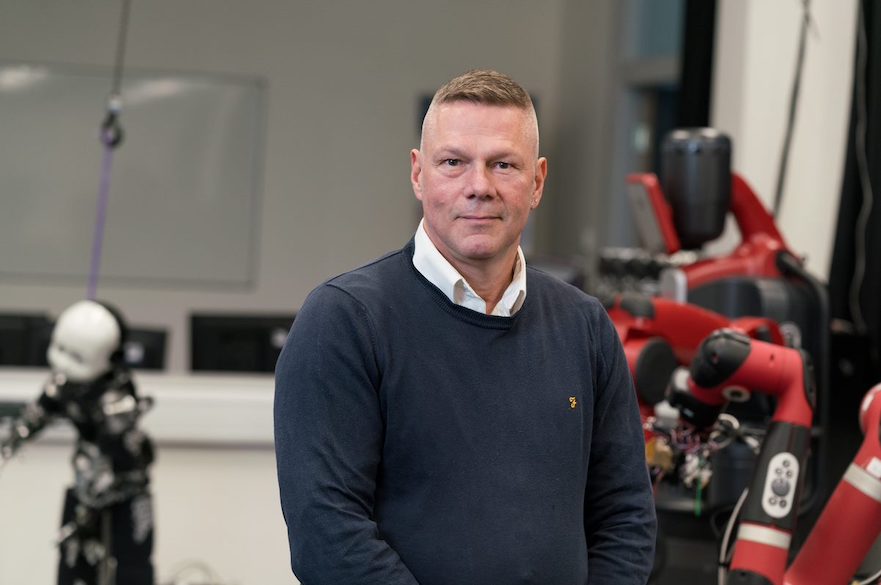
David Brown is a Professor in Interactive Systems for Social Inclusion at Nottingham Trent University's School of Science & Technology, Department of Computer Science. He serves as Director of the Computing and Informatics Research Centre (CIRC) and Research Group Leader for the Interactive Systems Research Group (ISRG). Director, Computing and Informatics Research Centre Research Group Leader, Interactive Systems Research Group Governor, Oak Field School for students with severe learning disabilities Conference Chair, International Conference on Disability, Virtual Reality and Associated Technology (ICDVRAT21) Associate Editor, Frontiers: Virtual Reality in Medicine Professor Brown's research focuses on developing inclusive technologies for people with disabilities. His work spans accessibility for students with learning, physical and sensory impairments; virtual reality applications for rehabilitation; multimodal affect recognition systems; social robotics for education; accessible visual programming toolkits; and serious games for developing physical and cognitive skills. His research is characterized by strong interdisciplinary collaboration and practical application in educational and healthcare settings. His recent publications demonstrate a consistent focus on applying emerging technologies like virtual reality, machine learning, and social robotics to address real-world challenges in accessibility and inclusion. The research shows a clear trajectory toward increasingly sophisticated multimodal systems that can detect user states and adapt accordingly, with applications ranging from autism support to mental health interventions. Extensive EU-funded research projects including Horizon 2020, Erasmus+, and EPSRC grants Notable projects: DIVERSIA, MaTHiSiS, Pathway, AI-TOP, EDUROB, No One Left Behind, Real Life, RISE Professor Brown has supervised numerous PhD students and collaborates extensively with international partners across Europe and Asia. His work bridges computer science, psychology, education, and healthcare to create technologies that promote social inclusion and improve quality of life for people with disabilities.
Hampus Bejnöمشاهده پروفایل
دانشیار
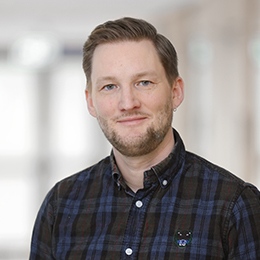
Hampus Bejnö is an Associate Professor and postdoctoral researcher at the Department of Special Education , Stockholm University. He also serves as Program Director for the Special Educator Program (specialpedagogprogrammet). Role: Associate Professor, Postdoctoral Researcher, Program Director Focus: Learning and participation of children with autism Key projects: APERS adaptation, TRAS evaluation, PANS qualitative studies Research Themes Improving educational environments for children with ASD Enhancing neuropsychological report readability Assistive technology for neurodiverse populations Awards & Collaborations While no explicit awards are listed, Bejnö contributes to interdisciplinary networks focused on neurodiversity and neuropsychiatric disabilities. His work bridges clinical practice with educational policy and technological innovation.
Dr. Irena Avirovic Bundalevska is an Associate Professor at the Institute of Family Studies, Faculty of Philosophy, Ss. Cyril and Methodius University in Skopje. She holds a PhD in Historical Sciences (2013) from the same university, specializing in Balkan migration histories. Her academic career includes roles at the Institute of National History as an assistant researcher and teaching positions at the American College in Skopje. Key qualifications include a Master's in International Relations from the University of Bologna (2009) and a Philology degree from the Faculty of Philology (2006). She serves as National Coordinator for the European Family Network (COST Action 18123) and speaks English, Italian, Spanish, with proficiency in German and Russian. Research Focus Cultural shifts in Balkan societies during the 20th century Ethnic minorities' migration patterns Family dynamics influenced by religious institutions Impact of multicultural policies on family structures Her work explores historical migration (e.g., Macedonian emigration to the U.S.), contemporary cohabitation trends, and institutional frameworks affecting family welfare. Recent publications analyze disability-inclusive family policies and UN family initiatives, reflecting her interdisciplinary approach bridging history, sociology, and policy studies. Awards & Grants No specific awards or grants mentioned in current records. Professional Networks Active participant in international conferences on social change and family studies. Collaborations include University Goce Delcev (Stip) and Macedonian Association of Marketing.
- Disability Studies
- Public Health
- Health Policy
- +۳ مورد دیگر
Dr. Mary-Ann O’Donovan is a Conjoint Associate Professor of Disability Studies at the University of Sydney and Executive Director of the Centre for Disability Studies, a research affiliate of the University. She is also a member of the Brain and Mind Centre. Her research focuses on housing stability, homelessness, and health service utilization for people with intellectual disabilities, with particular emphasis on policy analysis and de-institutionalization. She has led major national projects, including the Intellectual Disability Supplement to the Irish Longitudinal Study of Ageing (IDS-TILDA), and secured significant funding for studies examining the National Disability Insurance Scheme (NDIS) and supported living models. Dr. O’Donovan’s work bridges academic research with practical policy implementation, aiming to improve the quality of life and healthcare access for marginalized groups. Education: PhD (specific discipline not explicitly stated in text). Key Research Projects: ARC-funded study on NDIS realities versus rhetoric. AHURI-funded research on supported living models for high-support needs individuals. EIT Health-funded interventions for physical activity leadership programs. Department of Health (Ireland) evidence review on de-institutionalization outcomes. Grants: Designing a Continuum of Best Practices for Inclusion in Higher Education (Department of Social Services/NDRP). Homelessness Policy and Systems for People with Disabilities (AHURI). NDIS: Reality versus Rhetoric (ARC Linkage Project). Labs/Teams: Centre for Disability Studies, Brain and Mind Centre. Future Work: Continuation of global research agendas on disability inclusion, policy evaluation, and innovative support models for vulnerable populations.

Adam Pactonمشاهده پروفایل
عضو هیئت علمی
Adam Pacton is an Associate Teaching Professor at Arizona State University's College of Integrative Sciences and Arts, where he serves as the Dean's Fellow for AI Literacy and Integration and the English 105 Course Coordinator in the Writers' Studio. He has been at ASU since January 2016, contributing significantly to online education through MOOCs and innovative writing instruction. Ph.D. in Rhetoric and Composition, University of Wisconsin-Milwaukee (2015) M.A. in English, East Tennessee State University (2009) B.A. in Philosophy, Marquette University (2001) His research and teaching focus on bridging personalization and scale in writing instruction. Key areas include composition theory, pedagogy, writing program administration, disability studies, and multimodal composition. He is deeply engaged in online, hybrid, and MOOC-based education, emphasizing accessibility and innovation. His recent publications and presentations reflect a strong interest in scalable writing instruction, grammar pedagogy, and inclusive composition practices. Themes across his work include educational access, peer tutoring, and the integration of technology in writing education. ASU President's Award for Innovation (2017, 2021) Society for Disability Studies Tanis Doe Prize (2013) University of Wisconsin-Milwaukee Distinguished Graduate Student Fellowship (2013) James A. Sappenfield Fellowship (2012) Dr. Pacton has advised on the development of Study Hall and Crash Course YouTube playlists and has served on multiple university committees related to composition and faculty hiring. He is also active in editorial roles, including as a reviewer for Pedagogy and copyeditor for Queen City Writers . He leads initiatives in writing assessment and curriculum development, particularly in large-scale and online contexts. He has coordinated writing programs at multiple institutions and is involved in the assessment redesign and online composition instruction. His service includes leadership in writing centers, curriculum committees, and faculty development workshops.
Katrijn KLINGELSمشاهده پروفایل
مدرس ارشد
- Physiotherapy
- Rehabilitation
- Motor Control
- +۲ مورد دیگر
Prof. Dr. Katrijn KLINGELS is a Senior Lecturer at the Faculty of Rehabilitation Sciences , Hasselt University , Belgium. Her work centers on Motivational Control , Developmental Neuroscience , and Pediatric Rehabilitation , with a focus on neurodevelopmental disorders like Cerebral Palsy and Developmental Coordination Disorder . Supervision of 11 ongoing doctorates, including studies on balance control heterogeneity , intensive balance training , and somatosensory deficits in children with motor disorders. Leadership roles in the OMT Bachelor ReKi program and the Examination Board for Rehabilitation Sciences. Her research integrates brain imaging , neuromechanics , and functional assessments to understand motor impairments and design targeted therapies. Current projects include CO-OP interventions for autism , ICP-Move implementation for intellectual disabilities, and muscle fatigue studies in cerebral palsy. She teaches courses like Evidence-Based Clinical Reasoning and Advanced Pediatric Rehabilitation .
Katerina Zlatkova-Doncheva is an Associate Professor at the University of Veliko Tarnovo within the Faculty of Education , specializing in Pedagogy . Her research focuses on at-risk children , emotional and behavioral disorders , and inclusive education , with a particular emphasis on Bulgarian community-based mentorship programs . Key Research Areas: Special Education Social Pedagogy Behavioral Intervention Child Psychology Inclusive Education Projects: 2025: Coordinator for "Stimulating publication and research activities of young scholars in Vratsa branch" 2024: Participant in "International scientific symposium on pedagogical education" 2023: Focus on improving practical training for pedagogical students 2022: Advocate for "Methodological and classical trends in pedagogical research" Publications: Authored 15+ works on aggression reduction , anxiety management , and mentorship efficacy in at-risk youth Developed frameworks for multisensory learning in dyslexia education Contributed to international discussions on Vygotsky's theories in inclusive education
Christine Drewمشاهده پروفایل
استادیار
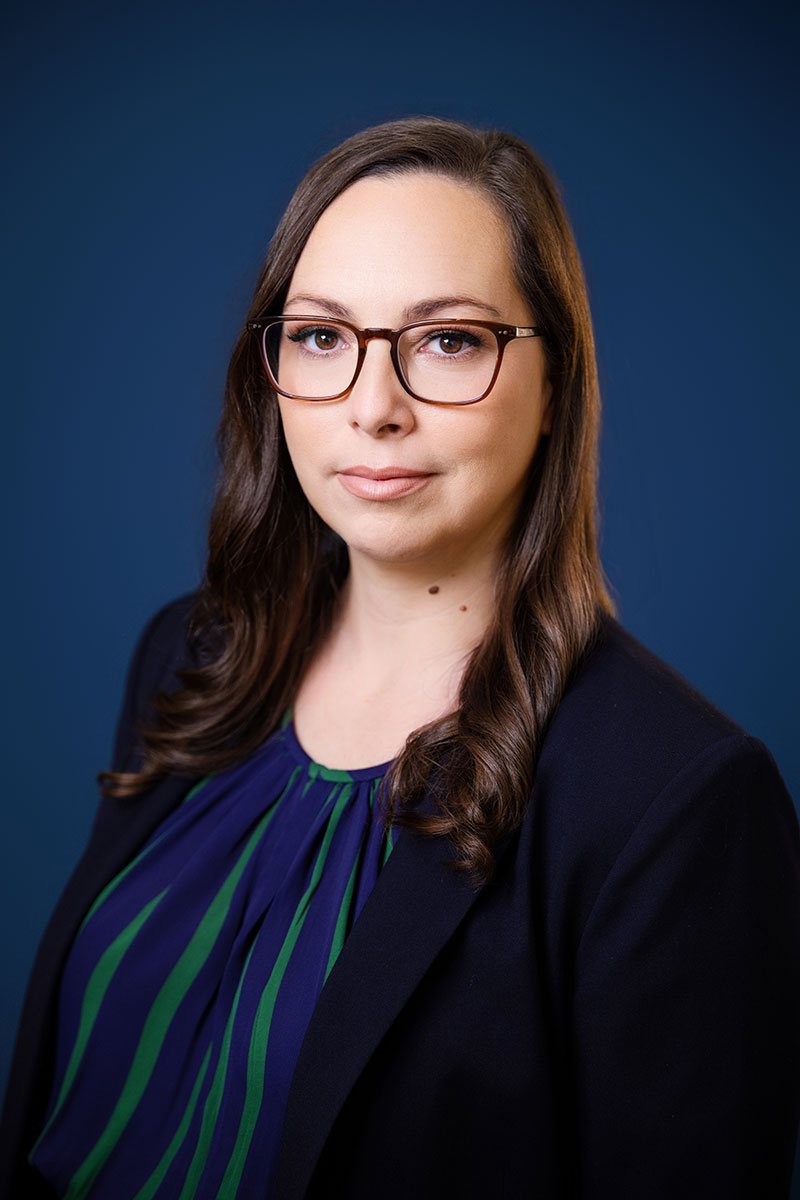
Dr. Christine Drew serves as Assistant Professor in Auburn University's College of Education within the Department of Special Education, Rehabilitation, and Counseling. She coordinates the Graduate Transition Certificate Program and advises the EAGLES Program, leveraging her expertise in behavior analysis for intellectual and developmental disabilities. Her academic foundation includes a Ph.D. from the University of Oregon, M.Ed. in Special Education from Texas State University, and B.A. in Economics from the University of Texas. Educational background: Ph.D. in Special Education from University of Oregon M.Ed. in Special Education with Applied Behavior Analysis concentration from Texas State University B.A. in Economics with minor in secondary social studies education from University of Texas Dr. Drew's research pioneers intersections of behavior analysis, sexuality education, and IDD support through parent collaboration. Her work advances telehealth interventions for challenging behavior and inclusive practices for neurodiverse populations, with growing emphasis on social justice dimensions like LGBTQIA+ inclusion and racial equity in autism services. Methodologically, she integrates single-case designs with community-based participatory approaches to address systemic barriers. Analysis of her 2021-2025 publications reveals three dominant trajectories: (1) Practical skill-building interventions for daily living and menstrual health, (2) Telehealth adaptations for family-implemented behavior support across generations, and (3) Critical examinations of equity gaps in disability research and incarceration systems. Her scholarly impact extends through editorial contributions to the Journal of Positive Behavior Interventions . Professional recognition includes Board Certified Behavior Analyst-Doctoral (BCBA-D) status achieved in 2019, though no formal scientific awards are documented. Her editorial board service demonstrates peer acknowledgment of expertise. As EAGLES Program Faculty Research Advisor, Dr. Drew mentors transition-focused projects while coordinating graduate certificate training. Her telehealth research during the pandemic suggests NIH or IES grant involvement, though specific funding isn't detailed. Current work emphasizes sustainable activism models for behavior analysts. Dr. Drew leads Auburn's EAGLES Program research initiatives, developing inclusive higher education frameworks for students with IDD. Her telehealth case studies involve multi-stakeholder teams including grandparents, parents, and school personnel, reflecting her commitment to ecological intervention approaches.
فقط ۷۵۰ نتیجه اول نمایش داده میشود. برای رسیدن به نتایج دقیقتر، جستوجو را با فیلترها محدودتر کنید.