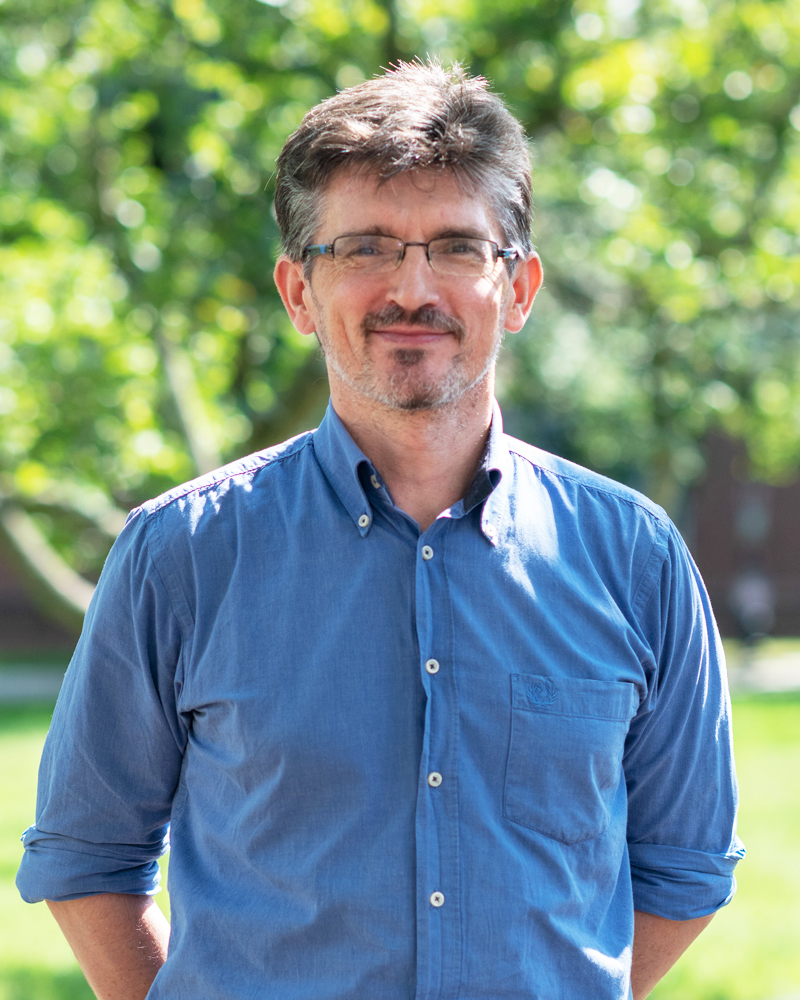
Janne Lindqvist is an Associate Professor at the Department of Computer Science, Aalto University. His research bridges security engineering, human-computer interaction (HCI), and privacy, with a focus on making security systems usable and user-centric. University: Aalto University Department: Department of Computer Science Rank: Associate Professor Email: janne.lindqvist@aalto.fi Lindqvist’s work spans security engineering , privacy systems , and user research , emphasizing practical authentication methods, password management, and human behavior in security contexts. He explores how users interact with systems like TPM APIs, gesture passwords, and mobile authentication mechanisms. Recent publications highlight trends in authentication systems , ubiquitous computing security , and mobile user behavior . Key themes include biometric authentication, gesture-based security, and balancing usability with cryptographic robustness. CHI'25 Honorable Mention Award CHI'24 Best Paper Award His research integrates empirical studies with technical implementations, such as analyzing password forgetting patterns and developing acoustic sensing for vehicle detection (e.g., Auto++, BO-Ear). Collaborative efforts span machine learning, psychology, and embedded systems.
Suchi Saria is the John C. Malone Associate Professor at Johns Hopkins University , with appointments in the Whiting School of Engineering (Computer Science), the Bloomberg School of Public Health (Health Policy & Management), and the Whiting School (Applied Math & Statistics). She directs the Machine Learning and Healthcare Lab and co-founded the Bayesian Health startup. Education: PhD in Computer Science from Stanford University (advisor: Daphne Koller), NSF Computing Innovation Fellowship at Harvard (2011), prior research at UMass (Barto, Madhavan), and industry experience at Aster Data Systems (acquired by Teradata). Research Focus: Saria develops statistical machine learning tools to extract insights from heterogeneous clinical data (structured/unstructured EHRs, sensor streams). Her work enables counterfactual reasoning for personalized treatment plans, dataset shift mitigation in healthcare AI, and weak supervision frameworks for mobile health apps. Key applications include sepsis prediction , Parkinson’s symptom tracking , and critical care optimization . Article Trends: Recent publications emphasize AI safety (2024-2025), addressing racial bias , transparency frameworks , and dynamic monitoring for clinical deployments. Her work spans conformal prediction , causal modeling , and policy guidelines for health AI. Scientific Awards: Sloan Research Fellowship (2018) DARPA Young Faculty Award (2016) MIT Technology Review TR35 Innovator (2017) Popular Science Brilliant 10 (2016) IEEE Intelligent Systems AI’s 10 to Watch (2015) NSF Computing Innovation Fellowship (2011) Rambus Fellowship (2004-2010) Best Paper Awards in ML, Informatics, and Medicine venues Advising & Grants: Saria mentors PhD students/postdocs in machine learning and health informatics , including funded projects like the NSF Smart and Connected Health Grant (2014) and Google Research Award (2014). Her lab’s TREWScore system (Science Translational Medicine 2015) is deployed in hospitals, while her Bayesian Health startup commercializes AI solutions for provider experience.
John P. O'Doherty serves as the Fletcher Jones Professor of Decision Neuroscience within Caltech's Division of Humanities and Social Sciences, holding continuous faculty appointments since 2004 (Assistant Professor 2004-07, Associate Professor 2007-09, Professor 2009-present, Fletcher Jones Professor 2021-present). He previously directed the Caltech Brain Imaging Center (2013-17) and maintains affiliations with the T&C Chen Center for Social and Decision Neuroscience. His educational background includes a B.A. from University of Dublin, Trinity College (1996) and D.Phil. from University of Oxford (2000). His research focuses on computational and neural mechanisms of reward-based learning and decision-making , employing fMRI, intracranial recordings, and mathematical modeling to investigate how the brain solves complex decision problems through evolutionarily conserved algorithms. Key areas include Reinforcement learning systems (model-based/model-free arbitration) Observational and social learning mechanisms Neural representation of value, risk, and uncertainty Computational phenotyping of mental disorders Temporal dynamics of goal persistence Analysis of his 2023-2025 publications reveals dominant trends in computational psychiatry (problem gambling, autism traits), hierarchical decision-making, and neuroeconomic modeling of social behavior. His work consistently integrates cross-species computational frameworks with human neuroimaging to identify transdiagnostic mechanisms. While specific awards beyond his endowed professorship aren't detailed, his leadership as Brain Imaging Center Director and prolific high-impact publications demonstrate significant recognition. Current advising includes graduate researcher Sneha Aenugu on goal-persistence projects, with administrative support from Mary A. Martin (mmartin@caltech.edu). His active research program continues to pioneer computational approaches to understanding decision pathologies.
Marc V Fuccillo is an Associate Professor of Neuroscience at the Perelman School of Medicine, University of Pennsylvania, where he leads a research laboratory focused on understanding the neural circuit mechanisms underlying behavioral control. His work bridges molecular, synaptic, and behavioral approaches to investigate how striatal circuits regulate mouse behavior from simple motor patterns to complex goal-directed actions. Fuccillo holds dual appointments in the Neuroscience and Cell and Molecular Biology Graduate Groups at Penn and maintains an active laboratory investigating the synaptic and circuit basis of neuropsychiatric disorders. Education: B.A. in Molecular and Cellular Biology and Music Performance (Violin) from Brown University (1998) Ph.D. in Developmental Genetics from New York University School of Medicine (2007) M.D. from New York University School of Medicine (2008) Fuccillo's research centers on the synaptic and circuit mechanisms of behavioral control, with particular emphasis on striatal circuits. His laboratory employs a range of technologies including mouse genetics, in vitro electrophysiology, in vivo imaging, and quantitative behavioral analysis to explore how neural circuits of the striatum regulate behavior and how disruptions in these circuits contribute to neuropsychiatric disorders. His work has particularly focused on autism-associated abnormalities in behavioral control, examining how synaptic adhesion molecules like neuroligins and neurexins shape circuit function and behavior, with significant findings regarding D1 dopamine receptor positive medium spiny neurons in the nucleus accumbens. Analysis of Fuccillo's recent publications reveals a strong focus on striatal circuit function across multiple dimensions. His work spans molecular neuroscience (examining synaptic adhesion molecules), cellular physiology (studying specific neuron types in striatal circuits), systems neuroscience (mapping circuit connectivity), and behavioral neuroscience (quantifying motor learning and decision-making). A unifying theme is how disruptions in specific molecular pathways lead to circuit-level abnormalities that manifest as behavioral phenotypes relevant to neuropsychiatric disorders, with particular attention to autism, OCD, and schizophrenia models. Scientific Recognition: Publications in high-impact journals including Nature Neuroscience, Current Biology, Cell Reports, and Neuron Research supported by multiple NIH grants including NIMH F32, NIMH K01, and HHMI Gilliam Fellowship awards for lab members Fuccillo actively mentors a diverse group of trainees including postdoctoral fellows, graduate students, and undergraduates. His laboratory has produced numerous successful alumni who have gone on to faculty positions, medical residencies, and graduate programs at prestigious institutions. His mentoring approach emphasizes technical skill development across multiple neuroscience disciplines while fostering independent scientific thinking. Current research in his lab is supported by NIH funding focused on understanding the molecular architecture of striatal circuits and their role in behavioral control, with three major research directions exploring molecular logic of striatal circuits, circuit mechanisms of behavioral control, and striatal dysfunction in neuropsychiatric disease models. The Fuccillo Laboratory operates within the Department of Neuroscience at the University of Pennsylvania, with access to state-of-the-art facilities for molecular, electrophysiological, imaging, and behavioral neuroscience research. The lab maintains active collaborations with other neuroscience research groups at Penn and beyond, creating a rich intellectual environment for studying the neural basis of behavior. Current research directions include investigating whether there is a molecular logic to striatal circuit composition, how striatal circuits shape behavioral control, and what mouse models of autism, schizophrenia, and OCD can reveal about striatal circuit dysfunction in disease pathophysiology.
Arvind Narayanan is a Professor of Computer Science at Princeton University and Director of the Center for Information Technology Policy (CITP). His research focuses on the societal impact of digital technologies, particularly artificial intelligence, with emphasis on policy implications, fairness, and privacy. He leads interdisciplinary efforts connecting technical research with real-world policy challenges. Dr. Narayanan earned his Ph.D. from the University of Texas, Austin in 2009. His academic journey has established him as a leading voice in the critical examination of AI systems and their societal consequences. Narayanan's research spans multiple domains where technology intersects with society. His work on AI includes critical analysis of AI capabilities versus marketing claims (AI Snake Oil), fairness in machine learning systems, and the reproducibility crisis in ML-based science. In privacy research, he led the Princeton Web Transparency and Accountability Project which uncovered how companies track users online, developing the OpenWPM tool used in over 100 studies. His early work demonstrated fundamental limits of de-identification techniques and how machine learning reflects cultural stereotypes. His recent publications reveal a consistent focus on demystifying AI capabilities while identifying genuine opportunities and risks. Narayanan's work bridges technical computer science with policy relevance, emphasizing the importance of evidence-based approaches to AI governance. His research increasingly addresses the limitations of prediction systems, the challenges of evaluating AI systems, and the need for transparency in foundation models. Presidential Early Career Award for Scientists and Engineers (PECASE) Privacy Enhancing Technologies Award (twice recipient) Privacy Papers for Policy Makers Award (three-time recipient) TIME's inaugural list of 100 most influential people in AI 2025 Graduate Mentoring Award Narayanan is recognized as an exceptional mentor, receiving Princeton's Graduate Mentoring Award in 2025. His policy engagement extends to congressional testimony, advisory roles, and frequent media commentary. He has secured significant research funding supporting his work on web transparency, AI policy, and cryptocurrency analysis. His research group has produced influential tools like OpenWPM for web privacy studies and contributed to foundational textbooks on cryptocurrencies and fairness in machine learning. At Princeton, Narayanan leads the Web Transparency and Accountability Project, a major research initiative that has conducted large-scale measurements of online tracking across millions of websites. He also co-founded and directs the CITP's AI Policy Initiative, which brings together researchers from multiple disciplines to address pressing AI governance questions. His work frequently involves collaboration with social scientists, legal scholars, and policymakers to develop practical solutions to technology governance challenges.
Ludo Waltman serves as Scientific Director and Professor of Quantitative Science Studies at the Centre for Science and Technology Studies (CWTS) within Leiden University's Faculty of Social and Behavioural Sciences. He holds multiple influential positions including Co-chair of the Research on Research Institute (RoRI), President of ASAPbio, and Editor-in-Chief of MetaROR (MetaResearch Open Review). As an Open Science Ambassador for Leiden University, he actively promotes transparency and innovation in scholarly communication. Waltman's research spans Quantitative Science Studies, Bibliometrics, and Metascience, with particular focus on university rankings, preprint ecosystems, open access publishing models, and research evaluation frameworks. His work critically examines the infrastructure of scholarly communication, advocating for more transparent and efficient systems that better serve the research community. He has been instrumental in developing initiatives like the Barcelona Declaration on Open Research Information and advancing publish-then-review models as alternatives to traditional peer review. His recent publications reveal a consistent emphasis on systemic issues in scholarly communication, with particular attention to preprint adoption across Europe, the relationship between assessment reform and publishing reform, and the methodological transparency of university rankings. These works collectively demonstrate his commitment to evidence-based approaches for improving research infrastructure and evaluation practices. Waltman actively engages in advising and shaping research policy through his leadership roles. As Co-chair of RoRI, he helps guide metascience research that examines the research system itself. His work with MetaROR promotes innovative peer review models, while his presidency at ASAPbio advances preprint culture in life sciences. He frequently collaborates with major research funders, publishers, and infrastructure organizations to implement practical reforms in scholarly communication. Through CWTS at Leiden University, Waltman leads a research environment focused on quantitative analysis of science and technology systems. His work connects with broader initiatives like the Research on Research Institute and the Barcelona Declaration movement, creating networks that bridge researchers, funders, and infrastructure providers committed to improving research practices.
Dr. Xinwei Ye serves as a Researcher in the Inorganic Chemistry and Catalysis division at Utrecht University's Faculty of Science. His primary affiliation is with the Department of Chemistry, where he conducts cutting-edge research on heterogeneous catalysis for environmental applications, particularly focusing on selective catalytic reduction (SCR) systems for automotive emissions control. With a strong background in inorganic materials and advanced characterization techniques, Dr. Ye contributes significantly to understanding catalyst structure-performance relationships. Educational Background: Master of Science (MSc) - Institution not specified in source Doctor of Philosophy (PhD) in Chemistry, Utrecht University (2022) Dr. Ye's research program centers on the development and mechanistic investigation of copper-exchanged zeolite catalysts for NH 3 -SCR processes. His work integrates multiple advanced characterization methodologies including operando spectroscopy, scanning transmission X-ray microscopy (STXM), and atom probe tomography to probe catalyst behavior under working conditions at nanometer resolution. This multi-technique approach enables unprecedented insights into active site speciation, reaction mechanisms, and deactivation pathways in emission control catalysts. Analysis of Dr. Ye's publication record from 2018-2022 reveals a cohesive research trajectory focused on copper-zeolite SCR catalysts. His work consistently addresses critical challenges in catalyst durability and performance optimization through fundamental understanding of structure-activity relationships. The publications demonstrate increasing sophistication in experimental approaches, moving from membrane synthesis (2018) to nanoscale deactivation studies (2020) and ultimately to comprehensive structure-performance correlations in his doctoral thesis (2022). As a core member of Utrecht University's catalysis research community, Dr. Ye collaborates extensively with the renowned Weckhuysen group. His research is conducted within well-equipped laboratories featuring state-of-the-art instrumentation for catalyst synthesis, testing, and characterization, including access to synchrotron radiation facilities for advanced X-ray techniques.
Madelon Hulsebos is a Researcher at CWI in Amsterdam, where she leads the Table Representation Learning (TRL) Lab and contributes to the Database Architectures group. She is also a faculty member of the European Laboratory for Learning and Intelligent Systems (ELLIS) Amsterdam unit. Her career bridges academia and industry, including a postdoctoral fellowship at UC Berkeley and prior industry experience in automating data analysis pipelines with ML. Education : PhD in Computer Science (University of Amsterdam, 2023), with research at Sigma Computing and MIT; Postdoctoral Fellow (UC Berkeley, 2024). Her research focuses on establishing tabular data as a key AI modality through Table Representation Learning , generative models for relational data, and robust systems for data analysis. Key interests include: Relational Table Embeddings LLMs for QA/text2SQL and data wrangling Retrieval over Data Lakes and Databases Agentic Systems for Data Science Democratizing insights from structured data Recent work highlights trends in benchmarking table retrieval (TARGET), semantic column detection (AdaTyper, Sherlock), and large-scale tabular data curation (GitTables, SchemaPile). These projects address challenges in metadata utilization, data lake search, and end-to-end systems for structured data. She has secured significant funding, including the NWO AiNed Fellowship Grant ($1M) for her 5-year DataLibra project. Madelon organizes workshops at NeurIPS , SIGMOD , and ACL , and reviews for top venues like VLDB and NeurIPS. Scientific Awards : NWO AiNed Fellowship Grant ($1M) She actively mentors students and collaborates on European AI initiatives, including monthly TRL seminars and workshops. Her lab's tools (GitTables, TARGET) are widely adopted for training foundation models on tabular data.
Yuni Xia, Ph.D., is an Associate Professor of Computer Science at the Luddy School of Informatics, Computing, and Engineering at Indiana University Indianapolis. She holds a Ph.D., M.S., and B.S. in Computer Science from Purdue University (2005, 2002) and Central China University of Science and Technology (1996), respectively. Education: Ph.D. Computer Science, Purdue University (2005) M.S. Computer Science, Purdue University (2002) B.S. Computer Science and Engineering, Central China University of Science and Technology (1996) Her research focuses on machine learning, AI, computer science education (especially AI integration), data mining, data stream mining, and database systems. She is actively involved in the school’s Database, Data Mining & Machine Learning Research Group and has collaborated with students on projects like the NSF-funded SYMBIOTE system (2008–2010). She serves as a USA Computing Olympiad national team coach and emphasizes innovative teaching methods. Research Grants: Co-PI for NSF-EHCS grant “SYMBIOTE: A Reconfigurable Logic Assisted Data Stream Management System for Multimedia Sensor Networks” (2008–2010) Awarded the IU Trustees Teaching Award twice and recognized as a Digital Faculty Fellow, Xia’s contributions span both research and education. She advocates for pedagogical advancements in AI and computational systems.
Özgür Atalay (ORCID: 0000-0003-1050-0685) is an Associate Professor at the Department of Textile Engineering , Istanbul Technical University . His research focuses on Textile-based Engineering with emphasis on Capacitive , Actuator , and Soft Robotics Engineering . Current projects include TexSoRVA (Textile-Based Soft Robotics for VR Applications), SMARTWASTE (Agricultural/Natural Waste Textiles), and TEXWEAROTS (Self-powered Wearable Soft Robotics). Collaborations span EU-funded initiatives, Turkish Scientific and Technological Research Council (TUBITAK), and industrial partnerships. His work integrates Internet of Things (IoT) with Electronic Textiles (E-textiles) , focusing on applications in Telerehabilitation , Wearable Robotics , and Smart Textiles . Key technologies include Capacitive Sensors , Conductive Yarns , and Fog Computing Frameworks . Recent publications highlight advancements in auxetic sensor design , cloud-controlled textile gloves , and self-powered wearable systems . His research output (58 publications) demonstrates a focus on practical implementations in Therapeutic Applications and Human-Machine Interaction . Özgür leads 6 active research projects, including: TexSoRVA : 04/2025-09/2026, EU-funded SMARTWASTE : 01/2023-12/2026, TTO-funded TEXWEAROTS : 11/2022-10/2027, EU-funded With over 1623 citations (h-index 15), his work contributes to Textile Electronics , Soft Robotics , and Wearable Technology fields.
Dr. Joey Paquet is a Tenured Associate Professor and Department Chair in the Department of Computer Science and Software Engineering at Concordia University in Montreal, Canada. He holds a PhD and specializes in research areas including Design and Implementation of Programming Languages, Context-Driven Computing, and Demand-Driven Computing. His work focuses on advancing programming paradigms and their applications in cybersecurity, distributed systems, and autonomic computing. Dr. Paquet is actively involved in thesis supervision across Computer Science and Software Engineering programs at both master's and doctoral levels. Research interests are centered around programming language design, particularly in demand-driven and context-aware systems. His contributions include frameworks like GIPSY and OpenISS, enabling scalable data processing and forensic computing. Recent work explores autonomic intent-driven networking, real-time gesture recognition, and IoT forensics. These efforts highlight his expertise in both theoretical constructs and practical implementations. His advising role supports students in MCompSc, MASc, and PhD programs. While specific grants are not detailed, his projects often involve interdisciplinary collaboration. Dr. Paquet is affiliated with platforms like LinkedIn and ResearchGate, reflecting an active academic presence. Key technical contributions include pioneering work on forensic computing backends, intent expression languages, and multimodal interaction systems. His research addresses challenges in cybersecurity, distributed systems, and service composition, with a focus on resilience and scalability.
Amilcare Porporato is the Thomas J. Wu '94 Professor of Civil and Environmental Engineering at Princeton University, with joint appointment at High Meadows Environmental Institute. His research integrates hydrology, ecology, and thermodynamics to study soil-water interactions and sustainable resource management. Education includes: Ph.D. Polytechnic of Milan (1996) M.S. Civil Engineering, Polytechnic of Milan (1992) Research explores nonlinear hydrologic systems, soil moisture dynamics, ecohydrology, and environmental complexity using theoretical and experimental approaches. His work advances understanding of water-biota interactions across scales from pore-level processes to landscape evolution. Honors and Awards: Hydrologic Sciences Award, AGU Borland Lecturer American Geophysical Union Fellow Inaugural Landolt Chair, EPFL Teaches courses on Environmental Thermodynamics (ENV 385/CEE 385) and Ecohydrology (CEE 587/ENV 587).
Aleksander Madsen is a Researcher at the University of Oslo (UiO), affiliated with the Department of Sociology and Human Geography under the Faculty of Social Sciences. His primary research interests include social stratification, immigrant assimilation in labor markets, welfare state policies, and statistical methods. He holds a PhD from Oslo Metropolitan University and an MA from UiO. Education: PhD in Sociology, Centre for the Study of Professions, Oslo Metropolitan University (2014–2018) MA in Sociology, University of Oslo (2013) His research explores labor market integration of immigrants, gender disparities in male-dominated workplaces, and the impact of education-occupation mismatch on health outcomes. He has conducted longitudinal studies on long-term sickness absence and labor market trajectories using sequence analysis. Dr. Madsen has held postdoctoral and research positions at UiO and NIFU, and was a visiting scholar at Stanford University's SCANCOR (2024) funded by the Fulbright Foundation. His work spans interdisciplinary collaborations, including projects on workplace diversity, ethnic stratification, and policy evaluations. Awards: U.S. - Norway Fulbright Foundation Grant (2023–2024) His research group affiliations include the Social Inequalities and Population Dynamics team and the ORGMIGRANT project, investigating work organizations and immigrant assimilation. Recent publications address residential networks among immigrants, workplace ethnic diversity, and women’s attrition from male-dominated sectors.
Dr. Seyyed Hamed Hosseini Nasab is a Lecturer at the Department of Health Sciences and Technology at ETH Zürich, affiliated with the Institute for Biomechanics and the Laboratory for Movement Biomechanics. His research focuses on biomechanical analysis of musculoskeletal systems, particularly knee mechanics, implant design, and ligament behavior in total knee arthroplasty. He integrates experimental, computational, and clinical approaches to improve surgical techniques and prosthetic design. Key research interests include knee joint loading, ligament elongation patterns, and the influence of implant conformity on post-surgical outcomes. He has contributed to standardized methods for measuring tibiofemoral implant loads and kinematics, earning the European Society of Biomechanics SM Perren Award in 2022. His publications emphasize computational modeling, in vivo testing, and finite element analysis to address challenges in orthopedic engineering. Recent work explores artificial neural networks for real-time knee contact force estimation and the biomechanical implications of surgical procedures like posterior cruciate ligament substitution.
Albert Lau is an Associate Professor of Civil and Environmental Engineering at the Norwegian University of Science and Technology (NTNU), located in Trondheim, Norway. He specializes in railway engineering, structural dynamics, and transportation systems. Lau holds leadership roles as the Study Program Leader for the MSc in Road, Railway, and Transportation Engineering, overseeing curriculum development and program coordination. His research focuses on railway track design, dynamic modeling of train-track interactions, and infrastructure maintenance, with projects such as the MeTinT initiative (Measurement with Train in Regular Traffic). He has extensive experience supervising master’s and PhD students, and his work emphasizes innovation in rail infrastructure and sustainable transportation solutions. Education and Professional Background: Lau earned his PhD from NTNU in 2018, focusing on numerical simulations of railway turnouts. Prior roles include Postdoc (2018–2020) and Assistant Professor (2017–2018) at NTNU, and teaching at Oslo Metropolitan University (2020). His industry experience includes roles as a Design Engineer (2010–2012) and Project Engineer (2013–2014) in Malaysia, where he managed construction projects and structural design. Research Interests: Lau’s work spans railway track dynamics, infrastructure health monitoring, and machine learning applications in transportation. Key projects include developing digital twins for railway test sites and analyzing ground displacement impacts on track anomalies. His contributions to the Road, Railway and Transport Group at NTNU aim to advance rail safety and efficiency through interdisciplinary approaches. Teaching and Outreach: Lau coordinates courses such as TBA4225 (Railway Engineering) and BA6012 (Fundamental Railway Technology). His outreach includes expert commentary on railway incidents, such as an interview on NRK (2024) discussing potential causes of a train accident. Current initiatives focus on revitalizing regional rail services and optimizing train positioning systems.