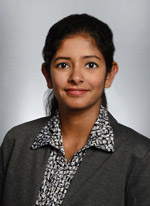
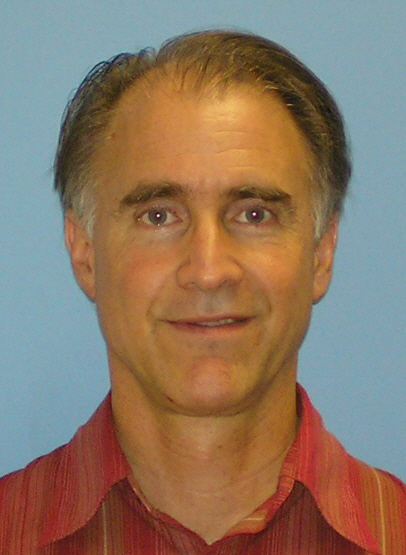
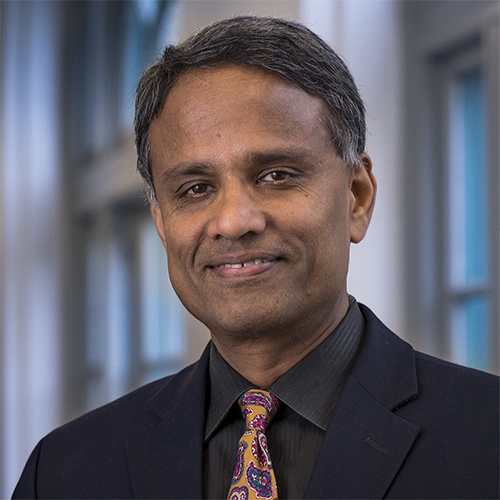
Ana Dyreson is an Assistant Professor in Mechanical and Aerospace Engineering at Michigan Technological University and Associate Research Director at the Center for Innovation in Sustainability & Resilience (CISR). She leads the Great Lakes Energy Group, focusing on climate change impacts on electric power systems , energy transitions in cold climates , and thermal power plant modeling . Her work bridges solar photovoltaic design , electricity grid operational modeling , and the energy-water nexus . Education : PhD in Mechanical Engineering, University of Wisconsin–Madison (2018) MS in Mechanical Engineering, Northern Arizona University (2014) BS in Engineering Mechanics, University of Wisconsin–Madison (2011) Research emphasizes climate-resilient energy systems , particularly solar energy in cold climates and grid-scale modeling . Her 2025-2022 publications investigate snow mitigation on PV panels , heat pump adoption , floating solar-hydropower hybrids , and climate stressor impacts on thermoelectric plants . She develops inclusive teaching methods and advises on renewable energy deployment through initiatives like the Tech Forward Initiative on Sustainability and Resilience . Her team collaborates on multisector dynamics and energy-water-climate research in the Great Lakes region.
Jennifer Pontius is a Senior Lecturer and serves as Director of the Environmental Sciences Program and Geospatial Technologies Program at the Rubenstein School of Environment and Natural Resources, University of Vermont. She is also Assessment Coordinator for the Rubenstein School and Principal Investigator for the Forest Ecosystem Monitoring Cooperative (FEMC). Her work focuses on integrating geospatial tools like remote sensing and GIS to address forest health challenges across scales, collaborating with USDA Forest Service, Vermont Agency of Natural Resources, and others. She holds a Ph.D. in Earth and Ecosystem Science from the University of New Hampshire and dual B.A. degrees in Environmental Science and Spanish from the University of Virginia. Research Expertise: Her research emphasizes scaling field observations to landscape-level insights using remote sensing and GIS, particularly in detecting forest decline caused by invasive species, climate change, and nutrient depletion. Current projects include novel forest structure mapping techniques and decision support tools for sustainable forest management in the northeastern U.S. Education: Ph.D. 2004 (University of New Hampshire), M.S. 1998 (University of New Hampshire), B.A. 1993 (University of Virginia). Grants & Projects: Principal Investigator on high-impact projects like the Regional Forest Health Monitoring Program (1992–present), Climate Change Exposure Mapping (2021–2024), and Vermont Forest Health Monitoring Program. Active in EPSCOR initiatives and fragmentation risk assessments. Labs/Teams: FEMC collaborator and leader in geospatial technology development. Directs Environmental Sciences program with curricula in forestry, sustainability, and policy.
Michael Sposi serves as Associate Professor of Economics and Director of Doctoral Studies at Southern Methodist University's Department of Economics. His academic leadership includes overseeing doctoral program development and curriculum design. Education: Ph.D. in Economics, University of Iowa Dr. Sposi's research bridges macroeconomics and international trade through innovative quantitative spatial modeling. His primary focus areas include global structural change patterns, demographic impacts on macroeconomics, U.S. tariff policy implications, global supply chain dynamics, and dynamic trade gains. Methodologically, he develops techniques to incorporate temporal dynamics into spatial economic models, creating novel frameworks for analyzing trade policy and structural transformation. His work frequently examines state-level heterogeneity in economic responses, particularly regarding tariff policies and demographic shifts. His publication portfolio demonstrates consistent output in top-tier journals including Journal of Monetary Economics , Journal of International Economics , and European Economic Review . Recent work analyzes strategic trade-offs in tariff policy design (2025), state-level consumption and wage responses to tariffs (2023), and demographic drivers of global imbalances (2022). The research exhibits strong methodological coherence through dynamic spatial modeling frameworks applied to trade policy, structural change, and demographic economics. Dr. Sposi teaches International Macroeconomics at both undergraduate and graduate levels, connecting theoretical frameworks with contemporary policy challenges. His transition from the Federal Reserve Bank of Dallas, where he provided economic analysis for FOMC meetings, informs his applied research approach. Current projects examine services trade expansion effects on global trade patterns and steel tariff impacts on U.S. economic resilience.
Dr. Srikanthan Ramesh serves as an Assistant Professor in the School of Industrial Engineering and Management within Oklahoma State University's College of Engineering, Architecture and Technology. Since establishing the Advanced Materials and Additive Manufacturing Laboratory in August 2022, he has led interdisciplinary research at the intersection of materials science, physical phenomena, and advanced manufacturing technologies, with applications spanning healthcare, aerospace, and electronics sectors. His educational foundation includes a Ph.D. in Mechanical and Industrial Engineering from Rochester Institute of Technology (2022) and an M.S. in Industrial and Manufacturing Systems Engineering from Iowa State University (2017). This academic background enables his innovative approach to manufacturing science. Dr. Ramesh's research program focuses on biological and micro-scale additive manufacturing (bio-AM), specializing in biomaterial development for tissue engineering and regenerative medicine. His work integrates computational fluid dynamics, machine learning, and real-time process monitoring to achieve precise control over mechanical, biological, and electrical properties of manufactured structures. He develops experimental tools and process frameworks for droplet-based and extrusion-based AM systems, with particular emphasis on wound healing applications and space-compatible microelectronics. Analysis of his 14 publications from 2020-2025 reveals a strong trajectory toward AI-driven manufacturing solutions, with increasing emphasis on multi-objective Bayesian optimization for bioink design, aerosol jet printing process refinement, and bioprinted tissue construct development. His recent work demonstrates sophisticated integration of machine learning with physical manufacturing processes to solve complex biomedical challenges. His scientific recognition includes: Doctoral Dissertation Pitch Competition (Runner-up), IISE, 2021 Best Oral Presentation, Graduate Showcase, Rochester Institute of Technology, 2019 Gilbreth Memorial Fellowship, IISE, 2018-2019 Wakonse College Teaching Fellowship, Iowa State University, 2018-2019 Graduate Research Excellence Award, Iowa State University, 2017 Best Overall Oral Presentation, Nano@IAstate, Iowa State University, 2017 Dr. Ramesh currently leads significant research initiatives including as Principal Investigator for an NSF REU Site on Additive Manufacturing and Cybersecurity ($464,606, 2025-2028) and a NASA EPSCoR Travel Grant for aerosol jet printing in space missions (2024-2025). As Co-PI on an NSF grant for Privacy-aware Collaborative Design in additive biofabrication ($599,981, 2025-2028), he develops frameworks for mass personalization in medical applications while addressing data security challenges. These projects support his lab's mission to advance manufacturing science through rigorous experimentation and computational innovation. The Advanced Materials and Additive Manufacturing Laboratory operates as a collaborative hub where Dr. Ramesh directs research teams in developing novel biomaterials, optimizing printing processes, and creating functional prototypes for wound dressings, liver tissue models, and space-rated microelectronics. The lab's interdisciplinary approach combines expertise in materials characterization, computational modeling, and machine learning to push the boundaries of what's possible in additive manufacturing for critical applications.
Tsitskari Efi is an Associate Professor at the Department of Physical Education and Sport Sciences, Democritus University of Thrace. She specializes in Sport Marketing and Communication Technologies, focusing on service quality in sports facilities and the application of new technologies in physical education. Her office is located in Β2-1 and she holds office hours on Tuesdays 11:00-13:00. Her research explores intersections of technology, marketing, and ethics within sports contexts. Key themes include corporate social responsibility in sports clubs, ethical decision-making by fitness managers, and the adaptation of service quality models to Greek cultural contexts. Recent work examines stroke patient needs assessment and loyalty mechanisms in fitness centers. Publications span over 20 years, with notable contributions to journals like International Journal of Sport Management , Education & Information Technologies , and Total Quality Management . Though no explicit awards are listed, her sustained academic output reflects significant scholarly contribution. No formal student advisees or grant details are documented. She maintains an active publication schedule addressing emerging trends in sport management and leisure studies.
Steve Muylle is a Full Professor of Digital Strategy and Business Marketing at Vlerick Business School and Ghent University, and serves as Associate Dean Digital Learning. His expertise spans digital transformation, B2B marketing, and leveraging technologies like AI, blockchain, and IoT. He holds a Doctor in Business Engineering from Solvay Management School and has held visiting roles at SMU’s Cox School of Business and Vanderbilt University’s Owen Graduate School. Education: PhD in Business Engineering (Solvay Management School) Visiting Doctoral Researcher (Owen Graduate School of Management, Vanderbilt University) Research Interests: Digital strategy, B2B customer experience, AI-driven marketing, and digital innovation frameworks. His work emphasizes actionable insights for executives in sectors like energy, healthcare, and finance. Recent trends in his publications focus on agentic marketing, VR in education, and competitive digital innovation. Impact: Designs executive programs like the Digital Strategy Open Programme and the Executive Master Class in B2B Marketing/Sales. Recognized for contributions to digital learning and open banking strategies. Board member at multiple firms.
Milton Boyd is a Professor in the Department of Agribusiness and Agricultural Economics at the University of Manitoba, Faculty of Agricultural and Food Sciences. He also serves as an Adjunct Professor in Risk Management and Actuarial Science at the Asper School of Business. His research and teaching focus on quantitative finance, risk management, derivatives, and international business. PhD, Purdue University, United States MA, Washington State University, United States BA, Seattle Pacific University, United States His research interests center on quantitative finance and agricultural risk management , with a strong emphasis on derivatives, portfolio strategies, and market behavior. He applies statistical and financial modeling to real-world agricultural and commodity markets, often integrating international and policy perspectives. His work bridges academic rigor with practical application in agribusiness and government sectors. His recent publications reflect a consistent focus on financial risk modeling, commodity pricing, and market efficiency. Themes include hedging strategies, volatility analysis, and the role of futures markets in price discovery and income stability. His work spans both developed and emerging markets, with increasing attention to Asia and global trade dynamics. Two University of Manitoba Awards for Research and Outreach Fellow of Seattle Pacific University Best Conference Presentation Award Outstanding Journal Paper Award Dr. Boyd has advised numerous graduate students and contributed to academic service through editorial roles, conference committees, and keynote presentations. He has secured research funding through university and external grants, though specific grants are not listed. His outreach includes media commentary, industry training, and policy advising, particularly in commodity market development. He has been actively involved in professional development and public service, including teaching short courses at the Winnipeg Commodity Exchange (ICE), Canadian International Grains Institute, and Canadian Securities Course. He has served as a Policy Advisor for the Frontier Center for Public Policy and as a columnist for Grainews , contributing to public understanding of financial and commodity markets.
Dr. David E. Lumley is the Cecil & Ida Green Endowed Chair in Geophysics and Professor of Earth Sciences & Physics at the University of Texas at Dallas (UTD), serving as Department Head since 2021. He holds a PhD from Stanford University (1995), MSc and BSc from the University of British Columbia (1989/1986). His research focuses on wavefield inversion methodologies for 4D time-lapse seismology, subsurface imaging, and applications to CO2 sequestration, induced seismicity, and planetary geodynamics. Lumley directs UTD's Seismic Imaging & Inversion Lab and previously led the Center for Energy Geoscience at University of Western Australia (2009-2017). Education: PhD in Geophysics, Stanford University (1995) MSc in Geophysics & Astronomy, UBC (1989) BSc (Hons) in Geophysics & Astronomy, UBC (1986) Research Interests: Pioneering 4D time-lapse seismology, seismic full-waveform inversion (FWI), ambient noise imaging, and applications to energy transition challenges. Current projects include monitoring Yellowstone's magmatic system, CO2 storage validation, and induced seismicity characterization. Combines HPC, AI, and geostatistical methods to solve inverse problems in exploration geophysics and environmental monitoring. Awards: SEG's J. Clarence Karcher Award (1996), 8 Best Paper Awards, Distinguished Lecturer for AAPG/SEG/SPE, and SEG Endowed Scholarships. Named SEG's first 'Pioneer of Geophysics' in 2005. Grants: Over $135M in competitive funding from NSF, DOE, DOD, and international agencies. Active in industry partnerships through ventures like 4th Wave Imaging (acquired by Fugro, 2007). Labs/Teams: Leads Seismic Imaging & Inversion Lab at UTD, collaborating with global networks in Australia, Europe, and industry consortia. Co-developer of seismic inversion software tools used in energy and environmental sectors.
Abbas Roozbahani is an Associate Professor in the Department of Building and Environmental Technology at the Faculty of Science and Technology, Norwegian University of Life Sciences (NMBU). His academic expertise lies in Water Infrastructure Engineering, where he contributes to research, teaching, and project leadership in sustainable urban water systems. His research interests include: Sustainable water management Urban water transport systems (drinking water, wastewater, stormwater) Risk assessment of water infrastructure Simulation and optimization of water systems Hydroinformatics and artificial intelligence Asset management for urban water infrastructure The analysis of his recent publications (2022–2025) reveals a strong focus on integrating advanced computational methods—such as Bayesian Networks, Fault Tree Analysis, machine learning (e.g., LSTM), and multi-criteria decision-making (MCDM)—into water resources management. His work frequently addresses urban stormwater optimization, drought and climate change risk assessment, groundwater forecasting, and the water-food-energy nexus, demonstrating a consistent trend toward data-driven, risk-informed, and sustainable solutions for complex water systems. Dr. Roozbahani teaches graduate-level courses including: THT301 - Asset Management for Urban Water Infrastructure THT302 - Analysis and Design of Water Distribution Networks THT261 - Introduction to Water and Wastewater Systems (co-instructor) THT313 - Water Management in Changing Conditions (co-instructor) THT390 - Preparations for the Master's Thesis (co-instructor) He has supervised multiple MSc and PhD students and led projects funded by academic and private institutions. His collaborative research spans international institutions, with frequent co-authorship on topics related to risk modeling, AI in hydrology, and sustainable infrastructure planning.
Per Skougaard Kaspersen is a Senior Officer at the Department of Technology, Management and Economics at the Technical University of Denmark (DTU), specializing in Climate Economics and Risk Management. His work contributes to climate and energy policy, with a strong emphasis on climate change adaptation, urban flooding, and cost-benefit analysis for sustainable infrastructure. His research interests lie at the intersection of climate change, urban development, and economic policy, focusing on flood risk assessment, resilience planning, and climate services for energy and financial sectors. He utilizes interdisciplinary methods combining remote sensing, flood modeling, and socio-economic analysis to evaluate climate risks in both developed and developing regions. Recent publications highlight his work on cross-sectoral climate risk hotspots in Europe, climate services for renewable energy markets, and the socio-economic impacts of extreme weather in Cambodia. His research demonstrates a consistent focus on integrating scientific data into policy-relevant decision-making frameworks. Reviewer for Remote Sensing and IEEE Geoscience and Remote Sensing Letters Organizer and lecturer in training programs on cost-benefit analysis and climate adaptation Active contributor to EU-level climate research projects such as CROSSEU and COHERENT He has coordinated and participated in multiple research projects funded by Innovation Fund Denmark and other sources, focusing on climate adaptation, urban flood management, and renewable energy integration. His work has been referenced in policy sources and widely shared in academic and public media. Kaspersen is involved in teaching and capacity-building activities, including courses on climate adaptation methods and tools, and has organized workshops to train professionals in climate risk assessment techniques.
Rajesh Rajaguru is a Senior Lecturer in Marketing at the Tasmanian School of Business and Economics (TSBE), University of Tasmania. He is actively engaged in research, teaching, and industry collaboration, with a focus on marketing management, consumer behavior, sustainability, and digital technologies. His work bridges academia and practice, particularly in service ecosystems, SME resilience, and ethical consumption. Research Interests: Marketing Management and Strategy Consumer Behavior and Decision-Making Sustainability and Responsible Consumption Digital Marketing and eWOM Blockchain and AI in Consumer Trust Service Exclusion and Inclusive Service Design SME Resilience and Market Shaping His recent publications reflect a strong trend toward interdisciplinary research, integrating insights from psychology, information systems, and environmental science. A significant portion of his work explores how technology and sustainability concerns influence consumer trust and purchasing behavior, particularly in food, hospitality, and retail sectors. He also investigates pedagogical innovations in higher education and supply chain dynamics in emerging markets. Scientific Awards and Recognition: Certified Practicing Marketer, Australian Marketing Institute (since 2019) Supervision and Grants: Rajesh Rajaguru has successfully supervised multiple PhD students to completion and is currently supervising a doctoral candidate on SME resilience. He has secured both internal and external funding, including grants from the University of Tasmania, Australian Institute of Business, and the Korean Government. He is also a key participant in the Marine Bioproducts Cooperative Research Centre, a major $59 million initiative funded by the Australian Government and industry partners. Labs and Research Teams: He collaborates within interdisciplinary research teams focused on service ecosystems, sustainable business models, and digital transformation. His work is aligned with the UN Sustainable Development Goals, particularly Responsible Consumption and Production , Industry, Innovation and Infrastructure , and Climate Action .
Suchi Rajendran is an Assistant Professor with a joint appointment in the Department of Industrial and Systems Engineering and the Department of Marketing at the University of Missouri, Trulaske College of Business. She is also the Director of Undergraduate Studies in ISE and actively leads research in prescriptive analytics, operations research, and data-driven decision-making across healthcare, transportation, and business systems. Education: PhD in Industrial Engineering, Pennsylvania State University Her research focuses on applying advanced analytics to solve complex real-world problems. Key areas include optimizing healthcare delivery systems, supply chain and logistics (notably blood supply chains and port operations), marketing data analytics, and emerging transportation systems such as air taxis and electric vehicle infrastructure. She leverages predictive and prescriptive artificial intelligence to forecast demand and recommend optimal operational strategies. Her recent work, highlighted in university news up to 2025, demonstrates a strong trend toward interdisciplinary, AI-powered solutions in logistics, sustainability, and public service. She frequently collaborates with industry partners like Case New Holland and Schneider Electric, and has secured funding from agencies such as the Alaska Department of Transportation and the National Science Foundation. Scientific Awards and Recognitions: Richard Wallace Faculty Incentive Grant Bob Bloss Faculty Enhancement Grant Winemiller Excellence Award in Data Analytics NSF CHOT Scholar (Penn State) Service Enterprise Engineering Fellow DAAD-WISE Fellowship (Germany) Lean Six Sigma Black Belt Dr. Rajendran is actively involved in mentoring students, having advised honors-winning graduate and undergraduate researchers. She leads an NSF-funded Research Experiences for Undergraduates (REU) program that brings 10 students annually to Mizzou to work on AI-enabled operations engineering. Her grants support hands-on, interdisciplinary research that prepares the next generation of engineers and data scientists. She is affiliated with cutting-edge research initiatives involving simulation modeling, digital communication platforms, and AI integration in industrial systems. Her lab and team focus on developing practical, scalable solutions for logistics, healthcare, and sustainable transportation, often through collaborative, real-world projects with public and private stakeholders.
Paul Edward Simshauser is a Professor at Griffith Business School, Griffith University in Brisbane, Australia. His research focuses on energy economics, particularly Australia's National Electricity Market (NEM), with extensive publications on electricity market design, renewable energy integration, and energy policy. His research interests span energy economics, electricity market regulation, renewable energy policy, electricity pricing mechanisms, power system economics, resource adequacy, fuel poverty, and renewable energy zones. His work addresses critical challenges in energy market design, particularly as markets transition toward higher renewable penetration. He examines the economic implications of policy interventions, market structures, and technological changes in electricity systems. Analysis of his recent publications reveals a strong focus on Australia's energy transition challenges. His research examines renewable energy zone development, electricity market design for high renewable penetration, price formation mechanisms, and the social impacts of energy policy. He frequently analyzes the intersection of engineering constraints and economic outcomes in power systems, with particular attention to how market structures affect investment and operational decisions. Professor Simshauser has made significant contributions to understanding the economic dimensions of Australia's National Electricity Market, including its reform experience, policy challenges, and response to the energy transition. His work provides critical insights for policymakers navigating the complex trade-offs between energy security, affordability, and sustainability. He has advised numerous PhD students and research projects focused on energy economics and electricity markets. His research has been supported by grants from energy policy research groups and institutions focused on electricity market analysis and reform.
Michael Murray is a Lecturer in the Department of Biological Sciences at the College of Science and Mathematics, with additional affiliations in the College of Allied Health Sciences and the Department of Interdisciplinary Health Sciences, supporting the Masters in Public Health program. His academic work bridges environmental science and public health, emphasizing water resources and ecological sustainability. Education: Ph.D. in Water Resources Engineering, University of Wisconsin–Madison, 1996 M.S. in Water Resources Engineering, University of Wisconsin–Madison, 1987 B.S. in Geological/Geophysical Engineering, Colorado School of Mines, 1982 Dr. Murray's research focuses on pressing environmental challenges, including eutrophication in the Great Lakes, environmental cycling of PFAS, ecological indicators, and sustainability across societal sectors. His teaching encompasses environmental biology, aquatic sciences, air pollution, and environmental policy, reflecting his interdisciplinary expertise. He has taught courses such as BIOL 1102 (Environmental Biology) and its laboratory component. His recent publications highlight long-term stressors like climate change on Great Lakes fisheries, the re-eutrophication of Lake Erie due to harmful algal blooms, and stakeholder-driven agricultural conservation strategies. These works reflect a strong trend toward applied environmental problem-solving, integrating ecological science with policy and community engagement. Scientific Awards: 2022 Honor or Award (unspecified) 2018 Honor or Award (unspecified) 1993 Honor or Award (unspecified) 1990 Honor or Award (unspecified) Dr. Murray has contributed significantly to scholarship in environmental science, particularly in the areas of water quality and ecological risk assessment. While no formal advising or grant activities are detailed in the text, his publications and teaching indicate sustained scholarly engagement. He has authored or co-authored key works on mercury assessments and wildlife indicators, contributing to frameworks used in ecological monitoring and policy development. His work is closely tied to large-scale environmental systems, particularly the Laurentian Great Lakes, and he emphasizes interdisciplinary approaches that link engineering, ecology, and public health. Though no formal lab or research team is mentioned, his research themes suggest collaboration across environmental science, public health, and policy domains.
Ramayya Krishnan is the W. W. Cooper and Ruth F. Cooper Professor of Management Science and Information Systems at Carnegie Mellon University, jointly appointed in Heinz College and the Department of Engineering and Public Policy. He served as Dean of Heinz College from 2009 to 2025 and has been a faculty member since 1988. He is a leading expert in digital transformation, data analytics, and AI policy, with extensive collaborations in government and industry. His education includes: B.Tech. in Mechanical Engineering, Indian Institute of Technology Madras (1981) M.S. in Industrial Engineering and Operations Research, University of Texas at Austin (1983) Ph.D. in Management Science and Information Systems, University of Texas at Austin (1987) Krishnan's research focuses on the responsible use of AI, data-driven workforce development, risk management in information systems, and the intersection of technology and public policy. His work bridges operations research, information systems, and policy design, with a strong emphasis on real-world impact. He has pioneered academic programs and research centers that integrate analytics with societal challenges. His recent publications reflect a strong trend in AI measurement science, policy design for emerging technologies, and the ethical deployment of data analytics in public and private sectors. These works emphasize safety, fairness, transparency, and accountability in AI systems, aligning with national priorities and global challenges. His scientific awards and honors include: INFORMS Fellow AAAS Fellow Elected Member, National Academy of Public Administration Commissioner, Geotech Center of the Atlantic Council IIT Madras Distinguished Alumnus Award (2017) Y. Nayudamma Award (2015) GM Outstanding Distance Learning Faculty Award Martcia Wade Teaching Award Two-time recipient of Heinz College IT Teaching Award UPS George D. Smith Prize (awarded to Heinz College under his leadership) Appointed to the National AI Advisory Committee (NAIAC), 2022 Krishnan has been a serial academic entrepreneur, founding the Master of Information Systems and Management program and the Decision Analytics and Systems (DAS) undergraduate minor. He has founded four externally funded research centers, raising nearly $100 million, including the Block Center for Technology and Society. He advises policymakers at the highest levels, including the U.S. President, the Commonwealth of Pennsylvania, the U.S. Government Accountability Office, and international bodies like the Asian Development Bank and the World Economic Forum. His leadership in the CMU/NIST AI Measurement Science & Engineering Cooperative Research Center (AIMSEC) underscores his role in shaping national AI standards. He leads or is affiliated with several key labs and teams: Block Center for Technology and Society (Director) CMU/NIST AI Measurement Science & Engineering Cooperative Research Center (AIMSEC) (Lead Research Coordinator) NIST AI Innovation Lab (NAIIL) (Contributing Leader) Global Agenda Council on Data Driven Development, World Economic Forum (Former Member)