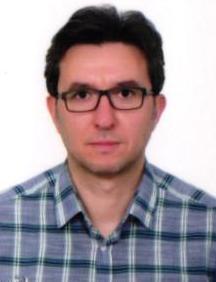
Professor Sander Nieuwenhuis (Leiden University) specializes in Cognitive Neuroscience of Decision Making through behavioral, EEG, and pharmacological approaches. His work bridges prefrontal cortex function and noradrenergic system mechanisms in human cognition. Studied cognitive psychology (Groningen) and earned PhD (Amsterdam, 2001) International experience: Cambridge University (visiting research), Princeton University (postdoc) Research focuses on noradrenaline's role in attention, decision-making, and cognitive control via: Locus coeruleus-norepinephrine system dynamics Phasic vs. tonic alertness effects Cognitive task performance under neuromodulator deficiency Neuroprotective pathways in Alzheimer's models Recent publications analyze DBH deficiency (Jepma et al., 2011) and attentional blink mechanisms (Nieuwenhuis et al., 2005). His Temporal Attention Lab integrates fMRI, genetics, and computational modeling . Teaching leadership includes: Chair of Research Master Program Committee Coordinator of Scientific Writing courses
Prof. Muhittin Eren Uçkan is a Professor in the Department of Civil Engineering at Rafet Kayış Faculty of Engineering. His work focuses on earthquake engineering, structural dynamics, and seismic performance of infrastructure systems. Education: MS in Civil Engineering (1987) from Middle East Technical University, PhD in Earthquake Engineering (1994) from Boğaziçi University Key Research Areas: Seismic response of pipelines, soil-structure interaction, base isolation systems, and infrastructure resilience His recent publications analyze post-earthquake performance of transmission pipelines (2024 Kahramanmaras), liquid storage tanks (2023), and buried steel pipes (2016–2019). Studies emphasize fault crossing effects , sloshing damping , and seismic risk frameworks . Administrative roles include Vice Dean at Gebze Institute of High Technology (1998), Head of Department (1995–1998), and Commission Presidency at Alanya Aladdin Keykubat University (2020).
Navid Bayati is an Associate Professor at the University of Southern Denmark, affiliated with the Institute of Mechanical and Electrical Engineering and the Centre for Industrial Electronics. He leads the Control and Protection of Smart Grids (CAP-SG) group and focuses on renewable/hybrid power systems, microgrid protection, and grid code compliance. Education: Ph.D. in Power Systems & Microgrid Protection (2020, Aalborg University); M.Sc. in Power Systems (2017, Amirkabir University of Technology) His research spans renewable energy integration , transient analysis , grid interconnection , and digital twin applications . Recent work includes machine learning for carbon emission prediction, fault localization in DC microgrids, and supercapacitor resilience in hybrid systems. Collaborations include projects like IEA Wind Task 50 and RePoSys , addressing grid renovation, life cycle assessment, and digital twin resilience. His teaching portfolio covers power electronics , energy management , and microgrid control .
Prof. Dr. İbrahim Halil Ekşi is a faculty member at Gaziantep University’s Faculty of Economics and Administrative Sciences, Department of Business Administration. He has served as Professor (2020-present), Associate Professor (2014-2020), and Assistant Professor (2008-2014) at Gaziantep and Kilis 7 Aralık Universities. His research focuses on finance, financial markets, risk management, and corporate governance, with 57 academic publications. He has advised 9 PhD and 19 Master’s students, and received awards such as the 2024 Mesleki Dernekler Lisansüstü Gayrimenkul Tez Ödülleri Yarışması and 2017 Uludağ University Bilim-Sanat Ödülü. His education includes a PhD in Business Administration (2007, Süleyman Demirel University), Master’s in Business Administration (2003, Gaziantep University), and BSc in Business Administration (1998, Uludağ University). He has led projects like TÜBİTAK 1001’s 'Finansman ve Halka Açılma Tutumları (ISO 1000 Uygulaması)' and EU-funded studies on refugee financial inclusion. His editorial roles span journals like Journal of Economics and Business Issues and Financial Inclusion Across Asia . Active in professional associations (MUFAD, Finans Bilim Platformu), he teaches courses in International Finance, Financial Management, and Investment Analysis. Hakemli makaleleri, kitap bölümleri ve uluslararası konferans bildirileri Türkiye, Balkan ülkeleri ve BRICS-T ekonomileri üzerine bankacılık düzenlemeleri, küresel çatışmaların finansal piyasalara etkisi, ve yapay zekâ uygulamaları gibi temalarda yoğunlaşmıştır. 57 makale ve 8 kitap yayımlarında finansal piyasalar, kurumsal yönetim, ve risk yönetimi gibi disiplinlerde katkı sağlamıştır. 2024 yılında Finance Research Letters dergisinde 'Climate Uncertainty and Green Betas' başlıklı makale ile 2023 yılında Energies ’de 'Geothermal Energy and FDI' gibi çalışmalarıyla güncel finansal gelişmelere katkıda bulunmuştur. 2018 Nobel Yayınevi’nden yayınlanan Yatırımların Temelleri kitabında portföy yönetimi ve vergi stratejisi bölümleri kaleme almıştır. Ödülleri: 2024: Mesleki Dernekler Lisansüstü Gayrimenkul Tez Ödülleri Yarışması (GYODER ve İktisadi Araştırmalar Vakfı Proje Ödülü) 2017: Uludağ Üniversitesi Bilim-Sanat Ödülü Önemli projeleri: 2022-2024: Avrupa Birliği fonu ile 'Suriyeli Mültecilerin Finansmana Erişimi' 2021-2022: TÜBİTAK 1001 destekli 'Türkiye’de Reel Sektör Firmalarının Finansmanı' 2018-2019: Gaziantep Üniversitesi destekli 'Kalkınma Ajansı Finansal Desteklerinin Firmalara Etkisi'
Daniel J. Bain is an Associate Professor in the Department of Geology & Environmental Science at the University of Pittsburgh, where he also serves as Deputy Director of the Pittsburgh Water Collaboratory. He holds a B.A. in Chemistry and Geography from Macalester College, an M.S. and Ph.D. in Geography & Environmental Engineering from Johns Hopkins University, and completed a National Research Council Postdoctoral Fellowship at the U.S. Geological Survey's Water Resources Division. His research integrates hydrology, geomorphology, biogeochemistry, ecology, and spatial analysis to assess human impacts on environmental systems over centuries. Focus areas include: Fluvial (stream) system dynamics and sediment chemistry Urban critical zone processes and land-use impacts Water quality monitoring in anthropogenic landscapes Green infrastructure performance and stormwater management Environmental justice implications of urbanization Recent publications (2024-2025) demonstrate strong emphasis on urban hydrology, metal contamination pathways, climate-health interactions in vulnerable communities, and novel assessment methods for environmental systems. Research spans Pittsburgh's urban watersheds to international sites like China and El Salvador, employing field measurements, laboratory analysis, and geospatial approaches. Dr. Bain leads the Bain Lab at Pitt's Space Research Coordination Center, focusing on environmental chemistry and sustainable water systems. He collaborates extensively with community partners, including the Pittsburgh Center for Healthy Environments and Equity Research, and co-organizes symposia on urban environmental challenges.
Anja Kraus is a Professor in Arts and Culture Education at Stockholm University, Department of Teaching and Learning. She has held academic positions at the University of Education Ludwigsburg (2003-2013), Linnaeus University Växjö (2013-2019), and joined Stockholm University in 2018. Her academic journey began with studies in Philosophy and Educational Sciences at Free University Berlin and Arts Education at the University of the Arts Berlin, Germany. Her research focuses on Pedagogical Anthropology, with special emphasis on tacit knowledge, corporeality, aesthetic education, and multimodal learning. She has developed systematic approaches to understanding tacit knowing in educational contexts, particularly examining how corporeality, aesthetic learning, and inclusivity function in schools. Her work bridges phenomenological, ethnographical, and body-phenomenological approaches with practical educational applications. She has made significant contributions to understanding how materiality, performativity, and imaginaries shape educational practices. Her recent publications reveal strong trends in embodiment studies, with particular attention to kinesthetic learning, spatial pedagogy, and the relationship between aesthetics and sustainability. Her work increasingly explores educational practices within the Anthropocene context, examining how arts education can address environmental concerns through embodied approaches. The recurring theme across her publications is the exploration of how tacit knowledge manifests in educational settings and how this understanding can transform teaching practices. As head convenor of the international scientific network 'Tacit Dimensions of Pedagogy,' she has organized numerous workshops and conferences addressing pedagogical terminologies across languages. Her collaborative projects span Scandinavia, Europe, Asia, and North and South America, demonstrating her commitment to transcultural approaches in educational research. Her teaching spans multiple languages (German, English, Swedish, Spanish) and covers diverse areas including Classroom Education, Cultural and Media Education, Sciences of Bildung, Elementary Education, and Vocational Training. Her pedagogical approach emphasizes practice-oriented competence, inclusive school development, and aesthetic learning environments with a comparative perspective.
Simon Harvey is a Professor in Energy Engineering at Chalmers University of Technology, Sweden. With a background in Mechanical Engineering and over two decades of academic leadership, he focuses on industrial energy systems optimization and sustainable process integration. PhD from Thayer School of Engineering, Dartmouth College (1994) Assistant Professor at Chalmers (1997-2011) Full Professor since 2011 His research spans : Energy efficiency in chemical processes Biomass-based industrial energy systems Biorefinery techno-economics Climate impact assessment methodologies Energy market scenario modeling Recent publications demonstrate expertise in carbon capture integration, heat recovery optimization, and biomass utilization for negative emission technologies. Collaborative work emphasizes cross-sectoral energy synergies and uncertainty analysis in industrial retrofits. Key trends include: Decarbonization of pulp/refinery operations Hybrid electric/steam generation systems Excess heat valorization in district heating Process flexibility under uncertain parameters
Phil Pavilionis is an Associate Professor of Kinesiology in the School of Public Health at the University of Nevada, Reno. With over 20 years of clinical experience as a Certified Athletic Trainer (ATC) and Certified Strength and Conditioning Specialist (CSCS), he bridges academic research with practical applications in sports medicine. His roles include teaching undergraduate/graduate courses, conducting research in the Neuromechanics Laboratory, and serving as an adjunct clinical athletic trainer for Nevada Sports Medicine. Education: Ph.D. in Neuroscience, University of Nevada, Reno (2024) M.S. in Exercise Science, California University of Pennsylvania (2007) B.S. in Health Science, University of Nevada, Reno (1995) Dr. Pavilionis specializes in head injury prevention and virtual reality applications for concussion evaluation. His research leverages clinical experience to develop standardized assessment protocols, focusing on vestibular-ocular motor screening (VOMS) using virtual reality to reduce administrator variability. Key investigations include oculomotor deficits following concussion, head impact biomechanics in football using instrumented mouthguards, and minimal detectable change metrics for neurocognitive tests like ImPACT. His work integrates neuroscience, kinesiology, and engineering to improve concussion diagnosis and management. Analysis of his 45 publications (2022-2025) reveals three dominant trends: (1) Virtual reality standardization of concussion assessments, particularly VOMS protocols; (2) Head impact monitoring using instrumented mouthguards to evaluate protective equipment like Guardian Caps; and (3) Machine learning applications for objective concussion detection through eye-tracking and biomechanical data. These studies consistently address the critical need for objective, standardized tools to overcome subjective symptom reporting in sports concussion management. Dr. Pavilionis actively collaborates with the Neuromechanics Laboratory and Nevada Sports Medicine, translating research into clinical practice. While no specific grants are documented in the provided materials, his extensive publication record (including 15 articles in 2023 alone) demonstrates sustained research productivity and interdisciplinary collaboration across neuroscience, engineering, and sports medicine disciplines.
Ernest Davis is a Professor at the Department of Computer Science , Courant Institute of Mathematical Sciences , New York University . His research focuses on representing commonsense knowledge in AI systems , with an emphasis on spatial and physical reasoning , and he collaborates with Gary Marcus on integrating AI and psychological models. He has authored over 50 scientific papers and three books, including Linear Algebra and Probability for Computer Science Applications (2012). His teaching includes courses on Artificial Intelligence and Fundamental Algorithms. Research Trends: His recent work examines benchmarks for commonsense reasoning , limitations of large language models (e.g., GPT-4, DALL-E 2), mathematical reasoning in AI, and the Winograd Schema Challenge . Professional Activities: He has served as an ACM reviewer, program committee member for 50+ conferences, and area editor for ACM Transactions on Computational Logic . He contributes book reviews to Computing Reviews , SIAM News , Artificial Intelligence journal, and others. Non-Technical Writing: Davis writes for general audiences on topics spanning computer science, mathematics, cognitive psychology, and literary themes, published in outlets like The New Yorker , Wired , and The Times Literary Supplement .
Carsten Greve serves as Professor of Public Management and Governance and Head of the Department of Organization at Copenhagen Business School (CBS), where he maintains an office in room KIL/14.A-4.75 with contact number +4538153598. His academic leadership extends to directing departmental operations while maintaining an active research profile focused on the intersection of public sector management and private sector collaboration. At CBS, he teaches core courses including Leading Reform and Change for the Master of Public Governance program and Strategic Public Management Across the Public Sector , shaping the next generation of public sector leaders. Greve's research program centers on four interconnected domains: public management and governance systems, public management reform trajectories, public-private partnership frameworks, and market-based governance mechanisms. His work critically examines how privatization processes transform public service delivery, particularly in Nordic contexts where traditional welfare state models confront market-oriented reforms. Through comparative analyses of infrastructure projects and elderly care systems, he investigates the tension between efficiency-driven market mechanisms and democratic accountability requirements in public administration. His scholarship consistently bridges theoretical frameworks with Danish policy implementation challenges, especially in healthcare and transportation sectors. Recent publications reveal evolving research trajectories toward regulatory capitalism frameworks and agile governance models, with the 2025 Research Handbook on Privatisation synthesizing global privatization debates while the 2023 Handbook on Strategic Public Management advances collaborative governance approaches. His article corpus demonstrates increasing focus on temporal dimensions of reform implementation, risk allocation in complex partnerships, and the adaptation of public management practices in digitally transforming administrations. The recurrent Nordic case studies highlight distinctive administrative traditions navigating privatization pressures while maintaining public value commitments. No scientific awards or formal honors are documented in the available materials. Greve's supervisory record includes 10 successfully completed PhD dissertations at CBS, though specific student names and dissertation topics remain unlisted. His research activities generate substantial external engagement through presentations at national institutions including Rigsrevisionen (National Audit Office), Aalborg University, and Danske Professionshøjskoler, alongside international contributions to European Union policy reports. While grant funding details are unspecified, his prolific publication output across edited volumes, book chapters, and peer-reviewed journals indicates sustained research productivity.
Renee Crawford is an Associate Professor at Monash University’s School of Curriculum Teaching & Inclusive Education . With a career spanning higher education and secondary music teaching, she advocates for technology-integrated pedagogy and curriculum innovation. Her work bridges music education, teacher development, and sociological perspectives on educational inclusion.
William Harbert is a Professor in the Department of Geology and Environmental Science at the University of Pittsburgh, where he leads research in geophysics and subsurface characterization. His work bridges fundamental geophysical principles with practical applications in energy and environmental systems. Education: MS in Exploration Geophysics from Stanford University PhD in Geophysics from Stanford University Research focuses on seismic analysis across multiple scales, from micro-CT to surface seismic. His group specializes in advanced processing of microseismic, reflection seismic, and VSP data to image subsurface structures and understand pore-scale dynamics. Current work integrates deep learning for geophysical object detection and classification, with emphasis on organic shale systems and CO 2 storage monitoring. Key areas include rock physics, microseismicity analysis, and environmental geophysics for water quality assessment. Publication trends show strong emphasis on energy-related geophysics, particularly hydraulic fracturing monitoring, CO 2 sequestration verification, and unconventional reservoir characterization. Recent work increasingly incorporates machine learning techniques and addresses environmental monitoring challenges in subsurface operations. Scientific recognition: DOE ORISE Research Associate Resident Institute Fellow of the NETL-Institute for Advanced Energy Solution Professional engagements include membership on the Altarock Review Board for DOE-funded geothermal projects and prior service on the Scientific Advisory Board for the In Salah CO 2 Injection Project. His research involves extensive collaboration with national laboratories and industry partners on subsurface monitoring technologies. His laboratory group develops advanced geophysical processing techniques for subsurface imaging across multiple scales, with current projects focusing on microseismic monitoring of shale reservoirs and CO 2 storage sites.
Dr. Maryam Ghahramani is a Senior Lecturer in AI & Robotics at the Faculty of Science & Technology, University of Canberra, Australia. She holds a BSc in Electrical Engineering from Shiraz University, Iran, and a PhD in Biometric Gait Analysis from the University of Wollongong, Australia. Biomedical Engineering Researcher Machine Learning Specialist Human Motion Analysis Expert Her research focuses on applying machine learning to human motion analysis for rehabilitation purposes, particularly in three key areas: Parkinson's Disease: Using fNIRS and machine learning for disease detection and motor function assessment Fall Prevention: Analyzing postural sway and risk of falls in older adults Spatial Disorientation: Studying balance in hypoxic aviation environments Recent publications demonstrate her work at the intersection of biomedical engineering, machine learning, and clinical rehabilitation. Current projects include: Young Onset Dementia Detection with 12-week Home-Based Exercise Programs Mild Hypoxia Analysis for Aviation Safety Balancing Mat Performance Evaluation
Panying Rong, Ph.D. is an Assistant Professor in the Department of Speech-Language-Hearing: Sciences & Disorders at the University of Kansas , within the College of Liberal Arts and Sciences. Her research focuses on the neuromechanical basis of motor speech disorders and the development of quantitative tools for speech assessment. Primary Affiliation: University of Kansas Department: Speech-Language-Hearing: Sciences & Disorders Academic Rank: Assistant Professor Email: prong@ku.edu Research Interests Dr. Rong’s work investigates the biomechanical and neurological mechanisms underlying speech impairments in neurodegenerative diseases like ALS and Parkinson’s. Key areas include: Mechanistic modeling of speech motor control Development of data-driven speech diagnostics Acoustic and kinematic analysis of bulbar disorders Compensatory articulatory strategies in speech pathologies Temporal structuring of speech signals Integration of multimodal assessments for neurological conditions Article Trends Her recent publications emphasize automated, multimodal frameworks for assessing bulbar ALS, neuromechanical biomarkers, and cultural-linguistic influences on speech outcomes. Techniques include EMA, EMG, kinematic modeling, and computational analysis of speech subsystems.
Dr. Miguel Rico-Ramirez serves as Associate Professor of Radar Hydrology and Hydroinformatics at the University of Bristol's School of Civil, Aerospace and Design Engineering. His research integrates advanced radar technology with hydrological modeling to address critical water resource challenges including flood forecasting, drought management, and precipitation measurement across diverse global contexts from South Korea to Mexico City. Education: Bachelor of Engineering (Eng.) Master of Engineering (M.Eng.) Ph.D. in Engineering, University of Bristol His research program focuses on radar-based precipitation estimation, hydroinformatics, and flood prediction systems. He pioneers deep learning applications for rainfall nowcasting and develops innovative methods for uncertainty quantification in hydrological modeling. Current work emphasizes cosmic-ray neutron sensor validation, satellite-based flood mapping, and seasonal forecast applications for reservoir operations, with strong emphasis on translating research into operational water management solutions. Recent publications (2023-2025) reveal three dominant research thrusts: (1) deep learning frameworks for spatiotemporal rainfall prediction, (2) global validation of precipitation and soil moisture datasets using novel sensor networks, and (3) operational implementation of seasonal forecasts for drought mitigation in South Korea. His work consistently bridges radar meteorology with practical hydrological applications across urban and data-scarce environments. Scientific Awards: No specific awards documented in source materials Dr. Rico-Ramirez supervises postgraduate researchers in radar hydrology and hydroinformatics, with projects spanning flood early warning systems, precipitation nowcasting, and climate adaptation strategies. His research receives funding for international collaborations focused on water security challenges, particularly in drought-prone regions and data-scarce basins like the Nile Delta. Current grants support development of integrated forecasting systems combining global datasets with machine learning for extreme event management. He leads the Radar Hydrology research group within Bristol's Water and Environmental Engineering division, collaborating closely with Professor Dawei Han on hydroinformatics and Dr. Rafael Rosolem on water-climate interactions. The team maintains active partnerships with meteorological agencies and water authorities globally, particularly in flood forecasting system implementation across South Korea and Mexico.