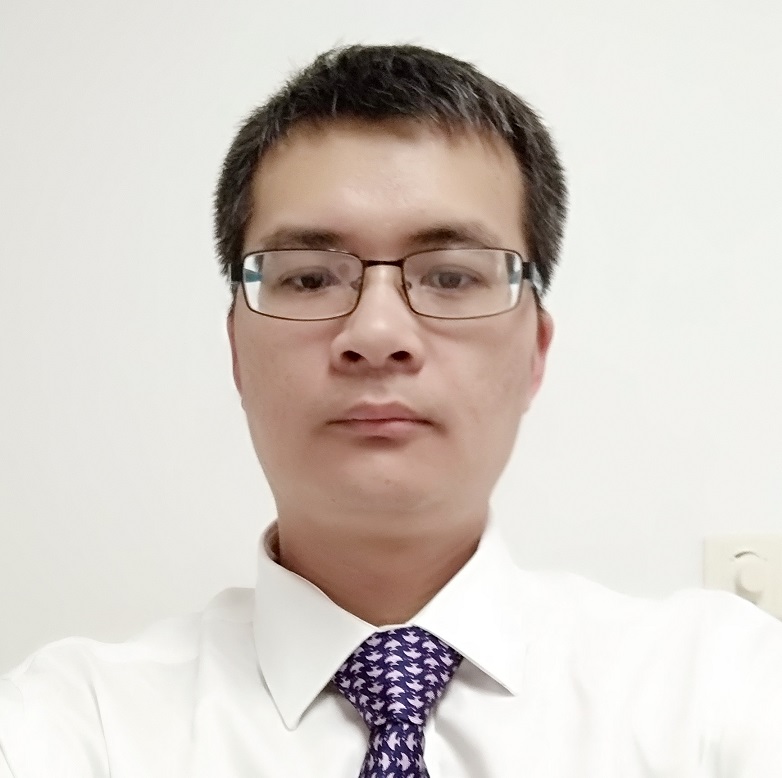
Liang Zhangمشاهده پروفایل
پژوهشگر ارشد
Dr. Liang Zhang is a Research Fellow in the Department of Physics at the University of Strathclyde, United Kingdom, within the Faculty of Science. He has been actively contributing to advanced research in high-power mm-wave and terahertz technologies since completing his PhD in Physics at the same institution in 2012. Research Interests: His expertise lies in the development of broadband, high-power gyrotron travelling wave amplifiers (gyro-TWAs), gyrotron backward wave oscillators (BWOs), and free electron lasers. His work spans electron beam generation, beam-wave interaction, plasma-filled microwave sources, and pulsed power technologies. These systems have applications in next-generation magnetic resonance spectroscopy, satellite communications, security imaging, and radar systems. Publication Trends: His recent publications (2023–2025) focus on optimizing high-power mm-wave components such as feedhorns, orthomode couplers, and helically corrugated waveguides. A growing trend is the integration of plasma physics with microwave engineering, particularly in rock and geological media, suggesting novel applications in subsurface communication and energy systems. 20th International Vacuum Electronics Conference (IVEC 2019) Best Poster Award IEEE Senior Member (2019) IEEE Member (2019) Overseas Research Students Award (ORSAS) Scottish Universities Physics Alliance (SUPA) Prize Studentship Advising and Grants: Dr. Zhang is accepting PhD students and has supervised research outputs. He has been a Research Co-investigator on multiple funded projects, including DIGGER (UK Space Agency), THz vacuum electronic devices (EPSRC), and gyrotron development for radiotherapy (Newton Advanced Fellowship). His work is supported by substantial grants focusing on high-power microwave sources and their applications in accelerators and developing-world healthcare. Labs and Teams: He is part of the Plasma and Particle Sources research group at the University of Strathclyde, collaborating closely with Prof. Adrian Cross, Prof. Kevin Ronald, and Dr. Craig Donaldson. His work is embedded in the broader Cockcroft Institute and international collaborations in vacuum electronics and accelerator physics.