Paul Prucnal is a Professor of Electrical and Computer Engineering at Princeton University, affiliated with the Princeton Materials Institute (PMI). He leads the Lightwave Communications Research Lab, focusing on ultrafast optical techniques for communication networks and neuromorphic photonics. His research spans optical security, CDMA networks, nonlinear signal processing, and photonic neurons. Education: Ph.D., Columbia University (1979) M.Phil., Columbia University (1978) M.S., Electrical Engineering, Columbia University (1976) A.B., Bowdoin College, summa cum laude (1974) Research Interests: Optical Network Security (eavesdropping/jamming countermeasures) Optical CDMA for broadband networks Silicon photonic neuromorphic computing RF interference cancellation in wireless systems Photonic spiking neurons mimicking biological organisms Awards: National Academy of Inventors Fellow (2017) 10+ teaching awards including Princeton's President's Award (2015) OSA/IEEE Fellowships (1992, 1997) Labs/Teams: Leads the Lightwave Communications Lab, collaborating with government/industry partners. Lab alumni like Prof. Bhavin Shastri have achieved international recognition. Grants/Publications: Over 350 journal papers, 22 U.S. patents. Authored/co-authored Neuromorphic Photonics (2017) and edited Optical Code Division Multiple Access (2019). Current projects include photonic tensor processors and real-time RF signal processing.
Jason Ritt is an Associate Professor of Brain Science (Research) and Scientific Director of Quantitative Neuroscience at the Robert J. and Nancy D. Carney Institute for Brain Science, Brown University. He holds affiliations with the Data Science Institute and collaborates across disciplines on quantitative research methods. Education : B.S., M.A., and Ph.D. in Neuroscience from Boston University (1997–2003). Research : Focuses on neural processing during active sensing and neuroengineering for neurostimulation. Combines electrophysiology, optogenetics, and theoretical approaches in rodent models. Develops closed-loop systems for studying sensory neural prosthetics and brain-machine interfaces. Key areas include synaptic diversity, neurocontrol algorithms, and sensory restoration. Teaching : Instructs NEUR 2100 NeuroPracticum, integrating hands-on neuroscience research training.
Houman Savoji is an Associate Professor in the Department of Pharmacology and Physiology at the Faculty of Medicine, University of Montreal. He is also a full-time researcher at the CHU Sainte-Justine Research Center and principal investigator in regenerative medicine, organs-on-chip, and bioprinting at TransMedTech Institute. Dr. Savoji received his PhD in Biomedical Engineering from the Institute of Biomedical Engineering at Polytechnique Montréal in 2016. He then completed a postdoctoral fellowship at the Institute of Biomaterials and Biomedical Engineering at the University of Toronto. His research expertise combines advanced manufacturing technologies (micro- and nano-fabrication, 3D bioprinting, microfluidics, cell electrospinning) with functional and composite materials for applications in tissue engineering, regenerative medicine, and organs-on-chip. His work focuses on the design, development, optimization, implementation, and characterization of innovative functional biomaterials using emerging engineering technologies, with particular emphasis on cardiac tissue engineering and biomimetic pulmonary heart valves for pediatric patients. Dr. Savoji has published extensively on biomaterials, tissue engineering, 3D bioprinting, and organ-on-chip technologies. His recent publications demonstrate expertise in viscoelastic characterization of soft tissues, engineering immune responses to biomaterials, ceramic engineering for biomedical applications, and advanced 3D bioprinting techniques for cardiac and vascular tissue engineering. 2017-2020, Postdoctoral Research Grant, CIHR 2017-2019, Postdoctoral Research Grant, FRQNT 2017-2018, Human Society of International Grant, Human Toxicity Assessment Project 2016, CR-CHUM Research Center Award 2015, Star Student-Researcher Award, FRQNT 2014-2015, Jane and Frank Warchol Fellowship, Society of Vacuum Coaters Foundation 2013, Institute of Textile Science Award 2012-2015, Excellence Doctoral Scholarship for Foreign Students, FRQNT Dr. Savoji has supervised Master's students including Ines Barrakad (2024) working on 'Advanced manufacturing technologies versus molding of corneal implants: 3D printing vs molding of a Keratoprosthesis' and Zineb Ajji (2023) researching 'Development of perfusable patches by 3D bioprinting for potential application in cardiac tissue regeneration.' He has secured numerous research grants from organizations including CIHR, NSERC, FRQNT, FRQS, MITACS, and others for projects related to 3D bioprinting of cardiac tissues, biomimetic heart valves, and other tissue engineering applications. The Savoji Laboratory, located within the Department of Pharmacology and Physiology and Institute of Biomedical Engineering of the Faculty of Medicine of the University of Montreal, the Research Center of the CHU Sainte-Justine (CHUSJ), and the TransMedTech Institute, focuses on multidisciplinary research involving 3D bioprinting using stem-cell derived human cardiac cells to fabricate functional cardiac tissues for transplantation and drug discovery applications.
Assoc Prof Ng Teng Yong is an Associate Professor at the School of Mechanical & Aerospace Engineering (NTU), specializing in numerical modeling and simulation. With a background as Research Manager at A*STAR Institute of High Performance Computing, his work spans materials science, nanotechnology, and aerospace engineering. Current focus on graphene-based desalination membranes Expertise in molecular dynamics simulations Investigates nanoscale fluid mechanics and structural dynamics Recent publications highlight advancements in energy-efficient electrodialysis, smart robotics, and nonlinear vibration analysis. His interdisciplinary approach integrates computational methods with experimental validation in additive manufacturing and soft material mechanics.
Jered Haun is an Associate Professor at the Samueli School of Engineering , University of California, Irvine , with joint appointments in Biomedical Engineering , Chemical and Biomolecular Engineering , and Materials Science and Engineering . Based in 3107 Natural Sciences II , his research focuses on developing nanoengineering and molecular medicine technologies to improve disease diagnosis and treatment. Email: jered.haun@uci.edu Phone: (949) 824-1243 Research Interests include: Nanomaterial Probes for molecular profiling and disease detection Microfabricated Platforms for cell analysis and tissue processing Targeted Delivery Carriers that interact with unique disease molecules Technologies employed in his lab encompass: Fluorescence imaging and MRI enhancements Bioorthogonal chemistry and nanosensor development Micro-NMR for tumor analysis Quantum dot-based detection systems Awards include: NIH National Cancer Institute's Innovative Molecular Analysis Technologies Funding The Haun Laboratory actively recruits graduate and undergraduate students for projects related to nanoengineering, molecular medicine, and microfluidic device development.
R. Edwin García is a Professor at the School of Materials Engineering at Purdue University, where he has been faculty since 2005. He holds appointments in the Materials Engineering department within Purdue's College of Engineering, specifically in the School of Materials Engineering located in the Neil Armstrong Hall of Engineering at Purdue's West Lafayette campus. His educational background includes: B.S. in Physics from the National University of Mexico (1996) M.S. in Materials Science and Engineering from Massachusetts Institute of Technology (2000) Ph.D. in Materials Science and Engineering with a minor in Applied Mathematics from Massachusetts Institute of Technology (2003) Professor García's research focuses on the design of materials and devices through the development of a fundamental understanding of the solid state physics of individual phases, their short and long range interactions, and associated microstructural properties and time evolution. His current research emphasizes establishing relationships between material properties and resultant performance and degradation in electrochemical systems. He integrates computational approaches ranging from kinetic Monte Carlo, phase field and level set methods, to finite elements, finite volumes, and symbolic computing. His work particularly addresses microstructure design, crystallographic texture, and grain boundary science and engineering to control the topology of underlying phases and establish practical relations between processing, microstructure, and material properties. His recent publications demonstrate a strong focus on lithium-ion battery technology, ferroelectric materials, and computational modeling of material behaviors. The research trends show increasing integration of machine learning with traditional computational methods, exploration of novel sintering techniques like flash sintering, and deeper investigation into the fundamental mechanisms of material degradation in energy storage systems. His work spans multiple length scales from atomistic to continuum modeling, reflecting a comprehensive approach to materials design and analysis. Professor García teaches several courses including MSE 230 (Structure and Properties of Materials), MSE 350 (Thermodynamics of Materials), MSE 597G (Modeling and Simulation of Materials), MSE 597I (Introduction to Computational Materials), and MSE 597N (Physical Properties of Crystals). He mentors graduate students in areas related to computational materials science, battery technology, and microstructural evolution. His research group, the Laboratory of Computational Microstructures, focuses on developing home-grown analytical theories and algorithms to resolve relevant time and length scales in materials systems. The group's work has significant implications for portable power sources, including rechargeable batteries and fuel cells, as well as for ferroelectric ceramic applications.
Professor Shubhra Pasayat is affiliated with the Department of Electrical and Computer Engineering and Materials Science & Engineering at the University of Wisconsin-Madison. She holds a PhD (2021) and MS (2017) from University of California, Santa Barbara, and a B.Tech (2013) from Indian Institute of Technology Kharagpur. Research focus: MOCVD growth of III-nitrides/oxides for optoelectronics, power electronics, quantum materials, and bio-photonics Key applications: LEDs, LASERs, HEMTs, bio-photonics, and sanitization technologies Her research interests center on wide bandgap semiconductor materials, particularly group-III nitrides and oxides. She works on strain relaxation techniques using porous GaN substrates, quantum dot engineering for visible light emission, and high-voltage GaN HEMT development. Current projects include lattice engineering for improved crystal quality and thermal management in RF devices. Publications highlight advancements in ultraviolet lasers, high-electron-mobility transistors, and micro-LEDs. Her work spans fundamental material studies and device optimization for industrial applications like electric vehicles, 5G/6G communications, and horticultural lighting. 2024 Awards : NSF CAREER, ONR DEPSCoR, WARF Early Career Innovator 2022 Awards : UCSB ECE Outstanding Dissertation, JAP Best Paper She teaches ECE 235 Introduction to Solid State Electronics and mentors research at both graduate and undergraduate levels.
Yongmin Liu is a Professor in Mechanical and Industrial Engineering and Electrical & Computer Engineering at Northeastern University, and a member of the Cross-College Magnetics Center. He holds a PhD in Applied Science and Technology from UC Berkeley (2009), with earlier degrees from Nanjing University. His research focuses on nano-optics, metamaterials, plasmonics, and their applications in optical devices and systems. His interdisciplinary work bridges engineering, physics, and AI, with notable contributions to metasurface design and optical neural networks. Education: PhD, Applied Science and Technology, UC Berkeley (2009) M.S. and B.S., Physics, Nanjing University (2003, 2000) Research Interests: Nano-optics, nanoscale materials engineering, metamaterials, plasmonics, and applied physics. His group develops novel optical materials and devices for applications like super-resolution imaging, efficient light harvesting, and biomedical detection. Recent projects include AI-driven photonic materials design and meta-optical neural networks. Key Achievements: Recipient of the Søren Buus Outstanding Research Award (2024) NSF CAREER Award (2017) and ONR Young Investigator Award (2016) Elected SPIE Fellow (2023) and Optica Fellow (2023) Lab & Collaborations: Head of the Yongmin Liu Research Group, collaborating with institutions like Georgia Tech and Purdue University. Recent grants include a $1.5M NSF DMREF grant for AI-driven photonic materials and a $468K NSF grant for meta-optical neural networks.
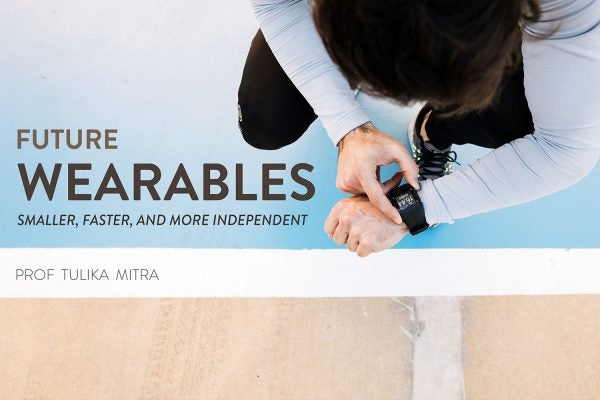
Professor Tulika Mitra is the Dean of the School of Computing and Vice Provost (Special Projects) at the National University of Singapore (NUS). She holds the Provost’s Chair Professor in the Department of Computer Science and has been instrumental in shaping academic policies and strategic initiatives at NUS since joining in 2001. PhD in Computer Science, Stony Brook University (2000) M.E. in Computer Science, Indian Institute of Science (1997) B.E. in Computer Science, Jadavpur University (1995) Her research focuses on hardware-software co-design for energy-efficient computing systems, particularly in real-time embedded systems, heterogeneous architectures, and AI accelerators. She leads major research programs such as the NRF Competitive Research Programme on Low-Power Edge Accelerators and the MOE Tier-3 Programme on Green AI , collaborating with industry leaders like ARM, AMD, and Meta. Her recent publications highlight innovations in CGRA optimization , sparse attention mechanisms , photonic-digital hybrid architectures , and low-power ML inference . These works often integrate compiler techniques, architectural design, and real-time constraints for edge computing applications. Scientific Awards : ESWEEK Test-of-Time Award (2022), ACM SIGDA Distinguished Service Award, IEEE CEDA Outstanding Service Recognition Award, Teaching Excellence Award (2006), and multiple best paper recognitions. Education Leadership : Spearheaded the Computer Engineering (CEG) Programme at NUS, a joint initiative between Engineering and Computing. As a mentor , she has supervised over 25 PhD students , many now in prominent academic or industrial roles. Her research group eCO Lab focuses on embedded computing challenges, while her grant collaborations include projects on 5G base stations, reconfigurable architectures, and IoT-optimized SoCs.
Andras Kis is a Full Professor at the École Polytechnique Fédérale de Lausanne (EPFL), affiliated with the School of Engineering (STI) across multiple institutes including the Institute of Electrical Engineering (IEL), Institute of Materials Science (IMX), and teaching programs in Electrical Engineering (SEL-ENS). He leads the Laboratory of Nanoscale Electronics and Structures (LANES) and serves on the PhD program committee for Microsystems and Microelectronics. PhD, EPFL (2003) MS, Physics, University of Zagreb (1999) Baccalaureate, MIOC High School Research Focus: Pioneering work on 2D materials for electronic and optoelectronic devices, particularly transition metal dichalcogenides like MoS2 and PtSe2. His research spans: Transistor design with atomically thin semiconductors Excitonic devices and valleytronics Nanofluidics and ionic logic Optical properties of 2D heterostructures Scalable fabrication of 2D materials Defect engineering and doping techniques Scientific Impact: Based on analysis of 15 most recent publications, his work focuses on advancing 2D materials for next-generation electronics through innovations in: Van der Waals heterostructures Thermoelectric and optoelectronic applications Nanofabrication techniques Spintronic and quantum transport phenomena Memristive and neuromorphic devices Characterization of electronic and optical properties Awards & Recognition: Fellow of the Institute of Electrical and Electronics Engineers (IEEE) Lotfi A. Zadeh Award for Emerging Technologies (2024) Highly Cited Researcher (Clarivate Analytics) Teaching & Academic Leadership: Currently teaching courses including Lab in Nanoelectronics , Physical Models for Micro and Nanosystems , and Semiconductor Devices II . He has supervised over 20 PhD students in his research group at EPFL. Laboratory & Collaborations: Directs the Laboratory of Nanoscale Electronics and Structures (LANES) which focuses on fundamental and applied research in 2D materials and nanoelectronic devices. His work bridges materials science, condensed matter physics, and microelectronics engineering.
Ambuj Varshney is an Assistant Professor at the National University of Singapore (NUS) School of Computing , leading the WEISER research group . His work bridges electronics, wireless communication, computer science, and AI with a focus on creating ultra-low-power embedded systems for sustainable IoT deployments. University of California, Berkeley: Postdoctoral Scholar (2020-2022) Uppsala University: PhD in Sustainable Networked Systems NXP Semiconductors: Software Engineer (prior to PhD) Bachelors in Information & Communication Technology Research interests center on overcoming wireless systems' energy asymmetry through tunnel diode oscillators , LiFi-RF hybrid networks , and battery-free communication architectures . His group develops STICORS —sticker-like computers for industrial and medical monitoring. Recent publications demonstrate AudioCast 's FM-band utilization for 130m transmission, TunnelSense 's vital monitoring, and PixelGen 's diffusion model cameras. These works combine IoT sustainability, spectrum efficiency, and hardware innovation . 2024: Google Research Scholar Award 2023: MobiSys Best Demonstration 2021: Berkeley FORM+FUND Fellowship 2019: ABB's $300K Research Award As an educator, he teaches CS4222 Wireless Networking and CS5272 Embedded Software Design . Past students include Wenqing Yan (NUS/UCB PhD), Qiao Yukai , and Kunjun Li . His team collaborates with Prabal Dutta (UCB), Christian Rohner (Uppsala), and Prateek Saxena (NUS).
Dist. Professor Rachel Caruso is a Professor at RMIT University's School of Science, specializing in nanomaterials, energy storage systems, and photocatalysis. Her research focuses on advancing materials science through innovations in titanium-based nanomaterials, perovskite solar cells, and sustainable hydrogen production. She is actively involved in research supervision, offering guidance on topics like carbon capture, electrochemical CO₂ reduction, and antimicrobial surface engineering. Her work integrates machine learning for material discovery and emphasizes interdisciplinary applications in environmental and biomedical fields. Research Interests: Macromolecular Chemistry, Nanotechnology, Energy Materials, Photocatalysis, and Biomedical Applications. Supervision Projects: Includes pioneering studies on direct air capture of CO₂, graphene-based photocatalytic films, and perovskite materials for biomedical uses. Professor Caruso collaborates extensively on projects addressing global challenges such as renewable energy and antimicrobial resistance. Her contributions span over 200 publications, with notable advancements in titanium suboxide synthesis and electrocatalyst design.
John A. Rogers is the Louis Simpson and Kimberly Querrey Professor at Northwestern University, holding joint appointments in Materials Science and Engineering, Biomedical Engineering, Mechanical Engineering, Chemistry, and Neurological Surgery. He directs the Querrey-Simpson Institute for Bioelectronics. His work bridges soft materials science, bio-integrated electronics, and nanotechnology, with a focus on wearable medical devices, bioresorbable systems, and neural interfaces. Educations: B.A. & B.S. from University of Texas Austin (1989), S.M. from MIT (1992), Ph.D. in Physical Chemistry from MIT (1995). Prior roles include Director of Bell Labs' Condensed Matter Physics Department and faculty positions at University of Illinois at Urbana-Champaign. Research emphasizes soft materials for bio-inspired electronics, including flexible sensors, microfluidic platforms, and bioresorbable implants. His lab has pioneered epidermal electronics, injectable optoelectronics, and neural interfacing systems. Over 1000 peer-reviewed publications and 100+ patents highlight his contributions to nanotechnology and biomedical engineering. Awards include the Benjamin Franklin Medal (2019), MRS Medal (2018), and MacArthur Fellowship (2009). He is a member of the National Academies of Sciences, Engineering, and Medicine. Current projects span bioelectronic medicines, wearable health monitors, and advanced medical imaging tools.
Qing Li is an Associate Professor in the Department of Electrical and Computer Engineering at Carnegie Mellon University (CMU), part of the College of Engineering. He holds a B.E. in Electronics Engineering from Tsinghua University (2006) and a Ph.D. in Electrical and Computer Engineering from Georgia Institute of Technology (2013). Prior to CMU, he worked as a postdoctoral researcher at the National Institute of Standards and Technology (NIST), where he developed quantum frequency conversion and microresonator-based optical systems. His research focuses on light-matter interactions in integrated photonics, emphasizing nonlinear optics and quantum information processing. He has pioneered silicon carbide and aluminum nitride platforms for chip-scale quantum technologies and optical metrology. Dr. Li has been recognized with prestigious awards including the Darpa Young Faculty Award (2019), OSA Paul F. Forman Team Engineering Excellence Award (2020), and Sigma Xi Best Ph.D. Thesis Award (Georgia Tech). His work bridges classical and quantum information systems, with applications in secure communication, atomic systems interrogation, and high-precision frequency synthesis. He actively contributes to the Pittsburgh Quantum Institute (PQI), advancing regional quantum engineering initiatives. His research group’s key projects include developing compact optical frequency synthesizers, soliton microcombs for communication grids, and entangled photon pair sources for quantum networks. Grants and collaborations support his exploration of novel photonic materials and devices, targeting advancements in both fundamental science and applied technologies.
Dr. Richard Fair is the Lord-Chandran Distinguished Professor of Engineering at Duke University, with a career spanning semiconductor physics, digital microfluidics, and lab-on-a-chip systems. His research group collaborates with faculty across Duke, Harvard, and Stanford in bioengineering, genomics, and environmental science to develop applications-driven microfluidic platforms. Ph.D. in Electrical and Computer Engineering, Duke University (1969) B.S.E.E., Duke University (1964) M.S.E.E., Pennsylvania State University (1966) Research interests focus on electrowetting-based microfluidics for biosensing, diagnostics, and synthetic biology applications. Key innovations include adaptive droplet routing , magnetic bead manipulation , and integrated optical sensors for real-time analyte detection in environmental and medical contexts. Recent publications emphasize deep reinforcement learning for biochip automation, fluorescent nucleosome detection , and inorganic ion analysis in aerosols. Collaborations with institutions like Advanced Liquid Logic and NSF-funded projects highlight his interdisciplinary approach. IEEE Third Millennium Medal (2000) Solid State Science and Technology Award (Electrochemical Society, 2003) Gordon E. Moore Medal (2009) Fellow, IEEE and Electrochemical Society Grants include NSF awards with Nan Jokerst and Krish Chakrabarty for adaptive lab-on-a-chip optical control, DARPA funding for genomic engineering platforms, and collaborations with the Desert Research Institute on airborne particle sensing. His lab develops scalable solutions for environmental monitoring, clinical diagnostics, and synthetic biology applications.