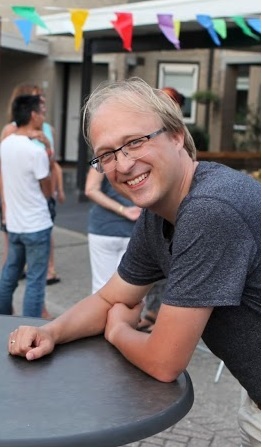
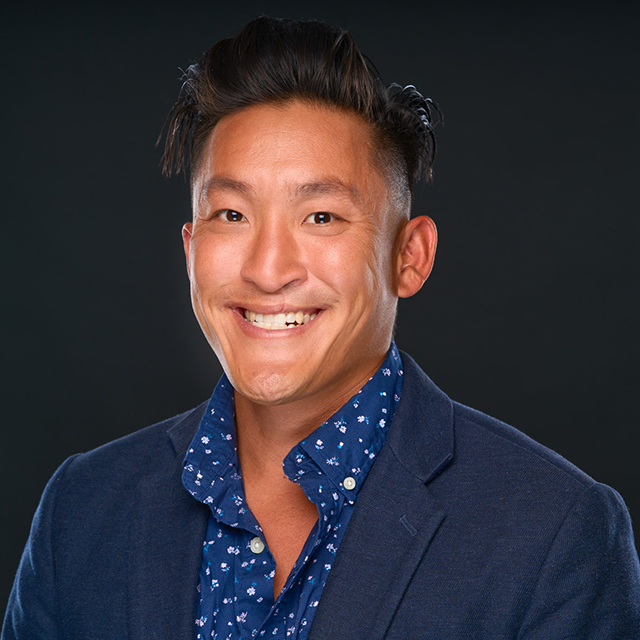
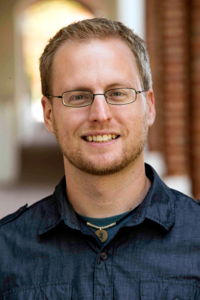
Dr. Liqiang Chen is Professor of Information Systems in the Business Communication and Information Systems Department at the University of Wisconsin-Eau Claire's College of Business. He holds a Ph.D. in Management Information Systems from the University of Nebraska-Lincoln and teaches courses in systems analysis, enterprise architecture, database management, and business intelligence. His research explores enterprise systems integration, information security compliance, IT education, and e-commerce consumer behavior. Recent scholarship examines artificial intelligence curriculum development in business schools and interdisciplinary connections between information systems and supply chain management. His work applies behavioral frameworks like the Awareness-Motivation-Capability model to information security policy compliance and investigates factors influencing student career choices in technology fields. He has developed pedagogical innovations using ERP simulation tools in information systems education.
Professor Paul Lepper is a faculty member in the Department of Electronic and Electrical Engineering at Loughborough University, specializing in underwater acoustics and bioacoustics. His research focuses on mitigating anthropogenic noise impacts on marine fauna, including studies on offshore windfarm construction, marine species hearing, and acoustic deterrent systems. He holds a PhD and BSc and has extensive experience in underwater technology development, such as parametric sonar systems and IoT-based environmental monitoring networks. Education: Paul Lepper earned his PhD and BSc, though specific institutions are not detailed. His career includes roles as a Senior Research Fellow and postdoctoral researcher at institutions like the Scripps Institution of Oceanography. Research Interests: His work spans underwater noise assessment, marine mammal behavior, renewable energy noise mitigation, and acoustic monitoring technologies. He collaborates on global projects addressing UXO disposal, tidal energy impacts, and flood detection systems. Key areas include noise source characterization, sound field modeling, and marine species exposure analysis. Publications: Recent work highlights advancements in UXO disposal methods, noise mitigation strategies, and UAV applications for environmental monitoring. His research emphasizes interdisciplinary approaches to address global challenges in marine conservation and renewable energy integration. Labs/Teams: He contributes to the Signal Processing & Networks Research Group and collaborates internationally on projects like the Billia Croo Wave Energy Test Site and acoustic impact assessments for offshore wind farms.
Prof. Beata Gabryś is a Professor in the Department of Botany and Ecology at the University of Zielona Góra, Poland. Her research focuses on plant-insect interactions, aphid behavior modification, and the development of biopesticides. She holds a position within the Institute of Biological Sciences and has expertise in chemical ecology, entomology, and agricultural science. Research Interests: Plant defense mechanisms against herbivorous insects Role of allelochemicals in pest deterrence Behavioral responses of aphids to plant compounds Development of eco-friendly pest control strategies Ecological impacts of invasive species like the larch woolly adelgid Key Research Trends: Her work spans from molecular-level analyses of plant secondary metabolites to large-scale pest population dynamics. Recent studies emphasize species-specific aphid behavior modulation using compounds like hesperidin, apigenin, and synthetic lactones. Projects also address agricultural challenges such as grain pest management and sustainable crop protection. Labs/Teams: Collaborates with interdisciplinary teams in plant chemistry, entomology, and sustainable agriculture at the University of Zielona Góra. Active in international research networks focusing on biopesticide development and ecological pest control.
Matthias Kasper is a researcher affiliated with the Department of Occupational, Economic and Social Psychology within the Faculty of Psychology . His research focuses on tax-related behavioral dynamics, including tax compliance mechanisms, audit effectiveness, and decision-making biases in taxation contexts. He has contributed to experimental studies exploring taxpayer behavior under various economic conditions. Research Interests: His work integrates insights from social psychology and economics to investigate topics such as tax audit impacts on self-employed individuals, tax rate biases, and the interplay between economic recessions and compliance attitudes. Collaborations include international studies on taxpayer behavior frameworks (e.g., TAS-Slippery Slope Study). Publications: Recent contributions include analyses of audit deterrence effects (2022) and experimental evidence on tax rate biases (2023). His work has been cited in policy contexts and widely accessed in academic platforms like Mendeley. Activities: Engaged in interdisciplinary presentations, including talks on audit effectiveness (2019) and taxpayer compliance frameworks (2018). Collaborations span institutions globally, emphasizing practical policy applications.
Prof. Bianca Beersma is a Full Professor at the Vrije Universiteit Amsterdam (VU) in the Faculty of Social Sciences and Humanities, Department of Organization Sciences. She holds additional appointments at the Network Institute and the Organization & Processes of Organizing in Society (OPOS) research group. Her research focuses on cooperation vs. competition dynamics, conflict management, negotiation, and the social functions of gossip in organizational contexts. She has supervised over 40 students, including those who won prestigious awards like the NSvP ‘David van Lennep Award’ and ‘Nico Frijda Thesis Award’. Education: PhD in Psychology (University of Amsterdam, 2002) Master in Social Psychology (Free University Amsterdam, 1997) Research Interests: Team functioning and performance Healthcare organizational behavior Workplace coaching and empowerment Gossip’s role in group processes Long-term care coordination Grants & Awards: ERC Consolidator Grant (€1.999.693, 2017) for ‘FORCE-OF-GOSSIP’ project ZonMW Grant (€288,860, 2020) on nursing home care relationships Multiple teaching awards including BKO certification Teaching: Leads courses on Cooperation/Conflict, Proposal Design, Organizational Behavior, and Conflict & Peacebuilding at both undergraduate and graduate levels. Key Projects: Investigating gossip’s impact on group cooperation Improving intergenerational empathy in online discussions Work environment effects on nursing staff retention Labs/Teams: Active in interdisciplinary research teams focusing on healthcare innovation, organizational psychology, and digital society challenges.
Jurjen Kamphorst is an Assistant Professor at the Erasmus School of Economics (Erasmus University Rotterdam) and a fellow of the Tinbergen Institute. His research focuses on organizational economics, labor economics, network formation, and competition policy. He previously worked at Utrecht School of Economics (Utrecht), Leiden Law Faculty, and completed his PhD at VU Amsterdam. His work examines feedback mechanisms in employee motivation, managerial discrimination, social network structures, and strategic behavior in competitive markets. Kamphorst has published in journals like the American Economic Journal: Microeconomics and European Economic Review. Ongoing projects include studies on intra-organizational quotas, police prioritization of intra-gang violence, and fixed costs in pricing strategies. Education: PhD in Economics, VU Amsterdam Previous affiliations: Utrecht School of Economics, Leiden Law Faculty Research Interests: Theory of employee motivation and managerial feedback Network formation under heterogeneous costs and information Competition policy and merger analysis Game-theoretic models of strategic behavior Publications Trends: His articles blend theoretical rigor with applied economics, often using game theory to analyze organizational and market dynamics. Recent work emphasizes the paradoxes of discrimination in workplaces and strategic signaling in competitive environments. Awards: None explicitly stated. Grants & Advising: No grants listed; advising details unavailable. Engaged in collaborative projects with colleagues like O.H. Swank and Christophe Bravard. Labs/Teams: Affiliated with Tinbergen Institute and Erasmus School of Economics research groups.
Emmanuel Barthe is an Associate Professor in the Department of Criminal Justice at the University of Nevada, Reno (UNR), within the College of Liberal Arts. His research focuses on policing strategies, situational crime prevention, spatial analysis, and the impact of casinos on criminogenic patterns. He collaborates closely with local law enforcement agencies, serving as an external evaluator for projects such as methamphetamine interdiction efforts and BJA-funded Smart Policing initiatives targeting prescription drug abuse. He teaches courses including Introduction to Criminal Justice, Policing, Crime Mapping, and Criminal Justice Ethics. Barthe holds a Ph.D. and M.A. in Criminal Justice from Rutgers University, and a B.A. in Sociology from McGill University. His work bridges academic research and practical application, emphasizing evidence-based policing and community-oriented strategies. Notable projects include analyzing the legal ramifications of traffic checkpoints and evaluating the effects of low-income housing on neighborhood disorder patterns. His research spans topics such as the spatial distribution of crime in casino zones, the influence of media on criminal justice student perceptions, and the effectiveness of police presence in non-criminogenic areas. He has contributed to national dialogues on community policing, COMPSTAT systems, and campus safety through peer-reviewed publications and encyclopedia entries.
Matthew Hayes is an Assistant Professor of Accounting at the University of Nevada, Reno's College of Business. He transitioned from an auditing career to academia after completing his PhD, previously teaching at the University of Michigan - Dearborn. His research focuses on behavioral biases and personality traits influencing financial reporting processes, particularly narcissism's impact on accounting judgments and decisions. Education: PhD in Accounting (Arizona State University), MBA & BS in Accounting (SUNY Buffalo) His work examines how individual and interpersonal factors shape accounting estimates, earnings management, and whistleblowing intentions. He has published extensively on narcissism's role in organizational accounting behaviors and generational differences in managerial responses. Teaching focuses on advanced accounting courses including ACC 402. His research integrates insights from psychology and organizational behavior to improve understanding of ethical and decision-making challenges in accounting contexts.
Professor Bryan Fry is a distinguished academic at the School of the Environment, University of Queensland. As a leading researcher in venom evolution and toxinology, his work spans multiple disciplines including ecology, evolutionary biology, and functional genomics. His research has made significant contributions to understanding the complex biochemical, ecological, morphological and pharmacological diversity of venom systems across diverse animal taxa. Professor Fry's research focuses on the evolution of venom systems across the animal kingdom, with particular emphasis on the biochemical, ecological, morphological and pharmacological diversity of venoms. His work addresses a critical gap in scientific knowledge - the very narrow taxonomical range traditionally studied in venom research. By investigating understudied venomous animals from Komodo Dragons to Antarctic octopuses, he has expanded our understanding of venom evolution and its adaptive roles in predation, defense, and competitor deterrence. His interdisciplinary approach integrates ecological field studies with advanced laboratory techniques to unravel the complex mechanisms of venom action and evolution. Analysis of Professor Fry's extensive publication record reveals a strong focus on coagulotoxic and neurotoxic effects of snake venoms, particularly examining variations across species, ontogenetic changes, and geographic differences. His work frequently investigates the clinical implications of venom variation for snakebite treatment, with particular emphasis on antivenom efficacy and alternative therapeutic approaches like enzyme inhibitors. The research demonstrates sophisticated experimental approaches combining biochemical, physiological, and clinical perspectives to address critical questions in toxinology. Professor Fry maintains an extensive collaborative network across international institutions, working with researchers from Australia, the United States, Mexico, and other countries. His laboratory appears to focus on venom biochemistry, evolutionary adaptations, and clinical applications of venom research, with particular emphasis on understanding venom variation and its implications for medical treatment of envenomation.
Alison Coulter is an Assistant Professor in the Department of Natural Resource Management at South Dakota State University. She teaches courses including WL 367/367L Ichthyology and Lab, WL 412/412L Principles of Fisheries Management and Lab, NRM 230 Natural Resource Management Techniques, and WL 792 Movement Ecology. Her office is located in Room 141B of the Edgar S. McFadden Biostress Laboratory. Education: B.S. from Michigan State University M.S. from Central Michigan University Ph.D. from Purdue University Research Focus: Her work integrates ecological science with practical natural resource management solutions. Primary research themes include: Fish movement ecology and habitat utilization patterns Sportfish population management and conservation strategies Invasive species prevention, containment, and impact mitigation Angler behavior analysis and engagement methodologies Fish stocking program efficacy and optimization Publication Trends: Recent articles (2024-2025) demonstrate a strong emphasis on invasive carp ecology, fisheries management techniques, and human dimensions of conservation. Work frequently employs advanced statistical modeling, telemetry data, and stakeholder surveys to address pressing issues in freshwater ecosystems under climate change pressures. Laboratory: Leads research operations at the Edgar S. McFadden Biostress Laboratory, focusing on field-based studies and data-driven resource management solutions.
Joshua Stafford is an Associate Professor in the Department of Natural Resource Management at South Dakota State University (SDSU) and serves as Assistant Unit Leader for the U.S. Geological Survey South Dakota Cooperative Fish and Wildlife Research Unit. He holds a B.S. in Wildlife Science from Oregon State University (1997), an M.S. in Wildlife from SDSU (2000), and a Ph.D. in Forest Resources and Wildlife from Mississippi State University (2004). Previously, he directed the Steven Forbes Biological Station and Frank C. Bellrose Waterfowl Research Center at the Illinois Natural History Survey for seven years before returning to SDSU. His research focuses on the ecology and management of North American waterfowl, particularly their foraging, breeding, and migratory behaviors. Key interests include annual-cycle dynamics, wetland management, and the integration of ecological data into practical conservation strategies. He has contributed to understanding waterfowl habitat use, migration patterns, and the impacts of agricultural practices and climate change on avian populations. Stafford is an associate editor for the Journal of Wildlife Management and Wildlife Society Bulletin , and served as President of the South Dakota Chapter of The Wildlife Society (2017–2018). His work emphasizes translating scientific findings into actionable management recommendations for state and regional agencies. He is based at the McFadden Biostress Laboratory in Brookings, South Dakota, where he continues to mentor graduate students and advance waterfowl conservation efforts.
Dr. Abubakri Yekini is a Lecturer in Law (Conflict of Laws) at the University of Sydney, specializing in Private International Law, Transnational Dispute Resolution, and Legal Systems. He holds a PhD from the University of Aberdeen (2020). His research focuses on conflict of laws, customary law, and the intersection of international law with national legal frameworks. He actively contributes to Sustainable Development Goals (SDGs), particularly in education and legal justice. Yekini has delivered invited talks globally, including at the Sydney Centre for International Law, addressing topics like the Hague Judgments Convention and Commonwealth Model Law. His scholarly work spans over 27 publications, including books, chapters, and peer-reviewed articles. Notable contributions include analyzing cryptocurrency jurisdictional challenges, human trafficking frameworks in Nigeria, and the effectiveness of foreign jurisdiction clauses. He is currently accepting PhD students in areas of Private International Law and transnational dispute resolution. Yekini’s research emphasizes pragmatic approaches to legal challenges, bridging theoretical and practical dimensions. His recent work explores the application of customary law in Nigerian courts, the prospects of multilateral frameworks in Africa, and the enforcement of punitive damages in Commonwealth Africa. He collaborates internationally, focusing on judicial cooperation and legal harmonization.
Professor KC Wong is Deputy Head of School and Director for Aeronautical Engineering at the University of Sydney's School of Aerospace, Mechanical and Mechatronic Engineering. A pioneering UAS researcher since 1988, he specializes in multidisciplinary airframe design, control systems, and flight testing. His research focuses on enhancing aerospace engineering education through experiential learning and global design opportunities. His primary research areas include unmanned aircraft systems, morphing airframe technologies, and system integration for industrial applications. Recent work explores autonomous pest control in agriculture and vision-based perching mechanisms for quadrotors. Professor Wong's publications demonstrate consistent focus on UAV applications, control systems optimization, and remote sensing technologies. His 2025 work on hyperspectral anomaly detection represents cutting-edge advances in real-time remote sensing algorithms. Awards & Honors: Fellow of the Royal Aeronautical Society (2016) Associate Fellow of AIAA (2013) He currently advises four PhD students working on trajectory planning, aerial delivery systems, space thrusters, and orbital manufacturing. His industry collaborations include projects with Rio Tinto and Department of Defence.
Matthew Stephen Lattanzio is an Associate Professor at The College of New Jersey's Department of Biology, Chemistry and Environmental Science, and Graduate Program Director for the Center for Sustainability in Education. His research integrates evolutionary ecology, behavioral ecology, and physiological responses of reptiles and amphibians to environmental stressors. Ph.D. in Biological Sciences, Ohio University M.S. in Biological Sciences, East Stroudsburg University of Pennsylvania B.S. in Biology, The College of New Jersey Lattanzio's research focuses on ecomorphology, UV exposure trade-offs, and climate-driven polymorphism in lizards. He employs field and isotopic methods to study behavioral thermoregulation, predator deterrence, and adaptive coloration. His 15 most recent articles (2016-2024) emphasize lizard behavioral ecology, climate adaptation, and UV-thermal physiology. Keywords span Ecology, Environmental Science, and Evolutionary Biology, with subfields including color polymorphism, thermal ecology, and disturbance response. Articles show a consistent focus on Sceloporus and Urosaurus species.
John Swaddle is a Professor of Biology and Faculty Director of the Institute for Integrative Conservation at the College of William and Mary since 2001. He holds a B.Sc. (Hons) and Ph.D. in Zoology/Animal Biology from the University of Bristol (1988–1994). His career includes roles as a Royal Society of London Research Fellow (1997–1999) and NCEAS sabbatical fellow (2007–2008). Swaddle's research focuses on human-wildlife interactions, conservation solutions, and environmental justice. He investigates how contaminants like lead and mercury impact avian behavior, physiology, and ecology, emphasizing applied conservation strategies. His work bridges behavioral ecology and toxicology, addressing issues such as urban bird behavior, collision prevention, and pest management using acoustic technologies like the 'Sonic Net.' His recent articles (2021–2025) highlight experiments on heavy metal effects on birds' cognition, flight performance, and predator avoidance. He also explores the role of noise pollution in altering bird behavior and social networks. Swaddle advocates for interdisciplinary conservation approaches, emphasizing practical solutions to mitigate human-wildlife conflicts. Key contributions include developing non-lethal deterrents for crop protection and reducing bird-aircraft collisions. His research integrates field studies with lab experiments, often using zebra finches and starlings as model species. Despite no listed scientific awards or advisees, Swaddle's work is instrumental in advancing conservation behavior and environmental policy through applied research.