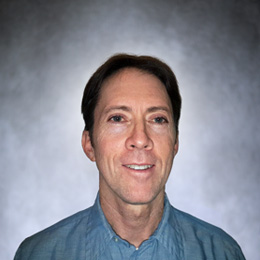
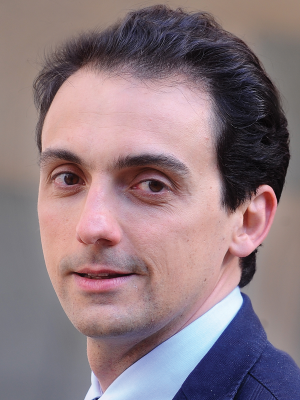
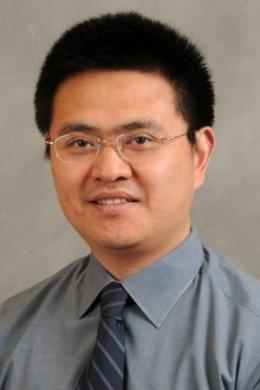
Hamid Bagheri is an Associate Professor in the Department of Computer Science and Engineering at the University of Nebraska-Lincoln , affiliated with the School of Computing and the Institute for Software Research (ISR) at UC Irvine. He co-directs the ESQuaReD Lab and focuses on software engineering, security, and formal methods. Research Interests span software reliability, mobile/IoT security, automated program repair, and cyber-physical systems. His work integrates lightweight formal methods, testing, and machine learning. Publications appear in top venues like IEEE TSE , ISSTA , and ICSE . Recipient of the EPSCoR FIRST Award and NSF CISE Career Award Advisor to PhD students (e.g., Clay Stevens, Mohannad Alhanahnah) now in tenure-track roles Active in program committees (IEEE TSE, ACM TOSEM) and research leadership
Vernita Gordon is an Associate Professor in the Department of Physics at the University of Texas at Austin (since 2018), previously serving as an Assistant Professor there from 2010 to 2018. She holds a Ph.D. in Physics from Harvard University (2003) and a B.Sc. in Physics and Mathematics from Vanderbilt University (1997). Her research focuses on understanding how physical characteristics like mechanics and spatial structure influence bacterial biofilms, particularly their interactions with the immune system and resistance to antibiotics. She has pioneered techniques such as laser trapping to manipulate biofilm structures and studies radiation effects on bacteria like Deinococcus radiodurans . Education: Ph.D. in Physics, Harvard University (2003) B.Sc. in Physics and Mathematics, Vanderbilt University (1997) Research Interests: Dr. Gordon’s work integrates biophysics, microbiology, and materials science to explore biofilm mechanics, bacterial mechanosensing, and radiation biology. Key areas include: How biofilm mechanics resist immune clearance and antibiotic treatment Role of surface stiffness and shear stress in biofilm initiation Radiation resistance mechanisms in Deinococcus radiodurans Development of tools like laser trapping to study biofilm structure Key Achievements: Recipient of the Elizabeth B. Gleeson Professorship (2023) and Texas Mindset Initiative Fellowship (2023) Provost’s Teaching Fellow (2020–2024) and multiple teaching awards Funded by NSF, NIH, and Cystic Fibrosis Foundation Published over 60 peer-reviewed articles, including in Nature , PNAS , and Biophysical Journal Advising & Outreach: She mentors graduate students in Physics, Microbiology, and Biomedical Engineering, emphasizing interdisciplinary training. Her group actively recruits undergraduates and collaborates with industry partners like Solvay and the College of Pharmacy. Outreach includes lesson plans for high school STEM education and community science initiatives. Labs & Collaborations: Her lab uses advanced microscopy, microrheology, and computational modeling. Key collaborations include work with the Contreras Lab (UT Austin Chemical Engineering) on radiation-resistant bacteria and the Raizen Lab (UT Austin Physics) on self-sterilizing surfaces.
Jennifer Dy is a Distinguished Professor at Northeastern University with joint appointments in Electrical and Computer Engineering and Khoury College of Computer Sciences. As Director of AI Faculty at the Institute for Experiential AI, she leads research in machine learning, computer vision, and explainable AI. Her work spans biomedical applications (COPD phenotyping, neuroimaging) and fundamental algorithms (active learning, continual learning). She holds a PhD from Purdue University and is an AAAI Fellow. Research Focus: Dy develops methodologies for robust and interpretable machine learning, including techniques for model stability in continual learning, dependency-aware active learning, and axiomatic explanation frameworks. Her applied research advances diagnostic tools using Raman spectroscopy, CT imaging, and multi-omics biomarker discovery. Awards: Recognized with the NSF CAREER Award, Faculty Research Team Award, and AAAI Fellowship for contributions to unsupervised learning and medical AI. Publication Trends: Recent articles demonstrate strong cross-disciplinary integration, combining theoretical advances in explainability/robustness with applications in healthcare, wireless systems, and particle physics. Methodological themes include optimal transport theory, probabilistic modeling, and transformer architectures.
Gayane Vardoyan is an Assistant Professor at the Manning College of Information and Computer Sciences, University of Massachusetts Amherst. She previously held a permanent Assistant Professor position at QuTech (Quantum Internet Division) and the Faculty of Electrical Engineering, Mathematics, and Computer Science at TU Delft (2022–2024). Her research focuses on quantum networking, particularly developing protocols for entanglement distribution and optimizing quantum systems. Vardoyan earned her B.S. in Electrical Engineering and Computer Sciences from UC Berkeley and her Ph.D. from UMass Amherst under Prof. Don Towsley. She has held postdoctoral and research roles at TU Delft, Inria, and Argonne National Lab. Education: Ph.D., University of Massachusetts Amherst (2017–2021) M.S., University of Massachusetts Amherst (2017) B.S., University of California, Berkeley (2013) Research Interests: Vardoyan’s work addresses challenges in distributed quantum systems, including entanglement distribution algorithms, quantum repeater architectures, and performance analysis of quantum networks. She integrates classical networking techniques with quantum principles to enhance protocol efficiency. Current projects emphasize utility maximization, resource allocation, and optimizing quantum network performance under hardware constraints. Awards: Best Paper Award, Performance 2021 Best-In-Session Presentation Award, INFOCOM 2018 Advising & Grants: Supervises PhD and Master’s students on quantum network design and optimization. Collaborates with industry and academic partners on projects funded by NSF and EU grants. Previously led initiatives at QuTech and co-organized events like the Quantum Software Consortium General Assembly. Labs & Teams: Leads the Distributed Quantum Systems group at UMass, focusing on theoretical and applied research in quantum networking. Engages in cross-disciplinary collaborations with computer science and electrical engineering teams.
Charless Fowlkes is a Professor in the Department of Computer Science at the University of California, Irvine (UCI). His research focuses on computational vision, spanning human visual system understanding, machine vision systems, and applications in biomedical informatics and forensic science. He holds a Ph.D. from UC Berkeley (2005). His work integrates techniques from computer vision, AI, and applied mathematics to address challenges in automated biological data analysis, morphology, and spatial gene expression. Key research areas include forensic science (e.g., shoeprint matching via 3D reconstruction), biomedical applications (e.g., heart function mapping and pollen classification), and AI-driven systems for scene understanding. Recent projects include a $20M forensic science center funded by the National Institute of Justice. His publications emphasize geometric reasoning, 3D reconstruction, and adaptive learning algorithms. Notable contributions include developing algorithms for 3D human pose estimation with scene constraints, automated pollen identification via CNNs, and frameworks for cross-domain forensic analysis. His work bridges theoretical computer vision with real-world applications in forensics, healthcare, and environmental science.
Sandra González-Bailón is the Carolyn Marvin Professor of Communication at the University of Pennsylvania's Annenberg School for Communication and holds a secondary appointment in Sociology. As Director of the Center for Information Networks and Democracy (CIND), her research examines how communication networks shape information exposure, with implications for political engagement, mobilization dynamics, and news consumption patterns. Her methodological work bridges computational social science and political communication. Education M.S. from University of Oxford (2004) Ph.D. from University of Oxford (2007) Research Focus González-Bailón's research program investigates the intersection of technology and society, with emphasis on how digital networks transform political communication. Key areas include: Information diffusion : Studies how content spreads through social platforms during elections and crises Algorithmic curation : Examines how platform algorithms shape ideological segregation and exposure diversity Network dynamics : Maps communication patterns in online collective action and protest movements Her empirical work employs computational methods to analyze digital trace data at scale. Publication Trends Recent publications demonstrate sustained focus on social media's impact during democratic processes, particularly the 2020 U.S. election. Key thematic threads include: misinformation diffusion patterns, asymmetric polarization in news exposure, experimental analysis of platform deactivation effects, and methodological innovations in computational social science. Notable contributions appear in Science , Nature , and PNAS . Center Leadership As founding director of CIND, González-Bailón oversees research examining how digital technologies impact democratic resilience, with projects spanning misinformation analysis, network mapping of political discourse, and policy interventions for platform governance.
Ken Forbus is the Walter P. Murphy Professor of Computer Science and Professor of Education at Northwestern University. He earned his Ph.D. in Artificial Intelligence from MIT in 1984, along with S.M. and S.B. degrees in Computer Science from the same institution. Current research focuses on qualitative reasoning , analogical reasoning , spatial reasoning , sketch understanding , and the Companion cognitive architecture . He has made foundational contributions to qualitative physics , compositional modeling , and cognitive simulation through systems like CyclePad and Companions . His work spans AI, cognitive science, and education technology with applications in intelligent tutoring systems , educational software , and interactive entertainment . Awards and Fellowships: Humboldt Research Award AAAI Fellow Cognitive Science Society Fellow ACM Fellow AAAS Fellow Herbert A. Simon Prize recipient Research trends in recent publications include analogical reasoning frameworks, normative modeling, pretense simulation, qualitative spatial representations, and applications in education and cognitive systems. Articles frequently address intersections between AI, cognitive science, and human-computer interaction. Teaching activities include core courses like Cognitive Science 207 , Design of Problem Solvers , and Conversational AI . He co-developed the open-source Freeciv game framework for AI research in strategy games.
Christopher Storie is a Professor of Geography at the University of Winnipeg, specializing in GIS, Remote Sensing, and Urban Geography. He holds an office in Lockhart Hall (5L03) and teaches courses such as Introduction to GIS, Remote Sensing, and Urbanization in the Developing World. His research focuses on Deep Learning applications for automated land use/land cover mapping, informal settlement mapping, and urban-rural fringe detection. Key research interests include leveraging neural networks for geospatial analysis, urban dynamics in regions like Mexico City, and collaborative international fieldwork. He has contributed to over 20 peer-reviewed articles since 2000, emphasizing satellite imagery analysis and environmental monitoring. His work bridges technical geospatial methods with socio-environmental challenges in urban and developing regions.
Ronald G. Larson serves as the George Granger Brown Professor of Chemical Engineering and A. H. White Distinguished University Professor at the University of Michigan's College of Engineering, with additional appointments in Mechanical Engineering and Macromolecular Science & Engineering. His research leadership spans multiple departments within the Chemical Engineering Division, where he directs the Larson Lab focused on fundamental and applied soft matter physics. His research program investigates complex fluids through computational and theoretical frameworks, emphasizing polymer physics, rheology, and molecular simulations. Key thrusts include polymer melt processing, biomembrane dynamics, colloidal systems, and polyelectrolyte coacervation. The group employs advanced techniques like Brownian dynamics, coarse-grained modeling, and multiscale simulation to address challenges ranging from industrial polymer processing to biomedical applications. Recent publications (2023-2025) reveal strong momentum in rheological modeling of complex fluids, with particular emphasis on self-healing materials, wax deposition in pipelines, and crystallization mechanisms. The work bridges fundamental molecular insights with industrial applications, demonstrating consistent high-impact output across polymer science, soft matter physics, and chemical engineering domains. The Larson Lab operates as a collaborative hub within the Chemical Engineering Department, leveraging computational resources to advance understanding of fluid mechanics and material properties. Current projects integrate machine learning with traditional modeling approaches, reflecting the group's commitment to methodological innovation while maintaining strong connections to experimental validation and real-world engineering problems.
Dr. John Hastings is a Professor in the Department of Computer Science at Dakota State University, part of the Beacom College of Computer & Cyber Sciences. With nearly 35 years of experience, he specializes in teaching and curriculum development in computer science, combining academic rigor with industry insights from his roles as an AI/ML engineer, team leader, and business owner. Education: Ph.D., Computer Science, University of Wyoming M.S., Computer Science, University of Wyoming B.S., Computer Science, University of Wyoming Research interests include machine learning, AI applications in natural language processing (LLMs), generative AI, computer vision, ecological/environmental AI, AI in games, and gamification in education. Recent publications focus on cybersecurity challenges, AI ethics, and insider threat detection. His work has been recognized with awards such as the AAAI’s Innovative Applications of Artificial Intelligence (IAAI) Award and an International IPM Award for Excellence related to the CARMA AI tool. Teaching emphasizes active learning and practical skills, including courses on programming, data structures, AI, and cybersecurity. He advocates for gamification in education to enhance student engagement and success.
Christina Youngmi Choi is a Professor in the School of Design at the Royal College of Art (RCA), specializing in emerging technologies, healthcare, and inclusive design. She holds a BFA and MA in Industrial Design from South Korea, followed by a MSc and PhD from the Georgia Institute of Technology (Georgia Tech), where she also served as faculty, earning tenure and holding leadership roles such as Associate Chair and Director of the Graduate Program. Her research focuses on leveraging technology for assistive and inclusive design, emphasizing evidence-based and human-centered approaches. Key areas include usability assessment, assistive product design, and healthcare innovation. She has over 60 publications in journals, conferences, and books, with notable works exploring augmented reality in design and accessibility. Dr. Choi has led or contributed to significant grants, including the Rehabilitation Engineering Research Center (RERC) for Wireless Inclusive Technologies (2016–22), and the NSF-funded Feasibility and Usability Assessment of an Intraoral Inconspicuous Control Surface (2013–16). Her work spans collaborations with industry partners like LG Electronics and Jeju Airlines, addressing challenges in healthcare, education, and consumer technology. Awards: Best Paper Award at AHFE 2022 Georgia Tech Teaching Excellence Recognition (multiple years) National Science Foundation Women of Excellence Award (2016) Her advising and grants highlight interdisciplinary projects, such as integrating traditional wood joinery into CNC manufacturing and developing user-friendly medical devices. She is an editorial board member of the Journal of User Experience and peer reviewer for multiple journals and conferences. Her work also addresses privacy in health technologies and medication adherence systems, reflecting a commitment to societal impact through design.
Luca Carloni is a Professor of Computer Science and Department Chair at Columbia University's Columbia Engineering. He leads the System-Level Design Group, focusing on heterogeneous system-on-chip (SoC) architectures, networks-on-chip (NoC), and embedded systems. Carloni holds a Laurea Summa Cum Laude in Electronics Engineering from the University of Bologna and a PhD in Electrical Engineering and Computer Sciences from UC Berkeley. His work emphasizes specialized hardware design, energy-efficient computing, and FPGA-based prototyping. Research interests include system-level design methodologies for SoCs, embedded accelerators, and quantum computing hardware. He has pioneered frameworks like Embedded Scalable Platforms (ESP) and tools like MosaicSim for rapid SoC prototyping. Carloni has received numerous awards, including the NSF CAREER Award (2006), IEEE Fellow (2017), and multiple best paper awards at DATE and CloudCom conferences. He has served on editorial boards of IEEE Transactions on CAD and ACM Transactions on Embedded Computing , and chaired key conferences like EMSOFT and ESWeek. His research addresses challenges in heterogeneous architectures, power management, and the intersection of machine learning with embedded systems. Current projects explore quantum control systems, brain-computer interfaces, and energy-efficient datacenter computing.
Yading Yuan, PhD is an Associate Professor of Radiation Oncology (Physics) at Columbia University Irving Medical Center and a member of the Data Science Institute. He holds a PhD in medical physics from the University of Chicago (2010) and completed clinical residency at Harvard Medical Physics Program (2013). His research focuses on AI-driven innovations in radiation oncology, including automated medical image analysis systems, federated learning frameworks for tumor segmentation, and data-driven approaches to personalized cancer treatment. He is certified by the American Board of Radiology and licensed in New York State. Education: PhD in Medical Physics (University of Chicago, 2010); Clinical Residency (Harvard Medical Physics Program, 2013). Research interests include: automated knowledge-based treatment planning, large-scale clinical AI systems, medical image reconstruction algorithms, and panomics integration for precision oncology. His work emphasizes translating data science advancements into clinical practice to improve patient outcomes. Key trends in his publications include federated learning for privacy-preserving medical AI, tumor segmentation in multi-modal imaging (PET/CT, MRI), and AI-driven prediction of treatment outcomes and recurrence risks. Recent work emphasizes decentralized learning architectures and cross-institutional collaboration systems. Scientific Awards: Distinguished Reviewers 2013 (selected by peer review committees) Advising/grants: No specific student names or grant details listed in provided text. His work is supported through institutional and collaborative research initiatives. Labs/teams: Active member of Columbia's Data Science Institute and Radiation Oncology department, contributing to interdisciplinary medical AI research groups.
An Verberckmoes is an Associate Professor at Ghent University in the Faculty of Engineering and Architecture, specifically within the Department of Materials, Textiles and Chemical Engineering. She is affiliated with multiple research units including the Biomolecules Center for Sustainable Chemistry, ChemTech Materials, and the Industrial Catalysis and Adsorption Technology group. Her research expertise centers on heterogeneous catalysis with a strong focus on sustainable chemical processes. Dr. Verberckmoes specializes in catalyst synthesis, particularly zeolite-based catalysts for bio-alcohol conversion and lignin valorization. Her work bridges fundamental catalyst design with practical applications in biomass conversion, aiming to develop more efficient and environmentally friendly processes for producing renewable chemicals and materials. Analysis of her recent publications (2024-2025) reveals a dominant research trajectory focused on lignin depolymerization technologies, with particular emphasis on catalytic approaches using noble and non-noble metals. She has made significant contributions to understanding reaction mechanisms in zeolite catalysis, especially for dehydration reactions of bio-alcohols to valuable chemicals like butadiene. Her work often combines experimental approaches with kinetic modeling to optimize both catalyst performance and process conditions. Dr. Verberckmoes collaborates extensively within Ghent University and with external partners on projects related to sustainable chemistry and biomass conversion. Her research group appears to focus on developing integrated approaches that combine catalyst design, process engineering, and advanced analytical techniques to advance lignin valorization and sustainable chemical production.
Mustafa A. Mustafa is a Senior Lecturer (Associate Professor) in the Department of Computer Science at The University of Manchester, where he leads the Trusted Digital Systems Cluster as part of the university-wide Centre for Digital Trust and Society. His academic journey spans prestigious institutions including The University of Manchester, where he completed his PhD, and KU Leuven in Belgium, where he served as a post-doctoral research fellow. Dr. Mustafa earned his educational qualifications through an impressive academic path: a B.Sc. in communications from the Technical University of Varna, Bulgaria (2007), an M.Sc. in communications and signal processing from Newcastle University, UK (2010), and a Ph.D. in computer science from The University of Manchester, UK (2015). His doctoral research focused on "Smart Grid Security: Protecting Users' Privacy in Smart Grid Applications," laying the foundation for his subsequent research career. Dr. Mustafa's research expertise centers on information security, data privacy, and applied cryptography with particular focus on smart grid systems, smart city applications, e-health, and IoT. His work addresses critical challenges in securing peer-to-peer electricity trading markets, smart metering infrastructure, electric vehicle charging systems, and health data management. He has developed innovative solutions for keyless car sharing systems, frictionless authentication mechanisms, and privacy-preserving protocols for data collection and distribution. His scholarly contributions demonstrate a consistent trajectory toward increasingly sophisticated privacy-preserving techniques applied across multiple domains. Recent work shows a growing integration of artificial intelligence and machine learning approaches with traditional cryptographic methods, particularly in federated learning systems and large language model verification. His research bridges theoretical cryptography with practical implementations in energy systems and healthcare applications. Dr. Mustafa's scientific achievements have been recognized with several prestigious awards: Winner of the Student Video Competition at IEEE SmartGridComm 2017 for "Secure and Privacy-friendly Local Electricity Trading" Best Paper Award at SECURWARE 2017 Distinguished Achievement Award as Postgraduate Research Student of the Year nominee by the School of Computer Science of The University of Manchester (2015) Dame Kathleen Ollerenshaw Research Fellowship (2018-2023) As an academic supervisor, Dr. Mustafa has mentored numerous graduate students through their PhD and Master's research, with a particular focus on privacy and security challenges in emerging technologies. His current supervision portfolio includes research on privacy-friendly multi-agent systems for smart grids, security for IoT in e-health, vulnerability detection in IoT cryptography, and bot detection systems. He has secured significant research funding through multiple competitive grants including EnnCore: End-to-End Conceptual Guarding of Neural Architectures (EPSRC, 2020-2024), SCorCH: Secure Code for Capability Hardware (EPSRC, 2019-2023), and SNIPPET: Secure and Privacy-friendly Peer-to-peer Electricity Trading (FWO-SBO project, 2019-2023). Dr. Mustafa leads the Trusted Digital Systems Cluster within the Centre for Digital Trust and Society at The University of Manchester. His research group comprises PhD students, postdoctoral researchers, and collaborators working on cutting-edge security and privacy solutions. The team maintains strong international collaborations, particularly with KU Leuven in Belgium, and contributes to standards development as evidenced by Dr. Mustafa's role as an expert in the IEC/SYC/WG 3 "IEC Smart Energy Roadmap."