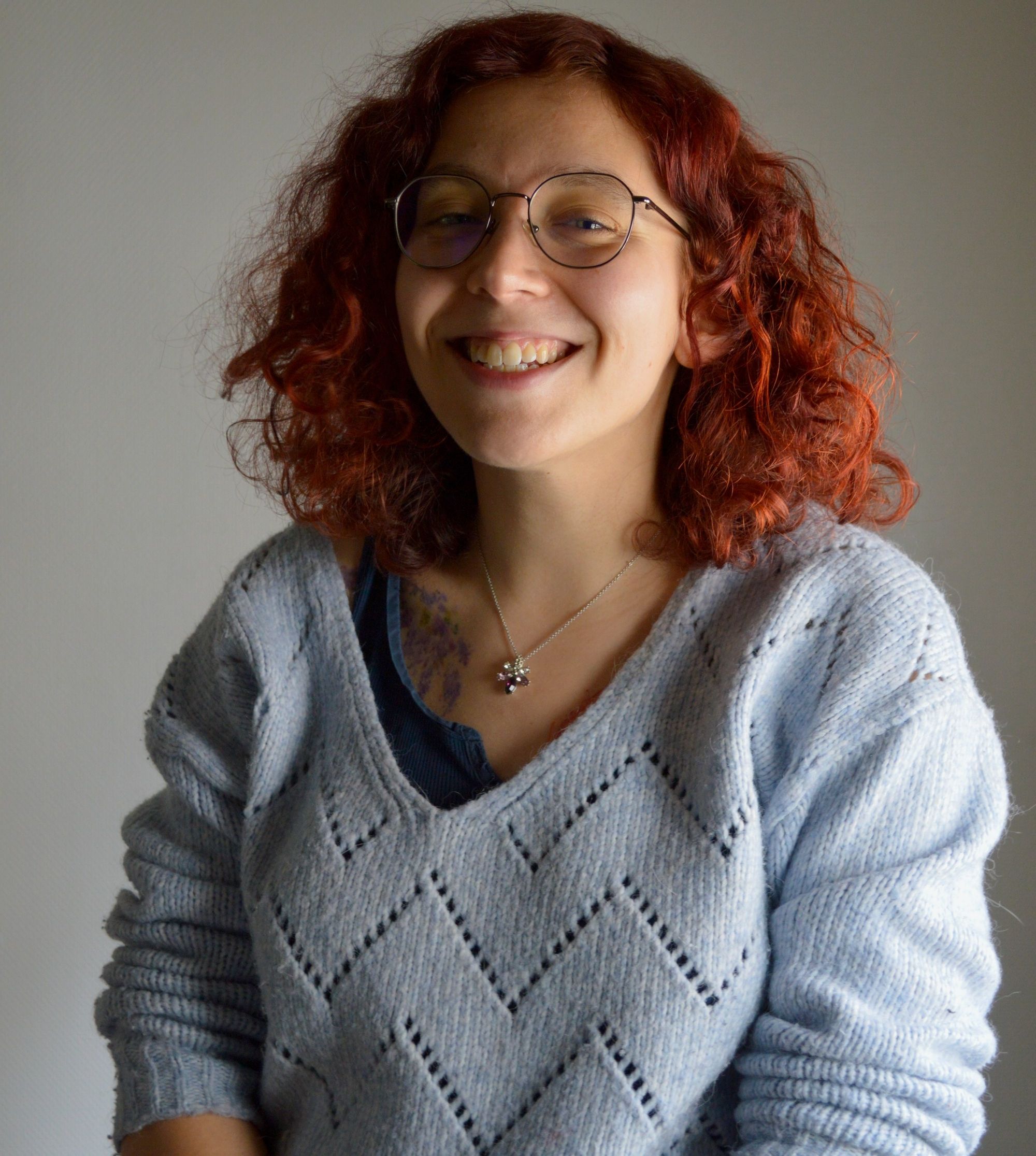
Elodie Gratreau is a permanent professor and researcher at the University of Technology of Compiègne (UTC) , affiliated with the COSTECH Laboratory . Her work bridges philosophy, epistemology, and psychiatry, with a focus on the Research Domain Criteria (RDoC) project. She investigates how technologies reconfigure mental disorder classifications and examines the ontological, methodological, and ethical implications of these shifts. PhD in Epistemology of Psychiatry (UTC, ongoing since 2020) Master 2 in Epistemology, History of Science and Technology (University of Nantes, 2020) Engineering Degree in Biological Engineering (UTC, 2019) Her research emphasizes the integration of biological and behavioral data in psychiatry, advocating for an "ethics of ambiguity" to address epistemic pluralism. She contributes to interdisciplinary seminars ( PHITECO ) and supervises research dissertations in science humanities. Recent publications analyze the RDoC project's governance mechanisms, transdiagnostic biomarkers, and tensions between technological integration and psychiatric pluralism. She also engages in public science communication, notably at the Pint of Science festival.
John Joshua Lawrence, Ph.D. is an Associate Professor in the Department of Pharmacology and Neuroscience at the Texas Tech University Health Sciences Center School of Medicine. His research program is deeply integrated with the Garrison Institute on Aging, the Center of Excellence for Translational Neuroscience and Therapeutics, and the Center for Excellence in Integrated Health, providing him with a comprehensive understanding of Alzheimer's disease pathogenesis and its impact on hippocampal learning. Dr. Lawrence's research focuses on the intersection of metabolic health and neurological function, with particular emphasis on nutrigenomics, cellular and synaptic physiology of Alzheimer's disease, excitation/inhibition balance in disease states, hippocampal learning and memory circuitry, GABAergic inhibition, cell type specificity of neuromodulation, antioxidant depletion across lifespan, neuroinflammation, effects of diet on healthy aging, computational neuroscience, and bioinformatics. His work investigates how vitamin A homeostasis disruption contributes to Alzheimer's disease pathogenesis, with a specific focus on all-trans retinoic acid (ATRA) depletion in memory circuits as an early event leading to reduced retinoic acid receptor occupancy, excess reactive oxygen species, and mitochondrial dysfunction. His recent publications demonstrate a clear research trajectory focused on Alzheimer's disease mechanisms and therapeutic interventions, particularly examining vitamin A/retinoic acid pathways, cholesterol modification strategies, and the convergence of artificial intelligence with neuroscience for neurological disorder diagnosis. This work spans both basic science investigations of molecular and cellular mechanisms and translational applications for therapeutic development. Dr. Lawrence currently leads two major NIH R01-funded projects: one investigating transcriptional dysfunction in dentate gyrus cell types related to retinoic acid responsive genes in Alzheimer's protection, and another examining how HDAC inhibition and vitamin A supplementation can boost retinoic acid-sensitive gene transcription to prevent Alzheimer's-related learning deficits. He also studies vitamin D deficiency in health disparities and cognitive decline, particularly among Hispanic populations. His laboratory maintains active research collaborations across Texas Tech University faculty in Engineering, Biology, Nutritional Sciences, and the Center for Biotechnology and Genomics, creating a multidisciplinary approach to understanding and addressing the complex mechanisms of Alzheimer's disease and healthy aging.
Daniel Fodorean is an academic at the Technical University of Cluj-Napoca, serving as a Lecturer in the Department of Electrical Machines, Marketing & Management. His research focuses on electric machine design, control systems, and magnetic field computation, with a particular emphasis on synchronous and hybrid excited machines for automotive applications. Education: Electrical Engineering (Diploma, 2001), M.Sc. in Variable Speed Electrical Drives (2002), Ph.D. in Double Excited Synchronous Machines (2005). Professional Experience: Assistant Lecturer at Technical University of Cluj-Napoca (2006–present); temporary teaching/research roles at Université de Technologie de Belfort-Montbéliard (2003–2004, 2005–2006). His work involves advanced control strategies (DTC-FOC, PWM), finite element analysis, and optimization techniques (gradient, surface response) for machines like permanent magnet and transverse flux motors. Key projects include double excited synchronous machine prototyping and thermal/mechanical design for hybrid systems. Recent publications address parameter optimization, vector control, and flux weakening in high-speed applications. Scientific Awards: Scholarships at Technological University of Belfort-Montbéliard (2001–2002, 2003). He contributes to international conferences such as ICEM, IEMDC, and COMPUMAG, with a focus on electromagnetic field computation and drive system efficiency. His expertise spans analytical modeling, numerical simulation (Flux2D/3D), and experimental validation of motor performance.
Michael Tempelmeier is a researcher at the Chair of Information Security, Technical University of Munich (TUM), specializing in hardware security and cryptographic implementations. His work focuses on authenticated encryption, lightweight cryptography (NIST LWC/CAESAR), and the development of evaluation frameworks for cryptographic hardware. He actively contributes to teaching, holding the Zertifikat Hochschullehre der Bayerischen Universitäten and leading courses like Angewandte Kryptologie and SmartCard Projektpraktikum . Tempelmeier's research centers on optimizing and securing cryptographic implementations for embedded systems. Key areas include: Design of hardware APIs for lightweight cryptography Side-channel and fault-attack countermeasures Trusted hardware gateways for IoT devices Efficient benchmarking methodologies for cryptographic hardware His publications demonstrate consistent focus on hardware vulnerabilities, cryptographic efficiency, and standardized evaluation frameworks. He maintains active involvement in tool development (e.g., MaskVer for detecting flawed masking implementations) and contributes to major projects like the Hardware API for Lightweight Cryptography. No awards or direct student supervision are mentioned in the provided text.
Prof. Dr. Simon Jacob is a leading researcher in translational neurotechnology at the Technische Universität München . As head of the Translational NeuroTechnology Laboratory and associate member of multiple neuroscience networks, he bridges rodent models with human neurosurgical research to unravel cognitive mechanisms. Board-certified neurologist Director of preclinical and clinical BCI research His research focuses on Neuronal basis of higher cognition Dopamine's role in executive function Neuromodulation of mental health using advanced methods like optogenetics , multi-scale neuroimaging , and computational modeling . Recent scientific publications reveal groundbreaking insights into Prefrontal cortex organization Striatal dopamine signaling Neuronal distraction filtering with implications for brain-computer interfaces and cognitive disorders. Recognized with a prestigious ERC Consolidator Grant , he mentors a diverse team of students spanning medicine, psychology, and AI. His teaching includes courses on neuroanatomy, cognitive neuroscience, and translational approaches to psychiatric disorders at TUM's elite programs.
Veeti Lahtinen is a Doctoral Researcher at Aalto University's Department of Electronics and Nanoengineering. He is affiliated with the Marko Kosunen Group, contributing to research in analog and microwave circuit design. His work focuses on automation frameworks for circuit design and verification. Research Focus: Integrated circuit design automation Specializations: Analog-to-digital converters, Microwave integrated circuits, Procedural verification His recent publications appear in top conferences like SMACD and NorCAS, emphasizing automated design methodologies. Reach him at veeti.lahtinen@aalto.fi .
Ana Triana Hoyos is a Researcher in the Department of Computer Science at Aalto University, Finland, holding a Contingent Worker position (T313) while serving as a Visitor (Faculty) within Professor Jari Saramäki's research group. Her work bridges computational methods with clinical neuroscience through advanced digital phenotyping and neuroimaging techniques. Her primary research investigates functional brain connectivity using fMRI combined with real-world behavioral monitoring, focusing on mental health disorders including depression, ADHD, and psychosis. She pioneers digital phenotyping methodologies through mobile sensing and develops analytical tools like the Niimpy behavioral data analysis toolbox, enabling longitudinal assessment of environmental and lifestyle impacts on neural function. Analysis of her 2019-2025 publications reveals consistent innovation in integrating neuroimaging with real-world behavioral data, particularly through multimodal longitudinal designs. Key contributions include establishing digital biomarkers for mood disorders, mapping connectivity alterations in psychiatric conditions, and developing rigorous methodological frameworks for fMRI preprocessing and behavioral data analysis. Scientific Awards: No awards were documented in the source materials. Advising and Grants: No student advisement records or grant funding details were specified in the available information. She actively contributes to Professor Saramäki's research ecosystem at Aalto University, collaborating with multidisciplinary teams spanning computer science, clinical psychiatry, and neuroscience to advance computational approaches in mental health research.
Professor Keijo Nikoskinen is affiliated with the Department of Electronics and Nanoengineering at Aalto University. His work spans two major domains: Electromagnetics and Antenna Engineering , focusing on advanced techniques like MIMO Over-the-Air (OTA) testing, computational electromagnetic modeling (FDTD), and antenna optimization; and University Pedagogy , with contributions to interdisciplinary education and teaching methodologies. He has pioneered plane-wave field synthesis for wireless testing and explored pedagogical innovations such as 360° teaching evaluation and clicker-based assessment tools. Scientific Awards: Teaching award by the ETA faculty of Aalto University (2010) Maxwell Award, England (1998) Research Trends in his publications highlight advancements in Wireless Communication Systems (MIMO testing, synthetic propagation environments), Computational Electromagnetics (FDTD techniques, nonlinear circuit modeling), and Educational Technology (interactive learning tools, pedagogical frameworks). Key subfields include antenna testing, field synthesis, interdisciplinary curriculum design, and hybrid simulation methods.
Tommi Junttila serves as a Senior University Lecturer in the Department of Computer Science at Aalto University, Finland, where he conducts cutting-edge research at the intersection of formal methods and computational logic. His academic profile demonstrates sustained contributions to theoretical computer science with practical applications in system verification and blockchain technology. His research program centers on advancing formal verification techniques, with core expertise in: Symmetry reduction algorithms for state space explosion SAT/SMT solving with specialized parity and XOR reasoning Bounded model checking of timed and asynchronous systems Blockchain protocol verification (notably DeFi lending pools) Canonical labeling tools for graph automorphism detection Recent work shows increasing focus on decentralized finance applications while maintaining foundational contributions to solver technology. Analysis of his publication trajectory (2011-2022) reveals consistent innovation in SAT solving methodologies, with symmetry reduction and parity reasoning forming persistent research threads. His 2022 work on DeFi lending pools represents a strategic expansion into blockchain verification, leveraging established formal methods expertise for emerging financial technologies. Tool development (bliss, PySMT) demonstrates commitment to practical research impact. No scientific awards were documented in the source materials. Similarly, no information regarding student supervision, grant funding, or laboratory affiliations was present in the provided text. His independent tool development (including bliss for graph canonical labeling and PySMT for SMT solver interfaces) indicates significant technical leadership within the formal methods community.
Mario Roberto Casu is an Associate Professor in the Department of Electronics and Telecommunications (DET) at the Polytechnic University of Turin, where he also serves as a contact person for the Degree Course in Electronic Engineering. He is a member of the Interdepartmental Center SmartData@PoliTO - Big Data and Data Science Laboratory and actively contributes to the VLSILAB research group. Dr. Casu received his laurea degree summa cum laude in electronics engineering and his Ph.D. in electronics and communications engineering from the Polytechnic University of Turin in 1998 and 2001, respectively. He has held visiting researcher positions at Columbia University (2010-2011), National University of Singapore (2017), and CEA Grenoble (2001), as well as a visiting professorship at Chongqing Technology and Business University (2016). His research spans several interconnected domains focused on hardware implementation of advanced computing systems. Dr. Casu's work primarily addresses Embedded Machine Learning through heterogeneous embedded systems (ASICs, FPGAs, CPUs, GPUs), System-on-Chip design including latency-insensitive approaches and Network-on-Chip architectures, Microwave Imaging for both biomedical (breast cancer and stroke detection) and industrial applications (food contamination detection), and Ultra-Wide Band technologies for biomedical applications. His research bridges theoretical design methodologies with practical industrial applications across biomedical, automotive, and food sectors. Dr. Casu's recent scholarly output demonstrates a clear trajectory toward optimizing hardware implementations for machine learning workloads, particularly through FPGA-based solutions and precision-scalable multipliers. His work increasingly integrates microwave sensing technologies with machine learning for specialized applications like food contaminant detection, while maintaining strong foundations in traditional VLSI design and system-level optimization techniques. As an academic leader, Dr. Casu serves on the editorial board of IEEE TRANSACTIONS ON AGRIFOOD ELECTRONICS and regularly participates in program committees for major international conferences including DATE, ICCAD, DAC, and VLSI-SoC. He has been involved in 9 national academic research projects (2 as principal investigator), 2 European academic research projects, and 7 national and international industrial projects (2 as principal investigator). Dr. Casu actively mentors the next generation of engineers, currently supervising multiple PhD students including Lorenzo Lagostina, Edward Manca, Teodoro Urso, Fabrizio Ottati, and Luca Urbinati. His teaching portfolio includes courses such as Integrated Systems Technology, Microelectronics Digital Design, and Embedded Electronic Systems for AI/ML across both bachelor's and master's programs in Electronic and Computer Engineering. His laboratory work centers around the VLSILAB Group at DET, where his team develops innovative solutions in hardware acceleration for machine learning, microwave imaging systems, and system-level design methodologies. Current projects include the EU-funded GreenChips-EDU initiative for sustainable microelectronics education and industry collaborations with companies like Infineon Technologies on coarse-grained reconfigurable array architectures for machine learning applications.
Andrew Fagan is a Lecturer in the Department of Computer and Information Sciences at the University of Strathclyde, working within the Faculty of Science. He is also affiliated with the Advanced Nuclear Research Centre in the department of Electronic and Electrical Engineering. Education: MEng in Computer and Electronic Systems (University of Strathclyde, 2019 with distinction) Research Interests: Design of safe, explainable artificial intelligence systems Human-in-the-loop AI for industrial applications Digitisation of engineering drawings for legacy equipment access Quantum computing optimisation techniques Computer science education innovations Recent Publications Trends: His 2025 papers focus on generative AI applications for programming education, while earlier works address engineering digitization and quantum circuit optimization. Key themes include AI explainability, human-machine collaboration, and educational technology solutions. Professional Activities: Speaker at the Double Acts for Demystifying Subroutine Calling Conventions event (2025) Contributor to the Accelerate Schools Programme Computer Science Challenge (2025) Organiser of the 8th Conference on Computing Education Practice (2024) Labs & Teams: Works closely with the Advanced Nuclear Research Centre and has cross-departmental collaboration with Electronic and Electrical Engineering. Participates in the RoVER VIP (Vertically Integrated Projects) team during his MEng studies.
Anton Dahbura is an Associate Professor at the Johns Hopkins University , affiliated with the Whiting School of Engineering and the Department of Computer Science . He serves as Executive Director of the Johns Hopkins University Information Security Institute , Co-director of the Institute of Assured Autonomy , and leads the Sports Analytics Research Group . He is also affiliated with the Malone Center for Engineering in Healthcare and the Laboratory for Computational Sensing and Robotics . Research Interests Information Security Fault-tolerant Computing Distributed Systems Protocol Conformance Testing Sports Analytics Scheduling Optimization Publications span IoT/CPS integration, protocol testing, fault-tolerant mobile networks, and ASIC array optimization. His work emphasizes algorithm development for system reliability and security, with historical contributions to multiprocessor fault diagnosis and protocol verification. Scientific Awards IEEE Fellow IEEE Browder J. Thompson Memorial Prize Paper Award Johns Hopkins Heritage Award (2004) He has held leadership roles at AT&T Bell Laboratories, Motorola Cambridge Research Center, and Princeton University. His academic career reflects deep engagement with systems engineering, security, and interdisciplinary sports analytics.
Dr. Martin Rudolph serves as Head of Processing and Head of Interfaces at the Helmholtz Institute Freiberg for Resource Technology (part of Helmholtz Center Dresden-Rossendorf) with dual affiliation to TU Bergakademie Freiberg. His research integrates advanced mineral processing with cutting-edge recycling technologies for critical materials. Specializing in froth flotation of ultrafine particles and recycling of lithium-ion batteries/electrolyzers , Rudolph investigates hydrodynamic phenomena, reagent development, and particle-surface interactions. His work bridges fundamental surface chemistry with industrial-scale separation processes, focusing on sustainable recovery of strategic materials from complex waste streams. Key innovations include bio-based depressants, multidimensional particle characterization, and conceptual recycling chains for hydrogen technologies. Analysis of his recent publications reveals a dominant focus on battery recycling (38% of 2025 articles) and ultrafine particle separation (42%), with strong emphasis on flotation hydrodynamics (15%) and electrolyzer recycling (5%). His methodology consistently combines experimental validation with computational modeling, targeting industrial scalability through Design of Experiments and numerical optimization. Rudolph leads processing research at HZDR's Freiberg facility where his team operates specialized flotation cells (ImhoflotTM, REFLUXTM) and develops separation protocols for resource recovery. Current projects target lithium extraction from slag, platinum group metal recovery from electrolyzers, and sustainable reagent systems using cellulose nanocrystals.
Roberto Bonasio, Ph.D., is a Professor of Cell and Developmental Biology at the Perelman School of Medicine , University of Pennsylvania. He serves as Core Faculty at the Penn Epigenetics Institute and Member of the Institute for Regenerative Medicine. Research Interests : The Bonasio Lab explores epigenetic gene regulation in brain function, focusing on noncoding RNAs , chromatin biochemistry , and gene-behavior relationships . His work spans traditional (mice) and non-traditional models (ants, fruit flies, planarians). Recent Articles highlight studies on neuropeptide-driven caste behavior in ants, RNA-binding chromatin complexes , and methodological innovations like ligation-independent RNA sequencing. Students : Roberto mentors PhD candidates in the Cell and Molecular Biology (CAMB) and Biochemistry and Molecular Biophysics (BMB) graduate groups, including Johnny Doherty, Segovia Garcia, Lauren Reich, and Julia Tasca. Labs & Teams : The lab integrates epigenetics, genomics, and neurobiology , with expertise in single-cell RNA sequencing , protein-RNA interaction mapping , and R-loop analysis . Key collaborators include Penn researchers and international institutions.
Dr. Milan Vesković is an Assistant Professor at the Department of Computer and Software Engineering, Faculty of Technical Sciences in Čačak, University of Kragujevac, Serbia. He has been employed at the Faculty since October 2007, progressing from research associate to his current position. His academic journey includes teaching courses in mechatronics, electronics, radio systems, and electronic components and assemblies. Graduated from Faculty of Technical Sciences in Novi Sad, March 11, 2002 (Electrical Engineering and Computer Science) Master's degree from Technical Faculty in Čačak, December 2009 (Electromagnetism) PhD from Faculty of Technical Sciences in Čačak, April 2018 (Electronics) Dr. Vesković's research spans multiple domains within electrical engineering and computer science. His primary interests include the application of numerical methods in electromagnetism (particularly the method of fictitious sources) for solving electrostatic conductor problems, signal processing techniques in electronics, and the application of electronic components in education, ecology, and hardware/software development. His work demonstrates a strong interdisciplinary approach, bridging theoretical electrical engineering concepts with practical applications in computing and environmental sustainability. His recent publications reveal a growing interest in emerging technologies including nanotechnology applications, waste management systems, educational technology (particularly Micro:bit applications), and optimization algorithms for energy management. There's also a clear trend toward interdisciplinary research combining electrical engineering principles with computer science, environmental science, and educational methodologies. Dr. Vesković has served as a UNIDO Consultant for Cleaner Production (CP) Programme following his successful engagement with the "Cleaner Production 2011" project in collaboration with UNIDO and the city of Čačak. As an educator, Dr. Vesković has contributed significantly to curriculum development and teaching in electrical engineering and computer science. His research has been supported through various academic and industry collaborations, particularly in the areas of cleaner production methods and educational technology implementation. He has been actively involved in numerous international conferences and has published 59 papers in domestic and international journals and conference proceedings. His work spans multiple laboratories and research groups within the Faculty of Technical Sciences, particularly those focused on electronics, computer engineering, and interdisciplinary applications of technology in environmental and educational contexts.