Serban Raianu is a Professor in the Department of Mathematics at California State University Dominguez Hills since 2004. His research focuses on Hopf algebras , quantum groups , and their applications to algebraic structures. He has published extensively on topics such as graded rings , crossed coproducts , and co-Frobenius Hopf algebras , often collaborating with leading mathematicians like S. Dăscălescu and C. Năstăsescu. His work in number theory includes recent studies on arithmetic properties of 3-cycles in quadratic maps (2022), extending the abc conjecture and exploring connections to Diophantine equations . He has also contributed to linear algebra with a 2005 paper on Jordan forms and matrix optimization . Key research contributions: Hopf algebras acting on algebras and coalgebras Quantum groups and their representations Duality theories for finite Hopf algebras Dr. Raianu has received notable scientific awards , including the Gheorghe Titeica Prize from the Romanian Academy (2001) and the first prize in the annual scientific contest for students at the University of Bucharest (1981). He has advised undergraduate research projects on partition problems , harmonic number differences , and Green's theorem applications , supported by grants such as the PUMP Undergraduate Research Grant (2016-2017) and NSF-Cal State grant (2003-2006).
Ziqing Xiang is an Associate Professor in the Department of Mathematics and the National Center for Applied Mathematics Shenzhen at Southern University of Science and Technology (SUSTech) . He completed his PhD at the University of Georgia (UGA) under the supervision of Daniel K. Nakano , with a dissertation titled "Representation theory for Iwahori-Hecke algebras and Schur algebras of classical type". Education: PhD in Mathematics, University of Georgia (UGA), 2019 Research Interests: His research lies at the intersection of algebraic combinatorics , representation theory , and number theory . Specific areas include: Combinatorics: association schemes, design theory, graph theory, symbolic dynamics, phylogenetic combinatorics Number Theory: Diophantine equations, finiteness of integral points, variable separated curves Representation Theory: algebraic groups, cohomology, Iwahori-Hecke algebras, quantum groups, Schur algebras Publications Overview: Dr. Xiang has published extensively in leading journals such as Advances in Mathematics , Journal of Algebraic Combinatorics , Discrete Mathematics , and Transformation Groups . His work spans theoretical classifications (e.g., tight designs, spherical designs), algebraic constructions (e.g., q-Schur algebras, quantum wreath products), and interdisciplinary applications (e.g., phylogenetic combinatorics). Contact & Affiliation: Email: xiangzq@sustech.edu.cn Office: College of Science M5005, SUSTech
Patrick Desrosiers serves as an Adjunct Professor in the Department of Physics, Physical Engineering and Optics within Université Laval's Faculty of Science and Engineering, while conducting neuroscience research at the CERVO Brain Research Center. He co-directs Dynamica, a multidisciplinary complex systems research group, and participates in UNIQUE (neuroscience-AI integration) and CIMMUL (mathematical modeling applications). His academic training spans physics and mathematics at Université Laval, the University of Melbourne, and CEA-Saclay. Dr. Desrosiers' research centers on mathematical and computational neuroscience , with signature contributions in dimensionality reduction and network resilience analysis . His work bridges biological and artificial neural networks , zebrafish brain mapping , and neurovascular coupling using advanced techniques from spectral graph theory , random matrix theory , and dynamical systems . Current investigations focus on neural decoding under chronic stress and structural-functional relationships in brain networks. Analysis of his 2023-2025 publications reveals three dominant trajectories: (1) Low-dimensional representations for predicting cognitive decline and neural dynamics, (2) Network reconstruction methodologies applied to neuroscience and biodiversity, and (3) Development of computational tools like NeuroTorch for neural data analysis. His work consistently integrates mathematical rigor with biological relevance across species and scales. His recognition includes: Professeur étoile prize for exceptional teaching (Faculty of Science and Engineering, Université Laval, 2018) As Dynamica co-director, he mentors a research team comprising Antoine Légaré, Arthur Légaré, Benjamin Claveau, Jordan Charest, Marziyeh Pourmousavi, Pierre-Luc Larouche, Vincent Savard, Vincent Thibeault, and Zahra Yazdani. His collaborative framework connects physics, mathematics, and neuroscience to address fundamental questions in neural network organization, with funding evident through sustained publication output and lab operations. Dynamica Lab ( https://dynamicalab.github.io/ ) serves as the operational hub for his interdisciplinary research, maintaining active collaboration with CERVO Brain Research Center and international institutions.
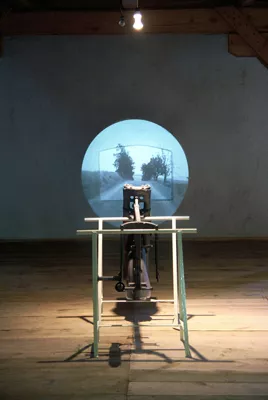
Patrik Kovačovský is a Professor and Studio Manager at the Department of Sculpture, Object, Installation at the Academy of Fine Arts in Bratislava. He works at the intersection of sculpture, architecture, and digital space, focusing on innovative artistic research and practice. Academy of Fine Arts in Bratislava (Department of Sculpture, 1990–1996) Art.D. studies, Academy of Fine Arts, 2001–2003 His research integrates traditional sculpture with virtual reality and architectural contexts, producing installations that explore memory, cosmic themes, and cultural identity. Recent works include Fluid Pictures (2011) and Kosmos (2006). 1996 Young Artist of the Year, Slovak National Gallery 2000 Annual Award, Galéria Klatovy/Klenová 2008 Visegrad Artist Residency 2010 Prohelvetia Residency in Zurich
Pavel Galashin is an Associate Professor in the Department of Mathematics at the University of California, Los Angeles, where he joined in 2019 after completing his PhD at MIT under Alex Postnikov. His research focuses on algebraic combinatorics with emphasis on total positivity and cluster algebras. His primary research interests include algebraic combinatorics, total positivity, cluster algebras, amplituhedra, plabic graphs, positroids, and connections to mathematical physics. His work bridges combinatorics with algebraic geometry, representation theory, and theoretical physics, particularly in scattering amplitudes and integrable systems. Galashin's recent publications reveal a strong focus on braid varieties, positroid varieties, and their connections to cluster structures. His research shows significant interdisciplinary impact across combinatorics, algebraic geometry, and mathematical physics, with particular attention to geometric structures in scattering amplitudes and connections to knot theory. He has received an Alfred P. Sloan Research Fellowship and NSF funding through grants DMS-1954121 and DMS-2046915 (CAREER). Galashin advises multiple PhD students including Matthew Tyler, Ariana Chin, Thomas Martinez, and Olha Shevchenko, and co-mentors postdocs such as Terrence George and Colleen Robichaux. Together with Anton Bernshteyn, Terrence George, Igor Pak, and Colleen Robichaux, he organizes the UCLA Combinatorics Forum.
Leila De Floriani is a Professor at the University of Maryland, with appointments in the Department of Geographical Sciences and the University of Maryland Institute for Advanced Computer Studies (UMIACS). She previously served as a professor at the University of Genova (Italy) since 1990, where she developed Italy's first undergraduate and graduate curricula in computer graphics and directed the Ph.D. program in Computer Science for eight years. Her professional activities include serving as the 2020 President of the IEEE Computer Society and currently as IEEE Division VIII Director for 2023-24. Professor De Floriani's research spans geometric modeling, data visualization, spatial data representation and processing, computer graphics, shape analysis, and topological data analysis. Her work focuses on developing mathematical models and algorithms for representing, analyzing, and visualizing complex spatial data, particularly through hierarchical models, mesh-based representations, and topology-based approaches. Her research group, the GeoVis group, investigates applications in terrain modeling, environmental data analysis, and forest structure mapping using LiDAR technology. Analysis of her recent publications reveals a strong focus on terrain representation and processing, with increasing emphasis on topological data analysis, machine learning integration, and efficient algorithms for large-scale spatial data. Her work bridges theoretical foundations in computational topology with practical applications in geospatial sciences, demonstrating consistent innovation in data structures and visualization techniques. Scientific Awards & Recognitions Fellow of IEEE (2016) for contributions to geometric modeling and scientific visualization Fellow of International Association for Pattern Recognition (IAPR) (1998) for contributions to geometric modeling and image analysis Fellow of Eurographics Association (2020) for outstanding contributions to computer graphics and visualization Pioneer of Solid Modeling Association (2017) for seminal work in solid and feature-based modeling Inducted Member of IEEE Visualization Academy (2020) IEEE Computer Society Golden Medal Award (2018) Inducted Member of IEEE Honor Society Eta Kappa Nu (2019) Multiple best paper awards at major conferences including Shape Modeling International (2015), IEEE/EG Symposium on Volume and Point-Based Graphics (2008), and ACM SIGSPATIAL (2008) Professor De Floriani has successfully advised numerous PhD students including Xin Xu, Yunting Song, and Noel Dyer, whose recent dissertations focused on topology-based individual tree mapping, efficient terrain analysis, and bathymetric data visualization respectively. Her research has been funded by prestigious agencies including the National Science Foundation, NASA, and the European Commission. As the leader of the UMD GeoVis group, she oversees a research program that develops open-source tools for spatial data analysis available on GitHub, with current projects focusing on forest point cloud processing and topology-based geospatial data visualization. The GeoVis group, affiliated with the Department of Geographical Sciences, UMIACS, and the Center for Geospatial Information Sciences, maintains a strong collaborative environment with ongoing projects in geometric modeling, spatial data structures, topology-based machine learning, and mesh-based terrain modeling. The group has received recent funding from NASA's HPOSS program for developing an open-source library for forest point cloud processing based on topological data analysis.
Nan Chen is an Associate Professor at the Department of Mathematics, University of Wisconsin-Madison, and a faculty affiliate of the Institute for Foundations of Data Science (IFDS), a multi-University TRIPODS Phase II Initiative. His research spans applied mathematics with applications in atmosphere-ocean science, climate dynamics, and data science. Education: PhD from Courant Institute of Mathematical Sciences (CIMS) and Center of Atmosphere and Ocean Science (CAOS), New York University (NYU), May 2016 Postdoc research associate at CIMS, NYU (June 2016-May 2018) Master's degree from School of Mathematical Sciences, Fudan University, Shanghai Undergraduate in Mechanical Engineering, Fudan University, Shanghai Visited Department of Scientific Computing at Florida State University working with Dr. Max Gunzburger and Dr. Xiaoming Wang Nan Chen's research focuses on contemporary applied mathematics, particularly modeling complex systems, stochastic methods, numerical algorithms, and data science. He specializes in uncertainty quantification (UQ), data assimilation, and developing statistically accurate algorithms to address the curse of dimensionality in large-dimensional complex dynamical systems with strong non-Gaussian features. His work has significant applications in atmosphere-ocean science, including predicting phenomena such as the Madden-Julian Oscillation (MJO), monsoons, El Niño Southern Oscillation (ENSO), and sea ice dynamics. He has also extended his research to material science, neuroscience, and other complex systems. His recent publications demonstrate expertise in inverse problems, wave equations, numerical methods, and data compression techniques that blend mathematical theory with practical applications. Dr. Chen has authored a book titled "Stochastic Methods for Modeling and Predicting Complex Dynamical Systems --- Uncertainty Quantification, State Estimation, and Reduced-Order Models" published by Springer, and a tutorial paper "Taming Uncertainty in a Complex World: The Rise of Uncertainty Quantification — A Tutorial for Beginners" in the Notices of the AMS. Professional Activities: Organizing "Data Meets Dynamics: Workshop on Data Assimilation for Complex Systems and Applications" (August 21-22, 2025) Author of two articles in Elsevier's Reference Module in Earth Systems and Environmental Sciences Participant in Wisconsin Science and Computing Emerging Research Stars (WISCERS) program Judge for Outstanding Student Paper Award (OSPA) program at American Geophysical Union (AGU) fall meetings Involved in Madison Experimental Mathematics Lab (MXM Lab) Dr. Chen actively mentors undergraduate students for research during semesters and summers, encouraging them to present at the UW undergraduate symposium. He also offers reading and independent study courses for interested undergraduates. He is currently seeking highly motivated PhD students to join his research group with possible Research Assistantship support.
Malte Laurens Kampschulte serves as Assistant Professor at the Department of Mathematical Analysis, Faculty of Mathematics and Physics, Charles University in Prague. He leads research within S. Schwarzacher's fluid structure interaction group and the OP JAK project FerrMion, following his role as Substitute Professor at the University of Leipzig during Summer 2024. His academic credentials include: B.Sc in Mathematics (2009) and Computer Science (2010) from RWTH Aachen M.Sc in Mathematics (2012) from RWTH Aachen Ph.D. in Mathematics (2018) with thesis "Gradient flows and a generalized Wasserstein distance in the space of Cartesian currents" Dr. Kampschulte's research centers on fluid structure interaction, calculus of variations, partial differential equations, and geometric measure theory. His work examines variational aspects of Eulerian-Lagrangian frameworks, relaxation methods for generalized solutions, topological invariants in PDEs, and current transport on manifolds. This integrated approach bridges theoretical analysis with physical applications in continuum mechanics. Analysis of his 2023-2024 publications reveals concentrated focus on three-dimensional fluid-structure systems with viscoelastic solids, compressible fluids, and self-collision phenomena. Key contributions include global weak solution frameworks for contact problems, variational approaches to hyperbolic evolutions, and regularity analysis for free surface dynamics—demonstrating both mathematical rigor and physical relevance. As Principal Investigator for the PRIMUS grant "Qualitative and quantitative Analysis for non-linear non-uniformly elliptic models" (previously held by Anna Balci), he oversees active research funding while mentoring through an open PostDoc position. His leadership extends to the FerrMion project where he develops mathematical frameworks for fluid-matter interactions. Based in the Department of Mathematical Analysis at Charles University, Dr. Kampschulte collaborates within S. Schwarzacher's research group to advance mathematical understanding of fluid-structure systems through both theoretical innovation and computational modeling.
Kazuo Habiro is a Professor at the University of Tokyo , affiliated with the Faculty of Science, Department of Mathematics . His work bridges topology and algebraic structures, focusing on quantum invariants of 3-manifolds and links. Research Interests: Specializing in low-dimensional topology , quantum topology , and algebraic topology , Habiro explores connections between topological spaces and quantum algebra. Recent interests include homological algebra, such as group homology and Hochschild homology. Selected Publications highlight his contributions to quantum invariants, Kirby calculus, and clasper theory, reflecting interdisciplinary trends in geometric topology and quantum field theory. Awards & Memberships: Geometry Prize of the Mathematical Society of Japan (2008) Editor for Quantum Topology
Georgios Arvanitidis is an Associate Professor at the Technical University of Denmark (DTU) in the Department of Applied Mathematics and Computer Science, specifically within the Section for Cognitive Systems (CogSys). He has established himself as a leading researcher in geometric machine learning, focusing on the application of differential geometry principles to enhance machine learning models. His work bridges theoretical mathematics with practical applications in artificial intelligence, with particular emphasis on understanding the geometric structure of data manifolds and latent spaces. Dr. Arvanitidis completed his educational journey with a Bachelor's degree from the Department of Informatics at the Aristotle University of Thessaloniki, followed by a Master's degree in Computer Science from Saarland University supported by the Max Planck Institute for Informatics. He earned his PhD at DTU's Cognitive Systems section under the supervision of Søren Hauberg, with additional research experience at Philipp Hennig's Probabilistic Numerics group. Prior to his current position as associate professor, he was a PostDoc at the Max Planck Institute for Intelligent Systems working with Bernhard Schölkopf. Dr. Arvanitidis's research primarily focuses on differential geometry in machine learning , where he explores how geometric structures can enhance representation learning and statistical modeling. His work in generative models investigates how learning the geometry of data manifolds can improve deep learning architectures. In the domain of deep learning theory , he examines why deep learning models generalize effectively on unseen data, with particular attention to the curvature properties of loss landscapes. His research in approximate Bayesian inference applies geometric principles to improve uncertainty quantification in neural networks. Through his innovative approaches, Dr. Arvanitidis has established himself as a leading researcher in geometric machine learning, contributing to both theoretical foundations and practical applications across various domains including robotics and life sciences. The publication trends of Dr. Arvanitidis reveal a consistent and evolving focus on geometric approaches to machine learning problems. His recent work (2023-2025) demonstrates increasing sophistication in applying Riemannian geometry to deep learning architectures, with particular emphasis on latent space geometry, optimization on manifolds, and geometric interpretations of neural network behavior. A notable pattern is the progression from foundational work on geometric representations to more applied research in areas like robotics and causal inference. His publications span top-tier conferences including NeurIPS, ICML, ICLR, and AISTATS, reflecting the high impact of his research. The interdisciplinary nature of his work is evident in collaborations across mathematics, computer science, and robotics domains, with recent papers addressing challenges in multimodal sampling, safety guarantees for dynamical systems, and counterfactual explanations. Dr. Arvanitidis has received several notable scientific awards and recognitions: Sapere Aude starting grant from the Independent Research Fund Denmark (DFF) GADL funding i-Rase, Pathfinder, and EIC (European Innovation Council) funding Best reviewer award for NeurIPS 2019 Best reviewer award for NeurIPS 2018 Best student paper award at Robotics: Science and Systems (R:SS) 2021 Dr. Arvanitidis actively mentors PhD students and researchers, currently supervising Alejandro Valverde, Johanna Gegenfurtner, and Albert Kjøller Jacobsen. He has previously co-supervised Alison Pouplin's PhD and worked with research assistant Georgios Pantis. His group receives substantial funding through multiple prestigious grants including the Sapere Aude starting grant from the Independent Research Fund Denmark, as well as European Innovation Council funding. He has been instrumental in creating opportunities for students interested in geometric machine learning, offering BSc and MSc thesis projects focused on generative models, deep learning theory, and optimization techniques. Dr. Arvanitidis also contributes significantly to the academic community as a reviewer for top conferences including ICLR and TMLR, and as an area chair for NeurIPS, ICML, AISTATS, and UAI. He co-organized the Machine Learning Summer School 2020 in Tübingen, further demonstrating his commitment to education and community building. Dr. Arvanitidis leads a vibrant research group focused on geometric machine learning within the Cognitive Systems section at DTU. His team includes multiple PhD students working on cutting-edge research at the intersection of differential geometry and artificial intelligence. The group has developed notable software tools, including the "geometric_ml" GitHub repository with over 70 stars, which contains implementations for applying Riemannian geometry in machine learning. His research has practical applications in robotics, where geometric approaches enable more robust motion planning, as evidenced by his work on "Reactive Motion Generation on Learned Riemannian Manifolds" which received a best student paper award. Additionally, his methodologies have found applications in life sciences, as mentioned in his 2022 AISTATS paper. The collaborative nature of his work is evident through extensive partnerships with researchers at institutions including the Max Planck Institute for Intelligent Systems, University of Cambridge, and various European universities. His recent news items indicate active engagement with the academic community through talks, conference presentations, and ongoing supervision of new PhD students joining his group.
Kirill Serkh is an Assistant Professor in the Department of Mathematics at the University of Toronto, with a cross-appointment to the Department of Computer Science. His research focuses on advanced numerical methods for solving complex mathematical problems. Key Research Areas: Numerical analysis, Scientific computing, Partial differential equations, Numerical linear algebra, Quadrature and approximation theory, Special functions His recent work explores high-order numerical schemes for PDEs on non-smooth domains, adaptive methods for oscillatory integrals, and efficient evaluation of Newtonian potentials. He has contributed to the development of hybrid boundary integral methods and spectral techniques for challenging computational problems. While no specific scientific awards are mentioned in the provided text, his publications demonstrate expertise in computational mathematics and interdisciplinary applications in fluid dynamics, wave propagation, and machine learning. His methodological innovations span both theoretical and applied domains.
Johann Guilleminot is an Associate Professor in the Thomas Lord Department of Mechanical Engineering and Materials Science at Duke University. He joined Duke in 2017 after a Maître de Conférences position at Université Paris-Est. His research bridges computational mechanics, materials science, and uncertainty quantification, with applications in additive manufacturing, biomedical implants, and naval systems. Education: M.S. in Theoretical Mechanics, Lille University of Science and Technology (2005) Ph.D. in Theoretical Mechanics, Lille University of Science and Technology (2008) Habilitation in Mechanics, Université Paris-Est (2014) His work focuses on probabilistic methods for heterogeneous materials, stochastic solvers, and scientific machine learning. Recent projects include data-driven uncertainty quantification in molecular dynamics and additive manufacturing simulations, funded by the Army Research Office, NSF, and national laboratories. Scientific Awards: No specific awards listed in the provided text. Lab & Collaborations: Leads the Guilleminot Lab at Duke, collaborating with Sandia National Laboratories and the U.S. Naval Research Laboratory. Research spans atomistic-to-continuum coupling, inverse problems, and stochastic modeling for predictive simulations.
Michael Black is a leading researcher in computer vision and human body modeling. He is a founding director at the Max Planck Institute for Intelligent Systems in Tübingen, Germany, where he leads the Perceiving Systems department. He holds concurrent academic appointments as Honorarprofessor at the University of Tübingen, Adjunct Professor (Research) in Computer Science at Brown University, and Visiting Professor of Electrical Engineering at Stanford University. B.Sc., University of British Columbia (1985) M.S., Stanford University (1989) Ph.D., Yale University (1992) His research centers on the mathematical representation of human body shape, with applications in computer vision, graphics, and neuroscience. He has pioneered methods for analyzing body shape variation using statistical models derived from 3D body scans and has developed techniques for estimating body shape from commodity sensors. His work bridges geometry, perception, and machine learning to enable machines to understand human form and behavior. His publications and research have significantly influenced the field of computer vision, particularly in shape modeling and pose estimation, with long-standing contributions to both theoretical and applied aspects. His work integrates broad disciplines such as machine learning, imaging, and human-computer interaction. IEEE Computer Society Outstanding Paper Award (1991) Honorable Mention for the Marr Prize (1999) Honorable Mention for the Marr Prize (2005) 2010 Koenderink Prize for Fundamental Contributions in Computer Vision Michael Black has advised numerous students and researchers through his roles at Brown University and the Max Planck Institute, though specific names are not listed. He has led major research initiatives and secured significant funding through his leadership in the Perceiving Systems department. His work continues to drive innovation in intelligent systems that perceive and interpret human behavior. He leads the Perceiving Systems department at the Max Planck Institute for Intelligent Systems, a multidisciplinary team focused on vision, learning, and human-centered computing. The group integrates computer vision, machine learning, and 3D modeling to develop systems that understand human shape, motion, and behavior.
Dr. Yassin A. Hassan is a Professor at the College of Engineering , Texas A&M University , with joint appointments in Nuclear Engineering and Mechanical Engineering . He holds the L.F. Peterson '36 Chair II , is a University Distinguished Professor , and directs the Center for Advanced Small Modular and Microreactors (CASMR) . Ph.D., Nuclear Engineering, University of Illinois – 1980 M.S., Nuclear Engineering, University of Illinois – 1975 B.S., Engineering, University of Alexandria in Egypt – 1968 His research interests include: Computational & Experimental Thermal Hydraulics Reactor Safety Fluid Mechanics Two-Phase Flow Turbulence & Laser Velocimetry Imaging Techniques His recent publications focus on: Thermal hydraulics of heat pipes and microreactors AI integration in nuclear thermal-fluid systems Flow regime transitions in wire-wrapped fuel assemblies CFD validation for pebble bed and molten salt reactors Uncertainty quantification in reactor simulations Flow visualization techniques under elevated pressures Scientific awards include: American Nuclear Society Seaborg Medal (2008) James N. Landis Medal (ASME, 2017) Akiyama Medal (ICONE 24, 2016) Arthur Holly Compton Award (ANS, 2003) Texas A&M TEES Research Impact Award (2018-2019) Honorary professor, Bangor University, UK Dr. Hassan leads the Thermal-Hydraulics Research Laboratory and has pioneered advancements in reactor safety, digital twin technologies, and AI-driven thermal-fluid simulations.
Amit Kuber is an Associate Professor in the Department of Mathematics & Statistics at Indian Institute of Technology Kanpur . He specializes in representation theory of associative algebras, order theory, and K-theory of model-theoretic structures, with a growing portfolio of high-impact publications and teaching accolades. Education PhD (2011-14) – University of Manchester, UK (Thesis: "K-theory of theories of modules and algebraic varieties"; Supervisor: Prof. Mike Prest) Master of Advanced Studies/Part III of Mathematical Tripos (2010-11) – University of Cambridge, UK M.Sc. (2008-10) – University of Pune B.Sc. (2006-08) – Garware College, Pune Research Interests & Focus Kuber's work lies at the intersection of algebra, model theory, and combinatorics. He explores combinatorial aspects of the representation theory of bound quivers , arithmetic properties of linear orders, and Grothendieck rings arising from model-theoretic structures. His research often bridges abstract categorical frameworks with concrete combinatorial problems, yielding insights into both tame and wild representation types. Scientific Awards & Honors Gopal Das Bhandari Memorial Distinguished Teacher Award (2023) Excellence-in-Teaching Award (2022) Sushila and Kantilal Mehta Award (2019) Eduard Čech Institute Post-doctoral Fellowship (2016) University of Manchester Overseas Students Scholarship (2011-14) Cambridge Commonwealth Trust Scholarship (2010-11) NBHM M.Sc. Scholarship (2008-10) Lt. Padmabhushan A. Garware & Lt. R.G. Kunte Memorial Awards for First Rank in B.Sc. Mathematics (Pune University) Professional Experience & Grants After completing his PhD, Kuber held post-doctoral positions at Masaryk University, Brno (2014-15) and the Second University of Naples, Caserta (2016). While explicit grant details are not provided, his continuous appointment at IIT Kanpur and multiple teaching awards indicate sustained institutional support for his research and pedagogical initiatives. Extracurricular Interests Beyond academia, Kuber engages in Indian classical and light music (vocal, harmonium, tabla) and poem writing .