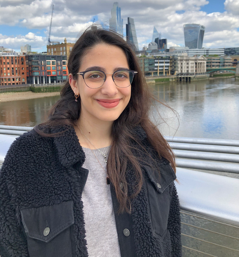
Harita Dellaporta is a postdoctoral researcher in the Department of Statistical Science at University College London (UCL), working with Dr. François-Xavier Briol. Previously, she completed her PhD at the University of Warwick under Prof. Theo Damoulas, focusing on robust Bayesian inference and distributionally robust optimization. Her research addresses model misspecification challenges, with applications in Bayesian methods, optimization, and simulator-based models. Education: PhD (2025), CDT in Mathematics and Statistics, University of Warwick MSc (2020), Computational Statistics and Machine Learning, University College London BSc (2019), Mathematics, University of Warwick Research Interests: Her work emphasizes robust methodologies to handle model misspecification, including robust Bayesian inference, distributionally robust optimization (DRO), and measurement error correction. She also explores applications in simulator-based models and exponential family distributions. Recent Work Trends: Her publications focus on integrating Bayesian methods with DRO frameworks, addressing decision-making under uncertainty, and developing robust statistical tools for complex models. Notable contributions include advancements in ambiguity sets for DRO and MMD-based posterior bootstrapping for simulator-based inference. Awards: Best Paper Award at AISTATS 2022 Teaching & Engagement: Exercise classes for STAT0043 (Inference at Scale) at UCL (2024–2025) Previously taught probability modules at the University of Warwick Active presenter at workshops and conferences, including talks at NeurIPS, PHYSTAT-SBI, and the Alan Turing Institute Labs & Groups: Member of UCL’s Fundamentals of Statistical Machine Learning group and previously part of Warwick’s Machine Learning Group.
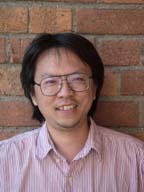
Matthew Thorpe is an Associate Professor in the Department of Statistics at the University of Warwick and a member of the European Laboratory for Learning and Intelligent Systems (ELLIS). His research focuses on applying methods from applied analysis—including partial differential equations (PDEs), calculus of variations, and optimal transport—to machine learning and data science challenges. He has organized workshops such as the 'Machine Learning in Infinite Dimensions' at ETH Zurich and the 'LMS-Bath Symposium on Inverse Problems and Artificial Intelligence in Medicine.' Thorpe currently seeks PhD students for his research projects. His work bridges theoretical mathematics with practical applications in data-driven fields. Thorpe's research interests include manifold learning in Wasserstein space, PDE-based approaches to data science, and convergence analysis of graph-based learning algorithms. He has contributed to understanding the impact of imputation quality on machine learning models and developed novel transportation distances for pattern recognition. His interdisciplinary approach integrates mathematical rigor with advancements in artificial intelligence. He has co-organized the One World Seminar Series on the Mathematics of Machine Learning and remains active in promoting collaborative research initiatives. Despite no explicitly listed awards, his prolific publication record reflects sustained academic impact. Thorpe’s advising focuses on training students in the intersection of applied mathematics and modern data science techniques.
Yudi Pawitan is Professor at the Department of Medical Epidemiology and Biostatistics at Karolinska Institutet, where he leads the research group on Statistical and Bioinformatics Analyses of High-Throughput Molecular Data. His work focuses on developing statistical methods for genomic studies including SNP/RNA arrays and next-generation sequencing. Education includes BSc in Statistics (Bogor Agriculture Institute, 1982), MSc in Statistics (UC Davis, 1984), and PhD in Statistics (UC Davis, 1987). Research interests span bioinformatics, cancer genomics, and statistical genetics with emphasis on high-dimensional data analysis, genetic correlations, and neural cell biology. His group addresses fundamental questions in genomic data interpretation and neurodegenerative processes. Publications demonstrate strong focus on genetic epidemiology, single-cell analytics, and statistical methodologies. Recent works explore machine learning applications in longitudinal data visualization, neural cell characterization, and cancer biomarker discovery. Awards: Not documented in provided texts. Supervises doctoral candidates including Linda Lindström and Ralf Kuja-Halkola. Manages the Live Imaging Facility at St. Vincent's Centre for Applied Medical Research. Research funded by Swedish Research Council and Swedish Cancer Society grants. Leads interdisciplinary collaborations through the Statistical and Bioinformatics research group, integrating computational biology with experimental neuroscience.
Roles and Affiliations: Alexander Herbertsson is a Senior Lecturer in Statistics and Quantitative Finance at the University of Gothenburg, affiliated with the CFF-Centre for Finance. He is based in the Department of Economics with Statistics, located at Vasagatan 1, Gothenburg. His work focuses on financial risk management, credit risk modeling, and quantitative finance methodologies. Education: Ph.D. in Economics: Quantitative Finance (2007), University of Gothenburg Licentiate of Engineering in Industrial Mathematics (2005), Chalmers University of Technology M.Sc. in Engineering Physics (Applied Mathematics specialty) (2001), Chalmers University of Technology Research Interests: Herbertsson's research emphasizes applied financial mathematics and statistical methods in finance. Key areas include credit risk modeling (default contagion, systemic risks), financial engineering, and the development of dynamic models for portfolio credit risk. His work often integrates Markov chain models, phase-type distributions, and stochastic processes to analyze dependency structures and pricing of credit derivatives. Recent studies explore saddlepoint approximations for portfolio risk analysis and risk management under exogenous shocks. Teaching: He teaches advanced courses in credit risk modeling, quantitative finance, and applied probability theory, emphasizing practical applications in risk management and financial markets. Grants and Labs: While specific grants are not detailed in the text, his affiliation with the CFF-Centre for Finance suggests involvement in collaborative financial research projects. His work often addresses real-world applications of theoretical models in systemic risk and portfolio hedging.
Hugh Durrant-Whyte is a Professor at the University of Sydney and Director of the Centre for Translational Data Science. He holds a BSc (Eng) from the University of London, an MSE, and a PhD from the University of Pennsylvania. Previously, he served as CEO of National ICT Australia (NICTA) and Director of the Australian Centre for Field Robotics (ACFR). His research focuses on robotics, autonomous systems, and data fusion, with over 350 publications and four successful startups. Education: BSc (Eng) in Engineering, University of London MSE in Robotics, University of Pennsylvania PhD in Robotics, University of Pennsylvania Affiliations: Director, Centre for Translational Data Science Former CEO, NICTA (2010-2014) Former Director, ACFR (1995-2010) His research interests span robotics, autonomous systems, and sensor networks. Notable contributions include foundational work on SLAM (Simultaneous Localization and Mapping) and decentralized data fusion. He has pioneered applications in mining automation, autonomous vehicles, and environmental modeling. His work emphasizes practical real-world systems, with projects like autonomous straddle carriers for container terminals and terrain mapping for mining operations. Awards & Honors: NSW Scientist of the Year (2010) Fellow of the Royal Society (FRS), Australian Academy of Science (FAA), and IEEE (FIEEE) Recipient of multiple IEEE Best Paper awards Grants & Labs: Leadership in securing multi-million-dollar grants for robotics and data science initiatives Centre for Translational Data Science: Focuses on translating data science into real-world impact He advises on numerous government and industry projects, bridging academic research with industrial applications. His research teams have developed influential algorithms for autonomous navigation and multi-agent systems.
Honorary Professor Simon Grant is affiliated with the School of Economics at the University of Queensland. His research focuses on decision-making under uncertainty, including ambiguity, awareness, and strategic interactions. He collaborates extensively with scholars like John Quiggin, producing influential work on risk premiums, contractual disputes, and climate change policy. His contributions span economic theory, behavioral economics, and policy analysis. Key research areas include the modeling of unawareness in economic decision-making, robust experimental frameworks for uncertainty, and the implications of equity risk for public policy. His work integrates game theory, experimental economics, and environmental policy, addressing topics such as bounded awareness and the Precautionary Principle in climate change contexts. Grant’s recent publications explore ambiguity aversion in contracts, dynamic consistency in stochastic models, and the theoretical foundations of Savage games. His work is widely published in top journals like Games and Economic Behavior and Econometrica . His contributions to economic theory include foundational studies on risk premiums, principal-agent models under ambiguity, and the interaction between equity risk and public investment. He has also engaged in applied policy analysis, particularly regarding the welfare effects of privatization and climate change mitigation strategies.
Dr. Md Al Masum Bhuiyan is an Assistant Professor in the Department of Mathematics and Statistics at Austin Peay State University, part of the College of STEM. He holds a Ph.D. and two Master's degrees in Applied Mathematics from The University of Texas at El Paso (UTEP) and a Bachelor's in Mathematics from the University of Dhaka. Dr. Bhuiyan specializes in Applied Statistics, high-frequency data analysis, machine learning, and stochastic modeling, with expertise in analyzing diverse datasets including financial markets, geophysics, meteorology, and public health. His educational background includes certifications in Big Data Analytics and SAS Base Programming. His research focuses on applying advanced statistical and computational methods to complex systems, such as financial volatility estimation, earthquake-seismic data analysis, and environmental monitoring. He teaches courses like Stochastic Processes, Probability, and Elements of Statistics at both undergraduate and graduate levels. Dr. Bhuiyan's work integrates interdisciplinary approaches, combining mathematical rigor with real-world applications. His publications span high-impact journals like Physica A and AIMS Environmental Science , addressing topics from ozone concentration prediction to volcanic activity modeling. His research trends emphasize predictive analytics, volatility modeling, and algorithmic solutions for geophysical and financial systems. While no formal awards are listed, his extensive publication record reflects significant contributions to computational science and applied mathematics. His teaching and research roles highlight a commitment to advancing data-driven methodologies across multiple disciplines.
Orli Herscovici is an Assistant Professor in the Department of Mathematics and Computer Science at St. John’s College of Liberal Arts and Sciences, St. John’s University. Her research focuses on advanced mathematical analysis, combinatorics, and special functions, with notable contributions to fractional calculus, polynomial theory, and combinatorial identities. She has published extensively on topics including Gaussian principal frequencies, deformed fractional transforms, and degenerate polynomials. Her work bridges pure mathematics and applications in probability theory and nonlinear systems. Dr. Herscovici’s academic affiliations include the Mathematics and Computer Science department, where she contributes to teaching and research initiatives. Her publications reflect a deep engagement with interdisciplinary areas such as spectral geometry and umbral calculus. While no specific scientific awards or grants are highlighted in the provided text, her scholarly output demonstrates sustained academic engagement in theoretical and applied mathematics.
Dr. Muni Rami Reddy Rasappagari is a casual academic staff member at the University of Southern Queensland (UniSQ) , Australia, within the School of Engineering . He holds a Diploma in Civil Engineering from SV Govt Polytechnic Tirupati, a Bachelor of Technology from Nagarjuna University, a Master of Science in Civil Engineering from Indian Institute of Technology (IIT), and a PhD from the University of Madras . His research spans composite materials , structural mechanics , fracture mechanics , and nanomaterials , with a particular focus on graphene-reinforced composites , functionally graded materials , and delamination modeling . His work integrates finite element analysis , fractal methods , and vibration analysis to address complex structural integrity problems. Dr. Rasappagari's recent publications (2018–2022) emphasize graphene nanoplatelet (GPL) reinforcement in composite plates, exploring free and forced vibration , flexural behavior , and boundary condition effects . Earlier work (2007–2009) centered on fractal finite element methods for crack sensitivity analysis and stress intensity factor computation in anisotropic and multi-crack systems . Contact: 📧 muniramireddy.rasappagari@unisq.edu.au
Laura Poggio serves as a Research Associate at ISRIC - World Soil Information, which operates under Wageningen University & Research. Her work focuses on advancing digital soil mapping methodologies and global soil information systems through interdisciplinary research combining remote sensing, machine learning, and soil science. Her primary research interests include: Digital Soil Mapping at multiple scales (local to global) Soil Organic Carbon monitoring using satellite imagery Machine learning applications for soil property prediction Global soil information systems development (notably SoilGrids) Integration of remote sensing data with soil databases Analysis of her 15 most recent publications reveals strong emphasis on continental-scale soil monitoring systems, particularly using Sentinel-2 satellite data for soil organic carbon assessment across Europe. Her work consistently addresses methodological challenges in handling spatial uncertainty, integrating multi-source data, and developing scalable models applicable from local to global contexts. Key technological approaches include machine learning algorithms (particularly Random Forest), survival probability models for censored data, and multi-sensor remote sensing integration. Her research output demonstrates significant collaboration across European institutions through projects like EJP SOIL and contributions to the Global Soil Partnership. While no specific awards are documented in the available materials, her work shows substantial scholarly impact through high citation counts and dataset adoption. Dr. Poggio actively contributes to soil science through conference presentations and supervised research work, particularly focusing on operational implementation of digital soil mapping for environmental monitoring and policy support.
Dr. Francisco J. Aparicio Navarro serves as Associate Professor in Cyber Security and Programme Leader for BSc/MSc Digital Technology Solutions Degree Apprenticeships at De Montfort University's School of Computer Science and Informatics. An expert in Computer Network Security and Intrusion Detection Systems, his research develops novel unsupervised detection frameworks integrating Contextual Information and Situational Awareness for cyber-attack identification in networked environments. His research spans Network Security, Machine Learning, and Cyber Situational Awareness with specialized expertise in Penetration Testing, Cyber Threat Intelligence, and Incident Response. Key contributions include statistical approaches for multi-stage attack detection, data fusion techniques for anomaly identification, and security solutions for Connected Autonomous Vehicles developed in partnership with Airbus. His work bridges theoretical advances in cryptographic protocols with practical defense mechanisms for critical infrastructure. Recent publications demonstrate evolving focus from foundational wireless intrusion detection (2017-2018) toward sophisticated APT prediction using machine learning correlation analysis (2018-2019), vehicle cybersecurity (2019-2020), and emerging areas like medical imaging watermarking (2023) and lightweight cryptographic solutions (2024-2025). Cross-cutting themes include contextual information integration, IoT privacy compliance, and distributed authentication mechanisms. Scientific recognition includes: Fellowship of the Higher Education Academy (FHEA) He currently supervises PhD candidates Tareq Ahmad Alhajahjeh (Cyber Threats Intelligence using BRNN-LSTM) and Ademola Elijah Owaraye (Zero-Trust Security in Fog Computing), following successful completion of Dr. Raphael Martin Juergen Riebl's thesis on Vehicular AdHoc Networks. Research funding includes Innovate UK projects SACRED (Co-Investigator), INSURE Phases 1-2 (Principal Investigator), and FLOURISH (Co-Investigator with Airbus), alongside EPSRC/Dstl collaborations on networked battlespace security. As Director of the Cyber Security Academic Startup Accelerator Programme, he fosters industry-academia partnerships while maintaining active consultancy in penetration testing and incident response for commercial clients.
Dr. Xiu Yao is an Associate Professor in the Department of Electrical Engineering at the University at Buffalo (UB), School of Engineering and Applied Sciences. She joined UB in 2015 and has held positions such as a research engineer at the University of Dayton Research Institute and a research intern at ABB Corporate Research Center. Her research focuses on power electronics, microgrid control, high-voltage DC transmission, and DC arc fault detection. Dr. Yao has received the 2016 US Air Force Summer Faculty Fellowship award for her work at Wright-Patterson Air Force Base. Education includes a PhD in Electrical Engineering from The Ohio State University (2015), an MS from Xi'an Jiaotong University (2010), and a BS from the same institution (2007). Her work emphasizes practical applications like modular multilevel converters and fusion power plant systems. Recent publications highlight advancements in DC microgrid security, wide-bandgap semiconductor devices (e.g., Ga2O3), and fault detection algorithms. Her research trends reflect a strong focus on integrating cybersecurity into power systems, optimizing HVDC systems, and enhancing fault detection through machine learning and observers. Awards and honors underscore her contributions to defense-related power systems. While no grants are explicitly listed, her work aligns with high-impact areas like renewable energy integration and high-voltage engineering.
Olivier Hekster is a Professor in Ancient History at Radboud University Nijmegen, where he has been a faculty member since 2004. He serves as Chair of Ancient and Medieval History and is affiliated with the Radboud Institute for Culture and History. Hekster is an elected member of the Royal Netherlands Academy of Arts and Sciences (KNAW) since 2020 and has held prestigious fellowships including the Humboldt Fellowship (2012-2013) and WWU Fellowship at Münster (2020-2021). He previously served as Director of the Institute for Historical, Cultural and Literary Studies (2015-2019) and Head of the History Department (2010-2012). Hekster's educational background includes: PhD in Roman History (cum laude), Radboud University Nijmegen, 2002 MA in Roman History (with distinction), University of Nottingham, 1998 MA in Ancient History (cum laude), Radboud University Nijmegen, 1997 Erasmus student at Terza Università di Roma, 1995 Hekster's research focuses on Roman history, particularly the impact of the Roman empire in its wider world. His primary interests include the power and imagery of Roman emperors, dynastic power and self-representation, Roman emperorship, Late Antiquity, the city of Rome, Roman numismatics, and theater and gladiatorial games in antiquity. He approaches these topics through interdisciplinary methods, examining how traditions influence new systems of rule and how power is communicated, contested, and accepted in changing societies. His work bridges historical analysis with contemporary questions about leadership, tradition versus innovation, and ancient globalization. Analysis of Hekster's publications reveals a consistent focus on Roman imperial power structures, with particular attention to how emperors established legitimacy through tradition while navigating political change. His work spans from early imperial periods through Late Antiquity, with increasing attention to methodological questions about historical contingency and scale. The interdisciplinary nature of his research is evident in collaborations with computer scientists on facial recognition of emperors and with numismatists on coinage analysis. His scholarship demonstrates a progression from specific case studies of individual emperors toward broader theoretical frameworks for understanding imperial transformation. Hekster has received numerous prestigious awards and grants: 2017 Ammodo KNAW Award for Humanities 2016-2021 NWO VICI grant: 'Constraints and Tradition. Roman power in changing societies (50 BC – AD 565)' 2017 GRAVITATION grant for the program Anchoring Innovation 2012-2013 Alexander von Humboldt Fellowship 2009-2014 NWO Open competition Humanities grant 2003 Keetje Hodshon Prize for best historical dissertation Hekster has led significant research initiatives including the GRAVITATION program 'Anchoring Innovation' and the NWO VICI project 'Constraints and Tradition.' As chair of the international Impact of Empire network since 2006, he has fostered collaborative research across institutions. His grant success demonstrates the high regard for his methodological innovations in connecting ancient history with contemporary theoretical questions. While specific student advisees aren't listed in the provided materials, his leadership roles suggest extensive mentorship of junior scholars through the Impact of Empire network and departmental responsibilities. Hekster chairs the international Impact of Empire network, which connects scholars studying the Roman Empire's influence. He has also been instrumental in establishing interdisciplinary research frameworks through the 'Anchoring Innovation' program, which examines how societies integrate novelty while maintaining tradition. His work bridges traditional historical scholarship with digital humanities approaches, as evidenced by his collaboration on facial recognition methodologies for identifying Roman emperors.
Sahebeh Karimi is a Research Fellow in the Department of Biology at Carleton University, affiliated with the Bennett Lab. She holds a B.Sc. and Ph.D. in Biology from the University of Tehran. Her research focuses on spatial analysis of ecosystem services, species distribution, and biodiversity conservation under land-use changes. She specializes in applying ecological niche models, spatial prioritization frameworks, and conservation decision-support tools. Her work bridges theoretical ecology and applied conservation, with contributions to environmental flow determination, temporary conservation area evaluations, and habitat prioritization for threatened species like the Crotalus oreganus (western rattlesnake). She collaborates closely with decision-makers to translate scientific findings into policy, such as informing environmental flow decisions for rivers and biodiversity stewardship strategies at national and local scales. Recent research trends include analyzing timber harvesting impacts on freshwater ecosystems, evaluating detection bias in biodiversity monitoring, and optimizing conservation area networks in North America and Iran. She employs advanced spatial modeling techniques like simulated annealing and multi-criteria evaluation to address conservation challenges. As a Lab Supervisor in the Bennett Lab, she oversees projects on systematic conservation planning and climate change adaptation. Her work emphasizes evidence-based approaches to conservation, integrating ecological data with policy frameworks. She has published in journals like Conservation Biology, Diversity, and Animal Biodiversity and Conservation. Professional activities include advising on spatial conservation strategies and contributing to international collaborations in biodiversity research. She actively engages in advancing methodological rigor in environmental impact assessments and conservation prioritization.
László Mérő is a Professor and lecturer in the Department of Affective Psychology at Eötvös Loránd University's Institute of Psychology. His work focuses on the interplay between psychology, game theory, and complex systems, particularly exploring how humans perceive and rationalize rare events, emotions in decision-making, and the boundaries of rational thought. He has also contributed to artificial intelligence research and the philosophical underpinnings of scientific inquiry. His publications often bridge theoretical and applied domains, addressing topics like monetary behavior, social coordination, and cognitive biases. Mérő’s research interests prominently feature the study of 'miracles' as probabilistic anomalies, the evolution of economic systems, and the limits of rationality in both human cognition and AI. He has written extensively on these themes, including books translated into English such as The Logic of Miracles and Moral Calculations . His work integrates empirical psychology with mathematical models to explain phenomena ranging from emotional impulses to collective social behaviors. No scientific awards are explicitly mentioned in the provided texts. While no advising or grant details are available, his publications suggest a focus on interdisciplinary research at the intersection of psychology, philosophy, and computational sciences. His institutional affiliation includes the Institute of Psychology, where he maintains an office at Izabella u. 46, Budapest, and can be reached via email and listed phone number.