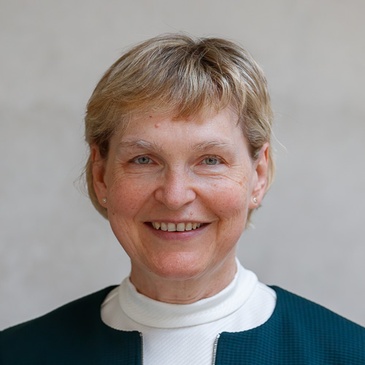
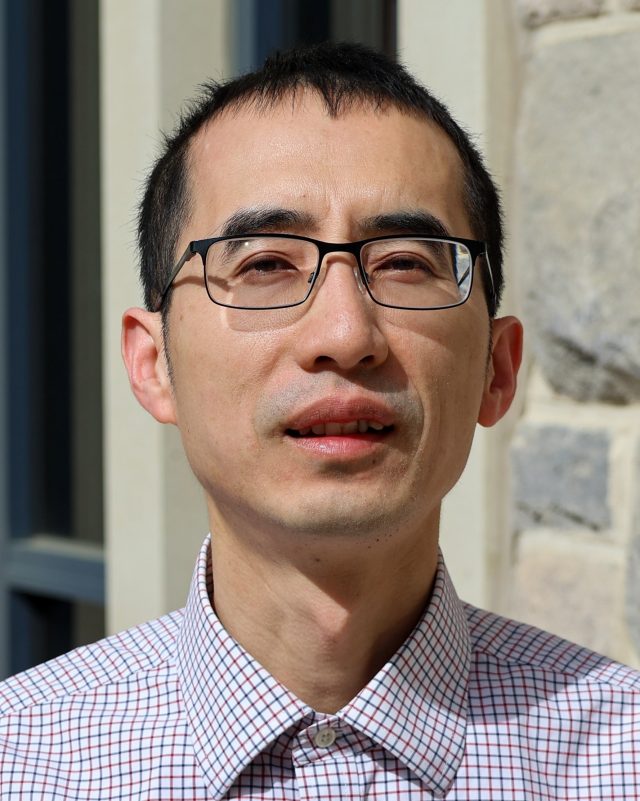
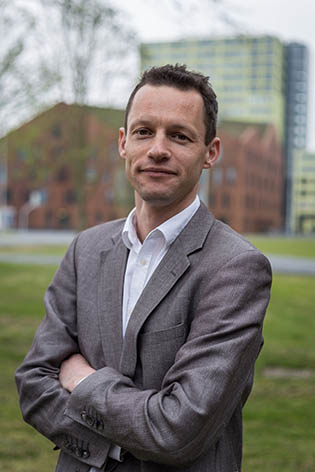
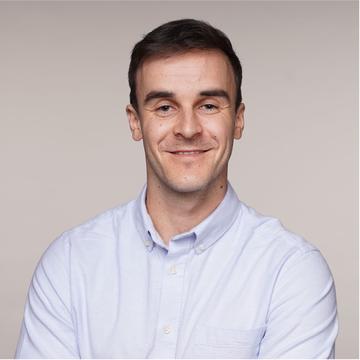
Milena Damrau is a researcher at the Department of Mathematics Education within the Faculty of Mathematics, Informatics and Statistics at Ludwig-Maximilians-Universität München (LMU). Her work focuses on how students develop mathematical competencies, particularly in proof validation and understanding general validity, while integrating technology-oriented approaches into teacher professional development. Research Focus: Mathematical proof comprehension, digital media integration in instruction, Bayesian reasoning education Projects: Contributor to the SFB-Transregio 419 SHARP on simulation-based learning and the KoKon project on digital tool utilization Recent Publications: Explored proof validation in secondary education, covariational reasoning in Bayesian tasks, and instructional quality profiles with digital tools Her research trends emphasize bridging cognitive development with didactic strategies, leveraging simulations for diagnostic competency training, and addressing student errors in probabilistic visualization. She collaborates across disciplines with biologists, medical educators, and psychologists in the SHARP initiative. Network: Active in international conferences (PME, EARLI, GDM) and local teacher training programs, including the LMU-NYU cooperation on adaptive simulations.
Gernot Akemann is a Professor at the Faculty of Physics, University of Bielefeld, with a focus on Random Matrix Theory and its applications in high energy physics and statistical mechanics . His work spans topics such as QCD Dirac spectra, effective field theory, orthogonal polynomials, asymptotic analysis, and universality. He has held leadership roles in projects like SFB 1283 and IGK 2235, emphasizing singular and random systems. 2025 : Subproject manager in SFB 1283 2024 : Leverhulme Trust Visiting Professorship at University of Bristol 2019 : Visiting Professor at KTH Stockholm His research includes random matrix theory for applications in quantum chromodynamics, statistical mechanics, and mathematical physics. Recent articles explore complex eigenvalue statistics, Ginibre ensembles, and their connections to Coulomb gases and territorial behavior in ecology. He has contributed to understanding universality in spectral statistics and non-Hermitian systems. Notable scientific awards include the Leverhulme Trust Visiting Professorship , Knut and Alice Wallenberg Foundation support, and DFG Research Grants . His work has been funded through projects like SFB 1283 and RTG 2235.
Dr. Yulin Hu serves as a Visiting Professor at RWTH Aachen University, holding the Chair of Information Theory and Data Analytics. His research program bridges theoretical foundations with practical implementations in next-generation wireless systems, with particular emphasis on UAV-aided networks and information-theoretic approaches to communication challenges. His core research interests span multiple interconnected domains: Wireless Communications (especially finite blocklength regimes) Information Theory applications in network design UAV trajectory optimization and network integration Wireless power transfer with nonlinear energy harvesting Edge computing and distributed learning systems Data analytics for network performance optimization Analysis of Dr. Hu's 2025 publication record reveals a concentrated research thrust on UAV trajectory design, where he develops joint optimization frameworks addressing energy efficiency, security, and reliability constraints. His work consistently integrates information-theoretic principles—particularly finite blocklength analysis—to solve practical challenges in ultra-reliable low-latency communications (URLLC) and wireless power transfer. A distinctive feature of his approach is the fusion of deep reinforcement learning with traditional optimization methods for dynamic network scenarios, including no-fly zone constraints and covert operations. While no specific scientific awards are documented in the available materials, his prolific output across top-tier venues demonstrates significant scholarly impact. Details regarding graduate student mentoring and research funding mechanisms remain unspecified in the current documentation. The Chair of Information Theory and Data Analytics, which Dr. Hu leads, functions as a specialized research unit focused on theoretical rigor and algorithmic innovation for wireless systems, though specific laboratory infrastructure or team composition details are not provided.
Dr. Christine von Bloh is a Researcher at the Potsdam Institute for Climate Impact Research (PIK) in the Department Earth System Analysis, serving as Equal Opportunities Officer and coordinator of the PIK PhD Programme. She chairs the Leibniz Association's Equal Opportunities and Diversity Working Group (AKCD) and serves as deputy speaker for the Alliance of EOOs in Non-University Research Organisations (AGbaF). Her educational background includes: 1983: German university entrance qualification (Abitur) 1983-1984: Internship at Central Institute for Physics of the Earth Potsdam 1984-1990: Diploma in Geophysics from Technical University Mountain Academy Freiberg 1997-1999: Environmental protection studies at University Koblenz-Landau 2004-2008: PhD in Astrophysics from Potsdam University Her research bridges astrobiology and Earth system science , focusing on exoplanet habitability, Earth's long-term biosphere evolution, and biogeochemical cycles. She develops thermal evolution models for terrestrial planets and investigates volatile exchange between planetary reservoirs using dynamic Earth system models. Analysis of her publication record reveals consistent emphasis on habitable zone dynamics across stellar evolution phases, biosphere longevity under climate change, and geosphere-biosphere feedback mechanisms. Her work integrates astrophysics, geophysics, and climate science to address fundamental questions about planetary habitability across cosmic timescales. Dr. von Bloh actively mentors early-career scientists through PIK's doctoral program and leads institutional initiatives for gender equality in research. As part of PIK's Earth System Analysis department, she contributes to planetary boundaries research and climate impact assessments within interdisciplinary teams studying Earth's safe operating space.
Professor Andreas Kyprianou is a leading probabilist at the University of Warwick's Department of Statistics, specializing in pure and applied probability. His research spans Branching Markov processes , Superprocesses , Lévy processes , and stochastic radiation transport . He directs the Centre for Mathematical and Computing Sciences (CAMaCS) and leads the £7.3M EPSRC MaThRad programme grant, focusing on nuclear technology applications. Academic Affiliations : University of Warwick (2023-present), University of Bath (2006-2023), Utrecht University (2001-2006), Heriot-Watt University, London School of Economics, University of Edinburgh Research Themes : Stochastic Modelling, Self-Similar Processes, Fragmentation-Coalescence, Neutron Transport, Monte-Carlo Simulation His recent work includes α-stable Lévy processes , jump SDEs in proton therapy , and non-local branching process stability . Scientific awards include the Royal Society Wolfson Merit Award and the Dutch Mathematics in Focus fellowship. He has supervised over 20 PhD students and co-led international research platforms like Prob-L@B and CIMAT-UNAM-Warwick-Bath . Grants section highlights major EPSRC and Royal Society funding for his interdisciplinary projects.
Mitchell Sutter is a Professor at the University of California, Davis , affiliated with the Department of Neurobiology, Physiology and Behavior and the Center for Neuroscience . His research explores auditory perception, neural coding of sound, and the role of higher brain areas in decision-making and attention during complex auditory environments. Combines neuroscience , behavior , and quantitative methods to study auditory systems. Focus on auditory cortex and its role in sound-guided behavior . Investigates attentional modulation of neural activity. Recent work emphasizes temporal modulation , amplitude modulation , and perceptual restoration in auditory processing. Publications span neurophysiological analysis , cross-species studies , and behavioral neuroscience .
Yili Hong is a Professor in the Department of Statistics at Virginia Tech's College of Science. Her research focuses on statistical methodologies in reliability analysis, machine learning, survival analysis, and spatial data analysis. She holds a Ph.D. from Iowa State University (2009), with prior degrees from the same institution and the University of Science and Technology of China. Hong has been recognized with awards such as the ASA Physical and Engineering Sciences Award (2017) and the DuPont Young Professor Award (2011). She serves on editorial boards for journals like Technometrics and Journal of Quality Technology, emphasizing contributions to statistical reliability and big data applications. Her work bridges theoretical statistics with practical challenges in engineering and public health, including studies on Lyme disease emergence in Virginia through spatial modeling. Education: Ph.D. in Statistics, Iowa State University, 2009 M.S. in Statistics, Iowa State University, 2005 B.S. in Statistics, University of Science and Technology of China, 2004 Research interests span machine learning robustness, reliability of AI systems, degradation analysis, and statistical computing. Notable achievements include pioneering work on mixture experiments for AI algorithm evaluation and statistical methods for high-performance computing variability. Her recent projects address the reliability of autonomous systems and AI safety through recurrent event data analysis. Awards and recognitions highlight her contributions to statistical methodology and industrial applications. Editorial activities reflect her leadership in advancing statistical practice through peer-reviewed journals.
Daan Crommelin holds a part-time professorship in Numerical Analysis and Dynamical Systems at the KdV Institute for Mathematics, University of Amsterdam, and is a senior researcher at CWI Amsterdam's Scientific Computing group. He serves on CWI's management team and previously led its Scientific Computing group (2013–2021). His research focuses on stochastic modeling of multiscale systems, uncertainty quantification, and rare event analysis, with applications in climate science, renewable energy, and fluid dynamics. Crommelin combines methods from scientific computing, applied probability, and dynamical systems to address challenges in atmosphere-ocean-climate modeling. He has contributed to projects like the EU-funded VECMA initiative for exascale computing and collaborated on superparameterization techniques for climate models. His work also extends to epidemic modeling and computational chemistry. Crommelin earned his PhD in 2003 from Utrecht University, with a thesis co-supervised by KNMI, and holds an MSc in theoretical physics and an MA in philosophy from the University of Amsterdam.
Soon Hyeok Choi is an Assistant Professor of Real Estate Finance at the Saunders College of Business, Rochester Institute of Technology. He holds a Ph.D., MA, and MPS from Cornell University, and a BA from Bowdoin College. His research focuses on real estate finance, AI/ML applications, asset pricing dynamics, housing affordability, credit risk, and climate risk modeling. Current projects include neural network frameworks for detecting asset price bubbles, winner's curse effects in housing markets, and pricing co-tenancy clauses in retail contracts. He has received awards such as the Best Practitioner Research Award (2023) and the Innovative Thinking Award (2024). Professor Choi teaches courses in financial economics, personal finance, and hospitality asset management. His work bridges theoretical finance with practical real estate challenges, including climate risk's impact on real estate valuations and mortgage lending disparities. Collaborations with scholars like Robert Jarrow and Patrick Smith highlight his interdisciplinary approach to financial markets and real estate dynamics. Award-winning research includes analyzing federal lease terminations' impact on CMBS bonds and modeling network effects on real estate agent career trajectories. His lab integrates machine learning tools to uncover patterns in housing markets and financial systems, contributing to both academic and practitioner understanding of emerging risks and opportunities.
Dr. Ruchit Agrawal is an Assistant Professor of Computer Science and Head of Computer Science Outreach at the University of Birmingham Dubai. Previously, he served as a Postdoctoral Researcher in AI for Healthcare at the University of Oxford’s Computational Health Informatics Lab, and as a Marie Curie AI Researcher in the transnational MIP-Frontiers project at Queen Mary University of London. His work focuses on optimizing healthcare systems using Machine Learning, alongside contributions to Natural Language Processing, Audio Signal Processing, and Multimodal Deep Learning. He holds a PhD in Computer Science from Queen Mary University of London and an MS by Research from IIIT Hyderabad. Education: PhD in Computer Science (Queen Mary University of London, 2021) MS by Research in Machine Translation (IIIT Hyderabad, 2017) Research Interests: Clinical Machine Learning for healthcare system optimization Natural Language Processing with a focus on Indian languages and context-aware models Audio Signal Processing for music performance analysis and stuttering detection Development of multimodal deep learning frameworks for diverse applications Adaptive AI systems leveraging contextual and positional encoding techniques Publications highlight trends in healthcare AI, multilingual NLP, and audio-visual alignment. Recent work includes Arabic sentiment analysis, stuttering detection via MMSD-Net, and stock price prediction using FB-GAN. Earlier contributions address structure-aware synchronization in music performance data and transformer-based post-editing for low-resource languages. His research bridges theoretical advancements with practical implementations in clinical, financial, and cross-modal domains. Scientific awards include the prestigious Marie Skłodowska-Curie scholarship (2017–2020) supporting his deep learning research in audio signal processing. Advising and grants: While no formal advisees are listed, his roles involve leading outreach initiatives and guiding collaborative projects at the Computational Health Informatics Lab during his postdoctoral tenure. Labs/Teams: Active member of the Computational Health Informatics Lab (Oxford) and Machine Translation group at FBK (Italy). His work also intersects with the MIP-Frontiers transnational research project.
Elliott Thornley is a Postdoctoral Research Fellow at the Global Priorities Institute, University of Oxford, and a Philosophy Fellow at the Center for AI Safety. His academic role involves advanced research in ethics and decision theory, particularly as they apply to artificial intelligence and long-term societal challenges. Thornley holds a DPhil (PhD) from the University of Oxford, focusing on normative ethics and population axiology. His research bridges theoretical philosophy with practical applications, addressing topics such as AI safety, catastrophic risk mitigation, and ethical frameworks for artificial agents. Key research themes include population ethics (e.g., procreation asymmetry, critical levels), decision-theoretic approaches to AI control (e.g., shutdownable agents), and the moral implications of longtermism. His work combines formal methods with philosophical analysis to tackle dilemmas in both human and artificial decision-making systems. Notable publications explore the shutdown problem in AI engineering, dilemmas in person-affecting ethics, and the limitations of longtermism in policy prioritization. Thornley’s interdisciplinary approach integrates philosophy, computer science, and public policy to address pressing existential risks and ethical challenges in technology. He is affiliated with the Global Priorities Institute and the Center for AI Safety, contributing to initiatives that aim to align advanced technologies with long-term human flourishing. His research has been published in journals like Analysis , Philosophical Studies , and Economics and Philosophy .
Giulia Di Nunno is a Professor in the Department of Mathematics at the University of Oslo, specializing in stochastic analysis and its applications to finance and risk management. She also holds an adjunct professorship at the Norwegian School of Economics (NHH). Her research focuses on stochastic calculus, control theory, financial modeling, and energy finance, with a particular interest in dynamic risk measures. She has led major projects like the STORM initiative on time-space risk models and is involved in interdisciplinary research on sustainability and energy markets. Di Nunno has served as President of the Scientific Council of CIMPA and is an associate editor for several prestigious journals, including Finance and Stochastics and Stochastics . Her work bridges theoretical advancements with practical applications in finance and energy sectors. Education: PhD in Mathematical Statistics (University of Pavia, 2003), Degree in Mathematics (University of Milan, 1998). Research Groups: Risk and Stochastics, STORE (completed). Key Projects: SURE-AI (AI-driven risk modeling), Unruly Sustainability (interdisciplinary research), STORM (ToppForsk project). Editorial Roles: Associate Editor for Finance and Stochastics , DEAF , FMF , and others. Her publications emphasize stochastic processes, volatility modeling, and risk measurement, with recent contributions on time-changed dynamics and applications to energy finance. She actively contributes to the international academic community through research networks like AMaMeF and ModSimFIE.
Dr. Ran Peleg is a Lecturer in Science Education at the Southampton Education School, University of Southampton, and a member of the MSHE research group. His work focuses on innovative teaching methods such as game-based learning, theatre, storytelling, and escape rooms to enhance science education. He holds a BA in Natural Sciences and MEng in Chemical Engineering from the University of Cambridge, and a PhD in science education from the Technion, focusing on museum theatre and informal learning environments. He has extensive experience in educational project management, including the EU-funded TEMI project and interdisciplinary STEAM initiatives. Education Background: BA in Natural Sciences, University of Cambridge MEng in Chemical Engineering, University of Cambridge PhD in Science Education, Technion Research Interests: Game-based and drama-based pedagogy Museum and informal learning environments STEAM education integration Accessibility in science education for visually impaired students Notable Achievements: Fellow of the Mandel Scholars in Education Programme Postdoctoral Fellowship, University of Haifa Senior Fellow of the Higher Education Academy (HEA) Supervision & Grants: Currently supervising 3 PhD students in Education Expertise in securing educational innovation grants through projects like TEMI and escape room initiatives Labs & Collaborations: Member of the MSHE research group Collaborations with museum practitioners and educational institutions globally
Ingrid Hotz is a Professor in Scientific Visualization at Linköping University, affiliated with the Department of Science and Technology (ITN) and the Center for Medical Image Science and Visualization (CMIV). She holds a Master's in Theoretical Physics from Ludwig Maximilian University (Munich) and a PhD in Computer Science from the University of Kaiserslautern. Her research focuses on data analysis and scientific visualization, spanning applications in fluid dynamics, medical imaging, and large-scale simulations. She has led research groups at the Zuse Institute Berlin (2006–2013) and the German Aerospace Center (DLR, 2013–2015). Her work integrates methods from computer graphics, computational geometry, and topology. Key research areas include multi-field visualization, topological data analysis, and scalable systems for ocean data exploration. She has contributed to software tools like VIAMD and pyParaOcean. Notable collaborations include material science research (e.g., beryllonitrene synthesis) and large-scale conference organization (Eurographics 2020, attracting 23,000 participants). Her research bridges theoretical foundations with practical applications in medicine, engineering, and environmental science. Publications highlight advancements in visualization techniques for molecular dynamics, medical imaging, and climate modeling. She actively participates in interdisciplinary projects, such as predicting liver steatosis dynamics and developing frameworks for analyzing brain activity via fMRI data. Her work emphasizes bridging gaps between computational methods and real-world scientific challenges.
Ludger Wößmann serves as Professor of Economics with a specialization in Education Economics at the Ludwig Maximilian University of Munich (LMU) and directs the ifo Center for the Economics of Education. He has held his professorship at LMU since May 2006 and has led the ifo Center since January 2004. His academic affiliations include the Center for Economic Studies (CES) and the Faculty of Economics at LMU. Wößmann maintains strong connections with international research institutions through numerous visiting positions at Stanford University's Hoover Institution and Harvard University's Kennedy School of Government. Wößmann's research interests span multiple interconnected fields in economics, with Education Economics at the core of his work. He investigates how education impacts economic prosperity both individually and societally, examining both historical and contemporary contexts. His work explores how institutional frameworks of school systems affect educational efficiency and equity. Beyond education, he has made significant contributions to Economic History, Religion Economics, and Internet Economics. His methodological approach primarily employs microeconometric techniques applied to international student assessments and large-scale datasets. His extensive publication record demonstrates consistent scholarly impact across leading economics journals. His research trends show a progression from foundational work on educational production and human capital to increasingly policy-relevant studies on educational inequality, skill formation, and the economic consequences of educational policies. Recent work increasingly incorporates behavioral economics perspectives, examining how patience, risk-taking, and other behavioral factors influence educational outcomes. Hermann-Heinrich-Gossen-Preis Gustav-Stolper-Preis of the Verein für Socialpolitik Young Economist Award of the European Economic Association EIB Prize of the European Investment Bank Choppin Memorial Award of the International Association for the Evaluation of Educational Achievement As Director of the ifo Center for the Economics of Education, Wößmann leads a major research hub focused on empirical studies of educational systems and policies. His grant portfolio includes significant funding from the German Research Foundation (DFG), the European Commission, the Smith Richardson Foundation, and various private foundations. His recent projects examine mentoring programs for disadvantaged youth, international comparative education policy, and the economic impacts of educational quality. Wößmann has organized the annual CESifo Area Conference on the Economics of Education since 2009, creating a key forum for international scholarly exchange in the field. Wößmann's leadership extends to the ifo Education Survey, a major longitudinal dataset on public preferences for education policy in Germany, and the ifo Education Barometer, which tracks German public opinion on educational issues. His work often bridges academic research and policy implementation through collaborations with government bodies and educational institutions.