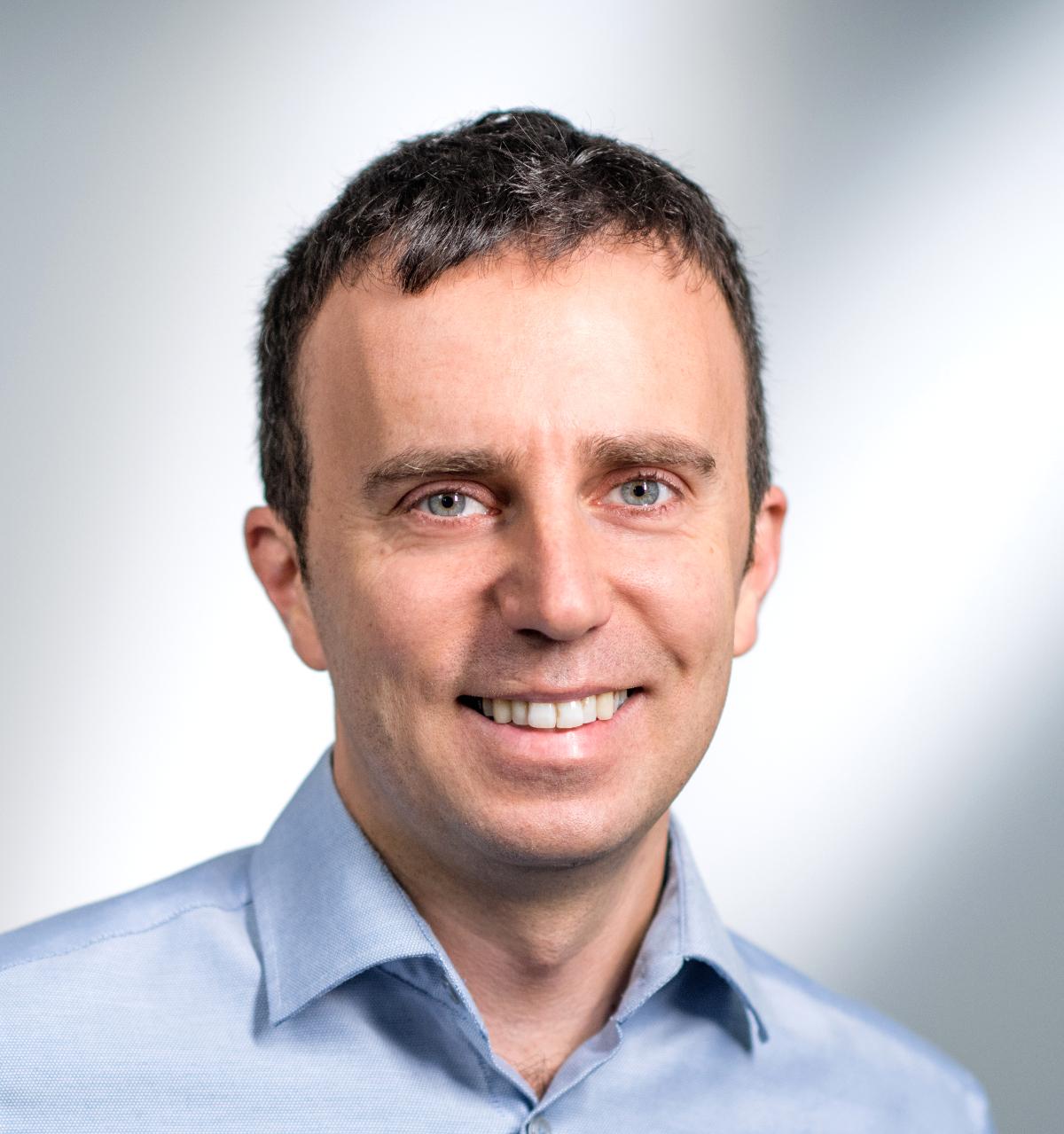
Roland Schwan is a researcher at the Automatic Control Laboratory (LA) within the School of Engineering at the École Polytechnique Fédérale de Lausanne (EPFL) . His work focuses on control systems, optimization algorithms, and the integration of machine learning with physical models. He is actively involved in projects involving model predictive control (MPC), stability verification of neural network controllers, and real-time optimization-based control for robotics applications. His research interests span physics-informed machine learning , quadratic programming solvers , and embedded systems . Key contributions include the development of the PIQP solver for convex quadratic programming and stability analysis frameworks for neural network controllers. He has also explored applications in hovercraft dynamics identification and rocket trajectory control using advanced MPC techniques. Schwan collaborates closely with institutions like the Swiss National Science Foundation and has published extensively in venues such as IEEE Transactions on Automatic Control and IEEE Conference on Decision and Control . His work bridges theoretical control methodologies with practical embedded system implementations.
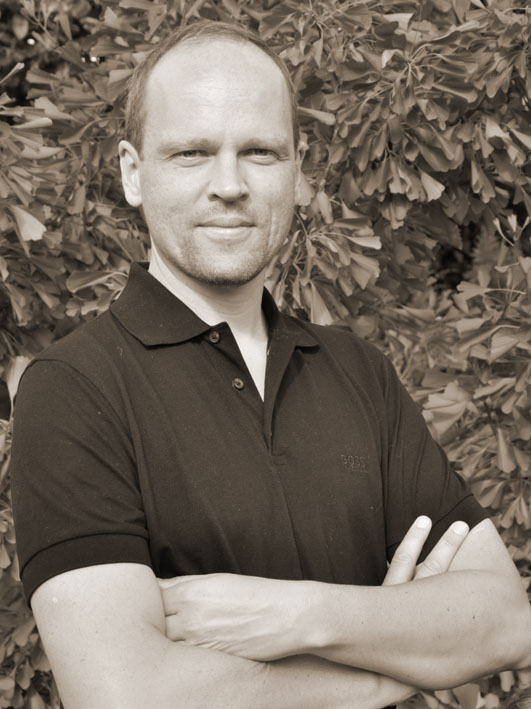
Etienne Bamas is a Lecturer at the Department of Computer Science, ETH Zürich, and a member of the ETH AI Center. His research focuses on algorithms, combinatorial optimization, and approximation algorithms. He has contributed to areas such as the Santa Claus problem, distributed graph coloring, and learning-augmented algorithms. Recent work includes advancements in submodular optimization, k-means clustering analysis, and network design algorithms. His publications span from 2016 to 2025, addressing both theoretical and applied challenges in computer science. Key research interests include: Approximation Algorithms for NP-hard Problems Combinatorial Optimization and Resource Allocation Online and Distributed Algorithms Algorithmic Game Theory His articles often bridge theoretical foundations with practical applications, such as energy minimization in scheduling and satellite mission design (SERB project). No specific academic awards or grants are listed in the provided information.
Robert Weismantel serves as Full Professor at ETH Zürich's Department of Mathematics and Deputy Head of the Institute for Operations Research. His research establishes foundational frameworks for Mixed Integer Optimization across linear, convex, and nonlinear domains, with significant theoretical contributions to algorithm design and computational complexity. His primary research domains include: Mixed Integer Linear Optimization using cutting plane methods based on lattice-free polyhedra Mixed Integer Convex Optimization combining polytope shrinking techniques with convex programming Mixed Integer Nonlinear Optimization focusing on convex relaxations for chemical engineering applications Polynomial Optimization in fixed dimensions with combinatorial substructure analysis Professor Weismantel's methodological innovations bridge discrete and continuous optimization, particularly through Mirror-Descent Methods and Lipschitz-continuous function minimization over integer points. His work demonstrates practical applications in chemical engineering through the SFB/TR 63 InPROMPT research collaboration. With an extensive supervision record spanning over two decades, he has guided 17 doctoral students to completion and mentored two successful habilitations. Current advisee Sabrina Bruckmeier continues this legacy of training optimization specialists. His research group maintains active projects including Mixed Integer Convex Minimization with Timm Oertel, Integer Polynomial Optimization with Kevin Zemmer, and Mixed-Integer Nonlinear Optimization applications with Martin Ballerstein and Dennis Michaels. The team operates within ETH's Institute for Operations Research, contributing to both theoretical advances and practical implementations of optimization algorithms.
Prof. Rico Zenklusen is a Full Professor at the Department of Mathematics and Deputy Head of the Institute for Operations Research at ETH Zurich. He previously held positions at Johns Hopkins University and conducted postdoctoral research at MIT and EPFL. His research focuses on Combinatorial Optimization, including algorithm design for complex optimization problems using structures like matroids, submodular functions, and polyhedral methods, with applications in Theoretical Computer Science and Graph Theory. Education: PhD in Mathematics from ETH Zurich Master's degree in Mathematics from EPFL Research Interests: Combinatorial Optimization, Network Design, Submodular Maximization, Matroid Theory, and Applications in Operations Research. His work emphasizes efficient algorithms for optimization problems with real-world applications, such as train engine scheduling, operating room management, and rolling stock scheduling for railways. Grants & Awards: ERC Consolidator Grant (ICOPT) Swiss National Science Foundation Support Students & Advising: Advises PhD and master’s students in optimization and related fields. Current and past students include Adam Kurpisz, Etienne Bamas, and Vera Traub. Visit the group page for project opportunities. Labs & Collaborations: Leads the Zenklusen Group, collaborating on interdisciplinary projects with industries like BLS Cargo (train engine optimization) and the SBB (rolling stock scheduling). Active in ETH Zurich's AI Center for complex system research.
Dr. Georgia Pierrou is a Research Fellow at ETH Zurich's Power Systems Laboratory, specializing in dynamic analysis, optimization, and control of electric power systems integrating renewable energy and electrified transportation. She holds a PhD from McGill University and a M.Eng. from National Technical University of Athens. Her research focuses on developing data-driven methods for power system stability, wide-area voltage control using PMUs, and optimal integration of electric vehicles in railway energy systems. She investigates renewable energy coordination, grid resilience against cyber threats, and stochastic modeling of power system dynamics. Her publications show consistent focus on renewable-integrated power systems, with recent work emphasizing EV charging optimization in transportation networks and physics-informed data methods for grid management. Awards & Honors: Future Digileaders (2023) Best Poster Award (2023) EECS Rising Stars (2022) D.W. Ambridge Prize (2022) Green Talents Award (2021) AQPER Student Contest Finalist (2020) McGill GREAT Award (2019) Constantina N. Frangouli Scholarship (2019) George Kontaxis Award (2018) Stiftung Mercator Scholarship (2016) She leads projects including RailPower for future railway energy systems and teaches power system dynamics, optimization, and sustainable energy courses at ETH Zurich. She mentors students in power systems research and sustainable mobility solutions.
Francesco Corman is an Associate Professor at the Department of Civil, Environmental and Geomatic Engineering at ETH Zürich, where he also serves as the Head of the Institute for Transport Planning and Systems (IVT). His academic career spans from his doctoral studies at Delft University of Technology to his current position at one of Europe's leading technical universities. He has established himself as a leading researcher in transport systems with a focus on railway operations and optimization. His educational background includes: Doctoral Degree (Ph.D.) from Delft University of Technology (2007-2010) Master's Degree in Management & Automation Engineering from Roma TRE University, Italy (2004-2006) Bachelor's Degree in Computer Science Engineering from Roma TRE University, Italy (2001-2004) Professor Corman's research focuses on analytics, optimization and control in transport systems, with particular emphasis on public transport, railway networks, and logistics systems. His work bridges the gap between theoretical optimization models and practical applications in real-world transportation networks. He has developed innovative approaches to railway traffic management, public transport operations, and freight logistics that address contemporary challenges in transportation systems. His recent publications demonstrate a strong trend toward data-driven approaches in transportation, with increasing integration of machine learning techniques, particularly deep learning and Bayesian networks, into traditional transportation optimization problems. There's also a growing emphasis on sustainability considerations in transportation systems, as evidenced by research on environmental impacts of railway infrastructure. His scientific contributions include: Development of advanced models for railway traffic management and optimization Innovative approaches to public transport disruption analysis and recovery Integration of on-board monitoring data for railway infrastructure management Probabilistic modeling of transportation operations under uncertainty Professor Corman leads several significant research projects including ESTRA (Efficient Safe Train Dynamics), LeRaBe (Learning railways for better schedules), NCCR (Dynamic stochastic learning of train dynamics as enabler to highly automated train operation), RaDiCa (Modeling the Impact of Digitalization on Railway Capacity), and UrbanEcho (Envisioning tomorrow - A digital twin technology for sustainable urban planning in data poor regions). He teaches multiple courses at ETH Zürich including Public Transport Design and Operations, Public Transport and Railways, Logistics and Freight Transportation, and contributes to doctoral seminars on Data Science and Machine Learning in Civil Engineering. His teaching reflects his research expertise, bridging theoretical concepts with practical applications in transportation systems.
Iñaki Rodríguez-Longarela is a researcher at Stockholm Business School, Stockholm University , with a focus on finance, quantitative finance, and market microstructure. His work spans empirical finance, asset pricing, and educational technology applications. Affiliation : Stockholm Business School, Stockholm University Research Interests : Finance Quantitative Finance Asset Pricing Options Markets Portfolio Theory Market Microstructure Publication Trends : His research covers empirical finance (nonstandard errors, liquidity), options market inefficiencies, portfolio optimization using stochastic dominance, and innovative educational technology applications. Key collaborations include work with Silvia Mayoral and Thierry Post. Teaching Innovation : Investigates student engagement in online vs. classroom settings, focusing on attention metrics and flipped learning methodologies.
Olivier Scaillet is a Research Fellow at the Swiss Finance Institute, affiliated with the University of Geneva. His work spans financial econometrics, quantitative finance, and risk management, with a focus on stochastic volatility models, copulas, and high-frequency data analysis. Research Interests : Financial econometrics and nonparametric estimation Stochastic volatility and jump-diffusion models Asset pricing and factor models in large panels Systemic risk and recovery rate density estimation Machine learning applications in finance Market microstructure and high-frequency data dynamics Scientific Contributions : Developed methodologies for nonstandard error analysis in multi-analyst studies Advanced techniques for testing stochastic dominance efficiency and latent factor models Explored copula-based goodness-of-fit tests and threshold effects in time series Innovated in American option pricing under complex market conditions
Monaldo Mastrolilli is a Professor at the University of Applied Sciences of Southern Switzerland and holds a permanent position as Senior Researcher at IDSIA (Dalle Molle Institute for Artificial Intelligence), a joint institute of USI and SUPSI. He earned his PhD summa cum laude from the University of Kiel and a Computer Science Engineering degree from Politecnico di Milano. His research focuses on combinatorial optimization, complexity theory, approximation algorithms, and scheduling problems. He has authored over 30 publications in top journals/conferences such as FOCS, SODA, and Journal of Algorithms. Research interests include approximation algorithms, metaheuristics, scheduling theory, and computational complexity. His work bridges theoretical foundations with practical applications in operations research and artificial intelligence. Notable contributions include advancements in Sum-of-Squares proofs, scheduling algorithms, and combinatorial optimization techniques. He has supervised four PhD students and serves on program committees for ICALP, APPROX, and WAOA. Awards include the Whizzkids'97 competition prize and a prestigious PhD distinction. Education: PhD (summa cum laude) in Computer Science, University of Kiel (2002); Master's in Computer Science Engineering, Politecnico di Milano (1997) Key Research Areas: Complexity Theory, Approximation Algorithms, Scheduling, Metaheuristics
Luca Maria Gambardella is a Full Professor at the Faculty of Informatics of Università della Svizzera italiana (USI) and serves as the Vice Rector for Innovation and Corporate Relations at USI. He is also the co-director of the Artificial Intelligence Master program and affiliated with IDSIA (Istituto Dalle Molle di studi sull'intelligenza artificiale USI-SUPSI). Additionally, he is the Co-Founder, CTO & Head of Applied AI at Artificialy SA, a Lugano-based company. His educational background includes a PhD in Engineering Sciences and Technology from ULB, École Polytechnique de Bruxelles, and a Master in Computer Science from the University of Pisa, Italy. Gambardella's research spans several cutting-edge areas in artificial intelligence and robotics. His work focuses on meta-heuristics algorithms , particularly Ant Colony Optimization, as well as machine learning and swarm intelligence . In operational research, he specializes in scheduling , vehicle routing and robust optimization . His robotics research emphasizes swarm robotics , mobile robots , and drones , with particular interest in human-robot interaction and visual anomaly detection. His recent publications (2023-2025) demonstrate a strong focus on optimization problems (particularly Traveling Salesman and Steiner Tree problems), robotics (swarm robotics, navigation, and human-robot interaction), and educational applications of computational thinking. A significant portion of his recent work combines traditional optimization techniques with modern machine learning approaches, reflecting the interdisciplinary nature of his research. Ranked by Stanford University in the top 2% of scientists worldwide (2021-2023) Special Swiss ICT Award 2016 (with Juergen Schmidhuber) "Watt d'Or", Swiss award for best energy projects 2015 Gambardella has supervised 14 PhD theses (with four in progress) and has secured over 61 million CHF in research funding, including 26 Swiss National Science Foundation projects (20 as principal investigator), 7 European Projects, and numerous industrial collaborations. He leads the Swarm Robotics Lab at IDSIA and has been instrumental in establishing several research units and master's programs in intelligent systems. His artistic endeavors include "the sense gallery" immersive space at FoxTown in Mendrisio, the interactive urban installation "Neuralrope#1" in Lugano-Besso pedestrian tunnel, and several published novels including "Sei Vite" (2013), "Il suono dell'alba" (2019), and "Segni particolari: tatuaggio con una stella a 5 punte sul polso sinistro" (2024).
Andreas Klinkert is a Professor at the Zurich University of Applied Sciences (ZHAW) , specifically affiliated with the School of Engineering and the Institute of Data Analysis and Process Design . His work focuses on operational research and optimization problems in complex industrial and logistical environments. Project Leader: Airport Ground Staff Scheduling (2023) Team Member: SARS-CoV-2 Intervention Modelling Extension Project Leader: Operational Staff Planning (2021) Project Leader: Automated Staff Scheduling (2020) Deputy Project Leader: Flight Network Simulation at Swiss International Air Lines His research integrates computational modeling with practical applications in staff rostering, production planning, and airport logistics. With a focus on combinatorial optimization and dynamic scheduling, he has developed algorithmic solutions for real-world problems across multiple industries. Klinkert has contributed to the field through publications on topics like job shop scheduling with blocking constraints, multi-skill staff rostering, and large-scale crew scheduling. His work often involves interdisciplinary collaborations and practical implementations of optimization algorithms in industrial settings.
Christoph Koch is a Full Professor of Computer Science at École Polytechnique Fédérale de Lausanne (EPFL), leading the Data Analysis Theory and Applications Laboratory (DATA). His academic journey includes previous roles as Associate Professor at Cornell University (2007-2010) and Saarland University (2005-2007), with academic foundations from TU Vienna (PhD 2001, Habilitation 2004) and research at CERN. Education: PhD in Artificial Intelligence (TU Vienna & CERN, 2001), Habilitation (TU Vienna, 2004) Appointments: EPFL (2010-present), Cornell University (2007-2010), Saarland University (2005-2007), TU Vienna (2003-2005) His research focuses on database theory and systems , with recent work spanning query optimization , transaction processing , and parallel data management . His publications address topics like robustness under SQL isolation levels , quantifier elimination for query optimization , and Datalog extensions . Articles trend toward high-dimensional data cubes , transactional concurrency , and embedded DSLs for performance-critical systems . Scientific accolades include: Best Paper Awards: PODS (2002) ICALP (2005) SIGMOD (2011) VLDB (2014) GPCE (2017) ERC Consolidator Grant (2011) Google Research Award (2009) ACM SIGLOG Alonzo Church Award (2021) He has advised numerous PhD students including Immanuel Trummer (now at Cornell), Milos Nikolic (Edinburgh), and Lionel Parreaux (HKUST). His lab contributes to query engine architectures , parallel processing systems , and quantum computing applications in database optimization.
Andrés Cristi is a Tenure Track Assistant Professor at EPFL's College of Management of Technology and heads the Chair of Game Theory and Operations (GO). He is affiliated with the CDM (College of Management of Technology) and its subunits MTEI (Management and Technology Education Initiative) and GO (Game Theory & Operations). Current Position: Tenure Track Assistant Professor, EPFL Previous Roles: Postdoc at Center for Mathematical Modeling (CMM), Universidad de Chile; Research Member at Simons-Laufer Mathematical Sciences Institute Education: PhD in Engineering Systems (2023), Universidad de Chile MS in Operations Management, Universidad de Chile Mathematical Engineer, Universidad de Chile His research focuses on the intersection of Algorithmic Game Theory , Mechanism Design , and Sequential Decision-Making , studying how optimization interacts with strategic agent incentives in dynamic allocation problems. He employs data-driven approaches to analyze platforms like routing apps and online marketplaces. Recent work trends include Prophet Inequalities , Combinatorial Auctions , Online Resource Allocation , and Fairness in Algorithmic Systems , with applications to real-time decision-making and bias reduction. Scientific Awards: Meta Research PhD Fellowship (2021) EURO Excellence in Practice Award Finalist (2019) IFORS Prize for OR in Development Runner-up (2020) He advises PhD student Zhang Jiechen and has taught courses on Algorithmic Game Theory and Applied Probability & Stochastic Processes .
Clémence Corminboeuf is a Professor at École Polytechnique Fédérale de Lausanne (EPFL), affiliated with the Laboratory of Computational Molecular Design (LCMD). Her research focuses on computational chemistry, machine learning for molecular design, and catalyst optimization using physics-inspired models. Email: clemence.corminboeuf@epfl.ch Scopus Author ID: 6603320500 Researcher ID: I-5973-2018 Current research involves: Developing integer linear programming algorithms for molecular machine learning training set selection Generative inverse design pipelines for singlet fission materials discovery Automated volcano plot analysis tools (SPOCK) for catalyst design Enantiospecific synthesis methods for planar chiral organometallic complexes Neural network potential frameworks for solute-solvent reaction dynamics Recent methodological advances include: Cost-informed Bayesian optimization (CIBO) for efficient chemical experimentation 3DReact geometric deep learning architecture for reaction property prediction MARC software for automated transition state ensemble analysis
Prof. Friedrich Eisenbrand is a Professor at the Institute of Mathematics, EPFL, Lausanne, Switzerland. His research focuses on discrete optimization, algorithms and complexity, integer programming, and geometry of numbers. Heinz Maier-Leibnitz award (2004) Otto Hahn medal (2001) Alexander von Humboldt professorship (2011) His work includes efficient algorithms for integer programming in fixed dimension and the theory of cutting planes. Recent publications explore advancements in integer programming, discrete optimization algorithms, computational geometry, and machine learning applications. He leads the DISOPT laboratory at EPFL, mentoring a team of junior researchers.