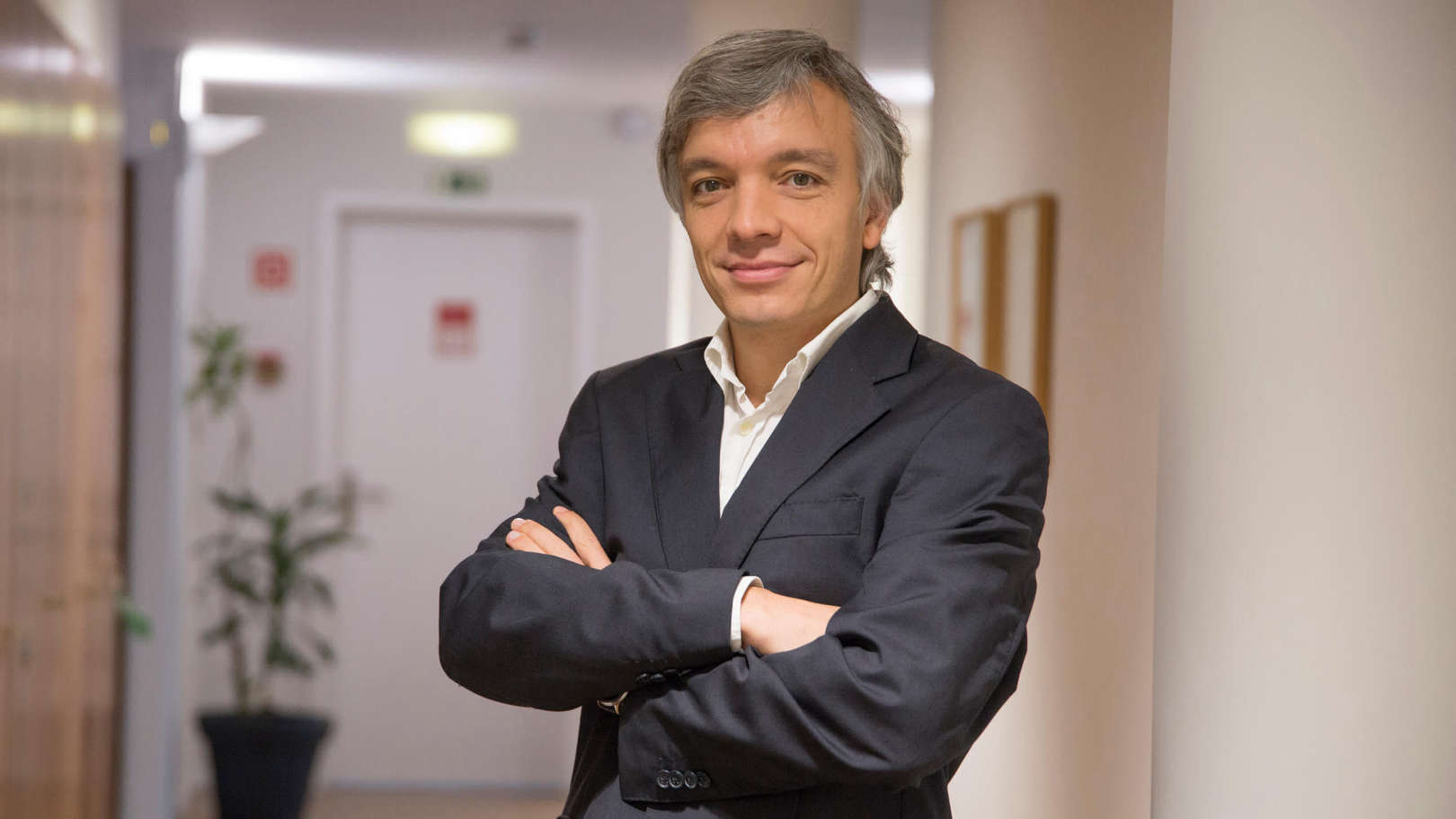
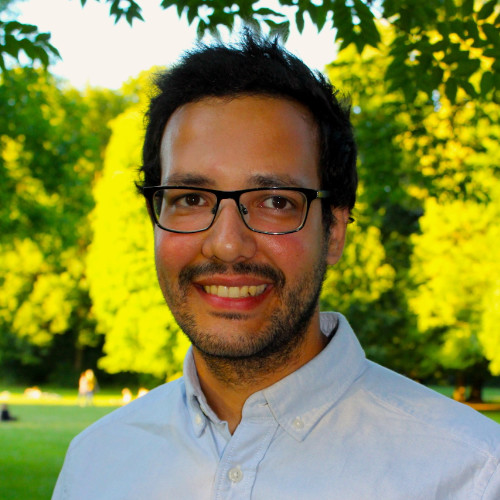
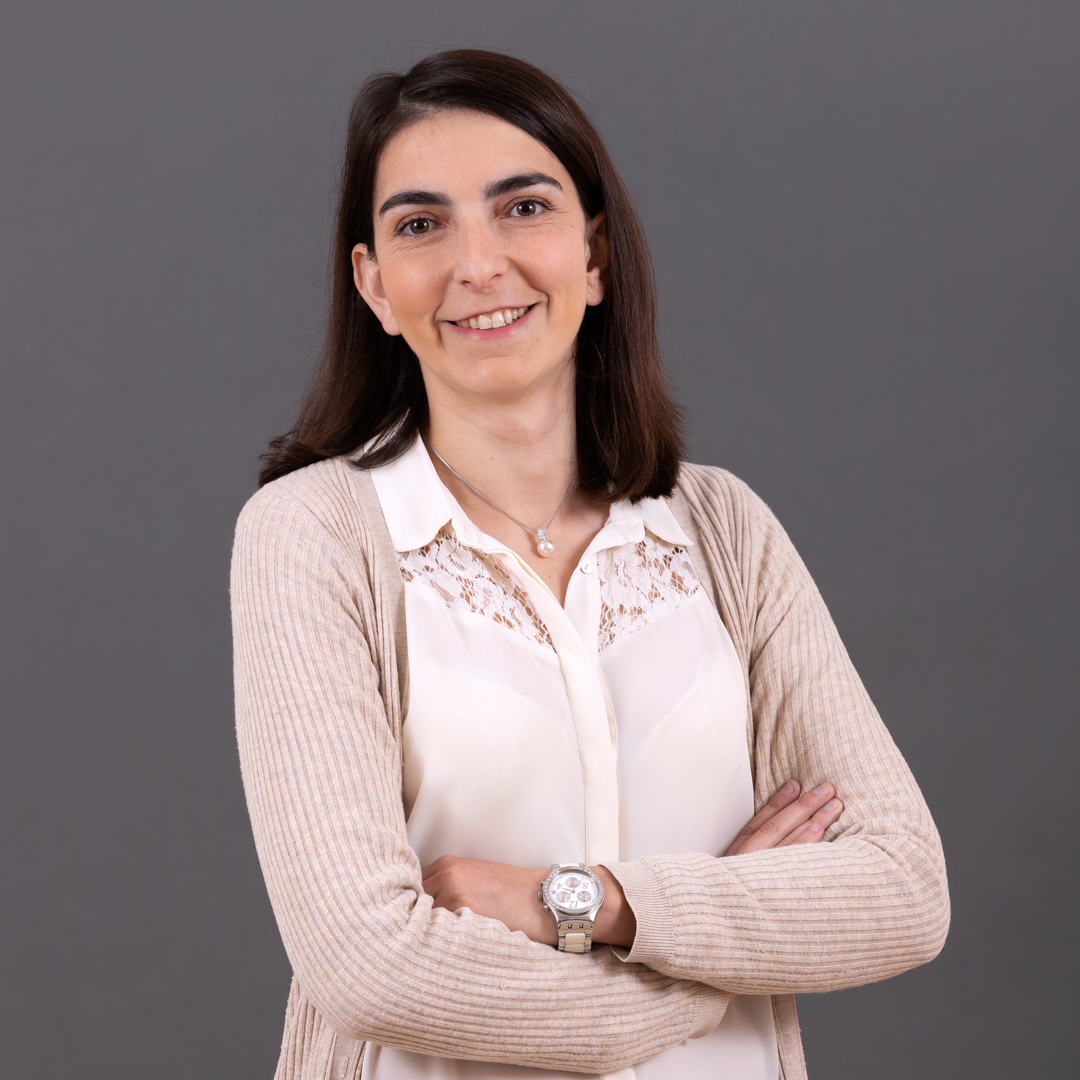
José António Crispim is a Professor at the School of Engineering, University of Minho, specializing in Industrial Engineering. Holding a Ph.D. in Engineering and Industrial Management from the University of Porto, he maintains an active research profile with significant contributions across operations research, healthcare systems, and sustainable development. His research spans critical domains including: Risk management frameworks for military shipbuilding and clinical laboratories Performance measurement systems in public sector and healthcare Sustainable supply chain networks aligned with UN SDGs Telemedicine equity and patient-centered care models Virtual enterprise formation and dynamic manufacturing networks His work demonstrates strong interdisciplinary focus, bridging engineering methodologies with real-world healthcare and sustainability challenges. Recent publications (2020-2024) show increasing emphasis on healthcare applications and SDG implementation through collaborative networks. Crispim leads and participates in significant research projects including vehicle routing optimization funded from 2010-2013. His teaching portfolio covers advanced data analysis, production management, and operational research across doctoral, master's, and undergraduate programs at University of Minho.
Bernardo Almada-Lobo is a Full Professor at the Faculty of Engineering (FEUP) of the University of Porto and the Porto Business School. He co-founded LTPlabs, a spin-off from INESC TEC and FEUP, and serves on the board of Trustees of Fundação Belmiro de Azevedo. His expertise lies in Management Science and Operations Research, applying advanced analytical models to solve managerial problems across manufacturing, healthcare, retail, and mobility sectors. Education: PhD in Industrial Engineering and Management (University of Porto), Degree in Management and Industrial Engineering (FEUP). Advanced Management Programme at INSEAD. Former Roles: Researcher at MIT Operations Research Center, Member of INESC TEC Board, Vice-Academic Director of IBM-CAS Portugal. Research Focus: Specializes in Operations Management, with a focus on optimization in complex systems, policy frameworks for healthcare roles, and revenue management. Recent work includes policy implementation for Clinical Nurse Specialists in Portugal and quality monitoring in manufacturing. Publications Trends: His recent articles address challenges in healthcare policy, manufacturing quality control, and revenue management under forecast uncertainties. Methodologies include advanced analytics, heuristics, and machine learning. Advising & Grants: Supervised theses on warehouse automation, demand forecasting, and inventory management. Involved in industry-collaborative projects, including pulp and paper production optimization. Labs/Teams: Co-founder of LTPlabs and Adjust Consulting (acquired by Glintt HealthCare), emphasizing tech-driven solutions in operations and analytics.
Cristiana J. Silva is an Assistant Professor (with Habilitation) in the Department of Mathematics at Iscte – Instituto Universitário de Lisboa (ISTA), Portugal. She holds a PhD in Mathematics from the University of Aveiro and Université d'Orléans, and a Bachelor's in Mathematics from the University of Coimbra. Her research focuses on mathematical epidemiology, optimal control theory, and biomathematical modeling with applications to public health and disease dynamics. She teaches courses such as Computational Optimization (Master in Artificial Intelligence), Differential Calculus, and Mathematics for Management programs. Silva has supervised multiple doctoral and master's students, including Ana Pedro Lemos-Paiao (2019), Zaitri Mohamed Abdelaziz (2020), and Sergio Punishment (ongoing). Her postdoctoral supervision includes Asmae Tajani (2023–2025). Her work emphasizes HIV/AIDS, cholera, and Zika virus modeling, with notable contributions to fractional calculus applications in epidemiology. She has developed compartmental models for infectious diseases like the SIQRB delayed cholera model and a hybrid model analyzing human behavior impacts on epidemics. Recent research includes optimizing control strategies for pandemics such as Portugal's sanitary deconfinement during the COVID-19 pandemic. Her publications span journals like Mathematical Biosciences and Engineering , AIMS Mathematics , and Scientific Reports , with over 2,100 Google Scholar citations. Silva collaborates internationally, contributing to interdisciplinary projects involving complex networks and optimal intervention strategies for public health crises.
Filipe Rodrigues is an Assistant Professor in the Mathematics Department at the Lisbon School of Economics & Management (ISEG), University of Lisbon, since 2020, specializing in Operational Research with emphasis on optimization under uncertainty. His educational background includes a PhD in Operations Research (2019), Master's in Operations Research (2015), and Bachelor's in Mathematics (2013), all from the University of Aveiro. Dr. Rodrigues' research centers on stochastic programming and robust optimization methodologies applied to port terminal operations and maritime transportation, addressing complex problems like berth allocation, quay crane scheduling, and vehicle routing under uncertain conditions. His work bridges theoretical advances with practical logistics solutions. His publication record shows consistent focus on maritime logistics optimization, with 15 recent articles in premier journals including European Journal of Operational Research and Transportation Research Part B. Key trends include distributionally robust modeling for port operations and advanced heuristics for vehicle routing under uncertainty. He has supervised nine Master's students on diverse topics including ship allocation under uncertainty, inspection routing for power lines, climate change investment impacts, and road freight pricing simulation. As an active researcher at ISEG, he contributes to the Data Lab and Policy Lab, supporting interdisciplinary projects that apply optimization techniques to economic policy and data-driven decision-making challenges.
Cláudio Manuel Martins Alves is a Full Professor at the Department of Production and Systems Engineering of the School of Engineering, University of Minho, a position he has held since 2018. He began his academic career at the same institution in 1998 and has been developing his scientific activity primarily in the areas of Systems Engineering, Optimization, and Operational Research. His research focuses on modeling techniques and problem-solving using Integer Programming and Combinatorial Optimization, with applications primarily in industrial processes. His educational background includes a Licenciatura's degree in Systems and Informatics (1998), a Master's degree in Industrial Engineering (2000), and a PhD in Production Engineering (2005). In 2013, he successfully defended his Habilitation in Industrial and Systems Engineering. As a Senior Researcher with Dr. habil, he is a member of the SEOR R&D Group at the Centro ALGORITMI. Professor Alves has made significant contributions to the fields of Optimization and Operational Research, with 67 publications, 855 citations, and an h-index of 16. His research spans various aspects of logistics and supply chain optimization, including vehicle routing problems, bin packing, inventory management, and integrated planning and scheduling. He has developed novel approaches such as arc flow formulations based on dynamic programming and variable neighborhood search algorithms for complex optimization problems. He has supervised numerous PhD and master's students, including doctoral research fellow Mário Manuel Silva Leite. Professor Alves has participated in various scientific and technological development projects, many conducted in direct connection with industry, resulting in effective knowledge transfer to companies. He has coordinated several postdoctoral projects supported by FCT grants and maintains collaborations with researchers from the University of Minho and other universities worldwide. His teaching activities cover undergraduate, integrated master's, master's, and doctoral programs at the University of Minho, focusing on Systems Engineering, Optimization, and Operational Research. He began his teaching career in the 1997/98 academic year and entered the academic career in November 1999 as a teaching assistant in the Systems Engineering and Industrial Processes Group. Current Position: Full Professor at Department of Production and Systems Engineering, School of Engineering, University of Minho Research Group: SEOR R&D Group at Centro ALGORITMI Academic Background: Licenciatura in Systems and Informatics (1998), Master's in Industrial Engineering (2000), PhD in Production Engineering (2005), Habilitation in Industrial and Systems Engineering (2013) Research Metrics: 67 publications, 855 citations, h-index 16, Q1/Q2 publications: 38 Professor Alves has been instrumental in advancing optimization techniques for industrial applications, particularly in the context of Industry 4.0. His work bridges theoretical developments in combinatorial optimization with practical applications in logistics, manufacturing, and supply chain management. He has contributed significantly to the development of column generation approaches, arc flow formulations, and variable neighborhood search algorithms for complex integrated problems.
Christof Ferreira Torres is an Assistant Professor at the Department of Computer Science and Engineering (DEI) at Instituto Superior Técnico (IST), University of Lisbon, and a researcher at INESC-ID in the Distributed, Parallel and Secure Systems (DPSS) group. His research focuses on program analysis, software security, and blockchain systems, particularly addressing vulnerabilities in smart contracts and decentralized finance (DeFi). He holds a Ph.D. from the University of Luxembourg and Technical University of Munich under Professors Radu State and Claudia Eckert. Education: Ph.D. in Computer Science, 2022 (University of Luxembourg & TU Munich) Postdoctoral Fellow at ETH Zurich (2022–2023) His research interests include blockchain security, MEV (Maximal Extractable Value) analysis, cross-chain interoperability, and privacy in Web3. Notable contributions include frameworks like Horus for attack detection in smart contracts and Elysium for automatic vulnerability patching. He actively participates in academic service, serving on program committees for major conferences like S&P, CCS, and USENIX. Recent work highlights cross-chain arbitrage dynamics, privacy leaks in web wallets, and centralized risks in blockchain infrastructure. His findings emphasize the need for decentralized solutions to counteract threats to blockchain liveness and finality. Key Awards: TLDR Research Fellowship (2024) Excellent Doctoral Thesis Award (2022) UBRI Impact Award (2022) He teaches courses on information security, dependable systems, and computer science foundations at IST and ETH Zurich. His work bridges theoretical computer science with practical blockchain security challenges, addressing both academic and industry needs.
Cristina Requejo is an Associate Professor at ISEG – Lisbon School of Economics and Management, University of Lisbon, and a researcher at CEMAPRE/REM. Her academic career spans institutions including the University of Coimbra and the University of Aveiro, where she held teaching and research roles in mathematics and operational research. Education: PhD in Mathematics, Operations Research – Faculty of Sciences, University of Lisbon (2004) Master's in Operational Research – University of Lisbon Degree in Mathematics – University of Coimbra Her research centers on optimization, particularly integer programming, combinatorial optimization, robust optimization, vehicle routing, and healthcare logistics. She applies advanced mathematical programming techniques to real-world problems in logistics, scheduling, and network design. Her work bridges theoretical algorithm development and practical applications in sectors like healthcare and transportation. The most recent publications reflect a strong focus on MIP-based heuristics, Lagrangian duality, and vehicle routing with skill and temporal constraints. Her research consistently appears in high-impact operations research journals, demonstrating sustained contributions to algorithmic and modeling advances in optimization. Scientific Awards: No awards explicitly mentioned in the text. She has supervised multiple graduate students, including doctoral candidates funded by FCT scholarships, and has contributed to active research projects promoting international collaboration. Her teaching includes advanced courses in decision making, optimization, and operational research at the doctoral and master’s levels. She is affiliated with research labs such as CEMAPRE/REM, contributing to a vibrant research environment in applied mathematics and economics.
Raquel Bernardino is an Assistant Professor in the Mathematics Department at ISEG (Institute for Economics and Management), University of Lisbon, and a member of CEMAPRE, a research center in applied mathematics and economics. Her academic work centers on operations research, particularly algorithmic solutions to complex routing problems. PhD in Statistics and Operations Research, University of Lisbon (2019) MSc in Mathematics, Operational Research, University of Lisbon (2015) BSc in Mathematics, University of Lisbon (2013) Her research focuses on routing optimization , including the family traveling salesman and vehicle routing problems. She develops branch-and-cut methods and metaheuristics for solving large-scale combinatorial problems. Her work bridges theoretical algorithm design with practical applications in logistics and transportation. The recent publications highlight a consistent trajectory in combinatorial optimization , particularly on variants of the traveling salesman and purchaser problems. These articles, published in top journals like European Journal of Operational Research and Networks , emphasize algorithmic innovation, including iterated local search, multi-trip planning, and clustered routing with constraints. Scientific Awards: No awards mentioned in the text. Raquel Bernardino has successfully supervised eight master’s students on topics ranging from scheduling algorithms to surgical planning and healthcare process compliance. She teaches Operational Research , Simulation and Optimization , and Programming Languages at both undergraduate and graduate levels. She is also involved in research projects through her affiliation with CEMAPRE and has professional experience as a Software Developer at SISCOG, S.A. (2019–2020). She is a member of the executive board of CEMAPRE, contributing to the strategic direction of the research center. Her work integrates academic research with real-world software development and educational leadership in quantitative methods.
Tayenne Dias de Lima is a researcher at GECAD - Research Group on Intelligent Engineering and Computing for Advanced Innovation and Development, affiliated with Polytechnic Institute of Porto (ISEP) and São Paulo State University (UNESP). Her work focuses on optimization methods for energy systems, particularly in distribution network expansion planning with distributed energy resources and electric vehicles (EVs). She holds a PhD (2023), MSc (2019), and BSc (2017) in Electrical Engineering from Brazilian institutions. Research Highlights: Specialized in battery degradation modeling and energy management optimization Contributor to Portuguese-Brazilian projects like CENERGETIC and Next Generation Storage (NGS) Developed multi-objective and stochastic programming models for sustainable distribution systems Key Contributions: First-author publications in IEEE Transactions on Sustainable Energy and Renewable and Sustainable Energy Reviews , including a 2019 best paper award at ISGT Latin America. She has served as a visiting professor and jury member for master's theses on energy management and EV infrastructure planning.
Anabela Ribeiro Dias da Costa is an Assistant Professor at the Department of Quantitative Methods for Management and Economics within the Lisbon Business School at ISCTE - Lisbon University Institute. She has maintained continuous academic activity at ISCTE since October 1989, serving as both educator and researcher with expertise spanning quantitative methods for management and economics. Her educational background includes: PhD in Statistics and Operations Research (2008) from Faculty of Sciences - University of Lisbon Master's in Statistics and Operations Research (1993) from Faculty of Sciences - University of Lisbon Bachelor's in Statistics and Operations Research (1989) from Faculty of Sciences - University of Lisbon Dr. Costa's research primarily focuses on investment project evaluation, particularly for R&D initiatives and natural resource management projects. She has developed expertise in applying real options theory to portfolio evaluation with budget constraints. Her work bridges theoretical operations research with practical financial applications, creating decision support tools for complex investment scenarios. In recent years, she has expanded her research into data mining and deep learning applications for financial time series forecasting, demonstrating adaptability to emerging analytical methodologies. Analysis of her publication history reveals a strong trajectory from traditional operations research methods toward contemporary machine learning approaches. Her earlier work centered on dynamic programming and surrogate constraint relaxations for capital budgeting problems, while her recent publications increasingly focus on LSTM networks and comparative studies of deep learning techniques for financial forecasting. This evolution demonstrates her ability to integrate established operations research principles with cutting-edge computational methods. Dr. Costa has served in multiple academic leadership roles, most notably as Coordinator of the Bachelor's Degree in Management program from 2016 through 2025, demonstrating institutional commitment and administrative capability. Her teaching portfolio includes foundational courses in Mathematics and Statistics alongside specialized instruction in Data Mining and Project Evaluation Methods, which she has offered in English since the 2009/10 academic year. Her research contributions have generated significant scholarly impact, with publications accumulating 9 citations in Web of Science and Scopus, and 23 citations in Google Scholar. Her work appears in reputable venues including Computational Management Science (Q2 journal) and numerous international conferences such as EURO, APDIO, and AIRO.
Fernando Manuel Tavares Pereira serves as an Assistant Professor in the Department of Mathematics at the University of Beira Interior (UBI), Covilhã, Portugal, actively contributing to academic instruction as of the 2025 academic year. His research expertise centers on mathematical optimization disciplines with emphasis on computational methodologies: Operations Research Integer Programming Discrete Mathematics Mathematical Calculus Algorithmic Optimization Decision Sciences Current teaching responsibilities include Mathematical Calculus (course code 13988) and Integer Programming (course codes 16611 and 16612), reflecting his specialized knowledge in quantitative analysis frameworks. His academic work demonstrates consistent focus on computational problem-solving techniques applicable to industrial and theoretical contexts.
Mehdi Amiri Aref is an Associate Professor of Supply Chain Management at KEDGE Business School. He previously served as a postdoctoral researcher at the same institution. BSc in Industrial Engineering MSc in Industrial Engineering PhD in Industrial Engineering from Mazandaran University of Science and Technology, Iran His research focuses on supply chain design , distribution network strategy , and supply chain simulation , addressing challenges like probabilistic barriers, multi-sourcing, and hybrid facility configurations. Recent publications analyze stochastic environments, barrier constraints, and optimization algorithms in supply chain and operations research, with applications in container logistics, humanitarian response, and tourism path planning.
Seyyed Ehsan Hashemi-Petroodi serves as an Assistant Professor in Production Systems and Industry 4.0 at the Department of Operations Management and Information Systems within KEDGE Business School. His academic background includes a PhD in Industrial Engineering and Operations Research from IMT Atlantique (Institut Mines Telecom), Nantes campus, France, completed in 2021. His research focuses on combinatorial optimization, robust optimization, assembly line design and balancing, workforce and process planning, and decision support systems. Dr. Hashemi-Petroodi's work primarily employs integer mathematical programming methods and their intelligent integration with heuristic approaches to address complex manufacturing challenges. His publication record demonstrates strong expertise in manufacturing systems optimization, with articles appearing in leading journals including the International Journal of Production Economics, International Journal of Production Research, and Omega - The International Journal of Management Science. His research trajectory shows consistent focus on assembly line optimization problems, evolving from foundational work on reconfigurable assembly lines during his PhD to more recent applications involving human-robot collaboration and risk-aware supply chain coordination. From 2021 to 2023, he served as a postdoctoral researcher and lead for process planning optimization in the European project ASSISTANT - Learning and robust decision support systems for agile manufacturing environments - which involved 12 industrial and academic partners. He has also contributed to other national and European projects focused on reconfigurable manufacturing systems and logistics.
Florbela Alexandra Pires Fernandes serves as an Associate Professor at the Polytechnic Institute of Bragança since 1998, contributing to mathematics education and research. She holds a Bachelor's degree in Mathematics (Education) from the University of Coimbra, a Master's in Applied Mathematics, and a PhD in Sciences (Mathematics) from the University of Minho, establishing a strong foundation in theoretical and applied mathematics. Her educational background includes: Bachelor in Mathematics (Education), University of Coimbra MSc in Applied Mathematics, University of Minho PhD in Sciences (Mathematics), University of Minho Professor Fernandes' research centers on Optimization, specializing in algorithm development for nonlinear and nonconvex problems with mixed variables. Her work bridges theoretical mathematics with industrial applications, extending into machine learning, data analysis, and educational technology through the MathE platform. She actively promotes mathematics education through initiatives like mathematical games for student engagement and inclusive projects such as Eurekit for visually impaired learners. Analysis of her 61 publications (2023-2025) reveals strong interdisciplinary trends: optimization algorithms applied to waste management (hybrid fleet routing), healthcare (LiDAR-based rehabilitation and liver disease diagnosis), retail safety (occupational accident prediction), and educational technology (fuzzy clustering for student categorization in MathE). Her work consistently transforms theoretical algorithms into practical solutions across diverse sectors. She has coordinated or collaborated in multiple funded projects: Eurekit: Inclusive educational games for visually impaired and colorblind students e-nature: Environmental science education initiatives mathE: Intelligent mathematics learning and assessment platform SmilD: Educational technology development FIT4FoF: Workforce upskilling for factories of the future SmartHealth: Robotic systems for upper limb rehabilitation Professor Fernandes leads interdisciplinary teams connecting mathematics with engineering, healthcare, and education. Her MathE platform development involves computer scientists and educators, while SmartHealth collaborations include rehabilitation specialists and robotics engineers, demonstrating her ability to bridge theoretical research with real-world implementation through strategic partnerships.
Nelson Rodrigues is a Researcher at the Polytechnic Institute of Bragança (IPB) and a Ph.D. candidate at the University of Porto, conducting research since 2010 with involvement in H2020 PERFoRM and GO0D MAN projects, as well as FP7 ARUM and GRACE initiatives. His academic credentials include: Master of Science in Information Systems, Polytechnic Institute of Bragança His research centers on Intelligent and Reconfigurable Manufacturing Control Systems, investigating Artificial Intelligence applications for self-adaptive manufacturing evolution. Additional expertise spans Industry 4.0, Cyber-physical systems, Multiagent systems, Simulation, and Advanced Data Analytics, with emphasis on enhancing manufacturing flexibility through cutting-edge computational methods. Recent publication analysis reveals a strategic pivot toward energy systems optimization, particularly virtual power plants, utilizing high-performance computing, quantum annealing, and evolutionary algorithms. Concurrent research explores intelligent transportation frameworks, assistive robotics, and manufacturing business analytics, demonstrating interdisciplinary technical agility. He maintains active affiliations with LIACC - Artificial Intelligence and Computer Science Laboratory and the IEEE Technical Committee on Industrial Agents, contributing to over 29 publications with an h-index of 11. Research funding derives from European Union projects including H2020 PERFoRM and GO0D MAN, and FP7 ARUM and GRACE, where he developed intelligent manufacturing control architectures and service reconfiguration systems. Within LIACC and IEEE collaborations, he advances industrial agent technologies for real-time manufacturing adaptation, focusing on dynamic reconfiguration and human-in-the-loop cyber-physical production systems.