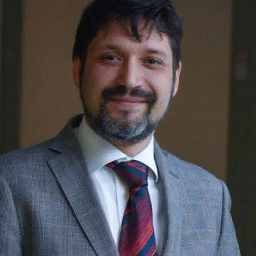
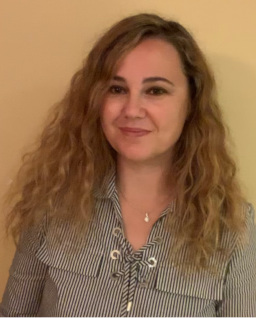
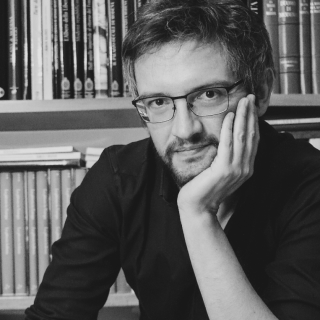
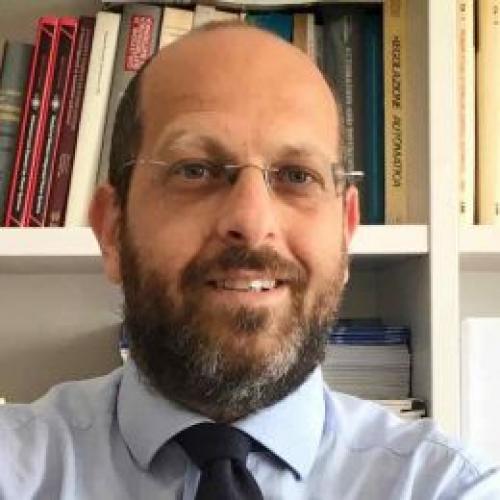
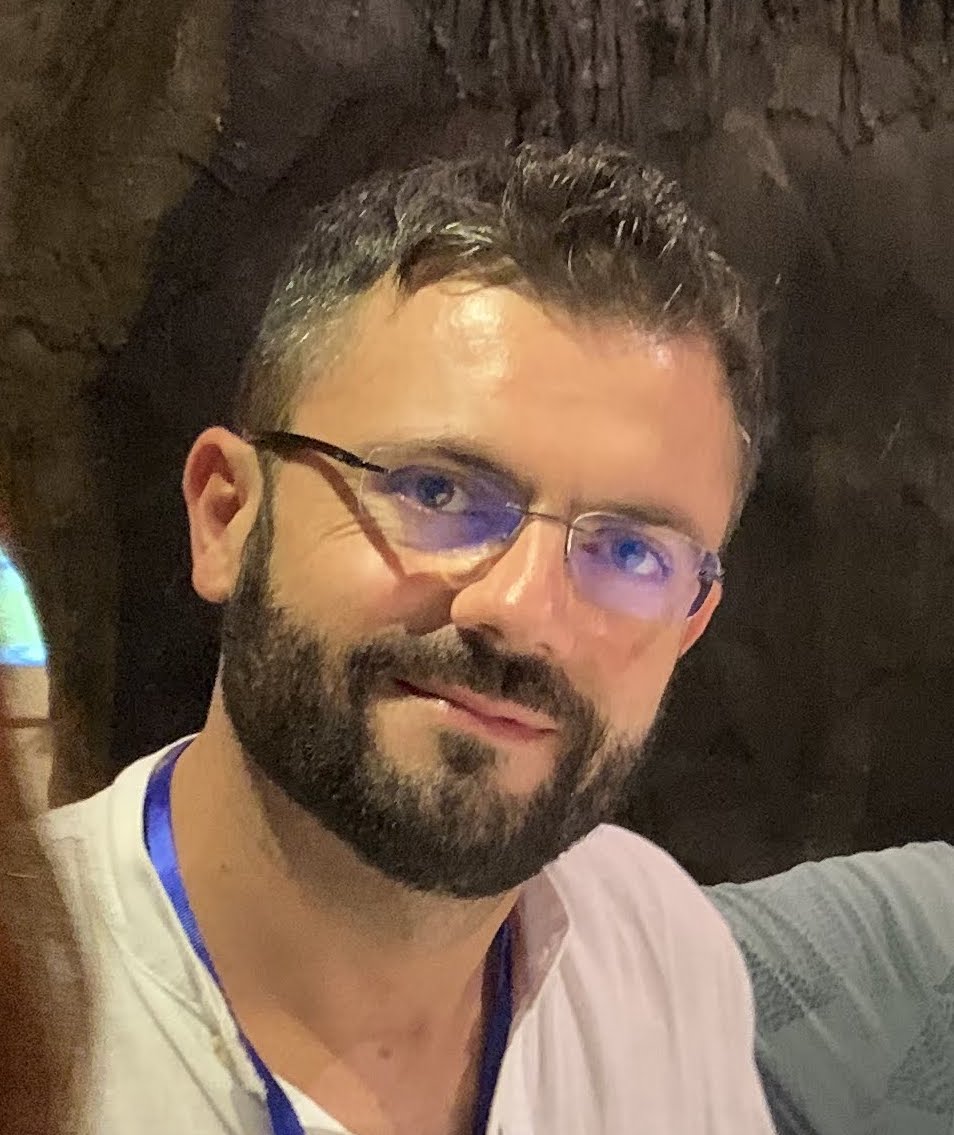
Luciano Lavagno is a Full Professor at the Department of Electronics and Telecommunications, Polytechnic University of Turin, with over two decades of academic and research contributions. His work bridges hardware acceleration, low-power electronics, and intelligent system design. Research Focus: Hardware-accelerated machine learning, high-level synthesis (HLS) for FPGA/ASIC, heterogeneous CPU/GPU/FPGA platforms Key Projects: SPACE (predictable acceleration), REBECCA (secure AI acceleration), HPC-National Center (quantum computing), and oral history preservation via "Ti racconto una storia" initiative His recent publications analyze CNN inference optimization, subgraph isomorphism, and superword-level parallelism exploitation. Lavagno supervises multiple PhD students working on FPGA acceleration, neural network hardware, and embedded systems. As Principal Investigator for national and EU-funded projects (PRIN, JTI-ECSEL, PNRR), he drives advancements in sustainable computing infrastructure. His patented technologies include MIx&Latch timing methodology, capacitive sensing innovations, and 5G acceleration frameworks.
Guido Perboli is a Full Professor in the Department of Management and Production Engineering (DIGEP) at the Polytechnic University of Turin, where he also serves as Logistics Coordinator and Project Coordinator for activities supporting relationships with government bodies. He is a member of the Interdepartmental Center CARS@PoliTO (Center for Automotive Research and Sustainable Mobility) and serves as Director of the ICT for City Logistics and Enterprises (ICElab@Polito) research center, which he founded in 2016. His research interests span a broad range of topics including Operations Research, Logistics, Last-mile Delivery, Sustainable Logistics, Combinatorial Optimization, Stochastic Programming, Business Development, and Lean Business methodologies. His work particularly focuses on City Logistics, Green Logistics, and the application of emerging technologies like Blockchain and AI in supply chain management. He has developed GUEST, a Lean Business methodology for innovation processes from early idea definition to implementation. Professor Perboli's recent publications demonstrate a strong focus on urban logistics, last-mile delivery optimization, blockchain applications in supply chains, and the integration of AI techniques in transportation systems. His work shows an increasing trend toward interdisciplinary research that combines optimization methods with emerging technologies to address sustainable urban mobility challenges. Professional Recognition: CASE Best Paper award from IEEE Conference on Automation Science and Engineering (2011) Effective member of INFORMS (2019-present) Effective member of EURO (1995-present) Effective member of AIRO (1995-present) Associate Editor for Journal of Applied Research and Technology (2020-present) Associate Editor for Sustainability (2018-present) Professor Perboli actively advises PhD students and has supervised numerous research projects, including EU-funded initiatives like SINFONICA, HESTER, and 5G-LOGINNOV. He serves as Scientific Director for multiple commercial research projects focused on blockchain, IoT, and AI applications in logistics. Beyond academia, he is Chief Scientific Officer of Arisk S.p.A., a fintech company specializing in business crisis prediction using AI and machine learning. His research group, ICElab@Polito, focuses on two main areas supporting urban growth: logistics and enterprises. The center collaborates with numerous companies including Amazon, DHL, and FCA, addressing real-world challenges in urban logistics and supply chain management through innovative research approaches.
Laura Sanità is an Associate Professor in the Department of Computing Sciences at Bocconi University, Milano, Italy. She previously held academic positions at TU Eindhoven (Netherlands) and the University of Waterloo (Canada). Education: Bachelor's in Management Engineering (2003), Università di Roma Tor Vergata Master's in Management Engineering (2005), Università di Roma Tor Vergata PhD in Operations Research (2009), Università Sapienza di Roma Postdoctoral Fellow at EPFL (Switzerland, 2009-2011) Laura's research focuses on discrete mathematics, theoretical computer science, and operations research, with particular emphasis on algorithmic solutions for combinatorial optimization problems. Her work spans approximation algorithms, network design, polyhedral combinatorics, and algorithmic game theory, advancing methodologies for solving complex optimization challenges in theoretical and applied contexts. Her publications demonstrate expertise in network design problems, spanning from fundamental polyhedral characterizations to game-theoretic applications. Key contributions include iterative randomized rounding techniques for Steiner trees, circuit augmentation algorithms, and stabilization approaches for network games. Scientific Awards: NWO-VIDI Award (Netherlands) Discovery Accelerator Supplements Award (NSERC, Canada) Golden Jubilee Research Excellence Award (University of Waterloo) Early Researcher Award (Ontario) Best Paper Award at STOC 2010 Advising & Collaborations: Laura advises PhD students Dylan Hyatt-Denesik and Lucy Verbeck, and collaborates with postdoctoral researchers like Afrouz Jabal Ameli. She has served on program committees and as Associate Editor for top journals including Mathematical Programming, Mathematics of Operations Research, and Operations Research Letters.
Fabio Furini is an Associate Professor at the Department of Computer Science, Automatics, and Management (DIAG) at Sapienza University of Rome since September 2021. Prior to this position, he served as a CNR researcher at IASI-CNR in Rome (2020-2021), Maître de Conférences at Université Paris-Dauphine, France (2013-2019), postdoctoral researcher at Université Paris-13, France (2012-2013), and research fellow at the University of Bologna (2011-2012). His educational background includes a Ph.D. in Control Engineering and Operations Research from the University of Bologna in 2011. He further obtained the Habilitation à Diriger des Recherches (HDR) in France in 2017 and the National Scientific Qualification for Full Professor in Operations Research in Italy in 2019. Fabio Furini conducts theoretical and methodological research on Combinatorial Optimization and Operations Research. His primary focus is on developing exact algorithms based on decomposition and reformulation techniques for integer linear programming problems. His research spans various applications including network optimization, graph theory, and combinatorial problems such as the maximum clique problem, bin packing problem, and vertex separator problem. His work often bridges theoretical developments with practical applications in transportation, logistics, and network security. His recent publications demonstrate a strong focus on exact algorithms for combinatorial optimization problems, particularly in network interdiction, bin packing with temporal constraints, and graph-based problems. His work consistently combines integer programming techniques with combinatorial search methods to develop novel formulations and efficient solution approaches that advance the state-of-the-art in these domains. Among his notable scientific awards are the Prime d'encadrement doctoral et de recherche (PEDR), which he received annually from 2014 to 2020, recognizing him among the top 15% of researchers in the French university system. He also holds the prestigious Habilitation à Diriger des Recherches from France (2017) and the National Scientific Qualification for Full Professor in Operations Research from Italy (2019). Fabio Furini has been actively involved in supervising PhD students and has served as principal investigator for numerous national and international research projects. His extensive network includes over 60 co-authors across European and American universities. He is also a member of the editorial boards for three prestigious international journals: Omega, Annals of Operations Research, and Discrete Applied Mathematics. His research activities include collaborations with various institutions across Europe and the United States, including Imperial College London and the University of Colorado. These collaborations have resulted in a robust research program focused on advancing the theoretical foundations and practical applications of combinatorial optimization.
Federico Silvestro is a Full Professor at the University of Genoa , affiliated with the Naval, Electrical, Electronic and Telecommunications Engineering Department . His academic roles include being a Course Coordinator, Department Council Member, and Deputy Director of DITEN. His research focuses on Power systems stability and control Cybersecurity in energy networks Electric propulsion for marine applications Optimal energy storage and microgrid design Integration of renewable energy in maritime contexts Recent publications highlight trends in data-driven power system analysis , DC microgrid modeling , cybersecurity for virtual power plants , and advanced energy management strategies for maritime and port systems. Email: federico.silvestro@unige.it He leads the ENET-RT Lab , focusing on real-time power systems simulation and co-simulation platforms for marine and grid applications.
Prof. Alessandro Zaccagnini is an Associate Professor at the Department of Mathematical, Physical and Computer Sciences, University of Parma. He graduated in Mathematics in 1989 and obtained his PhD in 1994, focusing on Analytic Number Theory. His academic journey includes a competitive appointment as Associate Professor in 2004 after serving as a Researcher from 1993 to 2004. Education : PhD in Mathematics (1994), University of Parma Academic Positions : Researcher (1993–2004), Associate Professor (2004–present) His research spans Analytic Number Theory, focusing on additive problems like the Hardy-Littlewood conjectures, Goldbach representations, prime distribution in short intervals, Diophantine equations with primes, and Mertens' constants. He also contributes to Cryptography education. Key Research Areas Additive Number Theory (Goldbach, Goldbach-Linnik problems) Prime Distribution in Short Intervals Diophantine-type Problems with Prime Variables Mertens' Constant for Arithmetic Progressions Cryptography and Mathematical Education Recent publications include studies on Laplace convolutions, Cesàro averages for additive problems, and educational materials using everyday objects for mathematical teaching. His work bridges theoretical research (e.g., Riemann zeta function) and practical applications (e.g., cryptographic protocols). Teaching responsibilities include Mathematical Analysis , Cryptography , and Elementary Number Theory for undergraduate and graduate programs in Mathematics and Computer Science.
Ciriaco D'Ambrosio is a Research Fellow at the Department of Mathematics, University of Salerno, specializing in combinatorial optimization and its applications to wireless sensor networks. He teaches courses in operations research and maintains regular reception hours for students on Tuesdays (3:00-5:00 PM) and Wednesdays (4:00-5:00 PM), conducted both in-person and via Microsoft Teams. Education: PhD in Computer Science, University of Salerno (2015) - Thesis: models and algorithms for coverage in Wireless Sensor Network Laurea cum laude in Computer Science, University of Salerno (2011) Research Focus: D'Ambrosio specializes in combinatorial optimization, developing heuristics, metaheuristics, and math-heuristics for mixed integer linear programming problems. His work addresses challenging optimization problems in wireless sensor networks, particularly network lifetime maximization under coverage, connectivity, and interference constraints. His research bridges theoretical computer science with practical applications in sensor network design, seismic monitoring systems, and resource allocation problems. His methodology often combines exact approaches with sophisticated heuristic techniques to solve computationally difficult problems. Publication Trends: Analysis of D'Ambrosio's publications (2017-2025) reveals a progression from foundational work on sensor network lifetime problems toward increasingly sophisticated algorithmic approaches for combinatorial optimization. His recent work shows expansion into seismic monitoring applications while maintaining strong focus on knapsack problem variants and network optimization. His publications appear in high-quality journals including Soft Computing, Computers & Operations Research, and Networks, demonstrating both theoretical rigor and practical relevance of his research. Professional Activities: Member of the Italian Operations Research Society (AIRO) Associate Editor for Soft Computing, A Fusion of Foundations, Methodologies and Applications Active collaborator with researchers including Andrea Raiconi, Raffaele Cerulli, and Francesco Carrabs Research Infrastructure: D'Ambrosio works within the Department of Mathematics at University of Salerno's Fisciano Campus (Building F2, Room 040). His research contributes to the university's growing expertise in computational optimization and has practical applications in environmental monitoring systems like SEISMONOISY.
Gabriele Bernardini is a Researcher at the Department of Civil, Building and Architectural Engineering within the Faculty of Engineering at Università Politecnica delle Marche (UNIVPM) in Ancona, Italy. His office is located at via brecce bianche 12, Ancona in the DICEA, Construction Section (quota 150), where he holds office hours on Wednesdays from 9-11 AM. His work focuses on the intersection of built environment safety, risk assessment, and innovative technological applications for urban resilience. Dr. Bernardini's research interests center on multi-risk assessment and mitigation in urban built environments, particularly addressing flood risks, terrorist threats, and heatwave vulnerabilities in historical contexts. His work employs innovative methodologies including virtual reality simulations, behavioral design approaches, and data-driven predictive models. He has developed frameworks for measuring user exposure and vulnerability, optimizing evacuation paths, and creating integrated wayfinding systems for emergency situations. His research bridges the gap between theoretical risk assessment and practical implementation in real-world urban settings, with a special focus on preserving historical character while enhancing safety. Analysis of his recent publications (2021-2025) reveals a consistent focus on multi-risk scenarios in urban environments, particularly examining how different hazards interact in historical settings. His work demonstrates increasing sophistication in methodology, moving from basic risk assessment to integrated multi-risk frameworks that consider user behavior, environmental factors, and technological solutions. A significant portion of his research applies virtual reality and extended reality technologies to safety training and evacuation planning, showing the evolution from theoretical models to practical applications with real-world testing. His research has practical applications across multiple domains including urban planning, emergency management, and building maintenance. Through his work on automatic detection systems using maintenance requests and predictive management approaches, he's contributing to more responsive building management practices. His case studies on specific locations like Matera demonstrate the translation of theoretical frameworks into context-specific solutions for historic urban environments.
Stefano Bracco is an Associate Professor in the Department of Naval, Electrical, Electronic, and Telecommunications Engineering (DITEN) at the University of Genoa, Italy, serving on both the Department Board and the School Council of the Polytechnic School. He teaches advanced courses including Energy Transition and Power Systems Management for Master's programs in Energy Engineering, Management for Energy and Environmental Transition (MEET), and Engineering for Natural Risk Management, covering critical topics in sustainable power systems and infrastructure modeling. His research focuses on power systems engineering with emphasis on microgrid optimization, renewable energy integration, and electric vehicle infrastructure. Key contributions include energy management systems (EMS) for active/reactive power control in microgrids, vehicle-to-grid/home technologies, and sustainable energy community design. His work addresses grid stability challenges, economic optimization of distributed energy resources, and resilience enhancement in critical facilities through advanced mathematical modeling and real-world case studies. Analysis of his 15 most recent publications (2024-2025) reveals consistent application of mixed-integer linear programming (MILP) for microgrid optimization across diverse contexts including university campuses, industrial sites, and Italian municipalities. Dominant trends include integration of electric vehicle charging infrastructure with renewables, uncertainty handling in renewable communities, and multi-scale control frameworks for automated transportation. His research bridges theoretical optimization with practical implementation, frequently using the Savona University Campus as a living laboratory for sustainable energy solutions. No scientific awards were mentioned in the provided information. The available text did not specify any advised students or research grants, though his extensive publication record suggests active research supervision and project leadership. While no dedicated laboratories are explicitly attributed to him, his work frequently involves the Savona University Campus infrastructure, including the CN MOST Laboratory and microgrid test facilities, indicating collaboration with existing university energy research platforms.
Pietro Cornetti is an Associate Professor in the Department of Structural, Building and Geotechnical Engineering (DISEG) at the Politecnico di Torino, where he also serves as Coordinator of the Doctoral School in Civil and Environmental Engineering. He is a member of the SISCON Interdepartmental Center for the Safety of Infrastructures and Constructions and the Doctoral School Council. His academic career has been deeply rooted at Politecnico di Torino, where he completed his education and has held continuous academic positions since 1999. His research interests span a broad spectrum of solid and fracture mechanics, with a focus on finite fracture mechanics , fractional calculus , fractal geometry , non-local elasticity , size effects in concrete and granular materials, and structural retrofitting using FRP/FRCM systems . His work bridges theoretical mechanics with practical applications in civil engineering and structural integrity. The 15 most recent publications highlight a strong trend toward integrating advanced mathematical frameworks—particularly fractional calculus and phase-field modeling—with classical and finite fracture mechanics. These works address brittle fracture, dynamic crack propagation, fatigue in composites, and debonding phenomena, demonstrating a consistent focus on improving predictive models for structural failure across scales. He actively mentors PhD students and leads major research initiatives, including the H2020-funded NEWFRAC project and the nationally funded REHARZE project on retrofitting historic architecture for zero emissions. His teaching portfolio includes Solid Mechanics, Structural Mechanics, Fracture and Plasticity, and advanced topics in computational mechanics across undergraduate, master's, and doctoral levels. He is affiliated with several professional organizations: Italian Group of Fracture (IGF) Italian Association of Applied and Theoretical Mechanics (AIMETA) European Structural Integrity Society (ESIS), Technical Committee TC16 He has served on the program committee of the International Conference on Fracture (ICF14) and participated in the organizing committee of AIMETA XXI. His research is supported by competitive grants from national (PRIN) and EU (H2020) funding programs. He supervises a research group focused on fracture mechanics and leads the Laboratorio di Meccanica della Frattura (DISEG) , which supports experimental and computational research in structural integrity. His team works on both theoretical developments and practical applications in civil and environmental engineering.
Francesco Liberati is an Associate Professor in Automatic Control at Sapienza University of Rome, Department of Computer, Control and Management Engineering (DIAG). His research focuses on cyber-physical systems, model predictive control (MPC), and hybrid MPC-deep learning algorithms with applications to power systems, traffic control, and task scheduling. PhD in Systems Engineering from Sapienza University (2015) Assistant Professor (RTD-B) at Sapienza University (2021-2024) Assistant Professor (RTD-A) at eCampus University (2015-2017) Liberati’s work combines theoretical advancements in control theory with real-world implementations in smart grids and transportation systems. He has pioneered approaches integrating MPC with reinforcement learning for large-scale optimization problems, particularly in electric vehicle (EV) charging and grid reconfiguration. His recent publications emphasize: Stochastic and economic MPC for renewable energy storage Decentralized control algorithms for EV charging Cyber-physical security in microgrids and smart infrastructure Hybrid AI-control solutions for traffic and industrial systems Scientific recognition includes: 2021 Best Paper Award, IEEE World AI IoT Congress (AIIoT) 2021 Networked Systems Best Paper Award He serves as Associate Editor for Advanced Control for Applications (Wiley) and on the Editorial Board of Smart Cities (MDPI). His applied research spans European Commission H2020 projects and collaborations with industry partners in energy and transportation sectors.
Giorgio Vinciguerra is a Research Fellow (RTD-A) at the Department of Computer Science of the University of Pisa since January 2023, and a member of the A³ Lab. His research focuses on compact data structures, data compression, and algorithm engineering, with a specialization in learned data structures that leverage machine learning to improve space-time trade-offs. He holds a PhD from the University of Pisa (2022), awarded the Best PhD thesis in Theoretical Computer Science by the Italian Chapter of EATCS. His academic journey includes postdoc research (2022), a visiting researcher role at KTH Royal Institute of Technology (2024), and Harvard University (2020). He has contributed to EU-funded projects like SoBigData.it and owns patents for innovations in data structure design. Key research interests include: Learned compression techniques for time series and string dictionaries Space-efficient indexing for massive datasets Algorithmic integration of machine learning into traditional data structures His work has been published in top venues including ICDE, Inf. Syst., and ACM Trans. Algorithms. Awards include the 2025 WSDM Outstanding Reviewer Award. He has co-supervised multiple theses on topics like adversarial query optimization and compressed indexing. Teaching roles include courses on programming, algorithms, and information retrieval at the University of Pisa. His software libraries (e.g., LeMonHash, PGM-index) are widely used in database systems and bioinformatics.
Stefan Weltge is a Professor of Discrete Mathematics at the Technical University of Munich (TUM). His research focuses on combinatorial optimization, linear and integer programming, and polyhedral combinatorics. He has received multiple teaching awards at TUM, including the Best Lecturer in Electrical and Computer Engineering (2019) and Best Advanced Course awards in Mathematics (2020/21, 2019). He also earned the Best Dissertation Award from the University of Magdeburg (2016). Education: PhD in Mathematics (University of Magdeburg), Postdoc (ETH Zurich) Research Grants: Funded by the German Research Foundation (DFG) via an Individual Grant (NextGen) and the PhD Program AdONE Professional Roles: Program Committee member for IPCO 2023, MIP 2022, ISCO 2022, ISCO 2020, ISCO 2018; Organizer of OR 2024, MIP 2022, and Cargese Workshops on Combinatorial Optimization (2024, 2022)
Francesco Veneziano serves as an Associate Professor in the Department of Mathematics (DIMA) at the University of Genoa, Italy, holding academic rank MATH-02/B in Geometry. His teaching portfolio spans multiple engineering and mathematics programs, including Geometry for Computer Engineering and Naval Engineering undergraduates, and advanced graduate courses such as Galois Theory and Higher Geometry in Institutions for Mathematics Master's students. Office hours are maintained via the university's Aulaweb platform. His research program centers on pure mathematics with emphases on geometric structures and number-theoretic phenomena. Primary investigations explore continued fractions over algebraic number fields, rational angle classification in lattice geometries, and nonlinear recurrence relations. Recent work demonstrates interdisciplinary expansion into computational mathematics, notably applying reinforcement learning to game theory problems. The geometric perspective permeates all research strands, connecting abstract algebraic frameworks with concrete discrete structures. Analysis of his 2022-2024 publications reveals consistent focus on classical number theory problems with geometric interpretations. Key trends include periodicity properties in continued fraction expansions, Diophantine constraints in lattice configurations, and algorithmic approaches to strategic game analysis. The 2024 publication on 7 Wonders Duel represents a methodological evolution, merging dynamical systems theory with artificial intelligence techniques while maintaining core mathematical rigor. No scientific awards or honors were documented in the source material. No information regarding doctoral advisees, master's students, or externally funded research grants was provided. His academic contributions appear concentrated in theoretical research and advanced mathematical education within the university's mathematics department.
Giampaolo Liuzzi is an Associate Professor at the Department of Computer, Automation, and Management Engineering 'Antonio Ruberti' (DIAG) at Sapienza University of Rome since July 2023. Previously, he was a fixed-term researcher at the same department (July 2020-June 2023) and a Senior Researcher at the Institute of Systems Analysis and Computer Science 'A. Ruberti' of the CNR until July 2020. He teaches Mathematical Programming, Complements of Mathematics, and Mathematical Analysis 2 for various engineering programs at Sapienza University. Dr. Liuzzi's research focuses on Nonlinear Optimization , particularly derivative-free methods for constrained and unconstrained optimization, global optimization, mixed integer nonlinear programming, and applications in operations research and machine learning. His work spans theoretical developments in optimization algorithms as well as practical applications in engineering design, simulation-based optimization, and biomedical systems. He has made significant contributions to derivative-free optimization techniques that don't require gradient information, which is particularly valuable for black-box optimization problems where derivatives are unavailable or expensive to compute. His recent publications (2022-2025) demonstrate a strong focus on advancing derivative-free optimization methods, with particular attention to complexity analysis, convergence properties, and practical implementations for challenging problem classes including nonsmooth, constrained, multi-objective, and mixed-integer optimization problems. His work bridges theoretical computer science with practical engineering applications, with publications appearing in top optimization journals like Optimization Methods & Software, Computational Optimization and Applications, and Journal of Optimization Theory and Applications. Dr. Liuzzi has received significant professional recognition through National Scientific Habilitations for both Associate Professor (2014) and Full Professor (2018) positions in Italy. He is actively involved in the academic community as an administrator of the Derivative-Free Library (DFL), a collection of algorithms and methods for derivative-free optimization developed through collaboration among several prestigious Italian research institutions. As an educator, Dr. Liuzzi has developed comprehensive teaching materials for courses in Mathematical Programming, Complements of Mathematics, and Mathematical Analysis. He is also engaged in academic entrepreneurship as a co-founder of DEIX s.r.l., a Sapienza startup focused on algorithms and industrial software for planning and control of complex systems. Additionally, he organized the 2nd Derivative-Free Optimization Symposium (DFOS'24) in June 2024 in Padua, highlighting his leadership role in this specialized optimization community.