Yin Tat Lee is an Associate Professor at the Paul G. Allen School of Computer Science & Engineering , University of Washington, and a Senior Principal Researcher in Microsoft AI. His research spans convex optimization , convex geometry , graph algorithms , online algorithms , and differential privacy , with applications in machine learning and theoretical computer science.
Prof. Dr. André Bardow is a Full Professor in Energy and Process Systems Engineering at ETH Zurich , leading research at the intersection of thermodynamics, machine learning, and sustainable energy systems. Previously, he held professorships at RWTH Aachen University (2010-2020) and TU Delft (2007-2010). He also served as part-time director at Forschungszentrum Jülich (2017-2022) and visiting professor at UC Santa Barbara (2015/16). His work focuses on energy systems optimization , computer-aided molecular design , and CO2 capture & utilization . PhD from RWTH Aachen University Current ETH Zurich affiliation Former roles at RWTH Aachen, TU Delft, Jülich Research Center His research integrates machine learning with thermodynamic modeling to optimize processes like crystallization and electrochemical cooling . Recent publications demonstrate advancements in solvent design, CO2 transport LCA, and ORC working fluid optimization. He chairs the VDI Technical Committee for Thermodynamics (2016-2024) and has received multiple awards including the Covestro Science Award and Arnold-Eucken-Award . Current projects address carbon circular economies , electrified chemical production , and AI-driven process optimization . His lab at ETH Zurich develops cutting-edge technologies like ML-CAMPD frameworks for sustainable separation processes and photoacid-based CO2 capture systems. Funding from the H2020 Systemic Expansion of Circular Ecosystems (grant 101036854) supports these initiatives. 2024 Clarivate Highly Cited Researcher 2022 Inaugural Lecture: "To sustainability and beyond: A computer-animated story on energy & chemicals" Recipient of multiple teaching and research excellence awards
Lars Rohwedder is an Associate Professor in the Algorithms Group at the University of Southern Denmark (SDU) in Odense. He previously held positions as an Assistant Professor at Maastricht University (Netherlands) and postdoc researcher at EPFL, Lausanne (Switzerland). He earned his Ph.D. in Computer Science from CAU Kiel (Germany), advised by Klaus Jansen, and is a recipient of the 2019 PhD of the year award from Förderverein der TF of Kiel University. His research focuses on algorithms for combinatorial optimization, including approximation algorithms, online algorithms, parameterized algorithms, and integer programming. He has contributed to solving scheduling problems, resource allocation, and optimization under uncertainty. Rohwedder has served on program committees for conferences like MAPSP, SODA, STACS, and ICALP. He is funded by NWO's Open Competition M1 project on quasi-polynomial time algorithms. His teaching includes courses on advanced algorithms, operations management, and optimization at SDU and Maastricht University. Key achievements include a quasi-polynomial approximation for the restricted assignment problem, FPT algorithms for scheduling, and contributions to the Submodular Santa Claus problem. His work bridges theoretical foundations and practical applications, with a focus on algorithmic efficiency and robustness.
Prof. Dr. Andreas S. Schulz is a faculty member at Technische Universität München (TUM), holding a chair in the Department of Mathematics and the Department of Business and Economics. He previously served as the Patrick J. McGovern Chair of Management and Professor of Mathematics at MIT. His research focuses on mathematical optimization, algorithm design, and their applications in logistics, production, healthcare systems, and online advertising. He has held visiting professorships at institutions such as the Sauder School of Business (UBC) and ETH Zurich. Prof. Schulz’s research bridges operations research, theoretical computer science, and economics. He develops analytical methods to solve complex decision-making problems in business, including scheduling, resource allocation, and network optimization. A key interest is applying mathematical approaches to enhance healthcare delivery and system efficiency. Education: PhD in Operations Research (MIT), prior academic roles at MIT and visiting institutions. Key Achievements: Alexander von Humboldt Professorship (2014), Humboldt Research Award (2010), Glover-Klingman Prize (2006). Research Themes: Robust optimization, approximation algorithms, scheduling theory, and algorithmic game theory. His publications span topics like integer programming, optimal transport, and congestion games. He collaborates across disciplines, emphasizing practical applications of theoretical insights.
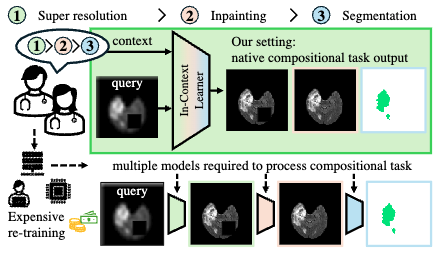
Prof. Dr. Erik Rodner is a faculty member at the University of Applied Sciences Berlin (HTW Berlin), where he serves as a Professor for Machine Learning and Data Science. He also contributes to the School of Engineering Sciences - Technology and Life. His research spans computer vision, machine learning, and biomedical applications, with a focus on learning with limited data, robust visual recognition models, and medical image analysis. He has developed innovative methods for medical diagnostics, industrial classification, and anomaly detection. Recent publications (2025-2016) highlight his expertise in visual in-context learning, semi-weakly segmentation, and active learning frameworks. He has collaborated with institutions such as ZEISS Group, Friedrich Schiller University Jena, and UC Berkeley. Scientific Awards: Award for Excellent Teaching (2023)
Peter Sewell is Professor of Computer Science at the University of Cambridge Computer Laboratory, where he builds rigorous foundations for real-world computer systems to enhance robustness, security, and formal verification of hardware-software interactions. His educational background includes undergraduate studies at the University of Cambridge and University of Oxford, followed by a PhD from the University of Edinburgh in 1995 under Robin Milner's supervision. Professor Sewell's research focuses on concurrency models (x86, ARM, Power, C/C++11), verified compilation, formal semantics for C/linking/filesystems/TLS, and applied semantics tools. He pioneers executable ISA specifications through projects like Sail and Cerberus, addressing relaxed-memory concurrency and capability-based security architectures. His 2020-2026 publications reveal a clear trajectory toward formal verification of hardware security properties, with increasing emphasis on capability systems (Arm Morello, CHERI) and real-world applicability of concurrency models across ARM, RISC-V, and MIPS architectures. Scientific recognition: Royal Society University Research Fellowship (1999-2007) He leads major research initiatives in systems security formalization, supported by Cambridge positions and collaborative projects with industry partners. His work bridges theoretical formal methods and practical systems engineering through executable semantics frameworks. As a core member of Cambridge's Systems Research Group, he directs projects including Sail (ISA semantics), Cerberus (C semantics), and verification frameworks for capability architectures, fostering interdisciplinary collaboration across hardware and software security domains.
Prof. Dr.-Ing. Richard Membarth is a Research Professor for System-on-a-Chip and AI at the Edge Computing at Technische Hochschule Ingolstadt (THI). He is affiliated with the Hardware-Software Co-Design group and holds a secondary position at the German Research Center for Artificial Intelligence (DFKI) Saarbrücken. Co-creator of DSL frameworks like AnyDSL and Hipacc Key contributor to MetaDL (AI metaprogramming) and PRIME (predictive rendering) His research bridges GPU computing , domain-specific languages , and compiler technology , with recent work on Vulkan SPIR-V compilation and device-driven SpMV algorithms . Notable awards include the HiPEAC Paper Award (2018) and multiple Best Paper Awards for his compiler frameworks.
Britta Peis is a Professor of Management Science at RWTH Aachen University since September 2013. She studied Mathematics and Sports Sciences at the University of Cologne and German Sport University Cologne, respectively. Her academic journey includes positions at TU Dortmund (2006-2007), TU Berlin (2007-2010), and a visiting professorship at Otto-von-Guericke University Magdeburg (2010-2011). Her research focuses on Combinatorial Optimization , Algorithmic Discrete Mathematics , Routing and Scheduling , Robust Optimization , and Algorithmic Game Theory . Her work spans theoretical and applied domains, including network flow analysis, auction algorithms, and strategic decision-making in complex systems. Recent publications (2025-2024) highlight advancements in dynamic auction mechanisms, Stackelberg game formulations, and train routing algorithms. Earlier works (2022-2018) explore matroid theory, packet routing with priority lists, and sensitivity analysis in polymatroid optimization. Key trends include algorithmic design for competitive networks and robustness in time-dependent flows. She is affiliated with the Graduiertenkolleg UnRAVeL (Aachen Institute for Discrete Mathematics and Logic) and contributes to the Chair of Management Science's research agenda in combinatorial optimization and algorithmic game theory.
Prof. Jörn Meissner, PhD, is a Full Professor of Supply Chain Management & Pricing Strategy at Kühne Logistics University (KLU) since 2011. He holds a PhD and Master’s in Management Science from Columbia Business School and a Diploma in Business from University of Hamburg . As an academic and entrepreneur, he founded Manhattan Review and Lancaster Executive . Education: PhD in Management Science, Columbia University (2005) Master of Philosophy, Columbia University (2005) Diplom-Kaufmann, University of Hamburg (1997) Research Expertise: Focus on stochastic and dynamic decision-making using mathematical optimization and machine learning Key projects: Global supply chain optimization , Inventory control , Revenue management , and Operations & service management Industry collaborations with British Telecom , British Airways , Apple Europe , and SAP Germany Publication Trends: Recent work addresses intermittent demand forecasting for spare parts, lateral transshipment optimization , and risk-sensitive capacity control Historical contributions include progressive interval heuristics for multi-item lot sizing and dynamic pricing with customer choice models Teaching Experience: Previously held academic positions at Lancaster University Management School , University of Hamburg , and University of Mannheim Developed MBA electives in Advanced Decision Models , Supply Chain Management, and Revenue Management
Cédric Soutil is a Researcher at the Conservatoire National des Arts et Métiers (CNAM) , affiliated with the CEDRIC Laboratory. His work spans combinatorial optimization , integer programming , quadratic programming , and algorithm design , with a focus on solving complex optimization problems in scheduling and graph theory. Recent publications highlight his expertise in non-separable and non-convex quadratic integer programming , knapsack problems , and online computation . His research trends emphasize mathematical reformulations , upper bound algorithms , and optimization models for real-world applications like horse race scheduling and hydrogen production . He has collaborated extensively with researchers such as A. Houdayer , D. Quadri , and P. Tolla , contributing to over two decades of academic output in operations research and combinatorial optimization .
Jan-Henrik Haunert is a Professor at the University of Bonn, affiliated with the Institute of Cartography and Geoinformatics within the Faculty of Civil Engineering and Geodetic Science. His research focuses on map generalization, geographic information systems (GIS), and optimization techniques in cartography. He has contributed to projects funded by the German Research Foundation (DFG), particularly in deriving scale-dependent representations of geographic data. His work emphasizes logical consistency, semantic accuracy, and quality assessment in geospatial data processing. Key research areas include land cover map generalization, spatial data integration (e.g., volunteered geographic information), and rule-based incremental generalization. He has developed methodologies leveraging mixed-integer programming and straight skeleton algorithms for cartographic automation. His publications span peer-reviewed journals like GeoInformatica and Photogrammetrie - Fernerkundung - Geoinformation , as well as conference proceedings such as AGILE and ACM-GIS. Haunert’s contributions address challenges in geospatial data quality, including polygon simplification and river dataset matching. He has also explored applications in vehicle localization and virtual reality systems like the GeoScope for urban planning. His work bridges theoretical GIScience with practical applications in cartography and geoinformatics.
Matthias Mnich is a Professor and Head of the Institute for Algorithms and Complexity at Hamburg University of Technology (TUHH), within the School of Electrical Engineering, Computer Science and Mathematics. He also serves as Deputy Dean International, reflecting his leadership in academic administration and international collaboration. He is a principal investigator at the Helmholtz Graduate School for the Structure of Matter, further emphasizing his interdisciplinary impact. His research lies at the intersection of theoretical computer science and practical algorithm design, focusing on parameterized algorithms , approximation algorithms , combinatorial optimization , scheduling , and algorithmic game theory . His work often bridges theoretical guarantees with real-world applications in energy systems, quantum computing, and logistics. The recent publications (2023–2025) highlight his sustained excellence in top-tier venues such as FOCS, ICALP, ESA, STACS, and journals like Mathematical Programming and ACM Transactions on Algorithms . These works explore foundational problems in vector bin packing , integer programming , graph algorithms , and kernelization , while also applying algorithmic techniques to microgrid energy optimization and quantum algorithm engineering . He is deeply embedded in the theoretical computer science community, having served on program committees of major conferences including: STACS 2023 ESA 2024 FOCS 2023 ICALP 2024 IJCAI 2019–2025 AAAI 2018 SWAT 2018 He has successfully supervised several PhD students to completion, including Matthias Kaul , Roland Vincze , and Alexander Göke , many of whom have taken postdoctoral positions at institutions like the University of Bonn and University of Augsburg. His current research projects include PATTERN (2025–2031) , Hamburg Quantum Computing (2024–2029) , and Kernelization for Big Data , indicating long-term funding and strategic research directions. He leads the Institute for Algorithms and Complexity (E-11) , fostering a research environment focused on high-impact algorithmic research.
Jürgen Giesl is a Professor at the Teaching and Research Area Computer Science 2 within the Department of Computer Science at RWTH Aachen University , Germany. He leads research in programming languages, formal verification, automated deduction, and term rewriting systems. Research Interests: Automated Termination and Complexity Analysis of Programs Dependency Pairs and Term Rewriting Systems Verification of Probabilistic and Integer Programs Static Analysis and Symbolic Execution Model Checking and Constrained Horn Clauses Development of Automated Tools (AProVE, LoAT) His recent research, reflected in the latest publications, focuses on termination and complexity analysis for probabilistic programs, polynomial loops, and integer programs, using advanced techniques such as dependency pairs, loop acceleration, and semiring semantics. He also contributes to SMT solving and transitive relation learning for infinite-state model checking. Scientific Awards: Best Tool Paper Award at iFM 2017 Silver Medal (Second Best Paper) at SEFM '16 Best Paper Honourable Mention at IJCAR 2024 Best Student Paper Honourable Mention at IJCAR 2024 Advising and Grants: Giesl has supervised numerous PhD and Master’s students, including prominent researchers such as Fabian Frohn, Jens Hensel, Nils Lommen, and Marcel Hark. He leads a large research group focused on automated verification and has contributed extensively to international verification competitions. His work is supported by ongoing research grants and collaborations with leading institutions in formal methods. Labs and Teams: He leads the Programming Languages and Verification research group at RWTH Aachen, which develops and maintains the AProVE and LoAT tools. These tools are central to automated termination and complexity analysis and are regularly submitted to international competitions such as TERMCOMP and VBS.
Martin Schmidt is a Full Professor (W3) for Nonlinear Optimization at the Department of Mathematics, Trier University, since 2019. He has held leadership roles in research training groups and international committees, focusing on mathematical modeling and optimization of energy systems, gas networks, and market equilibria. His work bridges mixed-integer nonlinear optimization , bilevel optimization , and robust methods with applications to real-world energy challenges. Education: PhD in Mathematics (2013), Diplom in Mathematics (2008), both from Leibniz University Hannover. Editorial Roles: Editorial Board member of Journal of Optimization Theory and Applications and Optimization Letters , Associate Editor for OR Spectrum and EURO Journal on Computational Optimization . His research integrates complex physical systems (e.g., gas transmission networks) with game-theoretic models to analyze energy markets. Recent publications emphasize robust optimization , decomposition techniques , and machine learning integration in bilevel frameworks. Awards highlight his contributions to gas market feasibility , linear bilevel optimization , and practical applications in energy systems. Collaborations span institutions like Universidad Zaragoza, Sapienza University, and Forschungszentrum Jülich.
Andrea Walther is a Professor of Mathematical Optimization at the Humboldt University of Berlin, holding a position within the Faculty of Mathematics and Natural Sciences. She leads the Mathematical Optimization research group at the Institute of Mathematics, focusing on algorithmic differentiation, nonlinear optimization, and applied mathematics. Her academic journey includes a Diploma in Business Mathematics (1996, University of Bayreuth), a PhD (1999, TU Dresden), and habilitation (2008, TU Dresden). She has held roles such as Junior Professor at TU Dresden (2007–2008) and Professor at the University of Paderborn (2009–2019) before joining Humboldt in 2019 as a MATH+ Professor. Education : 1991–1996: Studies in Business Mathematics, University of Bayreuth 1996: Diploma in Business Mathematics, University of Bayreuth 1999: PhD in Mathematics, TU Dresden 2008: Habilitation, TU Dresden Her research interests center on optimization methods, particularly algorithmic differentiation (e.g., ADOL-C software), nonsmooth optimization, and applications in engineering and machine learning. She leads initiatives like the Cluster of Excellence MATH+ and contributes to projects such as the Transregio 154. Key Projects: Co-PI of DFG Project 'Mixed-integer non-smooth optimization for gas market problems' (2020–2022) Principal Investigator in MATH+ Projects (EF3-7, AA2-7) Co-developer of ADOL-C, a widely used tool for algorithmic differentiation Notable awards include being a SIAM Fellow. Her work bridges theoretical advancements and practical applications, with contributions to energy sector optimization, inverse problems, and computational frameworks for solving complex systems.