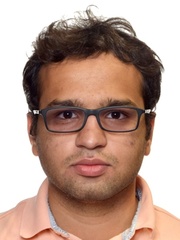
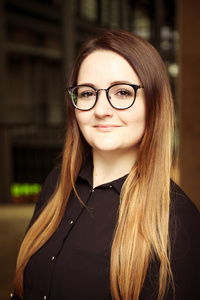
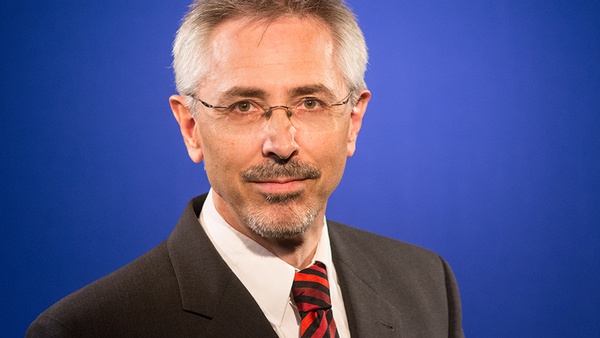
Harshit Jitendra Motwani is a Postdoctoral Researcher at the Max Planck Institute for Software Systems (MPI-SWS) , Germany. Previously, he was a Postdoctoral Fellow at the Hong Kong University of Science and Technology (HKUST) (2023-2024), following doctoral research at Ghent University (2021-2023) and earlier engagements at HKUST, Ghent University, and the University of Bristol . Education : PhD in Mathematics: Algebra and Geometry from Ghent University (2021-2023), Thesis on Algebro-Geometric Algorithms for Program Synthesis; Integrated BSc and MSc in Mathematics and Computing from IIT Kharagpur (2015-2020). Research Focus : Integrates mathematics into computational domains, particularly Computational Algebraic Geometry , Formal Verification , and Tensors . His work spans program synthesis , tensor networks , conditional independence models , and control theory applications . Publications : Recent contributions include algorithmic advancements in formal methods (FM, AAAI, LAGOS), algebraic statistics (IMRN), and quantum computing (SIGMA). His research combines symbolic computation with practical software engineering challenges. Awards & Honors : IEEE Computer Society Larson Best Paper Award (2023) ACM SIGPLAN Distinguished Paper Award (2023) Young Researcher of the Heidelberg Laureate Forum (2023) INSPIRE Scholarship (2015-2020) Teaching : Guest Lecturer at HKUST, Teaching Assistant at RPTU Kaiserslautern-Landau and IIT Kharagpur. Mentored multiple bachelor's projects at Ghent University and IIT Kharagpur.
Robert Krauthgamer is the Harry Weinrebe Professor of Computer Science and currently serves as Department Head in the Department of Computer Science & Applied Mathematics at the Weizmann Institute of Science , within the Faculty of Mathematics and Computer Science . He is a leading researcher in theoretical computer science, particularly in the analysis of algorithms. Research Interests: His research focuses on Analysis of Algorithms , with deep expertise in Data Analysis and Massive Data Sets , Combinatorial Optimization , Approximation Algorithms , Hardness of Approximation , Embeddings of Finite Metrics , and Routing and Peer to Peer Networks . He also maintains a broad interest in Discrete Mathematics and High-Dimensional Geometry . His recent publications highlight work in graph algorithms, parameterized complexity, streaming algorithms, and metric embeddings. Publication Trends: His most recent work, including papers from SODA 2016, demonstrates a strong trend in the design and analysis of efficient algorithms for fundamental problems in graph theory, optimization, and data streams. Key themes include kernelization and sampling techniques for dynamic graph streams, subexponential parameterized algorithms, deterministic derandomization of the polynomial method, and structural results for graph modification problems. His research often bridges theoretical insights with applications in computational biology and network science. Service and Recognition: Journal Editorial: Editor-in-Chief of SIAM Journal on Computing (2019–2025), Associate Editor (2012–2017); Managing Editor of Theory of Computing (2007–2018), and current Editorial Board Member. Conference Leadership: Program Committee Chair for SODA 2016 and HALG 2018; Steering Committee member for SODA, ESA, and HALG; and committee member for the Gödel Prize (2019–2021). Workshops: Organizer of numerous workshops on sublinear algorithms, fine-grained complexity, and high-dimensional data. Teaching and Mentorship: He regularly teaches advanced courses such as Randomized Algorithms and Sublinear Time and Space Algorithms . He advises a large group of MSc and PhD students and hosts postdoctoral researchers, demonstrating a strong commitment to training the next generation of computer scientists. His former students have gone on to successful academic and research careers. Laboratories and Research Groups: He is a key member of the Foundations of Computer Science (theory) seminar at Weizmann and has organized the TheoryLunch and Reading Group in Algorithms, fostering a vibrant research community within the department.
Dritan Nace is a Professor in the School of Engineering at the University of Evry , specializing in network optimization , robust resource allocation , and communication systems . His work bridges computer science , operations research , and telecommunications , focusing on max-min fairness , elastic routing , and survivable network design . Recent research includes: Probabilistic controller placement for 5G networks (2025) Robust VNF reconfiguration models (2024) Weather-resilient FSO network optimization (2021) His scientific contributions span: Network Fairness : Foundational work on max-min fairness and flow thinning 5G Optimization : Innovation in virtual network function placement Air Traffic Systems : Chance-constrained flight level assignment models Nace's collaborative work with researchers like Michal Pióro and Jacques Carlier has shaped telecom infrastructure design and resource-constrained scheduling methodologies.
Lukas Mayrhofer is a researcher affiliated with the Chair of Global Analysis (Prof. Friesecke) at the Department of Mathematics , Technical University of Munich . His work spans mathematical optimization, geometry, and computational methods, with a focus on lattice-free structures and self-assembly in two dimensions. Research Areas: Mathematical optimization, geometry/topology, and scientific computing. Contact: lukas.mayrhofer@tum.de Recent Publications explore lattice-free simplices and robust self-assembly of nonconvex shapes, reflecting interdisciplinary applications in physics and computational mathematics.
Bodo Rosenhahn is a Full Professor at Leibniz University Hannover, heading the Institute for Information Processing since September 2008. His research focuses on automated image interpretation with profound expertise in Computer Vision, Machine Learning, and Big Data Analysis. He has established himself as a leading researcher through extensive contributions to the field and successful industry transfer of his work. Rosenhahn received his Computer Science education at the University of Kiel, earning his Dipl.-Inf. in 1999 and Dr.-Ing. in 2003. His academic journey included a postdoctoral position at the University of Auckland (2003-2005), funded by the German Research Foundation, followed by senior researcher work at the Max-Planck Institute for Informatics in Saarbruecken (2005-2008). His research interests span multiple cutting-edge areas including Computer Vision, Machine Learning, 3D Human Pose Estimation, Motion Capture, Object Tracking, Anomaly Detection, and Reinforcement Learning. His work bridges theoretical foundations with practical applications, particularly in medical imaging, autonomous systems, and industrial quality control. The group he leads has developed innovative approaches for video-based motion capture, semantic scene analysis, and multi-object tracking that have achieved state-of-the-art results in numerous challenges. His most recent publications demonstrate strong trends toward explainable AI systems, uncertainty quantification in vision models, robust multi-model fitting techniques, and the integration of quantum principles with machine learning. These works reflect his commitment to developing both theoretically sound and practically applicable computer vision solutions that address real-world challenges in industry and medicine. DAGM-Prize 2002 Dr.-Ing. Siegfried Werth Prize 2003 DAGM-Main Prize 2005 ERC-Starting Grant 2011 (EUR 1.43 million) CVPR 2017 Multi-Object Tracking Challenge PhysRev-A Editors Suggestion 2023 TÜV-Süd Innovation award 2018 As head coach of the LUH AI competition team, Rosenhahn has mentored numerous students who have achieved success in international competitions. His research has been supported by prestigious grants including the ERC Starting Grant and POC Grant. He has also received the Erskine Fellowship for research at the University of Canterbury. Since 2023, he serves as associate editor for IEEE TPAMI, the highest-ranked journal in computer science. Rosenhahn leads a vibrant research group focused on automated image interpretation with multiple ongoing projects including Multiple People Tracking, Relational Object Tracking, Physics-based modeling, Video-based Motion Capture, and Quantum Learning. His group has developed significant datasets such as the Multimodal Motion Capture Indoor Dataset (MPI08) and Multimodal Motion Capture Dataset (TNT15) that have become valuable resources for the computer vision community. The group maintains strong industry connections, successfully transferring research into practical applications while continuing to push the boundaries of fundamental research in computer vision and machine learning.
William Pettersson is a Researcher at the University of Glasgow in the School of Computing Science , contributing to the Formal Analysis, Theory and Algorithms group. His work focuses on algorithm development and optimization for kidney exchange programs, supported by EPSRC grants. Current projects: KidneyAlgo (EP/X013661/1), Multilayer Algorithmics to Leverage Graph Structure (EP/T004878/1) Key tools: kep_solver software package, web-interface for kidney exchange demonstration Research Interests span mathematical algorithm design, graph theory, computational topology, and integer programming. His work bridges theoretical computer science with practical healthcare applications in organ transplantation. Technical expertise includes full-stack software development across multiple languages (assembly to Python) and open-source contributions. Additional Contributions : Maintainer of Gentoo Linux packages ( app-text/xapers , dev-python/latexcodec , etc.), developer of educational tools like The Kidney Exchange Game and twin-width graph visualization software.
Christin Münch is a Scientific Associate (Researcher) at the University of Duisburg-Essen, affiliated with the Mercator School of Management. She works in the research group of Prof. Kimms, focusing on logistics and operations research. Education: Master of Science (M.Sc.) Her research interests include Operations Research, Logistics, Supply Chain Management, Mathematical Optimization, Computational Geometry, and Drone Logistics. She applies advanced computational methods to optimize logistics systems, with particular emphasis on drone-based delivery and energy-efficient routing. Recent publications reveal a focus on integrating computational geometry with mathematical programming for logistics applications and developing collision-free trajectory planning for drones considering energy consumption. Her work demonstrates interdisciplinary collaboration in solving real-world logistics challenges through algorithmic innovation. Scientific Awards: No scientific awards mentioned. Advising and Grants: No information on students advised or research grants is provided in the text. Labs and Teams: She is part of the logistics research group under Prof. Kimms at the Mercator School of Management, contributing to the Master's program in SCM and Logistics and advancing projects in supply chain optimization.
Nikolaj Bjørner is a Principal Researcher at Microsoft Research , renowned for his foundational contributions to automated reasoning and formal verification. He is the co-creator and lead architect of the award-winning Z3 SMT solver , one of the most widely used tools in formal methods and program analysis. His research interests lie at the intersection of formal methods , programming languages , and automated reasoning . Specific areas include: SMT solving – theory solvers, quantifiers, and solver architectures Program verification – symbolic execution, model checking, and scalable analysis Constraint solving – linear arithmetic, strings, bit-vectors, and custom theories Network and cloud verification – configuration synthesis and policy checking Bjørner's recent work emphasizes scalable verification techniques for complex systems including cloud configurations, parameterized protocols, and sparse code optimizations. His publications span foundational theory, tool design, and real-world applications. He has served on the program committees of premier conferences such as POPL , PLDI , VMCAI , ASE , and SPLASH , shaping the direction of the field. He is a frequent invited speaker and tutorial presenter, including at PADL 2020 and POPL 2023 TutorialFest .
Jonas Norlinder is a researcher affiliated with Uppsala University in Sweden, specializing in memory management and virtual machine design . He actively contributes to academic conferences such as ECOOP, SPLASH, and PLDI, serving on committees for artifact evaluation and extended review processes.
Luitpold Babel is a Professor of Mathematics and Computer Science at the Faculty of Business Administration, University of the Federal Armed Forces Munich. He has been serving in this position since 2007 and continues to be actively involved in teaching and research as evidenced by his Spring Term 2025 course offerings including Fundamentals of Computer Science, Scientific Computing with Matlab, and Engineering Mathematics tutorials. His educational background includes: 1982-1987: Studied mathematics at the Technical University of Munich 1987: Diploma (with distinction) 1990: Doctorate (with distinction) 1997: Habilitation Professor Babel's research has evolved significantly over his career, beginning with theoretical work in discrete mathematics and graph theory before transitioning to applied defense technology research. His current focus spans operations research applications in military technology, particularly UAV route planning, missile guidance systems, and logistics optimization. He has developed expertise in translating complex mathematical concepts into practical engineering solutions for defense applications, with particular emphasis on kinematic constraints in path planning and risk assessment in navigation. An analysis of his publication trends reveals a clear shift from pure graph theory (1990-2005) toward increasingly applied research in aerospace engineering and defense technology (2010-present). His recent work demonstrates sophisticated integration of mathematical optimization with real-world constraints in military applications, with growing emphasis on cooperative systems, real-time replanning, and decentralized decision-making for missile and UAV fleets. His contributions have been recognized with: Teaching Award of the University of the Bundeswehr Munich (2015), awarded by the Student Convention Study Award of the German Society for Defense Technology eV Professor Babel has supervised over 30 master's and bachelor's theses, primarily focusing on defense-related applications of mathematics and computer science. His research has been supported by substantial external funding from the Federal Ministry of Defense and through multiple industry partnerships with major defense contractors including MBDA Deutschland GmbH and RAM-System GmbH. Current projects include Decentralized Flight Path Planning (2023-2025) and Studies on Technical-Logistical Tasks (2021-2024), demonstrating his continued active engagement in cutting-edge defense research.
Prof. Dr. Christian Almeder serves as Professor and Head of the Chair of Supply Chain Management within the Faculty of Business Administration and Economics at Viadrina European University (Frankfurt (Oder), Germany). His research focuses on operations research applications in production planning, logistics, and supply chain optimization, with particular expertise in lot sizing, scheduling, and perishable goods management. He maintains active research output with publications spanning from 1997 to 2023. Almeder's research centers on mathematical modeling of complex production and logistics systems. His primary contributions involve developing heuristic and metaheuristic solutions for capacitated lot sizing problems, multi-level scheduling, and integrated production-distribution planning. Key specialties include handling perishability constraints, lead time uncertainties, and batch processing requirements using genetic programming, simulation-based optimization, and clearing function approaches. His work bridges theoretical operations research with industrial applications in supply chain management. Analysis of his 15 most recent publications (2013-2023) reveals a consistent focus on lot sizing and scheduling, with increasing emphasis on integrated supply chain problems and perishable goods logistics. Methodologically, he combines metaheuristics (genetic programming, simulated annealing) with simulation techniques to address real-world complexities like stochastic processing times and limited buffers. His work demonstrates strong application in production planning parameter tuning, vehicle routing integration, and robust operational planning under uncertainty.
Dr. Florian Rösel is a researcher affiliated with the Department of Data Science at Friedrich-Alexander-Universität Erlangen-Nürnberg (FAU). He works under the Professorship of Optimization under Uncertainty & Data Analysis led by Prof. Dr. Frauke Liers, focusing on data-driven optimization techniques and their applications in aviation logistics and complex system modeling.
Larissa Breuning is a Researcher at the Chair of Renewable and Sustainable Energy Systems within the TUM School of Engineering at Technical University of Munich. She works under Professor Thomas Hamacher and maintains an active research profile in energy systems modeling with particular expertise in nuclear fusion integration and hydrogen systems. Her research interests focus on energy systems modeling and optimization , sector coupling in energy systems , and system security in renewable-dominant energy systems . Breuning's work bridges theoretical modeling with practical applications, particularly evident in her case studies on Egyptian hydrogen systems and German energy transition analysis. Recent publications show a strong trend toward nuclear fusion energy integration and green hydrogen systems , with significant contributions to understanding how these emerging technologies can be incorporated into future energy frameworks. Her work spans both technical optimization and policy-relevant analysis of energy transitions. As an educator, Breuning teaches Renewable Energy Technology II and Mathematical methods for expansion and deployment planning in modern energy systems , sharing her expertise in energy modeling with TUM students. She is actively involved in several research projects including the H2 real-world laboratory , Copernicus Project P2X , and collaborative fusion energy research with the Max Planck Institute for Plasma Physics .
Marco Lübbecke is a Professor at the Faculty of Business and Economics of RWTH Aachen University , Germany. He serves as the chairholder of the Lehrstuhl für Operations Research and holds the position of Studiendekan (Dean of Studies) for his faculty. His professional contact is marco.luebbecke@rwth-aachen.de, with additional administrative contact at luebbecke@or.rwth-aachen.de. Current academic rank: Professor Faculty: Business and Economics Department: Operations Research Marco Lübbecke's research focuses on Operations Research and Mixed Integer Programming . He develops and analyzes algorithms like Branch-and-Price , Dantzig-Wolfe Reformulation , and Decomposition Methods to solve complex optimization problems in industrial, transportation, and political science applications. Core research areas: Combinatorial Optimization, Mathematical Programming Application domains: Logistics, Rail Transport, Redistricting, Manufacturing Systems Methodological interests: Column Generation, Cutting Planes, Algorithm Engineering His recent publications highlight advancements in optimization software frameworks like the SCIP Optimization Suite and algorithmic techniques for solving large-scale linear and integer programs. Key research trends include automated decomposition methods, structural analysis of MIPs, and hybrid approaches combining classical optimization techniques with machine learning insights. Marco Lübbecke actively participates in academic conferences and serves as a co-author in numerous technical reports and journal publications, contributing to the development of efficient optimization algorithms and their practical implementation.
Torsten Koch is a Professor at the Max Planck Institute for Software Systems (MPI-SWS) in Kaiserslautern, Germany, where he conducts foundational research in computational mathematics and software systems. His work focuses on Mathematical Optimization and Algorithm Design , particularly in Mixed-Integer Programming and Operations Research . He develops advanced computational methods for solving complex optimization problems with applications in logistics, energy systems, and industrial engineering. His research bridges theoretical computer science and practical software implementation. As a scientific member of the Max Planck Society, he contributes to the institute's core mission of advancing software systems research through rigorous mathematical frameworks and algorithmic innovation.