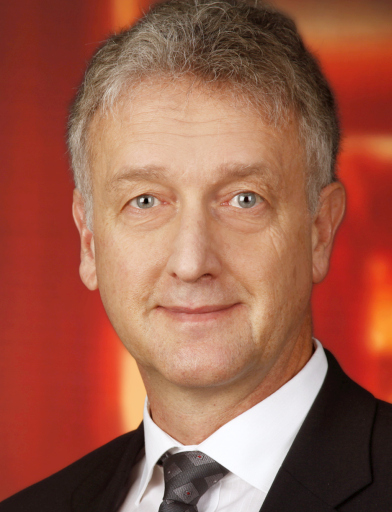
Michael J. Schlosser is a faculty member at the Faculty of Mathematics , University of Vienna. His research focuses on combinatorics, number theory, and special functions, with a particular emphasis on hypergeometric and q-series, elliptic extensions, and rook theory. He has authored numerous publications in collaboration with prominent mathematicians such as Victor Guo, Meesue Yoo, and Christian Krattenthaler. Research Interests : Combinatorics and hypergeometric series Elliptic functions and their applications Partition theory and supercongruences Matrix inversions and determinant evaluations Students : Josef Küstner (Ph.D., 2022) Christian Stump (Ph.D., 2008) Editorial Roles : Associate Editor, Journal of Mathematical Analysis and Applications Editorial Board Member, The Ramanujan Journal Editorial Board Member, Journal of Algebraic Combinatorics
Ilse Fischer is a Professor in the Department of Mathematics at the Faculty of Mathematics, University of Vienna. She holds the titles of Univ.-Prof., Mag. Dr., and Privatdoz., reflecting her senior academic status and contributions to combinatorics. Her research is centered on algebraic and enumerative combinatorics, with a focus on alternating sign matrices, plane partitions, lozenge tilings, and symmetric functions. Her research interests include: Enumerative and bijective combinatorics Alternating sign matrices and their symmetry classes Plane partitions and totally symmetric variants Lozenge tilings of hexagons with defects Gelfand-Tsetlin patterns and lattice path models Combinatorial identities and symmetric functions Analysis of her recent publications (2020–2024) reveals a consistent focus on exact enumeration, combinatorial bijections, and algebraic structures. Her work often bridges combinatorics with mathematical physics, particularly through models like the six-vertex (square ice) model. She frequently collaborates with leading researchers such as Matjaž Konvalinka, Mircea Ciucu, and Florian Schreier-Aigner, publishing in top journals including Advances in Mathematics , European Journal of Combinatorics , and Algebraic Combinatorics . She has received two scientific prizes, though specific names are not listed. Her academic activity remains strong, with ongoing projects and publications, indicating active research leadership. She advises students and postdoctoral researchers, though specific names are not provided in the text. She has led multiple research projects, particularly in the areas of combinatorial enumeration and symmetric functions. She is involved in collaborative research networks and regularly contributes to major combinatorics conferences such as FPSAC and AofA. Her work continues to advance foundational results in algebraic combinatorics, including bijective proofs of long-standing conjectures.
Adam Letchford is a Professor in the Department of Management Science at Lancaster University, specializing in Operations Research and Optimization. His research focuses on combinatorial optimization, integer programming, and algorithm design, with particular contributions to vehicle routing, network design, and polyhedral theory. He has authored numerous peer-reviewed articles, including works on clique partitioning polytopes, knapsack problems, and matheuristics. Letchford is actively involved in academic conferences and editorial roles, contributing to the advancement of operational research methodologies and applications in logistics and decision sciences. His work bridges theoretical foundations with practical implementations, addressing challenges in both academic and real-world contexts.
Christian Krattenthaler is a retired Professor at the University of Vienna's Faculty of Mathematics, specializing in combinatorics and algebraic combinatorics. He is a member of the combinatorics group and co-leads the Arbeitsgemeinschaft für Diskrete Mathematik. His research focuses on enumerative combinatorics, hypergeometric series, and number theory, with notable contributions to lattice path enumeration, determinants, and tilings. He has developed Mathematica packages like HYP, HYPQ, and RATE for hypergeometric series manipulation and sequence guessing. Krattenthaler is an editor for journals such as the Séminaire Lotharingien de Combinatoire, Electronic Journal of Combinatorics, and Annales de l’Institut Henri Poincaré D. His work includes advancements in Pfaffian rings, Schubert varieties multiplicities, and combinatorial identities. Collaborations span across institutions like TU Wien and TU Graz within the Special Research Programme (SFB) on Discrete Random Structures. He has advised numerous students, though specific advisee names are not listed here.
Ingo Feinerer serves as an Associate Professor at Vienna University of Technology's Faculty of Informatics, specifically within the Institute of Information Systems Engineering (E192-02). His research bridges theoretical computer science and practical applications in database systems, artificial intelligence, and text mining, with significant contributions to configuration management and formal methods. His educational background includes: PhD Dissertation (2007): A formal treatment of UML class diagrams as an efficient method for configuration management Diploma Thesis (2005): Formal program verification: a comparison of selected tools and their theoretical foundations Feinerer's research focuses on database theory (particularly schema mapping and dependencies), AI-driven configuration systems using integer linear programming, and text mining infrastructure development in R. His work combines theoretical rigor with practical tool development, notably through the textcat and tm packages. The integration of formal methods in software engineering remains a consistent thread throughout his publications. Analysis of his 15 most recent publications reveals strong specialization in database constraints (40%), text mining applications (30%), and software configuration systems (30%), with increasing interdisciplinary work connecting computer science to digital humanities. His notable recognition includes: INiTS Award (2007) for technology commercialization potential Feinerer has supervised doctoral research including F. I. Chertes' work on schema mapping languages and diploma theses on UML semantics and probabilistic databases. He led major research projects HINT (2012-2017) and SEE (2012-2016) focusing on database technologies and information systems. His work demonstrates consistent funding through Austrian national research programs. As a core member of the Databases and Artificial Intelligence research group, he collaborates extensively on R package development for text analysis and contributes to international workshops on theoretical aspects of software engineering.
Gerald Kuba is ao. Univ. Prof. (Associate Professor) at the University of Natural Resources and Life Sciences, Vienna (BOKU) , Institute of Mathematics, Gregor-Mendel-Straße 33, 1180 Wien. His research centres on analytic number theory, lattice-point problems, enumeration of discrete structures such as metric spaces, topologies, and Hamel bases, and set-theoretic real analysis. He has been involved in three Austrian Science Fund (FWF) projects led by Werner Georg Nowak, serving as sub-project leader or scientific staff between 1998 and 2012, all devoted to lattice points and analytic number theory. Since then he has continued an active solo publication record with over 80 refereed articles. Research interests Analytic number theory & lattice-point asymptotics Enumerative combinatorics of metric, ultrametric and ordered spaces Set-theoretic real analysis – decompositions of ℝ, Cantor sets, saltus functions Functional equations and didactics of mathematics Recent publications (2025-2021) explore connected Hamel bases in Hilbert spaces, functional equations of Cauchy type, Cantor sets as fields, and counting discrete structures, illustrating a persistent focus on combining classical analysis with enumerative problems. Presentations & outreach Invited talk “On the differentiability of certain saltus functions” , Mathematics Colloquium, University of Vienna, 2009 No doctoral students or supervised theses are recorded in the BOKU database under his name; no personal grants after 2012 are shown. He remains affiliated with the Institute of Mathematics and continues to publish actively, hence is regarded as an active faculty member.
Carsten Schneider is a Professor and Director of the Computer Algebra and Applications group at the Research Institute for Symbolic Computation (RISC) , part of the Johannes Kepler University Linz , Austria. His work focuses on symbolic summation algorithms, difference rings, and their applications in combinatorics, particle physics, and quantum field theory. Research Interests: His expertise includes Computer Algebra , Special Functions , Perturbative Quantum Field Theory , and Combinatorics . He develops algorithms for simplifying multi-sums and solving recurrences, with applications to Feynman integrals and operator matrix elements in particle physics. Grants & Projects: He leads Austrian Science Fund (FWF) grants such as Symbolic Summation for Computer Science (2024–2028) and Computer Algebra for Multi Loop Feynman Integrals (2021–2025). Past grants include FWF SFB F50 research projects in enumerative combinatorics. Software: He developed the Sigma summation package, used for symbolic computation in multi-loop calculations. His tools are widely applied in particle physics and combinatorics. Teaching & Mentoring: Teaches courses like Algorithmic Combinatorics and Computer Algebra at JKU. Organizes workshops and co-chairs conferences like SYNASC and RADCOR . Active in supervising international training networks such as the SAGEX Marie Curie project. Editorial Roles: Editorial board member of journals like Journal of Symbolic Computation and Annals of Combinatorics . Co-edited volumes on symbolic computation in physics and combinatorics.
Ankush Goswami is a Research Fellow at the University of Texas Rio Grande Valley (UTRGV), School of Mathematical and Statistical Sciences. He holds a PhD in Mathematics from the University of Florida (2019) and has held postdoctoral positions at institutions including IIT Gandhinagar and the Research Institute for Symbolic Computation (RISC) in Austria. His research focuses on analytic number theory, q-series, integer partitions, modular forms, and combinatorics. Education highlights include a PhD under Dr. Krishnaswami Alladi at the University of Florida, and an integrated MSc from National Institute of Science Education and Research (NISER), India. He has received notable awards such as the Kenneth and Janet Keene Fellowship (2019), CAM Travel Grant (2017), and INSPIRE-DST Fellowship (2008–2013). His research interests span asymptotic estimates of arithmetic functions, quantum modular forms, and partition analysis. Recent work includes studies on Gauss circle problems, Habiro elements, and quantum modularity of theta series. He uses computational tools like Maple and Mathematica for experimental mathematics. Teaching experience includes instructor roles for Linear Algebra, Calculus, and Precalculus at UTRGV and the University of Florida. He has also been actively involved in academic and non-academic activities, including organizing cricket tournaments and music performances.
Christoph Koutschan is a Senior Fellow in the Symbolic Computation group at the Johann Radon Institute for Computational and Applied Mathematics (RICAM), Austrian Academy of Sciences. He holds a PhD in Mathematics from JKU Linz (2009) and a Habilitation in Mathematics (2017). His research focuses on computer algebra, algorithmic combinatorics, and symbolic summation/integration of holonomic functions. Koutschan has held positions at Tulane University (2009–2010), Tulane University (2009–2010), and INRIA (2011–2012) before joining RICAM in 2012. Education: PhD in Mathematics (2009), Research Institute for Symbolic Computation (RISC), JKU Linz Habilitation in Mathematics (2017), JKU Linz M.Sc. in Computer Science (2005), FAU Erlangen-Nürnberg Studies in Computer Science (1999–2005), FAU Erlangen-Nürnberg Research Interests: Koutschan's work revolves around symbolic computation with a focus on holonomic functions, combinatorial identities, and applications in mathematical physics. His tools include algorithmic methods for summation/integration, differential equations, and computational algebra. Publications & Awards: Over 40 journal articles, including work on determinant evaluations, Feynman amplitudes, and combinatorial enumeration. Notable awards include the David P. Robbins Prize (2016), ISSAC's Distinguished Software Presentation Award (2016), and the ACA Early Researcher Award (2021). Grants & Collaborations: Lead or co-PI in projects like 'Certificate-free Summation and Integration' (SFB F50, 2017–2021) and 'Security and Safety for Shared AI' (FFG COMET-K2, 2020–2023). Active in editorial roles at Journal of Symbolic Computation and Annals of Combinatorics . Labs/Teams: Core member of RICAM's Symbolic Computation group, collaborating internationally with institutions like INRIA, Tulane University, and TU Wien.
Prof. Angelika Wiegele is a full Professor at the Department of Mathematics at Alpen-Adria-Universität Klagenfurt. She serves as a member of the university senate and head of the Institut für Mathematik. Her research focuses on semidefinite optimization, combinatorial optimization, and their applications in graph theory and operations research. She holds a Dipl.-Ing. (2001) and Dr. techn. (2006) from Alpen-Adria-Universität Klagenfurt, with thesis supervision by Franz Rendl. Her academic career includes positions at TU Graz, IASI-CNR Rome, and Universität zu Köln, as well as a visiting professorship at Università di Roma Tor Vergata. Her educational background includes studies at City University London (Erasmus) and TU Eindhoven (Leonardo project). Recent work emphasizes SDP-based methods for graph partitioning, edge expansion, and combinatorial problems, with a focus on high-performance computing solutions. Her research bridges theoretical optimization with practical applications in network design and algorithmic development. Publications from 2021–2024 highlight advancements in semidefinite programming for graph partitioning, SDP-based bounds for cutwidth, and exact solvers for clustering problems. She contributed to the BiqBin and SOS-SDP solvers for quadratic optimization and co-edited special journal issues on mixed-integer nonlinear optimization. Her work often appears in top operations research journals and conference proceedings. Prof. Wiegele has held global faculty positions at the University of Cologne (2022–2024) and is active in international research collaborations through PRACE high-performance computing initiatives. She maintains an ORCID profile and a university webpage with teaching and research materials.
Dieter Fellner is a Professor of Computer Science at Technical University of Darmstadt, Germany , and Director of the Fraunhofer Institute of Computer Graphics (IGD) . He also serves as Founding Director of the Institute of Computer Graphics and Knowledge Visualization at Graz University of Technology, Austria. His career spans multiple prestigious institutions including University of Bonn, Memorial University of Newfoundland, and University of Technology Braunschweig. Dr. Fellner's research focuses on algorithms integrating modeling and rendering , digital libraries , virtual/augmented reality , collision detection , and radio wave propagation simulation . His work in digital libraries led to a DFG-funded strategic initiative (1997-2005) involving 50 researchers annually across 21 groups. The 15 most recent articles highlight his expertise in 3D document modeling , stereoscopic projection , subdivision surfaces , and color quantization . His publications include influential textbooks like the German standard on computer graphics (1988) and Digitale Bibliotheken (2000). 2000 Fellow of the Eurographics Association Best Technical Paper Award (Günther Enderle Award) at Eurographics’98 2007 IST Advisory Group (ISTAG) Member for the European Commission 2019 Honorary Doctorate from University of Rostock Dr. Fellner actively participates in editorial boards of journals like Computer Graphics Forum , IEEE CG&A , and JOCCH , and serves on program committees for conferences such as Eurographics, VSMM, and ACM Web3D. His leadership roles include Chairmanship of the Eurographics Association (1999-2000) and Directorship of Fraunhofer IGD (since 2006).
Jie He is a PreDoc Researcher at the Department of Cyber-Physical Systems, Technische Universität Wien. His research spans computational social choice, algorithmic game theory, and formal methods in robotics and IoT systems. He works on multidisciplinary problems involving complexity analysis, fair division, and preference modeling. Current projects: EdgeAI (2022–2025), TAIGER (2023–2027), ADEX (2020–2024) Key collaborations: Research with R. Grosu, E. Bartocci, D. Nickovic Research interests focus on computational aspects of collective decision-making , including fair division, matching problems, and preference modeling. He works on both theoretical foundations (e.g., parameterized complexity) and practical applications (e.g., robotic-IoT systems). His publication history reveals deep expertise in computational complexity of social choice problems, with recent work on 3D stable roommates , fair division in graph-structured settings , and preference modeling through Euclidean and Manhattan geometries. As an advisor, he supervised diploma theses on: Optimization strategies for 5G transceivers Dynamic object detection in multi-agent systems His work appears in top conferences like ACM/IEEE DAC, ICSE, and various computational social choice venues.
Andrei Asinowski is a Researcher at the Institute of Mathematics at Alpen-Adria-Universität Klagenfurt. He has held academic appointments at institutions including Bielefeld University (2005–2006), University of Haifa (2006–2008), Technion (2008–2011), Free University of Berlin (2012–2015), and TU Wien (2015–2018). Since 2020, he leads the FWF-funded project 'Generic Rectangulations: Enumerative and Structural Aspects' (P32731). His research focuses on combinatorics, discrete mathematics, computational geometry, and enumerative combinatorics. Key interests include rectangulations, permutation patterns, lattice paths, and guillotine partitions. Research Interests: Combinatorics of rectangulations, permutation classes, enumerative combinatorics, geometric permutations, and algorithmic applications of discrete structures. His work bridges combinatorial theory and computational geometry, with recent emphasis on bijections between rectangulations and permutations, generating functions, and analytic methods. Grants & Projects: Principal Investigator of FWF Grant P32731 (since 2020), exploring enumerative and structural aspects of rectangulations. Collaborative projects include EuroGIGA's ComPoSe (2012–2015) and SFB F50's Algorithmic and Enumerative Combinatorics (2015–2018). Publications Trends: Recent work emphasizes rectangulation enumeration, permutation patterns, and analytic combinatorics techniques. Earlier contributions addressed geometric permutations, computational geometry, and lattice path enumeration.