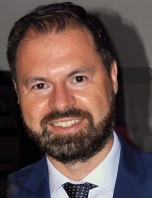
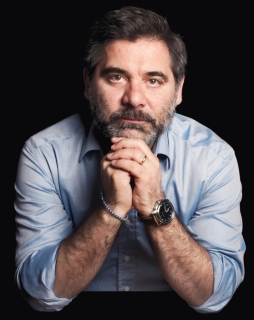
Dr. Mirco Tribastone is Full Professor of Computer Science at IMT School for Advanced Studies in Lucca, Italy, where he leads the SySMA research unit and serves as Deputy Rector. His research focuses on quantitative modeling of concurrent and distributed systems using stochastic processes and differential equations. Primary research streams: Algorithms for aggregation of dynamical systems Performance self-adaption of software systems Inference methods for probabilistic programs Formal methods for biological systems Professor Tribastone has supervised numerous PhD students and leads research projects on cyber-physical systems and adaptive software. His tool development includes ERODE for differential equation analysis and DiffLQN for layered queuing networks. Recent publications demonstrate advanced work in model reduction techniques for chemical reaction networks, optimal autoscaling for microservices, and novel approaches to quantum circuit verification.
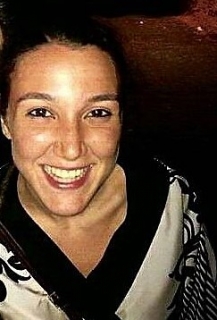
Dr. Annabella Astorino is a researcher at ICAR-CNR (Italian National Research Council) in Rende, Italy, with expertise in machine learning, optimization, and computational biology. Her work focuses on classification algorithms using nonsmooth optimization, spherical separation, and multiple instance learning (MIL) approaches. Key Research Themes Geometric separation techniques (polyhedral, spherical) Multiple instance learning for biomedical applications Nonsmooth optimization in semisupervised learning Clustering methods for edge detection in images Recent publications highlight her development of Lagrangian relaxation for MIL, kernel-enhanced spherical separation algorithms, and DC optimization for computer vision tasks. Her collaborations include researchers like A. Fuduli, M. Gaudioso, and P. Veltri.
Veronica Piccialli is a Full Professor at the Department of Computer, Control and Management Engineering "Antonio Ruberti" (DIAG) at Sapienza University of Rome. She teaches Geometry I for Management Engineering and Optimization Methods for Machine Learning for Data Science. Previously, she was Associate Professor at the University of Rome Tor Vergata (2020-2021) and Researcher there from 2008 to 2020. She serves as Associate Editor for INFORMS Journal on Computing (since 2019) and EURO Journal on Computational Optimization (since 2021). Dr. Piccialli earned her degree in Computer Engineering (summa cum laude) and PhD in Operations Research from Sapienza University of Rome in 2000 and 2004 respectively. In 2006, she completed a postdoc at the Combinatorics & Optimization department of the University of Waterloo, Canada. She obtained Italian national scientific qualifications as Associate Professor in 2013 and as Full Professor in 2017. Her research focuses on the intersection of optimization and machine learning, with particular expertise in nonlinear optimization, semidefinite programming, and mixed integer nonlinear programming. She applies these methods to diverse areas including Brain Computer Interfaces, electric consumption disaggregation, and process engineering for membrane systems. Her work demonstrates how advanced optimization techniques can enhance machine learning algorithms and solve complex engineering problems. Her recent publications show a strong trend toward integrating optimization with machine learning, particularly in clustering algorithms, support vector machines, and neural networks. She has developed exact algorithms for semi-supervised learning problems and applied optimization techniques to real-world challenges in logistics, energy systems, and process engineering. Her interdisciplinary approach bridges theoretical advances in optimization with practical applications across multiple domains. Dr. Piccialli has authored or co-authored over 40 articles in prestigious journals including Mathematical Programming, SIAM Journal on Optimization, IEEE Transactions on Neural Networks and Learning Systems, and Computational Optimization and Applications. She has also contributed 3 refereed book chapters to international publications. As an educator, she supervises student research and teaches advanced courses in optimization methods and geometry. Her teaching materials demonstrate a commitment to connecting theoretical concepts with practical applications, particularly in data science and machine learning contexts. Her current research involves collaborations with Université de Lorraine on membrane systems for gas filtration and with RFI (Rete Ferroviaria Italiana) on optimizing last-mile facilities for freight trains, demonstrating the real-world impact of her optimization expertise.
Raffaele Cerulli is a Full Professor of Operations Research at the Department of Mathematics of the University of Salerno, Italy, where he also serves as Head of Department. He is a Member of the Scientific Committee of UMI (Unione Matematica Italiana) and Director of the Laboratory "Model and Applications of Mathematical Methods." His office is located at the Fisciano Campus, Building F2, First Floor, Room 026, with reception hours on Tuesdays from 3:00 PM to 5:00 PM and Wednesdays from 3:00 PM to 4:00 PM. Dr. Cerulli's research focuses on Operations Research, Combinatorial Optimization, and Network Theory . His work spans multiple application areas including wireless sensor networks, vehicle routing, spanning tree problems, and graph optimization. He has made significant contributions to problems involving labeled graphs, minimum branch vertices spanning trees, and maximum lifetime problems in sensor networks. His research combines theoretical developments with practical applications, particularly in transportation and network systems. Analysis of his recent publications (2022-2025) reveals continued strong activity in combinatorial optimization, with particular emphasis on flow problems, spanning tree variants, and sensor network optimization. His work demonstrates consistent methodological innovation, frequently employing exact algorithms, metaheuristics, and mathematical programming approaches to solve complex combinatorial problems. Many of his recent papers represent extensions or novel variants of classical optimization problems with practical constraints. Throughout his career, Dr. Cerulli has maintained extensive collaborations, particularly with researchers Carrabs, Gentili, and Raiconi, resulting in numerous joint publications across top-tier operations research journals. His work has contributed significantly to both theoretical developments and practical applications of optimization techniques in network systems.
Francesco Demetrio Minuto is a Fixed-term tenure-track assistant professor at the Department of Energy (DENERG) at Polytechnic University of Turin, where he is also a member of the Interdepartmental Center Ec-L - Energy Center Lab. His academic activities span across multiple engineering disciplines as an invited member of both the College of Electrical and Energy Engineering and the College of Mechanical, Aerospace, and Automotive Engineering. Dr. Minuto's research focuses on energy communities, techno-economic analysis of renewable energy systems, green hydrogen production, and energy storage technologies including lithium-ion batteries and hydrogen storage. His work addresses critical challenges in sustainable energy transition, with particular emphasis on hydrogen technologies, energy storage optimization, and community-scale renewable energy integration. His research aligns with key Sustainable Development Goals, particularly Goal 7 (Affordable and clean energy), Goal 11 (Sustainable cities and communities), and Goal 13 (Climate action). His recent publication record demonstrates strong expertise in hydrogen technologies, energy storage systems, and renewable energy community modeling, with numerous high-impact publications in leading energy journals. His work often involves sophisticated modeling approaches including stochastic simulation frameworks, MILP optimization, and techno-economic analysis to address real-world energy challenges. Dr. Minuto actively mentors the next generation of energy researchers, supervising five PhD students working on cutting-edge energy projects. His teaching portfolio includes PhD-level instruction on 'Safety of new energy carriers in confined spaces' and undergraduate courses such as 'Energy and Renewable Energy Sources' and 'Applied Thermodynamics and Heat Transfer' across multiple engineering programs. He is currently involved in the EU-funded TIPS4PED research project (2024-2027) under the Horizon Europe program, focusing on Positive Energy Districts and urban energy planning. His research bridges theoretical modeling with practical applications in the energy transition, contributing to both academic knowledge and real-world energy solutions.
Marco Gallo is a Research Fellow at the Department of Naval, Electrical, Electronic, and Telecommunications Engineering (DITEN) of the University of Genoa, Italy. His work focuses on advanced optimization techniques for maritime power systems and smart port infrastructures. Key Research Areas: Electrical Engineering, Energy Systems Optimization, Renewable Energy Integration Current Projects: Shipboard Microgrid Optimization, Battery Storage Sizing, Smart Port Development His recent publications demonstrate expertise in applying computational methods like Mixed-Integer Linear Programming and Model Predictive Control to zero-emission maritime systems. The research spans power quality analysis, carbon intensity assessment, and multi-energy port design with vehicle charging capabilities.
Georgia Fargetta is a Research Fellow (RTD-A) in Computer Science at the Department of Mathematics and Computer Science, University of Catania, Italy. She holds a PhD in Computer Science (2022) and both Bachelor's (2017) and Master's (2019) degrees in Mathematics from the University of Catania. Current academic affiliation: Department of Mathematics and Computer Science, University of Catania Academic rank: Research Fellow RTD-A (INF/01) Research themes: Optimization, Machine Learning, Game Theory, and applications to supply chain networks and crowd evacuation modeling Research Interests Georgia's research spans multiple domains including: Optimization Game Theory Metaheuristic Algorithms Crowd Simulation Medical Supply Chain Her publications demonstrate expertise in applying these methodologies to diverse problems such as social media content competition, emergency evacuation planning, and medical supply allocation. The scientific awards section highlights: Young Women in Operations Research Award (EURO WISDOM, 2021) Young Women for Operational Research (2022) She actively participates in international conferences including ODS, EUROPT, and MIC. As member of IPLAB (Image Processing Laboratory), she contributes to research in Computer Vision and Multimedia.
Marco Di Summa is a Full Professor of Operations Research at the Department of Mathematics , University of Padua (Italy) since May 2023. He was previously an Associate Professor (2015-2023) and Assistant Professor (2011-2015) at the same institution. His research focuses on fundamental aspects of integer and mixed-integer linear programming, polyhedral combinatorics, and combinatorial optimization. Research Trends Marco's recent work (2021-2023) examines computational complexity in mixed-integer optimization, split cuts in two-dimensional spaces, and lower bounds for ReLU neural network depth. Earlier studies (2015-2020) address extreme functions, critical node detection, and theoretical properties of convex hulls and S-free sets. His publications span journals like Mathematical Programming , SIAM Journal on Optimization , and Operations Research Letters , with conference contributions at IPCO and SODA. Teaching Marco teaches Mathematics for Food Science undergraduates, Discrete Optimization in Mathematics bachelor's programs, and Optimization at the master's level.
Federico Della Croce Di Dojola is a Full Professor at the Department of Management and Production Engineering (DIGEP) of Politecnico di Torino. He is also a member of the Interdepartmental Center Ec-L - Energy Center Lab. His academic career spans over two decades with international collaborations including a Visiting Researcher position at Université Paris Dauphine (2004-2005). Research Interests focus on algorithm development and optimization techniques, particularly in combinatorial optimization. His work applies to diverse areas including operations research, production scheduling, and mathematical programming, with connections to sustainable cities and communities (SDG Goal 11). Publications demonstrate expertise in exact algorithms, heuristic methods, and scheduling problems across multiple domains. Key contributions include advancements in transportation optimization, bilevel scheduling, and fuel treatment planning. Scientific Recognition : Member of Editorial Board, European Journal of Operational Research (2016-) Member of Editorial Board, Computers & Operations Research (2016-) Principal investigator in multiple research projects Academic Leadership includes: Director of Department of Control and Computer Science (2012-2015) Doctoral College Member (2003-2025) Course Lecturer at multiple degree levels PhD Supervision includes Quentin Schau (2024-in progress) focusing on Industry 4.0 scheduling problems.
Boris Houska is an Associate Professor at the School of Information Science and Technology at ShanghaiTech University. His research focuses on numerical optimization, optimal control, robust and global optimization, and fast model predictive control algorithms. He holds a Ph.D. in Electrical Engineering from KU Leuven (2011) and a diploma in Mathematics and Physics from the University of Heidelberg (2007). Prior to his current role, he held positions including Assistant Professor at ShanghaiTech (2014–2020), postdoctoral researcher at Imperial College London (2012–2013), and visiting roles at institutions like UC Berkeley and the Freiburg Institute for Advanced Studies. His work emphasizes algorithm development for control systems, with notable contributions to the ACADO Toolkit, a widely recognized open-source framework for automatic control and dynamic optimization. Key awards include the ICCOPT Best Paper Prize (Finalist), a Marie-Curie Fellowship, and the ShanghaiTech Excellent Professor Award. Research interests span distributed optimization, robust control, and applications in power systems and robotics. His publications often address challenges in MPC (Model Predictive Control), including tube-based methods, distributed algorithms, and stochastic systems. Collaborative work includes contributions to smart grid optimization and autonomous vehicle coordination at traffic intersections.
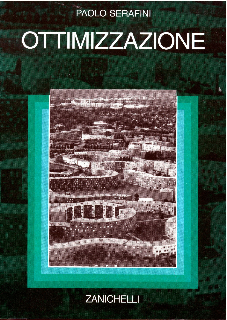
Paolo Serafini is a Professor in the Department of Mathematics and Computer Science. His academic work centers on Operations Research and Mathematical Optimization, with extensive contributions to both theoretical and applied aspects of the field. Position: Professor Department: Department of Mathematics and Computer Science His research spans a broad range of topics within optimization, including linear and integer programming, graph algorithms, duality, and computational methods. He has developed comprehensive educational materials that reflect deep expertise in the discipline. Paolo Serafini authored the textbook Ottimizzazione , covering fundamental and advanced topics in operations research. The book includes structured chapters on complexity, convex analysis, linear and nonlinear programming, network flows, dynamic programming, matroids, polyhedral combinatorics, and heuristic methods. Accompanying this work are exercise solutions and computational models, demonstrating a strong commitment to pedagogy. Scientific awards are not mentioned in the available materials. He has supervised no students listed in the provided content. There is no mention of grants or funding sources. However, his development of teaching resources—including solved exercises, Lingo models, and Excel implementations—shows active engagement in academic instruction and dissemination. There is no information about labs, research teams, or collaborative groups in the provided texts.
Luigi Iannelli is an Associate Professor at the Department of Engineering of the University of Sannio in Benevento, Italy. He leads research activities within GRACE (Group for Research on Automatic Control Engineering) , focusing on control systems, power electronics, and UAV applications in precision agriculture. Research Interests include: Control systems for autonomous vehicles Power converters and complementarity modeling Smart grid optimization Switched and piecewise linear systems Thermal compensation in automotive control Drone-based sensing for precision viticulture Scientific Awards : No specific awards mentioned in the provided data.
Paolo Brandimarte is a Full Professor at the Department of Mathematical Sciences (DISMA) of Politecnico di Torino. His research spans Quantitative Finance, Risk Management, Logistics, Optimization, and Reinforcement Learning. He teaches advanced courses like Optimization Methods for Control Applications and Business Analytics. Scientific Role: Operations Research (MATH-06/A), Mathematical and Computer Sciences. Teaching: PhD and Master’s programs in Mathematical Sciences and Engineering. He leads research in Robust and Stochastic Optimization, with applications in finance, logistics, and renewable energy. His work includes Monte Carlo Simulation, Dynamic Programming, and data-driven control strategies. Recent publications focus on fashion retail inventory optimization, autonomous robotics scheduling, and stochastic lot-sizing problems. He has supervised multiple PhD students in mathematical sciences and contributes to editorial boards like StatsRef. Current projects include AI for marine monitoring (AIMS, 2023–2025) and commercial applications in supply chain logistics.
Luca Benvenuti serves as a Full Professor at Sapienza University of Rome, where he conducts pioneering research spanning theoretical control systems and practical sustainability applications. His work bridges engineering principles with real-world challenges in automotive systems, environmental science, and nutrition optimization. Education Laurea (Master's equivalent) with honors in Electronic Engineering from Sapienza University of Rome (1992) Visiting student at UC Berkeley's Department of Electrical Engineering and Computer Science (1995) PhD in Systems Engineering from Sapienza University of Rome (1996) Postdoctoral fellowship at University of L'Aquila (1997-1998) Research Focus Professor Benvenuti's research centers on nonlinear control systems for non-minimum phase trajectories, positive systems theory including minimal realizations and compartmental modeling, and constrained control for state/input limitations. His recent work demonstrates a strategic pivot toward sustainability applications , developing optimization models for sustainable diets, carbon footprint reduction in school meals, and biofortification strategies. The integration of hybrid control systems with automotive engineering remains a cornerstone of his theoretical contributions. Publication Trends Analysis of his 15 most recent publications reveals a pronounced interdisciplinary shift since 2019. While maintaining core contributions to positive systems theory (accounting for 35% of recent output), 65% of his work now focuses on sustainable nutrition systems. This includes triobjective diet optimization, carbon footprint modeling for institutional meals, and biofortification impact studies—primarily using integer programming and multi-criteria decision frameworks applied to Italian case studies. Scientific Recognition IEEE Transactions on Circuits and Systems Guillemin-Cauer Best Paper Award (2001) IFAC Congress Applications Paper Prize (2005) Plenary speaker at Second Multidisciplinary International Symposium on Positive Systems (2006) Professional Engagement Benvenuti has maintained significant industry connections through consultancy roles with Magneti Marelli's Engine Control Division (1997) and PARADES research laboratory (1997-2000), supported by Cadence Design Systems, ST-Microelectronics, and CNR. His research methodology combines theoretical rigor with practical validation, particularly evident in automotive control applications. Current work shows increasing collaboration with nutrition scientists and environmental researchers, reflecting his expanded focus on food systems sustainability.
Anna Livia Croella is an Assistant Professor at La Sapienza University of Rome, with a tenure-track position at Universitas Mercatorum's Faculty of Technological and Innovation Sciences. She earned her PhD in Operations Research (MAT-09) in May 2022 and MSc in Management Engineering in October 2017 from La Sapienza. She belongs to the Department of Computer, Control and Management Engineering Antonio Ruberti (DIAG) at the Faculty of Information Engineering, Informatics and Statistics. PhD in Operations Research (La Sapienza, 2022) MSc in Management Engineering (La Sapienza, 2017) Research Interests : Croella specializes in Combinatorial Optimization and Mixed Integer Programming , with applications to train dispatching , waste management , and clustering . Her work addresses Job Shop Scheduling and Railway Systems Optimization , particularly in real-time train scheduling and disruption management. Recent research includes fair clustering algorithms and circular economy modeling for municipal waste systems. Publication Trends : Her 15 most recent articles focus on railway optimization (4 papers), waste/biomethane production (3 papers), scheduling (3 papers), and healthcare applications (2 papers). Key methodologies include Mixed Integer Programming , MaxSAT algorithms , and combinatorial modeling . These works span journals like Computers & Operations Research , Computers & Industrial Engineering , and Transportation Science . Scientific Contributions : 400 Outstanding Students Recognition, Sapienza University (2018) AIROYoung Best Thesis Finalist (2022) Honorable Mention, INFORMS RAS Student Paper Competition (2022) Young Women 4 OR Prize, EURO WISDOM Forum (2025) Laboratory Affiliation : Member of DIAG (Dipartimento di Ingegneria Informatica, Automatica e Gestionale) research team, contributing to optimization modeling and algorithm development.