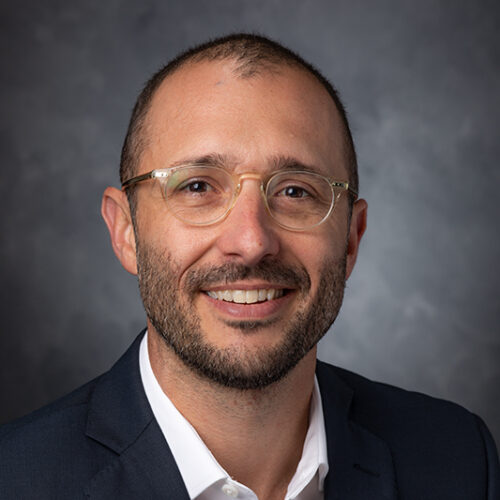
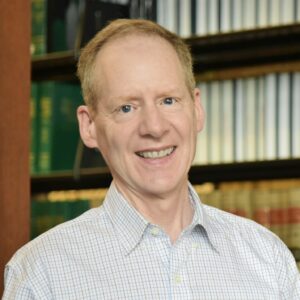
Mai-Anh Ngo is a Researcher at the Côte d'Azur University , affiliated with the Research Group in Law, Economics, and Management (GREDEG) under the National Center for Scientific Research (CNRS). Her work bridges legal frameworks with practical applications in disability, sports, and health law. Doctor of Private Law with HDR (Habilitation à Diriger des Recherches) Active member of the National Consultative Council for People with Disabilities (CNCPH) Served on the National Research Council for section 37 (2015-2021) Research interests span Disability Law , Sports Law , and Health Law , focusing on legal standards for Paralympic performance, assistive technologies, and workplace inclusion. Her work often intersects with Economics and Corporate Law in addressing societal transformation through legal compliance. Recent publications emphasize trends in Adaptive Sports Equipment Regulation , Disability Healthcare Access , and Corporate Social Responsibility , reflecting her interdisciplinary approach to legal norms in social contexts. Scientific roles include Member of CNCPH Elected to National Research Council (Section 37, 2015-2021) Côte d'Azur University affiliation involves collaboration with GREDEG , contributing to legal research in Technology , Health , and Corporate Sectors .
Dr. Karin Fisher is an Honorary Lecturer at the University of Newcastle's Department of Rural Health within the College of Health, Medicine and Wellbeing. With over 25 years of nursing experience, she transitioned to academia after completing her PhD at the University of New England, focusing on rural health, sexually transmitted infections, and health equity. Dr. Fisher holds a PhD from the University of New England. Her clinical background includes positions as Clinical Nurse Consultant at Hunter New England Health Service (1993-1997), Public Health Officer (1997-2007), Acting Director of Population Health & Planning (2002-2004), and Senior Research Officer (2008-2010) at Hunter New England Local Health Network. Dr. Fisher's research focuses on health services research, primary health care, public health issues, interprofessional collaboration, and health workforce issues with particular emphasis on equity perspectives. Her work explores Population Health issues, Sexually transmitted infections, Inequalities, Equity issues, Health service access, Rural workforce issues, and Difficult to access populations. She employs qualitative methodologies including Grounded theory and Mixed methods in her research. Her recent publications (2020-2024) demonstrate a strong focus on rural health workforce development, Indigenous health programs, telehealth service delivery, and interprofessional education. There's a clear trajectory in her work toward understanding how to improve health outcomes in rural and remote settings, with increasing attention to culturally safe practices for Aboriginal communities and innovative approaches to health professional education. Dr. Fisher has secured over $176,000 in research funding across 5 grants. Current projects include 'Out of sight, out of mind?' examining videoconferencing in rural healthcare education, exploration of rural palliative care models, and 'Yearning to yarn' focused on Aboriginal ways of knowing and learning. She currently supervises 2 students (one PhD and one Honours student) and has previously supervised 2 PhD students to completion. Her supervision focuses on topics related to Aboriginal health, nursing workforce, and graduate outcomes tracking. She works as part of a multidisciplinary team at the University of Newcastle that includes medicine, radiography, physiotherapy, nutrition and dietetics, pharmacy, occupational therapy, Indigenous health care, speech pathology and mental health professionals.
Ron Berman is an Associate Professor of Marketing at the Wharton School of the University of Pennsylvania. He serves as the PhD Coordinator for the Marketing department and teaches Digital Marketing courses across undergraduate, MBA, and Executive Education programs. His office is located at the Jon M. Huntsman Hall on the University of Pennsylvania campus in Philadelphia. Dr. Berman's research focuses on digital marketing analytics and experimentation, with specific expertise in online marketing, marketing analytics, advertising effectiveness, startups and entrepreneurship, game theory, and industrial organization . His work examines A/B testing methodologies, digital advertising, social media marketing, and the application of behavioral economics to marketing problems. He has developed methods to assess and optimize returns from online experiments, targeting and personalization, AI pricing and bidding algorithms, and social media hashtag usage. His recent publication trends reveal a strong focus on large-scale field experiments, particularly megastudies examining behavioral interventions in education and public health contexts. Several of his recent papers involve collaborations with prominent researchers like Katherine Milkman and Christophe Van den Bulte, demonstrating his interdisciplinary approach that bridges marketing science with behavioral economics and public policy. His work spans both theoretical contributions to experimental methodology and practical applications for businesses and policymakers. Among his notable scientific achievements are the Frank M. Bass Dissertation Paper Award (2014) ISMS Doctoral Dissertation Proposal Competition (2014) Dr. Berman serves as an associate editor at Management Science and Quantitative Marketing and Economics (QME) , and is a member of the editorial boards of Marketing Science and the Journal of Marketing Research . Before academia, Dr. Berman gained industry experience as an early-stage venture capital investor at Viola Ventures (formerly Carmel Ventures) and developed software for the Israeli Defense Forces. He maintains strong industry connections, frequently consulting with major technology companies including Google, Facebook, and Wayfair. As an active advisor and investor, he is involved with numerous startups such as Desti (acquired by Nokia), Zimperium (acquired by Liberty Strategic Capital), Abakus (acquired by SAP), Peerspace, Netlify, Stackbit (acquired by Netlify), cauzal.ai, Honeycomb Insurance, and Incrmntal. Dr. Berman teaches courses including Digital Marketing with AI (MKTG2270 and MKTG7270), Independent Study (MKTG3990 and MKTG8990), Econ/Or Models in Marketing B (MKTG9550), Advanced Topics in Marketing Part B (MKTG9720), and Dissertation (MKTG9950). His teaching emphasizes the intersection of data analytics, consumer behavior, and advanced experimental technologies in digital marketing.
Robert Meyer serves as the Frederick H. Ecker/MetLife Insurance Professor of Marketing and Co-Director of Wharton Human-AI Research at the University of Pennsylvania's Wharton School. With faculty appointments since 1990, he previously held positions at UCLA and Carnegie-Mellon University, and has served as chair of Wharton's Marketing Department and Vice Dean of doctoral programs. His leadership extends to visiting professorships at the University of Miami, Sydney, and Tokyo. Professor Meyer's research examines cognitive biases in consumer decision-making, particularly regarding artificial intelligence adoption, risk perception during disasters, and social media communication dynamics. His work reveals how near-miss experiences impair catastrophe preparedness and how ephemeral content affects information processing. This interdisciplinary approach integrates behavioral game theory, text analysis, and decision science to address real-world challenges in marketing and public policy. Recent publications demonstrate consistent focus on AI-human interaction, with studies analyzing political microblogging, smartphone-induced self-disclosure, and hurricane risk response. His methodology frequently employs dynamic simulations and natural language processing to uncover behavioral patterns across diverse contexts—from social media to climate adaptation. Scientific recognition includes: John D.C. Little Award for best paper in an INFORMS Journal Frank Bass Award for best article based on a doctoral dissertation O'Dell Award for best article in Journal of Marketing Research UCLA Chancellor’s Career Development Award USDOT/UMTA Fellowship As former editor of the Journal of Marketing Research and Marketing Letters, Meyer has shaped scholarly discourse while securing research funding from the National Science Foundation and industry partnerships. His grant portfolio exceeds $100,000, supporting projects like the Huntsman Center for Technological Competition and SMU/Wharton collaborations. Current teaching includes doctoral research methods and executive education programs focused on AI applications. Meyer co-directs Wharton Human-AI Research and developed the Stormview Lab—a dynamic simulation platform studying hurricane risk response. These initiatives foster cross-disciplinary teams examining AI ethics, consumer behavior in crises, and behavioral interventions for climate adaptation, with ongoing projects analyzing social media's role in disaster communication.
Lorian Hardcastle serves as Associate Professor at the University of Calgary's Faculty of Law with a joint appointment in the Department of Community Health Sciences at the Cumming School of Medicine. She maintains critical affiliations with the One Health Consortium, O'Brien Institute for Public Health, and Conjoint Health Research Ethics Board, positioning her at the intersection of legal and health system governance. Academic Background: Doctor of Judicial Science (SJD), University of Toronto (2014) LLM, University of Toronto (2006) JD with Health Law and Policy Specialization Certificate, Dalhousie Law School (2004) Fellowship, O'Neill Institute for National and Global Health Law, Georgetown University Her research critically examines healthcare regulation, liability frameworks, and public health policy with emphasis on patient safety and system accountability. Recent work demonstrates increasing focus on digital health governance, pandemic response mechanisms, and pharmaceutical policy within evolving trade agreements, reflecting urgent contemporary challenges. Publications consistently bridge legal theory with actionable policy solutions across law reviews, health policy journals, and major Canadian media outlets. Research Impact: Current projects address antimicrobial resistance (Alberta Major Innovation Fund), AI in health (CIHR), long-term care regulation, and COVID-19 legal issues, demonstrating sustained relevance to public health crises. Her op-eds in the Globe and Mail, Toronto Star, and provincial journals directly inform policy debates. Honors: Teaching Excellence Award, University of Calgary Students' Union (2020) Teaching Excellence Award, University of Calgary Students' Union (2019) Professor Hardcastle supervises directed research students while leading interdisciplinary collaborations through the One Health Consortium and O'Brien Institute. Her scholarship on virtual care regulation, long-term care accountability, and pharmaceutical policy continues to shape Canadian health law discourse through both academic publications and real-time policy engagement.
Nazaré Rego is an Assistant Professor of Management at the School of Economics and Management (EEG) and a member of NIPE - Center for Research in Economics and Management at the University of Minho. She has held administrative roles as Assistant Dean for International Accreditations and Director of the Master's in Management of Health Care Units. Her research integrates operations management and supply chain principles with applications in complex systems influenced by human behavior, networked structures, and risk. This work spans healthcare, shipbuilding, and cybersecurity contexts, published in journals like International Journal of Procurement Management and Heliyon . Current research trends emphasize digitalization, risk modeling, and network analysis in supply chains. She holds a PhD in Industrial Engineering and Management (2015), an MSc in Quantitative Methods in Management (2007), and a BA in Management (1992), all from the University of Porto. Her academic service includes coordinating courses across undergraduate to doctoral levels.
Walter Sulmeisters is an Assistant Professor and Director of the Center for Common Good Computing at the Anderson College of Business and Computing , Regis University. He joined Regis in 2006 as Affiliate Faculty and transitioned to full-time in 2020, following 12 years as an educator at Creighton University. His career spans diverse industries including consumer packaged goods, aerospace, financial services, and real estate title insurance. Education: Master of Management, Northwestern University's J.L. Kellogg Graduate School of Management Bachelor of Science in Business Administration, University of Colorado As Director of the Center for Common Good Computing, Sulmeisters focuses on leveraging computing for societal benefit, integrating management principles with technological innovation. His professional background in corporate leadership and operational roles informs his academic approach to business and computing education.
Dr. Kofi Awuviry-Newton is a Research Fellow at Victoria University's College of Sport, Health & Engineering , specializing in gerontology, health social work, and social policy. His work addresses health equity for older adults through quantitative data analysis (e.g., WHO SAGE, HILDA datasets) and focuses on minority populations, functional disability, and healthcare access. Education: PhD in Gerontology & Geriatrics (The University of Newcastle), BSW (Hons) (Kwame Nkrumah University of Science & Technology), Graduate Certificate in University Teaching (Federation University) Research Themes include healthy aging, social determinants of health, and policy impacts. His recent publications span topics like care experiences, carbon footprints in aging populations, and pandemic preparedness. He collaborates with the World Health Organization's CARETRACK consortium and leads the ARNAA Law, Governance, and Social Policy theme. Supervision: Available to mentor MPhil/PhD students using mixed-methods, quantitative, or qualitative approaches to study aging, healthcare equity, or social policy. He serves as an academic editor for BMC Geriatrics and Plos ONE , and reviews for top journals like The Lancet .
Tim Samples is a Professor of Legal Studies in the Department of Insurance, Legal Studies and Real Estate at the Terry College of Business, University of Georgia. He actively engages in teaching, research, and university service including Assistant Director of the Lilly Teaching Fellows Program (2024–present) and Chair of the International Business Committee (2016–present). His educational background includes a JD and MA in Latin American Studies from the University of Texas (2010) and a BA in International Affairs from the University of Georgia (2004). Professor Samples' research centers on sovereign debt and international investment law with Latin American case studies, and law-technology intersections including digital platform regulation. His sovereign debt work examines transparency mechanisms, natural disaster clauses, and restructuring frameworks, while his technology law research analyzes consumer contracts, readability of terms-of-use, and patent disclosure strategies through linguistic and behavioral lenses. Recent publications (2023-2025) reveal increasing focus on technology-law intersections alongside sovereign debt scholarship, demonstrating interdisciplinary methodology blending legal analysis with economics, linguistics, and behavioral science. Key thematic trends include systemic risks in digital platforms, climate-debt linkages, and energy reform challenges in emerging markets. Scientific Awards and Honors: Distinguished Early Career Faculty Award, Academy of Legal Studies in Business, 2021 Russell Award for Excellence in Undergraduate Teaching, University of Georgia, 2020 Outstanding Teacher Recognition, Student Government Association, 2018 Holmes Cardozo Distinguished Paper Award, Academy of Legal Studies in Business, 2018 Core Fulbright U.S. Scholar (Teaching/Research Grant at Universidad de Buenos Aires, Argentina), 2017 Holmes-Cardozo Award for Best Conference Paper, Academy of Legal Studies in Business, 2016 Lilly Teaching Fellow, UGA Center for Teaching and Learning, 2015-17 Teaching Academy Fellow, UGA Center for Teaching and Learning, 2014-15 While the text provides no specific grant details or student advising records, Professor Samples serves as Staff Editor for the American Business Law Journal and holds significant service roles including University Parliamentarian (2018–2024). His pre-academic legal career included corporate and energy law practice at Hogan Lovells LLP and Bracewell LLP. No laboratory or dedicated research team affiliations are mentioned in the source material.
Bárbara da Rosa Lazarotto is a doctoral researcher at the Faculty of Law and Criminology, Vrije Universiteit Brussel, specializing in the intersection of Data Protection Law , Privacy Regulation , and Smart City Technologies . Her work engages with GDPR frameworks, European data governance , and Latin American legal systems . Education : Master of Judiciary Law (2021) from the University of Minho. Her research explores disinformation regulation , redistribution of digital resources , and legal challenges in data-driven public administration . She actively contributes to academic discourse through blogs , working papers , and peer-reviewed chapters . Notable achievements include winning the BILETA European Journal of Law and Technology Prize (2023) . She participates in international conferences, including the AI & Law Crossroads: Winter Academy and Brussels Privacy Hub 10th Anniversary , and has been featured in media discussions on Big Tech ethics and African digital labor .
Casey Rothschild is the Norma Wilentz Hess Professor of Economics at Wellesley College. He holds a PhD in Economics from MIT (2006) and has taught at institutions including Middlebury College, Columbia Graduate School of Business, Harvard University, College of the Holy Cross, and MIT. His research focuses on public finance theory, particularly taxation and insurance markets. Education: B.A. in Physics from Princeton University, Ph.D. in Economics from MIT. His research interests include the optimal design of income tax systems, trade-offs between efficiency and distributional concerns in insurance markets, and the role of government pensions versus private alternatives. His publications span journals like the Quarterly Journal of Economics , Review of Economic Studies , and Journal of Public Economics , with interdisciplinary work in political science and biology. As a prolific academic, he serves as Co-Editor-in-Chief of the Geneva Risk and Insurance Review and on editorial boards of the Journal of Risk and Insurance and Journal of Economic Education . His recent work explores tontines, risk classification, and pandemic-related insurance challenges.
Rebecca Söderström serves as Associate Professor in Civil Law and Senior Lecturer in Capital Markets Law at Uppsala University's Department of Law, while also holding a Researcher position at the Department of Economic History and Center for the History of Entrepreneurship. Her academic career bridges legal scholarship and financial market practice, with expertise in banking regulation and capital markets law. She earned her PhD in Law from Uppsala University in 2017 through her dissertation "Sound Banking," which critically examined the legal standard of soundness in banking regulations and supervisory decisions. Her research focuses on: Financial supervision frameworks and regulatory implementation Market abuse and capital markets law Banking soundness standards and risk management Anti-money laundering regulations and de-risking practices EU financial regulation and national implications Legal economics in financial markets Analysis of her 2021-2025 publications reveals intensified focus on regulatory tensions between financial inclusion and money laundering prevention, alongside continued exploration of banking soundness principles within evolving EU supervisory structures. Her work consistently addresses practical implementation challenges of financial regulations. Information regarding academic advisees, research grants, and laboratory affiliations is not documented in the source material.
Dr. Daniel L. Clay is a Professor in the Department of Psychological and Quantitative Foundations at the University of Iowa, serving as Interim Director of UI WILD (Wellness and Innovation in Leadership Development). His affiliations include the Office of the Dean and the UI WILD initiative, with expertise bridging education, counseling psychology, and pediatric health. Education : PhD in Psychology from the University of Missouri, MBA from the University of Missouri, and BA/MA in Educational Psychology from College of Saint Scholastica. His research focuses on educational psychology , pediatric psychology , and cultural competence , particularly addressing chronic illness in schools , school bullying , and family dynamics in healthcare. His publications span topics like school nursing safety, diabetes management in children, and sibling coping mechanisms in pediatric palliative care. Dr. Clay’s work has been recognized through prestigious honors including Fellowships from AERA and APA Division 54 , the APA Division 22 Early Career Research Award , and the Sister Timothy Kirby Benedictine Spirit Award . He has contributed to grants and research initiatives in mental health counseling, educational leadership, and behavioral health services.
Professor Ewa Bagińska serves as a full Professor and Head of the Department of Civil Law at the University of Gdańsk's Faculty of Law and Administration. She concurrently directs the Postgraduate Program in Medical Law and holds the position of University Senator. Elected Vice-President of the International Academy of Comparative Law in 2022, she maintains active leadership in global legal scholarship while contributing to Poland's civil law codification efforts. Her academic foundation includes a Law degree (1995), PhD (1999), and Habilitation in Civil Law (2006) from Nicolaus Copernicus University (UMK), complemented by a judicial internship (1997) and extensive international training: Utrecht University (1994), European University Institute in Florence (1996), European Commission internship (1998), Fulbright Scholarship at Catholic University of America (1998-1999), and NATO Science Fellowship at CUA (2000-2001). Specializing in Tort Law and Civil Liability frameworks, Professor Bagińska's research examines products liability, medical law, and consumer protection through comparative European and American lenses. Her work critically analyzes harmonization of civil liability systems, human rights violation damages, and emerging technologies' impact on dangerous product regulations, establishing her as a leading authority in transnational civil justice mechanisms. Her distinguished honors include Fulbright and NATO fellowships, AcademiaNet recognition for outstanding female academics, and consecutive teaching excellence awards culminating in the 2017/2018 Mrongovius Award for Best Teacher. The 2022 Vice-Presidency of the International Academy of Comparative Law marks the pinnacle of her global institutional recognition. Professor Bagińska has successfully directed three major research initiatives: the RID project (2016-2018) on road safety device liability; an NCN OPUS project (2014-2016) analyzing human rights violation damages across legal systems; and an NCN Harmonia project (2013-2016) investigating dangerous product liability in evolving technological landscapes. She has mentored twelve doctoral candidates to completion while maintaining editorial leadership for prominent journals including Wiadomości Ubezpieczeniowe as Editor-in-Chief. She anchors her scholarly impact through leadership of the Department of Civil Law and Postgraduate Medical Law Program, while actively contributing to the European Law Institute Council, European Centre of Tort and Insurance Law, and the European Group on Tort Law. Her institutional roles extend to serving as national reporter for the Common Core of European Law and General Reporter for the International Congress of Comparative Law's human rights damages section.
Dan Keating is a Professor at Washington University School of Law specializing in bankruptcy, commercial law, and UCC Article 2. He has served three terms as interim dean and multiple administrative roles including vice dean, and is an elected member of the American Law Institute and Fellow of the American College of Bankruptcy. His educational background includes: J.D., University of Chicago Law School, 1986 B.A., Monmouth College, 1983 Professor Keating's research centers on bankruptcy law intersections with labor, employment, and pension systems, alongside foundational work in sales law and UCC Article 2. His scholarship critically examines collective bargaining implications in bankruptcy and PBGC dynamics while advancing commercial law pedagogy through innovative casebook methodologies. Recent publications reveal evolving focus toward practical bankruptcy education tools (Glannon Guides), prison education initiatives, and labor-bankruptcy policy analysis. His work consistently bridges theoretical frameworks with real-world legal practice challenges across debtor-creditor relations. His distinguished recognition includes: Washington University Founder’s Day Distinguished Faculty Award Washington University School of Law Outstanding Professor Award Gerry and Bob Virgil Ethic of Service Award for urban ACT prep instruction Elected Member of the American Law Institute Fellow of the American College of Bankruptcy Professor Keating actively contributes to academic governance through dean-level administration and innovative teaching, notably co-leading Washington University’s Prison Education Project course at Missouri Eastern Correctional Center. His service extends to community education through free ACT preparation programs for urban high school students. He maintains leadership in the Prison Education Project, expanding legal pedagogy into correctional settings while advancing bankruptcy scholarship through the American Law Institute.