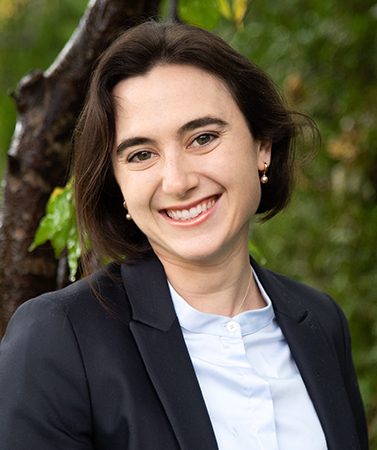
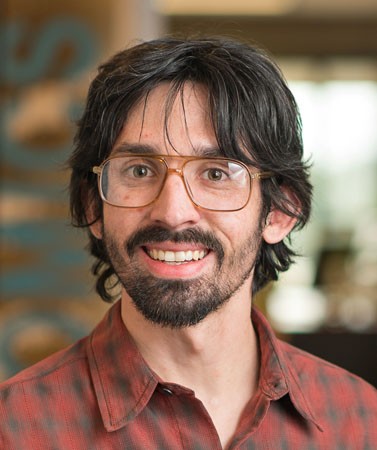
Gurupdesh Pandher is a Professor of Finance at the Odette School of Business, University of Windsor. He holds a Ph.D. in Financial Economics from Cornell University and has held tenured positions at institutions including the University of British Columbia and DePaul University. His academic leadership roles include Dean at California State University and West Virginia State University, Senior Associate Dean at Odette, and Graduate Coordinator at UBC. Dr. Pandher's professional experience spans over 10 years in consulting with firms like SunLife Insurance, Arthur Andersen, and Deloitte. His research focuses on entrepreneurial finance, venture capital, managerial incentives, and econometric modeling, with publications in top-tier journals such as Strategic Management Journal , Journal of Banking & Finance , and Quantitative Finance . His work has been supported by grants from SSHRC and the Cross-Border Institute, totaling over $270,000. Dr. Pandher actively promotes equity, diversity, and inclusion through his roles on WUFA's Administrative Evaluation Committee and Racial Justice Committee, and membership in RACEES (UWindsor's anti-racism initiative). His research and consulting address systemic institutional barriers and their impact on organizational productivity.
Zhenzhong Ma is a Professor in the Management department at the Odette School of Business , University of Windsor . Holding a Ph.D. in Management from McGill University (2004), his academic career spans over two decades with a focus on cross-cultural negotiation and organizational dynamics. Research Highlights : Cross-cultural Negotiation Intercultural Communication Conflict Management Knowledge Management Organizational Behaviour Workforce Diversity Article Trends : Recent publications emphasize digital innovation, AI ethics, and cross-cultural management. Topics include AI-driven fraud detection, big data impacts on social innovation, and cultural influences on corporate governance. Professional Affiliations : Active member of leading academic societies including the Academy of International Business (AIB), Academy of Management (AOM), and International Association for Chinese Management Research (IACMR).
Christian Dorion is an Associate Professor in the Department of Finance at HEC Montréal. He holds a Ph.D. in Finance from McGill University, an M.Sc. in Computer Science from Université de Montréal, and a B.Sc. in Mathematics and Computer Science from Université de Montréal. His expertise spans derivatives pricing, volatility modeling, credit risk analysis, and financial econometrics. He is actively involved in academic research and has published in top-tier journals such as The Review of Financial Studies. Education : Ph.D. (Finance), McGill University M.Sc. (Computer Science), Université de Montréal B.Sc. (Mathematics and Computer Science), Université de Montréal Research Interests : Dorion focuses on financial risk management, volatility dynamics, and the application of econometric methods to financial markets. His work bridges theory and practice, addressing issues like inflation’s impact on equity valuations, jump risk in equity returns, and systematic risk in credit derivatives. Advising : He has advised 24 students across doctoral and master’s programs, including topics like multivariate stochastic volatility models, real estate diversification benefits, and machine learning in finance. Recent student projects include volatility forecasting with GARCH-enhanced models and crisis simulation in mortgage portfolios. Labs/Teams : While no specific lab is mentioned, his research aligns with HEC Montréal’s finance and risk management initiatives.
Robert Gagné is a Professor in the Department of Applied Economics at HEC Montréal . He also serves as Director of the Department of Applied Economics, Director of the Centre for Productivity and Prosperity – Walter J. Somers Foundation, and Fellow at CIRANO (Center for Interuniversity Research and Analysis on Organizations). His work focuses on tax policy, insurance economics, and productivity analysis. Education: M.Sc. in Economics, Université de Montréal Ph.D. (sc. écon.), Université de Montréal Research interests include: - Quantitative analysis of tax systems and labour markets - Economic implications of reinsurance mechanisms - Productivity measurement and policy impact assessment Recent publications explore Canadian payroll tax effects and reinsurance market dynamics. He leads major research initiatives like the $2.4M-funded Centre for Productivity and Prosperity.
Amine Ouazad is an Associate Professor in the Department of Applied Economics at HEC Montréal. His research focuses on urban economics, environmental economics, and financial networks, with particular attention to real estate dynamics, climate change impacts, and credit markets. He holds a Ph.D. in economics from École des Hautes Études en Sciences Sociales (EHESS), a Master in statistics and economics from ENSAE, and an engineering diploma from École Polytechnique. His work examines how climate risks influence mortgage finance and urban housing markets, as well as the role of financial systems in mitigating shocks. Recent publications address flood protection policies, wildfire risk hedging, and the interplay between unemployment and crime. Teaching includes courses on market competition and microeconomic decision-making. He has advised one Master’s thesis on metro station impacts on gentrification. His research has been featured in journals like the Review of Financial Studies and Journal of the European Economic Association .
Pascale Valéry is an Associate Professor in the Department of Finance at HEC Montréal, a prestigious business school in Canada. She specializes in Financial Econometrics, Statistics, Privatization, and Corporate Governance. Her research explores topics such as corporate governance dynamics, privatization impacts, and econometric methodologies. Education: M. (sciences économiques), Université Aix-Marseille II D.E.A. (économétrie), Université Aix-Marseille II Ph.D. (sciences économiques), Université de Montréal Research Interests: Her work bridges theoretical econometric models with practical applications in corporate finance. Recent studies focus on competition-cost of equity relationships and governance challenges in the insurance sector. She has also contributed to privatization analyses and stochastic volatility modeling. Teaching: She teaches courses such as Financial Econometrics, Fixed Income Securities, and Capital Market Theory at both undergraduate and graduate levels. Supervision: In the past five years, she has supervised 11 MSc theses and projects, including studies on ESG performance, venture capital dynamics, and corporate debt governance. Notable topics include post-privatization innovation and ESG-financial performance linkages in energy sectors.
Delphine Bosson-Rieutort is an Assistant Professor at the School of Public Health (ESPUM), Université de Montréal, affiliated with the Department of Health Policy, Management & Evaluation (DGEPS). She holds research positions at the Centre de Recherche en Santé Publique (CReSP) and the Centre interuniversitaire de recherche en analyse des organisations (CIRANO). Her expertise includes leveraging administrative health data, machine learning, and epidemiological methods to study healthcare systems and end-of-life trajectories. She has conducted research on occupational exposures, environmental health risks, and healthcare utilization patterns in aging populations. Education: PhD in Models, Methods, and Algorithms for Health and Biology (Université Grenoble Alpes, 2015), Master's in Environment-Health (2012), Bachelor's in General Biology (2007). Research Focus: Optimal use of medico-administrative data to analyze healthcare trajectories, end-of-life care, and occupational/environmental health risks. Collaborates with institutions like INESSS and RRSPQ. Her research projects include analyzing interregional healthcare variations, process mining of post-COVID-19 trajectories, and evaluating vaccination coverage impacts. She has supervised over 20 students in PhD, Master's, and internship programs. Awards include an IRSST postdoctoral fellowship (2017–2019). Teaching includes data management, research methodology, and big data analytics. Active on committees for research grants and student evaluations at ESPUM. Key affiliations include RQSPAL (palliative care network) and Réseau-1 Québec (primary healthcare).
David Stanford is a Professor in the Department of Statistical and Actuarial Sciences at the University of Western Ontario. He earned his Ph.D. from Carleton University in 1981. His office is located in WSC 211 and he can be contacted via phone (519-661-2111 x83612) or email. Research Focus: Dr. Stanford's research spans several interconnected domains including: Queueing Theory : Specializing in multi-server systems, priority queues, and service optimization Actuarial Science : Risk modeling, ruin theory, and insurance mathematics Healthcare Operations : Applying stochastic models to transplant systems and patient flow Environmental Modeling : Forest fire prediction using compound Poisson processes His work frequently combines theoretical stochastic processes with practical applications in healthcare and environmental systems. Publication Trends: Analysis of recent publications shows a strong focus on queueing theory applications in healthcare systems, particularly modeling patient flow and organ transplant logistics. His actuarial research emphasizes advanced ruin probability calculations and risk process modeling. Environmental applications feature stochastic approaches to natural disaster prediction.
Alain Desgagné is a Lecturer in the Department of Mathematics at Université du Québec à Montréal (UQAM), where he contributes to teaching and research in actuarial science and statistics. His research interests lie primarily in actuarial science and statistical modeling, with applications in risk assessment, probability theory, and quantitative finance. These domains reflect his engagement with both theoretical and applied aspects of mathematical statistics. While no recent publications are listed in the available text, the focus on actuarial and statistical methods suggests a strong orientation toward practical problem-solving in insurance, finance, and data-driven decision-making contexts. There are no scientific awards mentioned in the current profile. Alain Desgagné provides academic guidance and supervision, particularly in the context of theses and dissertations, as indicated by the mention of memoir supervision, though specific students are not named. There is no mention of research grants or funded projects in the available information. There is no information available about specific research labs or collaborative teams he may be part of.
Okan Arslan is an Associate Professor in the Department of Decision Sciences at HEC Montreal , where he has been since 2017. He is also a member of prestigious research centers GERAD and CIRRELT . His academic journey began with a PhD in Industrial Engineering from Bilkent University . Expertise in Operations Research and Combinatorial Optimization Current research focuses on Intelligent Last-Mile Delivery Systems Dr. Arslan's work revolves around Large-Scale Network Design and Transportation Optimization , with specific applications in Urban Mobility , Logistics Innovation , and Smart Infrastructure . His recent publications address critical challenges like 15-Minute City Concepts , Crowdkeeping in Delivery , and Probabilistic Network Reliability . Key trends in his research include Machine Learning Integration for routing optimization, Stochastic Facility Location modeling, and Humanitarian Logistics applications. His work has been recognized through prestigious awards like the 2024 Transportation Science Meritorious Service Award and Amazon Last Mile Routing Research Challenge Third Place (2021). Advising : Mentors PhD and Master's students in network optimization and delivery systems Editorial Roles : Editor-in-Chief for Transportation Research Part B and advisory board member for Transportation Research Part C His teaching portfolio includes Fundamentals of Optimization and Distribution Management courses, emphasizing practical applications in Hydro-Quebec and Intact Insurance projects.
Yannick Tousignant-Laflamme is a Full Professor in the Physiotherapy Program at the School of Rehabilitation, Université de Sherbrooke, where he has been a faculty member since 2008. He also served as a Visiting Scholar at Duke University's Doctor of Physical Therapy Division from 2016-2017. His research is conducted through the Centre de recherche du CHUS, focusing on chronic pain management associated with musculoskeletal disorders, particularly low back pain. His educational background includes: Postdoctoral studies in Biomedical Sciences from Université de Montréal (2011) PhD in Clinical Sciences from Université de Sherbrooke (2008), with thesis on "Le role des hormones sexuelles dans la douleur chez des femmes saines" Master's degree in Clinical Sciences from Université de Sherbrooke (2005), with thesis on "The relationship between heart rate and pain" Bachelor of Science from Université d'Ottawa (1999) Certification McKenzie (Cr. MDT) Registered Physical Therapist (PT) Professor Tousignant-Laflamme's research focuses on three main axes: 1) improving the management of low back pain in rehabilitation; 2) chronic pain management; and 3) personalization of rehabilitation care for musculoskeletal disorders. His work advances knowledge and practices in low back pain, chronic pain management, and personalized rehabilitation care. He collaborates with research teams to develop and validate assessment tools to support clinicians in measuring pain, functional limitations, and other deficits related to musculoskeletal disorders. His research integrates biopsychosocial approaches to understand pain mechanisms and develop targeted interventions. His recent publications demonstrate a strong focus on prognostic tools, pain phenotyping, psychologically-informed physiotherapy, and implementation of evidence-based practices. The Pain and Disability Drivers Management Model appears as a central framework in many of his studies, showing his commitment to developing and validating clinical decision-making tools that address the multidimensional nature of pain. His work spans from basic assessment tool development to large implementation studies aiming to transform clinical practice. His scientific achievements have been recognized with numerous awards: Fellow, Ordre Professionnel de la Physiothérapie du Québec (2022) President of the executive committee, Canadian Council of Physiotherapy University Programs (CCPUP) (2020) Physical Therapy Program Teaching Award, Université de Sherbrooke Prix Alice-Girard for French-language publication, Fonds de recherche du Québec - Santé (FRQS) Multiple best presentation and publication awards from Université de Sherbrooke and other institutions Board membership with McKenzie Institute Canada and Ordre professionnel de la physiothérapie du Québec (OPPQ) Professor Tousignant-Laflamme has secured significant research funding as principal investigator and co-investigator, with recent grants totaling over $3 million from agencies including Canadian Institutes of Health Research (CIHR), Fonds de recherche du Québec - Santé (FRQS), and Veterans Affairs Canada. His current projects focus on validating quality indicators for chronic pain management, improving disability outcomes in chronic low back pain, evaluating integrated care models for Long COVID, and implementing the Pain and Disability Drivers Management Model across various clinical settings. He actively collaborates with national and international research networks to advance knowledge translation and implementation of evidence-based practices in pain management and rehabilitation. He leads the development of the MAPS (Measures Associated to PrognoStic) tool, which aims to personalize rehabilitation care for individuals with musculoskeletal disorders by establishing prognostic profiles. His work bridges clinical practice and research through active engagement with healthcare providers, policymakers, and patient stakeholders to ensure that research findings translate into improved patient outcomes.
M. Emrul Hasan is a Lecturer at the Vancouver School of Economics, University of British Columbia (UBC). He previously held academic positions at Simon Fraser University (SFU), Douglas College, and British Columbia Institute of Technology (BCIT). His academic qualifications include a PhD in Finance (SFU, 2018), MA in Economics (SFU, 2011), MA in Financial Economics (York University, 2010), and BBA (North South University, 2008). He is a CFA charterholder and FRM certified. His research focuses on capital gains tax policy, asset pricing, behavioral finance, IPO/SEO underpricing, and public policy. Notable works include studies on tax lock-in effects in equity offerings and auto insurance affordability in Canada. He has been awarded multiple scholarships, including the President’s PhD Scholarship and Beedie Family Graduate Scholarships. Teaching spans courses in econometrics, macroeconomics, international trade, corporate finance, and risk management. He has led over 20 courses across institutions, emphasizing practical applications of theory and bridging academic concepts with real-world finance and policy scenarios. His work also extends to financial education through FinanceTraining.ca , where he authored a CFA exam study guide.
Katherine R. H. Wagner is an Assistant Professor of Economics at the University of British Columbia's Vancouver School of Economics, part of the Faculty of Arts. She holds a PhD in Economics from Yale University, an MA in Economics from UBC, and a BA in Economics and Accounting from McGill University. Her research focuses on Environmental and Energy Economics, Public Finance, and Climate Policy, emphasizing empirical analysis of environmental externalities, climate change mitigation/adaptation, and natural resource management. She has taught courses such as 'Economics of Climate Change' and previously served as an Assistant Professor at UC Berkeley and a Postdoctoral Fellow at Stanford University's Institute for Economic Policy Research. Her research explores topics like natural disaster insurance policy design, climate policy implications of energy pricing, and efficient adaptation strategies to flood risk. Recent work includes studies on technology lock-in effects in climate policy delays and volunteerism dynamics in national parks. She is affiliated with the CESifo Network. Publications span journals like the Journal of Political Economy , Nature Climate Change , and Journal of Public Economics . Her work consistently addresses policy-relevant questions at the intersection of environmental economics and public finance.
Paul Schrimpf is an Associate Professor at the Vancouver School of Economics (University of British Columbia). He obtained his Ph.D. from MIT and works at 112 Iona Building, Vancouver, BC. His research focuses on theoretical and applied econometrics , with particular emphasis on dynamic games , partial identification , and insurance markets . Key research contributions include: (1) developing nonparametric identification methods for production functions with unobserved heterogeneity, (2) analyzing bunching responses to health insurance kinks in Medicare Part D, (3) creating semiparametric estimators for dynamic games with continuous states, and (4) quantifying welfare costs of asymmetric information in annuity markets. His work frequently involves collaboration with leading economists like Liran Einav and Amy Finkelstein. Recent projects examine: (1) regulatory distortions in natural gas pipeline investments, (2) econometric methods for unknown group structures in regression models, and (3) the impact of school reopening policies on COVID-19 transmission. He has published in top journals including Quartely Journal of Economics , American Economic Review , and Econometrica . Contact Information: Email: Paul.Schrimpf@ubc.ca Office: 112 Iona Building, 6000 Iona Drive, Vancouver, BC, Canada, V6T 1L4 Phone: 604-822-5360 (primary), 773-710-4775 (alternate)
Mingbin (Ben) Feng is an Associate Professor in the Department of Statistics and Actuarial Science at the University of Waterloo, where he also directs the Master of Actuarial Science Program. He holds professional certifications as an Associate of the Society of Actuaries (ASA) and Certified Analytics Professional (CAP). His research focuses on advanced simulation methodologies, risk management, and the integration of machine learning with financial and actuarial applications. Education: PhD in Industrial Engineering and Management Sciences, Northwestern University (2016) MS in Industrial Engineering and Management Sciences, Northwestern University (2012) MMATH in Actuarial Science, University of Waterloo (2011) BMATH in Actuarial Science and Operations Research, University of Waterloo (2010) Research Interests: Ben’s work bridges simulation analytics, actuarial science, and financial engineering. Key areas include: Green simulation techniques for output reuse and efficiency Nested simulation for tail risk estimation in complex portfolios Machine learning applications in pricing and risk management Stochastic optimization and portfolio design under risk constraints Systemic risk analysis in financial networks Publications: His recent research emphasizes scalable simulation methods for large portfolios and tail risk quantification. Notable contributions include advancements in likelihood ratio-based techniques, importance sampling, and the integration of clustering/Gaussian processes for efficient valuation. Awards: Associate of the Society of Actuaries (ASA) Certified Analytics Professional (CAP) Advising & Labs: Ben advises a dynamic research group involving PhD, MSc, and undergraduate students. His team developed the vamc R package for variable annuity modeling. Research focuses on simulation analytics, green simulation, and financial risk applications.