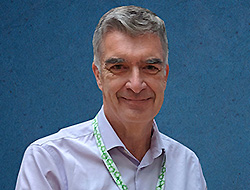
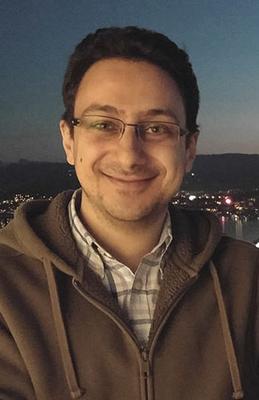
David Landriault is a Professor in the Department of Statistics and Actuarial Science at the University of Waterloo, Canada, and a Canada Research Chair in Risk Theory. His research focuses on Actuarial Science, Quantitative Risk Management, Applied Probability, and Stochastic Processes, particularly in ruin theory, drawdown analysis, and stochastic control for insurance and finance applications. Education: PhD in Mathematics (2005), MSc in Mathematics (2003), BSc in Actuarial Science (2002) from Laval University. Affiliations: University of Waterloo (postdoctoral fellowship, 2006); Canada Research Chair in Risk Theory. Research Interests Risk and Ruin Theory Stochastic Control in Insurance and Finance Drawdown and Occupation Time Analysis Regime-Switching Models Reinsurance Design and Optimization Time-Dependent Risk Models Scientific Awards Fellow of the Canadian Institute of Actuaries (F.C.I.A.), 2009 Fellow of the Society of Actuaries (F.S.A.), 2006
Michael O. Wood is an Associate Professor in the School of Environment, Enterprise and Development (SEED) at the University of Waterloo and currently serves as the Associate Dean of Work-Integrated Learning in the Faculty of Environment. He holds a Ph.D. in Strategy and Sustainability from the Ivey Business School at Western University, an M.A. in Environmental Studies in Sustainability Management from Western University, and a B.A. in Science from the University of Guelph. Ph.D. in Strategy and Sustainability, Ivey Business School, Western University M.A. in Environmental Studies in Sustainability Management, Western University B.A. in Science, University of Guelph Dr. Wood's research focuses on organizational responses to sustainability challenges through the lenses of space, time, scale, and social license to operate. His work spans industries like insurance, mining, carbon management, waste management, and global security, with a particular emphasis on the Blue Economy and climate change. He has contributed to frameworks for water risk assessment, sustainable packaging practices, and the role of governance in sustainability-financial performance linkages. His recent publications address transdisciplinary tools for water risk management, workforce practices' impact on sustainability, ETS policy effects, and disaster response patterns in multinational corporations. While no scientific awards are explicitly mentioned, his work has been published in journals such as the International Journal of Disaster Risk Reduction and Economic Systems Research . Dr. Wood teaches courses like Introduction to Environment and Business and Environment and Business Project , and he collaborates with researchers like Sandhu, Weber, and Bansal on sustainability-related projects. His studies often incorporate mixed-methods analysis and policy reviews for sustainable resource management in Ontario and Canada.
Mauricio Drelichman is a Professor at the University of British Columbia's Vancouver School of Economics within the Faculty of Arts. He serves as the Director of Undergraduate Studies and holds a Ph.D. from Northwestern University. His research focuses on Economic History , particularly Early Modern Spain , with emphasis on sovereign debt, fiscal policy, and institutional development. Ph.D., Northwestern University Director of Undergraduate Studies, UBC Research: Economic History, Early Modern Spain Drelichman's work investigates historical financial mechanisms such as sovereign debt contracts under Philip II, demonstrating how risk-sharing and contingent debt allowed sustained market access despite defaults. He has also analyzed resource curses , Dutch disease effects, and social consequences of persecution in Spain. His recent article in the Proceedings of the National Academy of Sciences (2021) examines long-term impacts of the Spanish Inquisition , while earlier studies explored gender wage gaps and housing markets in Early Modern Toledo. His publications often focus on historical debt sustainability , financial repression , and institutional quality . Scientific Awards: AEHE 2021 Earl J. Hamilton Prize Explorations Prize (2005/06 and 2010/11)
Patrick Baylis is an Assistant Professor of Environmental Economics at the Vancouver School of Economics, University of British Columbia. His research focuses on how people respond to environmental threats such as wildfires, air pollution, and extreme temperatures. He employs large datasets, natural language processing, and spatial information in his work, primarily using R/RStudio and Python for data analysis. Dr. Baylis earned his PhD from the University of California Berkeley in 2016 in Agricultural and Resource Economics. Prior to joining UBC, he was a postdoctoral fellow at the Stanford Center on Food Security and the Environment. He also worked as a research assistant at the Energy Institute at Haas and is a proud alumnus of Carleton College. His research interests span environmental economics with a particular focus on climate change impacts, energy economics, and behavioral responses to environmental threats. His work often examines the intersection of climate, health, and economic behavior, using innovative methods like social media data analysis to measure sentiment responses to temperature changes and other environmental factors. Analysis of his publication record reveals a strong focus on using big data approaches to understand human responses to environmental challenges. His work frequently appears in top journals including Nature Climate Change, PNAS, and the Journal of Public Economics. His research spans multiple subfields including wildfire economics, air quality valuation, climate migration, and the behavioral impacts of temperature extremes. Dr. Baylis has received significant media attention for his work, with coverage in major outlets including The New York Times, The Washington Post, The Guardian, and The Atlantic. His research on temperature and suicide rates, as well as climate perception, has been particularly influential in connecting environmental conditions with human behavior and mental health outcomes. He maintains an active research program examining critical environmental challenges, including wildfire risk, air pollution impacts, climate adaptation strategies, and the economic dimensions of climate change. His work combines rigorous economic analysis with innovative data collection and processing methods to provide new insights into how humans respond to environmental threats.
Louis G. Doray is a Full Professor of Actuarial and Financial Mathematics at the Department of Mathematics and Statistics, University of Montreal. His research focuses on statistical modeling in insurance, particularly in claim frequency, claim severity, survival analysis at advanced ages using logistic mortality models, and incurred but unreported accidents. Research Areas: Statistical modeling for insurance claims Survival analysis and logistic mortality models Actuarial applications of characteristic functions and fractional moments Risk management in financial mathematics Supervision: He has supervised graduate students including R. Momeya, I. Groparu-Cojaocaru, and Z. Ben Salah.
David Green is a Professor at the Vancouver School of Economics , University of British Columbia, and an International Fellow at the Institute for Fiscal Studies in London. He holds a Ph.D. from Stanford University and has served as Chair of the BC Basic Income Panel . Research Focus : Labour economics, income inequality, wage distribution, and public policy. His work bridges macro-level employment trends with micro-level identification of causal effects. Key Contributions : Analysis of minimum wage impacts on job stability, immigrant economic integration, resource boom spillovers, and basic income policy evaluation. Article Trends include: Welfare reform and health outcomes (2022) Covid-19 occupational risks (2022) Resource boom wage spillovers (2019) Post-2000 skill demand reversal (2016) Minimum wage and job tenure dynamics (2013) Scientific Recognition : Harry Johnson Prize (2000, 1995) for best articles in the Canadian Journal of Economics. International Fellow, Institute for Fiscal Studies (London). Policy Engagement : Directed the 2017-2019 BC Basic Income Panel , producing evidence-based reports on poverty reduction and workforce participation. His empirical work frequently informs national policy debates on taxation, immigration, and social assistance.
Cody Hyndman is a Full Professor and Acting Department Chair at the Department of Mathematics and Statistics, Concordia University, with a focus on Mathematical Finance, Machine Learning, and Stochastic Analysis. He has held significant administrative roles including Department Chair (2017–2023) and Acting Graduate Programs Director (2025–2025). Education: PhD, University of Waterloo (2005) MSc, University of Alberta BCom, University of Alberta His research spans Mathematical Finance , Stochastic Differential Equations , and Machine Learning , with notable contributions to arbitrage-free modeling, neural networks, and computational methods. Recent publications emphasize geometric deep learning and regularization techniques in finance. Scientific Awards: 2023: Concordia Academic Leadership Award Hyndman supervises graduate students in Mathematics and Statistics and co-founded the NSERC CREATE Program on Machine Learning in Quantitative Finance and Business Analytics (FIN-ML) , fostering industrial internships and interdisciplinary training.
Natalia Nolde is a Professor in the Department of Statistics at the University of British Columbia, Faculty of Science. Her research focuses on multivariate extreme value theory , probabilistic modeling , and applications in quantitative risk management across finance, insurance, hydrology, and geosciences. Her work explores non-classical approaches to multivariate extremes, particularly through limit set geometry and asymptotic dependence structures , offering novel insights into tail dependence and risk assessment. Recent publications highlight her expertise in copula-based risk modeling , financial stress testing , and geohazard prediction . Current students include: Daniel Hadley Jonathan O.K. Agyeman
Frances Woolley is a full-time Professor in the Department of Economics at Carleton University , with a cross-appointment to the School of Public Policy and Administration . Her research focuses on public finance , labour economics , and feminist economics , with expertise in family economics , gender inequality , and tax policy . Her work bridges theoretical economic models with real-world policy analysis, particularly in intra-household resource distribution and taxation fairness. Recent publications highlight her engagement with emerging issues such as cryptoasset taxation , long-term care financing , and cross-border carbon pricing . Her research consistently emphasizes gender dimensions in economic outcomes and policy impacts. Woolley has received notable awards including the Purvis Prize and Vanderkamp Award , and delivered the Canadian Economics Association Presidential Address in 2018. She actively contributes to public discourse through popular writing and media engagements, addressing topics like labor market dynamics, tax equity, and social policy.
David Saunders is an Associate Professor in the Department of Statistics and Actuarial Science at the University of Waterloo, affiliated with the David R. Cheriton School of Computer Science. His research focuses on quantitative risk management, mathematical finance, and stochastic optimization with applications to credit risk, portfolio optimization, and derivatives pricing. Professor Saunders has held academic positions at the University of Pittsburgh and Cyprus International Institute of Management, and has consulted for institutions like RiskMetrics, TD Bank, and Central Bank of Cyprus. Education: PhD studies at the University of Toronto with industry collaboration at Algorithmics Inc., followed by roles at Cyprus International Institute of Management and University of Cyprus's HERMES Center. His work bridges theoretical stochastic analysis and practical financial risk management challenges. Research interests prominently feature credit risk management, optimal stopping problems, and analytical techniques in finance. Recent work addresses inverse default boundary problems, wrong-way risk in derivatives, and efficient algorithms for portfolio optimization under complex return distributions. Collaborations with financial institutions drive applied research in capital allocation, operational risk modeling, and regulatory compliance. Advising and grants include directing the Professional Science Master's in Mathematical Finance at Pitt, supervising student-industry projects on credit risk and CDO pricing, and securing funding for computational finance initiatives. Active in RiskLab Cyprus and HERMES European Center, his research extends to equity risk management and market risk frameworks.
Professor Dan Shrubsole is a faculty member in the Department of Geography and Environment at Western University. His research focuses on integrated resource management, particularly water management and environmental policy, with an emphasis on Canada and Queensland, Australia. He has supervised numerous graduate students, including PhD candidates such as D. Bednar (2018) and F. Sekercioglu (2018), and Masters students like E. Cameron (2023). His work explores topics like climate change adaptation governance, small drinking water system sustainability, and flood management policy. Teaching includes GEO 9099 – Research Design and Presentation. Key publications address water governance in Ontario Conservation Authorities, flood risk perceptions, and integrated water resource management. His research spans over three decades, with notable contributions to policy analysis and environmental sustainability. Shrubsole's work bridges academic research and practical policy, emphasizing interdisciplinary approaches. His recent focus includes regulatory reforms for water systems and evaluating floodplain management strategies across Canadian regions. Collaborative projects highlight partnerships with institutions like the Upper Thames Conservation Authority and international case studies in Australia.
Franca Glenzer is an Assistant Professor in the Department of Finance at HEC Montréal and holds the title of CIRANO Fellow. She specializes in financial decision-making over the lifecycle, focusing on pensions, long-term care insurance, and risk management. Her work has been published in journals such as the Journal of Public Economics, Journal of Economic Behavior & Organization, and Geneva Risk and Insurance Review. Education: Dr. rer. pol. (Ph.D. equivalent in Finance) from Goethe University Frankfurt M.Sc. and B.Sc. in Business Administration from Humboldt University Berlin Research & Awards: Her research explores behavioral economics in policy design, post-pandemic savings behaviors, and insurer solvency. She was recently named a CIRANO Fellow, reflecting her contributions to applied economics. Current research is forthcoming. Teaching: She instructs courses including Basic Corporate Finance and Insurance at HEC Montréal. Advising: Supervised two MSc projects (2023–2024) focusing on insurance modeling and travel insurance analysis. Currently seeking a thesis student for UX/finance research.
Avi Goldfarb is Professor of Marketing at the Joseph L. Rotman School of Management, University of Toronto, where he holds the Rotman Chair in Artificial Intelligence and Healthcare. He serves as Chief Data Scientist at the Creative Destruction Lab and Research Associate at the National Bureau of Economic Research (NBER). His academic career spans 2002-2012 as Assistant and Associate Professor, becoming Professor of Marketing in 2012. Rotman Chair in Artificial Intelligence and Healthcare (2018-present) Professor of Marketing (2012-present) Research Associate, NBER (2014-present) Chief Data Scientist, Creative Destruction Lab (2015-present) Research Interests : Specializing in digital economics and the economics of artificial intelligence, his work bridges technology, marketing, and public policy. Key focus areas include: Digital economics and platform behavior AI adoption in healthcare systems Quantum computing economic implications Privacy regulation and data markets AI's impact on labor and inequality General purpose technology frameworks Publication Trends : His recent work spans AI implementation strategies across industries, digital behavior economics, and emerging technology commercialization. Key subfields include AI adoption patterns, digital privacy frameworks, quantum computing applications, and workplace health safety analytics. Scientific Recognition : INFORMS Society of Marketing Science Long Term Impact Award (2018) Roger Martin Award for Excellence in Teaching (2017) Leadership Roles : Former Senior Editor at Marketing Science (2016-2021), with editorial board memberships at Management Science, Journal of Marketing Research, and Journal of Economics and Management Strategy. He contributes to the Acceleration Consortium and Schwartz Reisman Institute for Technology and Society.
Angelos Georghiou is an Assistant Professor at the University of Cyprus and holds an affiliation with the Desautels Faculty of Management at McGill University . His research bridges game theory, optimization, and risk modeling, with applications in insurance and decision science. Primary Affiliation : University of Cyprus Secondary Affiliation : Desautels Faculty of Management, McGill University Research Focus : Georghiou specializes in derivative-free optimization , entropic risk estimation , and multistage stochastic programming , particularly in mitigating tail risks in insurance and developing robust data-driven prescriptive models. His work emphasizes algorithmic solutions for complex decision-making under uncertainty. Entropic Risk Estimation Regret Minimization Stochastic Optimization Machine Learning Applications Scientific Recognition : 2022 Esdras-Minville Prize (HEC Montréal) for risk-averse regret minimization research
Tejaswini Herath is a Professor of Information Systems at the Goodman School of Business, Brock University. Her research focuses on information security governance, mobile payment technologies, and the ethical implications of technology adoption. She has contributed extensively to understanding cybersecurity challenges, digital privacy, and the socio-economic impacts of emerging technologies. Her work often bridges technical and organizational aspects, emphasizing frameworks for risk management and innovation adoption. Recent studies include analyses of mobile payment systems in developing economies, cryptocurrency valuation ethics, and pandemic-era technology governance lessons. Her research spans interdisciplinary topics such as phishing susceptibility, user behavior in digital environments, and the integration of cybersecurity into organizational strategies. She has published over 50 peer-reviewed articles, with a focus on practical applications of theoretical models like Bayesian post-audit frameworks and technology-organization-environment (TOE) models. Her work addresses both academic and industry audiences, advocating for balanced scorecard approaches to security performance measurement. Tejaswini Herath is actively involved in curriculum development for information systems education, emphasizing student motivation and learning outcomes in IS courses. She collaborates with global institutions to study cross-cultural technology adoption patterns and policy implications.