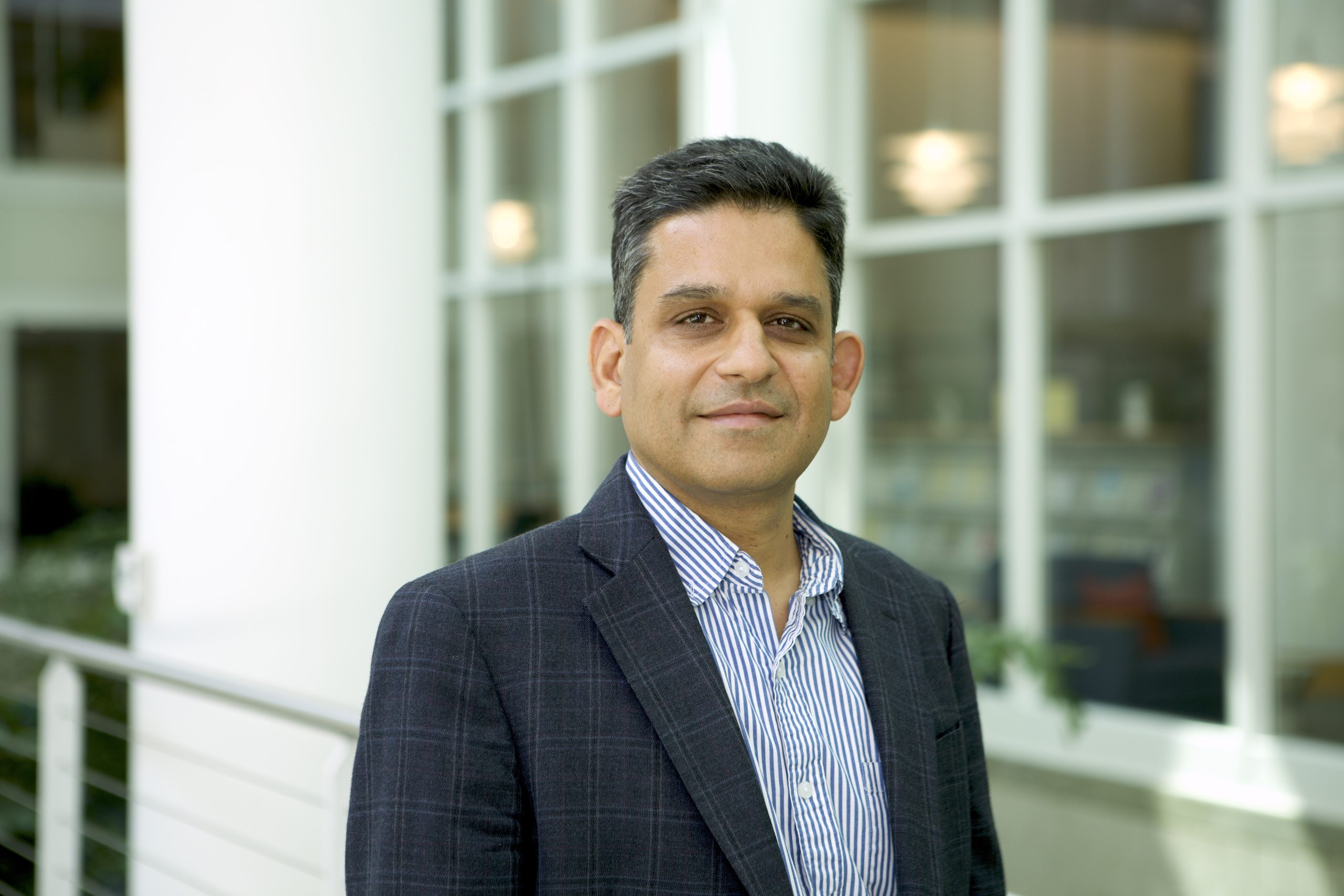
Chad E. Hart is a Professor in the Department of Economics at Iowa State University (ISU), specializing in agricultural economics and international trade policy. His research focuses on WTO agricultural commitments, crop insurance, biofuel policy, and commodity market dynamics. Hart holds a Ph.D. (1999) and B.S. (1991) in economics from ISU and Southwest Missouri State University, respectively. He has served in roles at ISU’s Center for Agricultural and Rural Development (CARD) and the Food and Agricultural Policy Research Institute (FAPRI), examining trade policies and energy-agriculture intersections. Hart has received notable awards, including the CALS Dean’s Citation (2020) and Exemplary Faculty Mentor Award (2016). His work bridges academic research and practical extension, addressing issues like trade disputes, commodity pricing, and agricultural sustainability. Hart’s insights frequently inform USDA outlook reports and policy analyses, with a focus on Iowa’s agricultural economy. Labs/Teams: Active in CARD and FAPRI, contributing to interdisciplinary research on agricultural policy and market dynamics.
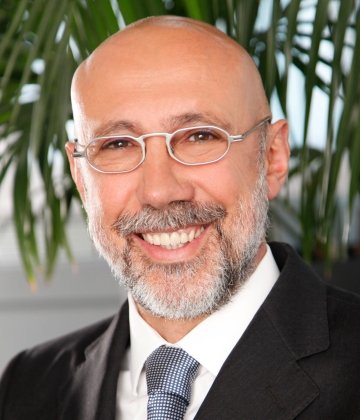
Professor Rainer Böhme is a prominent academic in the field of IT security and privacy at the University of Münster's School of Business and Economics, Department of Information Systems. He also holds a professorship for Security and Privacy at the University of Innsbruck's Institute of Computer Science. His research spans multiple dimensions of digital security, with particular expertise in steganography, digital forensics, privacy-enhancing technologies, and the economic aspects of cybersecurity. Dr. Böhme earned his Doctoral Degree from TU Dresden's Faculty of Computer Science in 2008, following studies in Communications, Economics and Computer Science at Technische Universität Dresden and Université Paris XII. His academic journey includes positions as Assistant Professor at the University of Münster (2010-2015), Postdoctoral Fellow at the International Computer Science Institute in Berkeley (2009-2010), and Scientific Staff at TU Dresden's Chair of Privacy and Data Security. His research interests focus on steganography and steganalysis, digital forensics, privacy-enhancing technologies, security and usability, economic and behavioral aspects of information privacy, virtual currencies, and the economics of information security. His work bridges technical security mechanisms with economic and behavioral considerations, creating a unique interdisciplinary approach to cybersecurity challenges. Analysis of his recent publications reveals a strong trend toward the economics of security, particularly regarding blockchain technologies, cryptocurrency, and privacy valuation. His work increasingly examines the intersection of technical security mechanisms with market dynamics, regulatory frameworks, and user behavior. The research spans theoretical game-theoretic models, empirical studies of user behavior, and practical applications in digital forensics and privacy protection. Program Co-Chair, Financial Cryptography and Data Security (2015) Program Co-Chair, New Security Paradigms Workshop (NSPW) (2015) General Chair, 8th International Conference on IT Security Incident Management & IT Forensics (2014) Organizer and Program Co-Chair, 1st Workshop on Bitcoin Research (2014) Associate Editor, Electronic Commerce Research (since 2013) Associate Editor, EURASIP Journal on Information Security (since 2013) Professor Böhme has supervised multiple Master's theses in Information Systems, including work on static code analysis for smart contracts, remote maintenance protocol security, and application protection requirements in retail banking. His research is supported by significant grants from the German Federal Ministry of Research, Technology and Space, the DFG, and the EU FP7 program, with projects focusing on digital forensics, privacy-enhancing technologies, and cryptocurrency crime prevention. He leads the IT Security Research Group at the University of Münster, which investigates theoretical and applied aspects of information security with particular emphasis on the economic dimensions of security decisions.
Christopher Williams is the Arthur Andersen Professor of Accounting and Area Chair of Accounting at the Ross School of Business, University of Michigan. His research focuses on debt contracting, banking risk, and financial reporting quality. He holds a PhD from the University of North Carolina and degrees from Brigham Young University. Academic Roles: Professor (2021–present), Associate Professor (2016–2021), Assistant Professor (2009–2016) Awards: Michael and Joan Sakkinen Faculty Fellow, Arnold M. Jacob Faculty Development Award Research emphasizes regulatory impacts on capital structures, loan syndication dynamics, and systemic risk. Key areas include banking transparency, covenant design, and media influence in private lending. Over 20 peer-reviewed articles appear in top journals like Journal of Financial Economics and Review of Accounting Studies . Articles (2023–2012) analyze topics such as Basel III anticipatory effects, CDS trading dynamics, and media's role in private lending. Recent work explores optimal capital structure under reporting quality constraints and strategic syndication behavior. Awards: Arthur Andersen Chair, Sakkinen Fellowship, Jacob Award Grants/Advising: Extensive grant history in accounting research; no listed advisees. Labs/Teams: Active in Ross School's accounting research initiatives focusing on financial reporting and banking analytics.
Rahul Vashishtha is a Professor of Accounting at Duke University's Fuqua School of Business, where he has served since earning his PhD in Accounting from the University of Pennsylvania in 2012. His research focuses on the determinants of corporate and banking sector disclosure, emphasizing economic consequences such as investment behavior, financial stability, and transparency's impact on institutions. Key areas include how mandated reporting frequency influences managerial myopia, banking sector fragility, and the interplay between mutual fund transparency and corporate decision-making. Dr. Vashishtha's work explores topics like loan covenant violations, bank mergers' effects on disclosure, and the role of analyst recommendations in stock price bubbles. He teaches Financial Statement Analysis in Duke's Daytime MBA program, blending academic rigor with practical business insights. His research has been published in top-tier journals such as the Journal of Financial Economics , Journal of Accounting Research , and Review of Financial Studies . Notable contributions include demonstrating how quarterly financial reporting pressures lead to short-term investment biases and analyzing bank transparency's role in deposit flows. His findings have been widely cited in media outlets like the Wall Street Journal , Financial Times , and Forbes . While no formal awards are listed, his extensive publication record and media engagement highlight his influence in accounting and finance research. Advising roles and grants are not explicitly detailed in available materials. He is actively involved in ongoing research on liquidity transformation in banking and voluntary disclosure strategies during financial crises.
Prof. Dr. Michael Voigtländer serves as Honorary Professor of Economics at Bonn-Rhein-Sieg University of Applied Sciences since 2011, while simultaneously leading the Competence Field for Finance and Real Estate Markets at the Cologne Institute of Economic Research (IW Köln) since 2015. He also holds teaching positions at ebs Business School Oestrich-Winkel, irebs Immobilienakademie, Bergische Universität Wuppertal, and Akademie deutscher Genossenschaften. PhD in Economics from University of Cologne Studies in Economics at University of Münster and University of Cologne Scientific Assistant at Economic Policy Seminar, University of Cologne (2000-2005) Voigtländer's research centers on the complex interrelationships between economic conditions, financial markets, and real estate markets, with particular focus on how demographic changes impact property markets and the formulation of effective housing policies. His work bridges theoretical economic principles with practical real estate market applications, examining how macroeconomic trends translate into specific housing market dynamics across German regions. His recent publications demonstrate consistent focus on German real estate market stability, with particular attention to rent control policies, commercial property valuation methodologies, and sustainability integration in real estate practices. The research shows evolving emphasis from pure market analysis toward policy impact assessment and sustainability considerations, reflecting broader industry trends toward environmental and social responsibility in property markets. Voigtländer actively contributes to industry knowledge through his leadership of the CSR in real estate industry research project with Dr. Rosemarie Stibbe at Bonn-Rhein-Sieg University. His advisory work extends across multiple academic institutions and industry organizations, where he provides expert guidance on real estate economics, financial markets, and housing policy matters. His institutional affiliations include the Cologne Institute of Economic Research (IW Köln) where he has worked since 2005, progressing to lead the Finance and Real Estate Markets competence field. He maintains strong connections with multiple academic institutions through his teaching roles, creating a bridge between academic research and industry practice in the German real estate sector.
Univ.-Prof. Dr. Martin Spitzer holds the Chair of Civil Law and Civil Procedure at the Vienna University of Economics and Business (WU Wien), where he has been a full professor since 2011. He serves as Program Director for Business Law and Institute Director at WU. Professor Spitzer is Editor-in-Chief of the Austrian Jurists' Journal (ÖJZ) and the Austrian Legal Archives (ÖJA), and co-editor of prominent legal commentaries including the ABGB commentary ("KBB"). His academic work spans both traditional civil law topics and modern commercial legal challenges. Professor Spitzer's research interests focus on the intersection of substantive and procedural civil law, with particular emphasis on banking law, inheritance law, insolvency law, collective legal protection, credit security law, tort law, and contract law. His work often takes comparative and historical perspectives, examining how civil law principles apply in contemporary commercial contexts. He has published extensively across all fields of civil and civil procedure law, with recent work exploring digitalization of legal processes, climate change liability, and human rights violations in global supply chains. His recent scholarly output demonstrates a clear trend toward addressing contemporary legal challenges through traditional civil law frameworks. Many publications examine how digital transformation impacts civil procedure, with particular focus on video hearings and electronic evidence. Other significant themes include banking regulation in times of crisis, consumer protection in financial services, and the evolving relationship between administrative decisions and civil proceedings. His work consistently bridges theoretical legal scholarship with practical applications for legal professionals. Excellent Teaching Award (2021, 2020, 2016) Innovative Teaching Award (2017) Insolvency Law Prize (Main Prize, 2014) Cardinal Innitzer Promotion Prize (2012) Walther Kastner Main Prize (2012) Capital Markets Prize (2012) Professor Spitzer plays a significant role in legal education through his position as Program Director for Business Law at WU Vienna. He co-founded Austria's best-selling legal textbook series (PSK, Bürgerliches Recht) with Stefan Perner, now in its 7th edition. He has supervised numerous doctoral students and research assistants who contribute to the chair's publication projects. Beyond academia, he maintains strong connections with legal practitioners through continuing education events for the judiciary and legal profession, including the Vienna Civil Court Day and Austrian Lawyers' Civil Law Day. His work extends to media commentary, expert opinions for public and private clients, and projects addressing social responsibility such as pharmaceutical supply chain resilience. The chair under Professor Spitzer organizes several major scientific events including the Banking Law Forum (since 2019), Forum for Civil Law (since 2016), Private Law Course including Civil Procedure (since 2014), Insurance Law Day (since 2021), Vienna Civil Court Day (since 2019), and Vienna Civil Law Day (since 2023). These events bring together academics, practitioners, and judges to discuss current developments in civil law. The chair also houses the editorial team for the Austrian Jurists' Journal and oversees publication of standard commentaries on key Austrian legal codes.
Prof. Markus Rudolf is a full Professor of Finance at WHU – Otto Beisheim School of Management since 1998, holding the Chair of Finance. He leads the WHU Center of Asset and Wealth Management and previously served as dean from 2015 to 2023. With a PhD and habilitation from the University of St. Gallen, his expertise spans banking, risk management, derivatives pricing, and Eurozone sovereign risk. He co-edits *Financial Markets and Portfolio Management* and advises major financial institutions such as Boeker & Paul AG. Research focuses include cryptocurrency dynamics, sustainable finance, and systemic risk. Notable contributions analyze market interdependencies, investor behavior, and regulatory frameworks like Basel II/Solvency II. His leadership roles include academic director of the Campus for Finance conference and supervisory board positions at financial firms.
Melda TAŞKIN is an Associate Professor at Istanbul University, Faculty of Law, Department of Private Law, specializing in Maritime Law and Insurance Law. She has been actively serving in academic positions since 2012, including as a Research Assistant and Assistant Professor, and continues her scholarly work with a strong focus on Turkish and comparative legal frameworks. Doctorate in Private Law, Istanbul University, Institute of Social Sciences (2014–2019) Postgraduate in Private Law, Istanbul University, Institute of Social Sciences (2012–2014) Undergraduate in Law, Istanbul University, Faculty of Law (2006–2010) Her research interests center on Maritime Law , Insurance Law , and Commercial Law , with particular expertise in carrier liability, charter party clauses, business interruption insurance during pandemics, life insurance general terms, and international conventions like the Cape Town Convention and Hague/Visby Rules. She frequently employs comparative analysis, especially between Turkish and German legal systems. The recent scholarly output of Melda TAŞKIN demonstrates a consistent focus on evolving challenges in maritime and insurance law, particularly in the context of global disruptions such as the COVID-19 pandemic and emerging contractual clauses like BIMCO’s Force Majeure. Her publications span peer-reviewed journals, books, and conference proceedings, reflecting both theoretical depth and practical relevance. Keywords across her work include carrier liability, unseaworthiness, inherent vice, disclosure obligations, and regulatory compliance. Scientific Awards: No specific awards listed in the provided text. She has secured research funding from TÜBİTAK and other official institutions, notably for projects on credit-linked life insurance and revision of insurance general terms. She advises on legal reforms and participates in national and international symposia. Melda TAŞKIN has delivered invited talks at international conferences, contributing to academic discourse on maritime and insurance law. She has also co-authored bibliographical works and contributed to edited volumes, indicating collaborative engagement within the legal academic community. There is no mention of a specific laboratory or research team, but her involvement in funded projects and conferences suggests active participation in scholarly networks and working groups focused on maritime and insurance law in Turkey and beyond.
Giacomo De Laurentis is a Full Professor in the Department of Finance at Bocconi University, affiliated with the School of Management. He has held leadership roles including past director of the Executive Education Custom Programs (2012–2016), Open Programs Division (2006–2012), and the Financial Intermediaries and Insurance Companies’ Department (1996–2006). He serves on the scientific committee of AIFIRM (Associazione Italiana Financial Industry Risk Managers) and as an independent board member of Fiditalia (Société Générale Group). Previously, he was part of the Supervisory Board of Standard & Poor’s entities from 2008 to 2019. His research focuses on corporate valuation, credit risk management, banking regulation, and financial analysis. Key themes include regulatory compliance (EBA guidelines), stress testing, credit policy design, and rating systems. His work spans academic publications and practical applications in banking and financial institutions. Teaching includes courses such as Financial Management and Financial Markets , Credit Risk Management , and executive education programs for institutions like Credit Agricole and Unicredit. He teaches in English at Bocconi University and SDA Bocconi School of Management, contributing to executive MBAs and specialized finance programs. Professional affiliations include board memberships and advisory roles, reflecting his expertise in regulatory frameworks and risk governance. His publications emphasize practical solutions to banking challenges under evolving regulatory environments.
Maurizio Di Rocco serves as a Professor at the Faculty of Law, University of Trento, Italy, with institutional affiliation centered on legal theory and dispute resolution practice. His academic base is anchored at Via Verdi, 53 - 38122 Trento, with primary contact via university email. Academic Credentials: Law Degree, Faculty of Law, University of Padua (1995), thesis: "Regicide in the legal thought of J. Milton" with supplementary work in Banking Law and Public International Law Classical High School Diploma, State High School "R. Franchetti", Mestre-Ve (1986) Advanced qualifications: Civil/commercial mediator trainer (accredited under Legislative Decree 28/2010), plus specialized training from JAMS-Endispute (Boston, 1999), NCRC (San Diego, 2005), and Friedman/Himmelstein workshops (2010-2014) Professor Di Rocco's research forms the cornerstone of Italian Alternative Dispute Resolution (ADR) scholarship, with concentrated expertise in mediation systems design , sector-specific conflict resolution (telecommunications, insurance, medical liability), and consumer dispute mechanisms . His work bridges theoretical frameworks in legal philosophy with actionable procedural protocols, emphasizing cross-cultural negotiation dynamics and institutional implementation challenges. The trajectory of his scholarship reveals deepening specialization in extrajudicial resolution pathways since the early 2000s, with particular focus on legislative compliance and practical mediator competencies. Analysis of his 12 major publications (2003-2013) demonstrates three dominant research vectors: (1) Codification and refinement of Italian mediation frameworks through annual updated codes (2011-2012), (2) Sectoral adaptation of ADR mechanisms to high-conflict industries like telecom and healthcare, and (3) Consumer rights protection through structured conciliation systems. His collaborative works with Covata, Santi, and Marucci reveal consistent focus on civil/commercial dispute resolution, while solo publications establish foundational theories for mediator ethics and procedural justice. No scientific awards or major fellowships are documented in the source materials. Professor Di Rocco's advisory impact manifests through policy-shaping engagements rather than formal student supervision. His Ministry of Productive Activities-cofunded consumer rights project (2004) and CNCU-commissioned ISDACI research report (1999) demonstrate direct influence on Italian ADR legislative frameworks. Current consulting roles with the Venice Chamber of Arbitration and Forensic Conciliation Coordination continue this practical policy integration. As co-founder and Vice President of "RESOLUTIA – Gestione delle controversie" (2000-present), he directs an active dispute resolution consortium that operationalizes his academic work. The association functions as a living laboratory for testing mediation protocols across consumer, corporate, and regulatory contexts, maintaining close ties with the Venice Chamber of Commerce and Consumer Defense Movement.
Andrea Miglionico is an Associate Professor at the University of Reading, serving as Programme Director for the LLM Commercial Law and Deputy Director of the Centre for Commercial Law and Financial Regulation (CCLFR). His work focuses on banking law, financial regulation, and the intersection of law and technology. He supervises PhD students in banking and finance law and has received grants from the ESRC and British Academy. Research Interests: Banking and Finance Law Regulation of Financial Markets Law and Economics FinTech Legal Frameworks Non-Performing Loans (NPLs) Resolution Key Achievements: Co-Investigator in ESRC Grant on Insurance Value Chains (2018-20) Principal Investigator in Leverhulme Grant on Regulatory Approaches (2017) Modern Law Review Scholarship (2014) Publications Highlight: Recent work addresses digital payments, RegTech compliance, and NPL restructuring, reflecting his expertise in financial innovation and crisis management.
Germán López Espinosa is a Professor of Accounting at both IESE Business School and University of Navarra, holding a joint appointment between these institutions. He serves as the Academic Director of IESE's Center for International Finance (CIF) and previously directed the Master in Banking and Financial Regulation at the University of Navarra for 11 years. IESE Business School - Professor of Accounting University of Navarra - Professor of Accounting Academic Director, Center for International Finance (IESE CIF) Dr. López Espinosa earned his B.Sc. in Statistics and B.Sc. in Business Administration from Universidad de Alicante, followed by a Ph.D. in Business Administration from the same institution. He also holds an M.A. in Financial Accounting and Auditing from Colegio de Economistas in Alicante. His academic career includes being an academic fellow at the International Accounting Standards Board (IASB) and a visiting scholar at NYU's Stern School of Business. His research focuses on the intersection of Banking, Finance, and Accounting, with particular emphasis on financial stability and international accounting standards. His work has been published in top-tier journals including Journal of Accounting Research, Review of Accounting Studies, Journal of Financial Intermediation, and Journal of Banking and Finance. His recent publications examine credit union risk management, depositor discipline, and the impact of IFRS 9 implementation during the pandemic. Cross of Military Merit with White Decoration (Condecoración de Estado) As an accounting expert witness, he has testified in high-profile cases including those involving CAM, BFA-Bankia, and Pescanova. He has also provided expert analysis for significant transactions such as the Strategic Control of Türkiye Garanti Bankasi A. Ş. and the investment agreement between Peugeot, Banque PSA Finance, and Santander Consumer Finance, as well as for specific reports for companies like Antonio Puig, Elecnor, Nutrexpa, Sol Meliá, and the University of Navarra itself.
Daniel Bergstresser serves as Associate Professor of Finance at Brandeis International Business School, Brandeis University, where he concurrently holds leadership positions as Chair of the Undergraduate Business Program and Area Head for Finance. His professional trajectory includes significant industry experience as Head of European Credit Research at Barclays Global Investors (2006-2007) and prior service at the Federal Reserve Board in Washington D.C. before pursuing academia. His academic credentials include a Ph.D. in Economics from MIT and an A.B. from Stanford University, establishing a robust foundation for his research endeavors. Bergstresser's scholarly work centers on municipal finance, taxation, household financial behavior, corporate governance, and financial reporting, with publications appearing in elite journals including the Journal of Financial Economics, Quarterly Journal of Economics, and Review of Financial Studies. Analysis of his publication record reveals a sustained focus on municipal bond markets spanning pricing mechanisms, regulatory impacts, and ownership patterns, with recent expansion into climate finance through green bond research. His work consistently bridges theoretical rigor with practical market implications, examining how taxation, regulation, and demographic factors shape financial outcomes. Notable contributions include investigations of dealer markups, stock-bond correlations, and the post-Dodd-Frank municipal advisor landscape. As administrative leader for undergraduate business education, Bergstresser oversees program strategy, curriculum development, and faculty coordination. While specific grant details remain unpublicized, his leadership roles indicate substantial engagement with institutional strategy and industry partnerships, particularly through initiatives like the Brandeis Municipal Finance Conference which fosters academic-practitioner dialogue.
Dr. Michael Rajnik is a Clinical Professor of Pediatrics at the Uniformed Services University of the Health Sciences in Bethesda, MD. He serves as Division Director for Infectious Disease within the School of Medicine, with academic and clinical expertise focusing on pediatric infectious diseases, epidemiology, and global health initiatives. B.S. Chemistry, King's College (1991) M.D., University of Virginia School of Medicine (1995) Pediatrics Residency, Wilford Hall USAF Medical Center (1998) Pediatric Infectious Diseases Fellowship, National Capital Consortium/USUHS (2001) Dr. Rajnik's research spans pediatric infectious diseases with emphasis on respiratory tract infections, epidemiology, and global health. He has led studies on rotavirus immunization effectiveness, tuberculosis treatment innovations, and pandemic-related healthcare impacts across military populations. His work combines clinical research with public health surveillance and has shaped vaccination and infection control practices within military healthcare systems. Pediatric infectious diseases during wartime, vaccine-preventable illnesses, and multidrug-resistant infections form recurring themes in his research. Recent work focuses on COVID-19 pandemic effects across military pediatric and adult populations, including rotavirus hospitalization trends, cardiac complications, and sexually transmitted infection management. Scientific contributions and recognitions include: Chair, Infectious Diseases Institutional Review Board (2009-2016) Chair, American Academy of Pediatrics Executive Committee (2009-2014) President, Armed Forces Infectious Diseases Society (2007-2008) USAF Master Educator (2007, 2012) Educator of the Year, San Antonio Uniformed Services (2006) As a mentor and Fellowship Director (2006-2016), Dr. Rajnik has guided numerous military physicians in pediatric infectious diseases while leading research administration and advocating for military families within the American Academy of Pediatrics. His clinical and administrative roles demonstrate sustained commitment to advancing military pediatric medicine through education, research, and policy engagement.
Dana Mukamel is a Professor of Medicine at the University of California, Irvine, with an affiliation in the Department of Population Health & Disease Prevention within the School of Public Health. Her research focuses on healthcare policy, geriatrics, mental health, and chronic disease management, particularly advanced chronic kidney disease (CKD) and cancer care. She explores topics such as Medicare Part D cost disparities, nursing home staffing and quality, digital mental health interventions, and rural-urban healthcare gaps. Dana's recent publications highlight trends in digital health adoption during the pandemic, staffing instability in nursing homes, and CKD treatment outcomes. Her work often intersects with health equity, examining disparities in rural and minority populations, and innovates through technology-driven care coordination models for seniors. She contributes to policy evaluations, including the Medicare Prescription Payment Plan, Certificate of Need regulations, and Medicaid waiver programs. Her projects frequently involve multi-site collaborations and stakeholder engagement, especially with peer perspectives in mental health interventions and county-level healthcare systems.