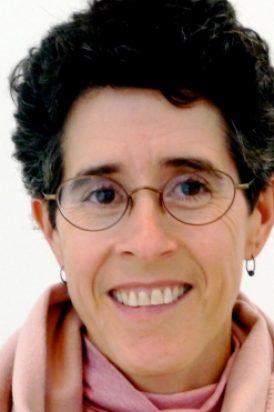
Colin M. Ramsay is a Professor in the Department of Finance at the Edwin J. Faulkner College of Business, University of Nebraska-Lincoln. His expertise lies in actuarial science, focusing on risk theory, pensions, health and disability insurance, and micro-insurance applications. B.Sc., City University, London M.Math. and Ph.D., University of Waterloo Ramsay’s research integrates economic principles into actuarial science, addressing challenges like the annuity puzzle, moral hazard, and adverse selection in insurance markets. He also explores peer-to-peer insurance and food security in developing regions. Recent publications highlight innovative annuity designs, LTC funding strategies, and stochastic modeling of insurance risks. His work spans theoretical advancements in ruin probability calculations and practical applications in funeral insurance and agricultural sustainability in the Caribbean. Ramsay teaches graduate and undergraduate courses in life contingencies and pension mathematics, emphasizing probabilistic models and actuarial assumptions.
Zhiyu (Frank) Quan is an Assistant Professor at the University of Illinois at Urbana-Champaign (UIUC), holding positions in the Department of Mathematics, Department of Statistics, and National Center for Supercomputing Applications (NCSA). He is also an affiliate faculty member at Discovery Partners Institute as InsurTech Lead and serves as an ORMI Faculty Fellow in Finance. His research focuses on data science applications in actuarial science, including tree-based models, natural language processing, and deep learning for insurance risk modeling, predictive analytics, and InsurTech innovation. Education: Ph.D. in Actuarial Science (University of Connecticut, 2019), MS in Applied Statistics (Michigan State University, 2014), and BS in Mathematics and Applied Mathematics (Xiamen University, 2012). Research interests include computational statistics, insurance analytics, and leveraging machine learning for actuarial challenges such as claim prediction, rate-making, and cyber risk modeling. He leads the Illinois Risk Lab, bridging academic research with industry needs, and has pioneered hybrid tree-based models to address imbalanced data in insurance. Notable achievements include the Arnold O. Beckman Research Award and Society of Actuaries Research Institute recognition. He advises two doctoral students and teaches advanced predictive analytics courses, emphasizing practical applications in actuarial science and data ethics. Key collaborations involve InsurTech companies and NCSA, focusing on NLP-driven academic paper repositories (CyLit) and federated learning for privacy-preserving insurance data sharing. His work addresses real-world challenges in cyber insurance and automated machine learning systems.
Catherine Legrand serves as Professor of Biostatistics at UCLouvain (Louvain-la-Neuve, Belgium), affiliated with the Institute of Statistics, Biostatistics and Actuarial Sciences (ISBA) and the Louvain School of Statistics, Biostatistics and Actuarial Sciences (LSBA) within the Faculty of Science. She chaired ISBA from 2019-2022 and currently presides over the Louvain Institute for Data Analysis and Modeling (LIDAM). Her academic foundation includes: Master Degree in Mathematics from Université Libre de Bruxelles (1998) PhD in Statistics from Hasselt University (2005) supervised by Prof. Paul Janssen and Prof. Luc Duchateau, specializing in survival analysis and frailty models Her research program centers on Survival Data Analysis with emphasis on frailty models, cure models, and Joint Models for Longitudinal and Survival Data. She develops methodologies for clinical trial design and analysis with direct applications in oncology data, bridging theoretical statistics and clinical practice through collaborations with medical researchers. Analysis of her recent publications (2023-2025) reveals three dominant trends: 1) Advanced survival modeling techniques (semi-Markov, cure rate models) for disease progression; 2) Validation frameworks for surrogate endpoints in clinical trials using joint modeling; 3) Emerging applications in health insurance analytics and public health systems. Her work increasingly addresses real-world healthcare challenges while maintaining methodological rigor. No scientific awards were documented in the available sources. Information regarding student supervision and research grant funding was not provided in the current materials. She leads research within LIDAM and ISBA, building on her prior role as primary statistician for the EORTC Lung Cancer Group where she contributed to multiple Phase II/III trials in lung cancer and mesothelioma. Her current work integrates biostatistical methodology development with practical applications across oncology, public health, and actuarial science domains.
Professor Melvyn Coles is a Professor of Economics at the University of Essex since 1997, specializing in labor and macroeconomic theory. He holds a PhD from Princeton University (1997) and has conducted research on equilibrium trade with frictions, labor markets, and marriage markets. His work explores topics like wage-tenure contracts, unemployment dynamics, and optimal policy design. Education: B.A. in Mathematics (First Class Honors) from Cambridge University, MSc in Economics and Econometrics (Southampton University), and PhD in Economics (Princeton University). Research Interests: Labor market frictions, marriage market dynamics, unemployment policy, and equilibrium wage structures. Publications span over 40 articles in top journals, including Review of Economic Studies , Journal of Political Economy , and Econometrica . His work addresses structural decomposition of wage inequality, optimal unemployment insurance, and business cycle impacts on labor turnover. He has supervised numerous PhD and Master’s students, including Ashley Nicole Burdett (2024), Federico Sciacca (2018), and Luz Adriana Florez (2014). His research has been funded by grants such as the ESRC-funded project on recession impacts (2011).
Virginia Young is the Cecil J. and Ethel M. Nesbitt Professor of Actuarial Mathematics at the University of Michigan's Department of Mathematics, within the College of Literature, Science, and the Arts. She holds a Ph.D. from the University of Virginia (1984). Her research focuses on actuarial and financial mathematics, particularly decision-making processes for individuals and insurance companies in financial and insurance contexts. This includes topics like optimal reporting strategies, reinsurance mechanisms, and risk management under uncertainty. Her work addresses modern challenges such as defined contribution pension plans and strategic insurance product design. Key research areas include stochastic control theory, game-theoretic models in insurance markets, and optimization under model ambiguity. She explores how insurers and individuals make decisions under risk, with applications to annuities, reinsurance chains, and lifetime financial planning. Recent studies investigate Stackelberg games in reinsurance, optimal deductible insurance, and minimizing lifetime ruin probabilities through strategic annuitization. Virginia Young has no listed scientific awards in the provided texts. She advises no formally documented students, though her role likely involves mentoring within the Mathematics Department. Her work contributes to both theoretical advancements and practical applications in actuarial science and financial risk management.
Prof. Francesca Biagini is a Full Professor of Applied Mathematics at the University of Munich (LMU), leading the Department of Mathematics within the Faculty of Mathematics, Computer Science, and Statistics. She holds additional roles as Vice President for International Affairs and Diversity at LMU since 2019, and served as President of the Bachelier Finance Society (2022–2023). Her academic career includes professorships at LMU (since 2009) and prior roles at the University of Bologna and Leibniz University Hannover. She specializes in financial and insurance mathematics, focusing on asset pricing, systemic risk, and model uncertainty. Education: PhD in Mathematical Finance (Scuola Normale Superiore, 2001), Laurea in Mathematics (University of Pisa, 1997). She has advised over 14 PhD students and 180+ master/bachelor students, collaborating with institutions like Allianz, MunichRe, and SwissRe. Research: Biagini’s work bridges financial and actuarial mathematics, including stochastic processes, systemic risk modeling, and insurance frameworks. Notable contributions include modeling asset bubbles, xVA calculations, and liquidity-based frameworks. She has published extensively in journals like *Finance and Stochastics* and *Mathematical Finance*. Awards and Activities: Recipient of the Prinzessin Therese von Bayern Preis (2019) and Zonta Clubpreis (2015). She organizes international conferences, serves on editorial boards (e.g., *Mathematical Finance*), and chairs the Munich Risk and Insurance Center. Her research is funded by grants from BayernLB and LMU Excellence programs.
Chris Rogers is a Professor of Statistical Science within the Department of Pure Mathematics and Mathematical Statistics (DPMMS) at the University of Cambridge, actively contributing to research at the intersection of probability theory, stochastic analysis, and financial applications. His academic profile reflects deep engagement with mathematical finance and theoretical probability through publications and departmental affiliations. His research spans financial mathematics, probability theory, stochastic analysis, statistics, and mathematical economics, with emphasis on rigorous mathematical frameworks for financial markets. Key themes include option pricing mechanisms, stochastic process modeling, and geometric probability applications, often addressing real-world financial instruments like Asian options and S&P500 index behaviors through advanced probabilistic techniques. Analysis of his 15 most recent publications (2016-2018) reveals consistent focus on stochastic calculus applications in finance, particularly Lévy processes, diffusion models, and optimal stopping problems. His work bridges theoretical probability with quantitative finance, demonstrating expertise in translating complex stochastic phenomena into financial modeling solutions across asset pricing, risk assessment, and market analysis domains. No scientific awards were documented in the provided source material. Information regarding PhD/Master's student supervision, research grants, or collaborative teams was not specified in the available texts, indicating absence of such details in the source documentation.
Professor Jae Kyung Woo is a distinguished academic in the School of Risk and Actuarial Studies at the UNSW Business School, University of New South Wales. She holds multiple prestigious professional designations including Fellow of the Institute of Actuaries of Australia (FIAA), Fellow of the Society of Actuaries (FSA), and Chartered Enterprise Risk Analyst (CERA). Her educational background includes MMath and Ph.D. degrees from the Department of Statistics and Actuarial Science at the University of Waterloo. She has held academic positions at Columbia University as Assistant Professor in the Department of Statistics (2011-2012), and at the University of Hong Kong as Assistant Professor in the Department of Statistics and Actuarial Science (2012-2017) before joining UNSW in July 2017. Research interests focus on risk theory, reliability theory, aggregate claim analysis, queueing theory, and dependence modelling Editorial Board member for ASTIN Bulletin (2021-present), European Actuarial Journal (2025-present), Probability in the Engineering and Information Sciences (2018-present), and Risks (2020-present) Principal investigator for ARC Discovery Projects (2020-2023) and Casualty Actuarial Society grants (2018-2020) Her research output includes 35 journal articles, 1 book, 1 thesis/dissertation, and 1 other publication, with recent work emphasizing shock models for correlated large losses, credibility theory under dependency structures, and advanced dependence modeling techniques in insurance contexts. Her work bridges theoretical stochastic analysis with practical applications in insurance and risk management. Fellow of the Institute of Actuaries of Australia (FIAA), since May 2018 Fellow of the Society of Actuaries (FSA), since Oct 2013 Chartered Enterprise Risk Analyst (CERA), since Jan 2012 Fellow Member of Actuarial Society of Hong Kong (ASHK), since Dec 2018 Professor Woo has secured significant research funding including an ARC Discovery Project grant of AUD 334,000 (2020-2023) for developing shock model-based frameworks for correlated large losses, and a Casualty Actuarial Society grant of USD 20,000 (2018-2020) for credibility theory research under general dependency structures. She served as Nominated Accreditation Actuary at UNSW until 2024.
Erik Teodoor Verhoef is a Full Professor of Spatial Economics at the Department of Spatial Economics, Faculty of Economics and Business Administration, Vrije Universiteit Amsterdam. He also serves as a Visiting Professor at the Institute for Transport Studies, University of Leeds since 2009. Previously, he was a Member of the Faculty Board (serving as Research Director and Vice dean) at the Faculty of Economics and Business Administration, VU University Amsterdam from 2008 to 2011. His educational background includes a Cum Laude graduation in Economics from State University Groningen in 1991, followed by a PhD from VU University Amsterdam under the supervision of Professors Peter Nijkamp and Piet Rietveld. Since 1996, he has been an Elected Research Fellow at the Tinbergen Institute, Amsterdam-Rotterdam. Verhoef's research focuses on traffic congestion, static and dynamic network analysis, urban externalities, second-best regulation, efficiency and equity aspects of spatial externalities and regulation, spatial equilibrium modelling, valuation, transport economics, and urban economics. His work has significantly contributed to understanding congestion pricing mechanisms, transport policy design, and the economic analysis of transportation networks. His research often combines sophisticated theoretical modeling with empirical analysis to provide practical insights into optimal transport policies. His publication record shows a consistent contribution to transportation economics, with particular emphasis on congestion pricing, road pricing schemes, and the economic analysis of transportation networks. Analysis of his recent publications reveals a strong focus on equity implications of pricing mechanisms, behavioral responses to transport policies, and the integration of reliability considerations into transport economics. The Epainos Prize 1996, European Regional Science Association Honorable Mention for the 1996 Dissertation Prize of the Transportation Science Section of INFORMS RSUE Award for Innovative Research by Recent Doctoral Candidates 2000 Reimut Jochimsen Prize 2006 Honorable Mention for the WCTRS Prize 2007 Highly Cited Author Award 2004–2008, Journal of Urban Economics Elected Fellow of the Regional Science Association International (2010) Verhoef serves in significant editorial capacities, including as one of two Editors-in-Chief for Economics of Transportation and Associate Editor for Transportation Research B. He also serves on the editorial boards of several prestigious journals including the Journal of Urban Economics, Journal of Transport Economics and Policy, and Journal of Regional Science. His academic leadership extends to international organizations where he serves on the Founding Board of the International Transportation Economics Association and as Vice-chair of NECTAR, while having organized numerous academic events including the Nectar-Kuhmo Summer Schools and the European Regional Science Association Conference.
Annamaria Olivieri is a Professor of Actuarial Science at the Department of Economics and Business , School of Business , University of Parma , Italy. Her research focuses on actuarial mathematics for life insurance and pension funds , particularly in longevity risk valuation, solvency requirements, and risk-sharing frameworks. She has held visiting positions at the School of Actuarial Studies and CEPAR , University of New South Wales , and contributed to institutional teaching and PhD programs in Italy. Her work appears in leading journals such as Insurance: Mathematics & Economics and ASTIN Bulletin . Degree in Business Economics, University of Parma Degree in Statistics and Actuarial Science, University of Florence PhD in Mathematics for Financial Markets, University of Brescia Her research spans stochastic mortality modeling , capital allocation for life annuities, and multistate models for insurance valuation. Recent publications explore longevity-linked annuities , time-restricted annuity benefits , and mortality shock risk . As an Associate Editor of the European Actuarial Journal , she contributes to advancing actuarial research. Scientific Awards: Bob Alting von Gesau Prize 2010 (with Ermanno Pitacco) for longevity risk research She has participated in Italian MUR-funded projects and served on PhD scientific committees at the University of Udine , University of Parma , and University of Trieste . Her editorial and refereeing roles include ASTIN Bulletin , Insurance: Mathematics & Economics , and Journal of Risk and Insurance .
Kwaku Ohene-Asare is a Lecturer in Business Analytics at De Montfort University, UK, within the School of Leadership, Management and Marketing. He holds a PhD in Operational Research and Management Science from the University of Warwick, an MSc in Economics and Finance (with distinction) from Loughborough University, and a BSc in Economics (first-class honors) from the University of Ghana-Legon. He also completed a certificate in Decision Science and Machine Learning at MIT, USA. He has held visiting professorships at Warwick University and Stellenbosch University and plays a senior lecturer role at the University of Ghana. His educational background includes: PhD in Operational Research and Management Science, University of Warwick, UK (2012) MA in Decision Science and Machine Learning, MIT, USA MSc in Economics and Finance, Loughborough University, UK (Distinction) BSc in Economics, University of Ghana-Legon (First Class) PGCAP (Part 1), University of Warwick, UK (2009) Certificate in Nonparametric & Bootstrap Methods, Sapienza University of Rome, Italy (2012) Kwaku's research interests span business analytics, management science, artificial intelligence, data science, machine learning, economic efficiency, productivity analysis, data envelopment analysis (DEA), stochastic frontier econometrics, and their applications in energy, finance, insurance, and credit unions. He has developed a research-based DEA course at the University of Ghana and pioneered the advanced quantitative research methods course for PhD students since 2015. His work integrates cutting-edge computational techniques and econometric modeling to address real-world economic and business challenges. The recent trend in his publications shows a strong focus on efficiency and productivity analysis across sectors—particularly in energy, banking, and insurance—using advanced non-parametric and parametric methods. He frequently applies DEA, Malmquist indices, and stochastic frontier models to assess performance in African and ECOWAS economies, with a growing emphasis on sustainability, undesirable outputs, and dynamic efficiency. His work bridges theoretical rigor with practical policy implications. His scientific awards include: Global Leadership Award (2021) DFID Shared Scholarship Scheme Award (2004) Doctoral Research Scholarship, Warwick Business School (2007) He has received multiple research grants, primarily from the University of Ghana Business School (UGBS), as Principal Investigator, including projects on data science and machine learning, energy productivity, banking efficiency, and multinational operations. He has supervised PhD students through course development and research mentorship. His consultancy work includes efficiency analysis for the National Petroleum Authority, Ghana, and market entry feasibility studies for international firms. He is affiliated with the Centre for Enterprise and Innovation (CEI), the Institute for Sustainable Economics, and the Institute of Energy and Sustainable Development (IESD) at DMU, where he contributes to interdisciplinary research on sustainable economic development. He is an active member of professional societies including the Operational Research Society (UK), INFORMS, Association of European Operational Research Societies, British Academy of Management, Productivity Analysis Research Network (USA), and the Economic Society of Ghana.
Tarun Ramadorai is Professor of Financial Economics at Imperial College London, with a distinguished career spanning household finance, financial economics, behavioral economics, real estate, and international finance. He serves as Executive Editor of the Review of Financial Studies and holds prestigious fellowships including Research Fellow of the Centre for Economic Policy Research (CEPR), Senior Academic Fellow of the Asian Bureau of Finance and Economics Research (ABFER), and Nonresident Senior Fellow at the National Council of Applied Economic Research (NCAER). Education BA in Mathematics and Economics from Williams College MPhil in Economics from the University of Cambridge PhD in Business Economics from Harvard University Research Interests Professor Ramadorai's research spans household finance, financial economics, behavioral economics, real estate, and international finance. His work examines how households make financial decisions across different markets and countries, with particular focus on housing markets, investment behavior, and financial inclusion. He has established himself as a leading expert in international comparative household finance, having previously served as Principal Investigator on a transformational initiative financed by the Sloan Foundation to establish this sub-field of finance and economics. His recent research explores the intersection of technology and personal finance, housing market dynamics, and optimal tax policy. He has demonstrated how housing costs impact fertility decisions, how machine learning affects credit markets, and how privacy policies influence consumer data extraction. His work combines rigorous theoretical frameworks with innovative empirical approaches using large-scale datasets from diverse markets. Publication Trends Professor Ramadorai's recent publications reveal a strong focus on household decision-making in financial markets, with increasing attention to the digital transformation of finance. His work bridges theoretical insights with practical policy implications, particularly in emerging economies. There is a clear trend toward interdisciplinary research that combines finance, economics, and data science to address pressing questions about financial inclusion, housing affordability, and the impact of technology on traditional financial services. Scientific Awards Brattle prize for best paper in the Journal of Finance Jensen prize for the best paper in the Journal of Financial Economics Wharton School-WRDS Best Paper Award in Empirical Finance James A Lebenthal Excellence in Municipal Finance Research Prize FMA Napa Conference Best Paper Prize INQUIRE Europe third prize Viz Risk Management Best paper prize Policy Engagement and Advisory Roles Professor Ramadorai has made significant contributions to policy discussions worldwide. He served as Chairman of the Inter-Regulatory Committee on Household Finance constituted by the Reserve Bank of India, which produced the influential "Indian Household Finance" report. He has advised numerous institutions including the Economic Advisory Council to the Prime Minister of India, the European Securities and Markets Authority, and the Norwegian Sovereign Wealth Fund. Currently, he co-chairs the Fintech workstream of the India-UK Financial Partnership, helping to shape the future of financial technology across borders. Research Initiatives Professor Ramadorai previously led the Initiative on International Comparative Household Finance, funded by the Sloan Foundation, which established household finance as a distinct sub-field of research. He is in the process of setting up a new initiative at Imperial College Business School to further advance this area of study. His work has influenced both academic research and practical policy interventions in financial markets around the world.
Ida Scheel is an Associate Professor in Statistics and Data Science at the University of Oslo , Department of Mathematics. She specializes in Bayesian hierarchical modeling, recommendation systems, and stochastic processes on networks. Her research interests include: Bayesian statistics and model diagnostics Data science applications in environmental and health domains Network-based machine learning Uncertainty quantification in predictive modeling Recent publication trends show a focus on Bayesian model validation, machine learning for product adoption prediction, and real-estate analytics. She contributes to interdisciplinary projects like BigInsight and CELS . Scientific awards : Sverdrup Prize for Young Researchers (2011) Advising : Supervised 8 PhD students (main/co-supervisor) in areas spanning Bayesian causal effects, neural network survival analysis, and model conflict detection. Key grants include participation in the Data Science@UiO and Integreat projects. Labs/teams : Active member of the Center for Computational Inference in Evolutionary Life Science (CELS) and the BigInsight center.
Antonella Basso serves as a Full Professor in the Department of Economics at Ca' Foscari University of Venice, specializing in mathematical methods of economics and actuarial and financial sciences (STAT-04/A). She is affiliated with the Research Institute for Complexity and maintains her office in the San Giobbe building where she holds regular office hours on Tuesdays from 2:00 pm to 5:00 pm CET. Professor Basso's research expertise spans multiple domains of quantitative finance and economics, with particular emphasis on Financial Mathematics , Quantitative and Computational Finance , and Ethical Finance including ESG investments and green finance. She has pioneered the application of Data Envelopment Analysis (DEA) across diverse contexts from mutual funds and pension funds to museum evaluation. Her work increasingly explores the integration of Artificial Intelligence and Machine Learning techniques for economic applications, alongside traditional risk assessment methodologies. She also maintains significant research interests in art as a financial asset and alternative investment class. Her recent publications (2019-2025) reveal a consistent research trajectory with growing emphasis on sustainable finance, alternative investments including art, and performance measurement in cultural institutions. Her work demonstrates sophisticated methodological approaches to portfolio optimization with volume-based liquidity constraints, ethical fund evaluation using metafrontier approaches, and innovative integration of DEA with Balanced Scorecard and AHP methodologies for comprehensive performance assessment. As an educator, Professor Basso actively supervises undergraduate and master's theses on topics spanning financial mathematics, computational finance, insurance, and ethical finance applications. She requires preliminary discussions with students to ensure appropriate thesis topic alignment with research objectives and methodological capabilities. Through her affiliation with the Research Institute for Complexity, she contributes to interdisciplinary research examining complex economic and financial systems through quantitative lenses, bridging theoretical mathematical approaches with practical financial applications across multiple sectors.
Dr. Iain Long is a Senior Lecturer in Economics at Cardiff Business School, Cardiff University. He serves as the Director of Undergraduate Economics Programmes, responsible for approximately 23 different degree programmes containing modules taken by around 900 students from across the University. His academic background includes: PhD in Economics from the London School of Economics and Political Science M.Res. in Economics from the London School of Economics MSc in Econometrics and Mathematical Economics from the London School of Economics BSc in Mathematics and Economics from the London School of Economics Dr. Long is an applied microeconomic theorist with particular interests in the economics of crime and conflict. His research spans topics from how informal work alters the incentives to search for work whilst receiving unemployment insurance to how unanticipated changes in behavior due to intoxication can explain alcohol-fuelled violence. He conducts both theoretical modeling and experimental studies, including lab-in-the-field experiments to test behavioral hypotheses related to crime and conflict. His work frequently examines how environmental factors and psychological states influence decision-making in contexts involving risk, violence, and economic incentives. Analysis of Dr. Long's publications reveals a consistent focus on the intersection of behavioral economics, crime, and conflict, with a notable thread examining alcohol's role in altering behavior and increasing violence using innovative experimental methods that combine laboratory precision with real-world contexts. His scientific recognition includes: Senior Fellow of the Higher Education Academy Former winner of the Economics Network's National Outstanding Teaching Prize Academic Fellow of Cardiff University's Crime & Security Institute Associate of the Economics Network Dr. Long has secured research funding as both Principal Investigator and Co-Investigator. Notably, he led a British Academy/Leverhulme Trust Small Research Grant (SG162643, £4,330) titled "Assessing the causes of alcohol-fueled violence" in 2017, and was a Co-Investigator on a Crime and Security Research Institute Academic Fellowship Fund (£9,000) in 2016 for "A novel insight into alcohol-fueled violence among Emergency Department patients." He is available for postgraduate supervision in economics of crime, economics of conflict, unemployment protection, and applied microeconomic theory. Dr. Long is actively involved in the academic community through his role as an Associate of the Economics Network, where he has delivered training to PhD students across nine UK universities and trained new lecturers in teaching methodologies.