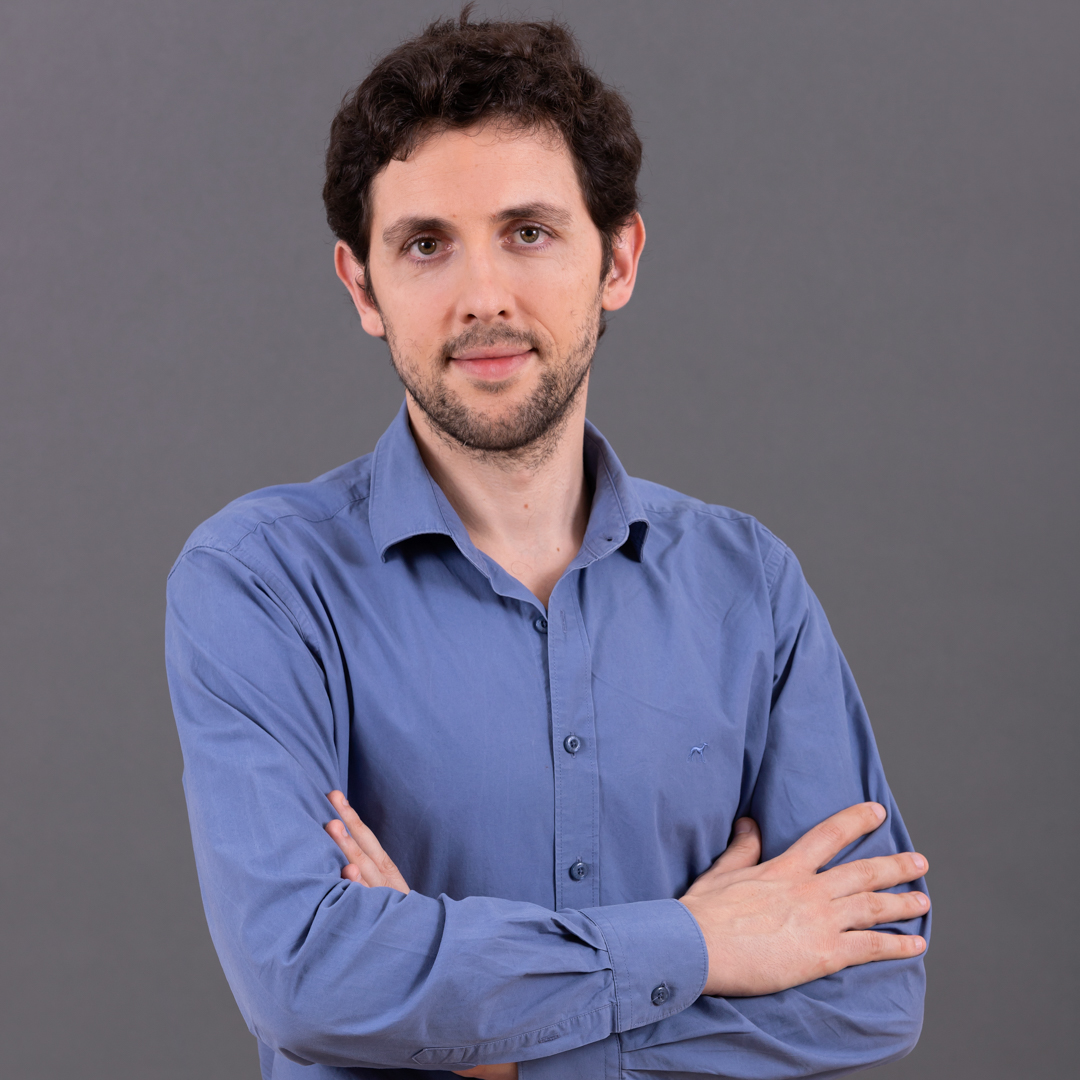
Dr. Vladimir Pozdnyakov is a Professor in the Department of Statistics at the University of Connecticut (Storrs Campus). His research focuses on applied probability, mathematical statistics, and sequential analysis with applications in insurance, ecology, and stochastic processes. Key areas include survival analysis for financial products, stochastic modeling of animal behavior, and estimation techniques for complex stochastic systems. He collaborates with researchers such as C. Hu, J. Yan, and M. Elbroch on interdisciplinary projects. His recent work spans insurance mathematics, ecological statistics, and statistical inference for stochastic processes. A personal website is available for further details.
Dr. Joy Tong is an Assistant Professor of Finance at the Ivey Business School, University of Western Ontario. Her research focuses on healthcare and finance, innovation, labor economics, and ESG factors. She holds a PhD and MA in Finance from Duke University and a BS in Mathematics and Economics from the University of Toronto. Her expertise includes corporate finance, entrepreneurial finance, and healthcare policy. Key publications include studies on healthcare costs' impact on corporate investment and patent reallocation post-bankruptcy. She has received grants from the Social Sciences and Humanities Research Council (SSHRC) for research on health insurance brokers in employer-sponsored markets. Teaching interests include Finance (HBA1) and M&A strategies. She is an Ivey MBA '80 Faculty Fellow and actively contributes to professional activities in finance education and policy analysis.
Carlos Miguel Dos Santos Oliveira is an Assistant Professor at the Higher Institute of Economics and Management (part of the University of Lisbon). He holds a Doctorate in Mathematics from Instituto Superior Técnico (2018), a Master’s in Financial Mathematics (2012), and a Bachelor’s in Mathematics applied to Economics and Management (2010), all from Portuguese institutions. His research focuses on stochastic optimization, financial mathematics, and their applications in environmental and policy-driven investment decisions. He has published extensively on topics such as optimal investment strategies, risk management, and the impact of climate-related events on financial portfolios. Key research interests include stochastic control theory, green investment under policy uncertainty, and the interplay between technology and market dynamics. His work frequently addresses real-world challenges like disaster risk mitigation and sustainable resource management. He has supervised master’s theses on topics such as insurance product improvement and climate change impacts on non-life insurance liabilities. Prof. Oliveira teaches courses in statistics, mathematical finance, and risk theory at both undergraduate and graduate levels. His academic contributions span multiple journals and conferences, with notable publications in Managerial Finance , Energy Economics , and Journal of Economic Dynamics & Control .
Prof. Claudia Czado is a Professor of Applied Mathematical Statistics at the Technical University of Munich (TUM), affiliated with the TUM School of Computation, Information and Technology. Her research focuses on statistical methodology, particularly vine copula models, applied to finance, insurance, engineering, and environmental sciences. She earned her Ph.D. in Operations Research from Cornell University and has held academic positions at York University (Canada) before joining TUM in 1998. Education: She studied at the University of Göttingen and received her doctorate from Cornell University in 1989. Her career includes roles as Assistant and Associate Professor at York University before becoming a full Professor at TUM. Research Interests: Her work centers on modeling complex dependencies using vine copulas, Bayesian inference, risk management, and applications in diverse fields like climate science and engineering. Notable contributions include the textbook Analyzing Dependent Data with Vine Copulas (2019). Awards: Recipient of the Fulbright Travel Grant (2001), Mathematical Sciences Institute Fellowship (1986–1987), and other fellowships from Cornell University. Advising & Grants: Supervised numerous theses (over 50 listed), contributing to academic mentorship. Active in collaborative projects with industry and international researchers. Labs/Teams: Co-founder of the "Global Challenges for Women in Math Science" program at TUM, promoting gender equality in STEM.
Raffaele Vardavas is a Professor of Policy Analysis at the RAND School of Public Policy and a senior-level mathematician at the RAND Corporation. His work integrates advanced mathematical modeling with public health policy, focusing on infectious disease transmission, socioeconomic systems, and behavioral dynamics. Institution: RAND Corporation School: RAND School of Public Policy Academic Rank: Professor Email: Raffaele_Vardavas@rand.org He holds a Ph.D. and M.Sci. in Physics from Imperial College London and completed postdoctoral training in applied mathematics at UCLA. His research bridges epidemiology, economics, and computational modeling to inform real-world policy decisions. Vardavas specializes in agent-based and population-level models for infectious diseases, with a focus on behavioral adaptation, social networks, and policy evaluation. His work spans influenza, HIV, antimicrobial resistance, and the socioeconomic impacts of pandemics like COVID-19. He has led numerous federally funded projects under NSF and NIH grants and contributed to WHO advisory efforts on integrated epidemiological-economic models. The recent articles reflect a strong trend toward policy-relevant simulation modeling, particularly in pandemic response, health care financing, workforce dynamics, and climate-health interactions. His methodologies emphasize robustness, behavioral realism, and decision support under uncertainty. Scientific Awards and Recognition: Principal Investigator on NSF and NIH (R21, R01) grants Member of WHO Technical Advisory Group on integrated models for COVID-19 Reviewer for NIAID influenza and COVID-19 grant panels Vardavas has led major research initiatives involving grant-funded projects, policy tools (e.g., the COVID-19 Decision Support Tool), and stakeholder-engaged modeling. His work has informed federal and state-level health policies, particularly in pandemic preparedness, insurance reform, and workforce planning. He is affiliated with interdisciplinary teams at RAND that combine behavioral science, economics, and systems modeling. He is actively engaged in developing synthetic data methods, microsimulation models (e.g., LHIEM, COMPARE), and AI-driven approaches to public policy challenges. His lab-like environment at RAND supports large-scale computational modeling and cross-sector collaboration.
Dr. Andrea Monaco is a physicist and academic currently serving as the Program Director of the Master’s in Financial Mathematics at University College Dublin. With a strong foundation in complex systems and statistical mechanics, he applies quantitative methods to financial modeling and risk assessment in banking and insurance sectors. His research focuses on the intersection of physics and finance, particularly in statistical mechanics , model risk , machine learning applications in finance , and the risks associated with digital platforms . These interdisciplinary interests reflect a growing field known as econophysics, where methods from theoretical physics are adapted to economic and financial systems. Dr. Monaco earned his Ph.D. from Université Grenoble Alpes in 2006, with early research conducted at ESRF – The European Synchrotron. His transition from academic physics to financial mathematics highlights a career dedicated to solving real-world quantitative challenges. He plays a key role in shaping advanced education in quantitative finance through his leadership of a specialized master's program, indicating significant involvement in curriculum design and academic administration. Dr. Monaco has participated in events such as the Econophysics Colloquium 2024 and the CSH Workshop on Complexity Science Hub, reflecting his engagement with the international research community in complexity science and financial systems.
Prof. Dr. Maren Diane Schmeck is an Associate Professor at the Institute for Mathematical Economics within the Faculty of Economics at Bielefeld University. Her research focuses on Actuarial Science and Financial Mathematics with Applications in Commodity Markets . She is affiliated with the SFB 1283 (Taming uncertainty) project, Bielefeld Graduate School in Theoretical Sciences , and the Center for Uncertainty Studies . PhD in Mathematical Economics from Oslo University (2009-2012) Diploma in Mathematical Economics from University of Cologne (2009) Her work addresses actuarial risk decomposition and commodity market modeling , particularly in electricity and energy derivatives. She develops frameworks incorporating mean-reversion , stochastic volatility , and seasonal effects in pricing swaps and options. Her 2025 publications introduce jump risk decomposition and empirical delivery period risk analysis . Recent collaborative papers with A. Kemper (2025) and Ladokhin/Borovkova (2024) explore business time modeling to improve commodity forward curve accuracy. She has contributed to reinsurance optimization and electric vehicle transition economics (2021).
Nico P. Dellaert is an Associate Professor at Eindhoven University of Technology (TU/e) in the Department of Industrial Engineering & Innovation Sciences. His research focuses on quantitative modeling of business processes, with applications in logistics, healthcare operations, and production-inventory control. He has contributed to diverse fields such as sewer system design, insurance claim behavior, and container terminal planning. Education: Mathematics (MSc) from Delft University of Technology; PhD in Production to Order at Eindhoven University of Technology. His prime research interests include integrating capacity and production decisions, city logistics, multimodal transportation, and healthcare planning. He employs mathematical modeling techniques in collaboration with companies and hospitals, emphasizing adaptability and practical implementation. Nico has been recognized with the IIE Transactions Best Paper Award (2012) and the EURO Award for Best EJOR Review Paper (2016). He has directed the International Program in Logistics Management Systems (2002-2011) and led the Health Care Operations Lab within the OPAC group. His teaching portfolio covers inventory control, system dynamics, healthcare logistics, and operations planning. Projects like 'Multi-echelon Inventory Optimization' (2019-2021) and 'Da Vinc3i' (2011-2014) highlight his applied research approach. Collaborations span sectors including healthcare, logistics, and production systems.
Mario Marino is a Fixed Term Researcher at the Department of Economics and Management (DEAMS) of the University of Trieste. His research focuses on Mathematical Methods applied to Economy, Finance, and Actuarial Sciences. He is currently involved in the 'Building resilience to emerging risks in financial and insurance markets' project (Active) and previously contributed to consultancy projects for the Veneto Court of Audits. His work bridges theoretical mathematical frameworks with practical applications in financial regulation and market stability analysis. Departmental Roles: Member of the Department's Board Current Research: Active participation in projects addressing financial market resilience and insurance sector dynamics His research interests emphasize quantitative methodologies for economic systems analysis, with a focus on risk assessment frameworks and actuarial modeling techniques.
Engin Iyidogan is an Assistant Professor of Finance at SKEMA Business School in Paris, France. His research focuses on cryptocurrency design, blockchain technology, and frontier market formations. He holds a PhD in Finance from Imperial College London (2019), an MSc in Economics from Koç University (2014), and a BSc in Electrical and Electronics Engineering from Bilkent University (2012). Education Highlights: Imperial College London (PhD), Koç University (MSc), Bilkent University (BSc) His research interests span fintech innovations, decentralized systems, and blockchain applications in finance. Recent work explores blockchain adoption in reinsurance markets and governance efficiency in fashion supply chains. He has presented at major conferences including the Academy of Management and the FMA Annual Conference. Notable contributions include analyzing systemic risk in cryptocurrency markets and developing equilibrium models for blockchain-based currencies. He serves as a reviewer for the Journal of Corporate Finance . Awards: 2005 Silver Medal in National Mathematical Olympiad Engin has advised on multiple research grants and collaborates with institutions like the IFZ FinTech Colloquium. His work bridges engineering principles with financial systems, reflecting his interdisciplinary background.
Bjarne Astrup Jensen is an Associate Professor at the Department of Finance (BAFI) at Copenhagen Business School (CBS). He specializes in financial economics with a focus on taxation, debt tax shield mechanisms, retirement savings optimization, and economic growth dynamics. His work bridges theoretical models with real-world applications, particularly in corporate finance and public policy analysis. Research interests include analyzing how tax policies influence investment decisions, debt structures, and long-term economic outcomes. His recent studies explore optimal retirement savings strategies, the impact of debt tax shields on interest rates and growth, and risk diversification for individual investors. Collaborations with institutions like Landsbyggefonden and Levring & Levring A/S highlight his engagement with applied financial analysis in housing markets and mortgage systems. He contributes to CBS's Pension Research Center, addressing pension system design and lifecycle economic modeling. His publications appear in journals like Journal of Banking & Finance , Insurance: Mathematics and Economics , and Quarterly Journal of Finance , reflecting his expertise in both theoretical and applied finance. His research demonstrates a consistent focus on integrating tax frameworks with macroeconomic and microeconomic decision-making processes.
Marcel Fischer is an Associate Professor in the Department of Finance at Copenhagen Business School. His research focuses on how market imperfections influence portfolio decisions and asset prices, with particular expertise in portfolio management, financial economics, and taxation policies. Fischer has published extensively in top journals such as the Journal of Financial Economics and Review of Finance . His work explores topics including heuristic portfolio rules under tax constraints, homeownership decisions during economic downturns, and the interplay between debt tax shields and interest rates. Recent studies analyze optimal retirement savings strategies and spatial correlations in housing markets. Fischer has collaborated with researchers like Bjarne Astrup Jensen and Natalia Khorunzhina, producing influential papers on topics such as lifecycle portfolio choices and the impact of divorce risk on housing decisions. While no specific awards are listed, his prolific publication record reflects significant academic contributions. His research often integrates closed-form mathematical models with real-world policy implications, emphasizing practical applications in tax-deferred investing and pension planning.
Dr. Joanna Dębicka is a Professor and Head of the Department of Statistics at Wrocław University of Economics. Her primary research focuses on advanced modeling of life insurance contracts, including multi-state and multi-option financial instruments in both primary and secondary markets. She specializes in actuarial methods for senior financial security and family welfare, using statistical tools to analyze socio-economic phenomena like structural changes in mortality and comparative data analysis. Key research areas include: Multi-state insurance models (critical illness, marriage, viatical contracts) Thurstone scale methodology for preference measurement Optimization strategies in secondary insurance markets Mortality modeling under pandemic impacts Her recent work emphasizes stochastic economic environments and the interplay between health status, lifestyle, and insurance outcomes. She advises on actuarial valuations for complex contracts and provides expert analyses of socio-economic data structures via statistical methodologies. Consultation services include: Actuarial modeling for multi-option life insurance Statistical analysis of socio-economic datasets Viatical market optimization Labs/Teams: Leading the Department of Statistics at UEW, she collaborates on interdisciplinary projects involving actuarial science, demography, and financial engineering.
Dr. Francesco Ungolo is a Senior Lecturer in the School of Risk and Actuarial Studies at the UNSW Business School, with concurrent roles as an Associate Investigator at the ARC Centre of Excellence in Population Ageing Research (CEPAR) and a qualifying actuary for the Institute and Faculty of Actuaries UK. His academic journey includes a 2019 PhD in Actuarial Mathematics from Heriot-Watt University (Edinburgh), postdoctoral work at Technische Universiteit Eindhoven (2019-2021), and research appointments at Technische Universität München's Mathematical Finance Chair (2021-2022). Research activities focus on: Statistical models for actuarial datasets with corrupted data (missing observations, censoring, truncation, protected features) Stochastic mortality modeling for single/multiple populations, emphasizing continuous-time affine models Application of actuarial methods to retirement decision-making and innovative insurance product design (LTC, health insurance, annuities) Bayesian techniques for large-dimensioned datasets (including telematics data) Article trends reveal expertise in: Dirichlet process mixtures for dependent lifetimes and competing risks Affine mortality models with jump components for improved forecasting Latent class modeling for heterogeneous variance structures Computational methods for asset-liability management in insurance Missing data imputation techniques for pension schemes Machine learning applications in multi-population mortality analysis
Evaggelaras Charalampos is an Associate Professor at the Department of Statistics and Insurance Science, University of Piraeus. He holds a PhD in Mathematics (Statistics) from the National Technical University of Athens (NTUA), an M.Sc. in Applied Mathematics from NTUA, and a Diploma in Mathematics from the University of Athens. He has been teaching since 2008, offering courses in Applied Statistics, Regression Analysis, and Statistical Packages across multiple institutions including the University of Central Greece and Open University of Greece. Research Interests: Focuses on experimental design methodologies, including Orthogonal Arrays, Fractional Factorial Designs, Supersaturated Designs, and Latin Hypercubes. His work emphasizes Off-line Quality Control, Algebraic Statistics, and efficient model identification using combinatorial methods. Has published 47 peer-reviewed journal articles and 2 book chapters, contributing to statistical design theory and applications. Authored two Greek-language textbooks on regression analysis for academic and practical use. Teaching roles span undergraduate and postgraduate programs in Applied Statistics, including specialized courses on Data Analysis, Experimental Design, and Quality Assurance. Actively involved in curriculum development and statistical package training.