

David Landriault is a Professor in the Department of Statistics and Actuarial Science at the University of Waterloo, Canada, and a Canada Research Chair in Risk Theory. His research focuses on Actuarial Science, Quantitative Risk Management, Applied Probability, and Stochastic Processes, particularly in ruin theory, drawdown analysis, and stochastic control for insurance and finance applications. Education: PhD in Mathematics (2005), MSc in Mathematics (2003), BSc in Actuarial Science (2002) from Laval University. Affiliations: University of Waterloo (postdoctoral fellowship, 2006); Canada Research Chair in Risk Theory. Research Interests Risk and Ruin Theory Stochastic Control in Insurance and Finance Drawdown and Occupation Time Analysis Regime-Switching Models Reinsurance Design and Optimization Time-Dependent Risk Models Scientific Awards Fellow of the Canadian Institute of Actuaries (F.C.I.A.), 2009 Fellow of the Society of Actuaries (F.S.A.), 2006
جستوجوی استاد و پژوهشگر
استاد راهنما، استاد دانشگاه یا پژوهشگر مناسب برای مسیر پژوهشیتان را پیدا کنید و با او ارتباط بگیرید.
نمایش ۱-۱۵ از ۱۰۳ استاد راهنما
اطلاعات این پروفایلها از صفحات عمومی دانشگاهها جمعآوری شده و ممکن است بهروز نباشد.
Louis G. Doray is a Full Professor of Actuarial and Financial Mathematics at the Department of Mathematics and Statistics, University of Montreal. His research focuses on statistical modeling in insurance, particularly in claim frequency, claim severity, survival analysis at advanced ages using logistic mortality models, and incurred but unreported accidents. Research Areas: Statistical modeling for insurance claims Survival analysis and logistic mortality models Actuarial applications of characteristic functions and fractional moments Risk management in financial mathematics Supervision: He has supervised graduate students including R. Momeya, I. Groparu-Cojaocaru, and Z. Ben Salah.

Cody Hyndman is a Full Professor and Acting Department Chair at the Department of Mathematics and Statistics, Concordia University, with a focus on Mathematical Finance, Machine Learning, and Stochastic Analysis. He has held significant administrative roles including Department Chair (2017–2023) and Acting Graduate Programs Director (2025–2025). Education: PhD, University of Waterloo (2005) MSc, University of Alberta BCom, University of Alberta His research spans Mathematical Finance , Stochastic Differential Equations , and Machine Learning , with notable contributions to arbitrage-free modeling, neural networks, and computational methods. Recent publications emphasize geometric deep learning and regularization techniques in finance. Scientific Awards: 2023: Concordia Academic Leadership Award Hyndman supervises graduate students in Mathematics and Statistics and co-founded the NSERC CREATE Program on Machine Learning in Quantitative Finance and Business Analytics (FIN-ML) , fostering industrial internships and interdisciplinary training.
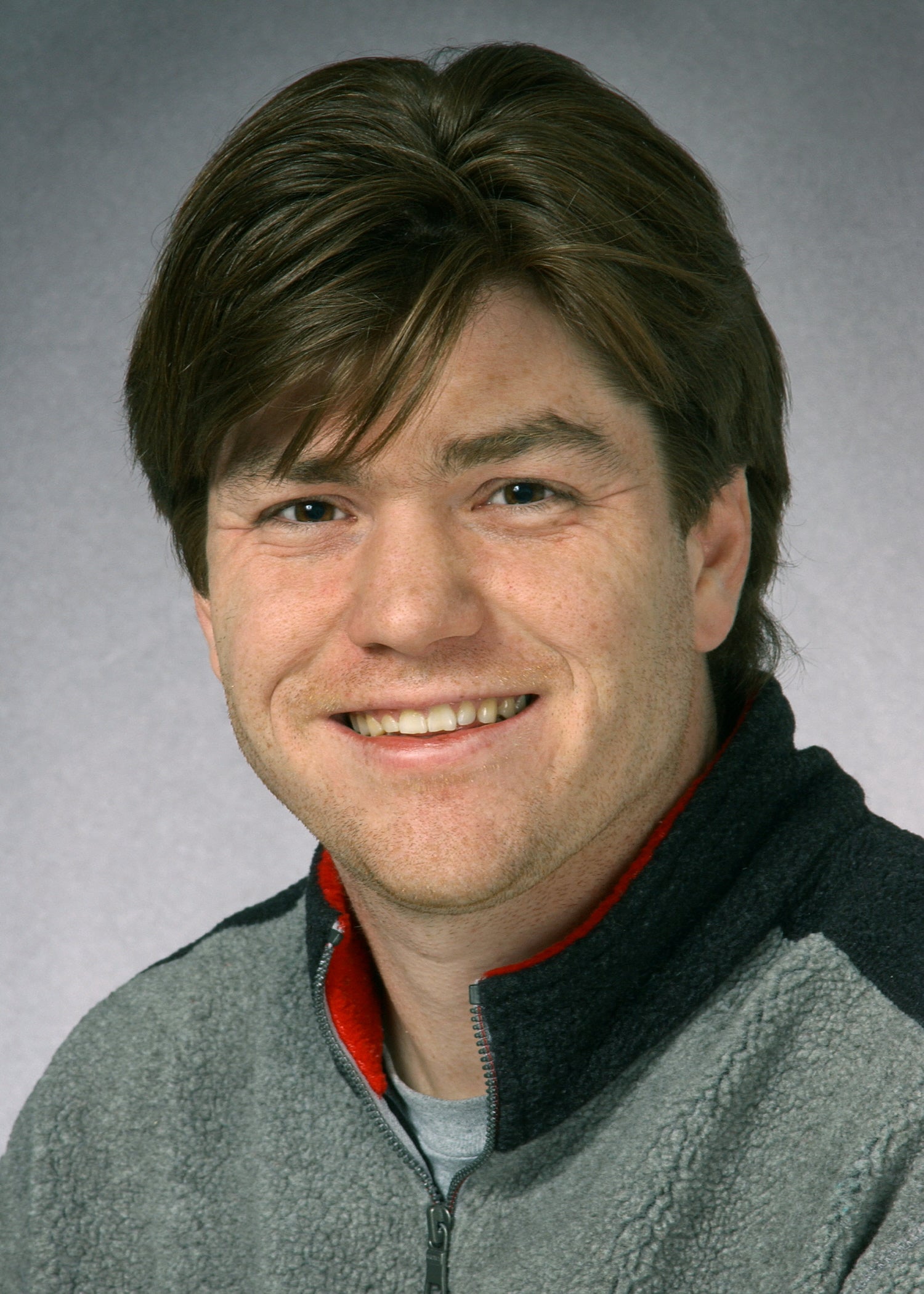
David Saundersمشاهده پروفایل
دانشیار
David Saunders is an Associate Professor in the Department of Statistics and Actuarial Science at the University of Waterloo, affiliated with the David R. Cheriton School of Computer Science. His research focuses on quantitative risk management, mathematical finance, and stochastic optimization with applications to credit risk, portfolio optimization, and derivatives pricing. Professor Saunders has held academic positions at the University of Pittsburgh and Cyprus International Institute of Management, and has consulted for institutions like RiskMetrics, TD Bank, and Central Bank of Cyprus. Education: PhD studies at the University of Toronto with industry collaboration at Algorithmics Inc., followed by roles at Cyprus International Institute of Management and University of Cyprus's HERMES Center. His work bridges theoretical stochastic analysis and practical financial risk management challenges. Research interests prominently feature credit risk management, optimal stopping problems, and analytical techniques in finance. Recent work addresses inverse default boundary problems, wrong-way risk in derivatives, and efficient algorithms for portfolio optimization under complex return distributions. Collaborations with financial institutions drive applied research in capital allocation, operational risk modeling, and regulatory compliance. Advising and grants include directing the Professional Science Master's in Mathematical Finance at Pitt, supervising student-industry projects on credit risk and CDO pricing, and securing funding for computational finance initiatives. Active in RiskLab Cyprus and HERMES European Center, his research extends to equity risk management and market risk frameworks.
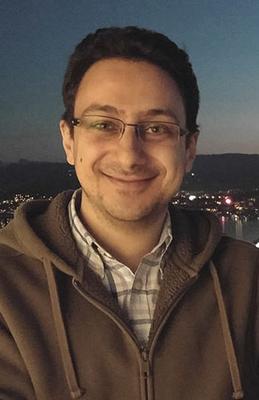
Angelos Georghiouمشاهده پروفایل
استادیار
Angelos Georghiou is an Assistant Professor at the University of Cyprus and holds an affiliation with the Desautels Faculty of Management at McGill University . His research bridges game theory, optimization, and risk modeling, with applications in insurance and decision science. Primary Affiliation : University of Cyprus Secondary Affiliation : Desautels Faculty of Management, McGill University Research Focus : Georghiou specializes in derivative-free optimization , entropic risk estimation , and multistage stochastic programming , particularly in mitigating tail risks in insurance and developing robust data-driven prescriptive models. His work emphasizes algorithmic solutions for complex decision-making under uncertainty. Entropic Risk Estimation Regret Minimization Stochastic Optimization Machine Learning Applications Scientific Recognition : 2022 Esdras-Minville Prize (HEC Montréal) for risk-averse regret minimization research

Kenneth Zhouمشاهده پروفایل
دانشیار
Kenneth Zhou is an Associate Professor in the Department of Statistics and Actuarial Science at the University of Waterloo. His academic profile indicates expertise in statistical methods and actuarial modeling, though specific research details are not provided in the source materials. Based on departmental affiliation, his work likely involves developing statistical models for risk assessment, insurance mathematics, or data analysis techniques. Zhou maintains an office in the Mathematics 3 building (M3 3131) and can be contacted via university email.
Lindsey Westover, PhD, PEng, serves as an Associate Professor in the Department of Mechanical Engineering and Associate Dean in the Faculty of Engineering at the University of Alberta. Her research and teaching activities are centered in the Biomedical Engineering program, with her laboratory located in the Donadeo Innovation Centre for Engineering (13-224, 9211 116 St, Edmonton, AB T6G 2H5). She maintains an active research profile while contributing to academic leadership through her deanship. Her educational background includes: 2018: Postdoctoral Fellowship in Rehabilitation Medicine, University of Alberta 2016: Ph.D. in Mechanical Engineering, University of Alberta 2011: M.Sc. in Mechanical Engineering, University of Calgary 2007: B.Sc. in Mechanical Engineering, University of Calgary Dr. Westover's research program spans biomechanics and biomedical engineering with emphasis on noninvasive assessment of biological structures, vibration analysis for percutaneous implants, joint biomechanics (ligaments and cartilage), spinal deformity analysis through asymmetry metrics, mechanical testing of biological tissues, and computational modeling of biological systems. Her work integrates laboratory experiments, computational methods, and in vivo studies to develop innovative diagnostic and therapeutic approaches. Analysis of her 15 most recent publications (2018-2020) reveals consistent focus on bone mechanics, implant stability, and symmetry analysis across orthopedics, audiology, and dentistry. Key themes include osseointegration evaluation using ASIST technology, pelvic/spinal deformity quantification, and computational modeling of biological structures. Her work appears in high-impact journals spanning engineering and clinical disciplines, demonstrating strong interdisciplinary collaboration. Scientific recognition includes: Nomination for Ear and Hearing 2018 Editor's Award for bone conduction device research Dr. Westover mentors graduate students through co-authorship on numerous publications and teaches core mechanical engineering courses including MEC E 451 (Vibrations and Sound), MEC E 390 (Numerical Methods), and MEC E 200 (Introduction to Mechanical Engineering). Her research is supported by collaborative grants with clinical partners and engineering colleagues. She leads biomechanics research within the Department of Mechanical Engineering, collaborating extensively with the Faculty of Rehabilitation Medicine and surgical departments. Her laboratory develops advanced testing systems like ASIST for implant stability evaluation across hearing devices and dental applications, while her computational work informs clinical approaches to scoliosis management and fracture reconstruction.

Manuel Moralesمشاهده پروفایل
دانشیار
Manuel Morales is an Associate Professor in the Department of Mathematics and Statistics at the University of Montreal since 2005. He holds a Ph.D. in Mathematics (2003) from Concordia University, an M.Sc. in Statistics (2000) from Concordia, and a B.Sc. in Mathematics (1996) from the National Autonomous University of Mexico. His research focuses on Financial and Actuarial Mathematics, particularly in Ruin Theory, Lévy processes, and High-Frequency Finance. He leads applied projects integrating Machine Learning in Banking and ESG Investment, and has pioneered AI governance frameworks at the National Bank of Canada as their Chief AI Scientist. Education: Ph.D. Mathematics, Concordia University, 2003 M.Sc. Statistics, Concordia University, 2000 B.Sc. Mathematics, National Autonomous University of Mexico, 1996 Research Interests: His work spans theoretical and applied directions, including non-Gaussian option pricing, regime-switching models, Limit Order Book dynamics simulation, and AI applications in finance. He emphasizes responsible investment and ESG factors through alternative data analysis. Advising & Partnerships: Supervises Master’s/Ph.D. students in Insurance and Financial Mathematics. Leads the FinML Network (since 2018) and collaborates with industry partners like the National Bank of Canada on AI-driven financial projects. His grants and contracts enable applied research in high-frequency market surveillance and model governance. Labs & Teams: Directs the FinML Network and oversees the National Bank’s AI initiatives, focusing on AI governance and algorithmic trading strategies.

Liqun Diaoمشاهده پروفایل
دانشیار
Liqun Diao is an Associate Professor (Tenured) in the Department of Statistics and Actuarial Science at the University of Waterloo. He holds affiliations with the Health Data Science Lab and the Waterloo Artificial Intelligence Institute. His research focuses on developing statistical methods and machine learning algorithms for applications in medicine, public health, and insurance. Education: B.Econ. in Statistics, Renmin University of China (2007) M.Math. in Statistics (Biostatistics), University of Waterloo (2009) Ph.D. in Statistics (Biostatistics), University of Waterloo (2013) Research Interests: Recursive partitioning and tree-based methods for survival and health data Causal inference and missing data methodologies Bayesian nonparametric models and copula dependence structures Mortality forecasting and actuarial science applications Awards: 2013 Pierre Robillard Award (best doctoral thesis in Canadian statistics) 2024 Outstanding Performance and Teaching Awards at UW Professional Activities: Led research groups in health data science and AI Recipient of multiple grants from NSERC and industry partners Advises graduate students in statistics and actuarial science Labs/Teams: Active contributor to the Health Data Science Lab and Waterloo AI Institute, focusing on applying statistical innovations to real-world health and insurance challenges.

Archer Yangمشاهده پروفایل
دانشیار
Archer Yang is an Associate Professor in the Department of Mathematics and Statistics at McGill University, with additional affiliations as an Associate Academic Member of Mila - Quebec AI Institute, Associate Member of the School of Computer Science, and Member of the Quantitative Life Science Program. His academic journey began with a PhD from the University of Minnesota under the supervision of Hui Zou, establishing his foundation in statistical methodology and machine learning. Dr. Yang's research spans three interconnected themes: statistical machine learning, applications in drug discovery, and computational genomics and healthcare. In statistical machine learning, he focuses on developing dimensionality reduction, probabilistic models, and causality-inspired methods to address complex high-dimensional data challenges. His work in drug discovery involves creating machine learning models to accelerate drug candidate identification and enhance understanding of drug efficacy and safety. In computational genomics and healthcare, he develops techniques to analyze genomic data, identify biomarkers, and explore the genetic basis of diseases, with the goal of improving precision medicine and predicting patient outcomes. His overarching objective is to bridge advanced data-driven methodologies with impactful applications in pharmacology, genomics, and healthcare. His recent publications reveal a strong trend toward applying machine learning to healthcare challenges, particularly in congenital heart disease analysis, mortality prediction, and drug discovery. His work demonstrates expertise in developing interpretable models that can handle complex, high-dimensional biomedical data while maintaining statistical rigor. The integration of causal inference methods with machine learning appears to be a growing focus in his research trajectory. ICML Spotlight Paper (top 2.6%, 313/12,107) Dr. Yang actively supervises a large research group including multiple postdoctoral fellows, PhD students, and Master's students. His lab has developed several notable software tools, including ml-mr for machine learning in Mendelian randomization. His supervision extends across statistics, computer science, and biomedical applications, reflecting the interdisciplinary nature of his work. He appears to maintain strong collaborative relationships with researchers in healthcare and genomics fields. His laboratory, the Archer Yang Lab, maintains active GitHub repositories focused on machine learning applications in healthcare and drug discovery, with particular emphasis on interpretable models and statistical methodology development. The lab appears to work at the intersection of theoretical statistics and practical biomedical applications, with projects spanning from algorithm development to clinical implementation.
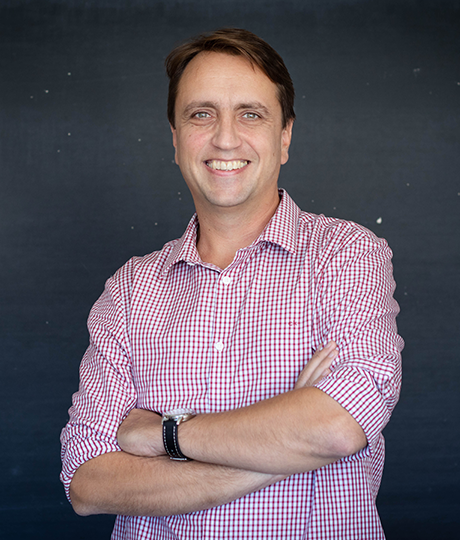
Andrei L. Badescu is a Professor of Actuarial Science and Director of the Master of Financial Insurance in the Department of Statistical Sciences at the University of Toronto. His academic leadership spans editorial roles at Insurance: Mathematics and Economics and program direction for graduate actuarial programs. His educational foundation includes: BSc in Mathematics and Economics from Bucharest University of Economic Studies (1998) MSc in Mathematics and Economics from Bucharest University of Economic Studies (2000) PhD in Actuarial Science from Western University (2004) He completed postdoctoral training at the University of Waterloo (2006) before joining the University of Toronto faculty in 2006. Research interests evolved from foundational work in Risk and Ruin Theory using Matrix Analytic Methods to contemporary applications in Stochastic Claim Reserving, Dependence Modelling, and Predictive Analytics. Current emphases include Telematics risk assessment and Insurance Data Science, leveraging advanced statistical techniques for real-world insurance challenges. Recent publications (2021-2025) reveal a strategic shift toward data-driven insurance solutions. Key trends include micro-level claim reserving via inverse probability weighting, telematics-based driving risk modeling using unsupervised learning, and mixture-of-experts frameworks for portfolio ratemaking. These works bridge traditional actuarial science with machine learning, particularly in handling censored data and operational risk. Professor Badescu mentors five doctoral students (Spark Tseung, Sebastian Calcetero, Ian Weng, Sophia Chan, Hassan Abdelrahman) and two master's students (Kaihua Sun, Yifeng Ge). His administrative leadership includes directing the Master of Financial Insurance program and previously overseeing the Data Science concentration in the Master of Applied Computing. His research group develops practical tools like the LRMoE.jl software package for actuarial loss modeling, while future work targets telematics integration and insurance-specific artificial intelligence applications.

- Actuarial Science
- Risk Management
- Insurance
- +۶ مورد دیگر
Dr. Edward Furman is a Professor in the Department of Mathematics and Statistics at York University, leading the Actuarial Science Program and serving as Founding Director of the Risk and Insurance Studies Centre (RISC). He holds a Master's (Distinction) and PhD (Summa Cum Laude) in Actuarial Science and Probability Theory from the University of Haifa, Israel. His research focuses on distribution theory, risk measurement, insurance pricing, and systemic risk modeling. Notable achievements include winning the Fortis Chair Best Paper Prize (K. U. Leuven) for collaborative work and serving as an external consultant for institutions like the Central Bureau of Statistics (Israel) and the Society of Actuaries (U.S.). Dr. Furman's work bridges theoretical and applied domains, with funded research by NSERC, the Society of Actuaries, and the Casualty Actuarial Society. He is a Fellow of the Science Leadership Program at the University of Toronto and an Associate Editor of the Journal of Statistical Distributions and Applications (Springer). His interdisciplinary RISC unit explores holistic approaches to insurance risk, integrating actuarial science with statistical and economic frameworks. Research Themes: Dependence modeling, risk capital allocation, systemic risk measurement, and inclusive insurance design. Consulting Expertise: Collaboration with public and private sector entities on actuarial and statistical challenges. Grants: Supported by NSERC, SOA, and CAS for projects on risk aggregation and insurance pricing models.

Gord Willmot is a Professor in the Department of Statistics and Actuarial Science at the University of Waterloo and an Adjunct Professor at the University of Toronto. He holds the endowed position of Munich Re Professor of Insurance. His research focuses on insurance mathematics, particularly aggregate claims models, ruin theory, and surplus analysis using tools from applied probability and mathematical reliability theory. He is a co-author of the textbook Loss Models , widely used in professional actuarial exams. Willmot earned his BMath (1980), MMath (1981), and PhD (1986) from the University of Waterloo. He is a Fellow of the Society of Actuaries (F.S.A.) and the Canadian Institute of Actuaries (F.C.I.A.). His work includes contributions to discounted penalty functions, Laplace transform techniques, and phase-type distributions in risk analysis. He has taught at international conferences, including the Ninth International Congress on Insurance: Mathematics and Economics. Key research areas include ruin probability analysis, time-dependent risk models, and reinsurance treaties. His publications span journals like Insurance: Mathematics and Economics and Scandinavian Actuarial Journal , addressing topics such as Coxian interclaim times, mixed Erlang distributions, and deficit analysis at ruin. Willmot’s expertise bridges theoretical advancements and practical applications in insurance risk management.

Fan Yangمشاهده پروفایل
دانشیار
Fan Yang is an Associate Professor in the Department of Statistics and Actuarial Science at the University of Waterloo. His research focuses on quantitative risk management and actuarial science, with emphasis on extreme value theory, asymptotic analysis of rare events, and heavy-tailed distributions. He holds a PhD in Applied Mathematical and Computational Sciences from the University of Iowa (2013), and BS degrees in Computational Mathematics and International Economics & Trade from Xi’an Jiaotong University (2008). Education: PhD, Applied Mathematical and Computational Sciences, University of Iowa, 2008–2013 MS, Mathematics, University of Iowa, 2008–2010 BS, Computational Mathematics, Xi’an Jiaotong University, 2004–2008 BS (minor), International Economics and Trade, Xi’an Jiaotong University, 2004–2008 Research Interests: Yang’s work addresses theoretical and applied aspects of risk modeling in insurance and finance. Key areas include extreme value theory for financial and insurance risks, asymptotic analysis of rare events, risk aggregation under dependence structures, and heavy-tailed distribution modeling. His research bridges mathematical rigor with practical applications in risk management, including catastrophe insurance and portfolio diversification. Publications: His recent work examines topics like asymptotic portfolio diversification, CAT bond premium prediction, and extreme risk estimation using copula models. These studies highlight trends in quantifying and managing extreme risks through advanced statistical methods. Awards: No specific prizes or fellowships are noted in the provided texts. Teaching & Service: Yang teaches courses on advanced actuarial topics including extreme value theory, quantitative risk management, and financial mathematics. He actively contributes to the academic community through peer-reviewed publications and graduate supervision.
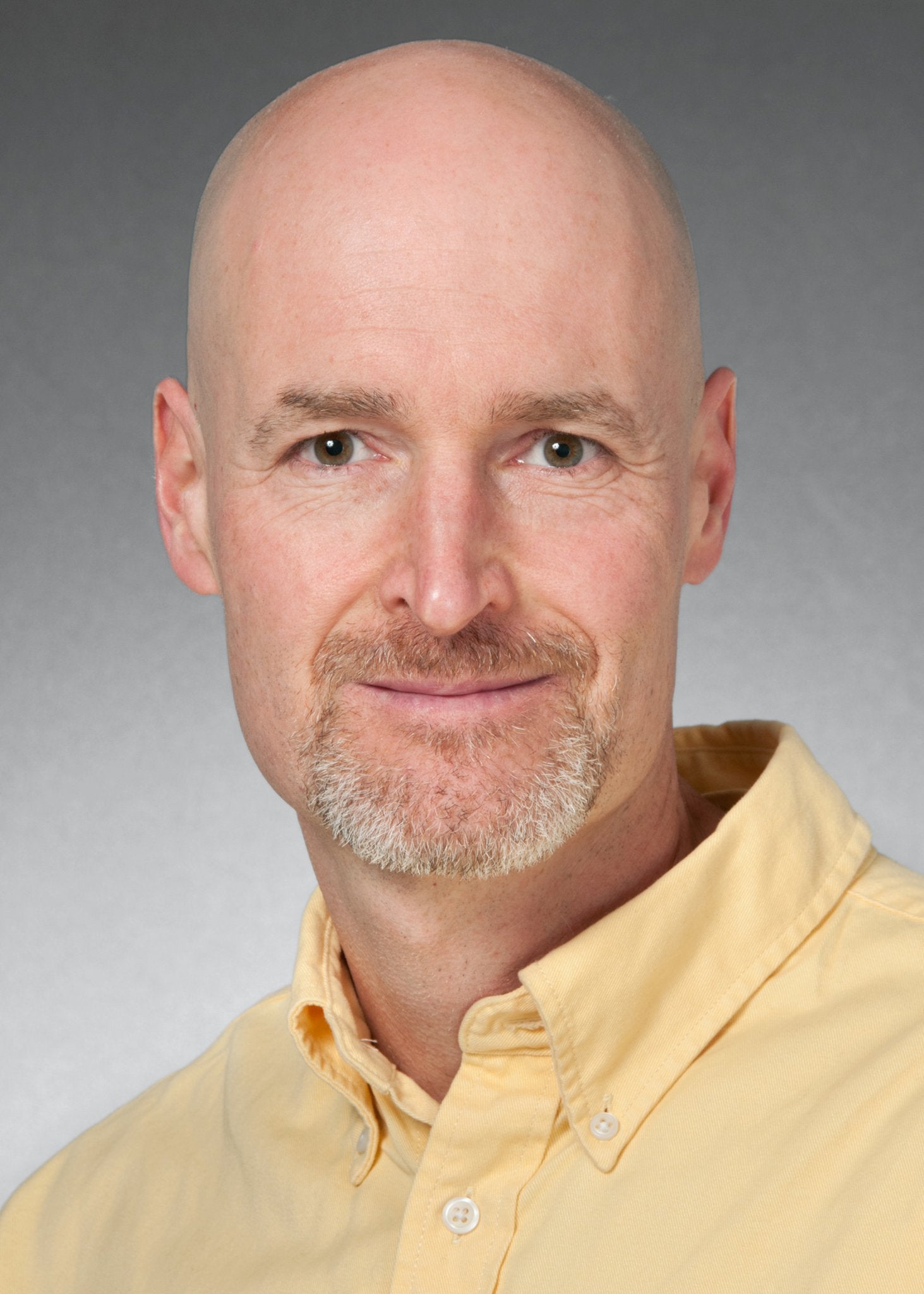
Keith Freelandمشاهده پروفایل
دانشیار
Keith Freeland is an Associate Professor (Teaching Stream) at the University of Waterloo's Department of Statistics and Actuarial Science, and Director of the Business Administration and Mathematics Double Degree Program. He holds a PhD in Business Administration from the University of British Columbia and a BSc in Actuarial Science from the University of Calgary. His career includes roles as an assistant professor at Waterloo from 2000–2010. Research interests historically focused on equity-linked insurance products and discrete-valued time series analysis, though he is no longer actively researching. He teaches courses like MATBUS 470 (Derivatives) and MATBUS 472 (Risk Management), emphasizing mathematical finance and financial risk management. Notable publications include work on categorical ARMA models, quasi-locally powerful tests for conditional variance, and integer-valued time series analysis. He holds the ASA designation from the Society of Actuaries (1991). Freeland's contributions bridge actuarial science, statistics, and financial mathematics, with teaching and past research centered on practical applications in risk management and insurance product modeling.