Friederike Lenelمشاهده پروفایل
پژوهشگر ارشد
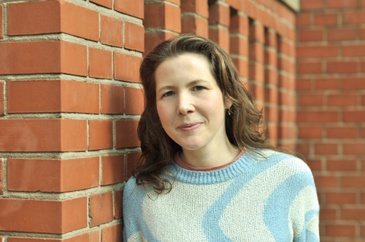
Friederike Lenel serves as Senior Scientist at the Potsdam Institute for Climate Impact Research (PIK) within the Department Climate Resilience and Working Group 'Adaptation in Agricultural Systems', while concurrently holding a part-time Dorothea-Schlözer fellowship at the University of Göttingen's Chair of International Economic Policy. Her PIK role focuses on evaluating climate adaptation interventions for farmers in West and Central Africa through the BMU-funded PACO project. Her academic foundation includes a PhD from DIW Berlin and Humboldt University, postdoctoral research in Göttingen's 'Globalization and Development' program, and a visiting scholarship at Stanford's King Center on Global Development. Lenel's research pioneers the integration of development and behavioral economics to dissect decision-making under uncertainty, particularly examining how formal and informal institutions interact in climate-vulnerable contexts. She deploys network analysis and field experiments across Southeast Asia and Africa to study risk-sharing mechanisms, adaptation behavior, and crisis response—revealing how informational nudges and institutional design can reshape economic resilience. Her 2020-2023 publications demonstrate consistent methodological innovation, merging high-frequency data tracking with randomized trials to evaluate mHealth interventions in Indonesia, solar adoption in microenterprises, and pandemic impacts on Cambodian education. Geographically concentrated in developing economies, her work identifies actionable pathways for transforming climate adaptation practices through behavioral insights. Scientific recognition includes: Dorothea-Schlözer fellowship (University of Göttingen, 2022) As lead impact evaluator for the PACO project, Lenel directs BMU-funded small-grant initiatives transforming national adaptation priorities in West/Central Africa. Her field-based approach involves close collaboration with local communities and policymakers to translate experimental findings into scalable adaptation tools, while her Göttingen fellowship supports continued methodological development in economic decision theory. Embedded within PIK's 'Adaptation in Agricultural Systems' working group, she contributes to interdisciplinary climate resilience research connecting behavioral science with agricultural policy—specifically analyzing how uncertainty perception influences farmers' adoption of adaptive practices in data-scarce regions.