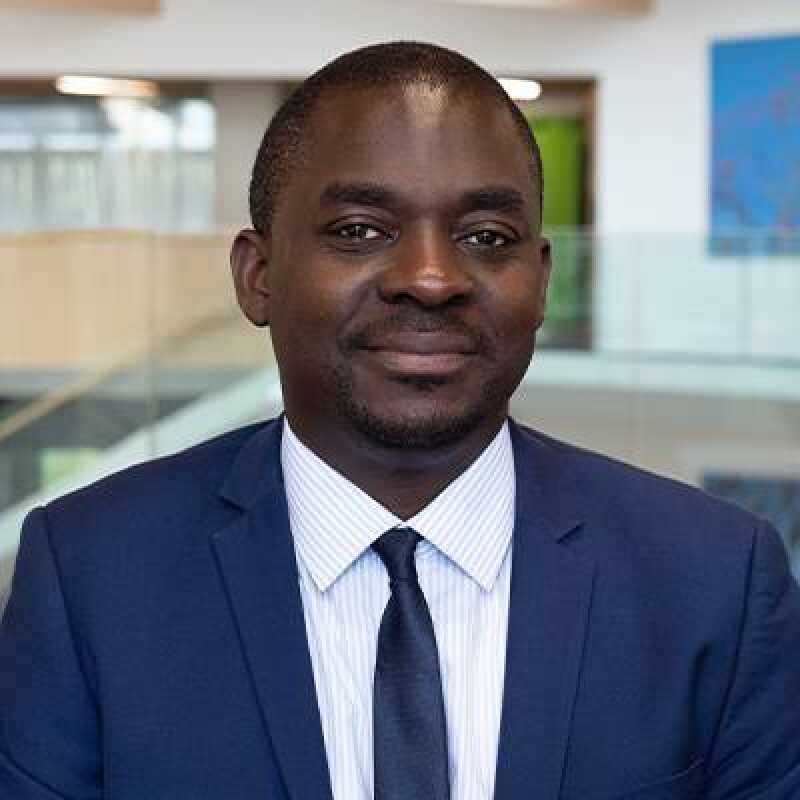
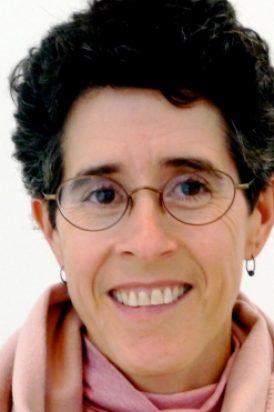
Professor Jennifer Payne is Warden of Merton College, Oxford, and a leading authority in company law, corporate finance law, financial regulation, and corporate insolvency. She has authored numerous influential books and articles, and holds significant editorial and advisory roles in the academic and policy-making spheres. Research Interests: Company law and corporate governance Corporate finance and securities regulation Financial regulation and policy Corporate insolvency and debt restructuring Comparative and European financial law Her work spans both theoretical and practical dimensions, with a strong focus on regulatory frameworks, legal reforms, and cross-border financial issues. She has contributed extensively to policy debates and legal developments in the UK and EU. Scientific Awards & Honors: Elected to membership of the International Insolvency Institute (2016) Member of ESMA’s Securities and Markets Stakeholders Group (2016–2018) Member of ESMA’s Corporate Finance Standing Committee Consultative Working Group (2015–2017) Law Delegate of Oxford University Press (2020–present) Expert Advisory Panel member to the Law Commission on Intermediated Securities and Digital Assets Editorial & Advisory Roles: Founder editor, Journal of Corporate Law Studies Founder editor, Oxford Business Law Blog Review Articles editor, Oxford Journal of Legal Studies Contributor to Palmer’s Company Law Visiting Positions: She has held visiting professorships at Melbourne Law School, National University of Singapore, and the University of Auckland, reflecting her international academic influence.
Prof. Dr. Evi Hartmann holds the Chair of Business Administration, especially Supply Chain Management at Friedrich-Alexander University Erlangen-Nuremberg (FAU) within the Department of Business, Economics, and Social Sciences. She is actively involved in multiple research focus areas including sustainability, energy markets and energy system analysis, and insurance and risk. Her academic leadership extends across interdisciplinary collaborations with engineering, mathematics, and industry partners. Dr. Hartmann studied industrial engineering at the University of Karlsruhe (TH), received her doctorate in 2002 from the Institute of Technology and Management at the Technical University of Berlin, and completed her habilitation in business administration in 2008. Prior to her academic career, she worked as a consultant at AT Kearney from 1998 to 2005, followed by a junior professorship for 'Purchasing and Supply Management' at the Supply Chain Management Institute at the European Business School. Her research program focuses on supply chain management, purchasing, and strategic foresight, with particular emphasis on application-oriented approaches that bridge theory and practice. Current research trajectories include supply chain resilience in crisis situations (including pandemic response), digital transformation through Industry 4.0 technologies, sustainable and low-carbon supply chains, and the integration of strategic foresight methodologies in logistics decision-making. Her work frequently employs Delphi studies, bibliometric analyses, and multi-tier case studies to examine complex supply chain phenomena. Analysis of her recent publications reveals a strong trend toward interdisciplinary research that combines supply chain management with digital transformation, sustainability, and crisis response. Her work increasingly examines the intersection of technology adoption (particularly Industry 4.0), organizational culture, and supply chain resilience across multiple industries including automotive, food, and maritime logistics. Prof. Hartmann is recognized as the author of two academic bestsellers in her field, though specific awards are not detailed in available materials. Her research has been published in top-tier journals including IEEE Transactions on Engineering Management, International Journal of Production Research, and Journal of Cleaner Production. Her research program demonstrates extensive industry collaboration, with numerous projects involving real-world implementations and close partnerships with companies. She leads research initiatives examining the practical implications of digital transformation, sustainability challenges, and resilience strategies in supply chain operations. Current projects include studies on digital ecosystems, physical internet applications, and the future of freight forwarding technologies. Prof. Hartmann participates in several research networks including the Energy Campus Nuremberg (EnCN) and collaborates with the Department of Mathematics on gas networks and markets research. She is also involved with the Nuremberg Energy Region (Energieregion Nürnberg eV) and contributes to interdisciplinary research centers focused on sustainable development and digital transformation in supply chains.
Allen N. Berger is the Carolina Distinguished Professor and H. Montague Osteen, Jr. Professor of Banking and Finance at the University of South Carolina's Darla Moore School of Business. He co-founded and co-directs the Center for Financial Institutions, chairs the Fixed Income-Financial Institutions Conference organizing committee, and is a Senior Fellow at the Wharton Financial Institutions Center. Education includes: Ph.D. in Economics, University of California, Berkeley (1983) M.A. in Economics, University of California, Berkeley (1979) B.A. in Economics, Northwestern University (1976) Research expertise spans financial institutions, with 138 refereed publications in leading finance and economics journals. Major contributions include developing liquidity creation measures used globally, analyzing bank efficiency, and examining crisis interventions. His work has received over 104,000 Google Scholar citations with an H-index of 113. Honors include the Southern Finance Association's Lifetime Service Award (2023), Best Paper Award from Review of Corporate Finance (2023), and University of South Carolina's top research award. He has addressed central banks worldwide and serves on eight editorial boards. Before academia, he spent 26 years at the Federal Reserve Board. Research areas: Bank liquidity creation and financial crises Government interventions (TARP, PPP) Bank competition and FinTech International banking comparisons Small business lending dynamics
Dr. Godfred Afrifa is a Senior Lecturer in Accounting and Senior Tutor (Canterbury) at Kent Business School , University of Kent. He is also a Visiting Lecturer at IESEG School of Management (France) since 2014 and at ISCID-CO International Business School (France) since 2016. PhD in Finance and Risk (Bournemouth University, 2013) MSc in Finance (University of Leicester, 2008) BSc in Applied Accounting (Oxford Brookes University) HND in Accounting (Kumasi Polytechnic) Chartered Accountant and Certificate in Insurance (Chartered Insurance Institute) His research explores the intersection of corporate governance , working capital management , and microfinance institutions . He investigates how CSR governance affects business practices, the dynamics of trade credit in SMEs, and the role of regional development in service-sector performance. His recent work also covers linguistic influences on financial reporting and pedagogical innovations in accounting education. Dr. Afrifa's 15 most recent publications (2020–2025) span topics like CSR decoupling , firm identity changes , credit policies , and microfinance integrity , with methodologies including stochastic frontier analysis and cross-country comparisons . His work frequently addresses financial strategies in SMEs and sustainability in supply chains and development. Scientific Awards : Fellow of The Higher Education Academy (2015), Affiliate Member of ACCA (2004). Dr. Afrifa supervises Mohammad Abwen (PhD thesis: Credibility of CSR Disclosure ) and welcomes PhD candidates in SME management , working capital , and microfinance . His Visiting Lecturer roles at French institutions highlight international collaboration. The 2023 Evaluation Report on Re:Generation 2031 underscores his work in sustainable development beyond traditional finance.
London School of Economics and Political Science (LSE)United Kingdom
Om Narasimhan is Professor of Marketing at the London School of Economics and Political Science. His research focuses on entrepreneurship in emerging markets, innovation, pricing, and distribution channels. He earned his Ph.D. from the University of Southern California and previously held the Board of Overseers Chaired Professorship at the University of Minnesota's Carlson School of Management. Education: Ph.D. in Business Administration (Marketing), University of Southern California M.S. in Physics, University of Virginia B.S. in Physics, University of Delhi His work explores how microentrepreneurs navigate informal economies and how marketing strategies adapt to emerging market constraints. Research integrates behavioral economics, supply chain dynamics, and consumer psychology to address real-world business challenges. Publications emphasize empirical analyses of market mechanisms, with recurring themes in retail strategy, compensation models, and global business development. Article keywords frequently include entrepreneurship, consumer behavior, and emerging economies. Awards: SIG Best Paper awards (American Marketing Association) John D. Little award finalist Marketing Science Institute Young Scholar Outstanding Researcher Award (Carlson School) Best MBA Professor Award (Carlson School) He teaches in the Masters in Management and Global Executive programs, with executive education engagements at companies including 3M, Samsung, and Target. Leads the Marketing Faculty Research Group at LSE.
John Harry Evans is the III Katz Alumni Professor of Accounting at the Department of Accounting, Katz School of Business, University of Pittsburgh. His research focuses on economic perspectives of accounting phenomena, analytical models of incentives, experimental studies in managerial and tax reporting, and empirical investigations of healthcare incentives. He teaches courses in Financial Accounting, Financial Statement Analysis, Managerial Accounting, and Strategic Cost Management. Research spans incentive design, corporate governance, healthcare accounting, and empirical methodologies. Recent publications address CEO turnover, physician compensation, tax reporting ethics, and organizational incentive structures. Awarded multiple honors including the Outstanding Management Accounting Paper Award (2012), Provost Award for Excellence in Mentoring (2011), and multiple Best Paper Awards across journals. Active in professional service as a financial consultant to the Department of Defense and expert witness in legal cases. Designed financial analysis training programs for healthcare managers at University of Pittsburgh Physicians and Highmark Insurance Company.
Saurabh Bhargava is a Visiting Associate Professor of Economics at the Booth School of Business , The University of Chicago , and a former Associate Professor of Economics at Carnegie Mellon University . He is also an academic affiliate of the Jameel Poverty Action Lab (J-PAL) at Masachusetts Institute of Technology . Education: He holds an AB from Harvard University and a PhD in Economics from UC Berkeley . Prior to academia, he worked at McKinsey & Company . Research Interests: His work lies at the intersection of behavioral economics, public policy, health economics, and finance. Key areas include: Health Insurance: Complexity, choice architecture, and behavioral interventions. Retirement Savings: Field experiments on savings puzzles and auto-escalation. Decision-Making: Risk-taking, contrast effects (e.g., speed dating), and heuristics in policy design. Happiness & Well-Being: Data-driven analysis of emotional welfare and time-use. Media & Consulting: His research has been featured in The New York Times , Wall Street Journal , and Vox . He has consulted with organizations like the IRS , DOJ , and firms such as Pittsburgh Penguins and Voya Financial . Article Trends: His publications focus on behavioral economics applications in health insurance (e.g., complexity and dominated options), retirement savings (field experiments), and well-being (boredom, parental happiness). Keywords include Decision-Making , Policy Design , Machine Learning , and Health Economics . Expert Engagement: He has participated in roundtables hosted by The Aspen Institute , Brookings Institution , and Russell Sage Foundation .
Isabel Gemma Fajardo García is an Associate Professor in the Department of Mercantile Law at the Faculty of Law, University of Valencia, Spain. She is affiliated with the Institut d'Investigació en Economia Social, Cooperativisme i Empresa (IUDESCOOP), where she conducts research on cooperative law, social economy, and related legal frameworks. Research Interests: Her work focuses on Commercial Law, Cooperative Law, Social Economy, Credit Cooperatives, Mutual Societies, and the legal regulation of solidarity-based enterprises. She explores both national and European dimensions, with comparative studies including Greece’s solidarity economy legislation. Her recent publications reflect a strong trend in analyzing the legal and institutional evolution of social economy actors across Europe, particularly in Spain and Greece. She has contributed extensively to journals such as CIRIEC España and REVESCO , and has co-authored books on worker-managed enterprises and social economy manuals. Her research emphasizes democratic governance, self-management, and the balance between economic viability and social objectives in cooperatives. Scientific Contributions: Author of numerous scholarly articles on cooperative banking, agri-food cooperatives, and legal frameworks for social economy. Co-author of the book Empresas Gestionadas por sus trabajadores and editor of Manual de economía social . Contributor to international academic networks, such as RULEESCOOP, fostering Europe-Latin America research collaboration. She advises on legal and policy aspects of cooperatives and social enterprises, though specific advisees are not listed. Her work is supported through institutional research frameworks and academic publishing. She is actively engaged in shaping legal discourse around cooperative models and social economy development. She leads and participates in research initiatives within IUDESCOOP, focusing on legal scenarios for social economy actors in the EU and member states, and exploring new perspectives for housing cooperatives and mutualist entities.
Kendra Gonzales is a Research Fellow at the Fenner School of Environment & Society, Australian National University (ANU), and concurrently holds an appointment as Associate Professor at the Department of Environmental Science, Ateneo de Manila University. She previously served as the Director of the Ateneo Institute of Sustainability (2021-2024) and is involved in international initiatives like the World Climate Research Programme’s My Climate Risk project. Her research focuses on environmental performance metrics, climate resilience, and systems thinking applications. Education: BS Physics (Ateneo de Manila University), joint MSc Environmental Management (Ateneo/USF), PhD in Earth and Atmospheric Science (Purdue University). Research interests include sustainability, climate resilience, disaster risk management, and earth system science. She applies systems thinking to address environmental challenges, particularly in Southeast Asia, emphasizing interdisciplinary approaches to quantify resilience and develop systemic metrics for companies and investors. Recent work highlights policy-relevant climate science, disaster risk communication, and land-use change impacts. Her contributions span e-learning modules for climate education and frameworks for sustainable enterprise collaboration. Collaborates internationally with organizations like the Sustainable Development Solutions Network Philippines and the World Weather Research Programme. Labs/Teams: Part of Fenner School’s Earth systems and risk resilience research groups.
Angelo Castaldo is an Associate Professor in Public Finance at the Faculty of Law, Sapienza University of Rome, with a Ph.D. in Law and Economics from the University of Siena and an M.Sc. in Economics from the University of York. He serves as Chair of the Graduate Program in European Studies (LM-90) and the Master in Competition and Regulation of Markets (CORE), while also holding roles at international institutions like Zhongnan University of Economics and Law in China. Education: Ph.D. in Law and Economics, University of Siena M.Sc. in Economics, University of York, UK Master in Law and Economics, University of Siena Research Focus: Public Finance Law and Economics Environmental Crime Analysis Occupational Safety and Health Competition Policy Technological Innovation Impact His recent publications analyze workplace accident determinants, environmental crime drivers, and taxation policies for sin goods, employing empirical methods across European and Italian contexts. Current research projects focus on technology's impact on occupational safety and public investment incentives for workplace health improvements. He actively participates in academic conferences and serves as co-managing editor for public finance working papers at Sapienza University of Rome.
Rhenish Friedrich Wilhelm University of BonnGermany
Prof. Farzad Saidi is a Professor in the Department of Economics at the University of Bonn. He is affiliated with the Institute for Macroeconomics and Econometrics, ECONtribute, and the CRC TR 224 EPoS research centers. His work focuses on financial intermediation, monetary policy, corporate finance, and labor markets. He has contributed extensively to understanding bank behavior under negative interest rates, the effects of financial regulation, and the interplay between social preferences and economic outcomes during crises. Research highlights include analyzing strategic communication among banks, the impact of regulatory changes on insurance industries, and the role of social preferences in pandemic responses. His awards include the Jensen Prize for outstanding corporate finance research. Current projects explore credit supply dynamics, data-driven business cycles, and the macroeconomic implications of financial sanctions. Prof. Saidi's work spans theoretical and empirical domains, addressing topics such as banking structure, liquidity management, and the transmission of monetary policy. His affiliations with interdisciplinary centers reflect a commitment to collaborative, policy-relevant research.
Professor Atula Abeysekera is a Professor of Practice in Risk Management at the Department of Civil and Environmental Engineering, Faculty of Engineering, Imperial College London. He holds Honorary Fellow status of the Royal Academy of Engineering and advises government bodies on risk strategies. His career spans 40+ years in global engineering (Mott MacDonald) and financial institutions (Morgan Stanley, Schroders). Education: Graduate of Imperial College London’s Civil Engineering Department. Affiliations include visiting professorship at Universidad de Navarra (Spain), advisory roles at the Institution of Civil Engineers, and membership in the Worshipful Company of International Bankers. He chairs the UK Government’s Industry Steering Group for building safety post-Grenfell and advises on risk culture improvements. Research focuses on extreme risk management, systems resilience, and infrastructure safety. Notable contributions include work on 'Black Swan' risks (unpredictable high-impact events) and innovative funding models for flood defenses. His 2015 book What’s the small idea? explores risk culture in government. Scientific Recognition: Freedom of the City of London (2017), Fellowship by HRH Princess Royal Advisory Roles: Non-Executive Director (Institution of Civil Engineers), Board Member (City & Guilds College Association) Labs/Teams: Active in Imperial’s Centre for Systems Engineering and Innovation. Leads interdisciplinary projects combining engineering, finance, and policy to address systemic risks.
Stephen Rowe serves as an Associate Professor in the Accounting Department at the Walton College of Business, University of Arkansas. With extensive industry experience including nine years at KPMG culminating as Audit Manager, he maintains an active CPA license in Washington State while teaching intermediate accounting at graduate and undergraduate levels. His scholarly work focuses on auditing and financial reporting, published in premier journals including The Accounting Review and Review of Accounting Studies . Rowe holds a PhD from the University of Illinois at Urbana-Champaign, a Master's degree from Loyola University Chicago, and a Bachelor's degree from Covenant College. His educational journey bridges rigorous academic training with practical industry experience, informing his teaching approach that emphasizes conceptual understanding through real-world case studies. Research interests span auditing quality, financial reporting practices, and capital market interactions. Recent investigations examine index fund ownership effects, auditor switching dynamics, and media influence on audit markets. His methodological toolkit combines traditional econometric analysis with machine learning techniques, particularly evident in predictive models for auditor behavior. Rowe's work consistently addresses regulatory concerns while exploring market-driven phenomena in accounting ecosystems. Analysis of his publication trajectory reveals increasing focus on market-based audit quality indicators, with growing emphasis on passive investing impacts and regulatory compliance mechanisms. The 2021-2025 period shows heightened attention to technological disruption (machine learning applications) and non-traditional monitoring forces (media scrutiny, index fund activism) within audit markets. Professional recognition includes multiple teaching awards and extensive litigation support consulting engagements. Rowe leverages his expertise as a founding member and CFO of White River Capital Advisors LLC (2020-present), providing expert witness services that connect academic research with real-world accounting disputes. His industry background enables practical translation of complex accounting concepts for diverse audiences. Rowe maintains active engagement with professional practice through ongoing litigation consulting since 2016 and continuous CPA licensure. His balanced commitment to academic rigor and professional relevance exemplifies the practitioner-scholar model, with research directly addressing contemporary challenges in financial reporting and auditing ecosystems.
University of Illinois Urbana-ChampaignUnited States
Zhiyu (Frank) Quan is an Assistant Professor at the University of Illinois at Urbana-Champaign (UIUC), holding positions in the Department of Mathematics, Department of Statistics, and National Center for Supercomputing Applications (NCSA). He is also an affiliate faculty member at Discovery Partners Institute as InsurTech Lead and serves as an ORMI Faculty Fellow in Finance. His research focuses on data science applications in actuarial science, including tree-based models, natural language processing, and deep learning for insurance risk modeling, predictive analytics, and InsurTech innovation. Education: Ph.D. in Actuarial Science (University of Connecticut, 2019), MS in Applied Statistics (Michigan State University, 2014), and BS in Mathematics and Applied Mathematics (Xiamen University, 2012). Research interests include computational statistics, insurance analytics, and leveraging machine learning for actuarial challenges such as claim prediction, rate-making, and cyber risk modeling. He leads the Illinois Risk Lab, bridging academic research with industry needs, and has pioneered hybrid tree-based models to address imbalanced data in insurance. Notable achievements include the Arnold O. Beckman Research Award and Society of Actuaries Research Institute recognition. He advises two doctoral students and teaches advanced predictive analytics courses, emphasizing practical applications in actuarial science and data ethics. Key collaborations involve InsurTech companies and NCSA, focusing on NLP-driven academic paper repositories (CyLit) and federated learning for privacy-preserving insurance data sharing. His work addresses real-world challenges in cyber insurance and automated machine learning systems.
Virginia Young is the Cecil J. and Ethel M. Nesbitt Professor of Actuarial Mathematics at the University of Michigan's Department of Mathematics, within the College of Literature, Science, and the Arts. She holds a Ph.D. from the University of Virginia (1984). Her research focuses on actuarial and financial mathematics, particularly decision-making processes for individuals and insurance companies in financial and insurance contexts. This includes topics like optimal reporting strategies, reinsurance mechanisms, and risk management under uncertainty. Her work addresses modern challenges such as defined contribution pension plans and strategic insurance product design. Key research areas include stochastic control theory, game-theoretic models in insurance markets, and optimization under model ambiguity. She explores how insurers and individuals make decisions under risk, with applications to annuities, reinsurance chains, and lifetime financial planning. Recent studies investigate Stackelberg games in reinsurance, optimal deductible insurance, and minimizing lifetime ruin probabilities through strategic annuitization. Virginia Young has no listed scientific awards in the provided texts. She advises no formally documented students, though her role likely involves mentoring within the Mathematics Department. Her work contributes to both theoretical advancements and practical applications in actuarial science and financial risk management.