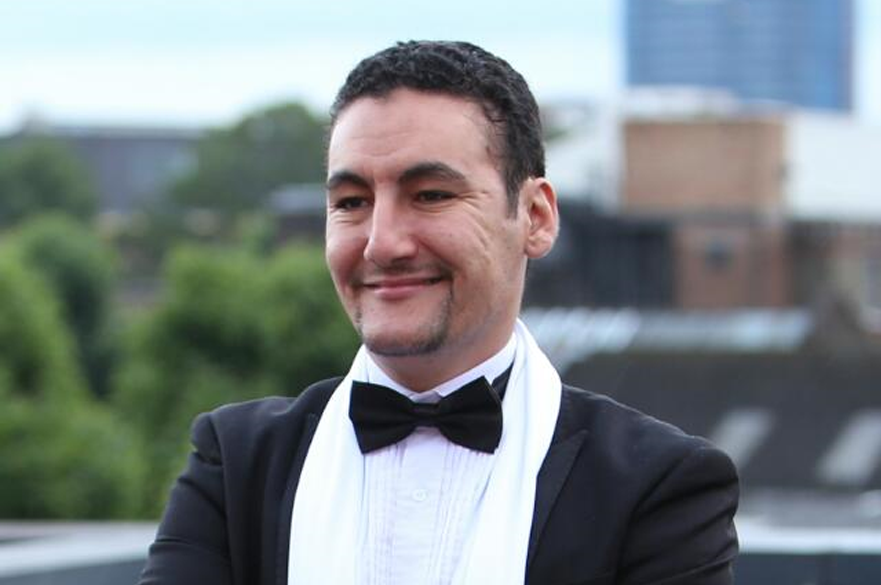
Karim Ahmed is a Principal Lecturer at the Nottingham Trent University within the Nottingham Business School , affiliated with the Department of Strategy, Analytics and Operations . His expertise includes Project Management , Sustainability , and Supply Chain Management , with a focus on practical applications in VUCA conditions and sustainable operations. Dr. Ahmed is a certified Prince2 and Agile PM Practitioner with over a decade of experience in teaching and industry. He leads the MSc Project Management program, emphasizing stakeholder alignment, efficient execution, and innovation in managing complex projects. His research explores the intersection of sustainability, supply chain resilience, and strategic decision-making, particularly in multinational contexts. Recent publications highlight his work on fuzzy logic in sustainability assessment, gamification in education, and multi-criteria decision models for supply chain optimization. Collaborations span institutions like Loughborough and Sheffield, with fieldwork in Egypt, Iraq, and the UK.
Jorge Louçã is a Full Professor in the Department of Information Science and Technology at ISCTE-IUL, where he has been a faculty member since 2000. He is also an Integrated Researcher at ISTAR-Iscte, the Research Center in Information Sciences, Technologies and Architecture, and leads the research group The Observatorium . He holds a PhD in Computer Science and Artificial Intelligence from Université Paris Dauphine and the University of Lisbon, and completed his Aggregation in Complexity Sciences in 2019. PhD in Computing – University of Lisbon & Université Paris-Dauphine (2000) Master’s in Informatique: Intelligent Systems – Université Paris-Dauphine (1995) Aggregation in Complexity Sciences – ISCTE-IUL (2019) His research centers on computational modeling of social systems, focusing on data-intensive analysis of human communication, knowledge generation in large networks, and the dynamics of complex systems. He founded the Doctoral Program in Complexity Sciences and has been instrumental in advancing the field through international collaborations such as the UNESCO Unitwin network for the Complex Systems Digital Campus and participation in the Conference on Complex Systems (CCS/ECCS). The recent publications highlight a strong interdisciplinary focus, combining network science, data analysis, and social theory. Key themes include the modeling of malaria transmission, information diffusion in social media, structural inequality in education, and the dynamics of opinion and popularity. His work often employs agent-based models, temporal network analysis, and entropy-based measures, reflecting a deep integration of computational and theoretical approaches. Research Methods for Doctorate in Complexity Sciences Advanced Topics in Complexity Sciences Data Science Fundamentals Development for the Internet and Mobile Applications Web Interfaces for Data Management Advanced Network Analysis Jorge Louçã has supervised over a dozen doctoral and master’s students, with completed theses on topics such as malaria modeling, information diffusion, temporal networks, and social inequality. His research has been supported by projects like NESS (Non-Equilibrium Social Science in ICT and Economics), reflecting his leadership in interdisciplinary science. He has held significant academic management roles, including Director of the Department of Information Science and Technology and head of multiple degree programs. His work continues to bridge computer science, social science, and policy, positioning him as a key figure in the global complexity science community.
Dr. Mirzet Šeho is a Senior Lecturer at the School of Business, Monash University Malaysia, where he contributes significantly to teaching, research, and academic leadership. With nearly fifteen years of combined industry and academic experience, he has established himself as a leading voice in Islamic finance, fintech, and financial economics. He plays a pivotal role in developing innovative fintech curricula that blend academic rigor with real-world industry insights. PhD in Islamic Finance, International Centre for Education in Islamic Finance (2018) Dr. Šeho's research centers on Islamic finance and banking, corporate finance, financial economics, and fintech. His work explores critical issues such as the stability of dual-banking systems, the impact of interest rates on Islamic financial instruments, and the role of finance in energy justice and sustainable development. He actively investigates how diversification strategies influence bank risk and returns, particularly in mixed financial environments. His recent publications, primarily from 2020 to 2024, reflect a strong trend toward empirical and policy-relevant research in Islamic and conventional banking systems. These works frequently appear in high-impact journals such as the Pacific Basin Finance Journal and International Review of Finance , with a methodological emphasis on econometric modeling, including GMM techniques. The interdisciplinary nature of his research is evident in contributions linking finance with energy justice and sustainable development goals. Dr. Šeho has been honored with three major scientific awards: Best Paper Award by the Journal of Muamalat and Islamic Finance Research (2016) Pacific-Basin Finance Journal Best Paper Award (2018) Pacific-Basin Finance Journal Best Paper Award (2019) He is actively involved in academic advising, currently accepting PhD students, and has contributed to research grants and projects through collaborative international research. His academic service includes peer review for journals like Applied Finance Letters and Journal of International Financial Markets, Institutions and Money , editorial responsibilities, and participation in major conferences such as the 14th Financial Markets and Corporate Governance Conference 2024, where he served as both speaker and session chair. Dr. Šeho is affiliated with research networks focusing on Islamic finance and fintech, collaborating with scholars from Malaysia, Bosnia and Herzegovina, and beyond. His work is disseminated not only in scholarly outlets but also through press and media features, demonstrating his commitment to public engagement and policy impact.
John Reynolds is an Adjunct Associate Professor (Research) at the Australian Centre for Blood Diseases, within the Faculty of Medicine, Nursing and Health Sciences at Monash University. He is also affiliated with The Alfred Hospital, where he serves as Senior Expert Biostatistician in the Department of Clinical Haematology. His work bridges academic research and clinical practice, focusing on statistical design and analysis in hematology and oncology. Current Affiliation: Monash University & The Alfred Hospital Role: Adjunct Associate Professor (Research), Senior Expert Biostatistician Academic Background: PhD in Statistics with Minor in Genetics, North Carolina State University Prior Experience: Peter MacCallum Cancer Centre, Novartis AG, Deakin University John Reynolds' research is centered on biostatistics in clinical oncology, particularly in hematological malignancies. His primary areas of interest include the design and analysis of clinical trials across all phases, with a strong focus on multiple myeloma, chronic myeloid leukemia, and immune thrombocytopenia. He has contributed significantly to projects involving liquid biopsy, minimal residual disease assessment, and the integration of patient-reported outcomes in clinical decision-making. His early-career work involved statistical design in food and agricultural sciences, showcasing a broad methodological foundation. The recent publications and ongoing projects reveal a consistent trend in applying advanced statistical methods to improve risk stratification, treatment efficacy, and early detection in blood cancers. His work frequently appears in high-impact hematology journals such as Blood , Haematologica , and Blood Advances , reflecting his leadership in biostatistical applications in clinical research. He is actively involved in major research initiatives, including the GLAM study on genomic liquid biopsy in multiple myeloma and trials focused on alcohol use disorders. His contributions are primarily as a Chief Investigator in large collaborative studies, emphasizing his central role in trial design and data interpretation. Invited speaker, American Society of Hematology, Clinical Research Training Institute (2023–2025) Invited speaker, CML Opinion Leader Training (2023) Invited speaker, iCMLf - CML Preceptorship (2019) John Reynolds leads and contributes to numerous federally funded research grants, including projects supported by the Department of Health and Aged Care (Australia). His collaborative network spans institutions in Australia and internationally, with active roles in multi-center clinical trials. He is instrumental in mentoring and advising research teams on statistical rigor, trial design, and data analysis. His lab and team involvement is embedded within the Biostatistics Consulting Platform at Alfred Health and Monash University, where he supports a wide range of clinical research projects.
Gisela B. Fritz is a Researcher at the Institute of Biomaterials and Biomolecular Systems at the University of Stuttgart. She specializes in limnology, restoration ecology, and invasive species research, particularly focusing on Craspedacusta sowerbii , native crayfish, and crayfish plague. Her work integrates field studies with molecular analyses to understand species distribution and phylogeny. Education: She holds a Master of Arts in Biology from Humboldt State University (USA) and a PhD in Biology from the University of Stuttgart (2007). Her doctoral thesis explored dynamics and stability in lacustrine systems. She also served as a Junior Scientist at Environmental Consulting in California (1998–2001). Teaching & Leadership: Since 2009, she has held roles such as Study Guide for the Joint Commission for Mechanical Engineering and Program Manager for the B.Sc. Technical Biology. She teaches courses like Monitoring and Documentation of Aquatic Systems , Aquatic Ecology , and Marine and Freshwater Algae . Her teaching spans undergraduate and graduate levels, emphasizing practical fieldwork (e.g., excursions in Croatia, Italy, and Germany). Research Focus: Her publications examine anoxic habitats, sulfur bacteria, invasive species impacts, and restoration ecology. She has collaborated internationally on projects including sponge sampling techniques and tardigrade desiccation tolerance. Fieldwork Experience: She leads limnological and marine excursions, including studies in Adriatic sponges, Rocky Intertidal zones in California, and coastal wetland recovery in Oregon.
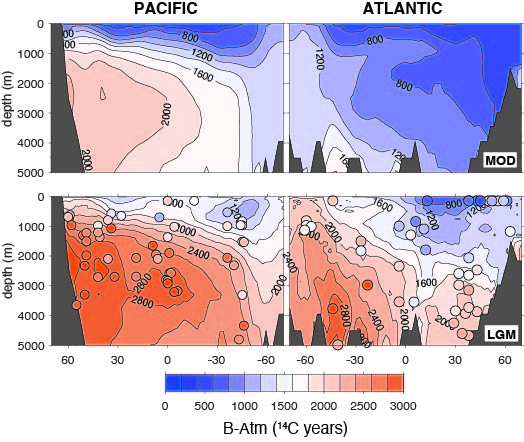
Professor Luke Skinner is a Professor of Earth System Science at the University of Cambridge's Department of Earth Sciences. His research focuses on the role of ocean circulation in past climate change, including its impact on hydrological and biogeochemical cycles. He uses geochemical, sedimentological, and micropaleontological methods to study past hydrographic changes. Key research areas include glacial-interglacial climate dynamics, abrupt climate events like the Younger Dryas and 8.2 kyr event, and the Last Glacial Maximum ocean-atmosphere interactions. His work integrates radiocarbon analysis, deep-sea sediment records, and climate modeling to understand carbon cycle feedbacks and oceanographic responses to climate shifts. Current projects explore the Southern Ocean's role in CO₂ fluctuations, the hydraulic mechanisms of Lake Agassiz floods, and the application of laser-ablation techniques for rare earth element cycling. He supervises PhD students and contributes to the department's research infrastructure, including analytical instrumentation at Bullard Laboratories. His findings provide critical insights into climate system feedbacks relevant to future environmental changes.
Dr. Shervin Shirmohammadi is a Professor at the University of Ottawa's Faculty of Engineering, specifically within the School of Electrical Engineering and Computer Science. With an impressive h-index of 41 and over 6,800 citations across 473 publications, his research has made significant contributions to the fields of computer vision, biomedical instrumentation, and health monitoring systems. His academic journey spans over two decades, beginning with work on communication architectures for virtual environments in 2001 and evolving toward practical healthcare applications. Dr. Shirmohammadi's research interests center on Computer Vision , Image Processing , and Embedded Systems with a strong focus on healthcare applications including nutrition monitoring, mental health assessment, and driver safety systems. His most influential work examines computer vision applications for health monitoring, particularly food calorie measurement systems that use smartphone cameras to analyze nutritional content. His research has evolved to include EEG-based systems for ADHD detection and serious games for autism therapy, demonstrating a consistent trajectory toward practical healthcare solutions using advanced instrumentation techniques. Dr. Shirmohammadi maintains active collaborations with researchers including A. Yassine (118 joint publications), D. Ahmed, Ali Asghar Nazari Shirehjini, and B. Hariri. His publications appear primarily in IEEE Transactions on Instrumentation and Measurement, reflecting his strong connection to the instrumentation and measurement community.
Christine Bauer is a University Professor at the University of Salzburg specializing in Artificial Intelligence and Human Interfaces. She serves as Head of the program area 'InterMediation. Music—Effect—Analysis' (2024-2028) and is actively involved in the EXDIGIT project (Excellence in Digital Sciences and Interdisciplinary Technologies) running from 2022 to 2028. Her work spans computer science, social sciences, and economics, contributing to Sustainable Development Goals related to education and responsible innovation. Her research focuses on recommender systems, particularly examining fairness, gender bias, and ethical considerations in music recommendation algorithms. She investigates how choice models and ranking strategies impact gender imbalance in music recommendations, explores value alignment in news recommenders, and develops frameworks for evaluating conversational agents. Her interdisciplinary approach bridges technical algorithm development with social science perspectives to create more equitable and transparent recommendation systems. The analysis of her recent publications reveals a strong trend toward interdisciplinary evaluation frameworks for recommender systems, with particular emphasis on fairness metrics, gender bias mitigation, and stakeholder-centered perspectives. Her work increasingly addresses the social implications of algorithmic decision-making, especially in music streaming contexts where artist diversity and representation are critical concerns. She has been instrumental in establishing evaluation standards that consider multiple stakeholder perspectives beyond just end-users. Women in RecSys Journal Paper of the Year Award 2024, Senior category Women in RecSys Journal Paper of the Year Award 2023, Senior category Best Reviewer Award @ UMAP 2022 Best Reviewer Award @ RecSys 2019 CPDP 2013 Multidisciplinary Privacy Research Award Professor Bauer actively mentors through conference workshops and serves as an Independent Ethics Advisor (2023-2025). She has secured significant research funding through projects like EXDIGIT and has contributed to numerous grant-funded initiatives focused on digital sciences and interdisciplinary technologies. Her organizational activities include chairing major conferences such as the European Conference on Information Retrieval (2026) and the Human-Computer Interaction Conference of the Alpine region (2026). She leads research teams focused on recommender systems evaluation, particularly through the Perspectives on Evaluation of Recommender Systems (PERSPECTIVES) workshop series and the Music Recommender Systems (MuRS) workshops. Her current work with the EXDIGIT project involves collaboration with researchers across multiple disciplines to advance digital sciences and interdisciplinary technologies.
Prof. Dr. Fatih GÜZEL , an Associate Professor at Kırşehir Ahi Evran Üniversitesi , Faculty of Economics and Administrative Sciences, Department of Accounting and Finance. His research focuses on investments, portfolio management, financial forecasting, and volatility analysis. Education: PhD in Business Administration, Selçuk University (2014-2020) Master’s in Business Administration (Accounting-Finance), Dumlupınar University (2012-2014) Bachelor’s in Business Administration, Afyon Kocatepe University (2008-2012) Research Interests: Empirical studies on financial markets, volatility interactions, and macroeconomic indicators Focus on Turkish capital markets, BRICS-T countries, and MINT economies Article Trends: Recent works analyze volatility dynamics in Borsa Istanbul, relationships between exchange rates and sector indices, and impacts of global crises on financial markets Utilizes econometric models like frequency domain causality and stochastic volatility Scientific Awards: Multiple TÜBİTAK Publication Incentive Awards (2016, 2017, 2021, 2022) İktisadi Araştırmalar Vakfı Doctoral Thesis Award (2021) Collaborations: Co-authored 15 publications with Melek Acar Worked with Gamze Şekeroğlu (7 papers), Yüksel İltaş (6 papers)
Sameer Deshpande is an Assistant Professor in the Department of Statistics at the University of Wisconsin–Madison. His research bridges Bayesian methodology development with applications in public health and sports analytics. Prior to joining UW–Madison, he completed a postdoctoral fellowship with Professor Tamara Broderick at MIT and earned his Ph.D. in Statistics from the Wharton School under Professors Ed George and Veronika Rockova. His educational background includes undergraduate studies in mathematics at MIT and a year at Jesus College, Cambridge through the Cambridge-MIT Exchange program. His research focuses on advancing Bayesian hierarchical modeling, treed regression, and causal inference techniques, with particular emphasis on flexible tree-based methods like BART variants for complex data structures. Deshpande's recent publications reveal a strong trend toward developing scalable Bayesian methods for high-dimensional data while maintaining rigorous uncertainty quantification. His work frequently applies these techniques to sports analytics (particularly baseball and football) and public health studies examining long-term effects of adolescent sports participation. The consistent focus on methodological innovation paired with substantive applications demonstrates his dual commitment to statistical theory and real-world impact. He actively mentors graduate students at UW–Madison, requiring STAT 775 as preparation for research collaboration. His Deshpande Lab focuses on Bayesian computation and causal inference, though specific grant details are not publicly listed. Notable projects include the NFL Big Data Bowl submission analyzing quarterback decision-making using Expected Hypothetical Completion Probability. Outside academia, Deshpande maintains interests in cooking, cocktail making, and photography, while remaining a devoted fan of Dallas sports teams – often seen wearing a Texas belt buckle.
Yasser Iturria Medina is an Assistant Professor at the Montreal Neurological Institute (MNI) , McGill University, within the Department of Neurology and Neurosurgery . He is an associate member of the Ludmer Centre for Neuroinformatics and Mental Health and the McConnell Brain Imaging Centre . Academic Rank: Assistant Professor Key Affiliations: MNI, Ludmer Centre, McConnell Brain Imaging Centre His educational background includes: Undergraduate: Nuclear Engineering (2004), Higher Institute for Nuclear Sciences and Technology, Cuba MSc: Neurophysics and Neuroengineering (2006), Cuban Neuroscience Center PhD: Neuroimaging and Neuroinformatics (2013), National Center for Scientific Research and Havana’s University of Medical Science His research focuses on neuroinformatics for precision medicine , particularly in neurodegenerative diseases like Alzheimer's and Parkinson's. His lab develops multiscale brain models integrating molecular, imaging, and cognitive data to characterize pathogenic mechanisms and identify personalized interventions. Key research areas include: Neurodegeneration modeling Neurovascular interactions in Alzheimer's Multi-omics integration for disease subtyping Neuroimaging biomarkers across neurodegenerative spectra Computational modeling of amyloid-beta and tau propagation The article analysis reveals his emphasis on: Alzheimer's disease mechanisms (45% of recent works) Multi-omics and transcriptomic modeling (30%) Neurovascular and white matter pathology (20%) Machine learning applications in neuroimaging (15%) Development of tools like NeuroPM-box and MVComp toolbox His lab has been instrumental in creating NeuroPM-box , a software platform for integrating molecular, neuroimaging, and clinical data to characterize neurodegenerative progression and heterogeneity. He has also contributed to CAPTURE ALS , a comprehensive analysis platform for amyotrophic lateral sclerosis.
Dr. Richard Beecroft is a Research Associate at the Institute for Technology Assessment and Systems Analysis (ITAS) at Karlsruhe Institute of Technology (KIT), working within the Research group 'Karlsruhe Transformation Center for Sustainability and Cultural Change' since 2024. He earned his Doctorate in Sustainability Sciences (Dr. phil.) from Leuphana University of Lüneburg in 2019 and previously served as Deputy Professor for Technology, Philosophy and Sustainability at Darmstadt University of Applied Sciences (2022-2023). Dr. Beecroft's research centers on sustainability transformations through Real-World Laboratories as transdisciplinary research and learning environments. His work bridges theoretical frameworks with practical applications for societal transformation, focusing particularly on methodological development for transdisciplinary research. He has been instrumental in establishing the Karlsruhe School of Sustainability and developing the Transformative Project Seminar methodology, which has been implemented across multiple courses. His recent publications demonstrate a strategic shift toward self-experimentation methodologies for sustainable lifestyle changes, with significant contributions on understanding the impacts of Real-World Laboratories and developing practical tools like the Self-Experiment Generator. His research spans sustainability science, technology assessment, education, and urban studies, reflecting the inherently transdisciplinary nature of his approach. As an educator, Dr. Beecroft has developed innovative teaching methods that connect academic learning with real-world sustainability challenges. He managed the KIT Center for Humans and Technology from 2018-2025 and has made substantial contributions to embedding higher education within Real-World Laboratories through transdisciplinary project courses. His current work explores how self-experiments can serve as tools for both personal and societal transformation toward sustainability, with practical applications designed to empower individuals to engage in sustainability transformations through structured personal experimentation.
Dr. Julia Hahn is a Scientific Associate at the Karlsruhe Institute of Technology (KIT), working within the Institute for Technology Assessment and Systems Analysis (ITAS) in the Research Group 'Sociotechnical Futures and Policies'. She serves as co-project leader for the 'Participatory Procedures and Processes in Research Organizations' (PaFo) project and leads the HGF project 'Airborne transmission of the SARS coronavirus – from basic research to efficient air purification systems (CORAERO)'. Her work spans across multiple institutions including German Electron Synchrotron (DESY), German Aerospace Center (DLR), and other Helmholtz Association members. Dr. Hahn completed her doctorate in 2019 at KIT's Faculty of Humanities and Social Sciences with her thesis 'Towards a Global Technology Assessment - Insights from Cases in Germany, China, India and Beyond'. She earned her Master's degree in Applied Cultural Studies from Leuphana University Lüneburg in 2010, followed by a research assistant position there before joining ITAS in 2011. Her research focuses on the intersection of technology, society, and governance, with particular emphasis on global technology assessment frameworks. She examines how participatory procedures can enhance technology assessment processes and influence research agendas. Her work explores responsible research and innovation (RRI) from both theoretical and practical perspectives, analyzing how different institutional contexts shape approaches to responsibility in science and technology. Dr. Hahn investigates policy engagement mechanisms that connect scientific knowledge with decision-making processes, particularly during crises and periods of rapid technological change. Her research often addresses the challenges of transnational technology governance in an increasingly interconnected world. Analysis of Dr. Hahn's recent publications reveals strong thematic continuity in technology assessment methodology, with increasing attention to crisis contexts and pandemic response. Her work demonstrates a clear evolution from national to global technology assessment frameworks, with growing emphasis on comparative international studies. The publications show consistent interdisciplinary collaboration across social sciences, engineering, and health disciplines, reflecting her commitment to transdisciplinary approaches. Recent work increasingly integrates digital methods like bibliometric analysis while maintaining strong theoretical grounding in sociotechnical systems theory. Dr. Hahn has been instrumental in several significant projects including 'Piloting RRI in Industry' (PRISMA), 'Responsible Industry', 'Responsible Research and Innovation in Practice' (RRI Practice), and the 'Citizens' Dialogue on Future Technologies'. Her project work demonstrates consistent engagement with both theoretical frameworks and practical implementation of technology assessment methodologies. She has contributed to multiple European collaborative projects including PACITA (Parliaments and Civil Society in Technology Assessment), showing her commitment to strengthening democratic technology governance across borders. As part of her role at ITAS, Dr. Hahn contributes to the institute's mission of conducting integrated technology assessment that provides 'continuous reflection' for research projects, analyzing social, legal, and ethical implications while considering public trust and acceptance. Her work with the globalTA network demonstrates her commitment to international collaboration in technology assessment.
Dr. Inken Bartels is a post-doctoral researcher at the Institute for Migration Research and Intercultural Studies (IMIS) at the University of Osnabrück, Germany. Since 2019, she has specialized in the politics of statistical knowledge production about migration and its impact on governance in West Africa. Her academic journey includes a PhD in Sociology from Humboldt University of Berlin (2018), a diploma in political science from Freie Universität Berlin and Université de Provence Aix-Marseille I, and visiting research at the European University Institute in Florence (2013-2014). Research Interests Migration and Border Regimes Knowledge Production on Migration International Organizations (especially IOM) Return Migration North and West Africa Practice Theories Science and Technology Studies Qualitative Methods Her recent book The International Organization for Migration in North Africa (Routledge 2022) analyzes IOM's role in shaping migration governance through information campaigns, voluntary return programs, and anti-trafficking initiatives. Her publications span topics like EU-IOM cooperation, contested migration terminology, and the moral economies of migration research. She has taught courses at the University of Hamburg, University of Osnabrück, Humboldt University, and Kiel University on subjects including Bourdieusian theory, migration policy, and border studies.
Marco Ruggeri, Ph.D. , is a Researcher in the Ophthalmology department at the University of Miami Miller School of Medicine , affiliated with the Bascom Palmer Eye Institute . His work focuses on advanced imaging techniques and biomechanical properties of ocular tissues. University: University of Miami School: Miller School of Medicine Department: Bascom Palmer Eye Institute - Ophthalmology Research Interests Marco Ruggeri's research spans several critical areas in ophthalmology and biomedical optics. He specializes in Optical Coherence Tomography (OCT) for dynamic imaging of ocular structures, including the ciliary muscle and crystalline lens . His work investigates refractive index variations in aging lenses, the viscoelastic properties of ocular tissues , and design optimization of intraocular lenses . Additionally, he explores handheld imaging systems for retinal diagnostics and biomechanical changes during accommodation and disaccommodation. Ruggeri's interdisciplinary approach bridges optical engineering , clinical ophthalmology , and biophysics to advance understanding of eye function and disease. Publications & Collaborative Work Ruggeri has authored peer-reviewed studies on OCT validation for lens shape estimation, age-related refractive index shifts, and peripheral defocus in intraocular lens design. His collaborative efforts include developing portable imaging devices and analyzing biomechanical responses to ocular treatments.