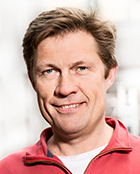
Jens Jørgen Gaardhøje is a tenured Professor at the Niels Bohr Institute , University of Copenhagen, specializing in Experimental Particle Physics . He leads the Subatomic Physics Division and directs the Danish National Center for CERN Research (NICE) . He is a member of the management board of the ALICE experiment at CERN's Large Hadron Collider (LHC). Born in 1954 (Hørsholm, Denmark) Dr. Scient. (1993, University of Copenhagen) Cand. Scient. (1980, Niels Bohr Institute, UCPH) Baccalaureat (1972, Lyçée Français Charles Lepierre, Lisbon, Portugal) His research focuses on high-energy nuclear reactions , progressing from MeV to TeV scales. He pioneered studies on Giant Resonances and co-founded the BRAHMS experiment at RHIC (1997-2010), establishing the Quark Gluon Plasma (sQGP) . Currently, he leads the Forward Multiplicity Detector project for ALICE at LHC, advancing understanding of particle production and collective properties of sQGP. His work spans quark-gluon dynamics , heavy ion collisions , and detector development . Recent publications highlight ALICE experiment studies at LHC, including femtoscopy in pp collisions, direct photon production , hypernuclei , and J/ψ correlations . These articles emphasize quark-gluon plasma , strange baryons , and ultra-peripheral collision analyses. Scientific Awards : Knight of the Order of Dannebrog, Chevalier des Palmes Académiques, Professor Honoris Causa (University of Bucharest), Top 5 in Science in Denmark (Ingeniørens Ugeblad), Fellow of the Danish Academy of Natural Science Grants & Leadership : Over 300 MDKK in career funding, Exec-chair of CERN-UP , Founder of L’Oréal-UNESCO-KDVS Women in Science Prize International Roles : Vice-president of CERN Council, Member of Science Europe Advisory Board, Chair of ESFRI PSE Strategic Working Group He has supervised 24 PhD , 21 MSc , and 24 postdocs , and organized numerous international conferences on nuclear, particle, and societal impacts of science.
Claus Thustrup Kreiner is a Professor of Economics and Director of the Center for Economic Behavior and Inequality (CEBI) at the University of Copenhagen's Faculty of Social Sciences, Department of Economics. He also serves as Area Director of Public Economics in the CESifo network and was co-editor of the Journal of Public Economics from 2014 to 2020. Kreiner has held various leadership positions including Director of the Economic Policy Research Unit (EPRU) since 2005 and Director of the Center of Excellence WEST from 2011-2013. Education: Ph.D. in Economics, University of Copenhagen, 1998 Visiting Ph.D. student, University of York, 1996 M.Sc. in Economics, University of Copenhagen, 1994 B.Sc. in Economics, University of Copenhagen, 1991 Claus Thustrup Kreiner's research primarily focuses on Public Economics , with secondary specializations in Labor Economics, Household Finance, Applied Microeconometrics, and Experimental Economics. His work examines inequality in income, wealth and health, optimal redistribution policy, and behavioral responses to public policy. Kreiner has conducted significant research using Danish administrative data to analyze tax compliance, labor supply responses, and inequality dynamics. His research often involves collaborations with institutions like Columbia University, London School of Economics, and UC Berkeley. His recent publications reveal a strong focus on inequality across multiple dimensions (income, wealth, health, life expectancy), tax policy design and compliance, labor market responses to policy changes, and the intersection of behavioral economics with public policy. Kreiner frequently employs high-frequency administrative data from Denmark to provide empirical evidence on how individuals and households respond to economic policies and shocks. Scientific Awards and Recognition: Appointed Knight of The Order of Dannebrog by Queen Margrethe II (2018) The Invisible Hand Award from the Society of Social Economics (2006, 2001) Best Teacher Award from the Study Board of Economics at University of Copenhagen (2002) Research Fellow at Centre for Economic Policy Research (CEPR), London (2009-) Kreiner has supervised numerous students primarily in Public Economics and has received multiple research grants including from the Danish Social Science Research Council (2003, 2006, 2009), International Growth Center (2009), and Danish National Research Foundation (1998-2003). He has served on important policy bodies including as co-chair of the Danish Economic Council (2010-2014) and member of the Danish Tax Commission (2008-2009). As Director of CEBI (Center for Economic Behavior and Inequality), Kreiner leads a major research center funded by the Danish National Research Foundation. He also directs the Economic Policy Research Unit (EPRU) and has been instrumental in establishing research collaborations through networks like CESifo. His work bridges academic research and policy application, as evidenced by his practical policy experience with government commissions.
Anja Boisen is a Professor and Head of the Drug Delivery and Sensing Section at the Department of Health Technology, Technical University of Denmark (DTU). Her research focuses on advanced drug delivery systems, sensing technologies, and nanotechnology applications in biomedical engineering. She leads a multidisciplinary team developing innovative devices such as microcontainers, microneedles, and lab-on-a-disc platforms for targeted drug delivery and diagnostics. Her work contributes to UN Sustainable Development Goals, particularly in improving health and reducing inequalities. Key research areas include surface-enhanced Raman spectroscopy (SERS), microfabrication for medical devices, and biomaterials for tissue engineering. She has supervised multiple PhD students, including projects on oral drug delivery systems, gastrointestinal retention devices, and energy-harvesting materials for biomedical applications. Boisen’s team has pioneered technologies like self-unfolding foils for oral delivery and smart drug delivery microparticles. Their innovations aim to enhance therapeutic efficacy while minimizing side effects. She has been recognized with the Sensor Division Outstanding Achievement Award (2022) for her contributions to sensor technology. Her lab actively collaborates internationally, advancing applications in cancer therapy, antibiotic monitoring, and gut microbiota research. Current projects explore high-throughput 3D tumor modeling, SERS-based diagnostics, and biodegradable materials for bone fixation.
Carsten Jahn Hansen is an Associate Professor in sustainable place development and planning at Aalborg University's Department of Sustainability and Planning, part of The Technical Faculty of IT and Design. His research focuses on innovations in planning for sustainable place-making, addressing climate change, socio-economic balance, and environmental sustainability. He leads the Planning for Urban Sustainability (PLUS) research group and participates in projects like the PLANNORD research network and EU-funded initiatives such as PlanCoast . Hansen holds a PhD in Spatial Planning and a Master's in Surveying, Planning, and Land Management from Aalborg University. Key affiliations include roles with the Danish Town Planning Institute (Dansk Byplanlaboratorium), ESPON (European Spatial Planning Observatory Network), and OECD/EU policy advisory work. His expertise spans coastal governance, participatory planning, and the integration of cultural heritage into spatial development. He has contributed to over 111 publications, including works on non-mandatory planning frameworks and climate adaptation strategies. Hansen has advised on regional and municipal planning policies, emphasizing trust-based governance and community engagement. His research explores the interplay between strategic planning and grassroots participation, with a focus on urban and rural resilience. Notable contributions include analyses of Denmark's development planning systems and the role of soft planning instruments in addressing complex spatial challenges.
Jeppe Lund Nielsen is a Professor in the Department of Chemistry and Life Sciences at the Faculty of Engineering and Science, Aalborg University, Denmark. His research lies at the intersection of microbial ecology, genomics, and environmental biotechnology, with a strong focus on sustainable solutions for wastewater treatment, anaerobic digestion, and environmental monitoring. His primary research interests include Microbial Ecology, Functional Ecology, Genomics, Molecular and Technical Microbiology, Anaerobic Digestion, Metagenomics, and eDNA Metabarcoding . He applies molecular tools to understand microbial community dynamics in engineered and natural systems, particularly in wastewater and marine environments. His work contributes to the UN Sustainable Development Goals related to clean water, sustainable cities, and climate action. The recent publication trends reflect a strong emphasis on environmental applications of microbiome science, including nitrogen cycling in wastewater, bioaerosol exposure in workers, eDNA-based biodiversity monitoring, and valorization of waste streams through biotechnology. His articles frequently appear in high-impact environmental and microbiological journals and demonstrate interdisciplinary collaboration across engineering, ecology, and public health. Among his notable scientific contributions are leadership roles in significant research projects such as the AAU Bubble Project (Power2Proteins), JAMBO seabed impact study, and investigations into biotechnological pesticides. He has also contributed to public discourse through media engagement on topics like pesticide regulation and environmental innovation. Professor Nielsen has supervised PhD students, including M. Eskeldsen, and is actively involved in grants and collaborative research across Europe. He is a key member of research teams focused on environmental microbiology, wastewater biotechnology, and marine impact assessments. His lab integrates molecular biology, bioinformatics, and environmental engineering to address pressing sustainability challenges.
Mircea Epure is the Serra Hunter Associate Professor at the Department of Economics and Business at Universitat Pompeu Fabra (UPF). He holds affiliated professorships at the UPF-Barcelona School of Management and the Barcelona School of Economics. His research focuses on governance, corporate performance, entrepreneurship, and accounting, with notable contributions to understanding firm strategies during crises, public policy impacts, and signaling mechanisms in corporate social responsibility. Epure's work has been published in leading journals and recognized with awards such as the Best Paper Prize at the Financial Markets and Corporate Governance Conference. His research has been cited in prestigious outlets like the World Bank studies and The Oxford Handbook of Corporate Law and Governance. He teaches graduate and undergraduate courses on organizational dynamics and management accounting. Key research themes include the real effects of public grants during crises, strategic responses to uncertainty, and the role of organizational identity in firm performance. Epure has explored topics ranging from macroprudential policies to the opaque aspects of ESG reporting during crises. His interdisciplinary approach bridges corporate governance, entrepreneurship, and financial accountability. Awards: ICQS Nomination, Financial Markets Conference Best Paper Grants: Funding from La Caixa Foundation and CEIBS Cathay Cross-border Private Equity Research Fund Labs/Teams: Collaborates with the Barcelona School of Economics and UPF-Barcelona School of Management research networks
Ole Bang is a Professor and Groupleader of the Fiber Sensors & Supercontinuum group at the Department of Electrical and Photonics Engineering, Technical University of Denmark (DTU). His work spans fundamental and applied research in nonlinear optics, fiber sensors, and biophotonics, with strong industrial collaboration and alignment with UN Sustainable Development Goals. Research Interests: Supercontinuum broadband light sources Fiber-optical biosensors Microstructured polymer optical fibers (mPOFs) Nonlinear optics and nonlinear dynamics Numerical modelling of nonlinear pulse propagation Mid-infrared and terahertz photonics His recent publications (2025) demonstrate a strong focus on advanced optical sensing technologies, including mid-infrared surface plasmon resonance sensors, real-time DNA binding detection, and high-resolution liquid level sensors using fiber Bragg gratings. These works highlight trends toward biomedical, environmental, and industrial applications of photonic technologies. Scientific Awards: No awards mentioned in the provided text. Advising and Grants: Currently supervising multiple PhD students in active projects such as Femtosecond Fiber Lasers and Low-Noise Supercontinuum Sources , Mid-infrared supercontinuum generation and rogue waves , and UV Supercontinuum Sources and Meta-Surfaces . Projects funded through DTU PhD programs, indicating institutional grant support. Labs and Teams: Ole Bang leads the Fiber Sensors & Supercontinuum research group at DTU, focusing on the development and application of advanced fiber-based photonic technologies. The group is highly active in both experimental and theoretical research, with strong ties to industrial partners like Koheras A/S and Crystal Fibre A/S.
Ravi Seshadri is an Associate Professor in the Transport Division at the Department of Technology, Management and Economics, Technical University of Denmark (DTU). His research focuses on designing equitable, efficient, and sustainable mobility solutions with a focus on fiscal instruments like congestion pricing and tradable permits, as well as emerging mobility modes such as shared and demand-responsive transit. He employs methods from transportation network equilibria, dynamic traffic assignment, and agent-based simulation. His research interests span transportation economics, urban planning, and intelligent transportation systems. Key areas include evaluating the impacts of automated mobility-on-demand systems, optimizing tolling strategies using predictive control and reinforcement learning, and integrating multi-modal transportation networks through game-theoretical frameworks. His work emphasizes real-world applications in urban freight systems, e-commerce logistics, and sustainable urban mobility policies. Recent projects include studying congestion pricing schemes via agent-based microsimulation, analyzing behavioral responses to decarbonization policies, and developing frameworks for tradable credit systems with peer-to-peer trading. He has contributed to both theoretical advancements (e.g., robust traffic assignment models) and applied tools like the SimMobility simulation platform. Ravi's research demonstrates a strong focus on bridging transportation engineering with policy analysis, using cutting-edge computational methods to address complex urban mobility challenges. His work spans academic publications, industry collaborations, and policy consultations to advance sustainable transportation systems.
Christina D. Tvarnø is a Professor at the Department of Business Humanities and Law (CBS Law) at Copenhagen Business School (CBS). She holds academic leadership roles including Chair of the Study Board for HA(jur) and cand.merc.(jur) programs, Head of Studies for legal programs, and subject responsibility for legal methodology, contract law, and social science methods. Her research focuses on climate law, public-private partnerships (PPP), contract law, and legal philosophy. She co-founded a climate law research group at CBS and authored seminal works on PPP and climate legal frameworks. Her administrative roles include membership in the Ministry of Climate, Energy and Utilities' expert panel (2020–present), Censor at University College London (2021–present), and upcoming Climate Council membership (2025–2029). She has published widely in climate law, PPP governance, and legal theory, including books like Climate Law (2022) and New Frontiers of PPP Law (2022). Her work bridges legal positivism and realism through the European realistic legal positivism framework. Key research themes: International/EU/Danish climate law, infrastructure PPP contracts, legal methodology, and interdisciplinary project frameworks. Her recent publications address climate negotiation challenges, PPP legal frameworks, and climate policy instruments.
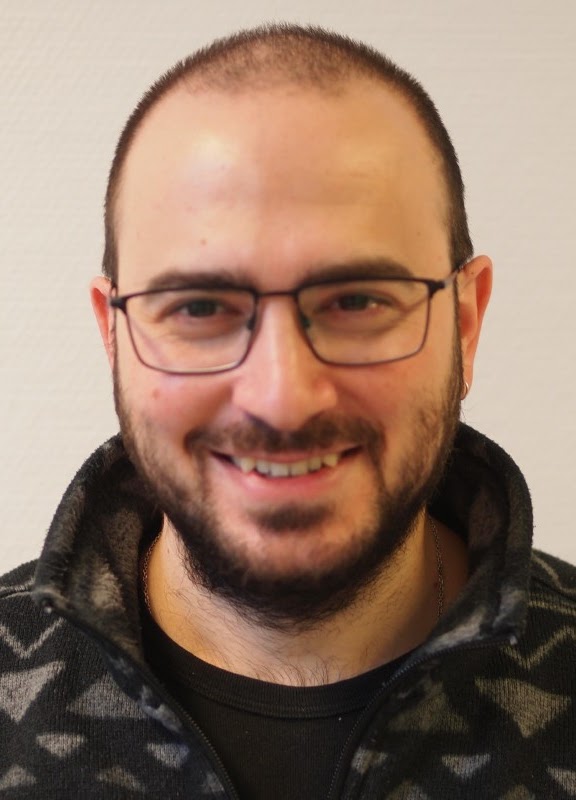
Georgios Arvanitidis is an Associate Professor at the Technical University of Denmark (DTU) in the Department of Applied Mathematics and Computer Science, specifically within the Section for Cognitive Systems (CogSys). He has established himself as a leading researcher in geometric machine learning, focusing on the application of differential geometry principles to enhance machine learning models. His work bridges theoretical mathematics with practical applications in artificial intelligence, with particular emphasis on understanding the geometric structure of data manifolds and latent spaces. Dr. Arvanitidis completed his educational journey with a Bachelor's degree from the Department of Informatics at the Aristotle University of Thessaloniki, followed by a Master's degree in Computer Science from Saarland University supported by the Max Planck Institute for Informatics. He earned his PhD at DTU's Cognitive Systems section under the supervision of Søren Hauberg, with additional research experience at Philipp Hennig's Probabilistic Numerics group. Prior to his current position as associate professor, he was a PostDoc at the Max Planck Institute for Intelligent Systems working with Bernhard Schölkopf. Dr. Arvanitidis's research primarily focuses on differential geometry in machine learning , where he explores how geometric structures can enhance representation learning and statistical modeling. His work in generative models investigates how learning the geometry of data manifolds can improve deep learning architectures. In the domain of deep learning theory , he examines why deep learning models generalize effectively on unseen data, with particular attention to the curvature properties of loss landscapes. His research in approximate Bayesian inference applies geometric principles to improve uncertainty quantification in neural networks. Through his innovative approaches, Dr. Arvanitidis has established himself as a leading researcher in geometric machine learning, contributing to both theoretical foundations and practical applications across various domains including robotics and life sciences. The publication trends of Dr. Arvanitidis reveal a consistent and evolving focus on geometric approaches to machine learning problems. His recent work (2023-2025) demonstrates increasing sophistication in applying Riemannian geometry to deep learning architectures, with particular emphasis on latent space geometry, optimization on manifolds, and geometric interpretations of neural network behavior. A notable pattern is the progression from foundational work on geometric representations to more applied research in areas like robotics and causal inference. His publications span top-tier conferences including NeurIPS, ICML, ICLR, and AISTATS, reflecting the high impact of his research. The interdisciplinary nature of his work is evident in collaborations across mathematics, computer science, and robotics domains, with recent papers addressing challenges in multimodal sampling, safety guarantees for dynamical systems, and counterfactual explanations. Dr. Arvanitidis has received several notable scientific awards and recognitions: Sapere Aude starting grant from the Independent Research Fund Denmark (DFF) GADL funding i-Rase, Pathfinder, and EIC (European Innovation Council) funding Best reviewer award for NeurIPS 2019 Best reviewer award for NeurIPS 2018 Best student paper award at Robotics: Science and Systems (R:SS) 2021 Dr. Arvanitidis actively mentors PhD students and researchers, currently supervising Alejandro Valverde, Johanna Gegenfurtner, and Albert Kjøller Jacobsen. He has previously co-supervised Alison Pouplin's PhD and worked with research assistant Georgios Pantis. His group receives substantial funding through multiple prestigious grants including the Sapere Aude starting grant from the Independent Research Fund Denmark, as well as European Innovation Council funding. He has been instrumental in creating opportunities for students interested in geometric machine learning, offering BSc and MSc thesis projects focused on generative models, deep learning theory, and optimization techniques. Dr. Arvanitidis also contributes significantly to the academic community as a reviewer for top conferences including ICLR and TMLR, and as an area chair for NeurIPS, ICML, AISTATS, and UAI. He co-organized the Machine Learning Summer School 2020 in Tübingen, further demonstrating his commitment to education and community building. Dr. Arvanitidis leads a vibrant research group focused on geometric machine learning within the Cognitive Systems section at DTU. His team includes multiple PhD students working on cutting-edge research at the intersection of differential geometry and artificial intelligence. The group has developed notable software tools, including the "geometric_ml" GitHub repository with over 70 stars, which contains implementations for applying Riemannian geometry in machine learning. His research has practical applications in robotics, where geometric approaches enable more robust motion planning, as evidenced by his work on "Reactive Motion Generation on Learned Riemannian Manifolds" which received a best student paper award. Additionally, his methodologies have found applications in life sciences, as mentioned in his 2022 AISTATS paper. The collaborative nature of his work is evident through extensive partnerships with researchers at institutions including the Max Planck Institute for Intelligent Systems, University of Cambridge, and various European universities. His recent news items indicate active engagement with the academic community through talks, conference presentations, and ongoing supervision of new PhD students joining his group.
Jakob Eg Larsen is an Associate Professor at the Technical University of Denmark (DTU), affiliated with the Department of Applied Mathematics and Computer Science (DTU Compute) within the Cognitive Systems Section. He leads the Mobile Informatics and Personal Data Laboratory (MILAB). His research focuses on Human-Computer Interaction (HCI), Personal Informatics, Quantified Self, and Information Visualization, with applications in wearable technology, mental health, and healthcare. He teaches courses in Digital Media Engineering, including user experience, mobile application prototyping, and personal informatics. Education: PhD (2005) and MSc in Computer Science (1999) from the University of Copenhagen, with additional studies in cognitive psychology. Research emphasizes wearable devices for mental health interventions (e.g., PTSD treatment), physical activity tracking in pregnancy, and personalized hearing aid systems. Over 98 publications and 12 supervised PhD projects highlight his contributions to HCI, mHealth, and data-driven healthcare solutions. Labs/Teams: MILAB focuses on mobile informatics and personal data interaction. Collaborations span interdisciplinary fields like audiology, clinical psychology, and public health.
Mostafa Mohammadi is an Assistant Professor at the Department of Health Science and Technology, Aalborg University, affiliated with the Faculty of Medicine and Center for Rehabilitation Robotics. His research focuses on neurorehabilitation robotics, human-computer interaction, and telerehabilitation technologies for individuals with disabilities. Ph.D. in Biomedical Engineering (Aalborg University, 2018-2022) M.Sc. in Biomedical Engineering (Polytechnic University of Milan, 2015-2017) B.Sc. in Mechanical Engineering (Sharif University of Technology, 2011-2015) His work spans exoskeleton design, assistive robotics, and innovative interfaces like tongue-computer interfacing. Recent projects include the eMotivo digital health solution funded by Innovation Fund Denmark and intelligent tendon-driven exoskeletons for severe disabilities. Research outputs (33 total) emphasize adaptive robotics, motor impairment solutions, and wearable technologies. Collaborations span robotics, biomedical engineering, and clinical disciplines. Teaching includes courses in rehabilitation robotics, human-computer interaction, and digital systems for biomedical engineering. Scientific activities align with UN Sustainable Development Goals for quality education and reduced inequalities. Notable contributions include advancements in myoelectric interfaces and neurorehabilitation technologies.
Jeppe Revall Frisvad is an Associate Professor in the Department of Applied Mathematics and Computer Science at the Technical University of Denmark (DTU), within the Visual Computing group. His work bridges computer graphics, material science, and applied optics, focusing on realistic rendering and material appearance modeling. Ph.D. in Computer Graphics, DTU Informatics (2008) M.Sc. in Engineering (Applied Mathematics), DTU (2004) Education in University Teaching, LearningLab DTU (2008–2009) His research centers on computing material appearance from physical and chemical properties, developing faster and more accurate physically based rendering methods. Key areas include light scattering, bidirectional reflectance distribution functions (BRDF), anisotropy, and translucency modeling. Applications span computer games, movies, digital prototyping, architectural visualization, and training simulators. His recent publications (2024–2025) reflect a strong trend in digitizing material appearance, especially for 3D printing and food science, using spectrophotometry and optical validation. The work combines computer graphics with interdisciplinary applications in food structure and biological imaging, emphasizing measurement, modeling, and simulation. Scientific Awards: Research travel prize from AEG Elektronfonden (2006) IGDA scholarship for GDCE 2005 DTU Ph.D. scholarship (2004) He actively supervises Ph.D. students and leads multiple research projects, including those on organ-on-chip imaging, cheese quality analysis, and optical modeling of teeth. He collaborates across disciplines and institutions, with external research stays at UC San Diego and the University of Otago. He is involved in projects integrating AI with 3D imaging and material digitization. Jeppe is a key member of the Visual Computing research environment at DTU, contributing to both fundamental rendering algorithms and practical applications in industry and science.
Dr. Gregor Giebel is a senior researcher and Head of Section in the Department of Wind and Energy Systems at the Technical University of Denmark (DTU), specifically within the Renewable Plants in Energy Systems group. He is actively engaged in advancing wind energy technologies and their integration into modern power systems. His leadership extends to major international and EU-funded initiatives, including IEA Wind Task 51 and the NEST Facilities research infrastructure. Gregor Giebel's research focuses on short-term wind power forecasting , large-scale integration of wind into electricity grids , wind farm flow control , and condition monitoring of wind turbines . His work is instrumental in improving the reliability and efficiency of renewable energy systems. He has made significant contributions to international standardization through the IEC and is a key figure in global wind energy research coordination. The recent publications highlight a strong trend toward weather-driven energy forecasting , modeling wind farm impacts on weather systems , and developing national research infrastructures for energy transition . These works reflect a deep integration of meteorology, energy systems engineering, and policy-relevant research. His scientific recognition includes: Poster Award at the WindEurope Offshore Conference, Copenhagen 2019 Poster Award on WindEurope Conference, Copenhagen 2021 Dr. Giebel is a Principal Investigator (PI) on multiple high-impact projects such as NEST Facilities , IEA Wind Task 51 , and GreenHyScale . He is renowned for his success in research funding, with a proposal success rate exceeding 50%. He has led the EU Marie Curie Initial Training Network Train 2 Wind and previously headed the FarmConners EU Coordination Action on wind farm control. He leads and is deeply involved in the NEST Facilities —a distributed Danish research infrastructure for energy transition—and contributes significantly to the Weather2X and GreenHyScale projects, which aim to advance green hydrogen production and weather forecasting for energy systems.
Peter Behrensdorff Poulsen serves as Solar Photovoltaic Systems Group Leader at the Department of Electrical and Photonics Engineering, Technical University of Denmark (DTU). His work spans photovoltaic research, solar-powered lighting systems, and drone-based inspection technologies within DTU's College of Engineering. His research focuses on Solar Cell Engineering , Photovoltaic Modules , and Drone Applications for renewable energy systems. Key areas include bifacial photovoltaics, electroluminescence imaging diagnostics, building-integrated photovoltaics, and ultra-efficient solar-powered lighting solutions. His work significantly contributes to UN Sustainable Development Goals related to affordable clean energy and sustainable cities. Recent publications reveal strong trends in AI-driven PV diagnostics , bifacial module performance in northern climates, and dark-sky compatible lighting systems . His research bridges fundamental photovoltaic science with practical applications in urban infrastructure and environmental sustainability. Best Poster Award at 44th IEEE Photovoltaic Specialists Conference Best Poster Award at 48th IEEE Photovoltaic Specialists Conference Characterizing the Performance of Daylight Filters for Electroluminescence Imaging Poster Award at 35th European Photovoltaic Solar Energy Conference Poster Prize at Sustain 2017 Poulsen leads multiple research grants including the Ultra-efficient Dark Sky-compatible Solar-powered Outdoor Lighting project (2024-2026) and previously managed the DronEL project (2017-2019) for drone-based PV inspection. His work connects photovoltaic engineering with practical lighting applications through the Lighting Color and Radiation Laboratory. He actively collaborates with industry partners on building-integrated photovoltaics and solar-powered infrastructure solutions, with notable projects including the Plateau Sun Hub public charging stations and Black Si BIPV panel development.