Christopher D.P. Baxter is a Professor and Department Chair of Civil and Environmental Engineering at the College of Engineering, University of Rhode Island , with expertise in geotechnical engineering, offshore wind energy, and coastal resilience. He holds a Ph.D. in Civil Engineering from Virginia Tech (1999), an M.S. from Purdue University (1994), and a B.S. from Tufts University (1990). Research Focus: Geotechnical characterization of marine sediments, liquefaction resistance analysis, fiber-optic sensing for infrastructure monitoring, and coastal protection systems. Recent Publications: 15+ articles (2011–2025) covering topics like shear wave velocity, offshore wind foundation dynamics, and tsunami hazard modeling. Grants: Led projects on offshore wind monitoring (2019–2024) and fiber-optic seismic sensing (2021–2023). Key Collaborations: Work with teams on submarine landslide analysis, coastal dune reinforcement, and Rhode Island infrastructure resilience. His work bridges experimental geomechanics with practical coastal engineering solutions.
Kevin A. Shinpaugh is Collegiate Professor in the Department of Aerospace and Ocean Engineering at Virginia Tech’s College of Engineering. Since 2019 he has led instruction and research in spacecraft design and propulsion, leveraging decades of experience in high-performance computing and space-systems engineering. Education Ph.D., Aerospace Engineering, Virginia Tech (1994) M.S., Aerospace Engineering, Virginia Tech (1989) B.S., Aerospace Engineering, Virginia Tech (1986) Research Focus Dr. Shinpaugh’s scholarship centers on the intersection of high-performance computing (HPC) and space systems engineering . He develops and applies advanced computational techniques to spacecraft design, propulsion analysis, and mission planning. His work spans numerical simulation of complex aerospace systems, optimization of propulsion architectures, and creation of scalable HPC frameworks that enable rapid design iteration for spacecraft and launch vehicles. Publication Trends Across more than thirty refereed papers and design-competition reports, a clear trajectory emerges: early contributions in experimental fluid-mechanics instrumentation (laser-Doppler velocimetry, fiber-optic sensors) evolved into large-scale computational studies of space systems, and most recently into student-led mission-concept designs for CubeSats, lunar exploration, and interplanetary missions. Keywords consistently include spacecraft design, propulsion, deployable structures, and mission architecture. Service & Committees Chair, Virginia Tech HPC User Committee (2004–2011) Member, VT HPC Advisory Board (2007–present) NSF TeraGrid/XSEDE Campus Champion for Virginia Tech (2006–2013) IBM HPC/AI Customer Advisory Council DC (2019–present) Member, VT AOE Seminar Committee (2019–present) Laboratory & Computing Resources Dr. Shinpaugh has long stewarded Virginia Tech’s high-performance computing ecosystem. He directs students and collaborators in leveraging the university’s Advanced Research Computing (ARC) clusters, as well as national facilities through XSEDE and DoD HPCMP, to execute spacecraft-design simulations and propulsion analyses at scale.
Amanda Stockton is an Associate Professor at the School of Chemistry and Biochemistry, Georgia Institute of Technology. Her research focuses on the development of analytical instruments for planetary exploration and the study of terrestrial analog environments to understand conditions suitable for life emergence. She leads the Stockton Lab, which specializes in microfluidics, biosignature detection, and astrobiological applications. Education: B.S. in Chemistry and Aerospace Engineering, Massachusetts Institute of Technology (2004) M.A. in Chemistry, Brown University (2006) Ph.D. in Chemistry, University of California Berkeley (2010) Stockton’s work bridges planetary science and analytical chemistry, targeting extraterrestrial life detection through technologies like the FELDSPAR and IMPOA projects. Her research explores sea spray aerosols, icy moon penetrators, and microfluidic systems for environmental and medical diagnostics. Research Highlights: Instrument development for Europa and Enceladus missions Microfluidic tools for origin-of-life experiments Terrestrial applications in environmental monitoring and point-of-care diagnostics Collaborative studies in Icelandic and Antarctic analog environments The Stockton Lab’s publications reveal expertise in biosignature preservation, Raman spectroscopy, and planetary habitability, with a focus on Mars and ocean worlds. Her team has pioneered low-cost microfluidic platforms like GLUE and modular CE-LIF systems.
Karl Ulrich Schreiber is an Adjunct Professor at the Department of Physics and Astronomy, University of Canterbury, New Zealand, and an apl. Professor at the Institute for Astronomical and Physical Geodesy at the Technical University of Munich (TUM). He is a scientist at the Geodetic Observatory Wettzell, jointly operated by TUM and the Bundesamt für Kartographie und Geodäsie (BKG). His work bridges fundamental physics and geodetic applications, with leadership roles in major international projects including ESA’s MAGIC/Science, QSG4EMT, and Baltic+ Theme 5, as well as DFG Research Units NEROGRAV and UPLIFT. His research focuses on Space Geodesy , Satellite and Lunar Laser Ranging , and Ring Laser Technology . He has pioneered the use of large ring laser gyroscopes for measuring Earth's rotation, polar motion, and seismic rotations. His work enables high-precision monitoring of geophysical phenomena such as Earth tides, Chandler wobble, and rotational ground motions from earthquakes. He is a key contributor to multi-technique co-location studies (VLBI, SLR, GNSS) and time transfer experiments, advancing the Global Geodetic Observing System (GGOS). His recent publications show a strong trend in developing and applying large-scale ring laser arrays (e.g., ROMY) for geophysical sensing, photon-counting laser ranging for space debris and satellite tracking, and optical timing systems for synchronization across geodetic networks. These efforts span disciplines including geodesy, seismology, quantum optics, and fundamental physics. Scientific contributions include: Development of the Wettzell Large Ring Laser (G-ring) for continuous Earth rotation monitoring. First direct measurements of Earth's diurnal polar motion and Chandler wobble using ring lasers. Pioneering work in rotational seismology, validating ring laser data against seismic arrays. Contributions to lunar laser ranging and its role in reference frame realization. Leadership in ESA and DFG projects advancing space geodesy and inertial sensing. He advises doctoral and master’s students within the DFG Research Training Group UPLIFT and collaborates with international institutions on instrumentation and data analysis. His lab at Wettzell hosts advanced laser ranging and ring laser systems, serving as a fundamental geodetic observatory. Future work includes enhancing clock ties for global geodesy, expanding multi-component rotation sensing, and advancing space-based geodetic technologies.
Dr. Penina Axelrad is a University of Colorado Distinguished Professor and Joseph T. Negler Professor of Aerospace Engineering Sciences at the University of Colorado Boulder. She has held academic roles since 1992, serving as Department Chair from 2012–2017. A member of the National Academy of Engineering since 2019, her research focuses on GNSS technology, satellite navigation, and remote sensing applications. She has authored over 223 publications and secured $17.5M in research grants. Education: Ph.D., Aeronautics and Astronautics, Stanford University, 1991 S.M., Aeronautical and Astronautical Engineering, MIT, 1986 S.B., Aeronautical Engineering (Avionics Option), MIT, 1985 Research Interests: Global Navigation Satellite Systems (GNSS), multipath mitigation, GNSS reflectometry, orbital dynamics, and quantum sensing for Earth science. Her work bridges astrodynamics, satellite navigation, and environmental monitoring. Awards: Member, National Academy of Engineering (2019) Women In Aerospace Educator Award (2016) Institute of Navigation Samuel Burka Award (2012) AIAA Summerfield Book Award (2011) Advising & Grants: Advised numerous students (no names listed) and led major grants including NASA Quantum Pathways Institute and Sentinel-6 orbit determination projects. Active in Institute of Navigation leadership roles. Labs/Teams: Colorado Center for Astrodynamics Research (CCAR), Quantum Pathways Institute, and collaborative efforts on CubeSat atomic clock experiments.
Brennan Phillips is an Associate Professor in the Department of Ocean Engineering at the University of Rhode Island . His work focuses on robotics , oceanographic instrumentation , and deep-sea biological exploration , with particular emphasis on bioluminescence , chemosynthetic environments , and soft robotics for marine research. Education : PhD in Oceanography (University of Rhode Island, 2016), MS in Oceanography (University of Connecticut, 2007), BS in Ocean Engineering (University of Rhode Island, 2004) Phillips leads the Undersea Robotics & Imaging Laboratory , which develops hardware-centric solutions for deep-sea exploration. The lab specializes in soft robotics , additive manufacturing , and imaging systems for studying delicate marine organisms. His recent publications span deep-sea coral propagation , 3D printing of pressure vessels , and soft robotic sampling tools , reflecting his focus on innovative marine technology and ecosystem observation . Collaborative work explores hydrothermal vent genomics and twilight zone shark ecology .
Professor Francois Ladouceur is a distinguished academic at the University of New South Wales (UNSW), where he serves in the Faculty of Engineering, specifically within the School of Electrical Engineering and Telecommunications. With a career spanning over three decades, Professor Ladouceur has established himself as a leading expert in photonics, optical engineering, and neural interfaces. His educational background includes: Ph.D. in Optical Communication from The Australian National University (1992) Masters in Solid State Physics from École Polytechnique, Montréal, Canada (1987) B. Eng. in Engineering Physics from École Polytechnique, Montréal, Canada (1985) Professor Ladouceur's research spans several cutting-edge areas in photonics and optical engineering. His work focuses on integrated optics, silica and diamond-based photonics, optical sensing networks, and photonics-based brain/machine interfaces. He has made significant contributions to both fundamental waveguide theory and applied integrated optics, introducing innovative approaches to waveguide path design that have improved the size and ease of design of integrated optics devices. His recent work has particularly emphasized the development of liquid crystal-based optical electrodes for neural interfacing and brain/machine interfaces. Analysis of his recent publications reveals a strong trend toward biomedical applications of photonics, particularly in neural interfaces and optrode technology. His research has evolved from fundamental optical engineering to practical applications in healthcare, with a focus on developing novel optical sensing technologies for electrophysiological measurements. The interdisciplinary nature of his work combines optical engineering, materials science, and biomedical engineering to create innovative solutions for neural interfacing. Professor Ladouceur has secured significant research funding through multiple prestigious grants: ARC Discovery (DP200102825): "A Multi-Optrode Array for Closed-Loop Bionics" ($495k) NHMRC Ideas Grant (APP2002282): "Re-engineering the Future of Electrophysiological Measurements" ($732k) ARC Discovery 2016 (DP160104625): "Design of an optrode for next generation brain-machine interfaces" ($457.6k) CRC Project 2016: "High performance optical telemetry system for ocean monitoring" ($1,014,320) US Office of Naval Research: "Multi-Optrode Array for Neural Interfacing" (US$360,000) Professor Ladouceur has extensive experience in translating research into practical applications, having founded Bandwidth Foundry Pty Ltd after raising approximately $20 million from private and public sources. His work bridges the gap between academic research and commercial applications, with a particular focus on developing novel hybrid opto-electronics devices from initial design through to commercial realization. He collaborates extensively with researchers across disciplines, particularly with Professor Nigel Lovell and other colleagues in biomedical engineering. His laboratory focuses on developing optical technologies for neural interfaces, with current projects including multi-optrode arrays for brain-machine interfaces, optical telemetry systems for various sensing applications, and diamond-based photonic structures. The research group maintains strong connections with industry partners and defense organizations, applying photonics solutions to real-world problems in healthcare, mining safety, and ocean monitoring.
Jiaxuan Li is an Assistant Professor of Geophysics in the Department of Earth and Atmospheric Sciences at the University of Houston's College of Natural Sciences and Mathematics. His research focuses on developing fiber-optic sensing technologies for seismic monitoring across diverse geological environments including volcanic, crustal, and glacial settings. Dr. Li's educational background includes a Ph.D. in Geophysics from the University of Houston (2015-2020) and a B.S. in Geophysics from Peking University (2011-2015). He previously held a postdoctoral position at Caltech Seismolab under Prof. Zhongwen Zhan. His research program centers on distributed acoustic sensing (DAS) applications, with major contributions in volcanic eruption forecasting through minute-scale magma migration imaging, earthquake rupture dynamics via high-frequency fault asperity analysis, and subsurface characterization for carbon sequestration and geothermal energy. Recent work demonstrates DAS capabilities as dense geodetic arrays for real-time volcanic monitoring systems deployed in Iceland through collaborations with the Icelandic Met Office and Reykjavik University. Analysis of Dr. Li's publication record reveals a strong emphasis on operationalizing fiber-optic networks for geophysical monitoring, with significant advancements in eruption early warning systems, earthquake source characterization, and subsurface imaging techniques. His work bridges fundamental seismological research with practical hazard mitigation applications. Dr. Li actively mentors graduate students and recently welcomed postdoc Dr. Tianfan Yan to his research team. His lab operates real-time DAS streaming systems for volcanic eruption monitoring in Iceland, developed through international collaborations involving the University of Houston, Caltech, Ljósleiðarann, and Reykjavik University. Current research directions include expanding DAS applications for carbon sequestration verification and deep geothermal reservoir characterization.
Ezra C. Wood is an Associate Professor in the Department of Chemistry at Drexel University, specializing in atmospheric chemistry research related to air pollution and climate change. His work focuses on quantifying primary pollutant emissions and elucidating secondary pollutant formation mechanisms, particularly ozone and secondary aerosol. Dr. Wood received his PhD from the University of California-Berkeley in 2004. His research employs optical and mass spectrometric techniques to measure trace atmospheric compounds at part-per-trillion levels. His work spans multiple research areas including: Atmospheric radical chemistry (HO x , RO 2 ) Urban air pollution dynamics Wildfire smoke chemistry Forest-atmosphere interactions Advanced atmospheric measurement techniques His research has been funded by the National Science Foundation, National Oceanic and Atmospheric Administration, and the Texas Air Quality Research Program. Dr. Wood has conducted extensive fieldwork in major urban areas (New York City, San Antonio, Philadelphia), forested regions (Indiana, Michigan), and wildfire-affected areas in rural Idaho. Dr. Wood teaches analytical, physical, and environmental chemistry courses at Drexel University, including Atmospheric Chemistry (Environmental Science 405/605), Analytical Spectroscopy (Chemistry 530), and Chemistry of the Environment (Environmental Science 401/501). His research group has developed specialized instrumentation including the Ethane CHemical AMPlifier (ECHAMP) for measuring peroxy radicals and operates a Chemical Ionization Mass Spectrometer (CIMS) for atmospheric analysis.
Dr. Thangavel Thevar is a Senior Lecturer in the School of Engineering at the University of Aberdeen, where he has been teaching since 2005. He completed both his undergraduate degree (First Class Honours in Electrical Engineering) and PhD (in Laser Engineering) at the University of Aberdeen in 1989 and 1993 respectively. Prior to his academic career, he accumulated approximately 10 years of industrial R&D experience in the USA, working on solid-state laser development and holographic applications. Dr. Thevar's research focuses on several key areas: Digital holography for imaging of marine plankton and micro-particles Laser Induced Breakdown Spectroscopy (LIBS) for subsea applications Laser-based instrumentation development Development of solid-state lasers for scientific, industrial, and medical applications Engineering applications of holography His most notable recent achievement is leading a team that developed the weeHoloCam, a state-of-the-art ultracompact underwater holographic camera for imaging microorganisms. Weighing just 3.5 kg, this system is the lightest and most compact of its kind, capable of imaging 240 ml/s and continuously recording up to 200,000 holograms. The system incorporates a rapid hologram processor and an AI-based image classifier. This technology has significant applications in marine studies including spatial and temporal monitoring of plankton species, monitoring harmful plankton & micro-jellyfish, study of vertical transport of floc, and monitoring microplastic pollution in the ocean. Dr. Thevar has secured numerous research grants as Principal Investigator, including projects funded by Sustainable Aquaculture Innovation Centre (SAIC), BBSRC, DEFRA, and Defence & Security Accelerator (DSTL). His current research portfolio demonstrates strong interdisciplinary connections between optical engineering, marine science, and environmental monitoring. His scientific contributions include: Royal Academy of Engineering Visiting Teaching Fellow Award (2010-2013) US patent 8,494,012 B2 for Raman converters Development of alexandrite lasers and ruby holographic lasers during his industrial R&D period Work on US government contracts for non-destructive inspection methods for military aircraft and the space shuttle Sabbatical work at NASA Langley Research Centre developing diode pumped Thulium YALO lasers As an educator, Dr. Thevar has served as Coordinator of MSc Oil & Gas Engineering (2007-2020), Undergraduate Level 1 Coordinator, and has contributed to various committees including Quality Assurance and Students' Progression. He currently teaches courses including Principles of Electronics, Electrical & Mechanical Systems, Control Systems, and supervises individual projects at both undergraduate and postgraduate levels. He is accepting PhD students interested in Engineering research. Dr. Thevar is actively involved in professional organizations, serving as Technical Programme Chair for IEEE/OES Oceans Conference 2007, on organizing committees for various conferences, as a committee member of the Instrument Science and Technology Group (Institute of Physics), and as a member of both IET and IEEE. He also serves as a reviewer for optics-based journals.
Mark E. Warner is a full Professor in the School of Marine Science & Policy at the University of Delaware’s College of Earth, Ocean & Environment . Based at the Lewes campus , he leads research bridging coral physiology, phytoplankton ecology, and climate-change impacts on marine symbioses. Education Ph.D., Ecology, University of Georgia, 1998 East-West Marine Biology Program, Northeastern University, 1991 B.S., Zoology, University of Georgia, 1992 Research Interests Professor Warner’s work centers on physiological ecology of phytoplankton and reef-building corals , with particular emphasis on algal–invertebrate symbioses . His laboratory investigates how temperature stress, ocean acidification, and nutrient regimes modulate the fitness of both Symbiodiniaceae (zooxanthellae) and their cnidarian hosts. A major thrust is understanding thermotolerance mechanisms that underpin coral resilience in a warming ocean, employing techniques from bio-optical fluorometry to stable-isotope probing . Additional foci include the ecology of harmful algal blooms , where he examines how dinoflagellate growth, toxicity, and fatty-acid profiles respond to multifactorial environmental change, and the development of low-cost, field-deployable instrumentation (e.g., CBASS) for standardized coral-stress diagnostics. Publication Trends Across the most recent 15 publications (2023-2025), the work spans coral bleaching physiology, symbiont diversity, thermal tolerance, and technology innovation . Themes include zooxanthellae–host fidelity , nutrient-transfer efficiency under heat stress , and portable bio-optical tools for reef monitoring , reflecting a trajectory from cellular mechanisms to ecosystem-scale applications. Scientific Awards No awards are explicitly listed in the provided text. Advising & Grants No specific student names or grant numbers were found in the supplied materials. Laboratory & Teams Professor Warner directs an active research group within the College of Earth, Ocean & Environment at the University of Delaware’s Lewes campus , housed in Cannon Laboratory (Room 232). The lab collaborates closely with the marine operations and instrumentation teams to advance coral-reef science and phytoplankton ecology.
Pasi Väliaho is a Professor in the Department of Philosophy, Classics, History of Art and Ideas at the University of Oslo, Faculty of Humanities. His research sits at the intersection of art history, media theory, and epistemology, exploring how visual media shape knowledge, power, and economic systems across historical periods. He is a key member of the Visual Studies research group and the Screen Cultures research initiative at UiO. His academic background includes a doctorate from the University of Turku, Finland, where he also holds the title of Docent in Media History and Theory. Prior to joining the University of Oslo, he served as Reader in Film and Screen Studies at Goldsmiths, University of London. His educational path reflects a strong foundation in European media and art history. Väliaho’s research focuses on the historical and political dimensions of visual culture, particularly how optical media, cinema, and digital technologies intersect with epistemic shifts, colonialism, and neoliberal capitalism. He examines topics such as camera obscuras, magic lanterns, military drones, video games, and deep-sea visualization, analyzing how images function as instruments of knowledge, governance, and capital. His work is deeply interdisciplinary, drawing from philosophy, science studies, and critical theory. The trends in his recent publications reveal a sustained engagement with the materiality and politics of images—from early modern optical devices to contemporary data-driven visualizations. His scholarship consistently links historical media forms with current digital and neuroscientific developments, emphasizing continuity in how vision is instrumentalized for power and control. Themes of embodiment, affect, biopolitics, and speculative economies recur across his work. 2023 Limina Award for the Best International Book in Film Studies (for Projecting Spirits ) Choice Outstanding Academic Title for 2015 (for Biopolitical Screens ) Väliaho actively supervises doctoral and postdoctoral researchers, including Rasmus Rodineliussen, William Wessel Nore, and Nanna Lenander. He is currently co-leading the Research Council of Norway-funded project 'Visualizing the Deep Sea in the Age of Climate Change' (2023–2027), which explores the political ecology of oceanic imaging. His teaching includes courses such as 'Archaeology of the Moving Image' and 'Philosophies of the Image,' reflecting his broad theoretical and historical expertise. He is embedded in collaborative research environments, notably the Visual Studies group at IFIKK and the international Screen Cultures initiative, fostering interdisciplinary dialogue on media, aesthetics, and epistemology.
James Bishop is a Professor in the Department of Earth and Planetary Science at the University of California, Berkeley, and a Faculty Senior Scientist at Lawrence Berkeley National Laboratory. He earned a B.Sc. (Honors) in Physical and Inorganic Chemistry from the University of British Columbia and a Sc.D. in Marine Chemistry from the MIT/Woods Hole Oceanographic Institution Joint Program in Oceanography. His research focuses on ocean carbon cycle dynamics, remote sensing, aquatic chemistry, marine biogeochemistry, and autonomous observing systems. Key affiliations: Lawrence Berkeley National Laboratory (since 2006), University of Victoria (School of Earth and Ocean Sciences), and Columbia University (Lamont Doherty Earth Observatory). Dr. Bishop’s research spans marine particle dynamics, biogeochemical cycling, and development of autonomous sensors for ocean carbon monitoring. His work involves major initiatives like GEOTRACES and VERTIGO, with emphasis on particulate inorganic/organic carbon (PIC/POC) proxies, carbon flux validation, and optical sensor integration. Recent publications highlight advancements in robotic oceanography, carbon export quantification, and cross-polarized light detection methodologies.
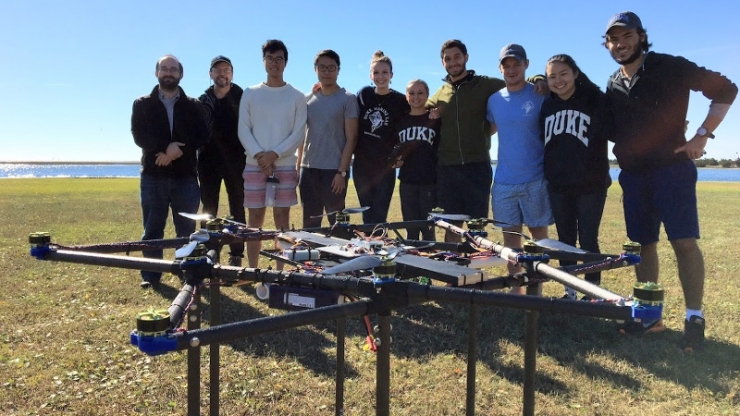
Martin Brooke is an Associate Professor of Electrical and Computer Engineering at Duke University's Pratt School of Engineering. He earned his B.E. in Electrical Engineering (First Class Honors) from Auckland University, New Zealand (1981), followed by M.S. (1984) and Ph.D. (1988) degrees from the University of Southern California. His career includes positions at Georgia Institute of Technology (1988-2003) before joining Duke. Dr. Brooke's research spans analog/RF/optoelectronic circuits, sensor interfaces, and deployable sensor systems with applications in ocean engineering and biomedical imaging. He leads innovative projects including ocean pH monitoring sensors and X Prize seafloor mapping initiatives, focusing on solving 'open-ended problems' through interdisciplinary approaches combining engineering with marine science. His extensive publication record (160+ articles) demonstrates consistent focus on sensor technologies, integrated circuits, and engineering education. Recent works emphasize biomedical applications (cancer margin assessment), environmental monitoring (ocean sensors), and educational innovations (remote microelectronics labs), showing a trend toward multidisciplinary solutions for real-world challenges. Awards and Honors: Capers and Marion McDonald Award for Teaching/Research Excellence (2022) Georgia Tech Outstanding Thesis Advisor Award (2003) IEEE Midwest Symposium Best Paper Award (1992) NSF Research Initiation Award (1990) Analog Devices Career Development Award (1988-1993) He has graduated 23 PhD students and mentors teams for major challenges like the X Prize ocean robotics competition. His research group develops deployable sensor systems with funding from NSF, X Prize Foundation, and industry partners. Current projects include drone-based ocean floor mapping systems and advanced pH sensors for marine ecosystem monitoring. Dr. Brooke leads the Brooke Research Group focusing on analog/RF systems and sensor integration. The team collaborates with Duke Marine Lab on ocean engineering initiatives and maintains eight U.S. patents. Future work emphasizes scalable sensor networks for environmental monitoring and biomedical diagnostics.
Ettore Biondi serves as an Assistant Professor of Geophysics at Stanford University, focusing on advanced sensing technologies for geophysical research. His work centers on leveraging fiber optic sensing and dense seismic networks to interpret vibrations from human activities and natural phenomena including ocean waves, earthquakes, and volcanic systems. Key research areas encompass subsurface structure analysis, volcanic dynamics, earthquake physics, and the development of environmental sensors for tracking climate-related changes. His group deploys specialized instrumentation in remote regions such as glaciers and volcanic systems to investigate complex geophysical mechanisms, while pioneering fiber-based early warning systems for natural hazards like tsunamis and seismic events. He leads an active research group dedicated to innovating sensor technologies for critical geophysical applications and environmental monitoring challenges.