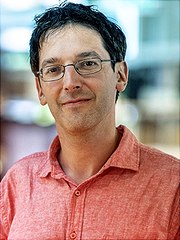
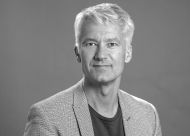
Jessie Turner is an Assistant Professor in Oceanography at Old Dominion University (ODU). Based in the Oceanography & Physics Building in Norfolk, Virginia, Turner specializes in marine science with a focus on oceanographic processes, water clarity dynamics, and climate-related phenomena in coastal and polar regions. His research integrates field measurements, remote sensing, and long-term ecological monitoring. Education: Ph.D. in Marine Science, Virginia Institute of Marine Science, William & Mary (2021) M.S. in Oceanography, University of Alaska Fairbanks (2015) B.A. in Earth & Oceanographic Science, Bowdoin College (2013) Turner's publications highlight his expertise in ocean carbon uptake , phytoplankton phenology , marine particle size distributions , and coastal water clarity . His work spans diverse environments such as the West Antarctic Peninsula, Chesapeake Bay, and the Gulf of Alaska, emphasizing both global datasets and regional environmental management challenges. His articles demonstrate a strong focus on climate change impacts, marine optics, and ecological modeling. Key trends include long-term studies of aquatic systems and the development of standardized methodologies for environmental monitoring.
Prof. Dr. Dirk Notz is a Professor and Head of the Sea Ice research group at the Institute of Oceanography, University of Hamburg, where he also serves as Deputy Managing Director. He is affiliated with the Centrum für Erdsystemforschung und Nachhaltigkeit (CEN) and the Cluster of Excellence Climate, Climatic Change, and Society (CLICCS), focusing on Arctic and Antarctic climate dynamics. His research centers on sea ice physics, Arctic amplification, climate modeling, and the impacts of global warming on polar regions. He investigates sea ice decline, Antarctic precipitation sensitivity, light transmission in sea ice (notably through the MOSAiC expedition), and uncertainty in climate data and sea-level projections. His work integrates observational data, satellite retrievals, and climate model simulations to understand and project changes in the cryosphere. His recent publications reveal strong trends in Arctic warming, under-ice photosynthesis at extremely low light levels, observational constraints on ice-free Arctic projections, and the communication of sea-level rise uncertainty. His articles appear in leading journals such as Science , Nature Communications , Nature Climate Change , and The Cryosphere . He leads and participates in multiple research projects, including those related to sea ice modeling, polar tipping points, and laboratory ice applications. His work contributes to international climate assessments and supports the UN Sustainable Development Goals, particularly SDG 13 (Climate Action), SDG 14 (Life Below Water), and SDG 15 (Life on Land). Prof. Notz mentors students and early-career researchers within his group and through his leadership roles. He has secured funding for projects analyzing sea ice light and biology, climate sensitivity, and future Arctic scenarios. His research infrastructure includes data from major field campaigns and collaborations with international polar science teams.
Dr. Li Ying is an Associate Professor and Doctoral Supervisor at the Department of Marine Science and Engineering, Southern University of Science and Technology (SUSTech), where she directs the Center for Marine Atmospheric Sciences. Her research focuses on atmospheric aerosol remote sensing , secondary pollution numerical modeling , and ocean-atmosphere interaction studies under climate change contexts. She holds a PhD in Atmospheric Environmental Science from the Hong Kong University of Science and Technology (2011), MSc in Atmospheric Science from Peking University (2006), and BSc in Physics from Bohai University (2002) with joint study at Tsinghua University. Her professional journey includes roles as Research Assistant Professor at HKUST (2015-2016) and Postdoctoral Fellow at HKUST (2011-2015), with visiting scholar experience at the University of Tennessee (2008-2009). Her research group develops satellite-based remote sensing algorithms for aerosol components (PM2.5, black carbon), studies ozone formation mechanisms in the Pearl River Delta, and creates novel emission control evaluation methods . She leads major projects including Shenzhen Smart City Atmospheric Monitoring and Guangdong-Hong Kong-Macao Air Quality Research Team . Scientific achievements include 60+ SCI publications in journals like Remote Sensing of Environment and Environmental Science & Technology Over 2,400 citations and H-index 24 Two ESI Highly Cited Papers Recipient of Shenzhen Overseas High-level C Talent (2017)
Sasha Wagner is an Associate Professor of Earth and Environmental Sciences at Rensselaer Polytechnic Institute (RPI), serving as Associate Director of the Center for Environmental Stable Isotope Analysis and Graduate Program Director. Her research focuses on the biogeochemistry of dissolved organic matter (DOM), particularly black carbon's role in global carbon cycles. She holds a PhD in Environmental Chemistry from Florida International University (2015) and a BS in Biochemistry from the University of Delaware (2009). Her work integrates geochemical techniques to study how anthropogenic activity and climate change affect DOM and black carbon dynamics in aquatic systems. Key areas include glacial black carbon deposition, wildfire impacts on riverine carbon export, and the development of novel analytical methods for BPCA quantification. Collaborations span institutions like the Rensselaer Astrobiology Research and Education Center and international river systems (e.g., Fraser, Yukon). Recent studies highlight hydrology's influence over wildfire severity in carbon export, the impact of dams on organic matter transport, and volcanic ash effects on marine ecosystems. Her lab emphasizes field experiments and cutting-edge analytical tools to address gaps in understanding DOM persistence and microbial interactions. Despite no listed awards, her research has yielded over 37 indexed publications since 2011, focusing on fire-affected watersheds, DOM optical properties, and cross-disciplinary environmental challenges. She advises students on topics like pyrogenic carbon cycling and organic geochemistry, while her grants include NSF-funded projects on black carbon characterization and hydrothermal vent systems' roles in carbon formation. Her lab (swagnerlab.com) serves as a hub for innovative projects, including experimental open-air burning studies and paleo-wildfire reconstructions. Ongoing work explores DOM-labile levoglucosan mobilization post-wildfire and spatiotemporal variability in Lake George's DOM composition.
Romain Feron is a researcher at the Laboratoire d'Acoustique de l'Université du Mans (LAUM) and a teacher-researcher within the ESEO Group , where he leads the GSII team . His work focuses on optical instrumentation , signal processing , and data analysis for geophysical applications. Key affiliations: LAUM, ESEO Group, PREST Project, EPOS-France Research specialties: Optical seismometers, Volcanic hazard monitoring, Geophysical instrumentation His publications demonstrate expertise in optical sensor development for extreme environments, including deployments at La Soufrière volcano and Caribbean subduction zones . Recent work (2024) details the first cabled optical ocean-bottom seismometer installation, combining 1.5km fiber optics with real-time seismic monitoring . Collaboration networks include IPGP , GEOAZUR , and OVSM-IPGP-PREST consortia. He has contributed to ANR projects on optical geohazard monitoring and participated in marine seismic campaigns like FIBROSAINTES-2021 .
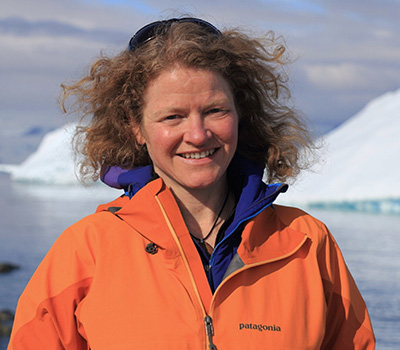
Erin Pettit is a Professor in the College of Earth, Ocean, and Atmospheric Sciences (CEOAS) at Oregon State University. Her research focuses on glacier and ice sheet dynamics, ice-ocean interactions, ice rheology, and climate history. She leads field-based studies in Antarctica, Alaska, and the Pacific Northwest, investigating processes such as submarine melt dynamics, subglacial discharge plumes, and ice shelf stability. Pettit also directs Inspiring Girls Expeditions , a program that empowers underprivileged young women to engage in field science through wilderness expeditions. Education: ScB in Mechanical Engineering (Brown University, 1994); PhD in Glaciology/Geophysics (University of Washington, 2003). Research Themes : - Ice deformation and fracture mechanisms - Glacial hydrology and meltwater dynamics - Climate change impacts on polar ice sheets - Planetary ice processes (e.g., icy ocean worlds) - Application of geophysical methods (seismology, radar, acoustics) Notable Projects : - Lead investigator for the International Thwaites Glacier Collaboration (ITGC) - Deployment of seismometers and fiber-optic moorings in Antarctic ice shelves - Study of meltwater plumes and submarine ice morphology at tidewater glaciers Awards : - National Geographic Emerging Explorer - Teaching Award, University of Alaska Fairbanks Advising & Outreach : - Mentor for early-career scientists via Girls on Ice and Inspiring Girls Expeditions - NSF- and NASA-funded collaborative research teams Labs/Teams : - CEOAS Glaciology Research Group - International Thwaites Glacier Collaboration (ITGC) - Center for Oldest Ice Exploration (COLDEX)
Chen Lingxin is a Professor and PhD supervisor at the Yantai Institute of Coastal Zone Research, Chinese Academy of Sciences, where he has been working since 2009 after serving as a Research Professor at Hanyang University's Department of Applied Chemistry from 2007-2009. His research focuses on developing innovative environmental analysis and monitoring technologies specifically for coastal zones. His primary research areas include: Bionano sensor techniques combining aptamers with nanomaterials for environmental pollutant analysis Chromatographic microanalysis techniques for trace analysis of environmental pollutants Opto-electronic monitoring techniques for oceanic water environment Pollutant identification, analysis, and assessment technology Ecological environment monitoring and surveillance technology Simulation of offshore environmental pollution processes and ecological restoration Professor Chen leads the innovative research team of 'Coastal Environmental Analysis, Monitoring and Ecological Restoration,' which strategically combines basic research with applied research and technology transformation across analytical chemistry, environmental science, marine chemistry, and ecological restoration engineering. His publications focus on marine environmental analysis and nanoanalysis methods, demonstrating expertise in developing new principles, methods, and instrument technologies for environmental monitoring of coastal pollutants including inorganic ions, persistent organic pollutants, and pathogens. He has successfully secured multiple national and ministry-level research projects spanning microfluidic chip SERS sensing technology, microbial metabolism of pollutants, and seawater nutrient monitoring systems. Professor Chen actively mentors graduate students in Environmental Engineering, Environmental Science, and Marine Chemistry, with a research group that welcomes students from chemistry, biology, and instrumentation backgrounds. His laboratory specializes in environmental microanalysis with capabilities in optical/electrochemical sensor development, microfluidic technologies, and marine pollution assessment for applications in coastal zone management.
Dani Mendoza DellaGiustina is an Assistant Professor at the University of Arizona's Lunar and Planetary Laboratory (LPL), with research focused on surface and near-surface structure of small airless worlds. She serves as Principal Investigator for OSIRIS-APEX and Deputy Principal Investigator for OSIRIS-REx missions, while also contributing to Artemis III LEMS, Hera, and Martian Moons eXplorer as a science team member. Ph.D., University of Arizona (2021) Current faculty since 2014 Teaching courses: PTYS 416/516 (Planetary Surface Processes) Her research interests include planetary geophysics , asteroid surface evolution , space weathering , and water distribution in the solar system . She combines remote-sensing data, geophysical instruments, and terrestrial analog field studies to investigate airless body processes. Recent publications focus on Bennu's seismic activity , carbonate vein analysis , regolith dynamics , and planetary analog seismology . Her work reveals insights into rubble-pile asteroid interiors, impact resurfacing, and low-cohesion surface physics. Awarded The Brilliant 10 (2022) by Popular Science, she mentors graduate students and leads spacecraft mission instrument development. Current advisees include Rishi Chandra, Carson Fuls, and Robin Van Auken.
Robin Lewis Modini is a Tenured Staff Scientist at the Paul Scherrer Institute (PSI) in Switzerland, working within the Laboratory of Atmospheric Chemistry since 2012. He leads research on atmospheric aerosols with expertise in aerosol optics, health impact mechanisms, and climate interactions. His position evolved from Tenure-Track Scientist (2016-2020) to Tenured Staff Scientist (2020-present), following postdoctoral work at EPFL (2012-2016) under Prof. Satoshi Takahama and Scripps Institution of Oceanography (2010-2012) under Prof. Lynn Russell. Education includes: PhD in Physics from Queensland University of Technology, Australia (2007-2010) with thesis on marine aerosol water uptake under Prof. Zoran Ristovski Bachelor of Applied Science with Honours in Physics from Queensland University of Technology, Australia (2002-2005) His research centers on aerosol health effects through oxidative potential measurements (SNSF project), in situ characterization of black carbon optical properties (ACTRIS/EUROCHAMP), and bridging observational gaps between ground-based and remote sensing data (BISAR project). Key methodologies involve the Single Particle Soot Photometer (SP2), machine learning applications, and field campaigns at Jungfraujoch and Zeppelin Observatory. Current work emphasizes combustion aerosol toxicity and Arctic aerosol-cloud interactions. Recent publications (2022-2025) show consistent focus on instrument validation, oxidative potential quantification, and black carbon behavior across environments. Trends include advancing real-time health-relevant metrics (e.g., dithiothreitol assays), refining optical property measurements (CAPS monitors, polar nephelometers), and analyzing transcontinental pollution transport (Africa-Amazon, Bolivia-Andes). International collaborations through ACTRIS and EUROCHAMP underpin high-impact work in Aerosol Science and Technology, Atmospheric Chemistry and Physics, and Nature Communications. No scientific awards were mentioned in the provided text. Modini directs SNSF-funded health impact studies and participates in European projects (ACTRIS, EUROCHAMP, BISAR) examining aerosol optical properties and oxidation processes. His AC/BC project conducted black carbon measurements in Arctic clouds at Svalbard's Zeppelin Observatory. While he served as postdoc adviser at EPFL and Scripps, no current advisees are listed. Notable grants include Swiss National Science Foundation support for aerosol health research and European infrastructure funding for chamber studies. He operates within the Aerosol Physics Group at PSI's Laboratory of Atmospheric Chemistry, utilizing SP2 photometers and custom polarimetric instruments. The group conducts field campaigns across Switzerland (Jungfraujoch), Bolivia (La Paz), Southern Ocean (Antarctic Circumnavigation Expedition), and Arctic regions, with international teams including ETH Zurich and UC San Diego collaborators. Current efforts focus on machine learning integration for aerosol-cloud interaction modeling and health metric development.
Edin Omerdic is a Senior Research Fellow at the Department of Electronic and Computer Engineering, University of Limerick, Ireland. His expertise focuses on marine robotics, fault-tolerant control systems, and underwater navigation technologies. Research Interests: Development of advanced control systems for Remotely Operated Vehicles (ROVs) and Unmanned Underwater Vehicles (UUVs) Integration of FPGA-based hardware for high-speed cybersecurity and data processing Design of optical fiber sensors for pressure and depth measurement in marine environments System integration for cyber-physical systems and heterogeneous robotic platforms Applications in offshore renewable energy inspection and maritime emergency response His work emphasizes real-time control allocation, power management, and sensor fusion for long-endurance underwater missions. While no specific awards or students are listed, his research has produced significant publications in marine robotics and embedded systems over two decades.
Geir Johnsen is a Professor at the Department of Biology, Norwegian University of Science and Technology (NTNU), with a part-time research position (Prof II) at the University Centre on Svalbard (UNIS). He is also a co-founder of the NTNU spin-off company Ecotone, which develops optical techniques for marine environmental mapping. Currently, he is on a one-year research stay at the University of Hawaii at Manoa, focusing on spectral bioluminescence in marine taxa and coral reef monitoring. University: Norwegian University of Science and Technology (NTNU) Department: Department of Biology Additional Roles: Prof II at UNIS, Co-founder of Ecotone Research Areas: Marine ecology, bio-optics, photosynthesis, pigment chemotaxonomy, underwater robotics, and sensor development for in situ identification of marine biogeochemical objects. His work integrates autonomous systems for Arctic polar night studies, coral reef mapping, and microplastics analysis. Scientific Output: Over 130 peer-reviewed papers, book co-editorships, and leadership in the Centre of Excellence (AMOS) for autonomous marine systems. Key 2025-2024 publications address climate change in the Arctic, hyperspectral marine mapping, microplastics detection, and photophysiological studies in polar regions. Advising: 3 MSc and 5 PhD students (total 47 MSc and 17 PhD advisees) Outreach: Public articles on deep-sea mining ethics, light pollution in the Arctic, and marine robotics.
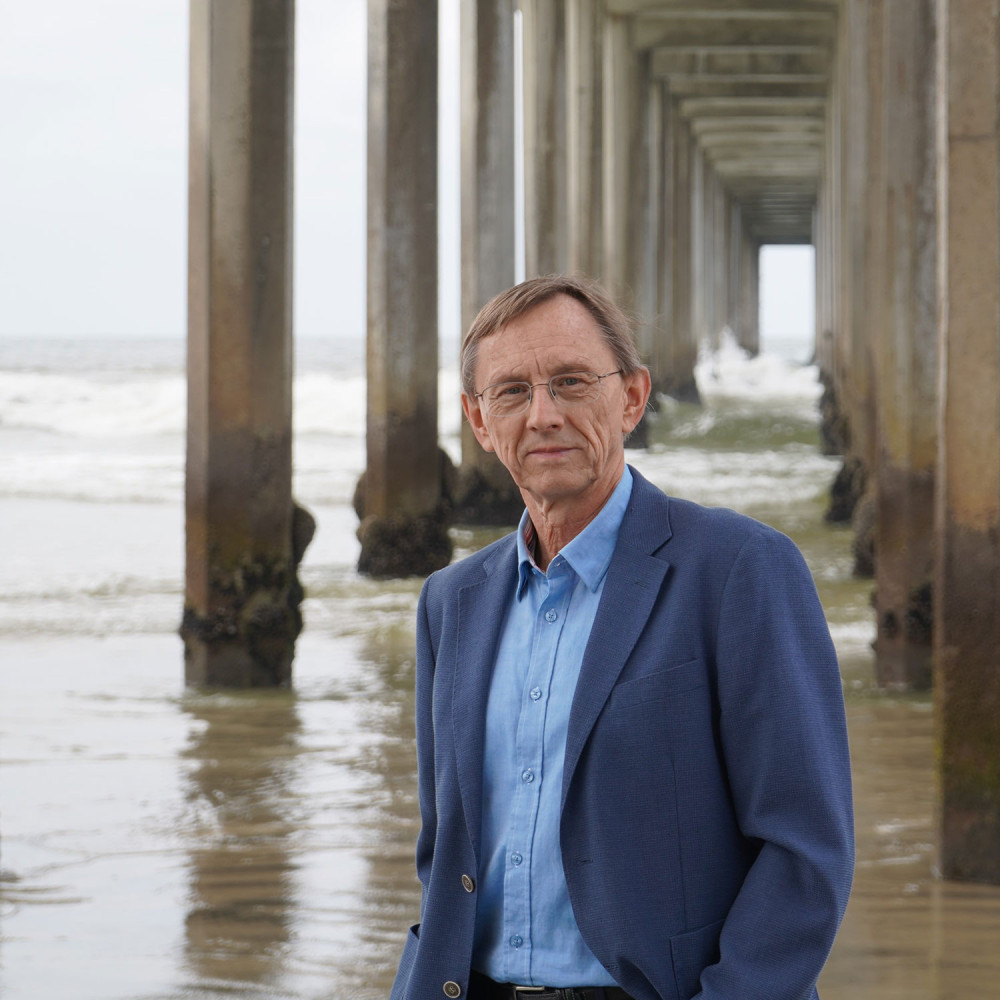
Professor Dariusz Stramski is a leading figure in optical oceanography currently affiliated with the Scripps Institution of Oceanography at the University of California San Diego, where he has headed the Marine Optics Laboratory since 1997. He holds a PhD in Earth Sciences from the University of Gdańsk (1985) and began his career at the Institute of Oceanology of the Polish Academy of Sciences. In 2024/2025, he assumed the honorary Professor Wacław Szybalski Chair at the University of Gdańsk, marking a symbolic return to his academic roots. His educational background includes: Master of Science (MSc) in Oceanography, University of Gdańsk, 1978 PhD in Earth Sciences, University of Gdańsk, 1985 Professor Stramski's research centers on the interaction between light and seawater, with a focus on radiative transfer, optical properties of marine particles (from viruses to phytoplankton), and the development of advanced optical instrumentation. His work underpins satellite-based ocean color remote sensing and supports major NASA missions such as MODIS, VIIRS, and PACE. He has contributed extensively to inverse modeling and algorithms used in interpreting ocean optical data. His scientific contributions have been recognized globally, most notably with the 2024 Nils Gunnar Jerlov Medal—the highest honor in optical oceanography—awarded for his comprehensive and pioneering research. He is also a Foreign Member of the Polish Academy of Sciences and has served as Associate Editor for Limnology and Oceanography , as well as on expert panels for IOCCG and NASA. Nils Gunnar Jerlov Medal (2024) As an educator and mentor, Professor Stramski has advised students and early-career scientists at Scripps, fostering international collaboration and advancing training in marine optics. He has led numerous oceanographic expeditions and research projects worldwide. His laboratory continues to innovate in measuring submicron particle distributions and characterizing underwater light fields, especially in low-light environments. His recent lecture series on 'Ocean Color Remote Sensing' and his inaugural Wacław Szybalski Chair lecture titled 'Fundamental Science in Fundamental: Blue Skies Research in Ocean Optics' reflect his ongoing commitment to fundamental and applied research in ocean optics.
Dr. Arne Estelmann works at the Leibniz Institute for Baltic Sea Research (IOW) in Rostock, Germany. He is a member of the Chemical In Situ Sensory Research Group and Trace Gases Working Group , focusing on the development of refractive index-based sensors for oceanographic applications. Specializes in Surface Plasmon Resonance (SPR) sensors for dissolved methane detection Investigates seawater properties like absolute salinity and density through modern SPR variants Conducts sensor intercomparison experiments to assess commercial marine sensor performance His recent publications highlight innovations in methane sensing technologies, chemical kinetics of organic acid oxidation, and microplastic transport dynamics in marine environments. While no formal awards are documented, his work contributes to advancing marine chemical monitoring systems and understanding ocean-climate interactions.
Prof. Gregor Rehder is Professor of Marine Chemistry and Deputy Head of the Marine Chemistry Section at the Leibniz Institute for Baltic Sea Research Warnemünde (IOW), an institute affiliated with the University of Rostock. Since 2006, he has led the Biogeochemistry of Environmentally Relevant Gases Working Group, focusing on greenhouse gas dynamics in marine systems. His work spans Research Priority 1 and 2 of the IOW program, emphasizing Baltic Sea biogeochemistry. Rehder holds a Diploma (1993) from the University of Bayreuth and a Ph.D. (1996) from the University of Kiel. His career includes positions at GEOMAR Kiel and Monterey Bay Aquarium Research Institute. Research interests center on marine greenhouse gases (CH₄, N₂O, CO₂), carbon cycling, and ocean acidification. He develops advanced sensors for gas monitoring and studies land-sea interactions affecting coastal biogeochemistry. Recent work explores methane leakage impacts, carbon dioxide removal technologies, and Baltic Sea acidification. Publications (2018-2025) show strong emphasis on: Baltic Sea greenhouse gas fluxes and carbon dynamics Coastal peatland rewetting effects Ocean alkalinity enhancement strategies Nord Stream methane leak impacts In-situ sensor development for marine gases He actively advises doctoral students, with 10+ completed PhD supervisions on topics like methane fluxes, ocean acidification, and trace gas liberation. Current projects include: RINGO (ICOS readiness for global observations) BONUS INTEGRAL (Baltic carbon/gas monitoring) EVAR (Benguela Upwelling System under climate change) Baltic Transcoast (land-sea matter flows) Rehder coordinates equipment on the VOS Finnmaid research vessel (ICOS infrastructure) and collaborates in international networks including ICOS-Oceans and the American Geophysical Union.
Emily Eidam is an Associate Professor at Oregon State University's College of Earth, Ocean, and Atmospheric Sciences. Her research focuses on sediment transport processes across fluvial, coastal, and continental shelf systems, with a strong emphasis on Arctic and sub-Arctic environments undergoing rapid environmental change. She holds a Ph.D. in Oceanography (2017), an M.S. in Oceanography (2013), and dual B.S. degrees in Geological Sciences and Civil Engineering (2010 and 2008). Research interests include sediment dynamics in riverine and coastal systems, short-timescale depositional histories, and the impacts of climate change on Arctic environments. Her work integrates field observations, numerical modeling, and novel sensor technologies to study sediment dispersal patterns and coastal evolution. The Eidam Lab develops low-cost sensors for real-time monitoring of sediment transport and collaborates on projects such as the Beaufort Lagoon Ecosystem Long Term Ecological Research program. Key projects include studying sediment fluxes in boreal rivers, modeling Arctic delta evolution under sea ice conditions, and investigating coastal bluff erosion in Greenland. Her group also engages in STEM outreach, such as K-12 education initiatives focused on Arctic research challenges. Current collaborations include the Collaborative Research: Sediment and Stability project on Greenland tidewater glaciers and the Coastal Ocean Dynamics in the Arctic (CODA) initiative. She leads efforts in open-source software development, such as the icepyx tool for glaciological data analysis.