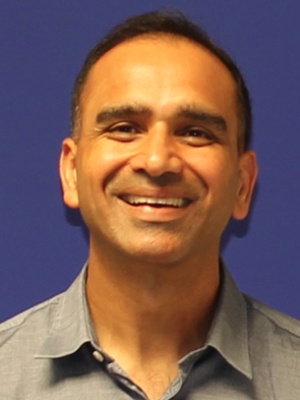
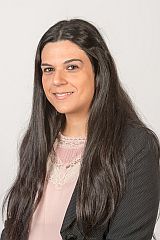
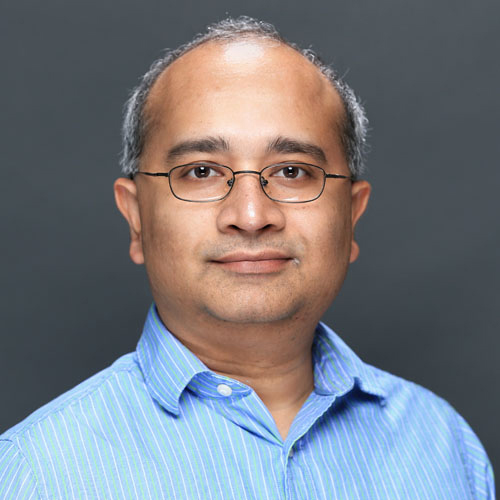
Javier Verdu Mula is a Professor at the Departament d'Arquitectura de Computadors (Universitat Politècnica de Catalunya - UPC) and a key researcher at the CRAAX - Centre de Recerca d'Arquitectures Avançades de Xarxes . His work focuses on computer architecture, parallel processing, and networking systems. Fields of Research include RISC-V virtualization, multithreaded processor optimization, and performance analysis of stateful networking applications. Scientific Awards include the BDigital Global Congress (2015) and Wayra Barcelona (2012) recognitions. Collaborations span institutions like Barcelona Supercomputing Center and researchers such as Manuel Alejandro Pajuelo, Mateo Valero Cortes, and Mario Nemirovsky. His recent publications address RISC-V hypervisor extensions, deep packet processing in parallel architectures, and statistical thread assignment models. He also holds patents in hardware virtualization and resource control systems.
Roger Espasa Sans is a senior academic and researcher at the Universitat Politècnica de Catalunya (UPC), affiliated with the Faculty of Informatics of Barcelona (FIB) and the Department of Computer Architecture. He has made significant contributions to computer architecture, particularly in vector processing, GPU design, and performance optimization. Universitat Politècnica de Catalunya (UPC) Faculty of Informatics of Barcelona (FIB) Department of Computer Architecture His research focuses on advanced computer architecture, including vector and superscalar processors, memory systems, instruction-level and data-level parallelism, GPU microarchitecture, and performance modeling. His work bridges theoretical design and practical implementation, especially in high-performance and embedded systems. The recent articles highlight a strong trend in GPU and shader optimization, memory redundancy elimination, and performance modeling. His publications span prestigious venues such as IEEE Microarchitecture Symposium, IEEE HPCA, and The Visual Computer, indicating sustained impact in the field of computer systems and architecture. Premiada (Awarded activity) Roger Espasa Sans has advised several doctoral students, including Manel Fernandez Gomez and Francisca Quintana Domínguez, contributing to the next generation of computer architects. His collaborative network is extensive, involving key figures like Mateo Valero and international institutions. While specific grants are not listed, his prolific output suggests sustained funding. He has contributed to major research groups such as CAP (High Performance Computing Group). He is a core member of the CAP - Grup de Computació d'Altes Prestacions (High Performance Computing Group), and has also been associated with PM - Programming Models and ARCO - Microarchitecture and Compilers. His work often involves simulation frameworks like JINKS and Asim, indicating a strong focus on performance evaluation and modeling.
Boryana Emiliyanova Mihailova is a Senior Lecturer at the University of Veliko Tarnovo , affiliated with the Department of General Linguistics and Old Bulgarian Studies . Her research focuses on Romanian language, onomastics, and metaphorical expressions in Balkan folk geographical terminology. University of Veliko Tarnovo: Senior Lecturer (Department of General Linguistics and Old Bulgarian Studies) Research Interests : Comparative analysis of Bulgarian and Romanian linguistic elements Metaphorical models in folk geographical terms Toponymy and anthroponymy in the Danubian region Historical and cultural linguistic patterns in Balkan languages Language education and cross-border linguistic networks Project Participation : "Thematic Research Perspectives through International Academic Networks" (2025): Collaborative project with universities in Niš, Warsaw, and Craiova "International Academic Networks – Traditions and Innovations" (2024): Research and educational exchange initiatives
Carlos Molina Clemente is an Associate Professor of Computer Architecture at Rovira i Virgili University in Tarragona, Spain. He holds a M.Sc. in Computer Engineering (Universitat Politècnica de Catalunya, 1996) and a Ph.D. in Computer Science (UPC, 2005). His research focuses on Computer Architecture, Mobile/Sensor Networks, and Cloud Computing. He leads the Cloudlab research group and coordinates initiatives like GTDAWIN and BIOGEI. Key research areas include multicore scheduling, LoRaWAN protocols, LIDAR data analysis, and serverless computing. He has published over 50 articles in top-tier conferences/journals and supervised three doctoral theses. His work spans projects on cache architectures, real-time systems, and educational multicomputing solutions. Affiliations include the Department of Computer Engineering and Mathematics (DEIM) at URV, with offices at Campus Sescelades (Avinguda Països Catalans 26, Tarragona). Research highlights include contributions to non-uniform cache policies, predictive mobile network algorithms, and energy-efficient sensor networks.
Prof. Edouard Bugnion is a Full Professor at the Data Center Systems Laboratory within the School of Computer Science and Communications at École Polytechnique Fédérale de Lausanne (EPFL). Since joining EPFL in 2012, he has led research in datacenter systems and virtualization, with prior experience as VMware's first CTO and Cisco's VP/CTO. Research Interests: Data Center Systems Network and Data Plane Efficiency Operating System Design Virtualization Technologies Trusted Execution Environments Low-Latency Computing His recent publications focus on datacenter efficiency for OLDI applications, system security through hardware-based trust, and network-compute co-design . These works span topics from microsecond-scale latency optimization to privacy-preserving proximity tracing systems. Scientific Recognition: Elected ACM Fellow (2017) ACM Software Systems Award (2009) Teaching: Currently teaching CS-212: Systems Programming Project , with past courses including CS-522: Principles of Computer Systems and CS-410: Technology Ventures .
Aakash Tyagi is a Professor of Practice in Computer Science & Engineering at Texas A&M University, affiliated with the Multidisciplinary Engineering program. His roles include academic leadership, teaching, and industry collaboration. He holds a Ph.D. in Computer Engineering from the University of Louisiana (1993), an M.S. in Electrical and Computer Engineering (1989), and a B.S. in Electronics & Communication from Kamla Nehru Institute of Technology, India (1987). His research focuses on hardware verification, secure computing, and high-performance computing architectures. He has over two decades of industry experience at Intel, contributing to CPU design and managing projects like the Knights Landing processor. Teaching interests include computer architecture, data structures, and project management. His publications emphasize innovative applications of machine learning in hardware verification, formal methods for processor security, and optimization techniques for EDA tools. Notable works include HyPFuzz (2023), MinBLoG (2024), and Spec2Assertion (2025), advancing automated verification and vulnerability detection. Tyagi has received over 15 teaching and service awards from Texas A&M, including multiple Distinguished Achievement Awards (2015–2024) and grants for instructional innovation. He actively bridges academia and industry through research partnerships and mentorship.
Melek Masal is a Professor in the Department of Mathematics and Science Education at the Faculty of Education, Sakarya University, Turkey. She holds a Ph.D. in Generalized Parallel p-Equidistant Ruled Surfaces from Ondokuz Mayıs University (1997), and has been an active faculty member since, advancing to associate professor in 2006 and full professor in 2012. She teaches both undergraduate and graduate courses in mathematics education and geometry. Ph.D.: Generalised Parallel p-Equidistant Ruled Surfaces, Ondokuz Mayıs University (1997) M.Sc.: Some New Characteristic Properties of Parallel p-Aquidistante Ruled Surfaces, Ondokuz Mayıs University (1994) B.Sc.: Education, Ondokuz Mayıs University (1991) Her research spans two primary domains: differential geometry , focusing on ruled surfaces, Bishop frames, Minkowski space, and curve theory; and mathematics education , emphasizing origami in teaching, geometric thinking (Van Hiele levels), mathematical literacy, spatial reasoning, and teacher education. She integrates theoretical mathematical concepts into practical pedagogical strategies. The most recent publications highlight a strong trend in both pure geometric research and applied educational studies. On one hand, her geometric work explores advanced topics like Bishop frames, Mannheim curves, and equidistant ruled surfaces in Euclidean and Minkowski spaces. On the other, her educational research investigates innovative teaching methods such as origami and geometric-mechanical games, analyzes student concept images in algebra, and examines teacher feedback practices and mathematical literacy. Teşekkür Belgesi - VII. Geometri Sempozyumu - 2009 Melek Masal has supervised multiple master’s theses and one doctoral dissertation. She has led several research projects, including a Sakarya University BAP project on the impact of elective intelligence games on spatial skills and a TÜBİTAK project on nature education for gifted students. She has also served as a mentor in national projects. In editorial roles, she has been a leading figure in journals such as Sakarya University Journal of Education , International Journal of Educational Studies in Mathematics , and Journal of Multidisciplinary Studies in Education , serving as editor-in-chief and editorial board member. She regularly participates in academic conferences as a jury, organizing committee member, or science board member. She is actively involved in academic service, including editorial leadership, conference organization, and project supervision. She has served on the editorial boards of multiple journals and participated in the organizing and scientific committees of national and international conferences such as ERPA International Congresses on Education and International Conferences on Mathematics and Mathematics Education.
John Sartori is an Associate Professor in the Department of Electrical and Computer Engineering at the University of Minnesota , holding the Robert and Sydney Anderson Professorship. His research focuses on extending Moore's law through energy-efficient computing by addressing hardware bottlene | [truncated for display]
Alexandra Winifred Chadwick is a Research Fellow in the Department of Computer Science and Technology at the University of Cambridge, affiliated with the School of Technology. She is actively engaged in research within the Computer Architecture Group with specific expertise in programming languages, semantics, and verification. Her academic work bridges theoretical computer science with practical applications in system performance and optimization. Her research interests include: Computer Architecture, particularly Instruction-Level Parallelism and processor design Programming Languages and Semantics, with focus on programming idioms and verification Embedded Systems optimization for machine learning applications Performance analysis techniques for computer systems Compiler construction and optimization Dr. Chadwick's publication record shows consistent research output from 2016 through 2025, with multiple publications in 2025 indicating active current research. Her work demonstrates a progression from embedded systems and memory optimization toward cutting-edge research in instruction-level parallelism and programming idiom prediction. She contributes significantly to the academic community through teaching responsibilities including Foundations of Computer Science (Part IA), Compiler Constructions (Part IB), and supervision of Part II projects, reflecting her expertise across theoretical and applied computer science domains.
Dr. William M. Jones Jr. is a Professor in the Department of Computing Sciences at Coastal Carolina University (CCU) since 2017. He concurrently serves as a Guest Scientist at Los Alamos National Laboratory (LANL) and is the founder of the LANL-CCU Collaboration initiative, established in 2007. His roles include HPC Visiting Scholar/Sabbatical at LANL (2025–present) and Guest Scientist at LANL (2023–present). Former positions include Department Chair of Computing Sciences at CCU (2012–2018) and Assistant Professor at the U.S. Naval Academy (2006–2008). Education: Ph.D. & M.S. in Computer Engineering (2005, 2000, Clemson University); B.S. in Computer Engineering (1999, Clemson University); B.A. in Spanish (2017, Coastal Carolina University). Research focuses on resilience and fault tolerance in HPC systems, including soft error mitigation, parallel computing optimization, and applied machine learning. He leads collaborative projects with LANL, emphasizing high-performance computing and student research engagement. Key contributions include the LANL-CCU partnership, yielding numerous publications and external funding since 2007. Articles highlight advancements in HPC resilience, machine learning applications, and fault tolerance, with recent trends emphasizing spatio-temporal modeling and statistical frameworks for system reliability. His work also extends to language pedagogy, with contributions to Spanish as a foreign language teaching methodologies. Advising and grants: Directs student researchers through the LANL-CCU initiative and has secured external funding for collaborative projects. Grants and partnerships focus on advancing HPC resilience and educational outreach in STEM. Labs/Teams: Co-leads the LANL-CCU Collaboration, fostering interdisciplinary research between academia and national labs. Active in the Ultrascale Systems Research Center (since 2014) and previously in the National Security Education Center at LANL (2019–2023).
Dr. Sophia Xenofontos is an Affiliate in Classics at the University of Glasgow, specializing in ancient Greek literature, classical philosophy, and the reception of Plutarch and Galen. Her research explores ethical education in Plutarch's writings, Byzantine intellectual culture, and the interplay between medicine and moral philosophy in antiquity. She has led major research projects, including a Wellcome Trust-funded study on Galen’s works and an AHRC-funded project on Aristotle’s reception in Byzantium. Her contributions include critical editions of ancient texts, such as George Pachymeres’ commentary on Aristotle’s Nicomachean Ethics. Education and Academic Roles: While specific academic qualifications are not detailed, her extensive publications and leadership in international projects indicate advanced scholarly training. She teaches courses on ancient ethics, medicine, biography, and reception studies at both undergraduate and postgraduate levels. Research Interests: Central to her work are Plutarch’s ethical frameworks, Byzantine adaptations of classical texts, and Galen’s psychological theories. She examines themes like practical ethics, emotion regulation, and the cultural transmission of classical ideas across Byzantium and the Enlightenment. Publications and Grants: Over 40 peer-reviewed articles and books, including monographs on Plutarch’s moral education and Theodore Metochites’ works. Notable grants include a £248k Wellcome Trust Award and an AHRC grant for the George Pachymeres project. Advising and Networks: Supervises doctoral students in Byzantine history and ancient medicine. Collaborates with institutions like the Centre for the History of Medicine (Glasgow), the Berlin-Brandenburg Academy, and the University of Wisconsin’s Classical Tradition project. Labs/Teams: Active in interdisciplinary networks such as the Medical Humanities Group and the Leverhulme-funded Emotions through Time project. Organized key conferences on medical texts and psychotherapy history.
Manuel Eugenio Acacio Sanchez is a Professor in the Department of Computer Engineering and Technology at the University of Murcia's Faculty of Informatics. His research focuses on computer architecture, parallel systems, cache coherence, and hardware transactional memory. He earned his Ph.D. from the University of Murcia in 2003 with a thesis on directory-based coherence protocols for distributed-shared memory multiprocessors. Doctorate: Universidad de Murcia (2003) Academic Rank: Professor Research Interests include Hardware transactional memory Cache coherence protocols GPU and DNN accelerators Energy-efficient computing Parallel architectures Recent Article Trends emphasize cycle-level simulation tools (e.g., STONNE), hardware transactional memory optimizations, and neural network accelerator design. His work bridges microarchitectural improvements and application-specific efficiency in multicore systems. Labs & Teams : Affiliated with the Computer Architecture and Parallel Systems research group, previously part of the Architecture and Parallel Computing group.
Alberto Ros Bardisa is a Professor at the Department of Computer Engineering and Technology within the Faculty of Informatics at the University of Murcia. He holds a Doctorate from the same university, completing his thesis on Efficient and Scalable Cache Coherence for Many-Core Chip Multiprocessors in 2009. His research focuses on computer architecture , with particular emphasis on cache coherence protocols , hardware transactional memory , speculative execution , and many-core systems . He has contributed to optimizing memory subsystems, concurrency management, and scalability in parallel computing environments. His work often bridges hardware-software co-design to enhance performance and security in modern architectures. Dr. Ros Bardisa is affiliated with the Computer Architecture and Parallel Systems research group and previously contributed to the Architecture and Parallel Computing group. His publications (over 130+ listed) reflect a sustained focus on advancing cache efficiency, transactional memory systems, and speculative execution techniques. His current work explores innovative solutions for fine-grain coherence , secure prefetching , and atomic operation optimization , with recent contributions in 2025 addressing novel protocols like WoperTM and MASCOT.
Dr. Tarek M. Taha is a Professor in the Department of Electrical and Computer Engineering at the University of Dayton. He leads the Parallel Cognitive Systems Laboratory, focusing on AI algorithms, neuromorphic computing, and high-performance systems. His research spans deep learning applications (e.g., medical imaging, cybersecurity), memristor-based architectures, and FPGA acceleration. Education: Ph.D., M.S., and B.S. in Electrical Engineering from Georgia Institute of Technology (2002, 1998, 1996), and a B.A. in Pre-Engineering from DePauw University (1996). Active collaborations include AFRL, NSA, Sandia National Labs, and multiple universities. Research Interests: Neuromorphic computing, memristor circuits, AI hardware acceleration, parallel algorithms, and cybersecurity. Key contributions include neuromorphic spiking processors (e.g., Intel Loihi), memristor device modeling, and low-power neuromorphic systems for real-time applications. Awards: NSF CAREER Award (2007), IEEE Dayton Bio-Engineering Award (2018), and multiple best-paper recognitions. Over 150 publications in top-tier journals/conferences. Advising: Supervised over 30 graduate students (listed in full description) and collaborates on grants from AFOSR, NSA, and industry. Labs include the Parallel Cognitive Systems Lab with state-of-the-art neuromorphic hardware and memristor fabrication capabilities.
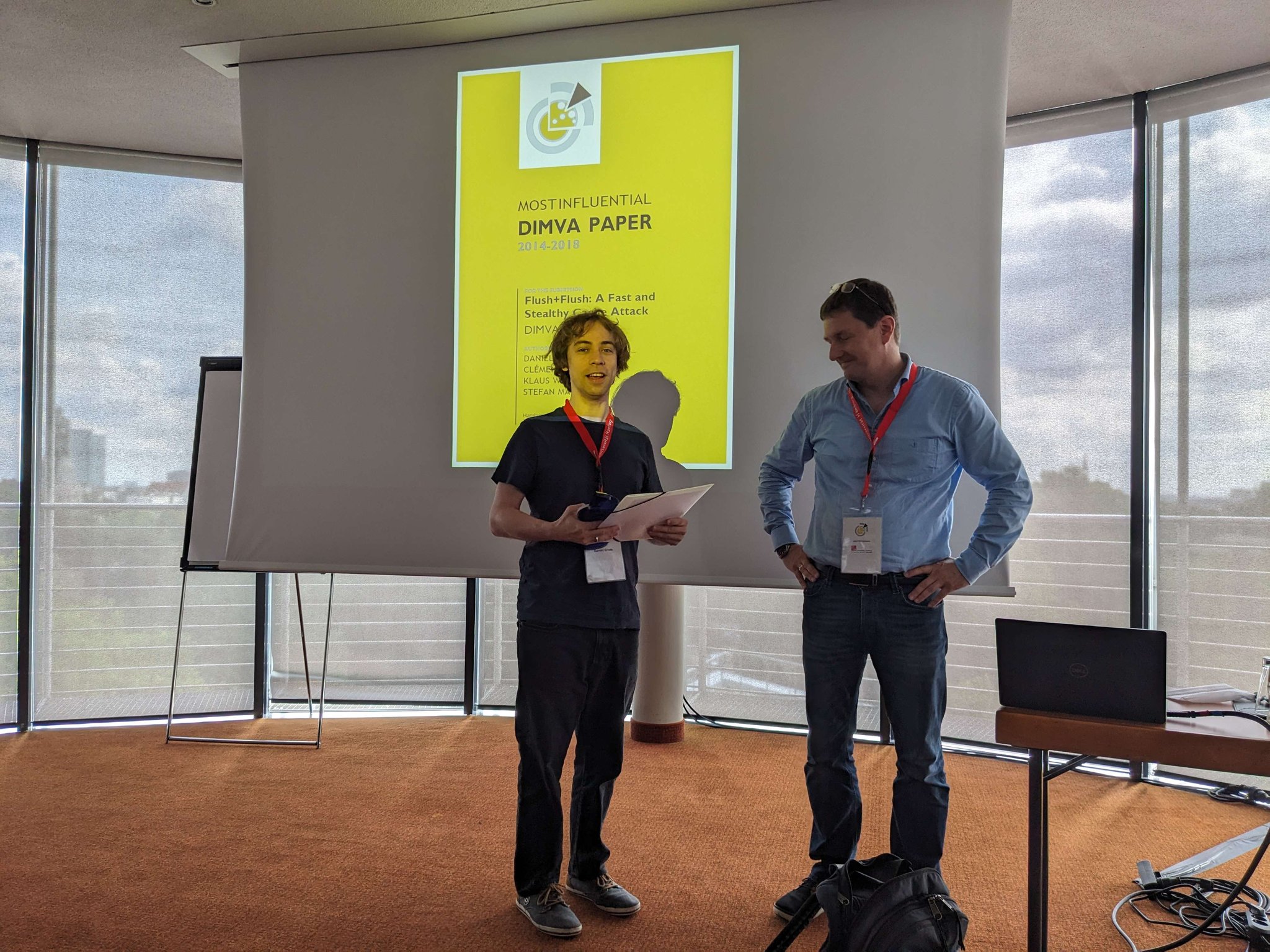
Clémentine Maurice is a full-time CNRS researcher at the University of Lille's CRIStAL laboratory, specializing in computer security with a focus on microarchitectural vulnerabilities. She leads the Spirals research group and previously worked at IRISA (Rennes) and Graz University of Technology. Her research spans side-channel attacks, fault injection, and hardware-software interactions. Education: PhD in Telecommunications from Telecom ParisTech (2015), postdoc at Technicolor and Eurecom. Academic background includes reverse-engineering CPU components and analyzing JavaScript timers in browsers. Research interests emphasize exploiting hardware vulnerabilities such as cache side-channels, port contention, and power-based fingerprinting. Notable contributions include PhaseSCA, BlueScream, and Rowhammer.js attacks, with awards including the 2023 DIMVA Best Paper and Mozilla Security Hall of Fame recognition. Grants: Leads the REV project under PEPR Cybersecurity, participates in ANR-funded projects like MIAOUS and ARCHI-SEC. Service roles include program committee positions at USENIX Security, EuroS&P, and DIMVA. Publications span 200+ works with a focus on practical attacks like Drammer (mobile rowhammer) and KASLR bypasses. Active in outreach through conferences, workshops, and mentoring PhD students via the Gilles Kahn award jury.