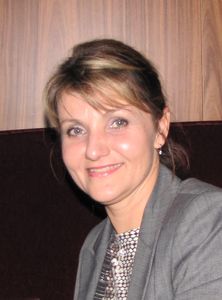
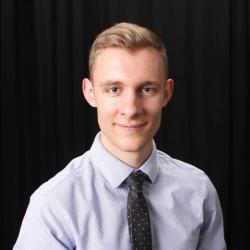
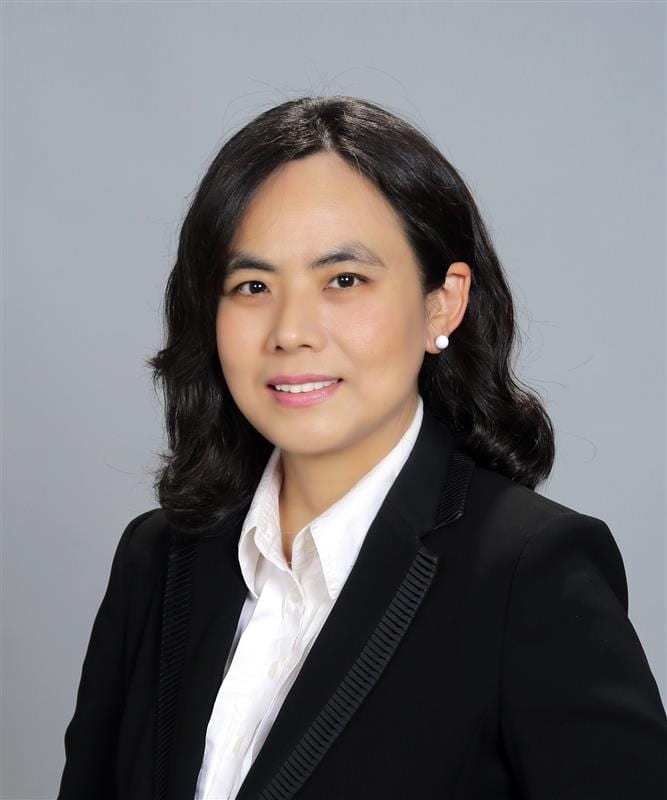
Assoc. Prof. Tatyana Yordanova is affiliated with the National Academy of Sports in Bulgaria, where she serves in the Faculty of Sports and Department of Technical and Ice Sports . She holds the academic rank of Associate Professor and has been leading the department since 2024. Education: Master's from State Central Institute of Physical Culture (1987); Doctorate in Sports Science (2019) Languages: English, Italian, Russian Her research focuses on technical elements in figure skating , speed-power abilities , balance stability , and judging systems . She has extensively studied jump mechanics and anthropometric factors in skaters. Her publications from 2018-2024 include studies on judging systems, jump techniques, and sports management. Key themes in her work involve training methodology, competition analytics, and biomechanics of skating. Since 2002, she has worked as an international figure skating judge, including at the Sochi 2014 Olympics . She chaired the Bulgarian Skating Federation (2011-2023) and participated in projects like Erasmus+ mobility (2022, 2024). Her pedagogical career includes roles as scientific assistant (1988), senior assistant (2006), and associate professor (2023).
Lutz Schubert is a researcher at the Institute of Computer Science , University of Cologne. He focuses on efficient distributed and parallel execution environments for heterogeneous systems, notably the MyThOS operating system in collaboration with Brandenburg University of Technology, Cottbus-Senftenberg. His interdisciplinary work bridges computer science and digital archaeology , addressing modeling of non-deterministic events from sparse excavation data and exploring human behavior constraints in archaeological contexts. Research Interests Design of modular, scalable operating systems for distributed systems Optimization of execution environments for heterogeneous hardware Application of complex systems modeling to digital archaeology Statistical and probabilistic methods for archaeological interpretation Autonomic resource distribution and adaptation in computing Publication Trends : His work spans operating systems , parallel computing , and digital humanities , with recent emphasis on probabilistic reasoning in archaeology and adaptive OS design for multicore architectures. Labs & Collaborations : He collaborates with Brandenburg University of Technology on MyThOS and leads research in computational archaeology as chair of Computer Applications and Quantitative Methods in Archaeology (CAA) , Germany.
Rachit Agarwal is an Associate Professor in the Department of Computer Science at Cornell University, with research focusing on systems, networking, and theoretical problems arising in practical systems. He leads a research group working on resource disaggregation, host architecture, secure cloud storage, and datacenter design. PhD in Computer Science, Cornell University Undergraduate, IIT Kanpur His research spans three major directions: Resource Disaggregation (with $3M NSF and Google awards), Host Architecture (exploring terabit interconnects), and PANCAKE (secure oblivious cloud storage with $1M NSF award). He also contributed to foundational work in Near-optimal Datacenter Design and Data Plane Monitoring . Awards include the Sloan Fellowship, NSF CAREER, IRTF Applied Networking Prize, and multiple best paper awards. His recent publications focus on host network architecture, congestion control, oblivious data access mechanisms, and secure cloud storage systems. He has advised multiple Ph.D. and postdoctoral researchers who now hold faculty positions at leading institutions. Sloan Research Fellowship NSF CAREER award Kavli Fellowship IRTF Applied Networking Research Prize SIGCOMM Best Student Paper Award Usenix Security Distinguished Paper Award Tau Beta Pi Professor of the Year 2025 Rachit has advised numerous students including current Cornell advisees like Midhul Vuppalapati, Shreyas Kharbanda, and Omar Eqbal. Former advisees include Saksham Agarwal (UIUC), Qizhe Cai (UVA), and Mina Tahmasbi Arashloo (University of Waterloo). His research is supported by large NSF grants and industry awards, with deployments in real-world systems and open-source contributions.
Jackie Chit Kit Cheung is an Associate Professor in the School of Computer Science at McGill University, where he co-directs the Reasoning and Learning Lab. He holds the Canada CIFAR AI Chair and serves as an Associate Scientific Co-Director at the Mila Quebec AI Institute. He is also a consulting researcher at Microsoft Research Montreal. Academic Background: Ph.D. in Computer Science, University of Toronto (2010–2014) M.Sc. in Computer Science, University of Toronto (2008–2010) B.Sc. (Honours) in Computer Science, minors in Linguistics and German, University of British Columbia (2004–2008) Research Interests: Jackie Cheung's research lies at the intersection of natural language processing, machine learning, and cognitive science. He focuses on natural language generation , automatic summarization , commonsense and pragmatic reasoning , and the evaluation of NLP systems . His work aims to build language models that reflect real-world structure and reasoning, with applications in health, education, and language revitalization. He is particularly interested in how implicit meaning is processed in context, a core concern in linguistic pragmatics. Publication Trends: His recent publications (2024–2025) show a strong emphasis on evaluation methodologies (e.g., COSMIC, ECBD), hallucination and factuality in language models, coreference and reasoning , and long-context modeling . He frequently collaborates across institutions and integrates insights from linguistics and psychology into NLP system design and analysis. Scientific Awards: Best Paper Award, ACL 2018 Outstanding Paper Award, NAACL 2018 Student Research Workshop SAC Award, ACL 2024 (for COSMIC) Best Poster Award, CMDO AI-Health Symposium 2024 Advising and Grants: He advises a large and diverse group of graduate students, including PhD and Master’s candidates, often in co-supervision with other faculty. His group has received support from major AI and health research initiatives, including CIFAR and Mila. He has trained alumni who have gone on to faculty and industry research positions. He has served in leadership roles in top NLP conferences, including as Senior Area Chair, Workshop Chair, and Program Chair of Canadian AI 2018. Labs and Teams: He co-directs the Reasoning and Learning Lab at McGill and is deeply involved with Mila – Quebec AI Institute . He founded the NLP Reading Group at McGill, which brings together researchers from computer science, linguistics, and information studies to discuss theoretical and applied NLP topics.
Anette Mikes is an Associate Professor of Accounting at the University of Oxford’s Saïd Business School and a Hertford College Fellow. She specializes in risk management, corporate governance, and sustainability, with a focus on the intersection of ethics and organizational control systems. Her research explores how risk frameworks shape corporate decision-making, particularly in climate change and decarbonization contexts. Education: PhD in Accounting from the London School of Economics (2005) Pre-doctoral work in the City of London (2006–2007) studying Chief Risk Officer roles Research Interests: Behavioral approaches to risk management Management control systems for sustainability Ethics in corporate governance Decarbonization strategies in heavy industries Her 2012 Harvard Business Review article (with Robert Kaplan) on risk frameworks remains influential, while her documentary on the Kursk submarine disaster highlights crisis management failures. Awards: 2025 Honorary Doctorate from Uppsala University 2017 ACA Prize for Risk Management Contributions 2014 Global Risk Forum Film Award Key Contributions: Co-developed Harvard’s Risk Management executive program Leads research on ‘Values at Risk’ and corporate purpose Published widely on climate risk governance and ethical leadership Her recent work emphasizes decarbonization strategies and moral accountability in business, bridging accounting practices with environmental and ethical imperatives.
Richard M. Murray is the Thomas E. and Doris Everhart Professor of Control and Dynamical Systems and Bioengineering at the California Institute of Technology (Caltech). He holds a B.S. from Caltech (1985), M.S. from UC Berkeley (1988), and Ph.D. from UC Berkeley (1990). He has served in academic roles from Assistant Professor (1991–1997) to his current endowed professorship. He chaired the Engineering and Applied Science division (2000–2005) and Biology and Biological Engineering (2020–2024). His research focuses on feedback control in biological and autonomous systems, synthetic cells, and networked control systems. Collaborators include experts in robotics, synthetic biology, and systems biology. Key awards include the IEEE Control Systems Award and election to the National Academy of Engineering. His educational contributions span courses on control systems, robotics, and bioengineering. Current research projects include the Developer Cell initiative (Sloan Foundation), layered testing for autonomous systems (AFOSR), and microbiome-based environmental solutions (CHARMME, ARO). He advises numerous graduate students and postdocs, with notable alumni in academia and industry. Labs include facilities in Keck and Steele laboratories at Caltech. His work bridges control theory, synthetic biology, and autonomous systems to address societal challenges like environmental monitoring and safe autonomy.
Gary Fedder is the Howard M. Wilkoff Professor of Electrical and Computer Engineering at Carnegie Mellon University (CMU), with courtesy appointments in Biomedical Engineering, Mechanical Engineering, and Robotics. He serves as Faculty Director of the Manufacturing Futures Institute (MFI) and previously held roles such as Vice Provost for Research and Interim CEO of the Advanced Robotics for Manufacturing (ARM) Institute. Fedder’s research focuses on MEMS, advanced manufacturing, and implantable microsystems. He earned his B.S., M.S., and Ph.D. in EECS from MIT and UC Berkeley, respectively. Education: Ph.D., Electrical Engineering and Computer Science, UC Berkeley (1994) M.S., Electrical Engineering and Computer Science, MIT (1984) B.S., Electrical Engineering and Computer Science, MIT (1982) Research Interests: Microelectromechanical systems (MEMS), digital twins, aerosol jet printing, stretchable electronics, and manufacturing innovation. His work integrates MEMS with CMOS processes, emphasizing low-cost, high-performance systems. Key Contributions: Co-founded the ARM Institute; developed MEMS-based sensors and actuators; pioneered methods for manufacturing innovation through projects like America Makes. His research spans over 300 publications and 21 patents. Awards: IEEE Fellow (2007), Ross Tucker Award (1993), NSF CAREER Award (1996), and leadership roles in Manufacturing USA initiatives. Leadership & Outreach: Directed the Institute for Complex Engineered Systems and led national initiatives to advance U.S. manufacturing competitiveness. Active in editorial roles for journals like IoP Journal of Micromechanics .
Wim VAN LENT is a Full Professor of Management at IÉSEG School of Management , France. He holds an HDR in Management from IAE Paris Sorbonne and a Ph.D. in Business Administration from ESSEC Business School. His academic career includes roles as Visiting Professor at Curtin University (Australia), Griffith University (Australia), and Researcher at the University of Paris I Panthéon-Sorbonne. He coordinates the 'Strategy and Sustainability' track and is a member of the LEM research group. His research focuses on Management Strategy , Business Ethics , Innovation and Entrepreneurship , and Historical Methodology . Notable areas include corporate archives' strategic use, temporal dynamics in organizations, and ethical repair mechanisms. His work often employs historical case studies, such as the Dutch East India Company (VOC) and colonial-era corporations, to analyze organizational adaptation and institutional contradictions. Van Lent's publications span top journals like Academy of Management Review , Small Business Economics , and Business Ethics Quarterly . His recent studies explore periodization practices in organizations, entrepreneurial time narratives, and moral repair frameworks. Teaching includes international strategy and corporate social responsibility at the MSc level. His research bridges historical analysis with contemporary management challenges, emphasizing how understanding past institutional dynamics informs modern organizational behavior and ethical decision-making.
Tomas Palacios is a Professor of Electrical Engineering at the Massachusetts Institute of Technology (MIT) , where he directs the Center for Graphene Devices and 2D Systems and leads the Microsystems Technology Laboratories (MTL). His research focuses on pushing the boundaries of microelectronics through novel semiconductor materials and device architectures, including Gallium Nitride (GaN) and 2D materials like graphene and molybdenum disulfide (MoS2). Professor, MIT Electrical Engineering and Computer Science Director, MIT Center for Graphene Devices and 2D Systems Clarence J. LeBel Professor, MIT Faculty Director, Northeast Microelectronics Internship Program (NMIP) Research Interests span multiple cutting-edge domains: High-frequency electronics (>300 GHz) for 6G and quantum applications High-voltage power devices (600V–10kV) for energy conversion Post-silicon logic devices using 2D materials High-temperature electronics (e.g., Venus rover applications) Distributed neural networks on large-area 2D materials Graphene-based biosensors and chemical detection systems Scientific Contributions include: Double recipient of the IEEE George Smith Award for groundbreaking GaN transistor work Co-invented first MoS2 electronic circuits Developed world’s first Wi-Fi-to-electricity conversion antenna Led MIT’s Microsystems Technology Laboratories since 2021 Advising Philosophy emphasizes cross-layer expertise, with students gaining experience from materials synthesis to system-level prototyping. His lab has incubated startups like Vertical Horizons , focused on GaN power devices for AI and EVs.
K. Michael Hays is the Eliot Noyes Professor of Architectural Theory at Harvard University's Graduate School of Design (GSD) and Co-Director of the Master in Design Studies program. He has been a faculty member since 1988, specializing in architectural history and theory. His research focuses on European modernism, critical theory, and contemporary architectural practice, with notable contributions to the field through writings on figures like Mies van der Rohe and Peter Eisenman. Education: He holds a Bachelor of Architecture (1976) from Georgia Institute of Technology, a Master of Architecture in Advanced Studies (1979) from MIT, and a PhD in History, Theory, and Criticism of Architecture and Art (1990) from MIT. Research Interests: Hays is renowned for founding the journal Assemblage , a pivotal forum for architectural theory. His work bridges historical analysis and contemporary practice, emphasizing theoretical frameworks for understanding modernism and its evolution. He has curated exhibitions at institutions like the Whitney Museum of American Art (as its first Adjunct Curator from 2000–2009). Publications: His authored and edited works include Architecture's Desire , Inscriptions: Architecture Before Speech , and critical studies on architects such as Buckminster Fuller and Diller + Scofidio. These publications explore themes of representation, modernist aesthetics, and interdisciplinary design. Awards and Roles: While no specific awards are listed, his academic leadership roles include Chair of the GSD PhD Committee (1995–2005) and Director of Advanced Independent Study Programs. He has also served on editorial boards for journals like Assemblage and Thresholds . Labs and Collaborations: Hays collaborates with academic and institutional partners, notably through curatorial projects and his role in shaping the GSD's theoretical curriculum. His influence extends to both pedagogical innovation and scholarly discourse in architectural education.
Asaf Cidon is an Associate Professor at Columbia University, jointly affiliated with the Department of Electrical Engineering and Computer Science, and a member of the Data Science Institute. His research focuses on software systems , storage , large-scale machine learning , and cybersecurity . Stanford University - PhD in Electrical Engineering Stanford University - MS in Electrical Engineering Technion - BS in Computer and Software Engineering His work in distributed storage systems has been commercialized by companies such as Facebook, Tibco, and Rubrik. He has led projects like Sentinel and Forensics during his industry career. Recent publications highlight advancements in software-based radiation protection (ASPLOS'26), PCIe pooling with CXL (HotOS'25), and AI phishing detection (IMC'25). These reflect his expertise in system architecture , security , and networking . Scientific recognitions include best paper awards at OSDI, Usenix Security, CIDR, and ATC, along with NSF CAREER and ARO Young Investigator Awards . His papers Cookie Monster (SOSP'24) and Chablis (CIDR'24) received notable accolades. He has mentored numerous PhD and Master's students , including Edward Guo, Harry Wang, and Teng Jiang, many of whom now hold roles at Google, Meta, Amazon, and academic institutions. His lab at Columbia is actively recruiting CS and EE PhD students. Prior to Columbia, he founded and led the startup Sookasa to acquisition and served as Senior Vice President of Email Protection at Barracuda Networks , managing a $200M business with 100 engineers.
Mary Bucholtz is a Professor in the Department of Linguistics at the University of California, Santa Barbara (UCSB). She holds affiliations with multiple departments including Anthropology, Feminist Studies, Spanish and Portuguese, the Gevirtz Graduate School of Education, Comparative Literature, and Latin American and Iberian Studies. Her research integrates sociocultural linguistics with anthropological, gender, and social justice frameworks. Education: PhD in Linguistics, University of California, Berkeley (1997) Bucholtz's work examines how language shapes and is shaped by social identities, particularly among youth, through dimensions like race, gender, and cultural practices. She emphasizes community-centered research , linguistic activism , and interdisciplinary methodologies to address systemic inequalities. Recent publications explore affective agency in Latinx youth, educational equity, and antiracist linguistics. Her collaborative projects often involve partnerships with educational institutions and youth communities in California, focusing on translanguaging , Black language justice , and raciolinguistic ideologies . Grants from the National Science Foundation, Spencer Foundation, and Wenner-Gren Foundation support her research. She co-edited the open-access volumes Decolonizing Linguistics and Inclusion in Linguistics (Oxford University Press, 2024), alongside authoring White Kids: Language, Race, and Styles of Youth Identity (Cambridge, 2011) and Talking College: Making Space for Black Language Practices in Higher Education (Teachers College Press, 2022).
Dr. Janet Garcia-Hallett is an Associate Professor of Criminal Justice in the Henry C. Lee College of Criminal Justice and Forensic Sciences at the University of New Haven. She earned her Ph.D. in Criminal Justice from Rutgers University School of Criminal Justice and specializes in research examining the intersection of race, gender, and the criminal legal system, with particular focus on formerly incarcerated mothers of color. Dr. Garcia-Hallett's educational background includes: Ph.D., Criminal Justice, Rutgers University School of Criminal Justice M.A., Criminal Justice, Rutgers University School of Criminal Justice B.A., Cum Laude, Honors in Sociology and Psychology, CUNY Macaulay Honors College: Hunter College Her research interests focus on the detrimental impact of incarceration on communities of color and the intersectional obstacles women of color face throughout the criminal legal process. She examines how formerly incarcerated mothers navigate motherhood while confronting systemic barriers related to gender, race, and criminal record. Her work challenges traditional narratives about mass incarceration that have historically centered on men, instead highlighting the unique experiences of women of color who must perform motherwork under oppressive conditions of surveillance and marginalization. Analysis of Dr. Garcia-Hallett's publications reveals consistent themes across criminal justice, gender studies, and race theory. Her work demonstrates a strong focus on qualitative methodologies to center the voices of marginalized populations, particularly examining the intersection of motherhood and incarceration. Recent publications increasingly address public health issues within correctional settings and community reentry challenges. Her research consistently applies critical race and feminist frameworks to challenge systemic oppression within the criminal legal system. Dr. Garcia-Hallett has received significant recognition for her scholarship: 2023 ASA Ida B. Wells-Barnett Distinguished Book Award Multiple 2023 finalists and honorable mentions for book awards 2019 SAGE Junior Faculty Professional Development Teaching Award University of Missouri President's Award for Intercampus Collaboration Her grant funding demonstrates substantial research impact, including the Prison Research and Innovation Network ($200,000) and collaboration on a $2.8 million Arnold Ventures grant for the Missouri Prison Transformation Project. Dr. Garcia-Hallett actively engages in community partnerships, such as her work with Winning Ways Inc. to empower women in the community. Her media presence shows significant public engagement through op-eds in Ms. Magazine and Hartford Courant addressing critical issues like abortion rights for incarcerated women.
Trevor Campbell is an Associate Professor in the Department of Statistics at the University of British Columbia (UBC), Vancouver. He holds a Ph.D. in Machine Learning and Statistics from MIT and a B.A.Sc. in Aerospace Engineering from the University of Toronto. His research focuses on automated, scalable Bayesian inference algorithms, Bayesian nonparametrics, and streaming data analysis. Campbell is a core contributor to probabilistic programming tools like Pigeons.jl and has developed influential methods for coreset-based Bayesian inference. Education : Ph.D. in Machine Learning and Statistics (2016), MIT M.S. in Aeronautics and Astronautics (2013), MIT B.A.Sc. in Aerospace Engineering (2011), University of Toronto Research Interests : His work emphasizes scalable Bayesian computation, including variational inference, MCMC optimization, and coresets. He develops algorithms that balance statistical accuracy with computational efficiency, particularly for large-scale datasets. His recent work explores adaptive samplers (e.g., AutoStep, autoMALA) and theoretical guarantees for coreset methods. Applications span astrophysics, materials science, and network analysis. Awards & Grants : NSERC Discovery Grant (2025) Blackwell-Rosenbluth Award (2021) PIMS Early Career Award (2023) Google Perception Academic Funding (2020) Advising & Labs : He supervises a team of PhD and M.Sc. students at UBC, focusing on Bayesian methodology and computational tools. His lab collaborates with institutions like SFU and MIT on projects involving distributed sampling and probabilistic modeling. He co-organizes workshops on Bayesian computation and serves on editorial boards for Bayesian Analysis and TMLR.
Hyesoon Kim is a Professor at the Georgia Institute of Technology , affiliated with the College of Computing and leading the HPArch research group . She co-directs the Center for Research into Novel Computing Hierarchies (CRNCH) . Her research focuses on Computer Architecture , GPU , Compilers and Runtime Systems , and Hardware Security , particularly for heterogeneous systems. Contact : hyesoon@cc.gatech.edu Location : 266 Ferst Drive, KACB 2344, Atlanta, GA Research Trends Her recent work spans RISC-V extensions for security, CUDA optimization on softcore GPUs, memory safety techniques, and energy-efficient deep learning architectures. Articles emphasize heterogeneous computing , GPU performance scaling, and IoT -oriented neural network methods. Open Source Projects She leads development of Macsim (heterogeneous architecture simulator) and Vortex (open-source GPU platform).