Professor Christian F. Doeller is a leading cognitive neuroscientist serving as Director of the Department of Psychology at the Max Planck Institute for Human Cognitive and Brain Sciences (MPI CBS) in Leipzig and Vice President of the Max Planck Society (since 2023). His roles include honorary professorships at the University of Leipzig (2019) and TU Dresden (Cognitive Neuroscience of Learning and Memory). He holds a PhD in Psychology from Saarland University (2005) and has held positions at institutions such as UCL (London), Radboud University (Nijmegen), and NTNU (Trondheim). His research focuses on spatial navigation, memory systems, and cognitive mapping in the human brain, leveraging neuroimaging (fMRI, EEG) and computational modeling. Key areas include hippocampal/entorhinal cortical function, grid cells, and the neural basis of spatial and conceptual representations. Recent work explores non-Euclidean spatial cognition, value-based decision making using grid-like maps, and hormonal influences on navigation. His lab combines experimental psychology, neuroimaging, and theoretical neuroscience to understand how brains build predictive models of environments and concepts. Publications emphasize cognitive maps, neural representations of space/value, and memory formation mechanisms. Over 100 journal articles span high-impact journals like Nature Neuroscience , Neuron , and Current Biology . His work bridges basic research and translational applications in neurodegenerative disorders and spatial cognition deficits.
Dr. Ruth Abbott is an Associate Professor in the Faculty of English at the University of Cambridge and a Fellow/Director of Studies at St John's College. Educated at Cambridge and Oxford, she has held prestigious fellowships at Cornell University, Harvard's Villa I Tatti (Florence), the Huntington Library, and Yale's Beinecke Library. She leads undergraduate and graduate teaching in 18th-19th century literature and textual scholarship, receiving multiple teaching awards including the Pilkington Prize. Her research specializes in textual scholarship and manuscript studies , with emphases on: History of note-taking and knowledge organization Compositional/reading practices in 18th-19th century manuscripts Scholarly networks of figures like Thomas Gray and George Eliot Institutional histories of libraries, museums, and universities She directs the Thomas Gray Manuscripts digital archive and edits major scholarly editions including Wordsworth's complete poems. Her publications demonstrate consistent focus on manuscript culture across 250+ years, blending literary analysis with historical epistemology. Recent works analyze knowledge-organization in Gray's commonplace books (2021-2024), George Eliot's research methods (2024-2025), and transcription practices in Enlightenment museums. Awards & Recognition: Gordon Duff Prize 2024 for manuscript studies research Pilkington Prize for teaching excellence CUSU Teaching Awards for supervision/lecturing She mentors graduate researchers in textual scholarship, Victorian studies, and manuscript culture, and contributes to university governance through committees on harassment prevention and diversity initiatives like 'Breaking the Silence'.
Abhinav Shrivastava is an Associate Professor in the Department of Computer Science at University of Maryland, College Park, with a joint appointment in the Institute of Advanced Computer Studies (UMIACS). Previously, he served as an Assistant Professor at the same institution from August 2018 to June 2024, and spent one year as a Visiting Research Scientist at Google Research from September 2017 to August 2018. His educational background includes: PhD in Robotics and Artificial Intelligence from Carnegie Mellon University (2017), advised by Abhinav Gupta, with thesis titled 'Discovering and Leveraging Visual Structure for Large-scale Recognition' MS in Artificial Intelligence from Carnegie Mellon University (2011), supervised by Alyosha Efros and Martial Hebert BTech in Computer Science and Engineering from Jaypee Institute of Information Technology (2010) Professor Shrivastava's research focuses on computer vision and machine learning, with particular expertise in object detection, image recognition, and neural representations. His work bridges theoretical advances with practical applications, exploring how visual systems can discover and leverage structure in large-scale recognition problems. He has made significant contributions to understanding the role of supervision in vision transformers, developing novel approaches for object-state composition recognition, and creating efficient neural representations for videos and 3D scenes. His research often addresses fundamental challenges in visual recognition, including handling novelty in open-world environments and improving the efficiency of visual systems. An analysis of his recent publications reveals a strong emphasis on neural representations, particularly for dynamic content like videos and 3D scenes. His work demonstrates increasing sophistication in handling open-world vision problems, with research spanning object discovery, localization, and representation learning. The publications show a clear progression toward more efficient and scalable models, with recent work focusing on model compression, sparse representations, and addressing the challenges of working with limited annotations. His scientific contributions have been recognized with several prestigious awards: Best Paper Award (Applications) at IEEE Winter Conference on Applications of Computer Vision (2020) Microsoft Research PhD Fellowship (2014-2016) Best Student Paper Award at IEEE Winter Conference on Applications of Computer Vision (2014) Outstanding Reviewer Award at IEEE CVPR (2015) Professor Shrivastava has successfully mentored numerous graduate students, many of whom have become prominent researchers in computer vision. His Amazon Research Awards (2020 and 2023) have supported innovative projects including 'The pursuit of knowledge: discovering and localizing new concepts using dual memory' and 'Audio-conditioned Diffusion Models for Generating Lip-synchronized Videos.' He has served as Area Chair for major conferences including ICCV, CVPR, and AAAI, demonstrating his leadership in the computer vision community. His research has attracted significant funding from both academic and industry sources, supporting his exploration of fundamental questions in visual recognition and representation learning.
Gina Stamm is an Associate Professor of French at the University of Alabama, Department of Modern Languages & Classics. Her work bridges environmental humanities, speculative literature, and queer/feminist theory, focusing on 20th-21st century French and francophone Caribbean literature. PhD in French, Emory University (2016), with certificates in Psychoanalytic Studies and Comparative Literature MA in French, Miami University (2010) Stamm specializes in ecocritical analysis , examining how surrealism, feminist utopias, and post-exotic literature engage with ecological crises. Her research spans topics like queer ecology , vegetal transhumanism , and postcolonial environmental trauma , often through interdisciplinary lenses combining psychoanalysis and postcolonial theory. Recent publications explore intersections of racial capitalism , intergenerational trauma , and botanical agency in francophone Caribbean contexts. She actively translates works like Antoine Volodine's Songes de Mevlido and participates in podcasts such as ASLE EcoCast, discussing plant-oriented critical theory and speculative narratives. Her scholarship contributes to evolving frameworks in ecopoetics , nonhuman subjectivity , and decolonial environmentalism , with affiliations to academic institutions in France and the Caribbean.
Olga Fernández López is an Associate Professor at the Department of History and Theory of Art, Universidad Autónoma de Madrid, and holds a PhD in Geography and History (History of Art) from Universidad Complutense de Madrid (UCM). She collaborates with institutions including Intermediae (Matadero Madrid), CA2M Madrid, and Andalusian Center for Contemporary Art Seville. PhD Curating Contemporary Art, Royal College of Art (2017) PhD in History of Art, UCM Master’s in Cultural Management, Fundación Ortega y Gasset Her research focuses on: History of exhibition models and curatorial practice Contemporary art in Spain and Latin America Visual culture and political philosophy Museum decolonization Recent publications explore: Urban curatorial practices (2016-2021) Postwar European visual culture (2019) Decolonial exhibition strategies (2020) Scientific awards include: Salvador de Madariaga grant (2020) for research at Columbia University Key projects: PUBLISHERS: Publics of Contemporary Art (2019-2021) European Forum for Advanced Practices (2019-2022) Decentralized Modernities: Cold War Art (2018-2020)
Holger Stritzel is a Senior Lecturer in International Relations at the Department of European & International Studies , King’s College London . Previously, he served as a Lecturer in International Relations and Programme Director for International Security Studies at the University of St Andrews. His academic background includes a PhD from the London School of Economics and Political Science , supervised by Barry Buzan. Research Interests: Transatlantic Relations German-American Relations Securitization Theory Critical Security Studies Discourse Theory Translation and Conceptual Transfer Publications Trends: His work focuses on security discourse analysis, with particular emphasis on Germany’s narrative responses to international crises (e.g., Israel, Ukraine, Afghanistan). Key themes include identity construction, ontological insecurity, and the politics of historical memory. Academic Networks: A founding member of the C.A.S.E. Collective (Critical Approaches to Security in Europe), Stritzel collaborates extensively with European research institutions and contributes to the Centre for German Transnational Relations , examining Germany’s evolving role as a 'reluctant hegemon.'
Susannah Heschel is the Eli M. Black Distinguished Professor of Jewish Studies at Dartmouth College , chair of the Jewish Studies Program, and faculty member of the Religion Department. She is currently the Joseph Engel Visiting Professor for 2025-2026 at Swartz Hall, Cambridge, and a Guggenheim Fellow researching European Jewish scholarship on Islam. Education: A.B. from Trinity College, M.T.S. from Harvard Divinity School, Ph.D. from the University of Pennsylvania. Research Interests: Her work bridges Jewish and Protestant thought (19th-20th centuries), focusing on biblical scholarship, antisemitism, and Jewish perceptions of Islam. She explores intersections of race, gender, and ethics, particularly in Nazi Germany and modern prophetic traditions. Publications Trends: Recent articles examine Holocaust-era biblical interpretation, prophetic leadership in civil rights, racial theology, and sensory dimensions of antisemitism. Her scholarship spans historical analysis, ethical critique, and interdisciplinary engagements with theology and politics. Scientific Awards: Guggenheim Fellowship National Humanities Center Fellowship Wissenschaftskolleg in Berlin Fellowship Moses Mendelssohn Prize (Leo Baeck Institute) Five Honorary Doctorates Elected Member, American Society for the Study of Religion and American Academy for Jewish Research Grants & Visiting Roles: Recipient of Ford Foundation and Carnegie Corporation grants. Visiting professorships at Universities of Cape Town, Frankfurt, Princeton, Edinburgh, and Lucerne. Convening a 2026 conference on 'Sexual Violence and Antisemitism' with Carnegie support.
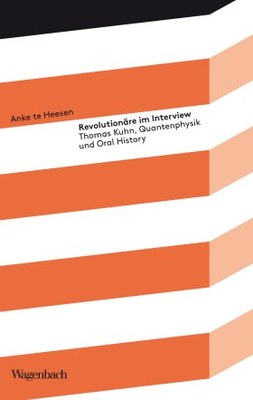
Professor Anke te Heesen is Chair of the History of Science with a focus on the history of education and the organization of knowledge in the 19th and 20th centuries at Humboldt-Universität zu Berlin. She has held this position since 2011 and is also the spokesperson (since 2024) of the DFG Center for Advanced Studies 'Applied Humanities – Politics and Genealogy,' alongside Professor Viktoria Tkaczyk. Previously, she served as Professor for Empirical Cultural Studies at the University of Tübingen (2008-2011) and founding director of the Museum of the University of Tübingen (2006-2008). Her academic career includes research positions at the Max Planck Institute for the History of Science in Berlin (1999-2006), the German Hygiene Museum Dresden (1998-1999), and the Research Center for the European Enlightenment (1996-1997). Professor te Heesen's research spans multiple interconnected fields including the history of humanities, natural history in the early modern period, museum and exhibition history, organization and notation methods of sciences, and the relationship between science and art. She has a particular interest in how knowledge is formed, organized, and presented through various material and institutional practices. Her work often examines the intersection of academic knowledge production with material culture, focusing on objects, collections, and exhibition practices as sites of knowledge formation. Her recent publications reveal a strong focus on the history of interviews as research methodology, the development of exhibition catalogs as scholarly monographs, and the material history of knowledge practices. The analysis of her 15 most recent articles shows consistent engagement with themes of materiality, the organization of knowledge, and the historical development of scholarly practices, particularly in the humanities. Her work frequently bridges historical analysis with contemporary scholarly concerns about knowledge production and dissemination. Spokesperson of the DFG Centre for Advanced Studies 'Applied Humanities: Genealogy and Politics' (since 2024) Senior Fellow, Collegium Helveticum, Zurich (WS 2023/24) Visiting Scholar, Max Planck Institute for History of Science (since 2021) Dibner Research Fellowship, Huntington Library (2020) Senior Research Fellowship, Lichtenberg Kolleg (2020) Professor te Heesen has held significant leadership roles including Ombudsperson of Humboldt University of Berlin (since April 2024) and Head of the Commission for Studies and Teaching at the Institute of History (since April 2024). She serves on multiple advisory boards including the Scientific Advisory Board of the project 'Serious Donations' at the Museum of Natural History in Berlin (since 2020), the DFG Review Board for History (2020-2024), and the Robert K. Merton Center for Science Studies at Humboldt University (since 2019). She is also a member of the editorial boards of several scholarly journals including Reports on the History of Science and History of Science and Humanities. Her work extends to museum practice and curation, with significant contributions to understanding how universities can leverage their collections to create meaningful educational experiences that connect historical context with contemporary research. She has initiated important publication series including 'Sonderdruck' (since 2016) and 'Minima Literatur- und Wissensgeschichte kleiner Formen' (since 2020).
Jelena Mirkovic serves as Principal Scientist at USC Information Sciences Institute (USC/ISI) and Research Associate Professor at the University of Southern California's Thomas Lord Department of Computer Science. She has held faculty positions at USC since 2010, progressing from Research Assistant Professor to her current role as Research Associate Professor since 2017, while also serving as Project Leader at USC/ISI. Her educational background includes: PhD in Computer Science from UCLA (2003) MS in Computer Science from UCLA (2000) B.Sc. in Computer Science from University of Belgrade, Serbia (1998) Mirkovic's research spans network security, human-centered attacks, and cybersecurity experimentation infrastructure. Her work focuses on critical security challenges including botnets, denial-of-service attacks, IP spoofing, vulnerability scanning, and user-centric privacy. She has pioneered methodologies for security experiments and led major infrastructure projects including the DETER testbed and SPHERE (Security and Privacy Heterogeneous Environment for Reproducible Experimentation). Analysis of her recent publications reveals consistent innovation across multiple security domains. Her work demonstrates strong technical depth in DDoS defense systems (particularly DNS protection), binary vulnerability analysis, privacy-preserving systems, and security experimentation infrastructure. A notable trend is her focus on bridging theoretical security concepts with practical implementation through large-scale testbeds and real-world data analysis. Her significant scientific achievements include: IEEE Senior Member distinction Best paper award at IEEE COMSNETS 2023 for DNS DDoS defense research Mirkovic has secured substantial research funding as Principal Investigator or Co-PI on numerous grants from NSF, DHS, and other agencies. Current major projects include SPHERE (Security and Privacy Heterogeneous Environment for Reproducible Experimentation), DISCERN (Datasets to Illuminate Suspicious Computations), and modernizing DeterLab education infrastructure. She has successfully led multiple REU sites focused on cybersecurity education and workforce development. She directs the STEEL (Security Research Lab) at USC/ISI, which develops innovative security solutions through interdisciplinary research in network security, human factors in security, and cybersecurity experimentation infrastructure. The lab emphasizes practical implementations that address real-world security challenges while advancing theoretical understanding of security systems.
John Peters serves as Associate Professor at Memorial University of Newfoundland within the Faculty of Business Administration and Department of Sociology, with additional appointments as Research Fellow at Montreal's CRIMT and Associated Professor at both Montreal's School of Industrial Relations and York University's Department of Politics. His educational background includes a Master's in History from the University of Michigan and PhD in Political Science from York University, building foundational expertise for his interdisciplinary work. Peters' research critically examines labor movements within financialized economies and climate crisis responses, focusing on decarbonization's impact on workers through frameworks of just transition and political economy. His scholarship bridges theoretical analysis of inequality with practical policy solutions for sustainable labor markets. Recent publications (2019-2022) reveal consistent thematic focus: financialization's erosion of labor power, climate-labor intersections, and policy pathways for equitable economic transformation, with significant emphasis on Canadian contexts and comparative frameworks. His research awards demonstrate sustained funding success: SSHRC Engage Grant (2023) analyzing unions' climate crisis strategies SSHRC Connection Grant (2022) exploring climate-work futures Multi-year SSHRC Partnership Grant (2017-2024) for institutional labor innovation Peters actively collaborates through CRIMT on sector-specific policy studies (auto, steel, aluminum) while developing union training programs for zero-carbon transitions, emphasizing worker capacity building for equitable clean energy economies.
Professor Brett Hayes is a distinguished cognitive psychologist at the University of New South Wales, serving in the School of Psychology. He is the founding Director of the Sydney Thinking and Reasoning (STAR) Laboratory, which he has led for over 15 years, securing more than $4 million in competitive research funding. Professor Hayes has previously held the position of Head of the School of Psychology and served as a member of the Australian Research Council (ARC) College of Experts. His research expertise spans reasoning, concept learning, memory, and developmental changes in these cognitive processes. Professor Hayes employs both experimental investigation and computational modeling in his work, with a particular focus on applying fundamental cognitive research to practical problems in forensic and clinical decision-making, early childhood education, and climate change science communication. His research has significant interdisciplinary applications across psychology, education, and environmental science. Professor Hayes has published extensively in top cognitive science journals, with his most recent work focusing on inductive reasoning, sampling assumptions, learning traps, and consensus perception. His research demonstrates consistent innovation in understanding how people process information, make decisions under uncertainty, and develop reasoning abilities across the lifespan. His scientific contributions include numerous journal articles, book chapters, and co-authored textbooks on developmental psychology. Professor Hayes has also contributed to teaching through courses such as PSYC3341 Developmental Psychology (which he chairs), PSYC3221 Cognitive Science, and PSYC2061 Developmental and Social Psychology. Professor Hayes maintains an active research program with ongoing collaborations across multiple institutions, as evidenced by his numerous co-authored publications. His laboratory continues to advance our understanding of human cognition through rigorous experimental work and theoretical development.
Nina Vollenbroker serves as Associate Professor of Architecture and Director of the Architectural Design PhD programme at University College London's Bartlett School of Architecture. A registered architect in the UK (ARB) and Germany (Architektenkammer NRW), she also acts as editor for Architectural Research Quarterly since 2020 and serves on the Society of Architectural Historians’ advisory committee on accessibility. Her educational background includes a PhD in Architectural History from UCL, along with multiple UCL degrees: Master of Architecture (2005), Certificate (2004), Master of Science (2002), Diploma (2001), and Bachelor of Architecture from Oxford Brookes University (1997). Vollenbroker's research centers on the intersection of deafness, disability, and architectural design, challenging normative spatial paradigms through historical and contemporary lenses. Her current Paul Mellon Centre-funded project "Hide and Speak" examines the first purpose-built deaf schools in 19th-century Britain, revealing how architecture actively shaped cultural understandings of deafness. She extends this work through "Deafening Architectural Modernism," which re-evaluates Adolf Loos's contributions through the lens of his hearing loss, demonstrating how sensory experience fundamentally informs spatial design. Her broader research encompasses migration studies, gendered domestic spaces, and critical examinations of architectural exclusion. Her recent publications span architectural history, disability studies, and material culture, with significant contributions to edited volumes on deafness in architecture (University of Illinois Press, 2025), mobile home-making (Brill, 2025), and the American West (Routledge, 2025). These works consistently demonstrate her methodological approach of centering marginalized perspectives within architectural discourse. Wilhelm Award from Pioneer America Society for outstanding research in material cultures studies Paul Mellon Centre Mid-Career Fellowship Royal Institute of British Architects Research Award British Academy Research Fund Award Vollenbroker supervises doctoral students in architectural design while securing major research funding from bodies including the Arts and Humanities Research Council, British Academy, and Royal Institute of British Architects. Her international collaborations include work with the Lebanese NGO Biladi on migration studies and knowledge-exchange programs funded by The Council for British Research in the Levant. She regularly convenes major conference sessions, including at the Society of Architectural Historians and Architectural Humanities Research Association conferences, and presents at institutions worldwide including Columbia University, Yale University, and Heidelberg University. Her research group actively engages with disability advocacy organizations and architectural practitioners to translate historical insights into contemporary inclusive design practices, particularly through her editorial work on special journal issues addressing disability and architecture.
Lara Choksey is a Lecturer in Colonial and Postcolonial Literatures in English (1800–present) at University College London, where she is also a Faculty Associate at the Sarah Parker Remond Centre for the Study of Racism and Racialisation. Her research bridges literature, science and technology studies, and political philosophy, focusing on how genomic and biotechnological narratives shape conceptions of human identity and temporality. Education BA in English, University of Leeds (2010) MA in Cultural Studies, Goldsmiths College (2011) PhD in English and Comparative Literary Studies, University of Warwick (2017) Choksey’s work interrogates the intersections of colonialism, postcolonialism, and scientific discourse. Her book Narrative in the Age of the Genome: Genetic Worlds (2021) explores how DNA sequencing technologies influence speculative fiction and bioethical frameworks, earning a shortlisting for the British Society for Literature and Science Book Prize. She is a series editor for Bloomsbury's Explorations in Science and Literature . Recent publications engage ecological collapse, racialized environments, and welfare systems, reflecting her interest in transnational narratives and material histories. She has held postdoctoral fellowships at the University of Exeter's Wellcome Centre for Cultures and Environments of Health (2018–21) and the University of Warwick's Institute of Advanced Study (2017–18). Scientific Awards Shortlisted, British Society for Literature and Science Book Prize (2021) As a supervisor, Choksey guides PhD projects on James Baldwin and visual culture, pandemic fiction in American literature, and Brian Catling's novels. Her professional activities include media engagements on colonialism, soil science, and agricultural history, alongside talks on AI’s colonial legacies and decolonizing literary canons.
Jill C Anderson, MD serves as a Clinical Assistant Professor in the Department of Dermatology at Northwestern University's Feinberg School of Medicine, specializing in Medical Dermatology. She maintains clinical practice at Northwestern Memorial Hospital and Northwestern Medicine Lake Forest Hospital, providing comprehensive dermatological care with hospital affiliations spanning major Chicago-area medical centers. Her academic foundation includes: MD from Rush Medical College (2009) Dermatology Residency at Rush University Medical Center (2010) American Board of Dermatology Certification Dr. Anderson's research centers on complex dermatological conditions with emphasis on pediatric presentations and vascular anomalies. Her clinical investigations bridge medical dermatology and pediatric dermatology, focusing on rare tumor manifestations within congenital vascular disorders. This specialized niche addresses critical diagnostic challenges in pediatric skin conditions through detailed case analysis and pathological correlation. Her publication activity demonstrates consistent engagement with pediatric dermatopathology, particularly in characterizing unusual tumor-vascular anomaly intersections. The 2013 Pediatric Dermatology publication established her scholarly contribution to understanding Masson tumor presentations in congenital contexts, reflecting ongoing commitment to advancing diagnostic precision in complex dermatological cases. Scientific Awards: No scientific awards documented in current profile Academic mentoring and research funding details remain undisclosed in available materials. While actively contributing to the Department of Dermatology's clinical mission, specific laboratory affiliations, research teams, or trainee supervision activities aren't specified in the institutional profile. Her professional focus appears centered on clinical practice within Northwestern's integrated hospital system, maintaining active patient care responsibilities across multiple clinical sites while fulfilling faculty obligations at the medical school.
Ryan P. Huang is an Associate Professor in the Computer Science & Engineering department at the University of Michigan, College of Engineering, where he leads the Order Lab. Previously, he was an Assistant Professor at Johns Hopkins CS department from 2017 to 2022. His research focuses on computer systems, particularly operating systems and distributed systems, with emphasis on reliability, efficiency, and defensibility across cloud data centers and mobile devices. Dr. Huang's research interests center on pushing the boundaries of cloud systems availability and observability. His work addresses critical challenges such as gray failures and partial failures in distributed systems, developing principled techniques for failure detection and localization. His research spans multiple thrusts including Panorama for enhanced observability, Watchdog for runtime checking, OmegaGen for partial failure localization, and Narya for predictive failure mitigation. He also investigates energy-efficient mobile systems and system misconfiguration prevention. His recent publications demonstrate a strong trend toward addressing silent failures in distributed systems, with multiple papers accepted to top-tier conferences including SOSP and OSDI in 2025. His work bridges theoretical principles with practical system implementations, focusing on real-world challenges in cloud infrastructure and distributed computing environments. NSF CAREER award recipient Multiple Best Paper Awards (OmegaGen, Argus, LeaseOS) CRA Outstanding Undergraduate Researcher Award honorable mentions for advisees Dennis Ritchie doctoral dissertation award honorable mention Dr. Huang actively mentors PhD students including Yuzhuo Jing, Wanning He, Yuxuan Jiang, and others. His lab has produced graduates who have gone on to faculty positions at institutions like University of Virginia and Boston University. He serves on program committees for major systems conferences including SOSP, OSDI, and NSDI, contributing significantly to the academic community. The Order Lab maintains active research collaborations and regularly publishes in top-tier venues, with multiple papers accepted to SOSP and OSDI in 2025.