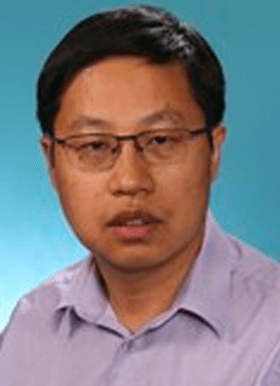
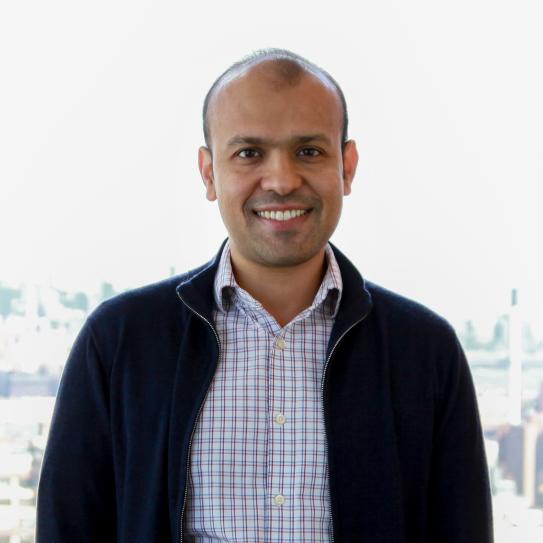
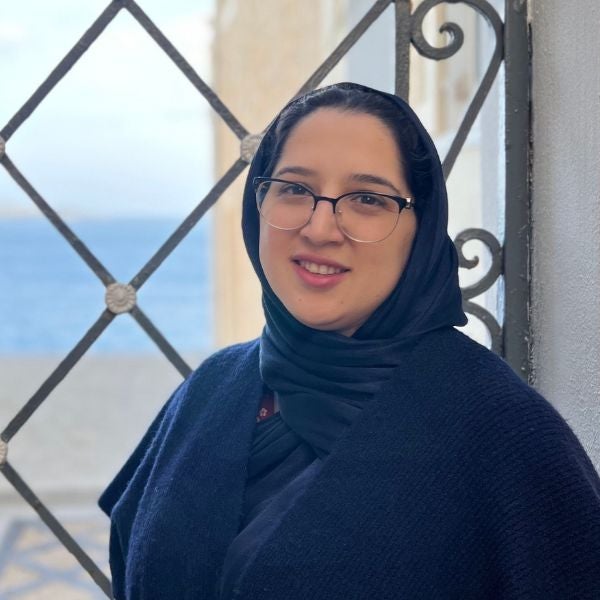
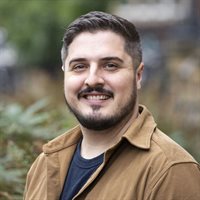
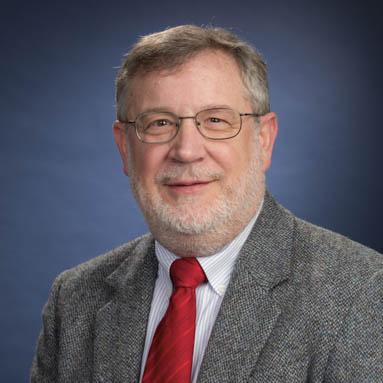
Lei Liu, PhD, is a Professor of Biostatistics, Medicine, and Statistics and Data Science at Washington University in St. Louis. He holds positions in the Roy and Diana Vagelos Division of Biology & Biomedical Sciences (DBBS), the Institute for Informatics, Data Science and Biostatistics (I2DB), and the Center for Biostatistics and Data Science (CBDS). His research focuses on biostatistical and data science methods, including survival analysis, longitudinal data modeling, and machine learning applications in healthcare. He collaborates with clinicians across disciplines like cardiology, ophthalmology, and addiction medicine. Dr. Liu’s work emphasizes high-dimensional omics data analysis, medical cost modeling, and joint multi-outcome models. He is an Associate Editor of Biometrics and a former member of the NIH Biostatistical Methods and Research Design Study Section. He mentors underrepresented minority researchers through the NHLBI PRIDE program.
Anja Skrivervik is a Full Professor at École Polytechnique Fédérale de Lausanne (EPFL), holding multiple key academic positions across the institution. She serves as a Full Professor in the School of Engineering (STI) within the Electromagnetics and Antennas group, as Director of the Electrical Engineering Doctoral Program, and as a Full Professor in multiple teaching units including EDEE, SEL, and EDMI. Her extensive institutional affiliations demonstrate her significant leadership role within EPFL's engineering and educational frameworks. Professor Skrivervik's research spans multiple cutting-edge domains in electromagnetic engineering with a particular focus on antenna design for specialized applications. Her work prominently features implantable medical devices, where she develops antennas and wireless power transfer systems for deep-body bioelectronics. She has made significant contributions to mm-Wave technology, particularly in multibeam systems for 5G applications and wireless power transfer. Her research also encompasses tissue phantom development for electromagnetic characterization, with recent work on biodegradable alternatives to traditional materials. The interdisciplinary nature of her work bridges electrical engineering, biomedical applications, and materials science. An analysis of her recent publications (2023-2025) reveals a consistent research trajectory focused on solving practical challenges in antenna design for constrained environments. Her work shows particular strength in optimizing antenna performance for implantable medical devices, where size, efficiency, and biocompatibility present unique challenges. She has developed novel approaches to beamsteering, mutual coupling reduction, and RF radiation modeling specifically tailored for medical applications. Her contributions to tissue phantom development represent an important methodological advancement for testing and validating implantable devices. As Director of the Electrical Engineering Doctoral Program and through her multiple professorial appointments, Professor Skrivervik plays a central role in shaping graduate education at EPFL. Her leadership extends to serving on the Doctoral Commission, where she helps set standards and policies for doctoral education across the institution. While specific grant information isn't detailed in the available materials, her extensive publication record across top journals and conferences suggests successful funding of her research activities. Her work appears to be conducted within EPFL's Electromagnetics and Antennas group (SCI STI AS), which likely houses specialized laboratories for antenna measurement, electromagnetic simulation, and biomedical device testing. The focus on tissue phantoms and implantable devices suggests dedicated facilities for biomedical electromagnetic testing, while her mm-Wave and 5G research indicates capabilities in high-frequency measurement and characterization.
Professor Marius Portmann is the UQ-Cisco Chair of Network Security at the School of Electrical Engineering and Computer Science (EECS), University of Queensland. His expertise spans Cybersecurity, IoT, and Applied AI. He holds a PhD from ETH Zurich (2003) and has led research in Software Defined Networking (SDN), blockchain, and energy-harvesting IoT systems. Education: PhD in Electrical Engineering from Swiss Federal Institute of Technology (ETH Zurich), 2003. Research focuses on securing IoT networks, AI-driven intrusion detection, and sustainable sensor systems. He has pioneered self-powered IoT systems using energy harvesters and developed frameworks like FlowTransformer for network analysis. His work bridges theoretical advancements with practical applications in smart tourism, energy efficiency, and edge computing. Recent publications highlight innovations in DDoS detection (P4-Secure), sensor-based environmental monitoring (EcoShower), and graph-based anomaly detection (XG-BoT). His datasets (e.g., NF-ToN-IoT-v3) are widely used in ML-based cybersecurity research. Collaborations include industry partners like Cisco and institutions like RMIT. Grants and leadership roles in interdisciplinary projects underscore his impact. He advises on IoT security standards and contributes to open-source tools for network research. Current projects explore edge-AI integration and sustainable sensor networks.
Dr. Andromachi Athanasopoulou is a Reader (Associate Professor) in Organisational Behaviour at Queen Mary University of London's School of Business and Management, where she also previously served as Head of the People & Organisations Department. She holds an MBA, MSc in Management Research, and DPhil in Management Studies from the University of Oxford, alongside an undergraduate degree in Business Administration from Athens University of Economics and Business. Research Interests : Her work focuses on leadership development (including gender & leadership, CEO careers, and executive coaching), business ethics, and corporate social responsibility (CSR). She employs qualitative research methods and has contributed to landmark studies like the CEO Report on leadership in uncertain environments. Awards & Recognition : Recipient of multiple awards, including the Academy of Management (US) and British Academy of Management awards. She has been honored with the Best Reviewer Award (2018, 2019, 2020, 2023) from the Academy of Management Learning & Education and the 2016 MED Best Symposium Award. Engagement & Impact : Active in executive education via roles at the Saïd Business School (University of Oxford) and as an external advisor to a US Cancer Center's Leadership Institute. Her research has been featured in global media like CNN and the BBC. Teaching & Leadership : Teaches undergraduate courses such as BUS141 and has experience at all academic levels. A Fellow of both the UK Higher Education Academy and the Royal Society of Arts.
Associate Professor Mathias Baumert is affiliated with the University of Adelaide, where he holds a position in the School of Electrical and Mechanical Engineering under the Faculty of Sciences, Engineering and Technology. He leads the Health Technology research theme in the School of Electrical Electronic Engineering and specializes in biomedical signal processing, focusing on dynamic electrocardiography and sleep-related phenomena. His work integrates clinical applications and technological advancements to address challenges in cardiology and sleep disorders. His research interests include the physiological underpinnings of ventricular repolarization variability and its clinical implications, particularly in post-myocardial infarction patients and those with sleep-disordered breathing. He also develops brain-computer interface (BCI) systems for stroke rehabilitation, leveraging real-time EEG analysis and motor function recovery techniques. Collaborations with clinical partners such as the Women’s and Children’s Hospital, Adelaide Institute of Sleep Health, and the Victor Chang Cardiac Research Institute highlight his translational research focus. His recent articles emphasize signal processing applications for risk stratification in cardiovascular disease, sleep apnea, and diabetes. Key themes include nocturnal hypoxemic burden prediction, REM sleep dynamics, and the development of novel diagnostic markers using ECG and EEG data. His work often bridges engineering and medicine, aiming to translate findings into clinical tools like adaptive servo-ventilation treatment optimization and personalized BCI systems. No scientific awards or fellowships are explicitly listed in the provided texts. He is eligible to supervise Masters and PhD students but current advisee names are not available. His research projects are supported by grants such as ARC DP110102049 (as noted in some articles). He teaches courses including Biomedical Instrumentation and Introduction to Medical Technology . His facilities include ECG equipment, polysomnogram repositories, and a BCI workstation with 64-channel EEG capabilities. He collaborates on lab-based and clinical partner studies to advance cardiac sensing algorithms and sleep-related diagnostic technologies.
Siddharth Garg is the Institute Associate Professor of Electrical and Computer Engineering at NYU Tandon School of Engineering, leading the EnSuRe Research Group. He holds a Ph.D. from Carnegie Mellon University (2009) and a B.Tech. from IIT Madras. His research focuses on secure and energy-efficient computing systems, integrating machine learning, cybersecurity, and hardware design. He previously held roles as Assistant Professor at NYU Tandon (2014-2020) and the University of Waterloo (2010-2014). Key affiliations include NYU Center for Cybersecurity (CCS), NYU Wireless, and the Center for Advanced Technology in Telecommunications. His work has been recognized with prestigious awards like the NSF CAREER Award (2015) and inclusion in Popular Science’s 'Brilliant 10' (2016). Notable research includes private inference optimization, secure hardware IP protection, and adversarial machine learning defenses. Publications highlight advancements in zero-knowledge proofs, AI-driven chip design, and mitigating backdoor attacks in neural networks. His grants include funding from NYU Wireless and NSF initiatives like the Chips4All project. The EnSuRe group emphasizes bridging software and hardware design gaps using AI and fostering cybersecurity education.
Oleg Shpyrko is a Professor and Department Chair in the Department of Physics at the University of California, San Diego (UCSD). He leads a research group focused on nanoscale structural dynamics using advanced x-ray scattering techniques. His work bridges hard and soft condensed matter systems, including magnetic materials, energy storage materials, and biophotonic nanostructures. Shpyrko earned his Ph.D. in Physics from Harvard University in 2004. His research leverages national facilities like the Advanced Photon Source (APS) and Linac Coherent Light Source (LCLS). Key areas include coherent x-ray imaging, domain dynamics in magnetic systems, and operando studies of battery materials. His research interests span: Coherent X-ray Scattering and Imaging Magnetic Domain Dynamics Nanostructured Materials Energy Storage (battery cathodes) Biophotonic Structures Phase Transitions Notable achievements include pioneering X-ray Photon Correlation Spectroscopy (XPCS) for antiferromagnetic domain studies and revealing dislocation dynamics in battery materials. His work has been featured in Nature , Science , and Physical Review Letters . Shpyrko has mentored over 15 graduate students and postdocs, many of whom have become faculty at top institutions. Awards include the NSF CAREER Award (2010), Hellman Fellowship (2009), and the Rosalind Franklin Young Investigator Award (2008). His group operates facilities including Dynamic Light Scattering labs, AFM/EFM microscopes, and collaborates with synchrotron and neutron sources globally.
Niklas Engbom is an Assistant Professor at the Stern School of Business of New York University , specializing in macroeconomics and labor economics. He holds affiliations with NBER, CEPR, IFAU, and UCLS as a researcher. His prior experience includes a Junior Scholar role at the Federal Reserve Bank of Minneapolis (2018–2019) and a PhD from Princeton University (2018) under Richard Rogerson's supervision. His research focuses on labor market dynamics, firm behavior, and their macroeconomic implications. Key themes include wage stagnation, job ladder decline, workforce aging effects, and minimum wage policies. He has contributed to understanding how labor market fluidity impacts skill accumulation and earnings inequality, with cross-country analyses in OECD nations and Brazil. Engbom's work integrates theoretical models with empirical data, such as employer-employee panels and Swedish labor market records. His findings highlight structural shifts in labor markets—such as reduced job mobility and increased employer concentration—as critical drivers of wage growth slowdowns. He also examines how demographic changes suppress entrepreneurship and firm dynamics, linking aging populations to reduced economic growth. His research has been featured in outlets like The Economist , MarketWatch , and the Economic Report of the President . Notable projects include analyzing Brazil's inequality decline through firm policies and evaluating the consequences of German labor market reforms.
Gaël Georges Marcel Le Mens is a Full Professor at Pompeu Fabra University (UPF), holding a position in the Department of Economics and Business. He is also affiliated with the Barcelona School of Economics and serves as academic co-director of the Executive Master in Business Administration (EMBA) at the UPF Barcelona School of Management. His academic journey includes teaching roles at INSEAD, London Business School, ESADE, and the University of Lugano, alongside positions at the universities of Southern Denmark and New York. Education: Doctor in Business Administration, Stanford Graduate School of Business MSc in Management Science and Engineering, Stanford University Diploma in Engineering, Supélec Bachelor of Economics, University of Paris XI His research focuses on decision-making processes, information sampling, machine learning applications in semantics, and organizational behavior. Key themes include cognitive heuristics, social media impact on political expression, and the interplay between popularity and evaluation dynamics. He has explored how feedback mechanisms shape political communication and developed methodologies to compare human and machine conceptual judgments using models like BERT. His publications span journals such as PNAS , Psychological Review , and Industrial and Corporate Change , reflecting his interdisciplinary approach. Though no explicit awards are noted, his prolific output highlights sustained academic impact. He has advised multiple institutions on curriculum design and executive education, leveraging his cross-university teaching experience. Le Mens is affiliated with the Barcelona School of Management’s research teams and contributes to initiatives bridging artificial intelligence and social sciences. His work often addresses practical challenges in organizational decision-making and digital communication strategies.
Maryam Aliakbarpour is the Michael B. Yuen and Sandra A. Tsai Assistant Professor in the Department of Computer Science at Rice University, affiliated with the Ken Kennedy Institute. She holds a Ph.D. and M.S. from MIT (2020 and 2015) and a B.S. from Sharif University of Technology (2013). Her research focuses on theoretical computer science, statistical inference, learning theory, differential privacy, and hypothesis testing, with an emphasis on algorithm design under computational and privacy constraints. She has held postdoctoral positions at Boston University, Northeastern University, and UMass Amherst, and participated in the Simons Institute's 2020 program on high-dimensional computation. Her work bridges foundational theory and practical applications, particularly in designing efficient algorithms for distribution testing, privacy-preserving machine learning, and hypothesis selection. Notable contributions include optimal algorithms for distribution testing under memory constraints and advancements in differential privacy for metalearning. She has received the Rising Stars in EECS (2018) and MIT’s Neekeyfar Award. Teaching includes graduate courses on learning theory and probabilistic methods, emphasizing algorithmic tools for modern computational challenges. Her publications span top conferences like COLT, NeurIPS, and ICML, addressing topics such as privacy-aware learning, efficient entropy estimation, and robust statistical methods. She advises on research projects requiring strong algorithmic foundations and mentors students in theoretical computer science and data privacy.
Blake Miller is an Assistant Professor of Computational Social Science in the Department of Methodology at the London School of Economics (LSE), affiliated with the Data Science Institute. Their research focuses on computational methods applied to political communication in authoritarian regimes, particularly China, and the intersection of social media with political violence and identity politics. They hold a PhD from the University of Michigan (2018) and conducted postdoctoral research at Dartmouth College. Key substantive areas include: China's surveillance-driven security state and information control mechanisms Political mobilization through moral outrage and outgroup targeting Technological adaptations in authoritarian governance Methodological expertise spans machine learning, text analysis, and fairness in AI applications. Their book project Platforms and Power examines how authoritarian states delegate censorship to private platforms. Teaching focuses on quantitative text analysis and machine learning in political contexts. Research outputs include influential work on: Censorship patterns during China's zero-COVID protests Moral-emotional triggers for violence support Evaluation of active learning algorithms for text labeling Blake's work has been featured in The Washington Post , China File , and the CSIS Pekingology Podcast. They maintain an active presence in interdisciplinary research communities.
Tommi Mäklin is a researcher affiliated with the University of Helsinki, conducting interdisciplinary research at the intersection of bioinformatics, microbiology, and genomic epidemiology. His work focuses on bacterial pathogen analysis, metagenomics, and the application of computational methods to study infectious diseases. Mäklin has contributed to high-impact studies on topics such as colibactin-producing Escherichia coli's link to cancer incidence, hospital-acquired infections during the pandemic, and enhanced metagenomic analysis tools like TRACS and Themisto. Key affiliations include visiting research positions at the University of Oslo (2024) and EMBL European Bioinformatics Institute (2023–2023), where he received the Theory@EMBL Visitor fellowship. His research has been featured in prominent journals like Nature Communications and The Lancet Microbe , with findings highlighted in media such as Yle and HS. Education: Not explicitly stated in provided materials. Research Interests: Genomic epidemiology, bacterial pathogen transmission, metagenomics, antibiotic resistance, and computational methods for microbial analysis. His recent work explores geographical cancer incidence correlations with bacterial exposure, hospital pathogen surveillance, and scalable genomic tools for outbreak analysis. Awards include recognition for methodological advancements in bioinformatics and microbial genomics.
Stephen J. Kmiotek is a Chemical Engineering Professor of Practice at Worcester Polytechnic Institute (WPI). He holds BS, MS, and PhD degrees in Chemical Engineering from WPI (1980, 1982, 1986). His career spans 30+ years in chemical and environmental industries, focusing on Chemical Process Safety, Air Pollution Engineering, and Environmental Health & Safety Management. He integrates legal regulations and technical standards into multidisciplinary engineering practices, collaborating with engineers and attorneys across diverse industries like chemical manufacturing, electronics, pulp/paper, and metal foundries. Research Interests: Chemical Process Safety Management Air Pollution Control Strategies Regulatory Compliance Frameworks Industrial Hazard Mitigation His scholarly work includes studies on hazardous pollutant emissions modeling, catalyst deactivation, and zeolite sorption processes. While not actively leading a graduate research program, he advises numerous MQP projects with local industry partnerships. Media highlights include contributions to WPI’s explosion protection engineering program and features in International Fire Protection Magazine and Dust Safety Science .
Quinton Temby is an Assistant Professor in Public Policy at Monash University, based at its Indonesia campus. His academic work is situated within the Faculty of Arts, specifically the School of Social Sciences, where he focuses on governance, digital regulation, and political dynamics in Southeast Asia. His research interests span public policy, digital technology regulation, disinformation, political violence, and the evolution of militant Islamism in the region. He investigates how digital platforms influence electoral integrity and ethnic tensions, particularly in Indonesia, and analyzes post-conflict fragmentation among extremist groups in the Philippines. The trends in his scholarly output reflect a consistent focus on political instability, security governance, and digital disruption in Southeast Asia. His recent publications explore the links between disinformation and post-election violence, as well as the structural changes in militant networks following major conflicts like the Marawi siege. Quinton Temby has been involved in active research projects, including the 2024 project Building policy networks for regulating digital tech in Southeast Asia , where he serves as a Chief Investigator. This project underscores his engagement with contemporary policy challenges related to data privacy and digital governance in the region. He has contributed to academic discourse through peer-reviewed journal articles and book chapters, and his work has been featured in media outlets, demonstrating public impact. His research is connected to broader global agendas, including the UN Sustainable Development Goals, particularly those related to peace, justice, and strong institutions. Dr. Temby is also engaged with academic networks and collaborative research teams, working alongside scholars such as Dr. Sarah Bächtold, Professor Edward Aspinall, and Dr. Dina Yulianti Pitaloka. His affiliations and projects suggest a strong regional network focused on policy development and democratic resilience in Southeast Asia.
Hassan Sajjad is an Associate Professor in the Faculty of Computer Science at Dalhousie University, Halifax, Canada. He is also the Director of HyperMatrix, a research group focused on AI and deep learning. His work centers on Natural Language Processing, Safe and Trustworthy AI, interpretability, and robustness of language models. PhD - University of Stuttgart, Germany (2012) Masters - National University of Computer and Emerging Sciences, Pakistan (2007) BSc - National University of Computer and Emerging Sciences, Pakistan (2005) Hassan Sajjad's research focuses on making AI systems more interpretable, robust, and safe. He investigates how deep learning models, particularly transformers, encode linguistic and conceptual knowledge. His work spans language generation , model editing , interpretability , and generalization . He develops tools like NeuroX and NxPlain to analyze neuron-level behavior in NLP models. His research also extends to crisis informatics and multilingual NLP, especially Arabic and Urdu. The recent publications show a strong trend in analyzing and interpreting deep NLP models, with a focus on neuron interpretation , latent concept discovery , and model robustness . His work appears in top-tier venues like NeurIPS, ICLR, ACL, and EMNLP, indicating high impact in the AI and NLP communities. There is a clear emphasis on developing practical tools and frameworks for model analysis. No formal scientific awards are mentioned in the provided text. Hassan Sajjad mentors students and has fellowship opportunities available. While specific grants are not listed, his extensive publication record and leadership roles suggest active research funding. He advises students in AI, NLP, and deep learning, and collaborates widely across institutions. He leads the HyperMatrix research group at Dalhousie University, which focuses on AI, deep learning, and NLP. The group develops tools for model interpretation and works on safe and trustworthy AI. Collaborations extend to institutions like MBZUAI, NYU Abu Dhabi, and various international research centers.