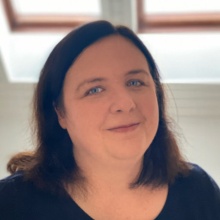
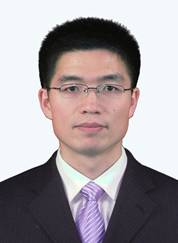
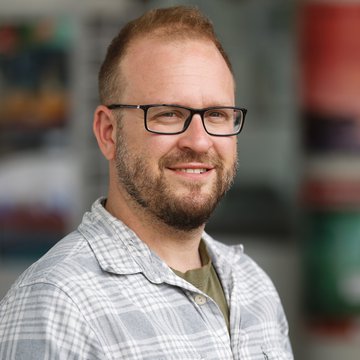
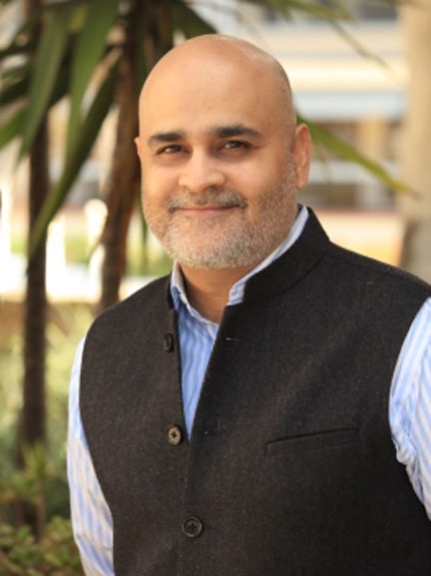
Prof. Dr.-Ing. Andrea Beck is a faculty member and Managing Director of the Institute of Aerodynamics and Gas Dynamics (IAG) at the University of Stuttgart. She leads the Numerical Methods in Fluid Mechanics working group, focusing on high-precision numerical methods for supercomputers, particularly discontinuous Galerkin (DG) methods. Her research spans fluid mechanics, aeroacoustics, plasma physics, and multiphase flows, with applications in wind energy, helicopter systems, and environmental aerodynamics. Role: Professor and Managing Director, IAG Committees: Member of the DFG Review Board, Strategy Committee for National HPC, and steering committee of High Performance Center Stuttgart. Her research emphasizes high-order methods, turbulence modeling, and data-driven approaches. She teaches courses such as 'Numerical Methods in Fluid Mechanics' and 'CFD Programming Projects', and has developed open-source software like FLEXI and HOPR for high-performance computing. Recent articles highlight advancements in entropy-stable DG methods, turbulence simulation using graph neural networks, and multiphase flow modeling. Her work integrates machine learning with CFD to enhance simulation accuracy and efficiency.
Yiguo Xue is a Professor and PhD Tutor at the Geotechnical and Structural Engineering Center, School of Civil Engineering, Shandong University. He has contributed extensively to tunnel engineering, subsea infrastructure, and slope stability analysis through advanced prediction models and numerical simulations. Research Interests: New tunnel geological condition prediction technologies Subsea tunnel and underground energy storage systems High slope stability evaluation Engineering exploration methods His recent work focuses on tunnel safety, subsea structural mechanics, and AI-driven hazard prediction models. Publications highlight his expertise in rockburst analysis, water inrush risk, and excavation optimization using machine learning and numerical frameworks. Scientific Awards: Recipient of China's Top 100 Most Influential Domestic Academic Paper Award (2008 paper on tunnel geological hazard forecasting) He has secured multiple national invention patents for tunnel monitoring devices (e.g., vibration sensors, collapse prediction systems) and developed specialized software for displacement prediction and rock classification.
Dr. Noam Libeskind is a faculty member and group head of the Cosmography and Large-Scale Structure group at the Leibniz-Institut für Astrophysik Potsdam (AIP). He specializes in mapping the Universe's large-scale structure and using these maps to simulate the local environment. His work bridges observational and theoretical astrophysics, focusing on galaxy formation, the Local Group dynamics, and cosmographic reconstructions. He has held professorial positions, including at the Institute of Two Infinities (Université de Lyon-1) until 2021. Current projects include leading trans-national initiatives on cosmic web impacts (with Purple Mountain Observatory) and gravity tests via Local Group simulations (with Polish Academy of Sciences). Libeskind’s research interests include satellite galaxies, matter distribution reconstructions, and alignments of galaxies relative to their environments. His work has been featured in Scientific American and Sky & Telescope , highlighting contributions such as cosmography of the Local Universe and dark matter studies. Key collaborations span institutions like Hebrew University, Shanghai Astronomical Observatory, and Durham University. He leads projects like CLUES (Constrained Local UniversE Simulation) and HESTIA (High-resolution Environmental Simulations) to model the Local Universe. His team’s efforts have been recognized, including a 2024 municipal award for organizing impactful scientific meetings. Publications span cosmological simulations, galactic dynamics, and observational cosmology, with a focus on advancing understanding of the Milky Way, Andromeda, and their surrounding structures.
Sharad Joshi is a Professor at the Middlebury Institute of International Studies, specializing in terrorism and nuclear security in South and Southeast Asia. He joined the Institute as a postdoctoral fellow at the James Martin Center for Nonproliferation Studies in 2006 and transitioned to full-time faculty in 2011. He also served as a research associate and interim director of the Monterey Terrorism Research and Education Program. Ph.D. in International Affairs, University of Pittsburgh M.A. in Politics, Jawaharlal Nehru University B.A. (Honors) in Economics, University of Rajasthan His research focuses on terrorism, nuclear weapons, and WMD proliferation, with emphasis on South Asian nuclear rivalry, CBRN terrorism, and transnational extremist networks. His courses include Global Politics , Great Power Competition , and specialized seminars on terrorism and nuclear issues. Recent publications analyze U.S.-India relations, China-Pakistan nuclear deals, and WMD security challenges. He leads the International Strategic Crisis Negotiation Exercise (ISCNE) , simulating Central Asian geopolitical crises involving China, India, Russia, and regional states.
Dr. Thea Tlsty is a Professor at the University of California San Francisco (UCSF) School of Medicine, Department of Pathology. With over 25 years of experience in cancer biology, she leads multidisciplinary research on epithelial-stromal interactions, chronic inflammation, and cellular plasticity in carcinogenesis. Her lab developed the first biomarkers for ductal carcinoma in situ risk stratification and discovered rare pluripotent cells in normal tissues with implications for metaplastic cancers. Education: BS in Zoology (University of South Florida, 1973) PhD in Molecular Biology (Washington University, 1980) Predoctoral Fellow (Washington University, 1976-1980) Postdoctoral Fellow & Senior Research Associate (Stanford University, 1981-1985) Dr. Tlsty's research focuses on: Stromal-epithelial stress response mechanisms Chronic inflammation's role in cancer CD36 repression in high mammographic density Pluripotent cell biology Multi-investigator grant projects Her 15 most recent publications highlight trends in proteomics, spatial transcriptomics, and multi-omics integration to study tumor microenvironment dynamics, particularly in breast, esophageal, and colorectal cancers. Scientific Awards: Cancer Research UK Grand Challenge Grant (£20M) NCI Outstanding Investigator Award Blaffer Distinguished Lectures (MD Anderson) Nakahara Award (Princess Takamatsu Foundation) KOMEN Scholar & AVON Scholar Elected AAAS Fellow NCI Knudson Award Dr. Tlsty has received continuous NIH funding since 1987, including ongoing R35 grant (R35CA197694) for studying stress-associated cellular plasticity. Her lab's translational insights bridge basic discoveries with clinical applications for cancer prevention and therapy.
Dr. Lee Slocum is a Professor in the Department of Criminology and Criminal Justice at the University of Missouri-St. Louis, College of Arts and Sciences. Her research focuses on police-citizen relations, developmental criminology, and environmental influences on criminal behavior. Specializes in longitudinal analysis of youth-police interactions Key contributor to the UMSL Comprehensive Safe Schools Initiative Recipient of Byrne Criminal Justice Innovation Grant Research interests span: Procedural justice and police legitimacy Environmental strain and criminal behavior School safety and disciplinary practices Victimization reporting dynamics Policy impacts on juvenile justice Recent publications examine: Racial disparities in pretrial detention Community-centered safety metrics Cyclical patterns in probation violations Long-term effects of police contact on youth Historical trends in urban policing Contact: slocuml@umsl.edu | Office: 340B Lucas Hall
Vasit Sagan is a Professor of Geospatial Science and Computer Science at Saint Louis University's School of Science and Engineering . He directs the Remote Sensing Lab , serves as Deputy Director of the Taylor Geospatial Institute , and holds the role of Associate Vice President for Geospatial Science in the Office of the Vice President for Research and Partnership. Education: Ph.D. from Peking University (2006) Leadership: Director of Remote Sensing Lab; Deputy Director, Taylor Geospatial Institute Research Interests center on geospatial computer vision , integrating remote sensing, photogrammetry, machine learning/AI, and imagery analysis. His work addresses critical challenges in food and water security , ecosystem monitoring , and social instability at scales ranging from local to global. He has secured over $50M in grants as PI/Co-PI and authored 150+ peer-reviewed publications. Recent Publications highlight his interdisciplinary approach, with studies on crop yield prediction via satellite/UAV imagery, disease detection in wheat, urban tree species classification, and deep learning applications for water quality monitoring. These works span agricultural technology , environmental science , and security informatics , emphasizing data fusion and AI-driven geospatial analysis. Scientific Awards include: 2021 Best Paper Award (Remote Sensing) Best Paper Award (International Archives of Photogrammetry) Advising and Grants : He has mentored numerous doctoral, master's, and postdoc researchers, and led major funded projects focused on geospatial AI and environmental sustainability. Labs and Facilities : Remote Sensing Lab at Saint Louis University and collaborative work with the Taylor Geospatial Institute.
Paul Rainey is a Professor and Director of the Department of Microbial Population Biology at the Max Planck Institute for Evolutionary Biology in Plön, Germany. He also serves as Professor at ESPCI Paris and holds an adjunct position at the New Zealand Institute for Advanced Study (NZIAS). His research spans microbial evolution, ecological scaffolding, and biophysics, supported by the Max Planck Society and collaborations across institutions. University of Canterbury – BSc, MSc, PhD Paul's research focuses on experimental evolution, ecological complexity, and the emergence of individuality in microbial systems. Recent work explores evolutionary rescue, biophysical mechanisms of surface colonization, and the interplay between ecological and genetic factors in adaptation. His publications highlight interdisciplinary approaches, merging microbial ecology with theoretical frameworks for evolutionary transitions. Key themes include stochastic phenotype switching, genome streamlining, and the role of environmental structure in shaping evolutionary trajectories. Fellow of the Royal Society of New Zealand Member of EMBO Paul leads the Laboratory for Evolutionary Genetics at ESPCI Paris and collaborates with institutions like Kiel University and the CRC 1182. His work addresses microbial community dynamics, evolutionary medicine, and the broader implications of eco-evolutionary feedback in biological systems.
Dr. Paul G. Rubin (he/him) is an Assistant Professor in the Department of Educational Leadership and Policy at the University of Utah, with expertise in higher education policy, sociology, and philosophy. His research focuses on improving college access and degree attainment for underrepresented populations, analyzing how state-level politics and governance structures influence policy outcomes. Rubin also investigates the role of empirical research in policy-making and mechanisms to enhance academic-policy collaboration. Education : PhD in Higher Education from the University of Georgia; M.S.Ed. in Higher Education from the University of Pennsylvania; BA in Communication and Political Science from Boston College. Research Interests : Higher education governance reforms Deservingness framing in scholarship policies Cross-state policy comparisons Equity in degree reclamation strategies Knowledge brokering in federal education policy Recent Article Trends : His work examines state-level responses to national college completion agendas, tuition-setting policies, and pandemic-era funding decisions. Key themes include the interplay of political context with policy design, equity-focused interventions, and the influence of intermediary organizations. Scientific Awards : Outstanding Reviewer for the 2024 ASHE Annual Conference ASHE/Ascendium Fellow (2021) Teaching : Courses taught include Foundations of U.S. Higher Education, Higher Ed. Finance, and research-focused seminars for doctoral students.
Prof. Dr.-Ing. Katharina Schmitz serves as Institute Director and Vice Dean at the Institute for Fluid Power Drives and Systems, RWTH Aachen University. Her leadership within the Production Technology Cluster and extensive contributions to fluid power engineering establish her as a leading authority in mechanical engineering research and education. Her research spans fluid power systems, hydraulic component design, tribology, and physics-informed machine learning applications. She pioneers sustainable propulsion solutions through bio-hybrid fuels research while addressing fundamental challenges in polymer material behavior under hydraulic stresses. Current work focuses on carbon-neutral heavy-duty transportation, physics-based neural networks for lubrication modeling, and advanced control systems for electro-hydraulic actuators. Analysis of her 15 most recent publications reveals a dominant trend toward integrating physics-based modeling with deep learning to solve complex engineering problems. Her team consistently develops novel frameworks for cavitation prediction, flow rate determination, and material compatibility assessment - significantly advancing fluid power system reliability, efficiency, and digitalization. Scientific recognition includes: GfT Förderpreis 2023 for experimental and simulative investigation of partially hydrostatic relieved contacts in variable speed axial piston machines As head of the Institute for Fluid Power Drives and Systems, she leads cutting-edge research in sustainable fluid power technologies. The institute maintains strong industry partnerships while driving innovation in hydraulic component design, digital twins for condition monitoring, and next-generation propulsion systems through its position within RWTH Aachen's Production Technology Cluster.
David Go is the Vice President and Associate Provost for Academic Strategy at the University of Notre Dame, where he also holds the Viola D. Hank Professorship in Aerospace and Mechanical Engineering. He oversees implementation of the University Strategic Framework and manages faculty appointment processes, with administrative oversight of institutes including the Lucy Institute for Data and Society and the Fitzgerald Institute for Real Estate. His research focuses on plasma science, heat transfer, fluid dynamics, and chemical analysis, with significant contributions to plasma-electrochemistry and sustainable chemical synthesis. Education: B.S. (2001) and M.S. (2004) from University of Notre Dame, Ph.D. (2008) from Purdue University His work explores plasma-liquid interfaces, solvated electron dynamics, and plasma-assisted catalysis, particularly for light hydrocarbon conversion. Recent publications highlight advancements in non-aqueous plasma electrolysis, machine learning-enhanced plasma sintering, and interfacial transport phenomena. Awards include the Air Force Young Investigator Award, NSF CAREER award, and multiple honors for teaching and innovation. Current research trends integrate plasma physics with chemical engineering and materials science, focusing on sustainable energy solutions and microscale manufacturing. Scientific recognitions include: Fellow of the American Society of Mechanical Engineers Senior Member of IEEE IEEE Early Achievement Award First-Source Bank Commercialization Award Go has supervised graduate studies and received patents for technologies in plasma-assisted synthesis and microfluidic diagnostics. His leadership roles involve committees addressing academic governance, risk management, and foreign influence in research.
Katherine A. Hoadley, PhD, is an Associate Professor in the Department of Genetics at UNC School of Medicine and a member of the UNC Lineberger Comprehensive Cancer Center. Her lab specializes in cancer biology through gene expression analyses and integrative genomic approaches , with a focus on breast cancer and pan-cancer projects. Key Affiliations : UNC Lineberger Comprehensive Cancer Center Computational Medicine Program Research Themes : Multi-omics cancer characterization Immune landscape mapping Proteogenomic therapeutic targeting Clinical trial genomic analysis Scientific Recognition : Clarivate Analytics Highly Cited Researcher (2018–2024) Breast Cancer Research Foundation Award (2020) Clinical Research Forum Awards (2015) Her work contributes to precision oncology through large-scale initiatives like The Cancer Genome Atlas (TCGA) and the Genomic Data Analysis Network (GDAN) , with applications in RNA sequencing analysis and clinical trial optimization .
Christian Stranne is an Associate Professor at Stockholm University's Department of Geological Sciences, specializing in Marine geophysical mapping and modeling. He leads research projects investigating climate change impacts on methane dynamics and Arctic glacial systems. Research Focus Climate warming-induced methane release from marine sediments Arctic ice-ocean-atmosphere interactions Acoustic mapping of oceanographic features Submarine groundwater discharge mechanisms Glacial sedimentation and retreat dynamics Scientific Contributions His work integrates field observations with numerical modeling, particularly through: Development of geomechanically-coupled hydrate dissociation models Pioneering acoustic techniques for mixed layer depth mapping Quantifying glacial erosion rates in Greenland fjords Awards & Grants Swedish Research Council Postdoctoral Fellowship (2015) Swedish Research Council Grant for methane release study (2018) Swedish Research Council Grant for sediment-ocean-atmosphere methane study (2022) Field Experience Christian has extensive polar expedition experience: 6 major icebreaker expeditions to Antarctica and Arctic Ocean Research cruises in Sweden, Finland, Brazil, and Chile Expertise in CTD/LADCP operations and mooring deployments
Thomas Jonsson is an Associate Professor at KTH Royal Institute of Technology in the Division of Electromagnetic Engineering and Fusion Science within the School of Electrical Engineering and Computer Science. His research focuses on fusion plasma physics with particular emphasis on modeling plasma heating, stability, and confinement. He is actively involved in studies of plasma heating by radio waves at the JET experiment in Oxford and serves as task coordinator for heating and current drive modeling within the EUROfusion Consortium. Jonsson's research interests span plasma physics, fusion energy, electromagnetic engineering, radio frequency heating, and computational plasma modeling. His work centers on the development and application of advanced computational methods for understanding wave-particle interactions in fusion plasmas, particularly ion cyclotron resonance heating (ICRH) techniques. He investigates plasma stability mechanisms, confinement properties, and heating optimization strategies for tokamak devices, with direct applications to ITER and future fusion reactors. His research bridges theoretical modeling with experimental validation at major international facilities. Analysis of Jonsson's recent publications reveals a strong focus on computational methods for radio frequency wave propagation in tokamak plasmas, disruption prediction techniques, and experimental validation of heating schemes. His work demonstrates increasing sophistication in modeling approaches, with growing integration of machine learning techniques for plasma control. The research spans fundamental plasma physics to applied engineering solutions for fusion reactors, with particular attention to ITER-relevant scenarios and DEMO design considerations. As an educator, Jonsson teaches a range of courses including Plasma Physics (EF2200), Electromagnetic Waves in Dispersive Media (ED2210), and Project in Fusion Research (ED2247), serving as examiner and course responsible for several advanced courses. His teaching spans both Master's level courses in electromagnetic theory and plasma physics, as well as specialized PhD courses on charged particle motion, plasma waves, and fusion research. Jonsson maintains active collaborations with major European fusion research institutions, particularly through the EUROfusion Consortium, and contributes to the JET experimental program. His work supports the international effort toward practical fusion energy by addressing critical challenges in plasma heating and stability for next-generation fusion devices.
Ángel F. Adames Corraliza is an Associate Professor in the Department of Atmospheric and Oceanic Sciences at the University of Wisconsin-Madison , where he holds the Ned P. Smith Distinguished Chair of Climatology . He leads the Large-scale Tropical Dynamics Group , focusing on physical processes driving tropical atmospheric circulations and their response to CO2 increases. Education: PhD from the University of Washington His research integrates observations, modeling, and theoretical frameworks to study phenomena like Madden–Julian Oscillation (MJO) , El Niño-Southern Oscillation (ENSO) , tropical convection , and inertio-gravity waves . Key themes include moist thermodynamics , moisture mode theory , and tropical-extratropical teleconnections . Article trends highlight interdisciplinary work on tropical wave dynamics , climate model validation (CMIP5/CMIP6) , and environmental impacts (e.g., methane emissions from oil platforms). His group collaborates globally and emphasizes public science communication. Scientific Awards: Ned P. Smith Distinguished Chair of Climatology His team includes undergraduates, graduate students, and postdoctoral researchers . Outreach efforts include the Spanish-language podcast "Tiempo, Clima y Tierra" and workshops on atmospheric science.