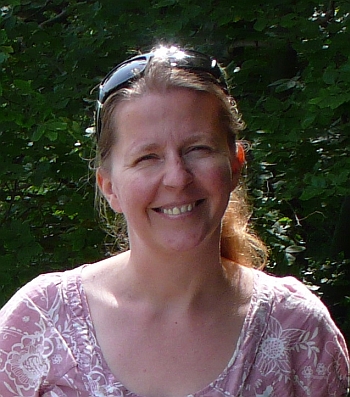
Dr. Matthew James Slater is the Head of the Aquaculture Research Group at the Alfred Wegener Institute, focusing on sustainable marine bioeconomy. His work emphasizes integrated multitrophic aquaculture (IMTA), holothurian ecology, and economic development through aquaculture. He leads applied research with industry partners to develop sustainable feed solutions and improve aquaculture practices. Research interests include optimizing feed ingredients from by-products (e.g., black soldier fly larvae, shrimp processing remains) and exploring the ecological roles of sea cucumbers. He investigates the effects of environmental factors (soundscapes, light, temperature) on aquatic species and promotes circular economy principles in aquaculture. Key contributions span over 60 peer-reviewed publications, with recent work on microplastic contamination in fish and the economic value of small-scale fisheries. His research integrates interdisciplinary approaches to address global challenges in aquaculture sustainability and food security. Contact: matthew.james.slater@awi.de | +49(471)4831-2727 | Alfred Wegener Institute, Bussestraße 27, 27570 Bremerhaven
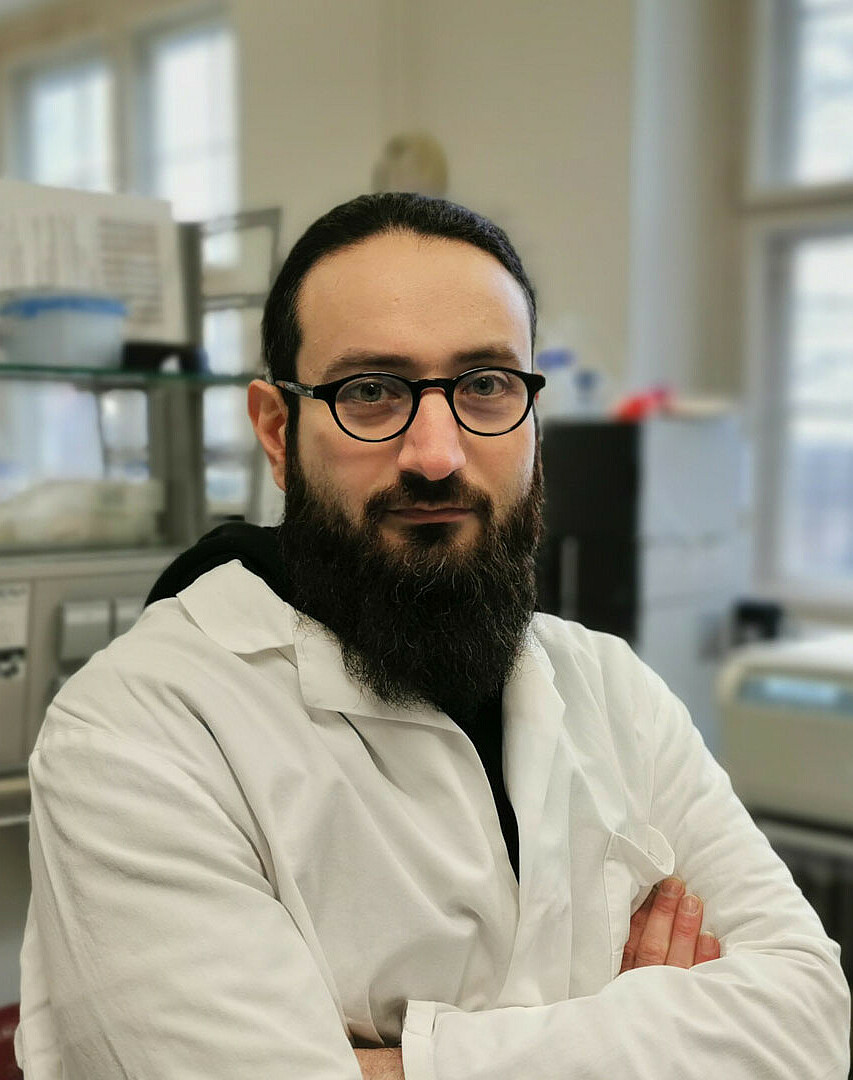
Dr. Wael Yakti is a postdoctoral researcher and Brain City Berlin Ambassador at the Humboldt-Universität zu Berlin , affiliated with the Urban Ecophysiology of Plants department at the Albrecht Daniel Thaer Institute for Agricultural and Horticultural Sciences. Since 2020, he has focused on integrating insect production with agricultural systems for sustainable protein generation and waste valorization. Research Areas: Bioeconomics, circular food production, plant-insect-microbe interactions Key Projects: CUBES Circle (standardized food production modules), insect waste utilization for plant substrates International Collaborations: German universities, practical partners His work bridges ecological sustainability with innovative biotechnologies, emphasizing urban-rural integration. Scientific honors include selection as a Brain City Berlin Ambassador and European Commission International Bioeconomy Youth Ambassador.
Prof. Thomas Brück holds the Werner Siemens Chair of Synthetic Biotechnology at the Technical University of Munich (TUM), within the TUM School of Natural Sciences and Department of Chemistry. He serves as Director of the TUM AlgaeTec Center, operating a globally unique algae pilot plant that enables algal process development with climate simulation. Since 2020, he has been Dean for Research and Innovation at the TUM School of Natural Sciences, overseeing three research departments (Chemistry, Physics, Biology) with over 90 professors and 7,500 employees, and developing comprehensive research and industrial implementation strategies. His educational background includes: Ph.D. in Biochemistry (2002) from Imperial College and Greenwich University, London Master of Philosophy in Molecular Medicine (1996-1997) from Keele University Dual B.Sc. (Hons) in Chemistry and Biochemistry (1992-1996) from Keele University Prof. Brück's research focuses on synthetic biotechnology, particularly designing sustainable processes for converting residual biomass and CO 2 into platform and specialty chemicals. His group employs advanced bioinformatic tools and molecular simulation to modulate enzyme catalysis toward process-relevant parameters. They incorporate redesigned enzymes into customized cell systems for whole-cell production of terpenoids and functionalized lipids. His team specializes in phototrophic and heterotrophic cell systems that convert CO 2 to value-adding chemical entities, with expertise spanning microbial cultivation, artificial metabolic pathway design, synthetic and systems biology, and associated bioprocess development using E. coli, yeast, and microalgae. His scientific achievements have been recognized with numerous awards: 2024 JEC-Award for Green Carbon Fiber in the 'Sustainable Building' category 2022 Green Award for sustainable building materials at Green Tech Festival in Singapore 2019 1st Sustainability Award of Technical University of Munich 2018 E-Ward for development of carbon fibers based on algae 2018 Werner Siemens Foundation Chair for Synthetic Biotechnology 2011 Süd-Chemie Foundation Professorship for Industrial Biocatalysis Prof. Brück has successfully supervised over 145 Master's students and 34 doctoral students, including several who now lead their own research groups or companies. He has secured more than 75 million euros in research funding across 34 projects from national, EU, and private sources since 2011. His research spans multiple projects including AlgenBauSchutz, CannDesign, InViDetect, and VALUABLE, with significant contributions to sustainable materials and carbon capture technologies. His research team includes Dr. Daniel Garbe, PD Dr. Norbert Mehlmer, Dr. Marion Ringel, Dr. Dania Awad, and numerous scientific staff members. He also founded the Werner Siemens Student Research Center, enabling school students to conduct biotechnology research focused on sustainability, and serves on advisory boards including the Munich Catalysis Alliance and Austrian Drug Screening Institute.
Dr. Sabine Kleinsteuber is a Senior Scientist and Head of the MicAS Group (Microbiology of Anaerobic Systems) at the Helmholtz Centre for Environmental Research - UFZ in Leipzig, Germany. With over 25 years of continuous service at UFZ since 1999, she leads research in microbial ecology of anaerobic environments, focusing on engineered systems such as anaerobic digesters and wastewater treatment plants for sustainable bioprocess development. Education: 1990: Diploma in Biology, Martin-Luther-University Halle-Wittenberg 1994: Dr. rer. nat., Martin-Luther-University Halle-Wittenberg, Faculty of Natural Sciences Dr. Kleinsteuber's research program centers on optimizing biotechnological processes based on complex microbial communities and harnessing the metabolic potential of anaerobic microbes within the circular economy framework. Her group combines anaerobic cultivation, lab-scale bioreactor operation, and molecular methods for community profiling with multi-omics approaches to explore metabolic functions in natural and engineered microbial consortia. This integrated methodology has positioned her as a leader in understanding microbial community dynamics in waste-to-value conversion processes. Analysis of her recent publications (2020-2025) reveals three dominant research trajectories: microbial chain elongation for medium-chain carboxylate production, syngas fermentation for carbon-efficient waste upcycling, and biodegradation of persistent micropollutants like acesulfame. These research areas demonstrate her commitment to developing sustainable biotechnological solutions that bridge environmental remediation with resource recovery, particularly through the lens of microbial community ecology and function. Dr. Kleinsteuber serves as Specialty Chief Editor for Frontiers in Microbiology (Section Microbial Physiology and Metabolism) and Associate Editor for Frontiers in Microbiology (Section Microbiotechnology). She also contributes to the Advisory Board of Energy, Sustainability and Society, reflecting her interdisciplinary impact across environmental science and engineering domains. As head of the MicAS Group, Dr. Kleinsteuber oversees a dynamic research program investigating the microbiology of anaerobic systems, with particular expertise in microbial community dynamics, metabolic interactions, and process optimization. Her leadership extends to collaborative projects across UFZ departments and international research networks, fostering innovation in sustainable bioprocess engineering and environmental biotechnology.
Dr. Daş researches nutritional impacts on animal health at Leibniz FBN, focusing on parasitic diseases and sustainable feed alternatives. His work bridges nutrition, immunology, and parasitology. Key investigations: Host resistance mechanisms against nematodes Nutrient-parasite interactions in poultry Insect/earthworm-based feeds Recent studies developed diagnostic methods for ascarid infections and evaluated nutrient recycling through insects. His research supports antibiotic-reduction strategies in poultry.
Prof. Christian Ulrichs leads the Urban Ecophysiology of Plants group at Humboldt University's Albrecht Daniel Thaer Institute of Agricultural and Horticultural Sciences. His work bridges agricultural sustainability with ecological physiology. Academic affiliation: Humboldt University of Berlin Department: Albrecht Daniel Thaer Institute of Agricultural and Horticultural Sciences Research spans biocircular systems, including insect-based waste valorization , plant stress responses , and urban agriculture . Recent studies examine: Yellow mealworm substrate optimization Hemp waste fermentation for insect rearing Biodegradable packaging for leafy vegetables UV spectrum effects on cannabis metabolites Nutrient cycling in aquaponic systems His publications from 2023-2025 demonstrate interdisciplinary approaches combining entomology, horticulture, and waste management. Contact: dekan.lewi@hu-berlin.de
Dr. Hendrik Monsees is a Research Fellow at the Leibniz Institute of Freshwater Ecology and Inland Fisheries (IGB), affiliated with the Department of Fish Biology, Fisheries and Aquaculture. He holds a doctorate from Humboldt-University of Berlin's Faculty of Life Sciences, supported by the Elsa-Neumann-Scholarship. His career includes roles as a Post-Doc (2018–present) and Research Assistant (2011–2013) at IGB, focusing on the ASTAF-PRO aquaponics initiative. Research interests center on sustainable integrated agriculture systems: Aquaponic Systems : Optimization of decoupled systems, nutrient flow efficiency, and sludge management. Urban Sustainability : Food-Water-Energy nexus in city-based aquaponics, including case studies in Berlin. Resource Innovation : Insect-based feeds, lighting regimes, and economic viability modeling. His publications emphasize practical applications—recent works analyze lettuce production efficiency, nitrogen recovery techniques, and policy frameworks for German aquaculture. Key trends include scalability of urban aquaponics and environmental impact mitigation. Awards & Grants : Elsa-Neumann-Scholarship (Doctoral funding) ASTAF-PRO project (Research Assistantship) Dr. Monsees collaborates with interdisciplinary teams at IGB, contributing to policy briefs and educational materials on sustainable aquaculture. His work bridges academic research and industry implementation.
Dr. Wael Yakti is a scientific collaborator at the Albrecht Daniel Thaer Institute of Agricultural and Horticultural Sciences under the Faculty of Life Sciences at Humboldt University of Berlin . His research spans sustainable waste management, edible insect rearing, and plant-microbe interactions, with a focus on optimizing insect-based biorecycling systems. Current research trends include: Developing standardized protocols for insect feed trials Analyzing microbial synergy in black soldier fly rearing Investigating hemp waste valorization through solid-state fermentation Comparative studies of nutrient recycling pathways His work bridges agricultural science and biotechnology, particularly through the Urban ecophysiology of plants research group located at Lentzeallee 55-57, Room 17.
Dr. Heike Sträuber is a Senior Scientist in the Department of Microbial Biotechnology at the Helmholtz Centre for Environmental Research - UFZ (UFZ) in Leipzig, Germany. She leads research in the Working Group Microbiology of Anaerobic Systems, with additional collaboration with the Deutsches Biomasseforschungszentrum (DBFZ). Her work focuses on developing and analyzing anaerobic fermentation processes and their integration into biorefinery concepts for sustainable production of green chemicals. Dr. Sträuber earned her MSc in Biochemistry from the University of Leipzig (1992-1997) and completed her PhD at the Helmholtz Centre for Environmental Research - UFZ and University of Leipzig (1997-2001). Her academic journey includes postdoctoral positions at SIAB – Saxon Institute for Applied Biotechnology (2005) and UFZ (2002-2003), followed by research fellowships at UFZ in the Department of Bioenergy (2010-2014) and Research Group Flow Cytometry (2007-2009). Dr. Sträuber's research focuses on developing and analyzing anaerobic fermentation processes for the production of valuable green chemicals such as carboxylates, hydrogen, and biomethane. Her work specifically targets the conversion of organic agro-industrial waste, plant material, and gaseous substrates into useful products. A significant achievement is the development of the CAPRAFERM® process for producing medium-chain carboxylates from complex biomass, which has potential applications in future biorefineries. She also investigates how carboxylic acids can be produced alongside biogas or biomethane in existing biogas plants, working in close cooperation with the Biochemical Conversion and Biorefineries departments of the DBFZ. Her research methodology combines process engineering with microbial ecology to understand and optimize anaerobic fermentation systems through systematic material and energy flow analyses. Her extensive publication record demonstrates a focused research trajectory centered on chain elongation processes, microbial community dynamics in anaerobic systems, and process optimization for carboxylate production. The research spans fundamental microbial ecology, process engineering, and systems analysis, with increasing integration of machine learning approaches for predicting process performance. Her work addresses critical challenges in sustainable bioproduction, including feedstock utilization, process stability, and integration with existing infrastructure. Dr. Sträuber has been actively involved in several research projects including CapUp, Cell4Chem, PaplGas2, and AcMp, demonstrating her engagement with both fundamental and applied research questions. Her collaborative approach extends to working with both academic and industrial partners to translate laboratory findings into practical applications for sustainable chemical production. Based at the UFZ in Leipzig, Dr. Sträuber contributes to Germany's research infrastructure in sustainable biotechnology and bioeconomy. Her work bridges fundamental microbial research with practical applications, addressing critical challenges in sustainable chemical production including feedstock utilization, process stability, and integration with existing infrastructure. Through her research, she contributes to the development of circular economy approaches that convert waste streams into valuable products, supporting the transition toward more sustainable industrial processes.

.JPG)