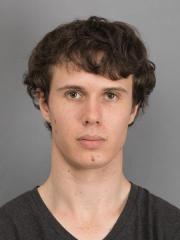
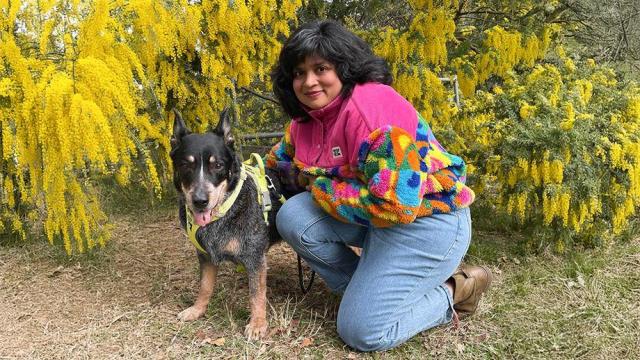
Georgina Ge is a Research Fellow at the Department of Applied Finance, Macquarie Business School, Macquarie University. Her work spans both Finance and Evolutionary Biology, focusing on asset-liability mismatch risks in shadow banking, mutual fund dynamics, and warning signal evolution in insects. PhD in Finance, Macquarie University (2019) Supported by Macquarie University Research Excellence Scholarship Her research in finance explores systemic risks in banking, mixed frequency data modeling, and investor-manager interactions. In evolutionary biology, she investigates aposematic signaling, genetic variation in moth defenses, and predator-prey dynamics. Key trends in her publications include interdisciplinary approaches to risk analysis and ecological signaling mechanisms. Georgina’s scientific contributions have garnered attention in 3 news outlets and 37 Mendeley readers.
Dr. Matthew Van De Poll is a Postdoctoral Research Fellow at the Queensland Brain Institute (QBI), The University of Queensland. He holds an MPhil (2018) and a PhD (2024) from QBI, focusing on neurophysiological mechanisms in model organisms like Drosophila and zebrafish. His research spans predictive processing during sleep, neuronal activity dynamics, and behavioral neuroscience, with a focus on linking neural correlates to cognitive functions. Education: MPhil in Neuroscience, The University of Queensland (2018) PhD in Neuroscience, The University of Queensland (2024) His work employs cutting-edge techniques such as multichannel electrophysiology, calcium imaging, and machine learning to study sleep stages in flies, synaptic protein trapping, and visual preference behaviors. Recent projects include investigating predictive coding during sleep and the impact of anesthesia on neuronal machinery. Collaborations with researchers like Bruno van Swinderen have produced influential studies in Journal of Neuroscience and Science Advances . Matthew’s research bridges basic neurobiology and computational models, aiming to understand how neural activity patterns underpin complex behaviors and consciousness. He has contributed to over 9 peer-reviewed articles and 2 theses since 2015, with ongoing projects exploring sleep’s role in predictive processing and behavioral flexibility.
Dr. V. Chitra is a Lecturer in the School of Archaeology & Anthropology at the Australian National University (ANU), part of the ANU College of Arts & Social Sciences. She holds a PhD in Anthropology from Johns Hopkins University (2015), a Master's in Visual Communication from the Indian Institute of Technology Bombay (2006), and an undergraduate degree in Architecture from KRVIA (2004). Her interdisciplinary work bridges environmental anthropology, science and technology studies, and visual arts, particularly through the use of comics and technical imagery to explore environmental governance and coastal management. Research interests include climate change, coastal dynamics, disaster ecologies, and human-animal relationships. Her 2024 book "Drawing Coastlines" critiques how technical images shape Mumbai's coastal futures. She co-founded the PossumLab, fostering visual and non-textual research collaborations across disciplines. Chitra advocates for innovative academic formats, emphasizing comics as legitimate research media. Her publications span urban studies, environmental policy, and materiality in housing. Collaborations include Dr. Adam Sargent in the PossumLab, and she actively engages with communities through visual ethnography. Outside academia, she enjoys sketching, hiking, and science fiction.
Dr. Steven Grainger is Director of Learning & Teaching in the School of Mechanical Engineering and Program Coordinator for Mechatronic Engineering at the University of Adelaide. With industry experience prior to academia, he joined the university in 2007 following a 10-year lecturing position at Glasgow Caledonian University. His international academic engagements include visiting lectureships in Oman, Russia, Germany, and Australia. His research focuses on: Nanopositioning systems and piezoelectric actuator modeling Autonomous robotics with emphasis on underwater vehicles Bio-inspired systems and constructive neural networks Multi-robot coordination strategies Publication analysis reveals strong emphasis on mechatronic systems (45%), bio-inspired algorithms (30%), and mechanical fault diagnosis (25%). Recent works demonstrate increasing focus on biologically-inspired robotics and multi-agent systems. Research collaborations span nine institutions across Australia, UK, and Sweden including the Australian Maritime College and Lund University. As Program Coordinator, he oversees mechatronics curriculum development and supervises postgraduate research. Laboratory activities integrate computational modeling with hardware implementation for autonomous platforms.
Dr Joshua Van Kleef is a Senior Research Fellow at the Australian National University's John Curtin School of Medical Research within the Eccles Institute of Neuroscience. He leads research in neural engineering and neuro-ophthalmology, focusing on non-contact medical devices using pupil responses and brain-computer interfaces. His educational background includes: BSc from University of Sydney BSc (Hons I) from University of New South Wales PhD in Neuroscience from Australian National University Dr Van Kleef's research centers on neural engineering applications for medical diagnostics, particularly leveraging pupillometry to detect neuro-ophthalmic diseases and enable brain-computer communication. His work bridges neuroscience , bioengineering , and ophthalmology , with significant contributions to objective perimetry techniques for diabetic retinopathy and age-related macular degeneration detection. Current projects involve developing non-invasive diagnostic tools for concussion assessment and early-stage diabetic eye damage. His recent publications demonstrate strong focus on visual field testing methodologies and neuro-ophthalmic disease detection , with applications spanning concussion assessment, diabetic retinopathy, and macular degeneration. The research integrates engineering principles with clinical ophthalmology to create objective diagnostic metrics. Dr Van Kleef serves as Chief Technology Officer for nuCoria Pty Ltd (2016-2017) and has held postdoctoral positions at University of California, Berkeley (neural interfaces for insect control), Australian National University (dragonfly visual flight control), and Lund University. He is registered to supervise research students at ANU and collaborates extensively with clinicians including Dr Ted Maddess and Dr Fereshteh Sabeti. His laboratory work operates within the Maddess Group - Diagnostics for Eye Diseases, focusing on translating neural engineering concepts into clinical ophthalmic applications through projects like the ObjectiveFIELD Analyser development.
Dr. Christina Zdenek is a researcher affiliated with The University of Queensland under the School of the Environment . Her work spans Venom Research , Snake Biology , Coagulation Toxicology , and Wildlife Ecology , with a focus on venomous snakes, lizard venoms, and avian behavior. She actively contributes to Medical Toxicology and Evolutionary Biology through studies on venom effects and antivenom efficacy. PhD in Biological Sciences from The University of Queensland (2020) Her research encompasses venom composition , anticoagulant and procoagulant mechanisms , venom resistance evolution in reptiles, and animal behavior in parrots. She has co-authored numerous high-impact publications in journals like Toxins , PLOS ONE , and PNAS , often collaborating with leading researchers in toxinology and ecology. Recent publications highlight her work on venom variability across snake species, venom-immune systems in lizards, and conservation strategies for endangered species like the palm cockatoo. She also engages in scientific outreach , developing interactive tools such as augmented reality experiences for public education on wildlife. While no specific scientific awards are mentioned in the provided text, her contributions to snakebite treatment , venom evolution , and conservation biology underscore her significant role in interdisciplinary research and mentorship within her academic community.
Saliya Gurusinghe is a Research Fellow at the Gulbali Research Institute, Charles Sturt University (CSU), with affiliations in the School of Animal and Veterinary Sciences. His research is centered on sustainable agricultural systems, particularly plant-plant and plant-microbial interactions, integrated weed management, and the use of cover crops to enhance soil health and biodiversity. He is actively involved in GRDC-funded and Federal Government-supported research projects in Australia’s Eastern grain-growing region. His educational background includes a Bachelor of Biotechnology from Box Hill Institute, a Bachelor of Medical Science (Honours) from CSU focusing on stem cell differentiation, and a PhD from CSU’s School of Biomedical Sciences on gene-modified cartilage regeneration in equine models. He transitioned into agricultural research in 2016. Saliya’s research interests span Plant-plant and plant-microbial interactions Non-herbicidal weed suppression strategies Cover crops and mulches in broadacre systems Phytoestrogens and their impact on livestock reproduction Rhizosphere metabolomics and soil health Biodiversity enhancement in cropping systems The analysis of his recent publications (2024–2025) reveals a strong interdisciplinary focus on agronomy, metabolic profiling, and sustainable farming. His work integrates plant science, microbiology, animal physiology, and environmental sustainability, often examining how crop genetics and microbial interactions influence weed suppression and soil health. A recurring theme is the use of natural plant compounds (e.g., benzoxazinoids, phytoestrogens) and their ecological and agricultural implications. Scientific awards and honors: No specific awards mentioned in the provided text. Saliya is actively engaged in research mentoring and collaborative supervision, contributing to doctoral theses, student projects, and multi-institutional studies. He has participated in national conferences and public outreach, including media contributions on new wheat varieties for weed control. His work is supported by competitive grants from GRDC and the Department of Agriculture, Water and the Environment, reflecting strong alignment with national agricultural priorities. He is embedded in the Plant Interactions Research Group at the Gulbali Institute, a multidisciplinary team focused on innovative, ecologically sound farming solutions. The group emphasizes field-based research, chemometric analysis, and real-world impact, particularly in improving sustainability and productivity in Australian agriculture.
Dr. Greg Watson is a Senior Lecturer in Chemistry at the University of the Sunshine Coast with over 30 years of multi-disciplinary research experience. His work integrates biology, physics, and engineering to study nano/micro-structured surfaces in nature, particularly insect wings, for applications in self-cleaning materials, medical devices, and environmental technologies. His research spans: Biomimetic nano/micro-structured surfaces Anti-bacterial and self-cleaning technologies Functional insect morphology and ecology Material interfaces in biomedical contexts Nanoscale properties of biological systems Dr. Watson's publications demonstrate consistent innovation in translating biological structures into engineering solutions, with recent work exploring biomimetic materials and educational demonstrations. His research has been featured internationally in media outlets including National Geographic and Scientific American. He has secured multiple grants including ARC Discovery and LIEF awards, and developed over 30 student research projects spanning surface analysis, environmental responses in organisms, and material characterization.
Jolanta Watson is a Senior Lecturer in Science and Higher Degree Research (HDR) Coordinator for the School of Science, Technology and Engineering at the University of the Sunshine Coast, Fraser Coast campus. Her research explores biophysical and material science applications, specializing in Scanning Probe Microscopy, surface science, nanoscience, and biomimetic designs inspired by insect morphology. With over 60 refereed publications and 40 conference presentations, Watson's work examines micro/nanoscale structures in natural systems like cicada wings and gecko skin, investigating properties such as hydrophobicity, antibacterial action, and structural coloration. As Program Coordinator for the Master of Science, she oversees graduate research and promotes interdisciplinary collaboration.
Monica Gagliano holds the position of Adjunct Associate Professor at the Faculty of Science and Engineering, Southern Cross University. She is also a Senior Research Fellow (adjunct) at the University of Western Australia. Her work bridges the Sciences and Humanities, focusing on ecological processes, plant bioacoustics, and the cognitive capacities of plants. She pioneered plant bioacoustics and expanded the concept of cognition to include plants, challenging traditional views on plant subjectivity and ethical standing. Education: BSc, MSc, PhD (JCU). Her research emphasizes interdisciplinary collaboration to redefine human understanding of Nature, including studies on plant communication through sound and electromagnetic signals. She has published extensively on topics like plant memory, learning processes, and ecological ethics. Research interests span plant perception, learning processes, bioacoustics, and ecological justice. Her work challenges anthropocentric paradigms and advocates for a more inclusive ethical framework encompassing all life forms. Key themes in her publications include plant intelligence, environmental adaptation, and the intersection of science with philosophy and spirituality. Grants and collaborations are integral to her work, though specific funding details are not provided. She leads discussions on plant-based dietary transitions in universities and the broader implications of ecological justice. Her lab and fieldwork involve innovative methods to study plant behavior and communication, often using bioelectrical and acoustic measurements. Monica advocates for rethinking human relationships with Nature, emphasizing empathy and interspecies connections. Her contributions have sparked global discourse on plant sentience and the ethical treatment of all organisms.
Dr. Januar Harianto is a Lecturer in Biostatistics at the University of Sydney's Faculty of Science, specializing in agricultural data science and statistical methodologies. He teaches biostatistics and conducts workshops, demonstrating a strong commitment to statistical education. His research focuses on ecological data analysis, marine biology impacts under climate change, and geospatial data processing. Research interests include biostatistical applications in environmental science, ecological modeling, climate change adaptation in marine organisms, and geospatial data harvesting. Key areas involve statistical analysis of soil science, marine invertebrate physiology under environmental stress, and reproductive biology of insects. Publications show consistent focus on climate impacts on marine ecosystems, statistical methods in environmental science, and insect physiology. His work employs multivariate analysis, physiological monitoring, and geospatial data techniques across diverse biological systems.
Farid Boussaid is a Professor in the School of Electrical, Electronic and Computer Engineering at The University of Western Australia (UWA), affiliated with the UWA Oceans Institute. He holds an MM PhD from INSA Toulouse, France, and has held roles including Head of School (2014–2017). His research focuses on smart sensors, neuromorphic engineering, and machine learning applications in computer vision and signal processing. Education: M.S. and Ph.D. from National Institute of Applied Science (INSA), Toulouse, France (1996, 1999) Postdoctoral Fellow at Edith Cowan University (2000–2001) Australian Research Council APD Fellowship recipient (2001) Research Interests: Design of low-cost smart sensing systems, neuromorphic approaches for olfactory/visual processing, and interdisciplinary work in microelectronics, gas sensors, and camera-on-chip technologies. His research addresses bio-inspired signal processing and efficient integrated circuit design. Recent Research Trends: His publications emphasize deep learning applications in 3D vision, generative models, and medical imaging, with a focus on weakly supervised learning and multimodal data integration. Awards: 2016 Citation for Outstanding Contribution to Student Learning UWA Award for Excellence in Teaching (2014) Award for Growth in Innovation and Entrepreneurship (2021) Grants & Projects: Leads initiatives like the National Australian Cardiac CT Platform and robotics with 3D vision. Involves collaborations with Tokyo University of Science and NSF-funded projects. Labs/Teams: Active in UWA’s Oceans Institute and interdisciplinary teams advancing AI-driven sensing technologies.
Ian Paulsen is a Distinguished Professor at Macquarie University's School of Natural Sciences, serving as Director of the ARC Centre of Excellence in Synthetic Biology and Deputy Director of the Biomolecular Discovery and Design Centre. He holds an ARC Laureate Fellowship and has published over 294 papers with 85,000+ citations (H-index 118). Education: PhD from Monash University, followed by an NHMRC C.J. Martin Fellowship at UC San Diego. Research focuses on microbial genomics, synthetic biology, and biotechnology, with key projects in genome engineering (e.g., synthetic yeast chromosomes), microbial adaptation, and climate change mitigation strategies. His work bridges basic science and applied biotechnology, including engineered microorganisms for waste management and biofuel production. Recent articles highlight advancements in synthetic chromosome construction, insect-based biomanufacturing, and policy frameworks for engineered biology. Awards include recognition as an ISI Highly Cited Researcher and one of Australia's top 40 research superstars. Leadership includes founding the Synthetic Biology Laboratory and overseeing 110+ research projects, including the EcoCyc database and coal seam microbiome studies. He collaborates globally on topics ranging from marine microbial communities to antibiotic resistance mechanisms.
Ajay Narendra serves as Associate Professor and Research Training Director (HDR) at Macquarie University's School of Natural Sciences, where he leads research at the Pollinator Futures Research Centre. With an ORCID profile (0000-0002-1286-5373) and extensive publication record of 73 research outputs, his academic career spans multiple significant research projects and collaborations. Dr. Narendra's research focuses on understanding animal navigation mechanisms, particularly in invertebrates with mini-nervous systems. His work spans behavioral studies and neural basis investigations of locomotory behaviors across diverse Australian and global invertebrate species. The research examines everything from fine-scale head and leg adjustments to complex navigation in challenging environments. Animal navigation systems Visual ecology of invertebrates Neural circuitry of goal-directed movement Effects of environmental factors on insect behavior Miniaturization limits in nervous systems Climate change impacts on pollinator species His recent publications reveal a strong focus on ant navigation using celestial cues, visual physiology of Australian bees, and the relationship between movement patterns and pest control applications. The research demonstrates interdisciplinary approaches combining behavioral observation, physiological measurements, and ecological analysis. Dr. Narendra has received significant recognition for his work: Tall Poppy Science Award (2008) Executive Dean Award for Research Collaboration (2022) He serves as Research Training Director (HDR), indicating his active role in supervising higher degree research students. His current projects include 'Overcoming limits of miniaturisation to enhance spatial memory capacities' (2022-2025) and 'Before the brink: sublethal effects of climate warming on native bee ecology' (2024-2027), demonstrating ongoing research leadership and funding success. Dr. Narendra leads the Ecological Neuroscience research group (http://www.ecologicalneuroscience.com), which focuses on the intersection of animal behavior, neural mechanisms, and ecological context in invertebrate navigation systems.
Mariella Herberstein is a Professor in the School of Natural Sciences at Macquarie University, with extensive research contributions in behavioral ecology, arachnology, and thermal biology. Her work focuses on spider behavior (particularly Argiope and Araneidae), damselfly thermal tolerance, mimicry systems, and chemical defenses in insects, with over 200 research outputs and an h-index of 47. Her research interests span animal behavior, entomology, behavioral ecology, arachnology, thermal biology, climate adaptation, chemical ecology, and evolutionary biology. She investigates how organisms adapt to environmental challenges, with particular emphasis on spider web-building behaviors, thermal tolerance mechanisms in Australian insects, and the evolution of mimicry systems. Analysis of her recent publications reveals strong trends in trait-based behavioral ecology approaches, advanced neuroanatomical imaging techniques for small arthropods, climate change impacts on insect thermal physiology, and sexual dimorphism in defensive strategies. Her work bridges fundamental evolutionary questions with practical conservation applications. Macquarie University Vice-Chancellor's Citations for Outstanding Contributions to Student Learning (2010) Professor Herberstein actively supervises research projects and collaborates across disciplines, with notable involvement in the Macquarie University Species Spectrum Research Center. Her work includes significant contributions to understanding spider behavior, thermal adaptation in Australian insects, and the mechanisms behind imperfect mimicry systems. She has led multiple research initiatives including 'Unlocking the paradox of imperfect mimicry' and 'Tough stickers: How are thread anchors of spiders structurally optimized and ecologically adjusted?'