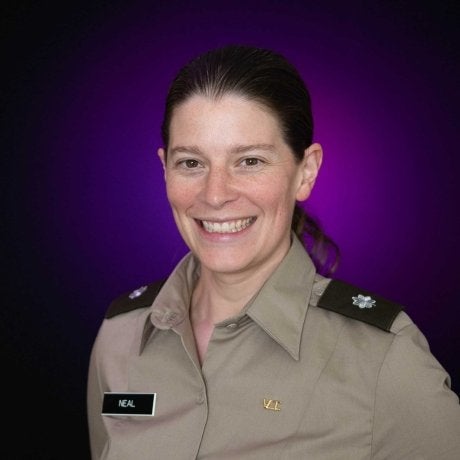
Laura Brettellمشاهده پروفایل
پژوهشگر ارشد
Dr. Laura Brettell is a University Fellow at the University of Salford's School of Science, Engineering & Environment. She is affiliated with both the Environmental Research and Biomedical Research centers at the university, contributing to research on arthropod-microbe interactions and their implications for ecosystem health and disease transmission. Dr. Brettell's academic journey includes: PhD in Honey Bee Virology from the University of Salford (2014-2017) Postdoctoral research at Western Sydney University focusing on pollinator health in commercial orchards (2017-2021) Postdoctoral work at Liverpool School of Tropical Medicine on mosquito-microbiome interactions (2021-2023) Earlier research at the University of Sheffield on honey bees and Varroa mites (2010-2012) and periwinkle speciation (2013-2014) Her research program centers on the ecology and evolution of arthropod-associated microbes, examining the complex interplay between host ecology, host-microbe interactions, and microbial community dynamics. This work spans diverse systems from honey bees and other pollinators to disease vectors like mosquitoes, addressing critical questions about how global environmental change affects these relationships. Her investigations have important implications for apiculture, sustainable agriculture, and controlling vector-borne diseases. Analysis of Dr. Brettell's recent publications reveals a strong focus on microbial ecology across multiple host systems. Her work bridges fundamental questions about host-microbe coevolution with applied research addressing real-world challenges in food security and public health. The publications span virology, bacteriology, and broader microbial ecology, demonstrating an integrative approach to understanding how microbial communities influence host health and ecosystem function. Dr. Brettell has made significant contributions to understanding: The dynamics of deformed wing virus in honey bees and other insects Mosquito microbiome composition and its implications for vector competence Pollinator health in agricultural landscapes Evolutionary aspects of host-microbe interactions Her teaching responsibilities include delivering lectures on tick-borne diseases and the relationship between global change and vector-borne diseases in the 'Vector borne and zoonotic infectious diseases' module. This reflects her commitment to translating cutting-edge research into educational content that prepares students to address emerging challenges in infectious disease ecology. Dr. Brettell's research contributes directly to multiple UN Sustainable Development Goals, particularly those focused on good health and well-being, life on land, and reduced inequalities. Her interdisciplinary approach bridges environmental health and human well-being, addressing complex sustainability challenges through the lens of microbial ecology.