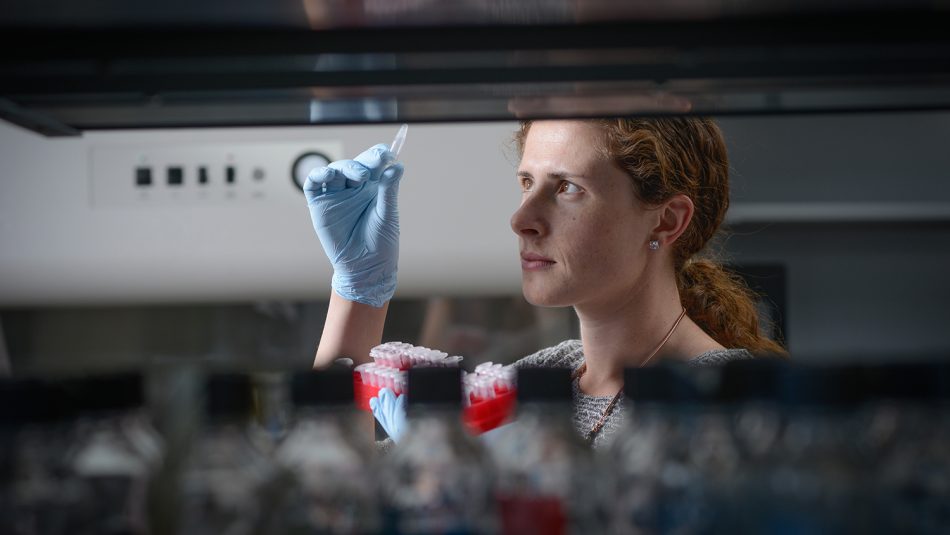
Kelly Meiklejohn is an Assistant Professor in the Department of Population Health and Pathobiology at North Carolina State University, joining in January 2018 as part of the Chancellor’s Faculty Excellence Program cluster in Forensic Sciences. Her research integrates molecular biology, taxonomy, and forensic DNA analysis to advance wildlife forensics and forensic casework protocols. Education: B. of Biotechnology Advanced (Hons Class 1) and Ph.D. from the University of Wollongong (Australia) Postdoctoral Training: University of Florida (2013), FBI Laboratory (2017) Meiklejohn’s work focuses on applying massively parallel sequencing (MPS) to forensic scenarios, improving mitochondrial DNA recovery from challenging samples, and developing molecular protocols for non-human biological material. Her recent publications highlight expertise in DNA metabarcoding, non-destructive sampling methods, and forensic geology. Affiliations: Member of Australian and New Zealand Forensic Science Society, American Academy of Forensic Sciences, Society for Wildlife Forensic Science She teaches undergraduate and graduate courses, mentors forensic science students, and leads the Meiklejohn Lab, which specializes in wildlife forensics and environmental DNA analysis.
H. Frederik Nijhout holds dual appointments as the John Franklin Crowell Distinguished Professor of Biology and Professor of Biology at Duke University’s Trinity College of Arts & Sciences, where he has been a faculty member since 1977. His work bridges developmental physiology, evolutionary biology, and mathematical modeling, focusing on how genetic and environmental factors interact to shape complex traits such as insect metamorphosis, polyphenic development, and wing pattern evolution. Educated at Harvard University (Ph.D. Biology, 1974; M.A. Biology, 1972) and the University of Notre Dame (B.S., 1970), Nijhout has pioneered studies on butterfly wing patterns, revealing their underlying genetic and hormonal mechanisms. His research also examines metabolic pathways like one-carbon metabolism and neurotransmitter dynamics, with implications for human health issues such as Parkinson’s disease and acetaminophen toxicity. His research interests include understanding phenotypic plasticity, hormonal signaling (e.g., juvenile hormone, ecdysone), and the evolution of developmental processes. He advocates for systems biology approaches to integrate molecular, physiological, and environmental factors in studying complex traits, emphasizing the limitations of statistical gene-environment interaction frameworks. Recent publications highlight advancements in modeling melatonin synthesis, serotonin transporter modulation under inflammation, and the genetic basis of polyphenisms. His work underscores the importance of developmental mechanisms in enabling evolutionary adaptations to environmental challenges. Nijhout’s awards include the National Academy of Sciences membership (2025), the Kowalevsky Medal (2016), and fellowships from the American Academy of Arts and Sciences (2018) and the American Association for the Advancement of Science (1989). He has advised students like Yuichiro Suzuki and collaborates with mathematicians and clinicians to advance interdisciplinary research. His lab at Duke University studies insects such as Manduca sexta and Onthophagus beetles, and he maintains an artistic practice in pottery and painting, inspired by biological principles of pattern formation.
Brian Fisher is a Curator of Entomology and Patterson Scholar at the California Academy of Sciences. His work focuses on ant biodiversity in Africa and Madagascar, integrating taxonomy, evolution, and conservation. Fisher leads initiatives like Insects and People of the Southwest Indian Ocean (IPSIO) , which promotes edible insect farming to address malnutrition and protect habitats. His research emphasizes leveraging ants as ecological indicators and developing tools for biodiversity monitoring. Education: Earned a biology degree from the University of Iowa, with early fieldwork in Panama and Costa Rica. Transitioned to entomology during studies at the Smithsonian Tropical Research Institute. Research Interests: Ant diversity and evolution, Madagascar’s ecosystems, and applying insect farming to solve food insecurity. Projects include the Breakfast Before Conservation initiative, which scales cricket farming to reduce lemur hunting and deforestation. Collaborations: Partnerships with Madagascar Biodiversity Center, Entomo Farms, and international scientists. Spearheads genomic and metabarcoding projects to track insect biodiversity across 50 Malagasy sites. Labs/Teams: Fisher Lab at the California Academy of Sciences and Madagascar-based research networks. Develops open-access resources like AntWeb and AntCat for global ant documentation.
Clint Penick is an Assistant Professor of Insect Ecology in the Department of Entomology & Plant Pathology at Auburn University's College of Agriculture. His research focuses on understanding insect ecology and behavior, particularly in urban environments, and translating biological insights into engineering solutions through biomimicry. Key areas include ant diversity patterns, climate change impacts on arthropods, and bio-inspired material design. Penick's work integrates field ecology, laboratory experiments, and computational modeling. He explores how ants adapt to urbanization, investigates antimicrobial defenses in social insects, and studies structural properties of biological materials like cactus wood and marine sponges. His research bridges entomology with engineering, contributing to advancements in robotics, meta-materials, and sustainable design. Notable projects include studying the invasive 'ManhattAnt' (Lasius emarginatus) in NYC, developing motion compensators for insect-like robots (TOLC), and analyzing form-function relationships in natural structures like the Venus flower basket. He collaborates across disciplines, involving engineers, computer scientists, and artists to apply biological principles to human challenges. Penick advises graduate and undergraduate students in his research areas, though specific advisees are not listed here. His work has been supported by various grants and collaborations, though grant details are not explicitly provided in the text. He maintains an active lab focused on ecological and applied entomology projects.
David M. Geiser is a Professor in the Department of Plant Pathology and Environmental Microbiology at Pennsylvania State University, where he conducts research in molecular evolutionary genetics and systematics of fungi. His work focuses on the phylogenetics and taxonomy of Fusarium and related plant pathogens, with implications for agriculture and food safety. His research interests include molecular phylogenetics, species complex delineation, DNA sequencing, fungal genomics, and mycotoxin production. He is a leading expert in the taxonomy and identification of Fusarium , contributing to major resources such as FUSARIUM-ID. His work integrates genomic, phylogenetic, and morphological data to resolve fungal species boundaries and improve diagnostic accuracy. The recent publications show a strong trend in phylogenomics, fungal taxonomy, and molecular diagnostics, particularly within the Fusarium genus. His research spans species discovery, misidentification issues in culture collections, trichothecene potential, and the development of genomic tools for pathogen identification. These works reflect a deep engagement with both fundamental fungal systematics and applied plant pathology. Elected to leadership in the Mycological Society of America Dr. Geiser has supervised and collaborated with numerous researchers, including PhD students and postdoctoral scholars, though formal advisees are not explicitly listed. He has been involved in multiple collaborative grants focused on fungal genomics, taxonomy, and plant disease diagnostics. His laboratory is part of a broad network of fungal researchers and contributes to international efforts in fungal nomenclature and classification. His lab is involved in high-impact collaborative research, particularly in the areas of fungal phylogenomics and diagnostic tool development. He is part of a global consortium working on fungal taxonomy and sequence-based nomenclature, contributing to standards that shape modern mycology.
Dr. Frank Friedrich is a Researcher at the University of Hamburg , affiliated with the Faculty of Mathematics, Computer Science and Natural Sciences and the Department of Biology . He leads the Electron Microscopy and Morphological Structural Analysis group at the Institute of Animal Cell and Systems Biology . Insect Morphology and Phylogenomics are central to his research Specializes in Synchrotron Radiation Microtomography (SR-μCT) for 3D anatomical reconstructions Collaborates on Holometabola Evolution and Phylogenetic Systematics His work spans Trichoptera (caddisflies) , Mecoptera (scorpionflies) , and Zoraptera , with a focus on head and thoracic anatomy . He has contributed to resolving insect phylogeny through innovative imaging techniques. Publications highlight his expertise in synchrotron radiation-based imaging and larval/adult morphological studies .
Jeffrey Feder is a full Professor in the Department of Biological Sciences at the University of Notre Dame, where he has been a faculty member since 1993 and earned tenure in 2006. He is affiliated with the College of Science and contributes to interdisciplinary initiatives including the Eck Institute for Global Health, the Environmental Change Initiative, Advanced Diagnostics and Therapeutics, and the Integrated Biomedical Sciences graduate program. He also directs GLOBES, an NSF-funded interdisciplinary graduate training program in environment and society. Research Interests: Dr. Feder's research focuses on ecological and evolutionary genomics, particularly the mechanisms of sympatric speciation. His lab studies the apple maggot fly ( Rhagoletis pomonella ) as a model system for real-time speciation driven by host plant shifts. His work integrates genomics, population genetics, neurophysiology, and field ecology to understand how ecological adaptation leads to reproductive isolation and biodiversity. Additional interests include vector-borne diseases like Chagas disease and the coevolution of insect communities under climate change. Recent Research Trends: His recent publications highlight the genomic architecture of speciation, the predictability of evolutionary trajectories, and cascading diversification across trophic levels. Articles span topics from transcriptomic responses to host environments to the dynamics of tipping points in speciation, reflecting a multidisciplinary approach combining empirical data with theoretical insights. Sloan Foundation Evolutionary Biology Fellow NSF Career Award Fellow, Wissenschaftskolleg zu Berlin Fellow, John J. Reilly Center for Science, Technology, and Values NSF Dimensions of Biodiversity Grant (co-PI, $2M) Advising and Grants: Dr. Feder has mentored numerous PhD and master’s students, including Cheyenne Tait, Glen Hood, Mary Glover, and Meredith Doellman, many of whom have published high-impact research. He actively recruits graduate students with backgrounds in bioinformatics and evolutionary biology. His lab has secured major funding from the NSF, Indiana Clinical and Translational Science Institute, and other sources to support research on speciation genomics and disease vector diagnostics. Labs and Teams: The Feder Lab at Notre Dame is a vibrant research group focused on evolutionary genetics and genomics. It collaborates widely, including with researchers at the University of Florida, University of Colorado Denver, and Binghamton University. The lab emphasizes both field and laboratory work, maintaining strong ties to the broader Rhagoletis research community and contributing to global understanding of speciation dynamics.
Justin Kratovil serves as an Assistant Professor In-Residence in the Department of Molecular and Cell Biology at the University of Connecticut, where his research bridges evolutionary biology, genomics, and organismal studies with emphasis on amphibians and arthropods. His academic foundation includes: Postdoctoral training in Ecology and Evolutionary Biology at the University of Connecticut Postdoctoral training in Entomology at the University of Kentucky Ph.D. in Biology from the University of Kentucky MS in Biology from Smith College BA in Biology from Hartwick College Dr. Kratovil's research program integrates molecular techniques with evolutionary theory to investigate gene regulatory networks in insect development and genomic mechanisms underlying amphibian diversification. His work frequently addresses methodological challenges in studying organisms with complex genomic architectures, particularly salamanders with exceptionally large genomes. This dual focus on developmental genetics and phylogenomic analysis positions him at the intersection of evolutionary developmental biology and systematic biology. Analysis of his publication record reveals a sustained emphasis on amphibian evolutionary genomics (particularly salamanders) and arthropod developmental evolution. His research consistently employs phylogenomic approaches to resolve species boundaries, reconstruct evolutionary histories, and address technical limitations in non-model organism genomics, demonstrating expertise in both wet-lab methodologies and computational analysis. No scientific awards are documented in the available materials. While his collaborative publications indicate extensive research partnerships across multiple institutions, specific details regarding student mentorship or grant funding are not provided in the source materials. No dedicated laboratory or research team structure is explicitly described in the available documentation.
Carlos Guerrero Bosagna is a Senior Lecturer at Uppsala University's Department of Organismal Biology; Physiology and Environmental Toxicology. His research bridges evolutionary biology, epigenetics, and environmental science, focusing on how environmental exposures (e.g., toxins, stress) induce epigenetic modifications that influence developmental processes and transgenerational phenotypic variation. Role: Senior Lecturer, Uppsala University Department: Physiology and Environmental Toxicology Key Projects: Epigenetic stress response in chickens, metabolic/reproductive effects of environmental toxins, germline epigenetic variation in speciation His work has secured a FORMAS grant for modeling environmental toxicant impacts on chicken reproduction and metabolism. Recent publications analyze avian methylation patterns , mito-nuclear interactions , and Z-chromosome epigenetic regulation . Collaborations span poultry science, computational biology, and global environmental epigenetics research. Scientific awards include a FORMAS grant for environmental toxicology research His research emphasizes sustainability and evolutionary innovation, with lab projects tracking epigenetic changes across six generations to mimic early speciation events. Methodological contributions include protocols like GBS-MeDIP for concurrent genetic/epigenetic analysis.
Dr. Christopher Hassall is an Associate Professor of Animal Biology at the School of Biology, University of Leeds , with research spanning entomology, climate change impacts, urban ecology, and conservation science. He leads the Hassall Lab and the BioDAR Project , which uses weather radar for biodiversity monitoring. Research Interests Quantifying insect abundance via weather radar (BioDAR/PestDAR/DRUID projects) Urban freshwater ecosystems and socio-ecological dynamics Evolution of insect camouflage/mimicry and flight behavior Climate change impacts on pollinators and invasive species Shadow diversity and extinction studies (Leverhulme DTP Co-Director) Scientific Awards Fellow of the Higher Education Academy Fellow of the Royal Entomological Society Advising : Supervises postgraduate researchers including Sicily Fiennes , Isabella Flowers , and Mx Solanum Foulstone , with a focus on interdisciplinary extinction studies and urban entomology.
Dr. John Abbott is an Associate Professor and Chief Curator at the University of Alabama Museums , where he leads the Department of Museum Research & Collections. With a PhD in Entomology from the University of North Texas (1999), his career spans academic research, conservation initiatives, and public outreach. Education: PhD (1999), MS (1998) from University of North Texas; BS (1993) from Texas A&M Academic Role: Associate Professor at University of Alabama Museums since 2016 Research Leadership: Editor-in-Chief of International Journal of Odonatology Research Focus: Specializes in Odonatology (dragonfly and damselfly studies), combining systematics , biogeography , and conservation biology with innovative citizen science approaches. Key projects include: Conservation genetics of endangered dragonflies Population dynamics of American Burying Beetle Citizen science data collection networks Field guide development (Texas and North America) Wing evolution and digitization projects Scientific Contributions: Author of 4+ field guides, with 1500+ research photos documenting global insect diversity. His work appears in journals like Freshwater Biology and Biological Invasions . Awards: Notable recognition includes the Hamilton Book Award at UT Austin for his Damselflies of Texas publication. Outreach: Active nature photographer and science communicator, maintaining platforms like OdonataCentral and PondWatch for public engagement.
John Harte is a Professor in the Department of Environmental Science, Policy, and Management at the University of California, Berkeley. His research centers on global change, ecosystem ecology, and biodiversity, with a focus on human impacts on ecological systems across scales. Utilizing field experiments, natural pattern analysis, and mathematical modeling, his work examines biodiversity patterns, climate feedbacks, and ecosystem-climate linkages. Recent research explores ecological equations of state, climate change impacts on species distributions, and information theory applications in complex systems. His publications demonstrate strong interdisciplinary connections between physics, data science, and conservation biology. Key themes in Harte's recent work include: Development of unified theories for biodiversity and ecosystem functioning Climate change impacts on tundra ecosystems Mathematical foundations of ecological complexity Integration of macroecology with conservation practice
Dr. Adrian Brennan is an Associate Professor in the Department of Biosciences at the University of Durham, UK. He holds key roles as the Academic Lead of the Durham Genomics and Bioinformatics Facility (since 2024), Academic Director of Durham Botanic Garden (since 2022), and Deputy International Exchange Coordinator (since 2023). His research focuses on genomic basis of adaptive trait variation, speciation, hybridization, and domestication in plants. He leads studies on Linum (flax), Haeterina damselflies, and invasive species like Centaurea solstitialis. Brennan teaches Evolution, Genomics, and Research Skills at undergraduate and graduate levels. He collaborates globally and serves as an associate editor for journals including Frontiers in Plant Science and Molecular Ecology . His educational background includes a DPhil (PhD) in Plant Sciences from the University of Oxford (2003) and a BA in Biological Sciences from the same university (1999). He has held postdoctoral roles at institutions like the University of Bristol and the Royal Botanic Garden Edinburgh before joining Durham in 2013. Brennan's research integrates genomic approaches with field and controlled experiments to study genetic architecture of traits like breeding systems, local adaptation, and domestication. His work emphasizes crop wild relatives and their genetic resources for agriculture. He actively supervises PhD students in topics like flax genomic resources and wildflower seed mixes.
Manu Saunders is a Senior Lecturer in Ecology and Biology at the University of New England's School of Environmental and Rural Science. She holds a PhD in Ecology from Charles Sturt University (2014) and conducts research in community ecology, insect-plant interactions, and ecosystem services. Her research focuses on insect ecology in agricultural and natural landscapes, examining how land use changes affect biodiversity and ecological processes. She investigates pollination networks, insect conservation strategies, urban insect ecology, and the impacts of disturbances like bushfires on insect communities. Dr. Saunders has received multiple awards including the Dean's Award for Early Career Research Excellence and the Ecological Society of Australia Award for Outstanding Science Outreach. She coordinates ecology units and promotes science communication through public engagement initiatives. Her publications demonstrate expertise in pollination ecology, conservation biology, and science communication. Recent work includes studies on fire impacts on threatened plants, urban insect conservation, and developing connected environmental science curricula.
Dr. Michael Raupach is the Head of Section Hemiptera at the Zoological State Collection Munich (ZSM) within the Bavarian State Natural Science Collections (SNSB) . His research integrates molecular techniques with traditional taxonomy to address systematics, biodiversity assessment, and phylogenetic relationships in Hemiptera and other arthropod groups. Key affiliations: ZSM, SNSB, German Research Foundation (DFG) projects Primary roles: Section Head, Researcher, Scientific Editor Dr. Raupach specializes in DNA barcoding and phylogenetic analysis of marine and terrestrial invertebrates, particularly Carabidae beetles , Isopoda crustaceans , and Hemiptera bugs . His work reveals cryptic species , glacial refugia , and deep-sea colonization patterns . His publications demonstrate expertise in mitogenome phylogeny , species delineation , and bioinformatic approaches to biodiversity. Collaborations span Antarctic marine ecology , German freshwater arthropods , and global crustacean systematics . Scientific Awards Recipient of the Order of Merit of the Federal Republic of Germany Leadership in national DNA barcoding initiatives Dr. Raupach actively contributes to peer-reviewed journals , scientific conferences , and public biodiversity education . His work bridges morphological taxonomy with next-generation sequencing to resolve long-standing classification challenges.