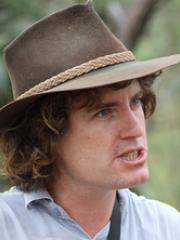
Dr. Jerry Cook is Professor of Biology in the Department of Biological Sciences at Sam Houston State University. His research specializes in systematics and taxonomy of Strepsiptera, functional morphology, invasive ant species ecology, and pollinator conservation. Research examines parasitic insects (Strepsiptera), Pleidae systematics, and impacts of invasive ants on native ecosystems. Publications demonstrate expertise in morphological analysis and neotropical taxonomy. Awards documentation is not provided in available materials.
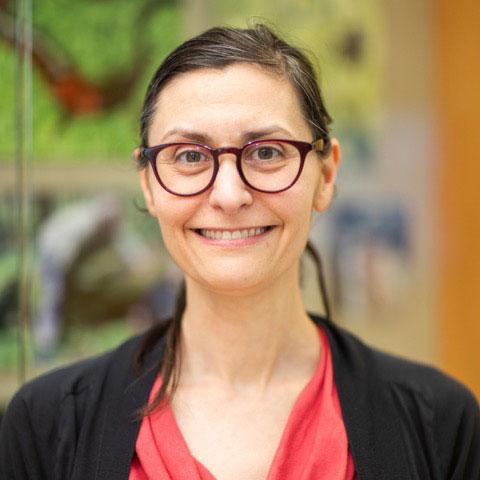
Dr. John B. Pascarella is Professor of Biological Sciences at Sam Houston State University, where he directs research on plant-insect interactions and pollination ecology. He holds a PhD in Plant Ecology from the University of Miami and leads investigations into bee biodiversity, solar farm ecology, and endangered plant restoration. Current projects include bee biodiversity surveys in East Texas, pollinator studies in Hungarian solar farms, and Red-Cockaded Woodpecker habitat restoration. Research bridges field ecology and conservation applications, with recent publications on nonlinear population modeling and ecovoltaic frameworks. Teaches Ecology and General Biology courses, and leads a Field Biology study abroad program in Hungary. Maintains active research collaborations internationally and welcomes students interested in plant ecology and pollinator conservation.
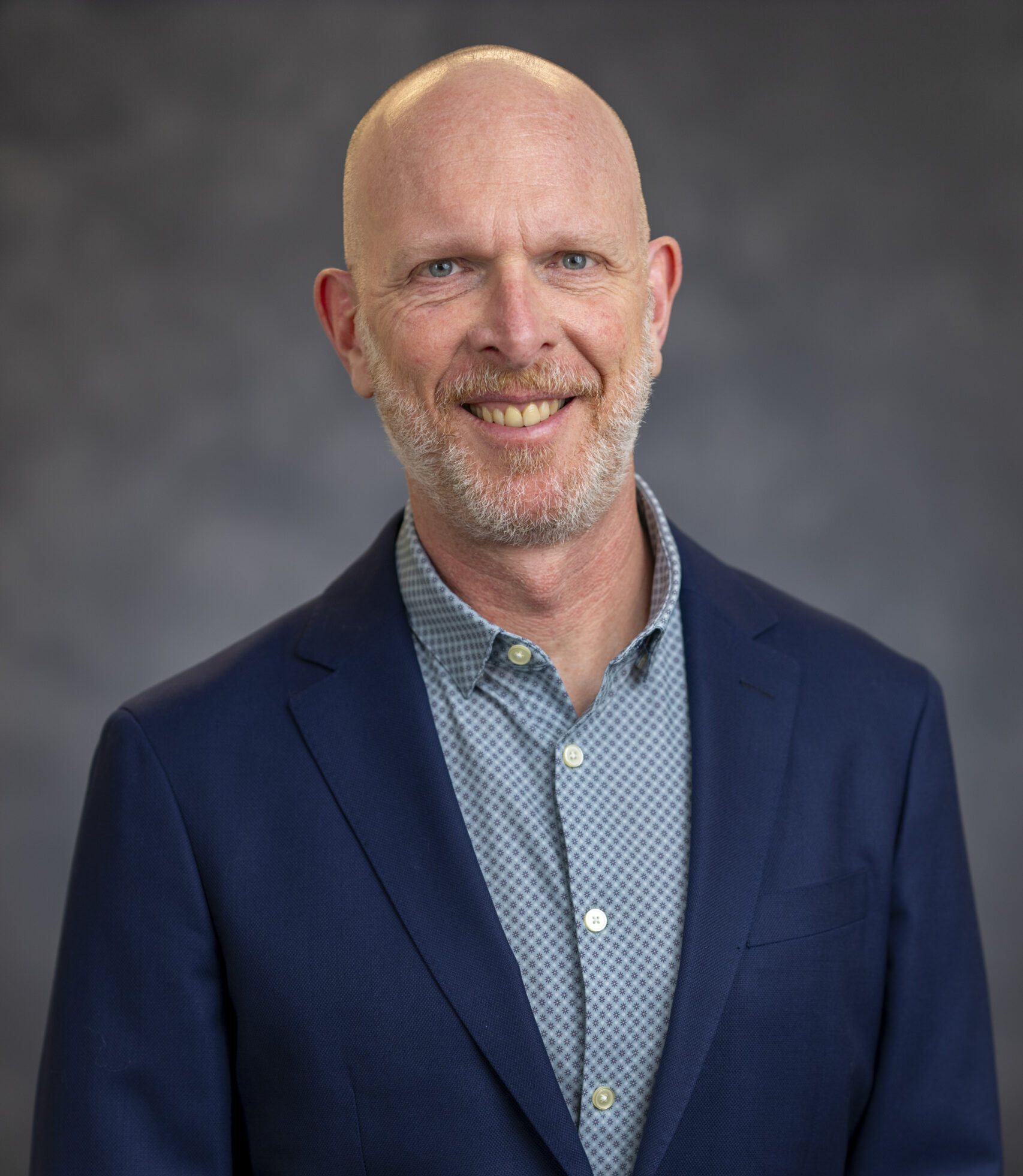
Matthew Steffenson is an Associate Professor of Biological Sciences at St. Edward's University in Austin, Texas. He teaches courses in General Biology, Entomology, Ecophysiology, Biostatistics, and Evolution. His research focuses on understanding how ecological factors influence immunological activity in insects and arachnids, particularly honeybees and wolf spiders. He has a Ph.D. in Quantitative Biology from the University of Texas at Arlington (2014), an M.S. in Biology from Tennessee Technological University (2009), and a B.S. in Biology from Siena College (2006). Dr. Steffenson's work integrates teaching and research, emphasizing undergraduate research opportunities. His research themes include immunological responses to environmental stressors, predator-prey interactions, and the mechanisms underlying population declines such as colony collapse disorder (CCD) in honeybees. He has explored how stressors like temperature, pesticides, and colony relocation affect honeybee immunity, as well as autotomy mechanisms in spiders and scorpions. His academic journey includes roles at Adams State University (2014–2017) and St. Edward's University since 2017. He has published extensively on immunology, ecophysiology, and pedagogical strategies in biochemistry education. His work bridges basic ecological research with applied concerns in agriculture and conservation.
Dr. Risa Sargent is an Associate Professor in the Centre for Sustainable Food Systems at the University of British Columbia's Faculty of Land and Food Systems. Her research focuses on ecological interactions between plants and pollinators, particularly in agro-ecosystems and urban environments, addressing global change impacts. She leads projects like PERCS (Perennial Plant Restoration for Carbon Sequestration), exploring carbon sequestration and biodiversity co-benefits in agricultural landscapes. Her work integrates field experiments, meta-analysis, and phylogenetic tools to study adaptation and ecosystem services. Education: Ph.D. from UBC, postdoctoral research at UC Berkeley. She advises graduate students (e.g., Batoule Hyjazie, Jens Ulrich) and has mentored numerous alumni now in academia, government, and policy. Current projects include urban pollinator studies, pesticide effects on bees, and perennial planting networks for carbon sequestration. Research spans invasive species management, biological control efficacy, and climate-driven phenological shifts. Collaborations with non-profits and government agencies aim to translate findings into sustainable agricultural practices and policy. Labs/Teams: Plant-Pollinator and Global Change Lab (PPGC) focuses on evolutionary ecology principles applied to global change pressures. PERCS involves interdisciplinary teams across Canadian universities and organizations.
Dr. Steve Grodsky is an Assistant Professor at Cornell University's Department of Natural Resources and the Environment and an Assistant Unit Leader in the U.S. Geological Survey New York Cooperative Fish and Wildlife Research Unit. His research focuses on renewable energy ecology, exploring interactions between energy development and ecosystems. He holds affiliations with the Atkinson Center for Sustainability and the Field of Entomology. Education: Ph.D. in Wildlife and Conservation Biology (North Carolina State University, 2016) M.S. in Forest and Wildlife Ecology (University of Wisconsin, 2010) B.S. in Conservation and Applied Ecology (Rutgers University, 2008) Research Interests: Dr. Grodsky investigates solutions to environmental challenges posed by renewable energy projects, such as solar and wind development impacts on biodiversity, desert ecosystems, and pollinators. His work emphasizes techno-ecological synergies and sustainable energy transitions. Recent projects include studies on floating solar installations, solar energy effects on arthropods, and non-lead ammunition for eagle conservation. Advising & Grants: He teaches courses like Renewable Energy Ecology (NTRES 6940) and oversees graduate students in entomology. His research has been funded by grants addressing solar energy’s ecological trade-offs and land-use optimization. Labs/Teams: Collaborates with the USGS New York Cooperative Unit and the Atkinson Center, focusing on applied ecological solutions for sustainable energy.
Dr. John Hall is a Lecturer in the School of the Environment at The University of Queensland, specializing in ecology with a focus on botany and plant-animal interactions. His teaching emphasizes field-based learning, narrative engagement in lectures, and student skill development in literature research and writing. He is a key contributor to international programs in Australian Terrestrial Ecology, including a course taught for the University of California. John’s research centers on cycad ecology, exploring pollination mechanisms, seed dispersal strategies, and plant defense systems. His PhD (2011, School of Biological Sciences, UQ) focused on cycads’ ancient ecological roles and their interactions with animals. His publications (2004–2018) highlight cycads’ evolutionary significance, examining topics like wind vs. insect pollination, megafaunal seed dispersal syndromes, and plant-pollinator mutualisms. These studies bridge paleoecology and modern plant biology, offering insights into pre-flowering plant-animal dynamics. While no formal grants or awards are listed, his work underscores contributions to both teaching innovation and foundational ecological research. He collaborates on international educational initiatives, extending UQ’s global academic reach.
Dr. Peter Graystock is a Lecturer in Human and Animal Health at Imperial College London's Department of Life Sciences (Silwood Park). His research focuses on microbial ecology, host-parasite interactions, and pollinator health, with a particular emphasis on bees and their microbiomes. Collaborations include Natural England, the Bumblebee Conservation Trust, and industry partners to inform conservation and policy. Key projects include the Microbiome Green Revolution (funded by a £2.45M grant) exploring plant-microbe interactions to improve crop yields, and the Leverhulme Centre for the Holobiont (£10M funding) studying host-microbe symbioses across life. His work on European Foul Brood (EFB) and pesticide impacts has been recognized by NERC's Impact Awards. Research interests span parasite transmission dynamics, microbiome engineering, and the gut-brain axis in bees. He supervises a dynamic group of PhD and MRes students exploring topics like pathogen spillover, microbial evolution, and epiphyte speciation. The lab also engages in public outreach through events like the Bugs, Birds and Beasts Day and educational workshops. Awards: NERC Inaugural Impact Award (2020) Grants: Microbiome Green Revolution (£2.45M), Leverhulme Holobiont Centre (£10M) Students: Supervises 15+ students including Miles Nesbit (parasite spillover) and Monika Yordanova (EFB disease). Labs and facilities include advanced microscopy, microbiome sequencing, and experimental apiaries at Silwood Park.
Professor Colin Turnbull is a Professor of Plant Sciences at the Department of Life Sciences, Faculty of Natural Sciences, Imperial College London. His research focuses on plant defense mechanisms against aphids, signaling pathways in plant development, and the molecular basis of plant immunity. He leads the Agri Futures Lab and is affiliated with multiple research groups including the Institute of Chemical Biology and the Molecular Plant and Microbial Systems network. Education: BSc Biological Sciences (Botany) from the University of Edinburgh (1976-1979), PhD from the University of Cambridge (1979-1983). Research interests include aphid effector proteins, plant resistance genes, cytokinin signaling, and the impact of climate change on plant immunity. Recent grants include studies on aphid chitinase-like effector proteins (BBSRC 2023-2026) and plant-fungal symbiosis (NERC 2022-2025). Key contributions include discoveries on FT protein as a mobile florigen, cytokinin perception mechanisms, and tools for studying phloem/xylem signaling. The lab actively recruits PhD students and postdocs for projects in plant defense and development. Contact: c.turnbull@imperial.ac.uk
Ros Gloag is a Research Fellow at the University of Sydney's School of Life and Environmental Sciences. She holds the Robinson Fellowship (2023) and ARC DECRA Fellowship (2022) . Her research focuses on evolutionary biology, behavioral ecology, and genetics of bees, particularly stingless bees in Australia and Fiji. She explores topics like invasive species dynamics, pollinator ecology, and the genetic basis of social insect behavior. Dr. Gloag earned a PhD in Zoology from the University of Oxford (2010s), followed by postdoctoral work at Oxford and the Australian National University. Her work integrates field studies and molecular techniques to understand ecological and evolutionary processes in social insects. Key themes include how environmental constraints shape species distribution and the role of genetic diversity in invasive populations. Her grants include a Strategic Partnership Seeding Grant (2024) for insect-microbe symbiosis research and a Robinson Award (2023) . Media coverage includes features in Nature , ABC News , and BBC CrowdScience . She leads the Behavior, Ecology, and Evolution (BEE) Lab and collaborates with institutions like the Sydney Environment Institute. Dr. Gloag's research highlights include studies on the Apis cerana invasion in Australia, thermal tolerance in stingless bees, and the evolutionary origins of venom genes. Her work bridges fundamental biology with applied questions in conservation and agriculture.
Associate Professor Tanya Latty is an entomologist at the University of Sydney's School of Life and Environmental Sciences. She holds a BSc in Biology and Environmental Science from Trent University (Canada) and a PhD in Insect Ecology from the University of Calgary (Canada). Her research focuses on insect behavior and ecology, with interdisciplinary collaborations spanning mathematics, computer science, and operations research. She is a member of the Sydney Institute of Agriculture and leads studies on pollination systems, swarm intelligence, and sustainable insect management. Her current projects include a systems approach to optimizing crop pollination via companion flowers (funded by ARC Future Fellowship) and assessing impacts of prescribed burning on honeybees (AgriFutures Australia grant). She has published extensively on topics like ant transportation networks, slime mould decision-making, and urban bee ecology. Media engagements include features on Quirks & Quarks discussing slime mould cognition and ant navigation. Research themes include bio-inspired technology development, pollination ecology, and invertebrate conservation. Her lab emphasizes Indigenous land acknowledgments, recognizing Gadigal traditional custodianship. Grants total over $2M in recent years, supporting both fundamental and applied ecological research.
Jessamyn Manson is an Associate Professor of Biology at the University of Virginia. She holds a B.Sc. from the University of British Columbia and a Ph.D. from the University of Toronto. Her research focuses on plant-animal interactions, particularly the ecological and evolutionary dynamics between plants and their pollinators. She examines how floral rewards and defensive traits influence pollinator behavior, health, and community structures in both natural and agricultural ecosystems. Her work combines field experiments, lab studies, and surveys to analyze the consequences of floral nectar chemistry on pollinator diversity, pathogen resistance, and plant fitness. Key areas include the role of nectar secondary metabolites in plant defense, herbivory effects on pollination, and pollinator community responses to land-use changes. Manson collaborates with institutions like the University of Alberta and the Mountain Lake Biological Station, engaging students in undergraduate research programs such as the REU. Her research has led to insights on nectar alkaloid impacts on bumble bee health, the ecological significance of floral reward composition, and the drivers of pollinator diversity in prairie ecosystems. Manson’s findings contribute to understanding how plant-pollinator interactions shape ecological communities and inform conservation strategies in agroecosystems.
Associate Professor Caroline Hauxwell holds a position in the School of Biology & Environmental Science at Queensland University of Technology (QUT). Her research focuses on microbial applications in agriculture, particularly biopesticides and integrated pest management. She leads projects addressing sustainable food production through the development of microbial solutions for crop protection, including biopesticide formulations and mathematical modeling of pathogen dynamics. Education: PhD (Imperial College, London), BA (University of Oxford). Research Interests: Microorganisms in food production, microbial ecology, invertebrate pathology, and the commercialization of biopesticides. Her group collaborates with industries to reduce chemical insecticide use and establish sustainable pest management strategies. Recent work includes international registration of biopesticides and founding a manufacturing company. Experience: Over 25 years of leadership in tropical forestry, pest management, and biopesticide development across Africa, Asia, and the Pacific. Key roles include developing baculovirus and fungal biopesticides, adjuvants for microbial insecticides, and diagnostic programs for plant biosecurity. Grants & Projects: Leads Australian Competitive Grant-funded projects including 'New technology for stored grain pest management' and 'A new biopesticide for Diamondback Moth management in canola'. Collaborates with organizations like GRDC and Queensland Government. Labs & Teams: Heads the Invertebrate Microbiology group at QUT, fostering interdisciplinary research in microbial applications and sustainable agriculture.
Matthew Symonds is Associate Professor and Associate Head of School (Burwood) at Deakin University's School of Life and Environmental Sciences. He holds honorary positions at the University of Melbourne and is a Fellow of the Royal Society of Edinburgh. Education: Ph.D. University of Cambridge (1996-2000) MPhil University of Nottingham (1995) BA(Hons) Natural Sciences, University of Cambridge (1991-1994) Research integrates evolutionary ecology, phylogenetics, and climate adaptation biology. Key projects examine: 1) Climate-driven morphological changes in birds ('shape-shifting' responses), 2) Thermal adaptation rules (Bergmann's/Allen's rules), 3) Evolution of insect chemical signals and antennae, and 4) Anti-predator behavior evolution. Publications demonstrate expertise in phylogenetic comparative methods, avian macroecology, and thermal adaptation. Recent work has received media coverage for documenting climate-related changes in animal morphology. Current ARC-funded projects investigate evolutionary responses to climate change and anti-predator adaptations in threatened birds. Awards include Vice-Chancellor's Prize for International Collaboration (2021) and election as Fellow of the Royal Society of Edinburgh (2013).
Spence Behmer is a Professor in the Department of Entomology at Texas A&M University and Founding Chair of the Ecology & Evolutionary Biology PhD program. His research focuses on insect nutritional physiology, ecology, and plant-herbivore interactions, with emphasis on species like ants, aphids, grasshoppers, and honey bees. He has secured over $15M in federal funding and published 85 peer-reviewed articles, cited over 5,400 times. Behmer co-edits the Journal of Insect Physiology and serves on editorial boards for Current Opinion in Insect Science , Insect Science , and others. He has led national and international conferences, including the Gordon Research Conference on Plant-Herbivore Interactions. Education: B.S. Biology, University of Nebraska-Lincoln M.S. Biology/Ecology, University of Nebraska-Lincoln Ph.D. Entomology, University of Arizona Research Interests: Behmer’s work integrates in vitro and field studies to explore how insects regulate nutrient intake, adapt to dietary limitations, and interact with host plants. Key themes include sterol nutrition, Bt toxin susceptibility, and the ecological consequences of herbivore nutritional strategies. His lab develops novel pest management techniques leveraging nutritional and molecular insights. Recent Article Trends: Behmer’s recent publications emphasize RNAi-mediated pest control, plant-insect sterol dynamics, and nutritional regulation in social insects. Key innovations include using cricket powder in ant diets and exploring leaf-mining fly evolution to understand herbivory adaptations. Grants & Funding: Over $15M secured through USDA and NSF programs for projects on nutritional physiology, Bt toxin efficacy, and plant defense mechanisms. Current work includes sterol-modified crops and nano-pesticide interactions. Labs/Teams: Leads Texas A&M’s Entomology Nutrition Lab, collaborating with ecologists, geneticists, and agricultural engineers to bridge lab and field studies. Initiatives include the Schistocerca gregaria genome project and Bt toxin-nutrition interaction studies.
Prof. Dr. Bertram Brenig is a Full Professor of Molecular Biology of Livestock and Director of the Institute of Veterinary Medicine at Georg-August University Göttingen. His research focuses on genetic and genomic analysis of domestic animals, particularly addressing traits and defects in cattle, dogs, and honey bees using advanced techniques like genome-wide association studies (GWAS) and next-generation sequencing (NGS). He has held academic positions since 1993 and has been awarded honorary doctorates by Jiangxi Agricultural University (2016) and the Russian State Academy for Biotechnology and Veterinary Medicine (2018). Education includes a Dr. med. vet. from Ludwig-Maximilians-University Munich (1987) and postdoctoral research at institutions in Edinburgh and Munich. His research spans bovine leg diseases, canine hemophilia, honeybee hygiene behavior, and structural genomic variants affecting pigmentation and development in livestock. Brenig collaborates internationally and leads projects funded by grants in veterinary genomics and molecular biology. Research Interests: Genetic disorders in livestock Genomic analysis of bovine embryonic lethality and infertility Molecular mechanisms of canine hemophilia Bioinformatics-driven GWAS and NGS applications His lab’s work bridges basic molecular biology with applied veterinary science, addressing both fundamental biological questions and practical breeding challenges in agriculture. Brenig’s team maintains active collaborations in global veterinary research networks and contributes to training the next generation of veterinary scientists through academic leadership and mentorship.