Rolf Anker Ims is a Professor of Ecology at the Department of Arctic and Marine Biology, UiT The Arctic University of Norway. He serves as Head of the Climate-ecological Observatory for Arctic Tundra (COAT) , focusing on population, community, and ecosystem dynamics in boreal and Arctic environments. His work emphasizes climate change impacts, adaptive monitoring systems, and food web interactions. Current Research : Arctic-alpine small mammal population dynamics Camera trap methodology for ecological monitoring Predator-prey interactions in cyclic systems Climate change effects on tundra ecosystems Adaptive ecosystem management frameworks Recent Trends : Developing semi-automated image analysis workflows Studying interspecific competition in Arctic foxes Examining parasite dynamics in Svalbard Modeling multi-scale predator-prey systems Collaborations : Leads the COAT program while collaborating with international researchers across institutions like Norwegian Scientific Committee for Food and Environment, and participating in multidisciplinary projects including ECOGEN research group and Arctic Future Pathfinders educational initiatives.
Dr. Elise Filotas is a faculty member in the Department of Science and Technology at TÉLUQ, University of Quebec, where she conducts research on ecological complexity and modeling. As a Regular member of the Centre d'études de la forêt (CEF), she contributes to interdisciplinary research on forest ecosystems, bringing together perspectives from geography, physics, and complex systems science. Dr. Filotas earned her Ph.D. in Geography from the University of Montreal in 2009, following an M.Sc. in Physics from McGill University (2002) and a B.Sc. in Mathematics-Physics from the University of Montreal (2000). Her diverse educational background has shaped her interdisciplinary approach to ecological research. Her research focuses on two main themes: the dynamics of ecological communities in forest landscapes, examining how inter- and intraspecific interactions and dispersal ability influence population dynamics across scales; and the interplay between forest management and forest function, investigating how ecological processes and management practices affect ecosystem dynamics. She develops quantitative, theoretical, and applied modeling tools to address these questions. Analysis of Dr. Filotas' publication record reveals a strong emphasis on ecological modeling, forest management, and the application of complex systems theory to forest ecosystems. Her work frequently examines climate change impacts, forest resilience, biodiversity conservation, and sustainable management practices. She often collaborates with researchers across multiple institutions, reflecting the interdisciplinary nature of her work. Dr. Filotas has supervised multiple graduate students, including McNie, P. (2024 PhD), Gagne, C. (2023 PhD), Laginha Pinto Correia, D. (2018 PhD), and Carpentier, S. (2015 Master's). Her supervision record demonstrates her commitment to training future researchers in ecological modeling and forest management. While specific grant details aren't provided in the available information, Dr. Filotas' consistent publication record since 2008, with recent publications in 2025, indicates active research funding. Her work appears to involve collaborations with researchers across multiple institutions, which typically requires successful grant applications.
René Bødker is a Senior Researcher in the Vector Group within the Section of Animal Welfare and Disease Control at the Department of Veterinary and Animal Sciences, University of Copenhagen's Faculty of Health and Medical Sciences. With over 30 years of experience, he specializes in monitoring and quantifying vector-borne disease transmission across Africa and Europe, and currently heads the Danish national vector surveillance program. Dr. Bødker's research focuses on quantifying and predicting transmission potential in time and space using robust mechanistic transmission models driven by detailed environmental and meteorological data. His work attempts to mimic biological processes step by step through modular approaches including: 'Biting daily rate' calculations 'Vector survival rate' estimations 'Virus development time in the vector' measurements His recent publication trends show a strong focus on vector-borne diseases in Northern Europe, particularly tick-borne encephalitis, West Nile virus, and African Swine Fever. His work integrates field surveillance data with sophisticated modeling approaches to address critical questions about disease transmission dynamics and risk assessment in changing climatic conditions. Dr. Bødker leads the Vector Group, which operates sentinel monitoring sites for ticks, mosquitoes and biting midges across Denmark (www.myggetal.dk). The group is actively involved in outbreak investigations both domestically and internationally, and works on identifying and ranking emerging vector-borne disease risks in Denmark.
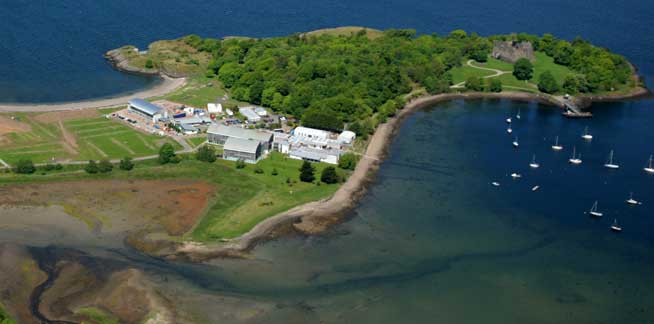
Dr James Clive Angus Craik serves as an Honorary Research Fellow at the Scottish Association for Marine Science (SAMS) since 1989, conducting pivotal field research on seabird predation dynamics and rare ecological phenomena across western Scotland's coastal islands. His work has revolutionized understanding of invasive American mink impacts on tern colonies and documented unprecedented biological events including armyworm migrations and iridescent iron bacterium films. His academic foundation includes a Ph.D. in Organic Chemistry from Cambridge University (1967), an M.A. (Hons.) in Chemistry, Physics, Biochemistry, and Maths (Cambridge, 1964), and a B.Sc. (Hons.) in Zoology from Durham University (1969). Ph.D., Organic Chemistry of Aphid Pigments, Cambridge University (1967) M.A. (Hons.), Chemistry/Physics/Biochemistry/Maths, Cambridge University (1964) B.Sc. (Hons.), Zoology, Durham University (1969) Craik's research integrates ornithological monitoring with entomological and malacological discoveries. He pioneered documentation of mink-induced seabird colony collapses through annual surveys of 100+ islands, while simultaneously identifying Britain's first armyworm columns ( Sciara militaris ) and studying Akera bullata mating chains. His investigations into iron bacterium ( Leptothrix discophora ) films bridge scientific rigor with aesthetic appreciation, and decades of moth-trap data inform conservation lighting methodologies under EU regulations. Analysis of his 15 most recent publications reveals sustained interdisciplinary focus on natural history documentation, with ornithological studies dominating conservation applications while entomological and malacological works explore novel organismal behaviors. His publications consistently translate field observations into actionable conservation strategies, particularly regarding invasive species management. His scientific recognition includes: RSPB Species Champion Award (2013) for developing mink-free tern breeding rafts at South Shian, Loch Creran Craik collaborated extensively with the Farming and Forestry Advisory Group (FFWAG) to establish mink-trapping networks across Scotland, training local trappers while leveraging SAMS facilities for independent investigations. Despite hearing impairment curtailing public lectures, he maintains active fieldwork through SAMS' scientific community, contributing to conservation bodies like the Scottish Ornithologists’ Club and RSPB. His research infrastructure operates through SAMS' Barcaldine facilities, utilizing Robinson moth traps, island survey protocols, and aquarium outflow monitoring systems. Key collaborations include FFWAG for predator control and co-authors like Andy McLeod for entomological studies, with ongoing work focused on iron bacterium film dynamics and mercury-vapour bulb alternatives.
Galina Viktorovna Klink is an Associate Professor at the Faculty of Computer Science and Senior Research Fellow at the International Laboratory of Statistical and Computational Genomics within the Institute of Artificial Intelligence and Digital Sciences at the National Research University Higher School of Economics (HSE). She joined HSE in 2024, bringing with her 9 years of scientific and teaching experience in computational biology and genomics. She holds a Candidate of Biological Sciences degree (2021) from the A.A. Kharkevich Institute for Information Transmission Problems of the Russian Academy of Sciences and a Biochemistry specialty (2012) from Moscow State University named after M.V. Lomonosov. Her academic journey includes postgraduate studies at Lomonosov Moscow State University's Faculty of Bioengineering and Bioinformatics (2013-2016) and research work at the Institute for Information Transmission Problems, Russian Academy of Sciences (2015-2023). Dr. Klink's research focuses on molecular evolution, genomic epidemiology, virology, and adaptive landscape analysis. Her work bridges computational methods with biological applications, particularly in viral evolution and genomic analysis. She has made significant contributions to understanding HIV-1 evolution, SARS-CoV-2 transmission patterns, and adaptation mechanisms in extreme environments. Her publication record shows a strong trend in applying computational genomics to solve biological problems, with recent work spanning viral evolution (HIV and SARS-CoV-2), environmental adaptation in organisms, and ecological monitoring. Her research demonstrates interdisciplinary expertise connecting computer science, biology, and environmental science. High Professional Potential Group (HSE Personnel Reserve) Category: New Researchers (2025) Dr. Klink teaches Introduction to Computational Genomics and the Research Seminar 'Data Analysis in Life Sciences' for third-year bachelor's students in Applied Mathematics and Computer Science. She is actively involved in research projects at the International Laboratory of Statistical and Computational Genomics, where she recently participated in outreach events including lectures at Zaryadye Park. Her laboratory work focuses on statistical and computational approaches to genomic analysis, with applications in virology and evolutionary biology.
Carsten Kirkeby is a Senior Researcher at the Department of Veterinary and Animal Sciences, University of Copenhagen, specializing in disease control and epidemiology. His work bridges theoretical modeling with practical applications in animal health and disease prevention. His educational background isn't explicitly detailed in the provided text, but his research profile suggests strong foundations in veterinary epidemiology, mathematical modeling, and statistical analysis of disease transmission. Kirkeby's research interests focus on statistical analyses of disease transmission dynamics in cattle (bluetongue, paratuberculosis, BVD, mastitis), birds (avian influenza), and zoonotic diseases (SARS-CoV2, avian influenza). He develops mathematical simulation models for disease dynamics and applies research findings to practical contingency work. His recent work emphasizes avian influenza epidemiology in Denmark, where he leads the Avian influenza Epidemiology subgroup. He also investigates insect detection using laser technology related to disease spread monitoring and addresses sustainability in relevant contexts. His recent publications (2025) demonstrate a strong focus on avian influenza modeling, risk assessment, and transmission dynamics across different geographical regions. His work shows particular expertise in spillover risk from wild birds to poultry, comparative outbreak analysis between continents, and developing risk assessment tools like L'ORA for zoonotic diseases. Erasmus+ Grant (2022) MedVetNet Short Term Mission Grant (2023) Partnership Collaboration Award (2018, 2019) EDENext 2013 3rd prize PhD award (2013) PhD Cup 2014 (2014) Kirkeby actively coordinates research activities and EU projects. As Project Coordinator for the EU Project PAIR, he oversees international collaborative efforts. His activities include numerous lectures, workshop leadership (notably at ISVEE 17), and organization of events like Nordfugl 2024 and 2025 focused on bird migration. He serves as an editor for research journals and participates in consultancy roles. His research output is substantial with 190 publications including 105 journal articles, demonstrating consistent scholarly contribution to veterinary epidemiology. He leads the Avian influenza Epidemiology subgroup and collaborates extensively across institutions, with research outputs showing strong international collaboration. His work connects mathematical modeling with practical disease control applications, particularly for high-priority diseases affecting both animal and human health.
Michael Hochberg is a Research Director at the French National Centre for Scientific Research (CNRS) and External Professor at the Santa Fe Institute. He is affiliated with the Institute of Evolutionary Sciences of Montpellier (ISEM) at the University of Montpellier, where he leads the Experimental Community Evolution Team. His research bridges evolutionary biology, disease ecology, and applied therapeutics. Hochberg's work explores how environmental and spatial dynamics mediate ecological and evolutionary processes, with emphasis on: Phage-bacteria coevolution and antibiotic resistance management Cancer evolution, intratumor heterogeneity, and adaptive therapies Social evolution in pathogens and transitions from parasitism to mutualism Ecosystem-level approaches to disease treatment His recent publications (2017–2021) demonstrate strong foci on evolutionary medicine, including phage steering to combat antibiotic resistance, COVID-19 mitigation modeling, tumor clonal dynamics, and ecological frameworks for disease management. These works integrate experimental data with computational models to predict therapeutic outcomes. Hochberg mentors a robust cohort of students and postdocs, with alumni now in academic roles worldwide. His lab investigates community evolution through microbial systems, cancer cell interactions, and environmental feedback on social behaviors.