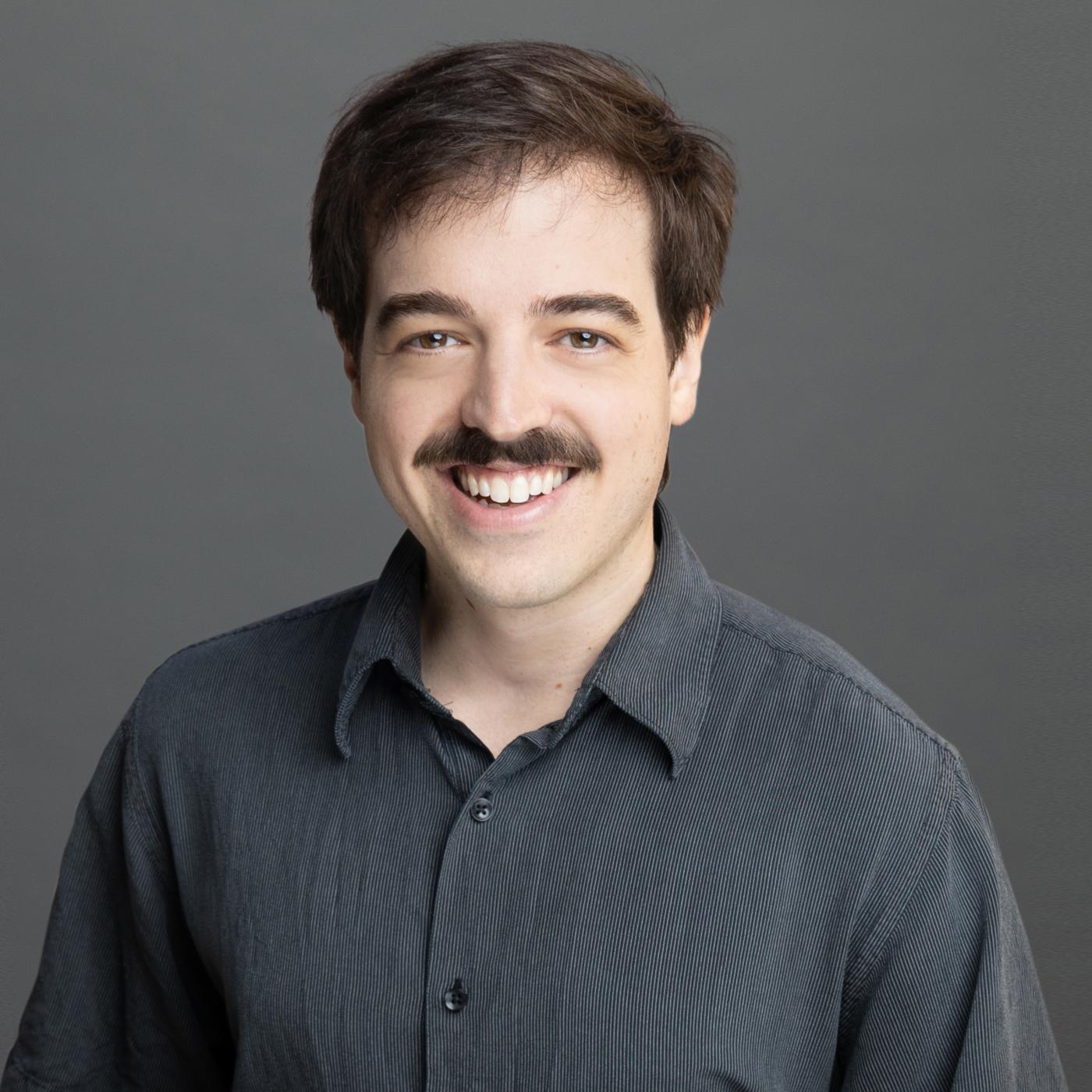
Román Corfas is an Assistant Professor of Instruction and Neuroscience Education Fellow at the University of Texas at Austin’s Department of Neuroscience. He transitioned to full-time neuroscience pedagogy in 2021, focusing on undergraduate curriculum development and teaching. Previously, his research explored insect behavior and sensory systems, including mosquito thermotaxis and fly navigation. Education: Bachelor’s in Neuroscience, Oberlin College Ph.D. in Neuroscience, Rockefeller University (2010) Postdoctoral Research, Caltech (2015–2021) Research Interests: Neuroscience education innovation, neuroethology of insect behavior, and sensory integration mechanisms in mosquitoes and fruit flies. His work bridges basic research on animal behavior with educational strategies to enhance STEM accessibility and engagement. Publications: Recent work emphasizes behavioral neuroscience (e.g., Drosophila navigation) and mosquito host-seeking mechanisms, reflecting his dual focus on research and pedagogy. Teaching & Curriculum: Leads introductory neuroscience courses and collaborates with the Neuroscience Department to modernize undergraduate curricula.
Alexandra Rutz is an Assistant Professor in the Department of Biomedical Engineering at the McKelvey School of Engineering, Washington University in St. Louis . She joined the university in March 2021. Her affiliations include the Institute of Materials Science & Engineering and the Center for Regenerative Medicine . She can be reached at rutzalexandral@wustl.edu , with her lab located in Whitaker Hall, Room 235 and office in Room 390D. Education: PhD in Biomedical Engineering, Northwestern University (2016) MS in Biomedical Engineering, Northwestern University (2014) BS in [unspecified field], University of Illinois Urbana-Champaign (2011) Research Interests: Professor Rutz’s work emphasizes nature-inspired design to advance bioelectronics via materials engineering and fabriation-based approaches . Her lab develops bioelectronic scaffolds for robust biointerfaces and long-lived medical devices, merging materials science with biomedical applications . She also explores principles of odor-guided navigation in brain-machine interfaces through collaborative projects. Scientific Awards: Marie Skłodowska-Curie Postdoctoral Fellowship Whitaker International Postdoctoral Fellowship Advising & Grants: While no formal advisees are listed, her postdoctoral research at the University of Cambridge (Division of Electrical Engineering) was supported by prestigious fellowships. She contributed to a National Science Foundation grant ($4.3 million) led by Barani Raman in 2023, investigating brain-machine interfaces for insects. Her work highlights transdisciplinary collaboration between engineering and life sciences. Labs & Teams: Her lab in Whitaker Hall focuses on electronic tissue engineering . She collaborates with institutions like the Center for Regenerative Medicine and leverages external funding for innovative projects.
Byron N. Van Nest serves as an Assistant Professor in the Department of Biological Sciences within the Faculty of Science at the University of Manitoba. His laboratory, housed in the Biological Sciences Building (Office 314), conducts research at the intersection of neurobiology and animal behavior with primary focus on invertebrate models. Dr. Van Nest's research program investigates fundamental questions about how brains select appropriate behavioral responses to environmental conditions, how neural architecture produces species-specific behaviors, and how neural systems change with age and experience. Using honey bees and cockroaches as model organisms, his lab employs multidisciplinary approaches including immunohistochemistry, confocal microscopy, electrophysiology, and sophisticated behavioral assays. Key research areas include time-memory processing in foragers, neural plasticity in mushroom bodies, sensory integration of olfactory and gustatory cues, and the neurotoxic effects of pesticides on insect cognition. Analysis of his publication record (2011-2023) reveals consistent contributions to insect neuroscience, particularly in understanding the neural basis of foraging behavior. His work demonstrates how experience shapes time-memory management in honey bees, how pesticide exposure alters synaptic organization, and how sensory modalities interact during decision-making. The research integrates molecular, anatomical, and behavioral methodologies to address questions about neural plasticity in changing environments. No scientific awards were documented in the provided materials. While the Van Nest Laboratory acknowledges funding sources, specific grant details and student mentorship records are not specified in the available text. The lab maintains active research operations focusing on neuroethological questions using invertebrate models. The Van Nest Laboratory operates within the Department of Biological Sciences at the University of Manitoba, utilizing specialized equipment for neural imaging and behavioral analysis. Current research directions include investigating pesticide impacts on neural circuits, decoding time-memory mechanisms in social insects, and exploring sensory processing pathways in honey bees under controlled laboratory conditions.
Scott P McRobert is a Professor in the Department of Biology at Saint Joseph's University. His academic career spans several decades, with a focus on animal behavior, ecology, and evolutionary biology. He maintains an active research laboratory and oversees the Biodiversity Laboratory, which houses numerous rare, exotic, and endangered species. BS (1977) in Biology, Juniata College, Huntingdon, PA MA in Biology (1983), Temple University, Philadelphia, PA PhD Genetics (1987), Temple University, Philadelphia, PA Dr. McRobert's research focuses on the genetic, ecological, and evolutionary aspects of animal behavior. His work primarily utilizes pomace flies (genus Drosophila ), fish, turtles, and frogs, with significant emphasis on understanding the biology of endangered species. His specific areas of investigation include animal communication, reproductive behavior, shoaling dynamics, and conservation biology. Much of his work has practical applications for wildlife management and conservation efforts, particularly with threatened turtle species. An analysis of Dr. McRobert's recent publications reveals a strong interdisciplinary approach spanning multiple biological disciplines. His work consistently bridges fundamental behavioral research with conservation applications, particularly in herpetology. The publications demonstrate expertise in both laboratory-based studies of model organisms like Drosophila and zebrafish, as well as field studies of wild turtle populations. A notable trend is the integration of educational technology with behavioral research, exemplified by tools like "Fish Cam" for classroom use. Dr. McRobert actively mentors students through research projects in the Biodiversity Laboratory. Current projects include investigating the effects of sleep deprivation on Drosophila melanogaster , factors influencing shoaling behavior in fish, the effects of water quality parameters on amphibian metamorphosis, and assurance colony studies on endangered turtles. These projects provide hands-on research opportunities for undergraduate and graduate students. Dr. McRobert oversees the Biodiversity Laboratory, which serves as both a research facility and a conservation resource. The laboratory houses large numbers of rare, exotic, and endangered species, supporting both scientific research and conservation efforts. This unique facility enables long-term studies of species biology and behavior that would not be possible with wild populations alone.
Professor James A.R. Marshall is a Professor of Theoretical and Computational Biology at the University of Sheffield's School of Computer Science, where he also serves as Director of the Centre for Machine Intelligence. He leads the Behavioural and Evolutionary Theory Lab (BET Lab), an interdisciplinary research group focused on understanding behavior through mathematical and computational approaches. His academic journey includes previous positions at the University of Bristol before joining Sheffield in 2010. Marshall's research spans collective social insect behavior, evolutionary theory, decision theory, robotics, and theoretical neuroscience. He applies mathematical and computational approaches to understand how and why behaviors evolve, with particular interest in social insect colonies, swarm intelligence, and biomimetic applications for robotics. His work often bridges biology and computer science, developing algorithms inspired by natural systems. He has made significant contributions to understanding confidence-weighted decision-making, quorum sensing in swarms, and magnitude-sensitive reaction times in multi-alternative choices. His recent publications reveal a strong trend toward applying insights from biological systems to robotics and AI, particularly through projects like Brains on Board and Opteran Technologies. His work increasingly focuses on neuromorphic control systems that mimic insect brains for autonomous navigation, demonstrating how constraints in biological systems can lead to robust engineering solutions. The interdisciplinary nature of his research is evident in publications spanning computational neuroscience, robotics, animal behavior, and theoretical biology. EPSRC Peer Review College Member (2010-present) Member of the UKRI Future Leaders Fellowship Panel College (2019-present) Editorial Board, Swarm Intelligence (2017-present) Associate Editor, PLoS Computational Biology (2020-present) Marshall has successfully mentored numerous researchers including HaDi MaBouDi, Andreagiovanni Reina, and Alexander Cope, while securing substantial research funding including EPSRC grants totaling over £4 million. His lab has produced the spinout company Opteran Technologies, which has secured over £12 million in funding to develop natural intelligence technology for autonomous systems. The BET Lab maintains strong connections with Sheffield Robotics and focuses on testing theoretical models in physical robotic systems while developing computational models of biological processes.
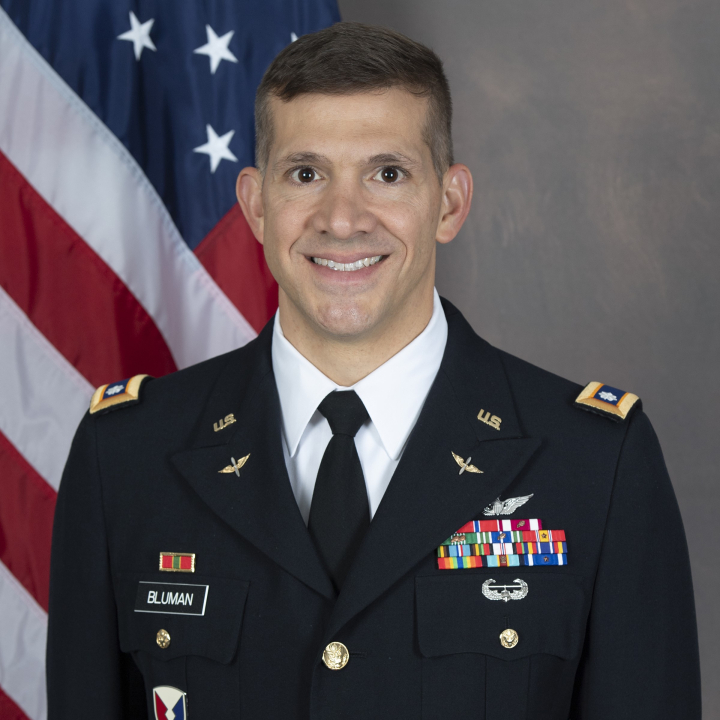
Colonel James E. Bluman, PhD, PE , serves as the Research Program Director for the Department of Mathematical Sciences at the United States Military Academy at West Point. Previously, he directed the Center for Innovation and Engineering and held an associate professorship in Civil and Mechanical Engineering at West Point. His Army career included operational roles as an Aviation Officer, Acquisition Corps officer with Level III DAWIA certification, and Assistant Product Manager for the Armed Scout Helicopter Project Office. Ph.D. in Mechanical Engineering - University of Alabama in Huntsville M.S. in Aerospace Engineering - Penn State B.S. in Mechanical Engineering - U.S. Military Academy His research focuses on robotics, military applications of small unmanned aerial systems (UAS), flapping wing micro-air vehicles, insect flight dynamics, drone autonomy, image classification, automated target recognition , and generative AI in undergraduate research . His recent publications emphasize algorithmic advancements for aerial search patterns, including Lissajous curves and deterministic flight planning. Scientific recognition includes the American Society of Mechanical Engineering’s Donald N. Zwiep Award for Innovation in Education and the USMA’s 2024 Dean’s Mid-Career Award for Scholarship Excellence .
Christian Agrillo is an Associate Professor at the Department of General Psychology, University of Padova. His research focuses on numerical cognition across species, visual perception in primates, and the psychology of music. He investigates how non-human animals (e.g., zebrafish, guppies) and humans perceive numerical quantities, spatial relationships, and visual illusions. Recent work includes studies on musical perception in professionals and susceptibility to illusions in domestic animals like dogs and cats. His research spans comparative psychology, behavioral ecology, and cognitive neuroscience. Key topics include quantity discrimination in fish, color discrimination in piranhas, and the application of operant conditioning in larval zebrafish. He collaborates on environmental enrichment strategies for captive fish using visual illusions. Agrillo’s articles explore cross-species perceptual mechanisms, emphasizing methodological rigor in studying animal cognition. His work bridges basic science with applied topics like animal welfare and music psychology.
Marc H Gershow is an Associate Professor and Director of Undergraduate Studies for Physics at New York University's College of Arts and Science. His research focuses on understanding sensory processing and decision-making in model organisms like Drosophila larvae and C. elegans. He develops advanced microscopy techniques, including CRASH2p and 3D tracking two-photon imaging, to study neural activity in freely behaving animals. His work bridges neuroscience, physics, and engineering to uncover how organisms integrate sensory information with learned and innate behaviors. Education & Background While specific educational details are not explicitly listed, his research trajectory suggests a strong background in biophysics and neuroscience. His lab homepage indicates ongoing projects in olfactory circuits, sensory integration, and neurophysiological imaging. Research Interests Gershow's lab investigates neural mechanisms underlying navigation, olfactory learning, and decision-making. Key areas include: Olfactory circuits in Drosophila larvae and C. elegans Development of closed-loop imaging systems (e.g., CRASH2p) Multi-neuronal recording in unrestrained animals Integration of learned and innate sensory valences Awards & Recognition NSF CAREER Award (2015) NIH Director's New Innovator Award (2015) Lab & Collaborations His lab integrates engineering and biology, with a focus on creating tools for real-time neural activity analysis. Collaborations likely span physics, neuroscience, and computational biology. The lab homepage provides further details on ongoing projects and publications.
Myles H.M. Menz is a researcher at James Cook University (JCU) with a focus on insect ecology, conservation biology, and technological applications in ecological monitoring. His work spans diverse topics including insect migration patterns, pollination dynamics, and the impacts of environmental stressors like pesticides and light pollution. He collaborates internationally on projects involving radar entomology, animal-borne sensors, and ecological genetics. Key research interests include the migration strategies of insects such as hoverflies, moths, and dragonflies, as well as conservation challenges facing endangered species like the orchid Caladenia xanthochila. His studies often integrate cutting-edge technologies (e.g., radar tracking, genomic analysis) to understand ecological processes at both individual and community levels. Notable contributions include demonstrating how hoverflies use sun compass navigation during autumn migration and revealing how insecticide exposure alters gene expression in honeybees. Menz also emphasizes interdisciplinary approaches, such as developing global databases for metacommunity ecology and advocating for landscape-scale ecosystem restoration frameworks. His work bridges applied and theoretical ecology, addressing critical issues like pollinator decline, urban biodiversity, and the ecological consequences of human activities.
Jeffrey F. Kelly, PhD is a Professor and Director of the School of Biological Sciences at the University of Oklahoma. His research focuses on Aeroecology, Ornithology, and the ecological impacts of artificial light at night. He leads projects on climate-driven avian migration patterns, light pollution, soundscapes, and microplastics, funded by NSF, USGS, and The Nature Conservancy. Recent work includes studies on nocturnal migration behavior and radar-based ecological monitoring. Education: Ph.D., Biology, Colorado State University M.S., Biology, Oklahoma State University B.S., Wildlife Biology, University of Maine Key Research Themes: Migratory connectivity and avian behavior Aerial habitat use and conservation Technological innovations in ecological tracking Grants & Awards: National Science Foundation (NSF) U.S. Geological Survey (USGS) The Nature Conservancy Labs/Teams: Aeroecology Research Group Avian Migration Dynamics Lab
Phil Husbands is a Research Professor of Artificial Intelligence in the Department of Informatics at the University of Sussex, School of Engineering and Informatics. He is a co-founder of the Centre for Computational Neuroscience and Robotics (CCNR) and a founding member of the Evolutionary and Adaptive Systems group (now the AI Group), reflecting his deep interdisciplinary engagement across engineering, neuroscience, and computer science. His research interests span artificial life, evolutionary robotics, biologically inspired neural networks, computational neuroscience, machine learning, and the history and philosophy of AI. He has pioneered work on GasNets (neural networks with diffusible modulators), insect-inspired navigation, and bio-inspired optimization algorithms. His work often bridges theory and application, integrating insights from biology into adaptive robotic systems. The recent publications highlight a strong trajectory in bio-inspired computation, including evolutionary swarm algorithms, neuromodulation models, cognitive architectures, and tactile robotics. His work increasingly explores foundational questions in agency, time perception, and autonomy, suggesting a move toward more comprehensive models of artificial cognition. Scientific Awards: No specific awards listed in the provided text. Phil Husbands has been involved in numerous research grants from major funders including the European Union, EPSRC, BBSRC, and Wellcome Trust. He has supervised multiple doctoral students and collaborated widely, notably with Andy Philippides and Michael O’Shea. He is actively engaged in postgraduate research supervision and public dissemination of science through books like Robots: What Everyone Needs to Know . He leads and contributes to interdisciplinary research teams such as the Evolutionary and Adaptive Systems group and the Centre for Computational Neuroscience and Robotics, fostering collaboration between computer scientists, neuroscientists, and roboticists.
Professor Andy Philippides is a faculty member in the School of Engineering and Informatics at the University of Sussex, where he holds the title of Professor of Biorobotics (Informatics). He has been continuously affiliated with the university since 1995, progressing from an MSc and PhD student to a permanent academic, achieving full professorship in 2017. His work is deeply interdisciplinary, bridging robotics, neuroscience, and artificial intelligence. His research interests focus on the mechanisms of intelligent behavior through the interaction of body, brain, and environment. Key areas include visual navigation in insects and robots, neuromodulation in neural networks (e.g., GasNets), evolutionary robotics, and computer vision. He leads and contributes to high-impact projects such as Brains-on-Board, INSIGHT, and be.AI, funded by EPSRC, BBSRC, MRC, and the European Union. His recent publications (2022–2025) reflect a strong trend in bio-inspired algorithms, particularly in insect navigation, spiking neural networks, and adaptive robotics. These works span journals like PLoS Computational Biology , Frontiers in Physiology , and Biomimetics , emphasizing visual route learning, memory networks, and neuromorphic computing. He has supervised over 50 MSc theses and numerous PhD students, many of whom now hold academic or industry positions. His collaborations include prominent researchers such as Paul Graham, Phil Husbands, and Tom Collett. He is actively involved in grant-funded research, with current projects extending into 2028. Action-based bio-inspired autonomous navigation (Universities UK) Emergent embodied cognition in shallow neural networks (BBSRC) be.AI - biomimetic embodied Artificial Intelligence (Leverhulme Trust) ActiveAI - active learning and selective attention (EPSRC) He teaches courses such as Intelligence in Animals and Machines and Research Methods in Neuroscience, and has previously taught in computational neuroscience and robotics. His lab, part of the Centre for Computational Neuroscience and Robotics (CCNR), fosters interdisciplinary research in biorobotics and neural modelling.
Martin N Andersson is a Senior Lecturer at Lund University, affiliated with the Pheromone Group and Sensory Biology. His research focuses on insect chemical ecology and olfaction, particularly in bark beetles and their ecological interactions. He holds a Master’s (2006) and PhD (2011) from Lund University and the Swedish University of Agricultural Sciences. Since 2017, he has been an Associate Professor while continuing as Senior Lecturer. His work addresses odorant receptor evolution, insect-microbe symbiosis, and ecological specialization. He has secured grants from the Swedish Research Council and FORMAS, leading projects on beetle olfaction and forest pest genomics. Awards include the 2018 Early Career Award in Chemical Ecology. He advises PhD students such as Magnusson A., Burchards J.G., and Montes Ortiz Z., and contributes to UN SDGs related to biodiversity conservation and sustainable ecosystems. Education: PhD in Biology, Lund University (2011) Master’s in Biology, Lund University (2006) Research Interests: His work spans genetic/molecular studies of odorant receptors to behavioral ecology, aiming to understand how insects perceive and interact with their environment. Current projects investigate olfactory receptor evolution in bark beetles and the sensory basis of symbiotic relationships between beetles and fungi. He employs genomic, electrophysiological, and field-based approaches. Publications: His 63+ articles highlight contributions to insect genomics, chemical ecology, and environmental impacts on avian biology. Recent work includes studies on bark beetle symbiosis and urban pollutant effects on birds. Awards: Early Career Award in Chemical Ecology (2018) Prominent PhD Thesis (2011) Supervision & Grants: Leads projects funded by VR and FORMAS, including studies on bark beetle host specificity and olfactory receptor conservation. Supervises doctoral research on beetle olfaction and fungal interactions. Active in media outreach, discussing forest pest management strategies. Labs/Teams: Part of the Pheromone Group at Lund University, collaborating internationally on chemical ecology and biodiversity research.
Dr. Huai-Ti Lin is an Associate Professor in the Department of Bioengineering at Imperial College London's Faculty of Engineering. His affiliations include the Centre for Neurotechnology and Robotics Forum. His research focuses on biomechanics, control systems, robotics, and neurosciences, with a particular interest in translating biological principles into engineering solutions. His lab develops bio-inspired sensors, neural devices, and robots by studying insect locomotion and sensory systems. Key projects include motion capture and neural recording techniques in insects like dragonflies. Dr. Lin holds a PhD from Tufts University, USA. His work integrates interdisciplinary approaches to understand how neural signals and physical bodies coordinate to enable sophisticated motor control in animals. The lab's innovations include the 'GoQBot' soft robot and passive aerial righting mechanisms. His research spans robotics, aerospace engineering, and artificial intelligence, with applications in micro aerial systems and obstacle negotiation. His articles highlight advancements in dragonfly flight mechanics, insect sensory systems, and bio-inspired algorithms. The lab's efforts aim to bridge biology and engineering for next-generation technologies. For more details, visit htlinlab.com .
Elizabeth Farrell Helbling is a researcher at Cornell University's College of Engineering, focusing on robotics and autonomy. Her work bridges biomechanics, computer engineering, and microscale systems to develop centimeter-scale autonomous robots. B.S. (2012) in Engineering Sciences from Smith College M.S. (2015) and Ph.D. (2019) in Engineering Sciences from Harvard University Postdoctoral research at Harvard University and the Wyss Institute for Biologically Inspired Engineering Her research explores the integration of control systems, sensors, and power electronics within strict weight and power constraints for insect-scale robots, such as the Harvard RoboBee and HAMR. This work addresses challenges in autonomy, multi-scale manufacturing, and bio-inspired design. Helbling's publications highlight advancements in flapping-wing and legged robotics, focusing on propulsion, power systems, and control architectures. These contributions have significantly impacted micro-robotics and autonomous systems. Awards include: 2018 Rising Star in Electrical Engineering and Computer Science 2018 ICRA Best Paper Finalist 2015 IROS Best Student Paper Her work has been featured in prominent institutions like the Boston Museum of Science, London Science Museum, and the Smithsonian, as well as major media outlets such as The New York Times and BBC.